
Affiliate Ad Disclosure: We’re reader-supported. When you buy via our links, we earn commissions. Learn more.
Where to Stay for Visiting Machu Picchu (If You’re Not Trekking)

👉 Jump to: Best Places to Stay | Best Base Towns | Tips | My YouTube Video | FAQs
Planning a trip to Machu Picchu has recently gotten quite complicated. There are a lot of rules and procedures to navigate, and you can very easily mess up your trip if you don’t plan ahead.
You’ll want to read this entire guide thoroughly before your trip (it’s long, so bookmark it now). I’ve visited Machu Picchu twice, and learned some of the advice I’m about to share the hard way.
First, we’ll tackle the decision of where to stay the night before your visit to Machu Picchu.
I recommend staying one night in Aguas Calientes (aka “Machu Picchu town”) because it puts you closest to the site the morning of your visit.
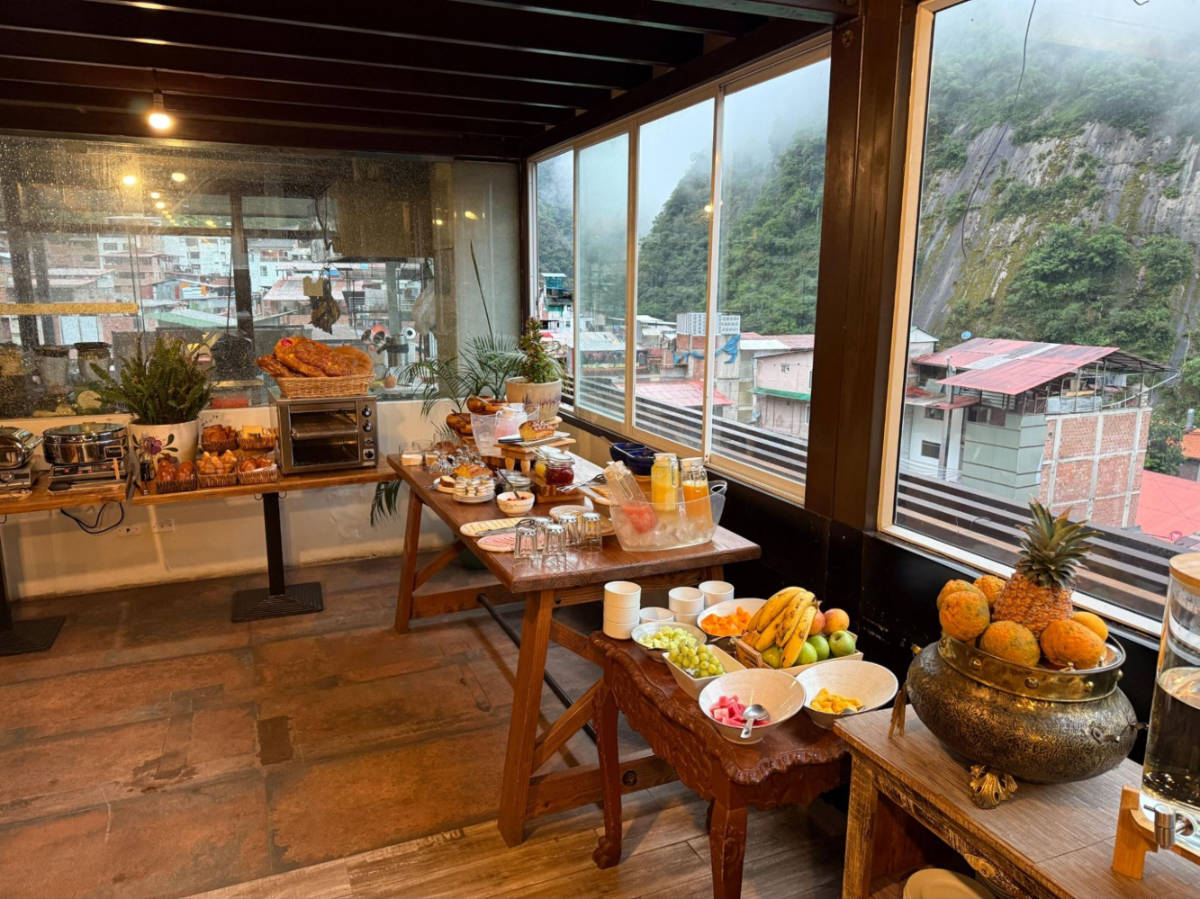
I recently stayed at Jaya Machu Picchu Boutique Hotel, and the location could not have been better. It’s steps from the train station and just across the river from the buses up to Machu Picchu. The rooms were modern and comfortable, the price was right, and the breakfast on the 7th floor terrace offered excellent views and a hearty start to our day.
Don’t want to bother moving hotels for just one night? You could alternatively stay in the Sacred Valley. I’ll go over good options in the towns of Ollantaytambo and Urubamba below.
Just realize this means a 1.5-hour train journey the morning of your visit. But that’s still more convenient than the 4-hour trip for those coming directly from Cusco (which I also cover below, but don’t recommend).
In particular, I’d note that luxury travelers might want to stay at Tambo del Inka, a Luxury Collection Resort & Spa in Urubamba. It’s a gorgeous property (many consider it Peru’s best hotel), and even has its own private train station to Machu Picchu. My partner Clara and I stayed there after our Machu Picchu visit and just loved it.
Wherever you stay, you need to plan carefully. You have to book tickets and transport ahead, and there are a bunch of rules and issues to navigate. Stay until the end for a tips section where I spill all my best advice. Or, add my Machu Picchu YouTube video to your playlist now for even more.

Best Places to Stay for Machu Picchu
If you’re short on time, here are my top hotel picks for Machu Picchu (note: all are in Aguas Calientes unless specifically noted):
- 🏆 Best Overall Hotel – Jaya Machu Picchu Boutique Hotel
- 📍 Best Location – Sanctuary Lodge, A Belmond Hotel (only hotel literally at Machu Picchu)
- 💎 Luxury – Inkaterra Machu Picchu Pueblo Hotel
- 💎 Luxury (in Urubamba) – Tambo del Inka (private train station to Machu Picchu town!)
- 🏨 Best Mid-Range – Casa de Luz Hotel or 1911 Hotel
- 👪 For Families – Casa Andina Standard Machu Picchu
- ❤️ For Couples – Casa del Sol
- ⛰️ Best in Ollantaytambo – Hotel Tierra Inka Sacred Valley
- 🏙️ Best in Cusco – Palacio del Inka or Wyndham Costa del Sol
- 🎒 Best Hostel – Nativus Hostel
- 🛏️ Best Budget – Inkas Land
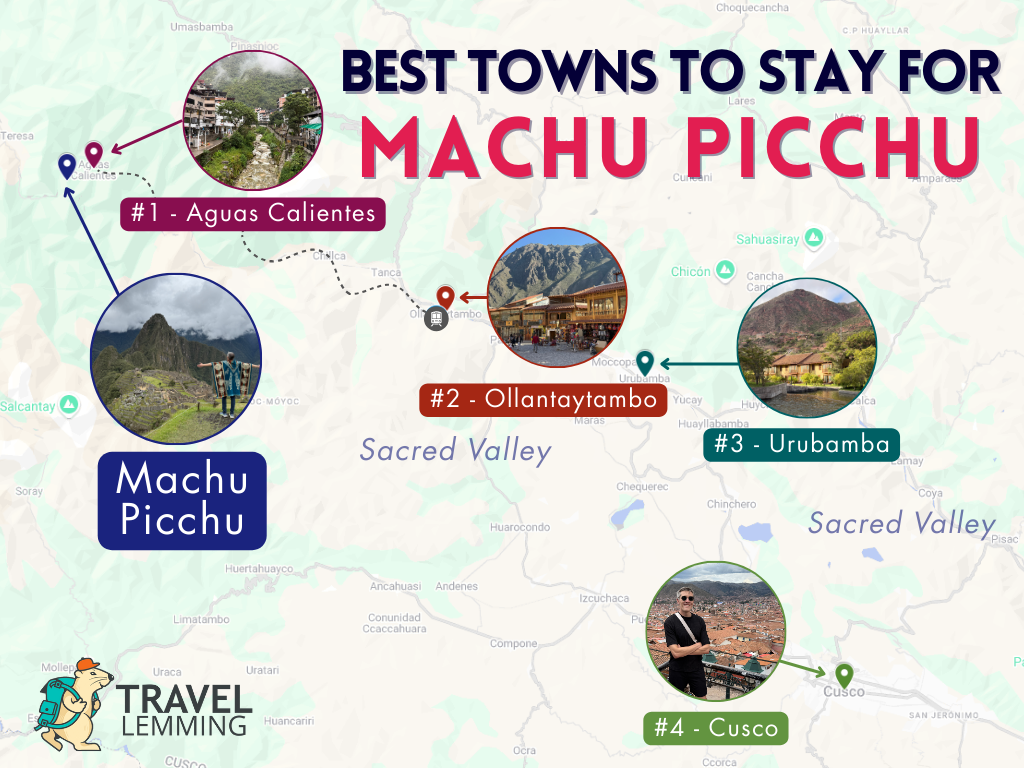
That’s the quick summary, but there’s a lot more to consider. Read on as I cover each of the four possible base towns you can stay at the night before Machu Picchu (and stick around afterwards for those crucial tips!).
The Best Towns to Stay for Machu Picchu
Aguas Calientes (aka “Machu Picchu Town”)
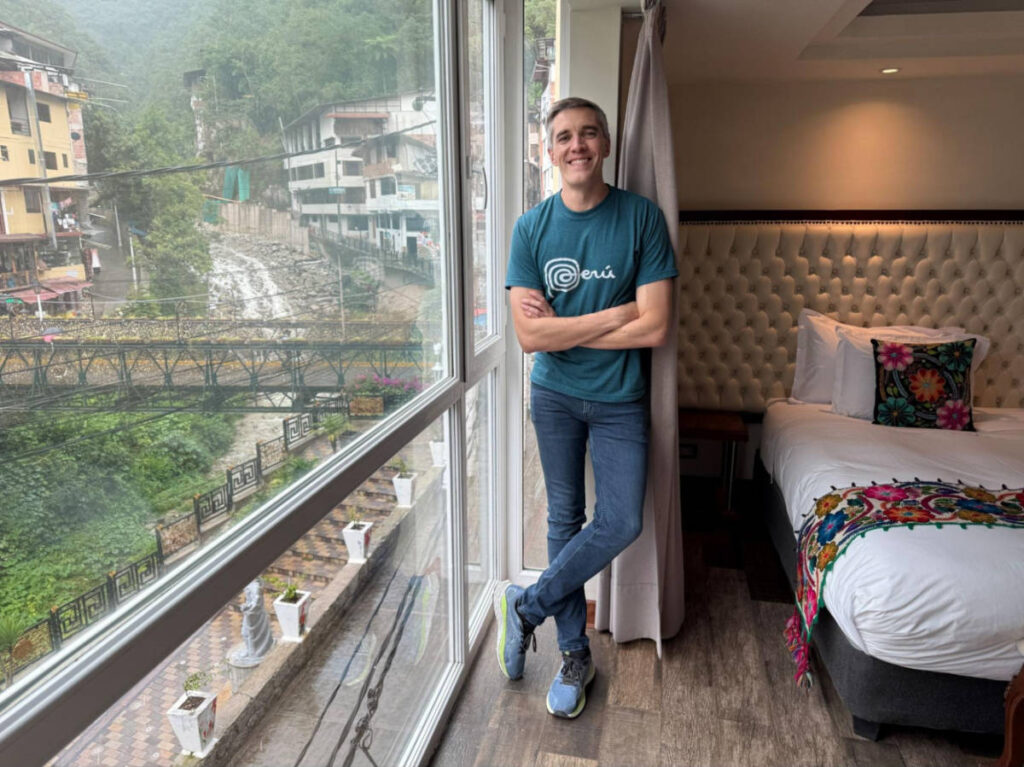
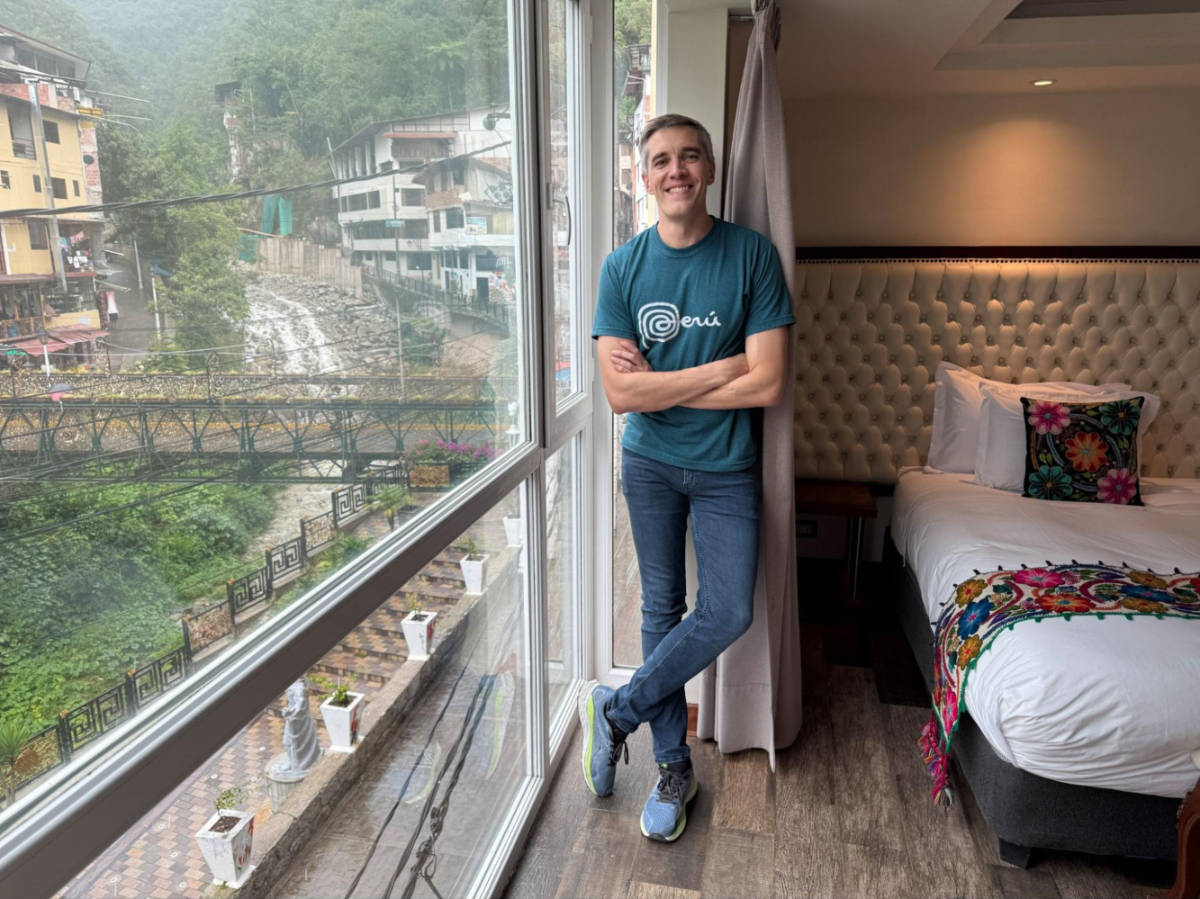
Me in our river-view room at Jaya Machu Picchu Boutique Hotel 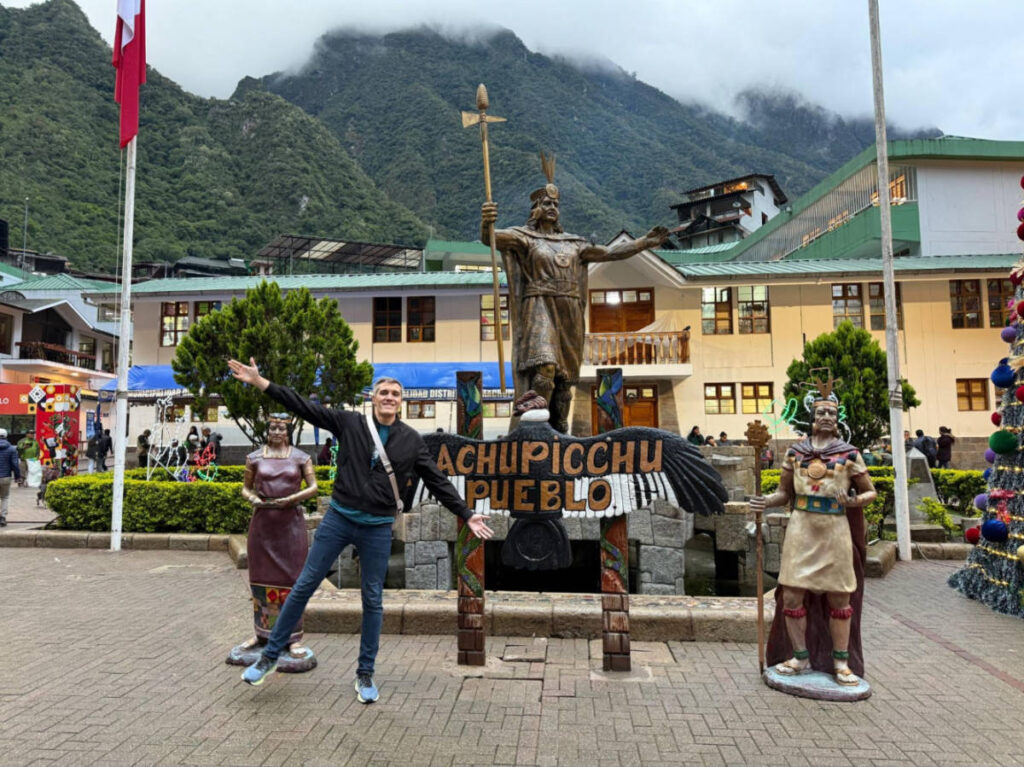
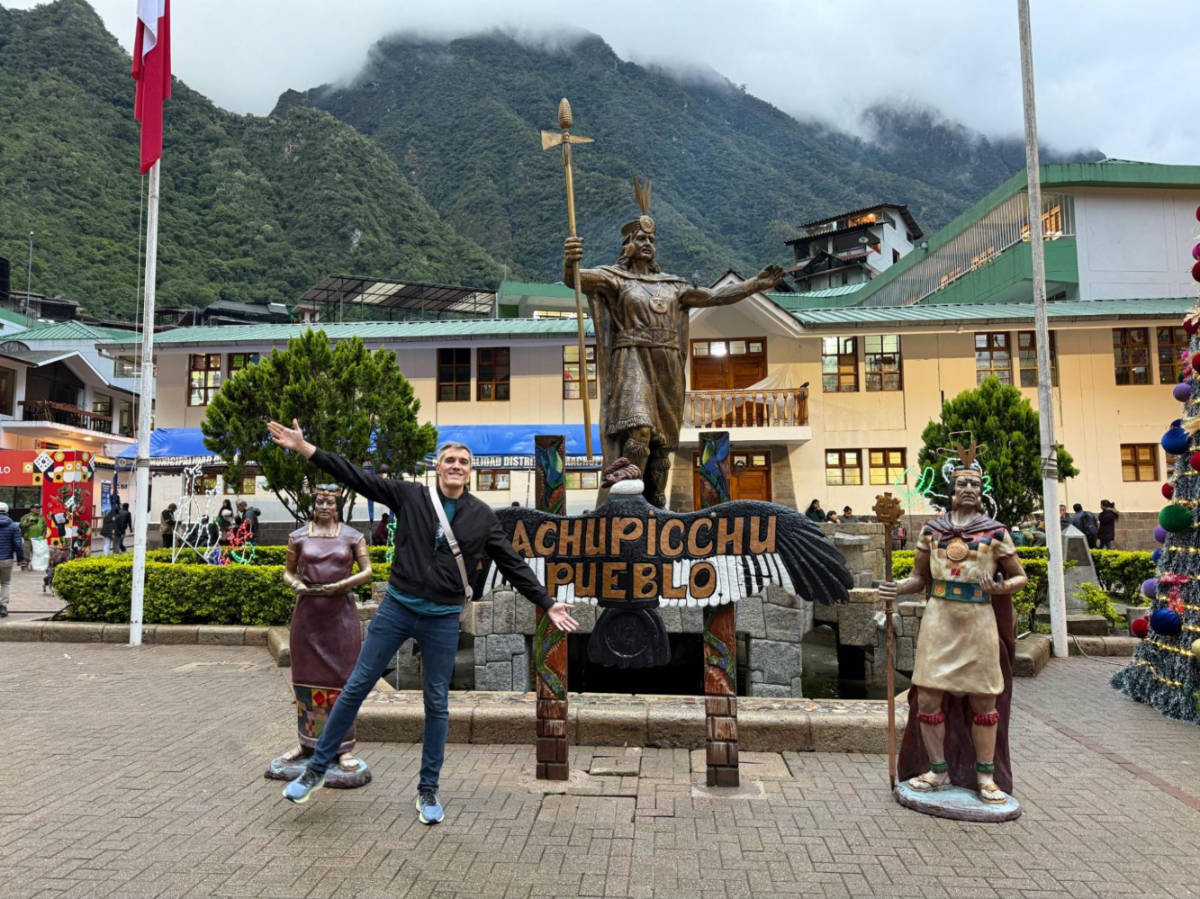
Me at Machu Picchu Pueblo’s tiny town square 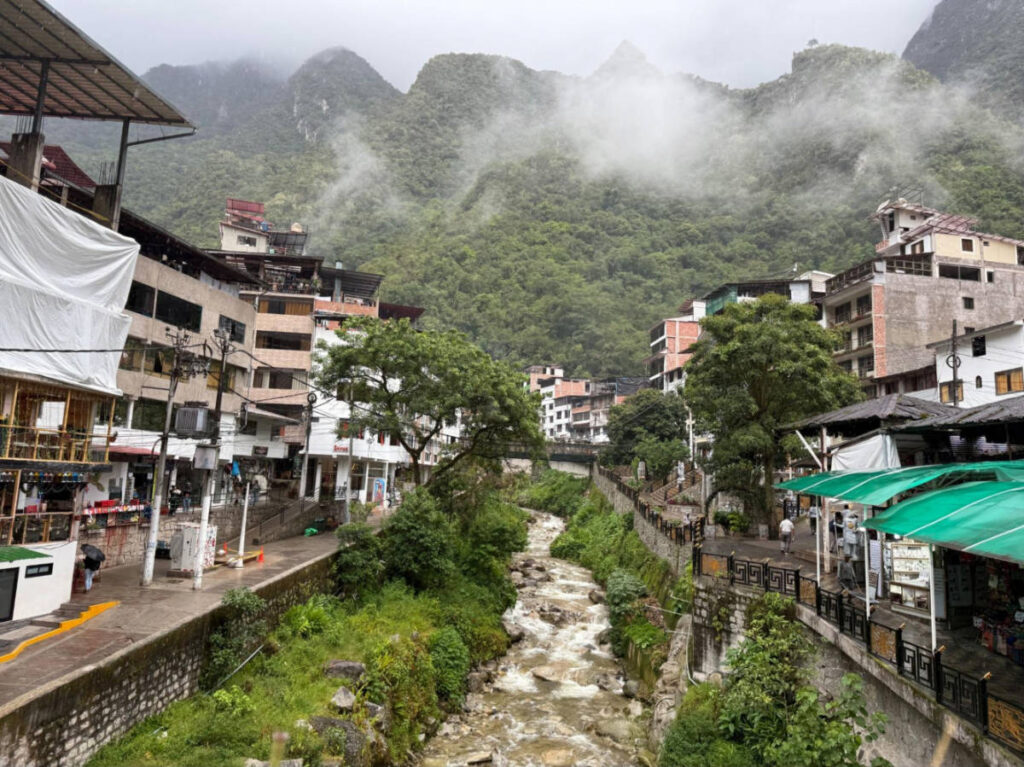
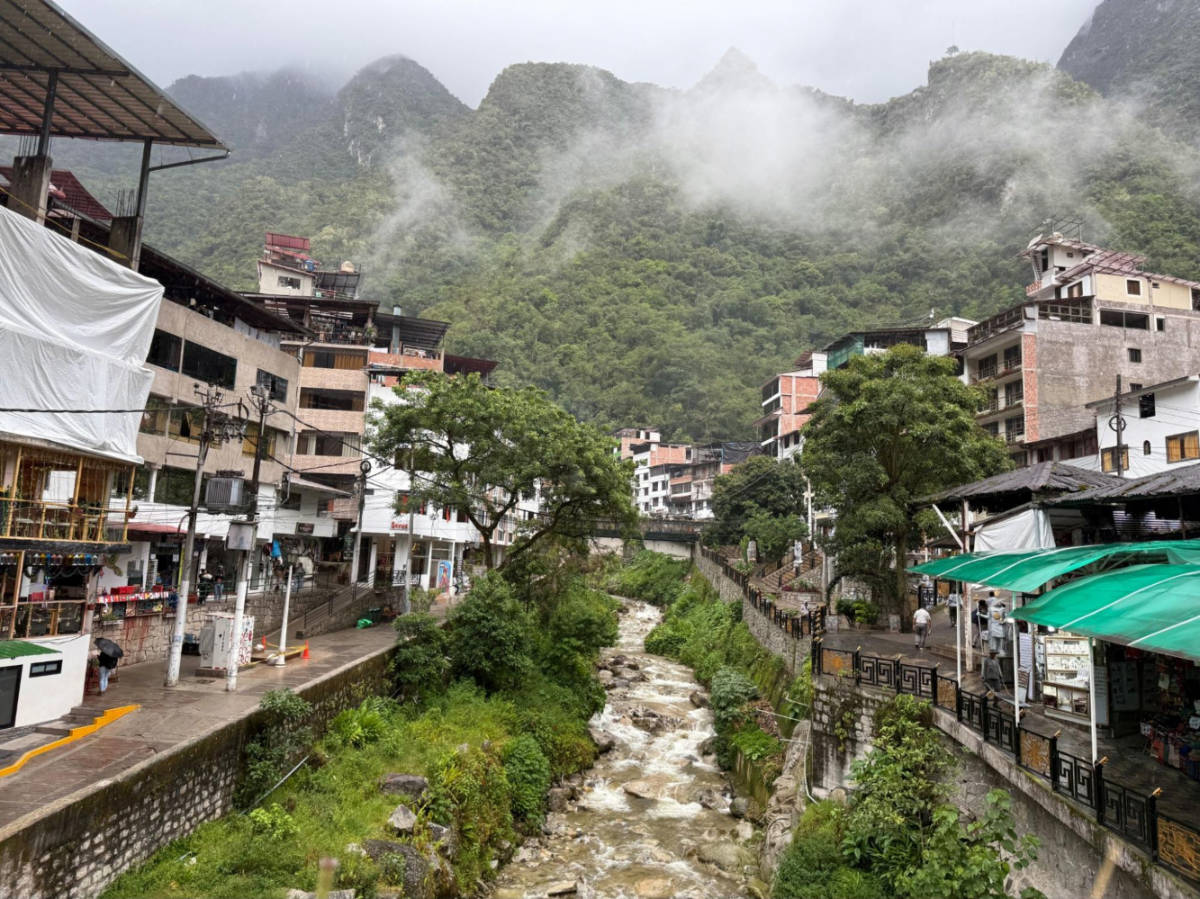
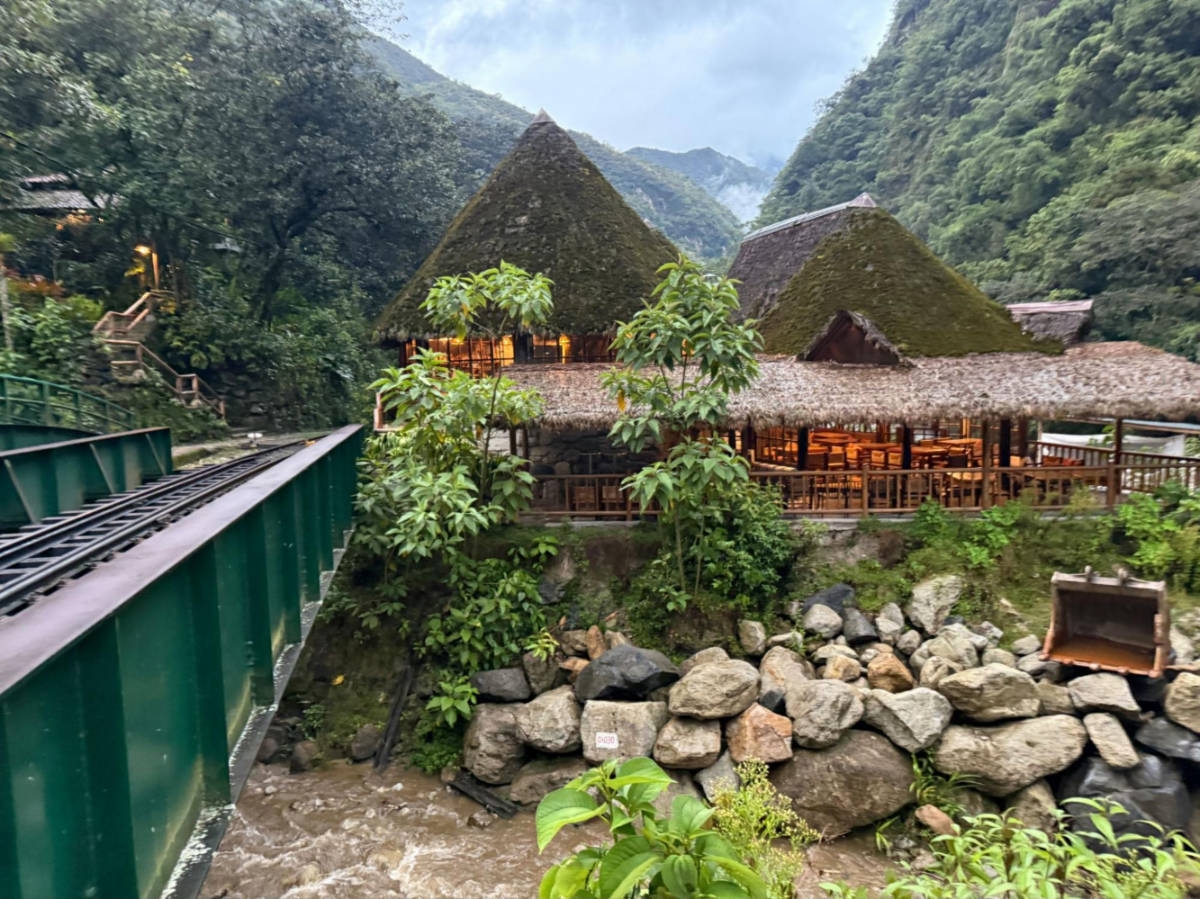
Aguas Calientes is basically just a bunch of buildings clustered around a river 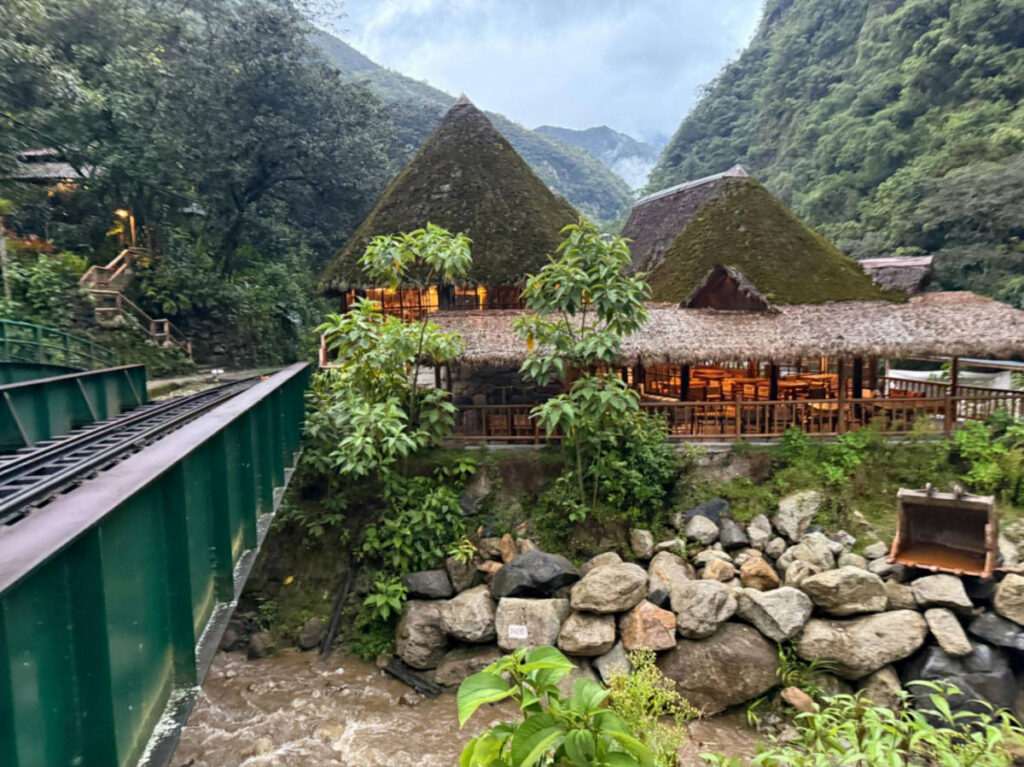
Inkaterra Machu Picchu Pueblo Hotel is probably the nicest luxury hotel in Aguas Calientes 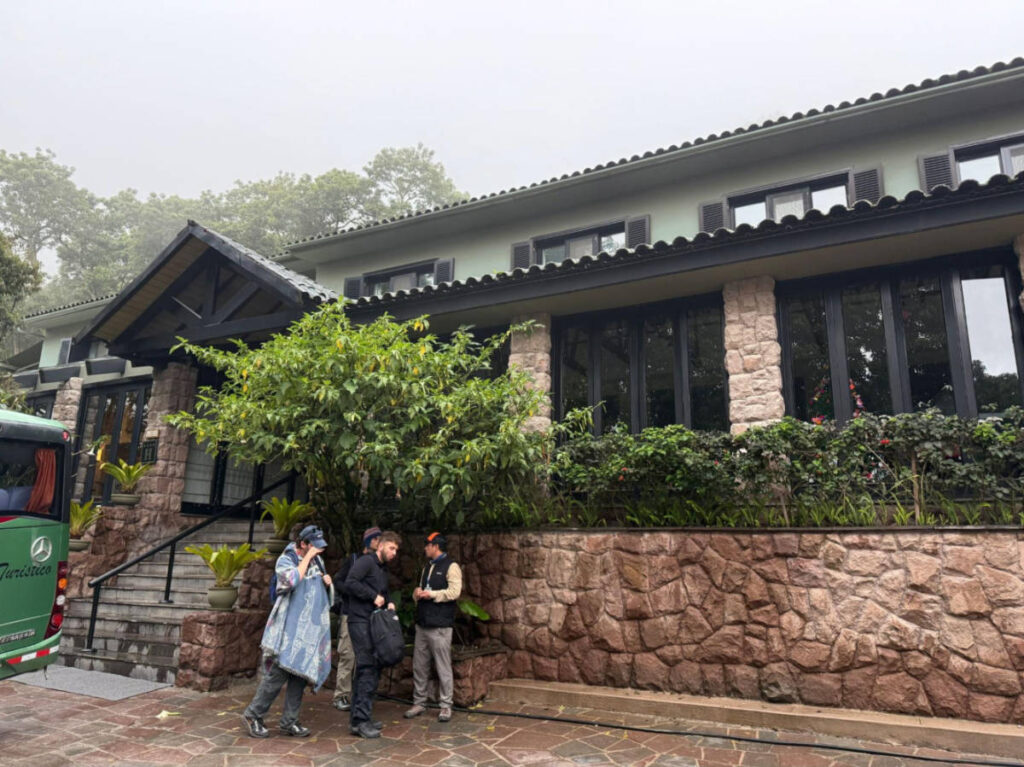
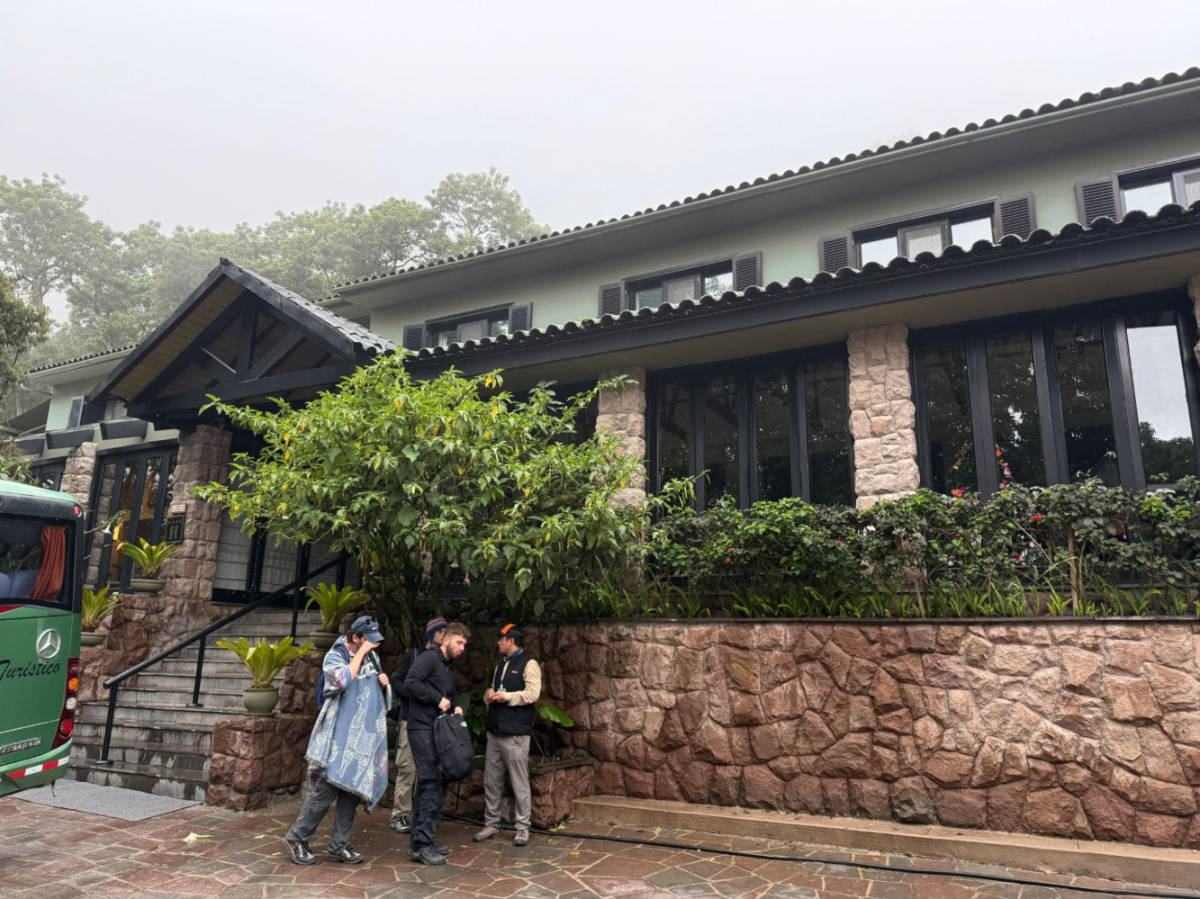
Sanctuary Lodge, a Belmond Hotel, is the only hotel up the mountain (just steps from the Machu Picchu entrance) 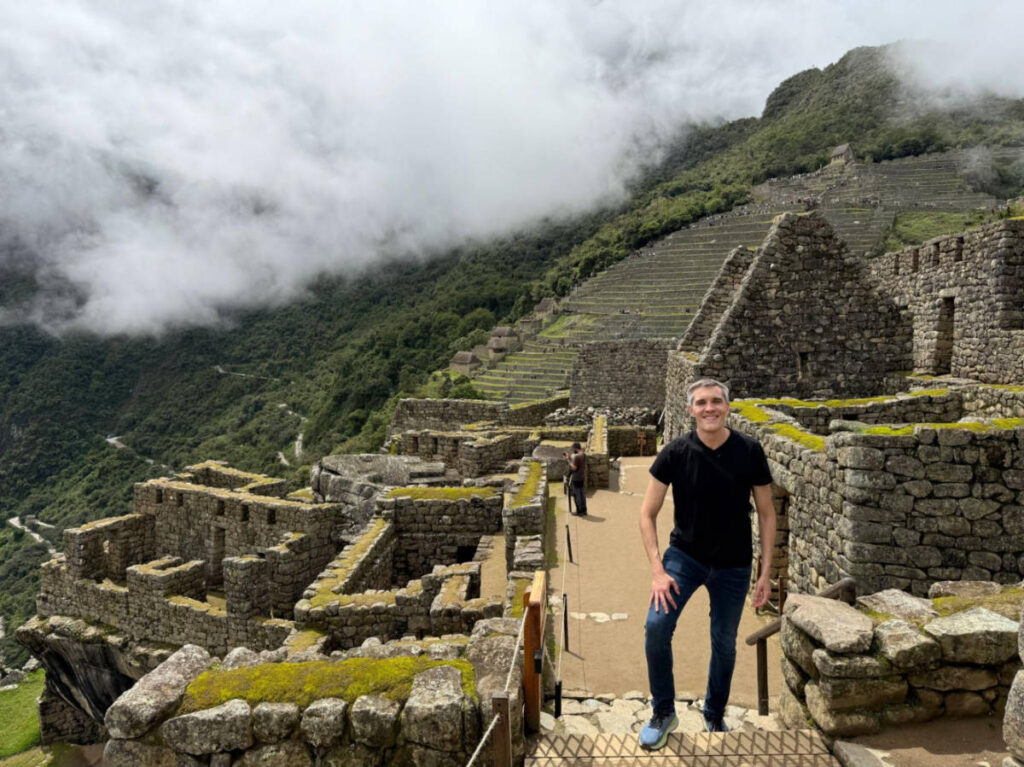
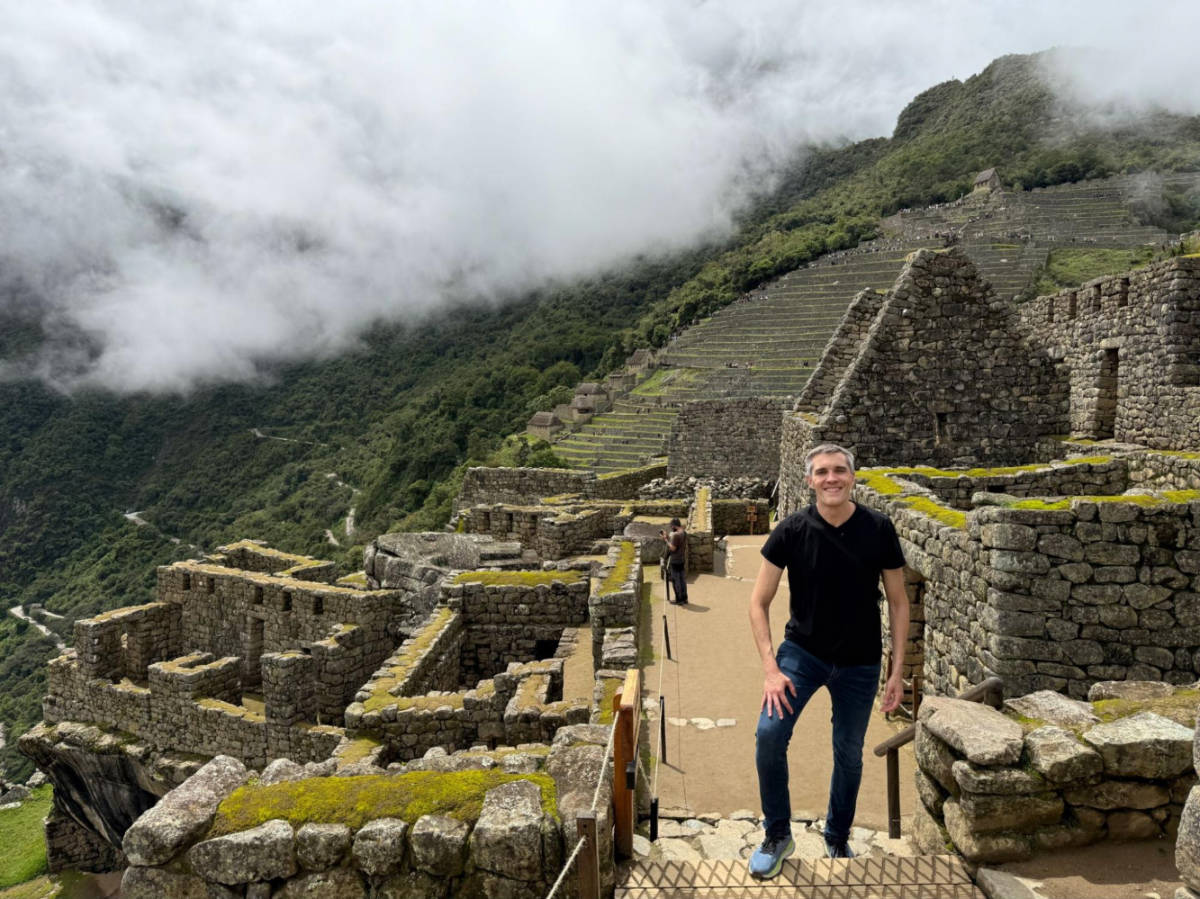
Me exploring the ruins of Machu Picchu (this was on Circuit 2B) 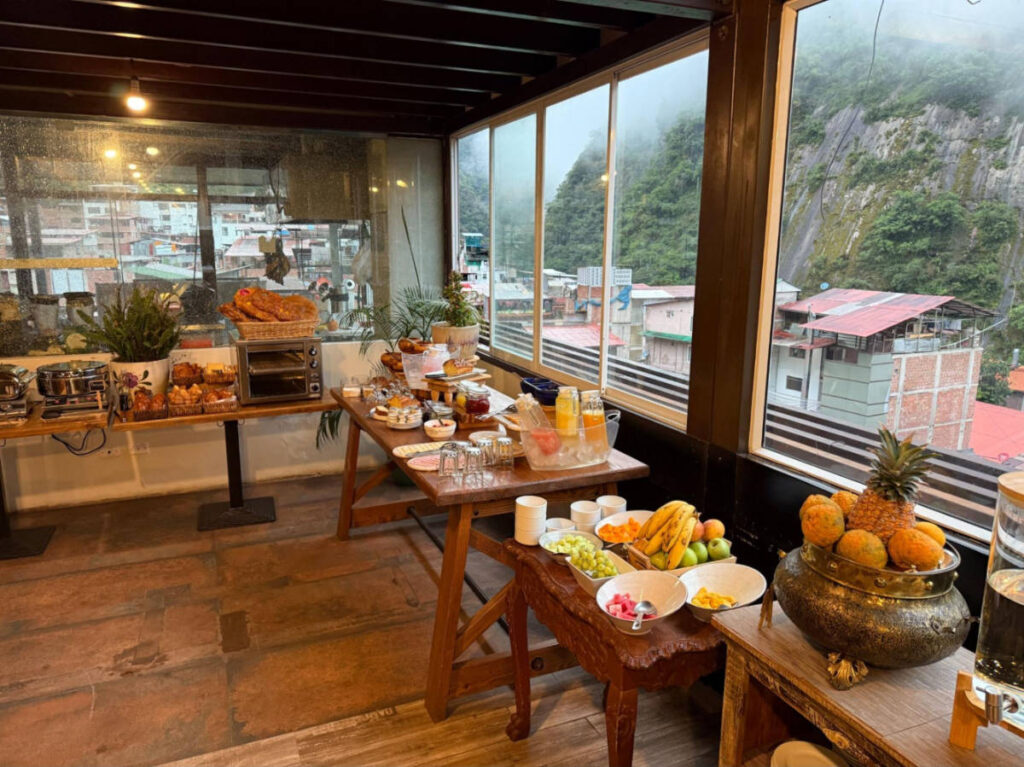
Our breakfast at Jaya Hotel was a great way to start our day. The views from the 7th floor were epic.
👉 The Closest Base for Machu Picchu | ✨ Best Aguas Calientes Hotels: Jaya Machu Picchu Boutique Hotel • Inkaterra Machu Picchu Pueblo Hotel • Casa de Luz Hotel • Casa del Sol • Inkas Land
The most convenient base for visiting Machu Picchu is Aguas Calientes (aka “Machu Picchu Town”). It’s a small purpose-built town that hugs a river valley in the middle of the Andes, just over the mountain from Machu Picchu’s citadel.
Aguas Calientes exists entirely to serve tourists to Machu Picchu. There are no cars, and the only way in is via train or by hiking a few hours from the nearest bus stop at Hidroelectrica.
Most visitors stay just one night, and that is what I would recommend you do. There really isn’t much to do here, apart from eating or drinking at its many restaurants, cafes, and bars. But, the rushing sounds of the river and the absence of vehicle noise give it a certain kind of natural beauty.
On my most recent visit, Clara and I stayed in Jaya Machu Picchu Boutique Hotel (see my full hotel review here). It was conveniently located next to the train station, our room had a river view, and the rooftop breakfast offered quality food and epic views. I also love that they offer shower and toilet facilities for use after check out, meaning you can freshen up after visiting Machu Picchu but before your train ride back.
For luxury travelers, Inkaterra Machu Picchu is the best-rated 5-star hotel within the town itself. It’s set in a quiet forested grove just off the river near the base of the town. Or, to really splash out, stay at Sanctuary Lodge, a Belmond Hotel – which is the only hotel located up the mountain, right next to the entrance to Machu Picchu itself.
Casa del Sol is also a stylish boutique with stunning rooms and an unbeatable location right near the buses to Machu Picchu.
At the mid-range price point, check out Casa de Luz Hotel, 1911 Hotel, or Hotel Horizonte. All have above average reviews, solid locations, and simple no-frills rooms.
For budget travelers, Inkas Land has highly-rated rooms for around $50/night. Or, for backpackers on a shoestring budget, stay at Nativus Hostel.
Pros of Staying in Aguas Calientes (Machu Picchu Town):
- Closest possible base (just wake up and go straight to Machu Picchu via bus)
- Less stressful. Staying here means more time to spend exploring Machu Picchu and less time in transit!
- The town is small but chill and picturesque
- You can go to the physical ticket office and snag the 1,000 last-minute tickets released the day before (read more about this below)
Cons of Staying in Aguas Calientes (Machu Picchu Town):
- It means moving hotels from your base in Cusco or the Sacred Valley
- You’ll need to store your luggage at the train station (or in Cusco) as only small bags are allowed on the train
- There isn’t much to do in the town (just outside you’ll find a few mediocre hot springs, a butterfly zoo, and some small waterfalls)
📚 Aguas Calientes Mini Guide 📚
The Closest Base for Machu Picchu
Google Map
✨ Best Hotels – Jaya Machu Picchu Boutique Hotel • Inkaterra Machu Picchu Pueblo Hotel • Casa de Luz Hotel • Casa del Sol • Inkas Land
🏠 Apartments – Browse Top Rentals in Aguas Calientes
🍽️ Where to Eat – Tao Dulce Salado ($), Chullos Machupicchu Restaurant ($$), Mapacho Craft Beer Restaurant ($$)
🍸 Where to Drink – Inka Happiness Lounge Bar
☕ Cafes – La Rivera Coffee Center, La Chuta café
🎟️ Top Attractions – Machu Picchu Historic Site, Machu Picchu Hot Springs, Butterfly Zoo, Cascadas Alcamayo
Ollantaytambo
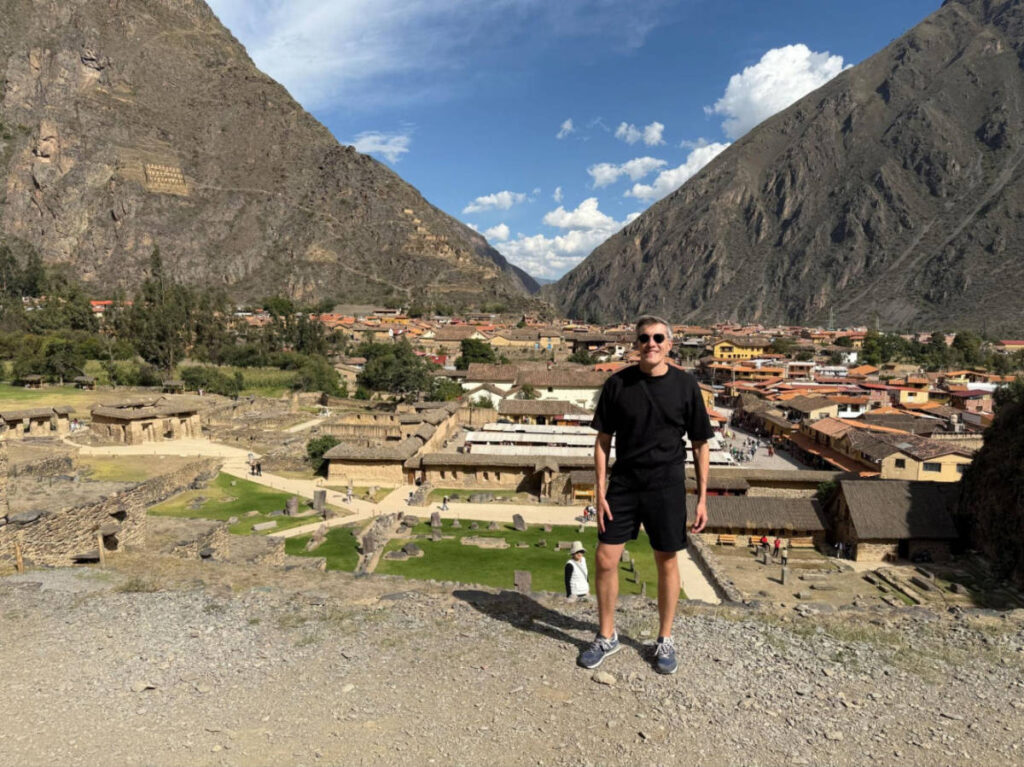
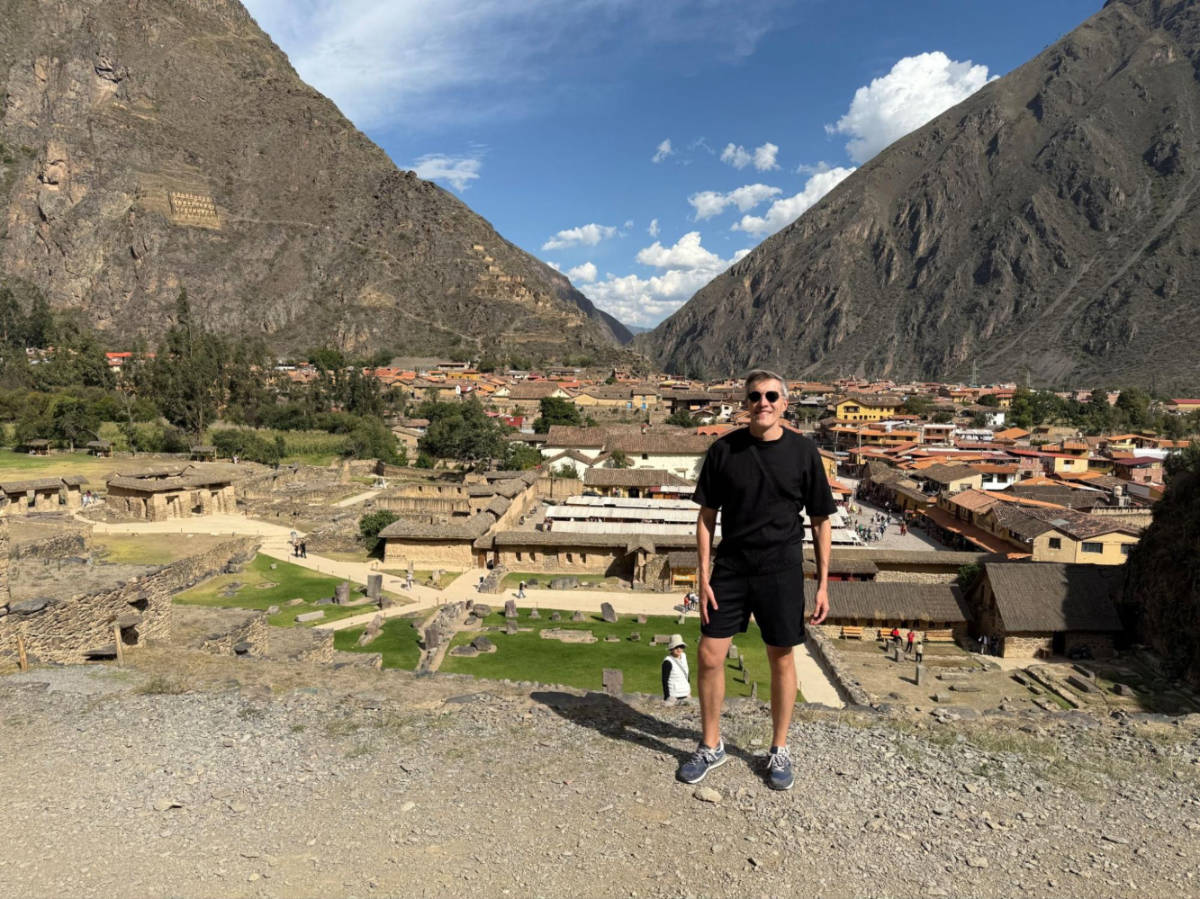
Me on the Ollantaytambo ruins, with the town in the background 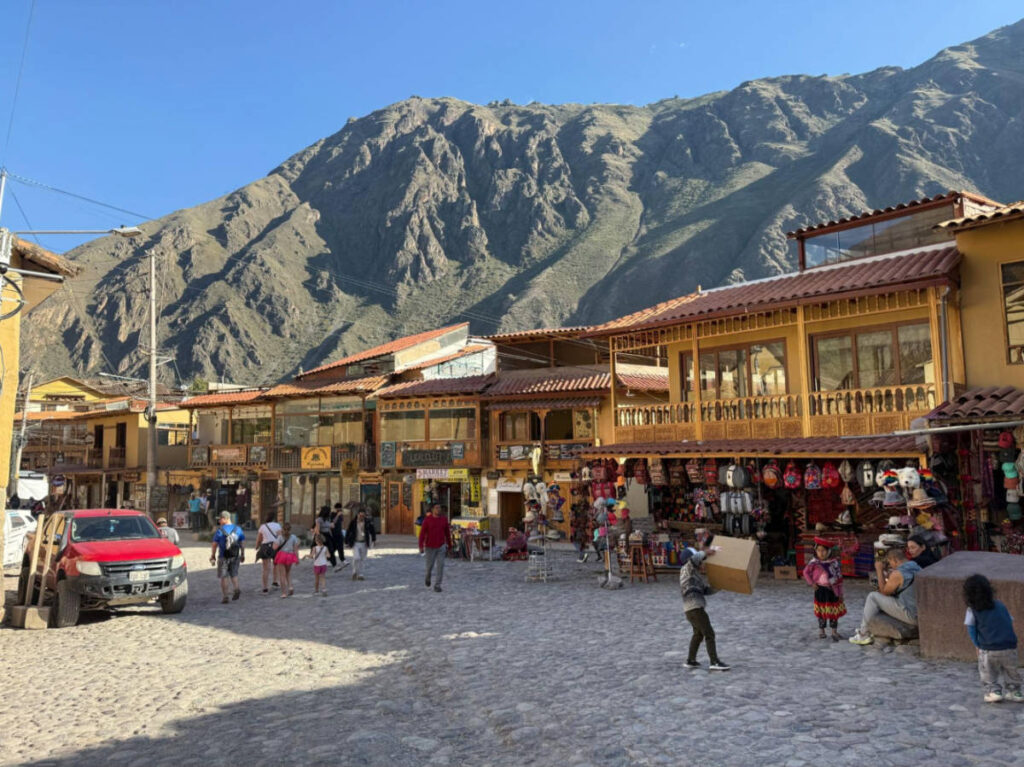
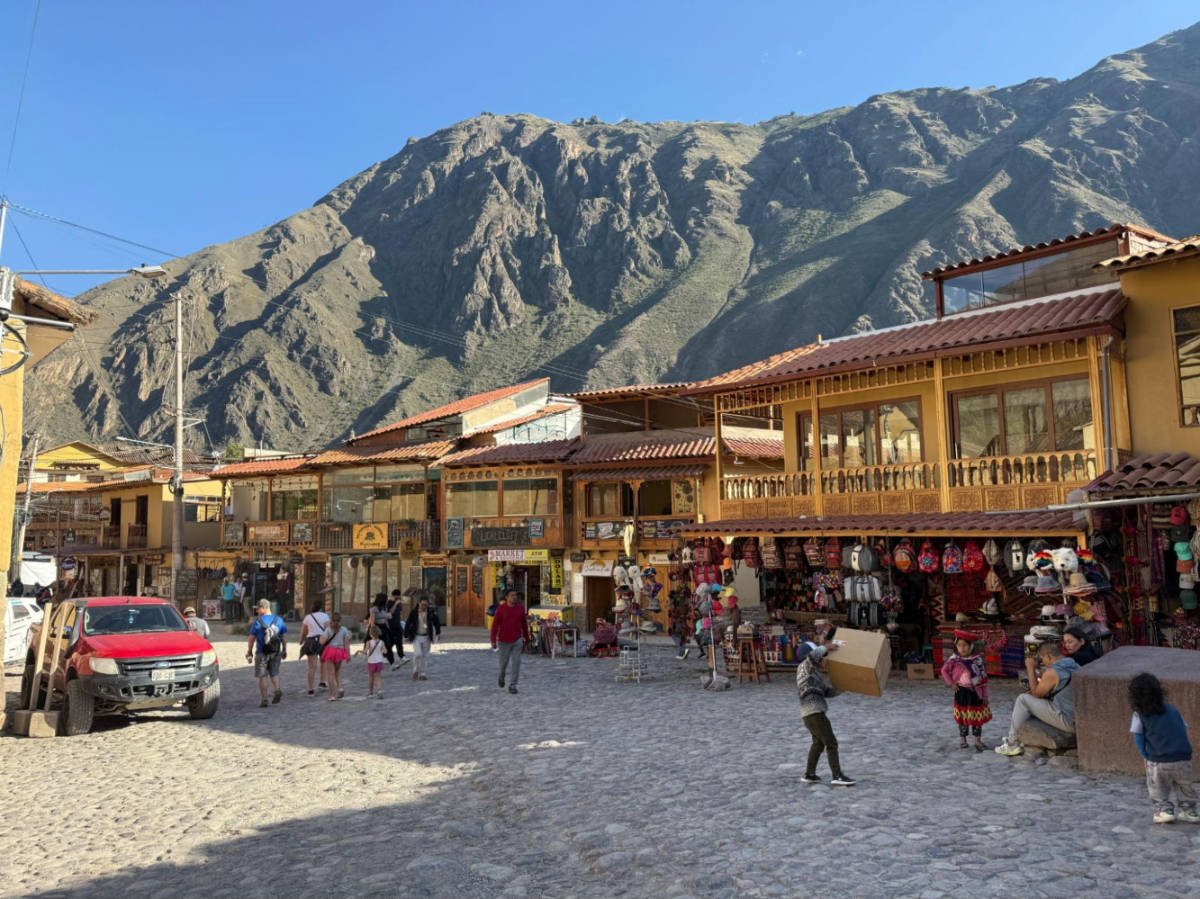
I think Ollantaytambo is one of the most picturesque towns in Peru 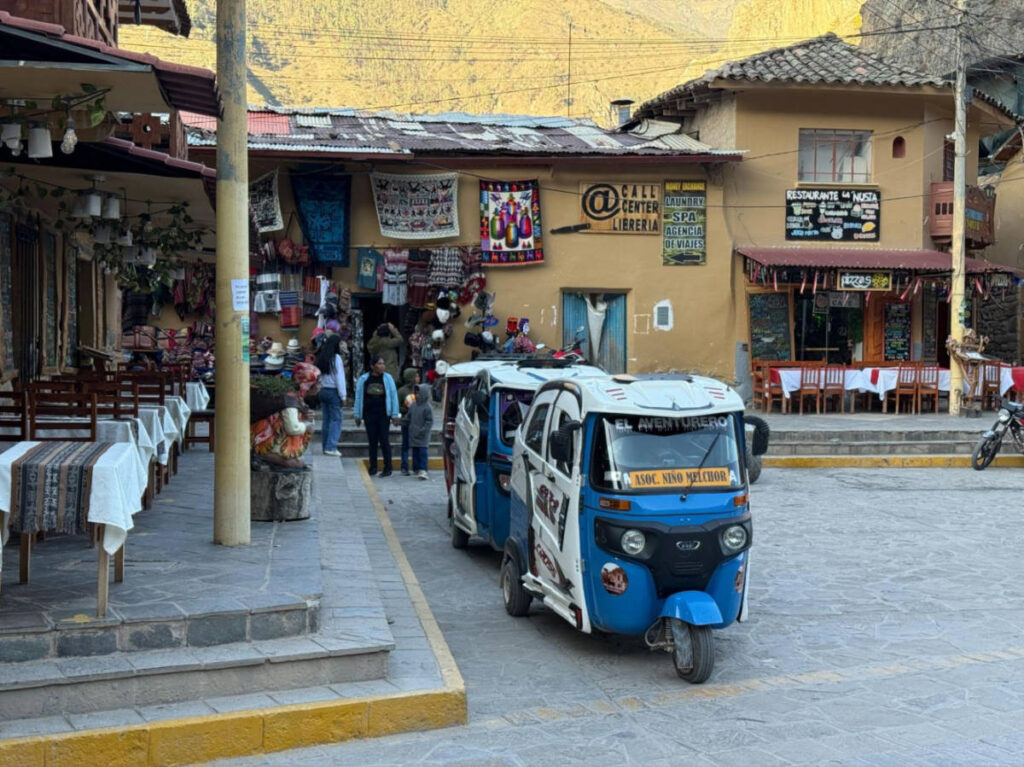
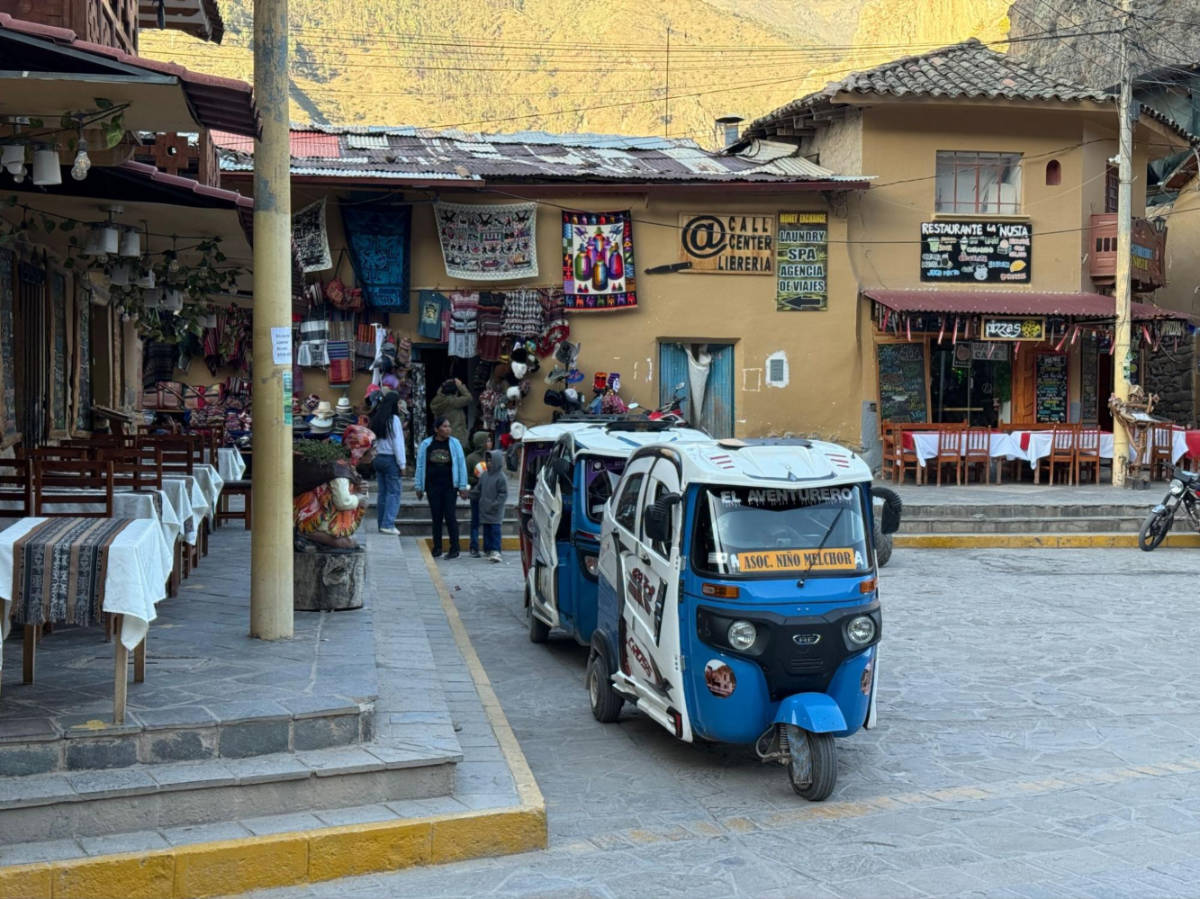
Tuk tuk style vehicles in the main square provide local transport 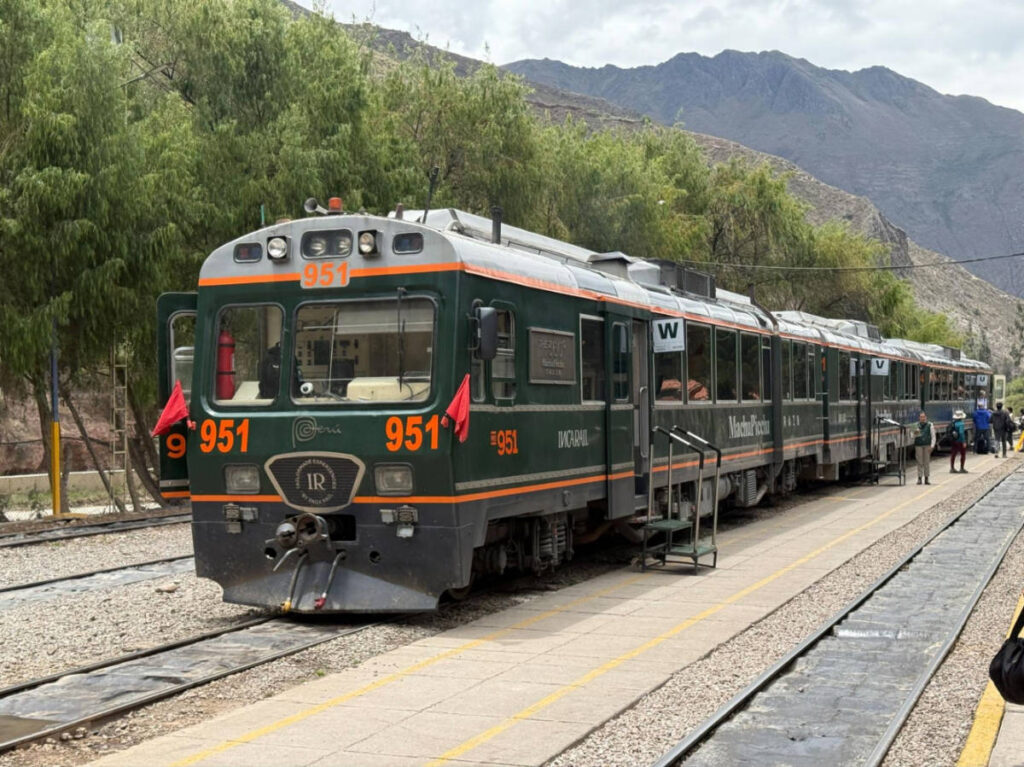
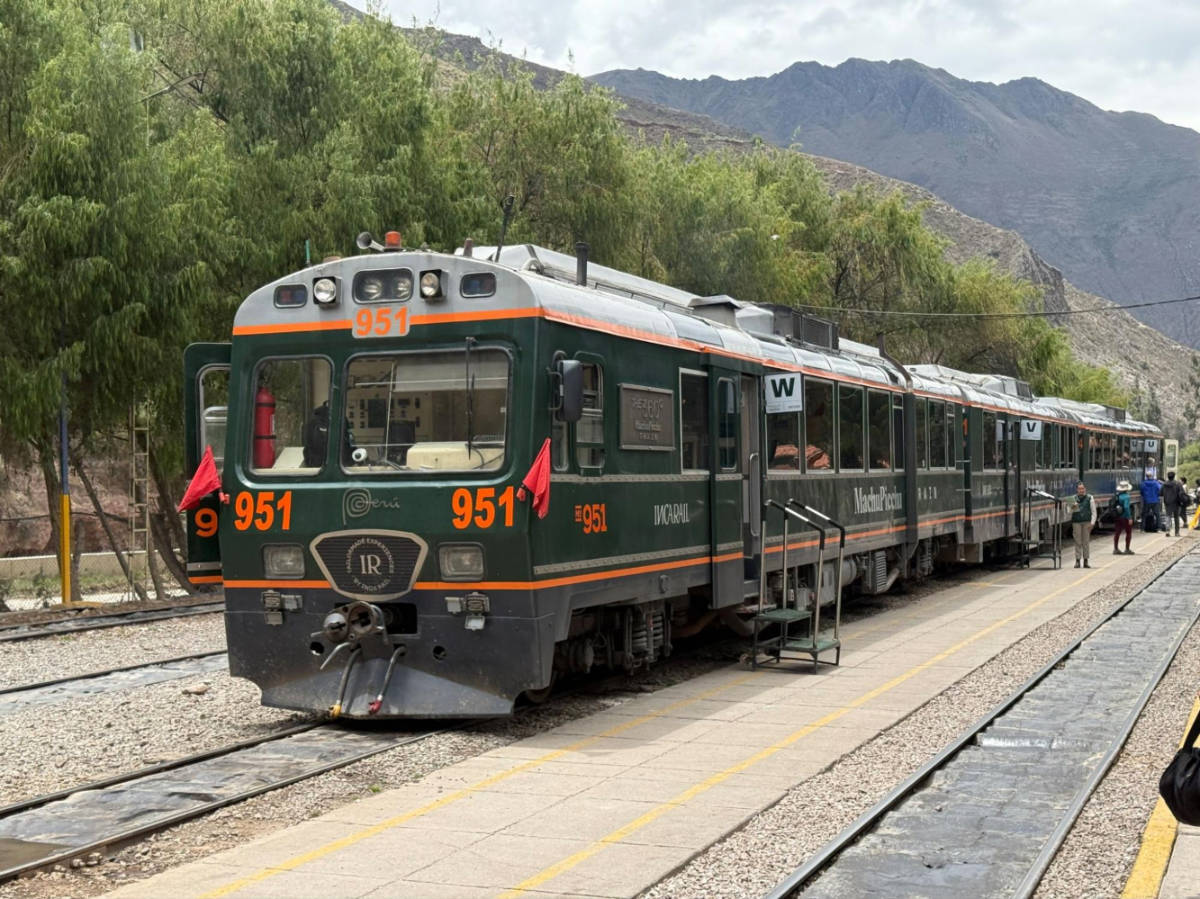
Ollantaytambo train station is the main departure point for 98% of trains to Machu Picchu 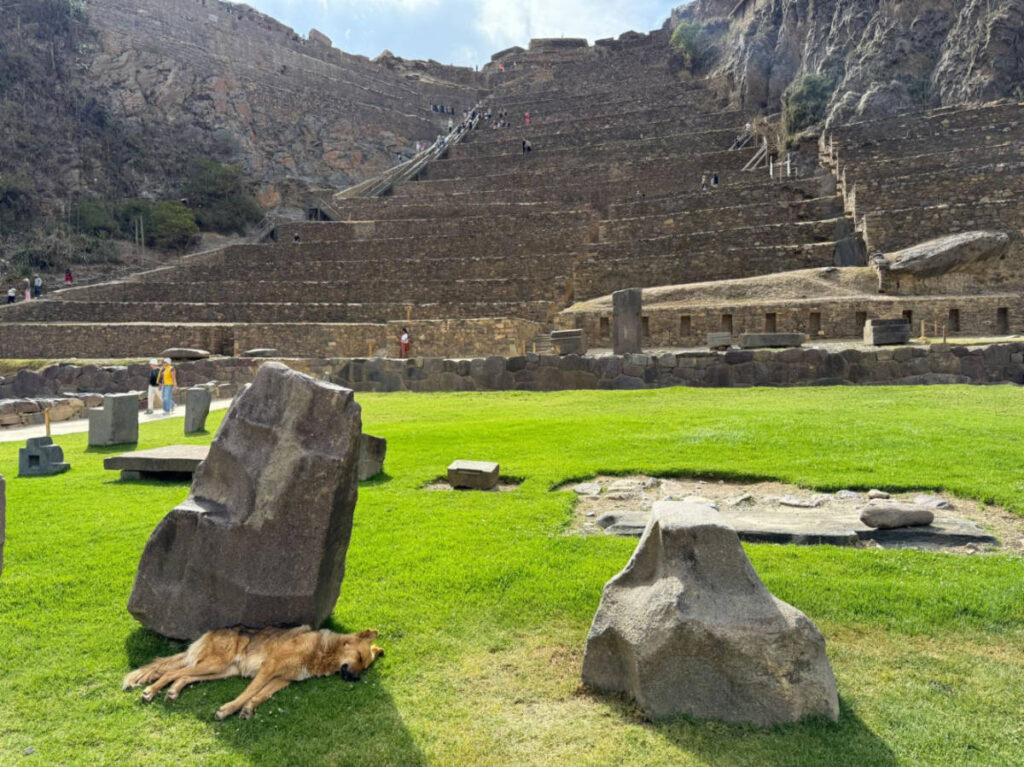
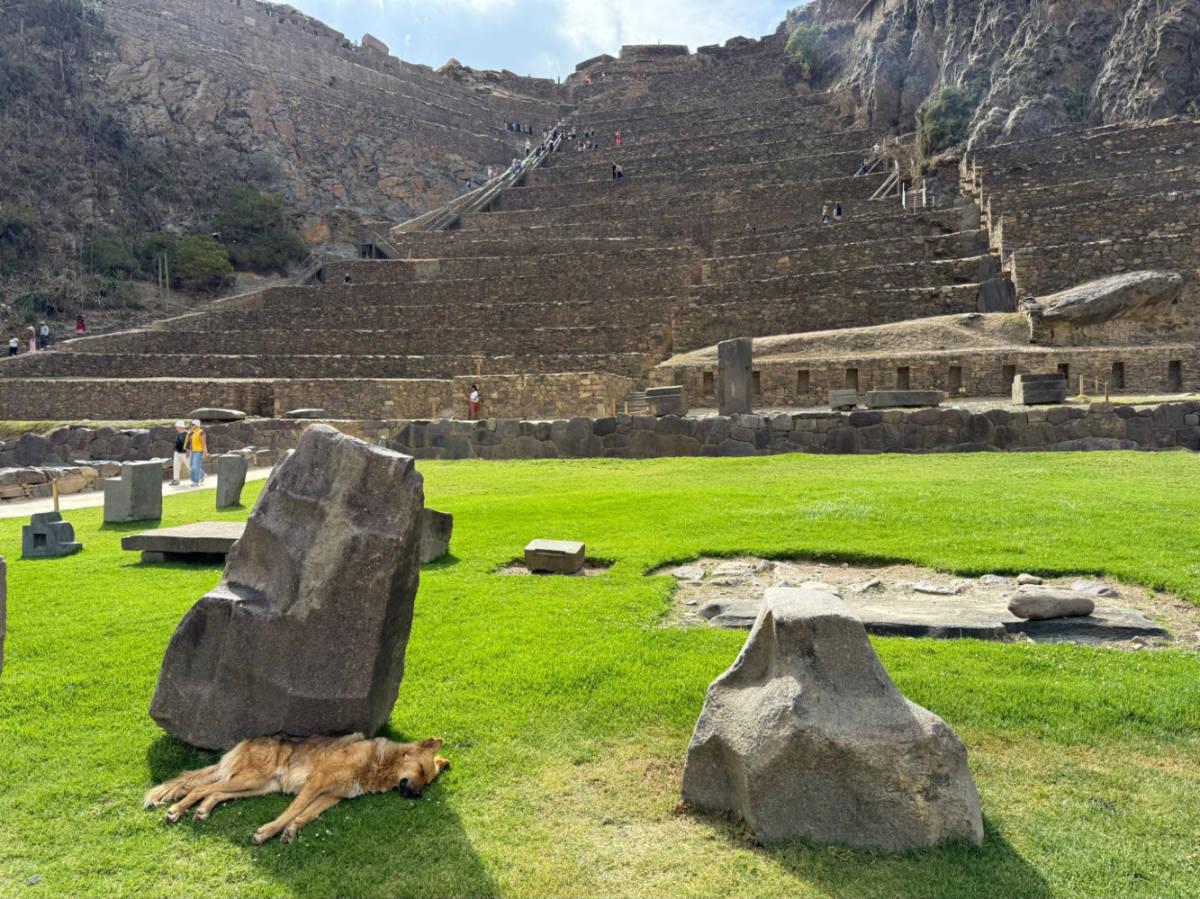
A dog tags a nap in the shadow of the Ollantaytambo ruins (which I think are second only to Machu Picchu) 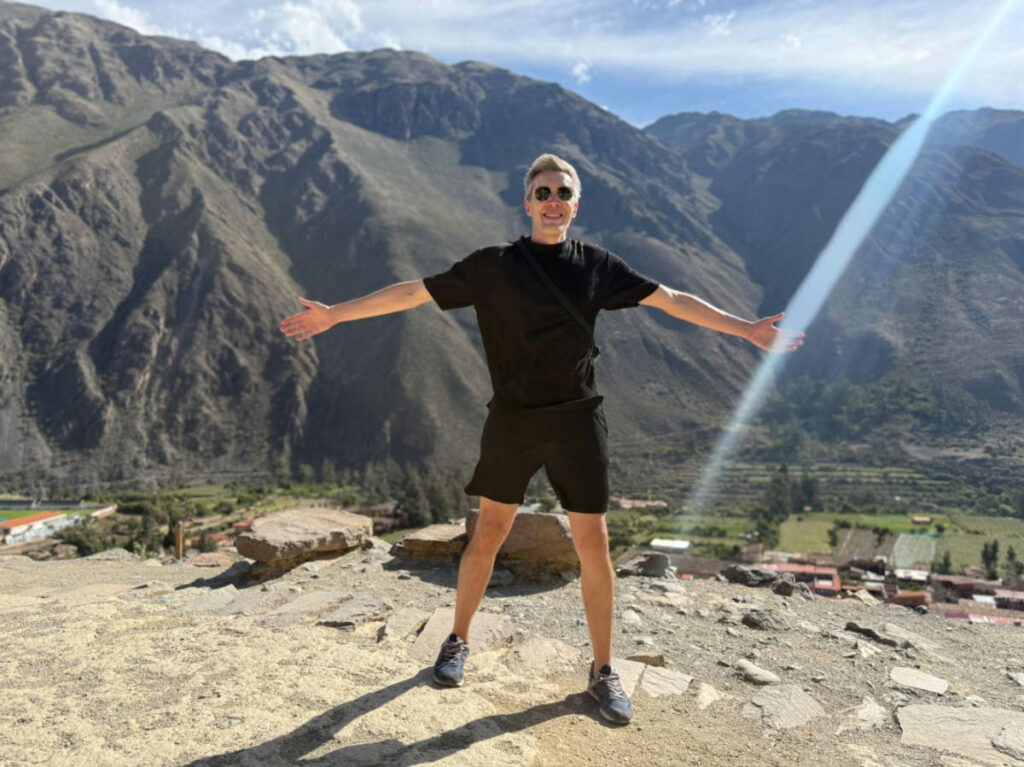
Me battling the wind at the peak of the Ollantaytambo Inca ruins 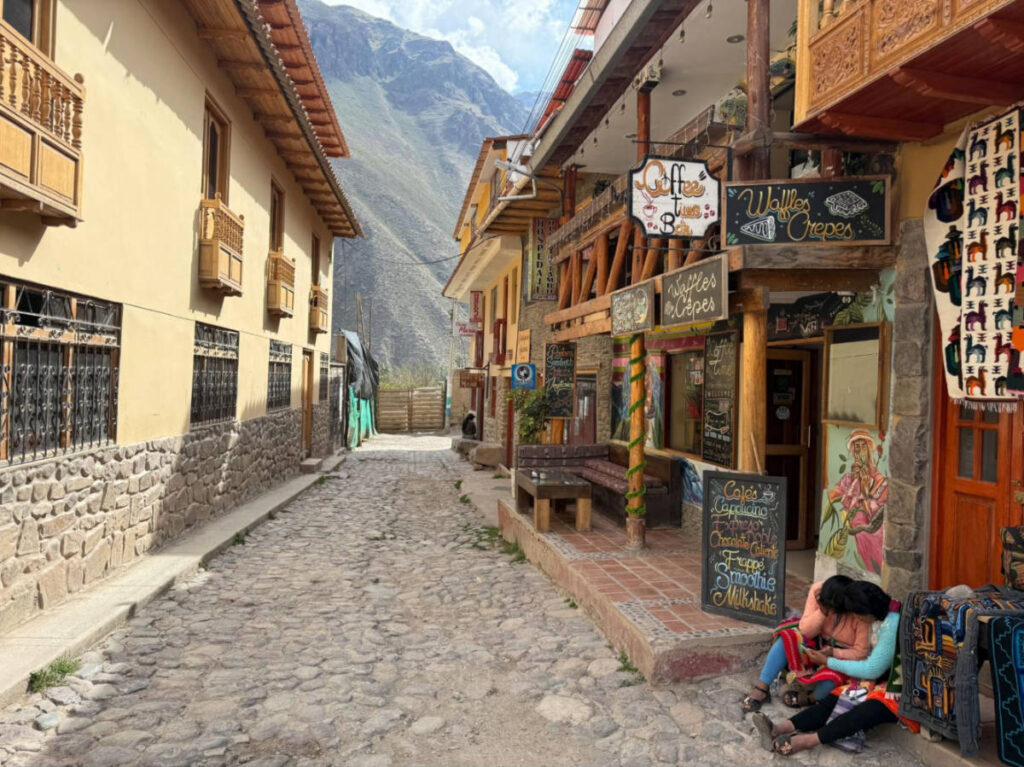
Cobblestone streets near Ollantaytambo’s town center
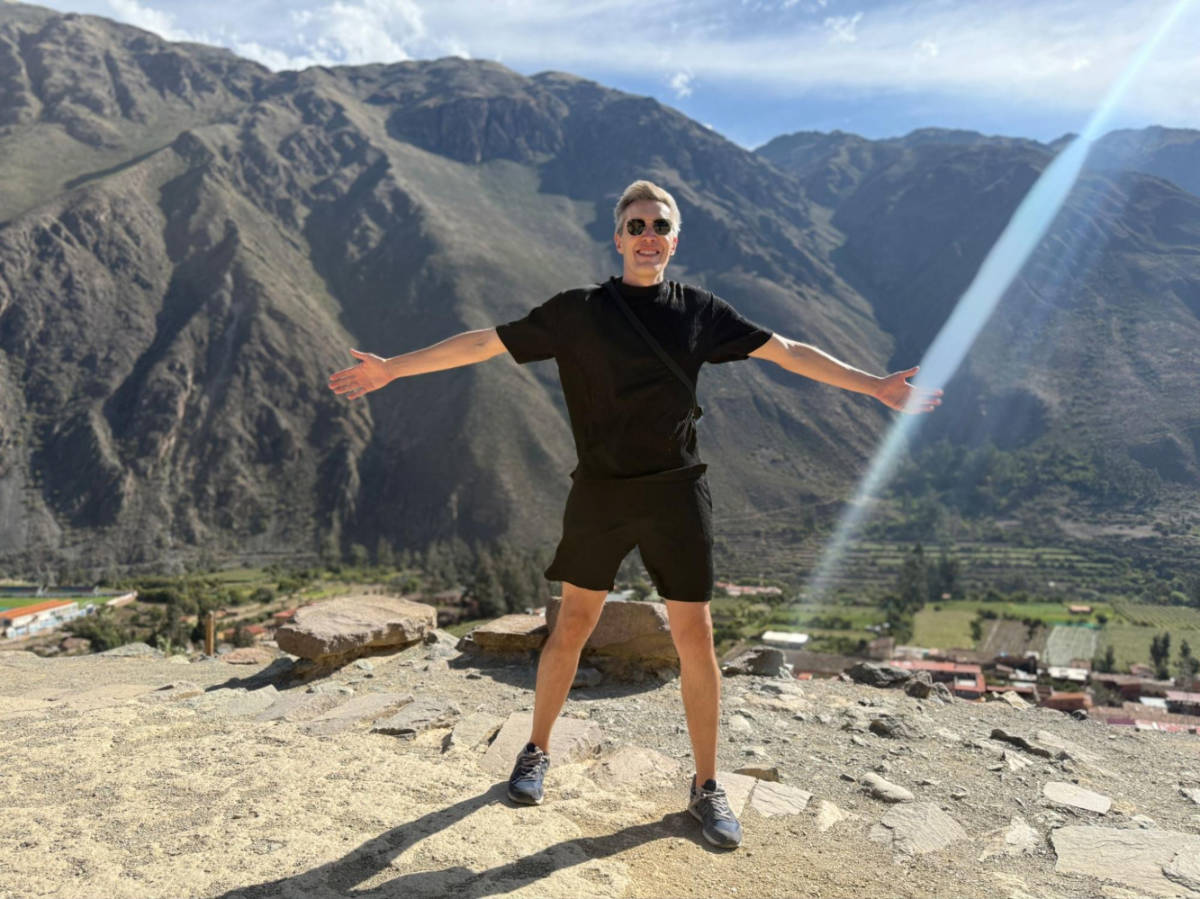
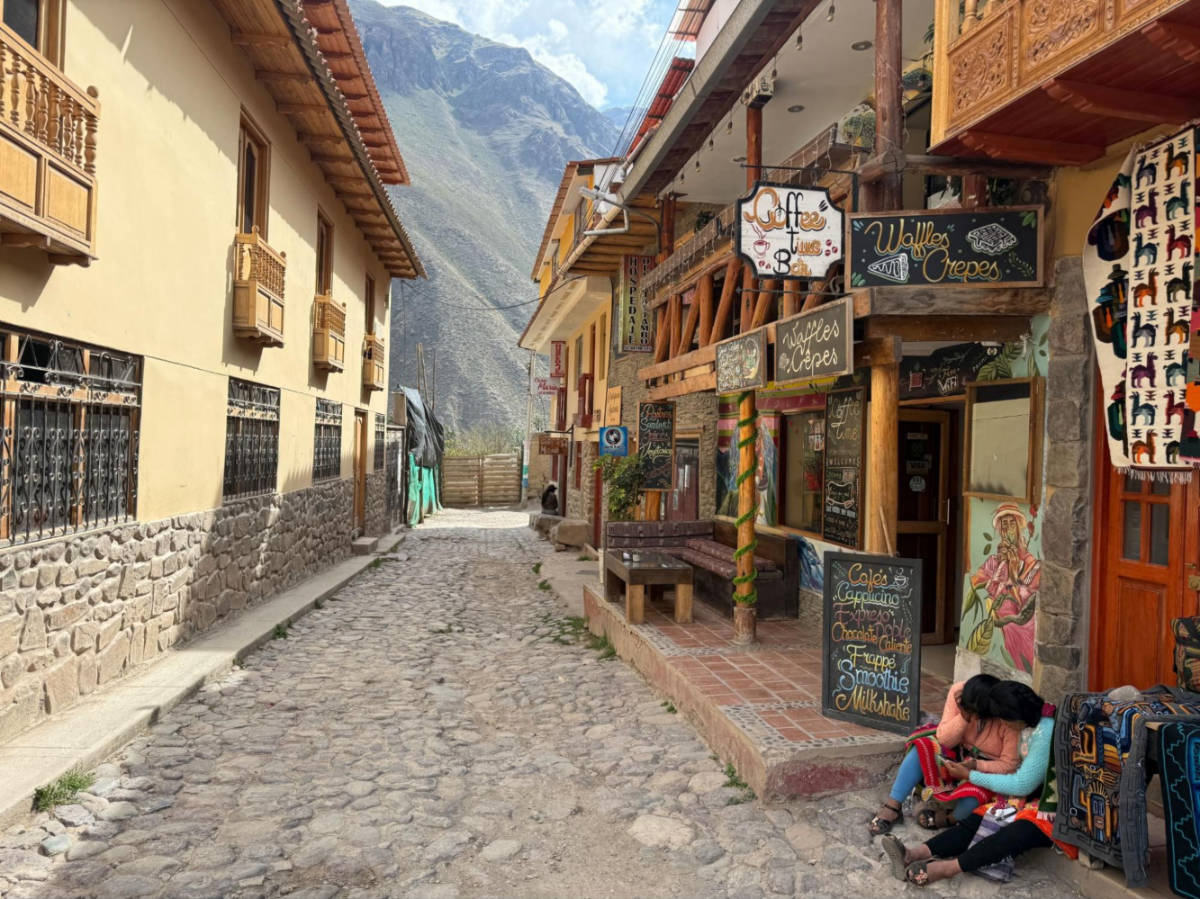
👉 Where Trains Leave for Machu Picchu | ✨ Best Ollantaytambo Hotels: Hotel Tierra Inka Sacred Valley • Las Qolqas EcoResort • Aranwa Sacred Valley Hotel & Wellness • Picaflor Tambo Guest House
Ollantaytambo is a quaint town in the Sacred Valley that is home to the train station where most trains leave for the 1.5 hour journey to Machu Picchu town.
It’s also the home of the Ollantaytambo ruins, which I would say are my favorite of the ruins in the Sacred Valley (excluding Machu Picchu itself, of course).
The Sacred Valley is incredible, particularly if you like nature or history, and I encourage everyone to spend a few nights in the Valley anyway. So, staying in Ollantaytambo might be a good choice if you want to minimize the number of times you are changing hotels, but still want to be relatively close to Machu Picchu.
The town of Ollantaytambo itself is so adorable. It looks like a town out of an Old West movie, with cobblestone streets and wood and stone buildings. There are lots of cute cafes, shops, and restaurants to keep you occupied for a few days. And the impressive Inca ruins start right in the town and run up along the hillside.
In terms of hotels, a good one is Picaflor Tambo Guest House, which garners solid reviews at a reasonable price point.
For something a little more luxurious, Hotel Tierra Inka Sacred Valley is probably the best option in Ollantaytambo. It’s walkable to town but surrounded by nature. Or, for even more natural beauty, stay in a tent at Las Qolqas EcoResort.
For those on a budget, check out Casa Inka B&B or the backpacker hostel Hostal al Viajero.
Pros of Staying in Ollantaytambo:
- Home to the main train station to Machu Picchu town
- A pleasant picturesque town worth spending a couple days in
- The Ollantaytambo ruins are incredible
- Lots of cafe and dining options
Cons of Staying in Ollantaytambo:
- You still have to take the train to Machu Picchu town (1.5 hours), then take the bus to the citadel (~1 hour), meaning it still makes for a fairly long day trip
- It’s further away from other Sacred Valley sites (Moray, Maras, Chinchero, Pisac) compared to Urubamba
📚 Ollantaytambo Mini Guide 📚
Where Trains Leave for Machu Picchu
Google Map
✨ Best Hotels – Hotel Tierra Inka Sacred Valley • Picaflor Tambo Guest House • Las Qolqas EcoResort • Casa Inka B&B • Hostal al Viajero
🏠 Apartments – Browse Top Rentals in the Ollantaytambo
🍽️ Where to Eat – Inka Nato Restaurante ($$), Koricancha ($$), Andean Organica Ollantaytambo ($$), Mawic Restaurant ($$), Emiliano’s Café ($), Santuario ($$)
🍸 Where to Drink – DE ELLAS – Resto Bar, Cerveceria ollantina
🎟️ Top Attractions – Ollantaytambo Archeological Site, Plaza de Armas, Sitio arqueológico Pinkuylluna
Urubamba
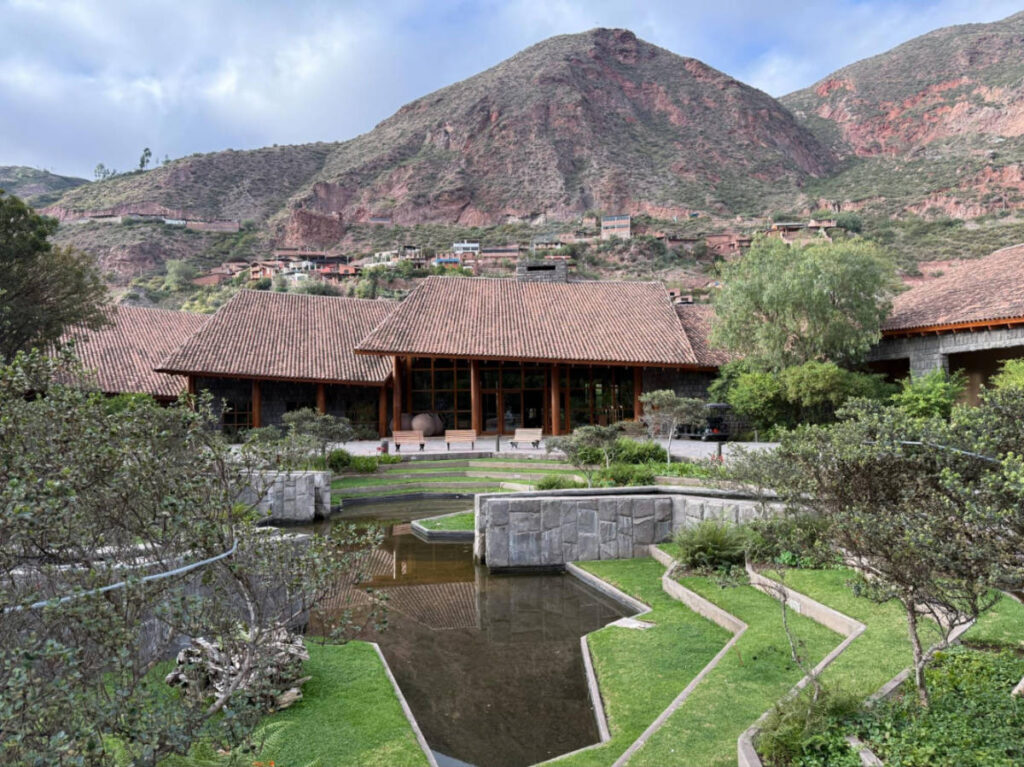
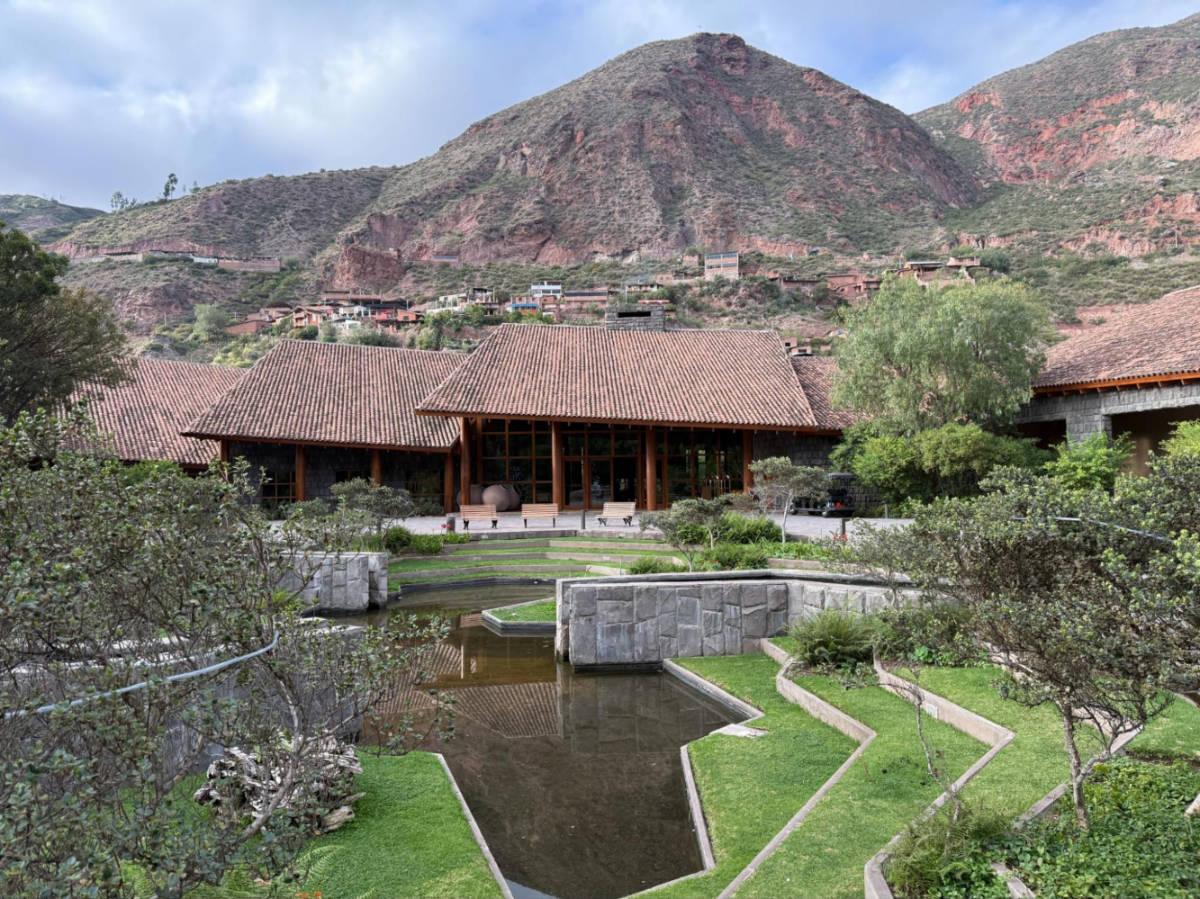
Tambo del Inka in Urubamba was one of the most luxurious hotels I’ve ever stayed at 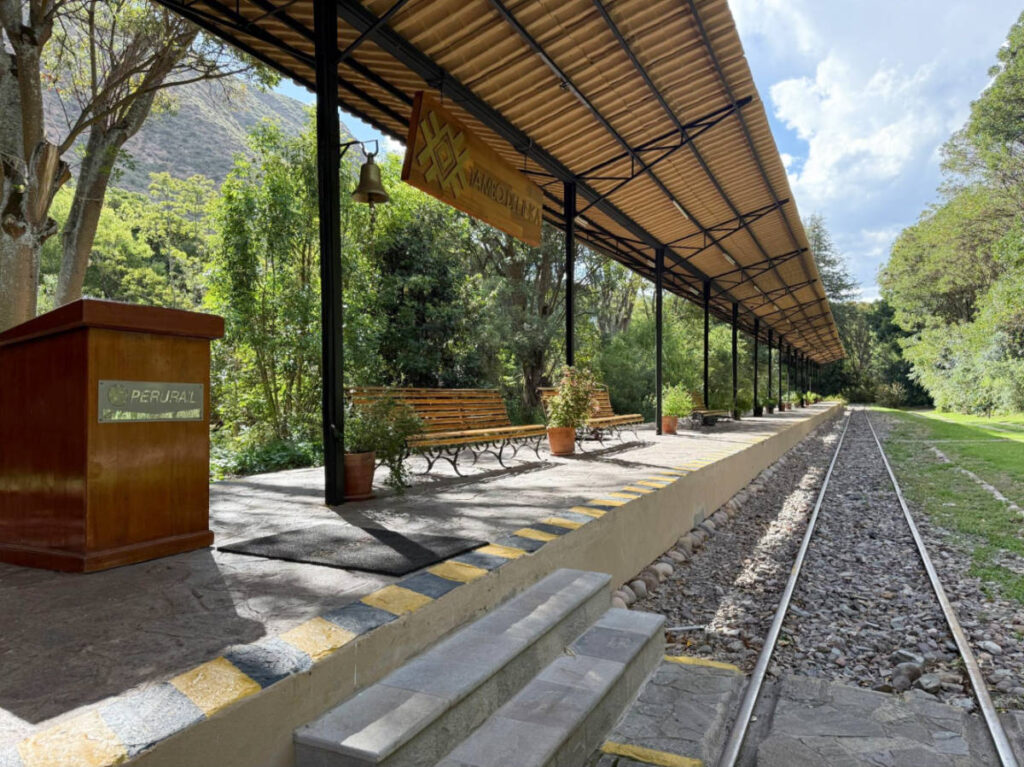
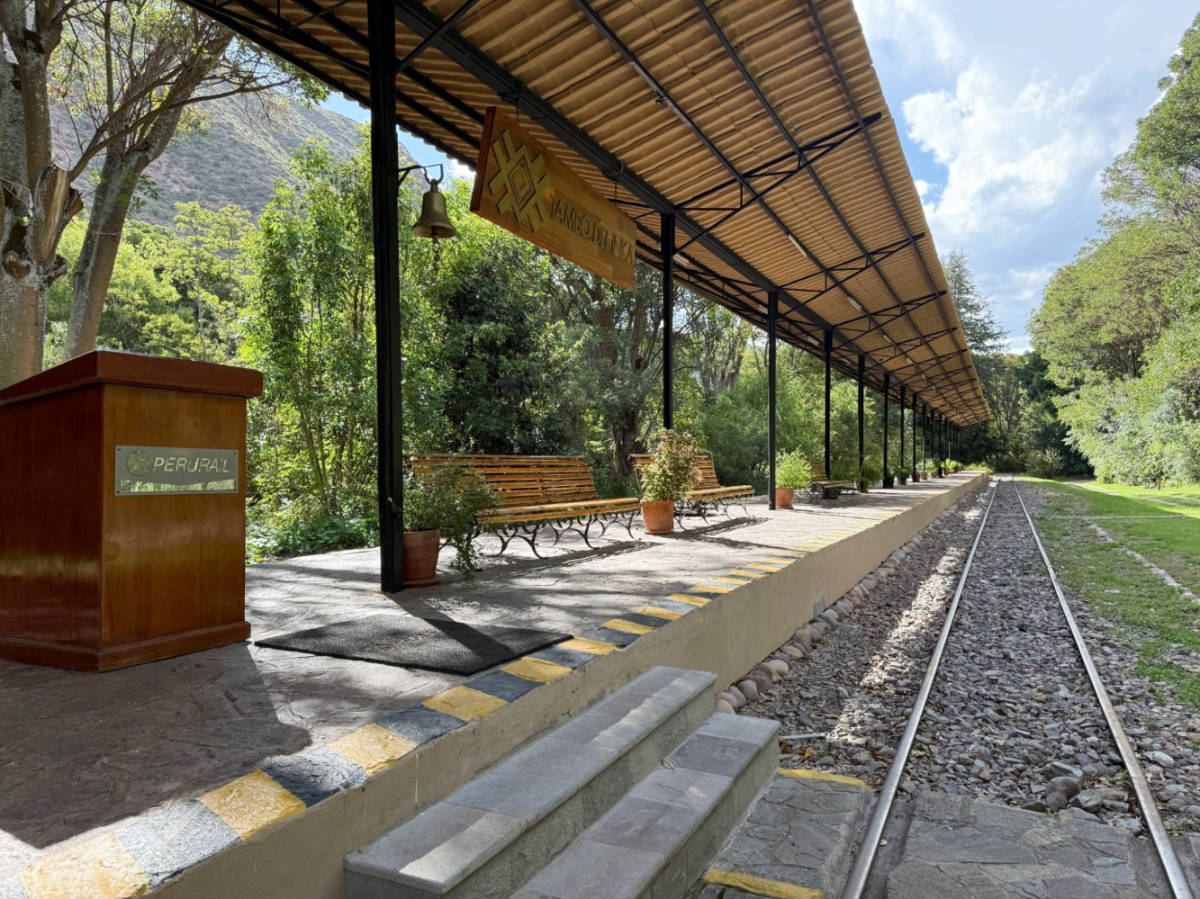
The private train station for Machu Picchu within the hotel Tambo del Inka (see my full review) 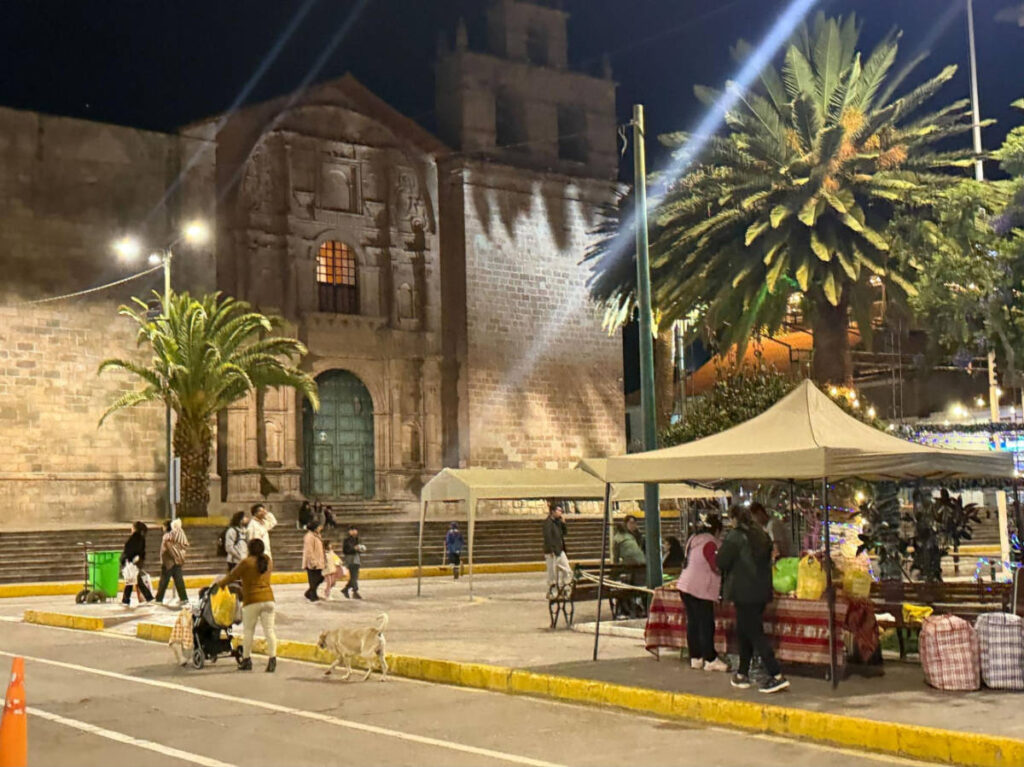
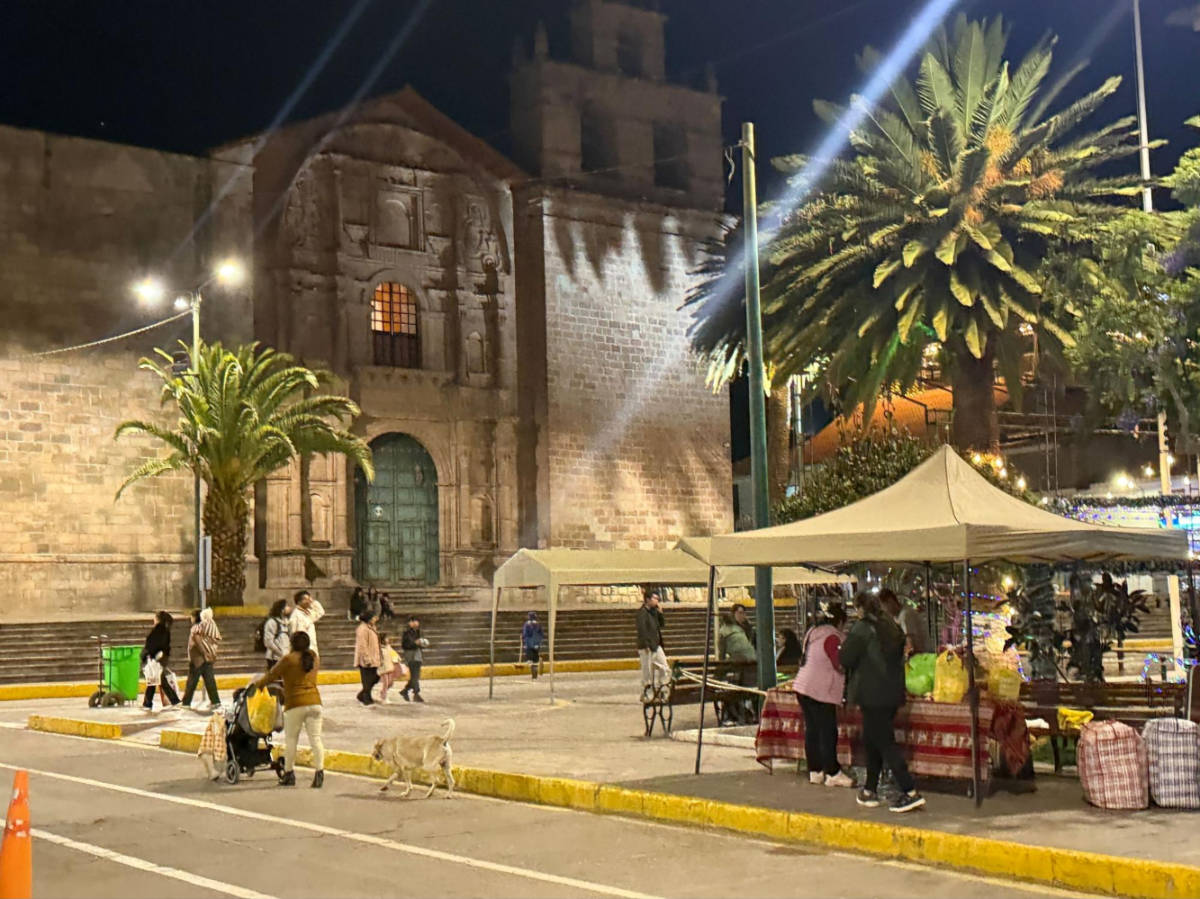
Urubamba’s town square at night (not as cute as Ollantaytambo, but safe, walkable, and friendly) 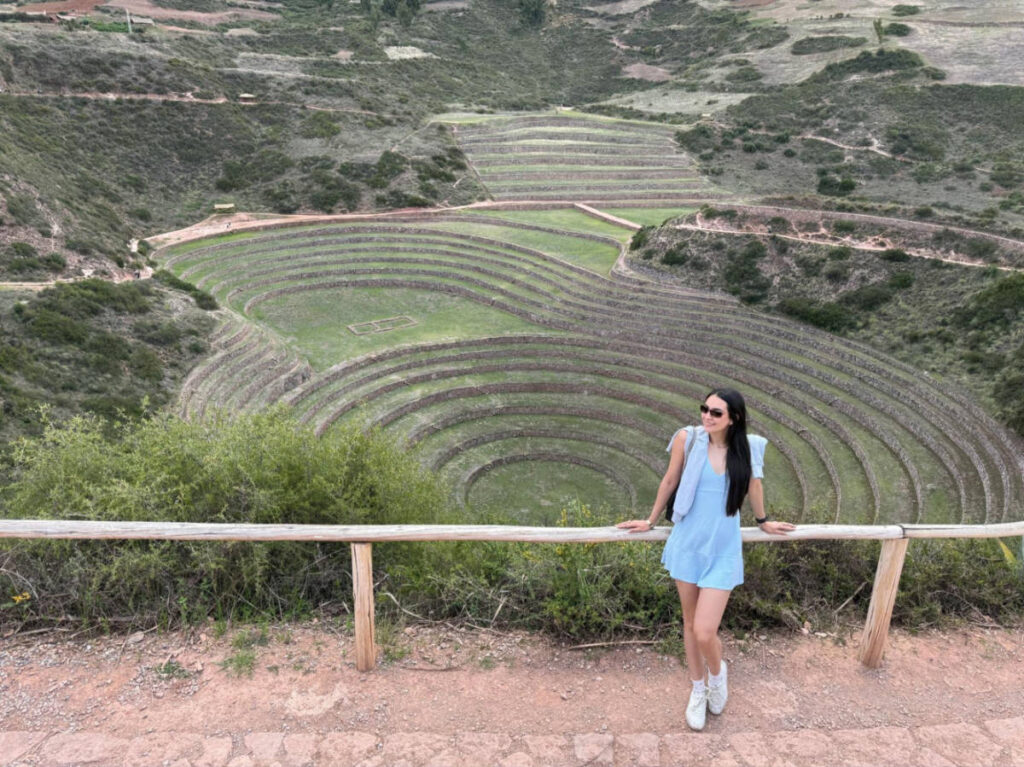
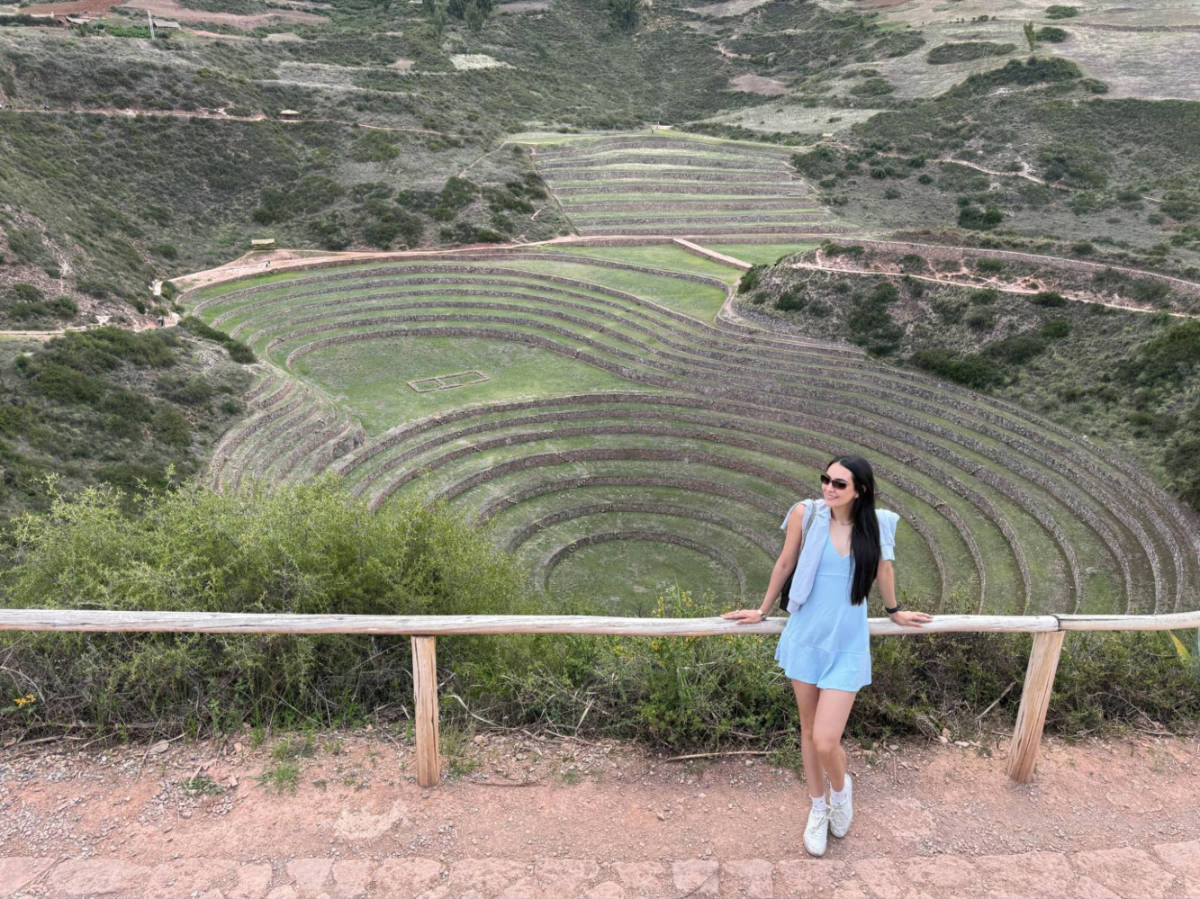
Clara poses in front of the Moray archaeological site, near Urubamba 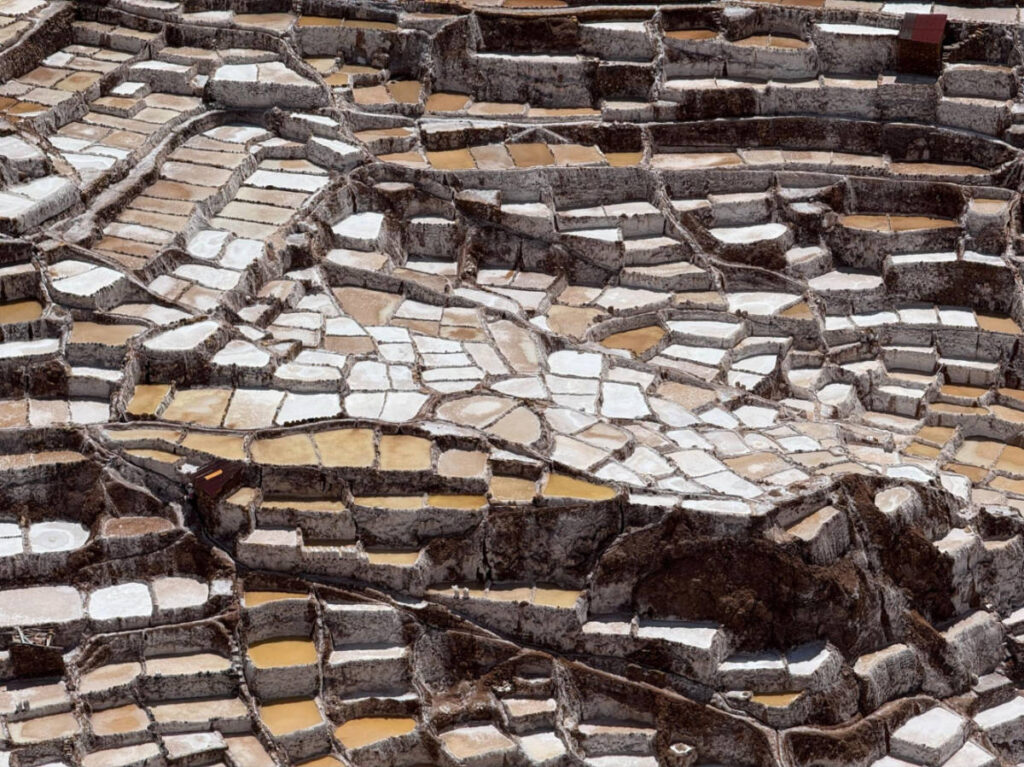
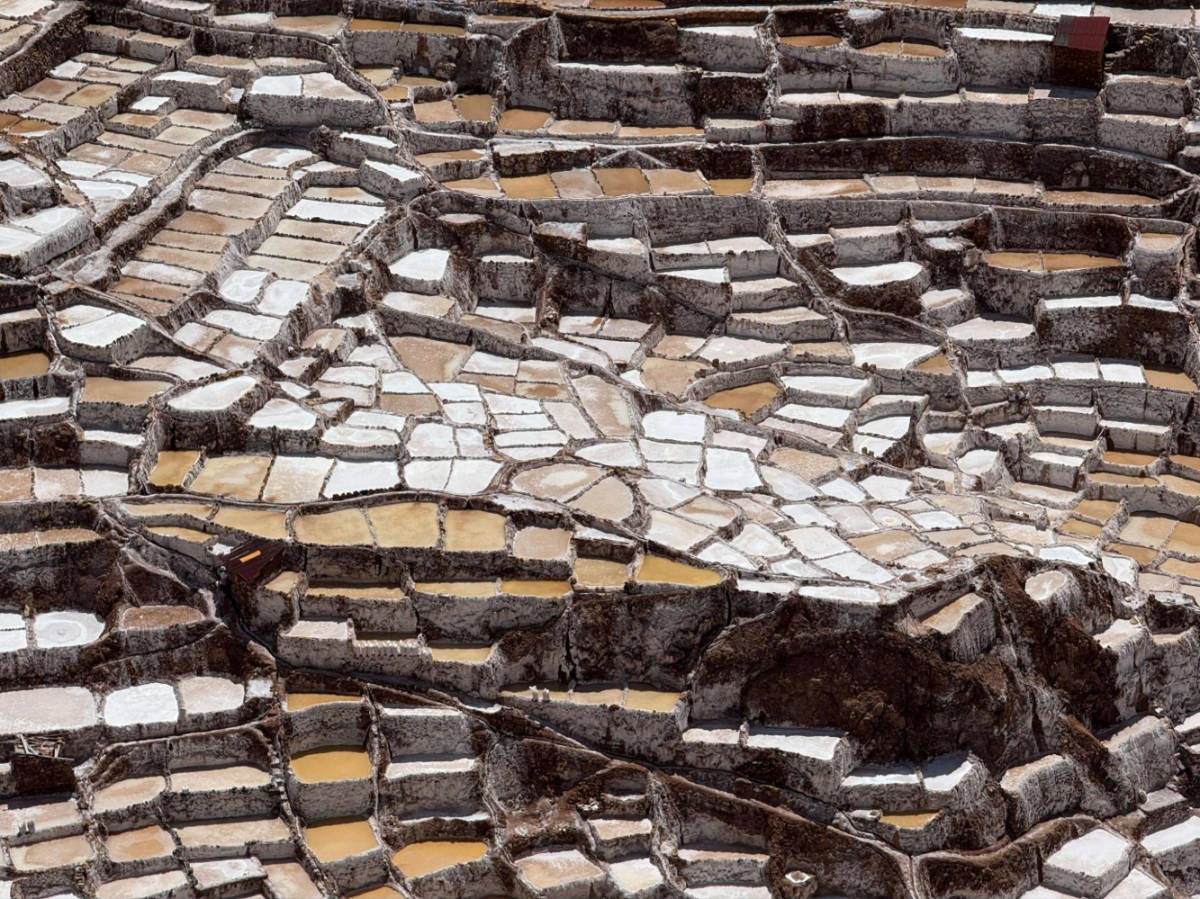
The salt pools at Maras are a really cool site near Urubamba 
Me on the double-terraces of our suite at Tambo del Inka

👉 Where to Stay for a Luxury Experience | ✨ Best Urubamba Hotels: Tambo del Inka • Aranwa Sacred Valley Hotel & Wellness • Tierra Viva Valle Sagrado Hotel • Wifala Harmony Hotel
Urubamba is the second most significant town in the Sacred Valley, set along the river of the same name. Urubamba is not as quaint or picturesque as Ollantaytambo, but it’s still a worthy Andean mountain retreat. Most notably, it’s home to some of Peru’s top luxury hotels.
Clara and I stayed at the incredible Tambo del Inka Luxury Collection hotel after our Machu Picchu visit. It was our favorite hotel in all of Peru. I cannot put into words how massive this hotel is. It literally has its own little village on the premises, containing shops, an art gallery, a brew house, a beer garden, playrooms, and much more. If you stay here, you’ll want to plan a day or two just to enjoy the resort’s amenities, spa, and 5-star service. See my complete hotel review if you’re interested.
Most notably, Tambo del Inka has its own private train station that takes you straight to Machu Picchu town. It only runs once a day, and it makes for a long day trip, but I think it would be a convenient option for families with children or anyone who doesn’t want to relocate for a night to Aguas Calientes. For more, see my full Tambo del Inka review here, or watch my YouTube video of my stay.
For more affordable luxury, Tierra Viva Valle Sagrado Hotel offers a gorgeous natural setting, receives rave reviews, and often costs as little as $100/night. Aranwa Sacred Valley Hotel & Wellness is also reasonably priced, and just as Instagram-worthy.
Lastly, for a hotel with really unique architecture, check out the funky design of Wifala Harmony Hotel (check out the photos of the rooms, which to me look like something out of a contemporary art gallery!).
Pros of Staying in Urubamba:
- A central location right in the middle of the major Sacred Valley sites (Moray, Maras, Chinchero, Pisac)
- Enough dining, shopping, and drinking options to keep you occupied
- Home to several incredible luxury hotels
Cons of Staying in Urubamba:
- It’ll still be a pretty long day trip to Machu Picchu (30 minutes to Ollantaytambo, 1.5 hour train to Aguas Calientes, 1 hour bus to the citadel, and then the return trip)
- The town center is not nearly as cute as Ollantaytambo
- No major attractions within the town itself (though many are nearby)
📚 Urubamba Mini Guide 📚
Where to Stay for a Luxury Experience
Google Map
✨ Best Hotels – Tambo del Inka • Aranwa Sacred Valley Hotel & Wellness • Tierra Viva Valle Sagrado Hotel • Wifala Harmony Hotel
🏠 Apartments – Browse Top Rentals in the Urubamba
🍽️ Where to Eat – Native Peruvian Restaurant ($$$), Pakakuna Restaurante ($$)
🍸 Where to Drink – Antes de Cristo – TapRoom, Cerveceria del Valle Sagrado
🎟️ Nearby Attractions – Zona Arqueologica Moray, Salt Mine of Maras, Centro Arqueológico de Chinchero, Parque Arqueológico Pisac
Cusco
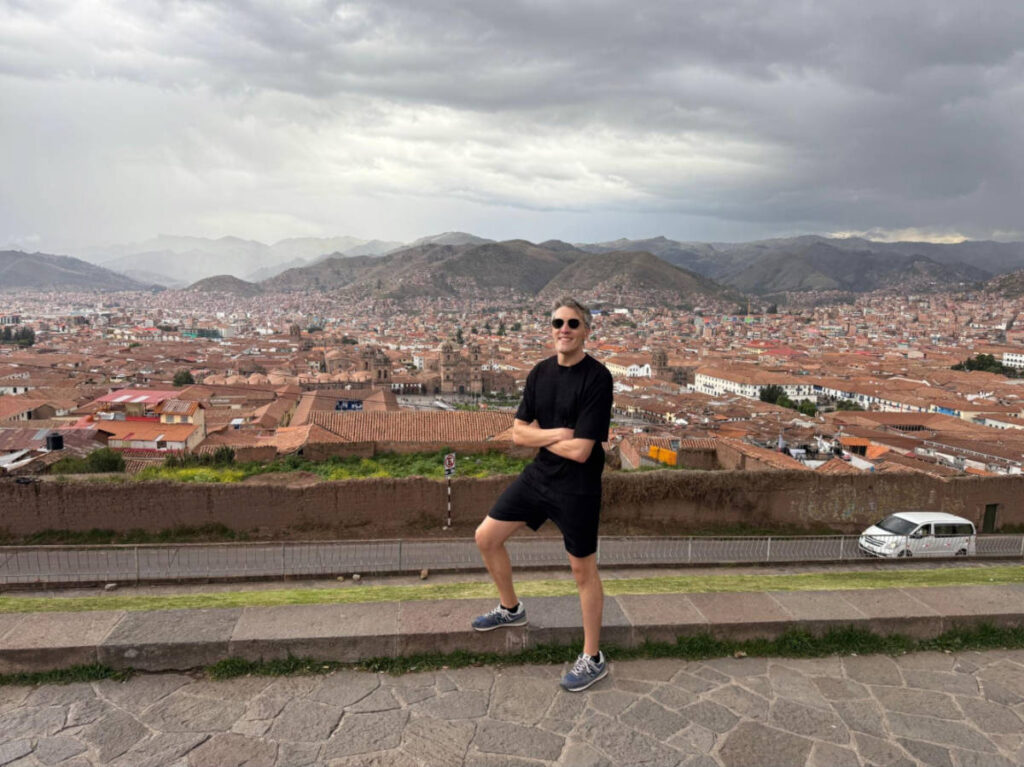
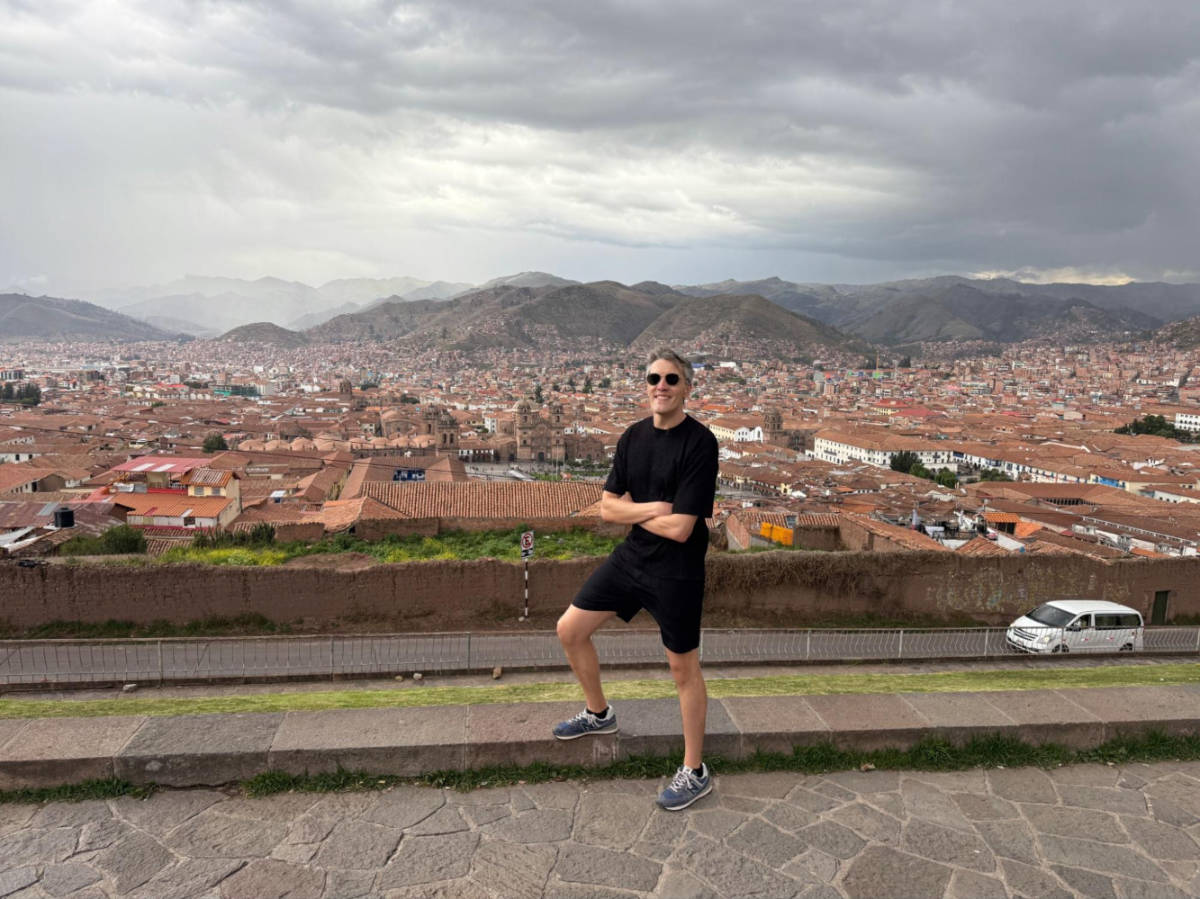
Me at the San Cristobal viewpoint overlooking Cusco’s Historic Center 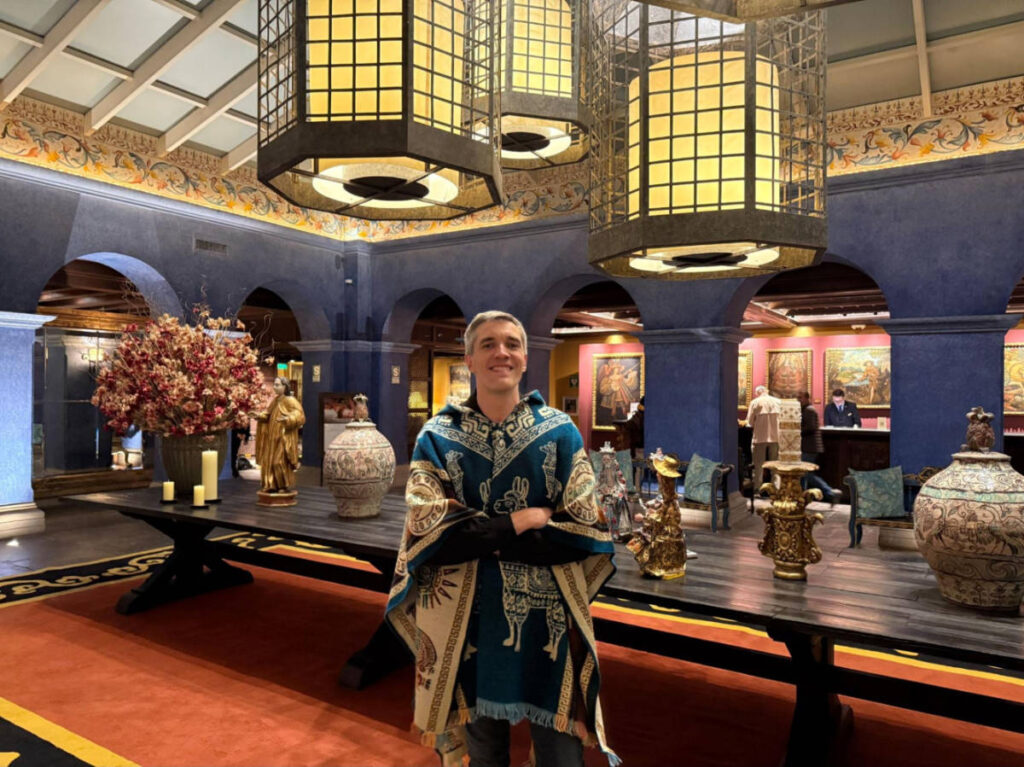
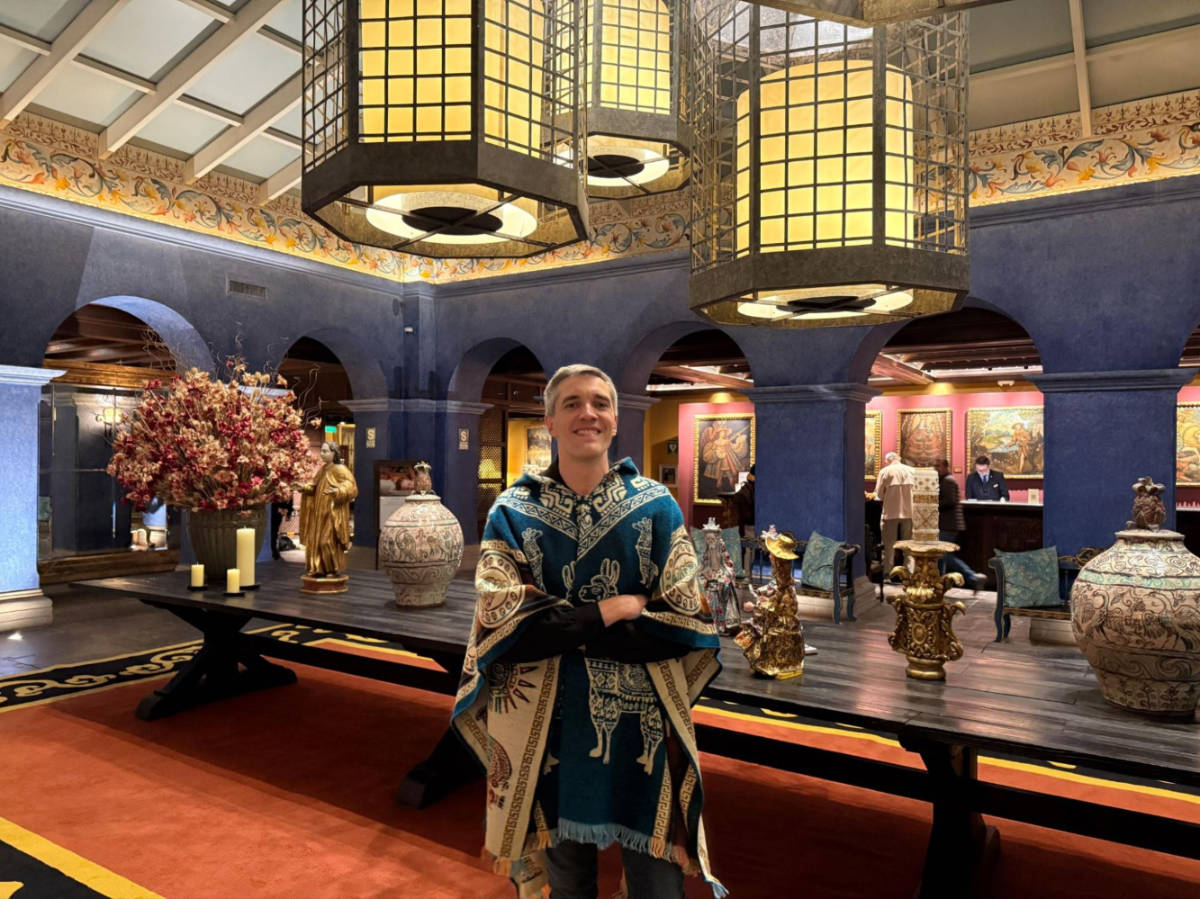
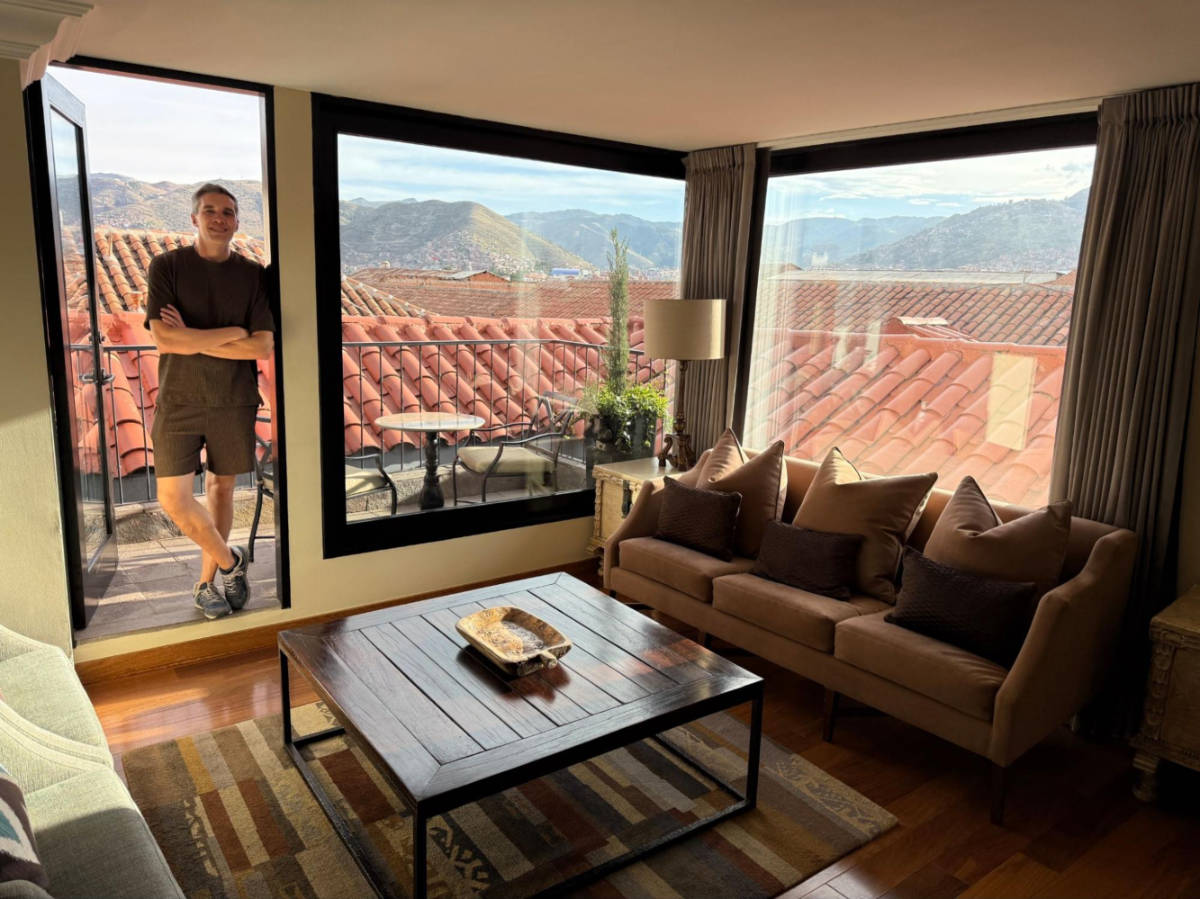
Me in the lobby of Palacio del Inka, my favorite stay so far in Cusco (it’s in a former Inca temple!) 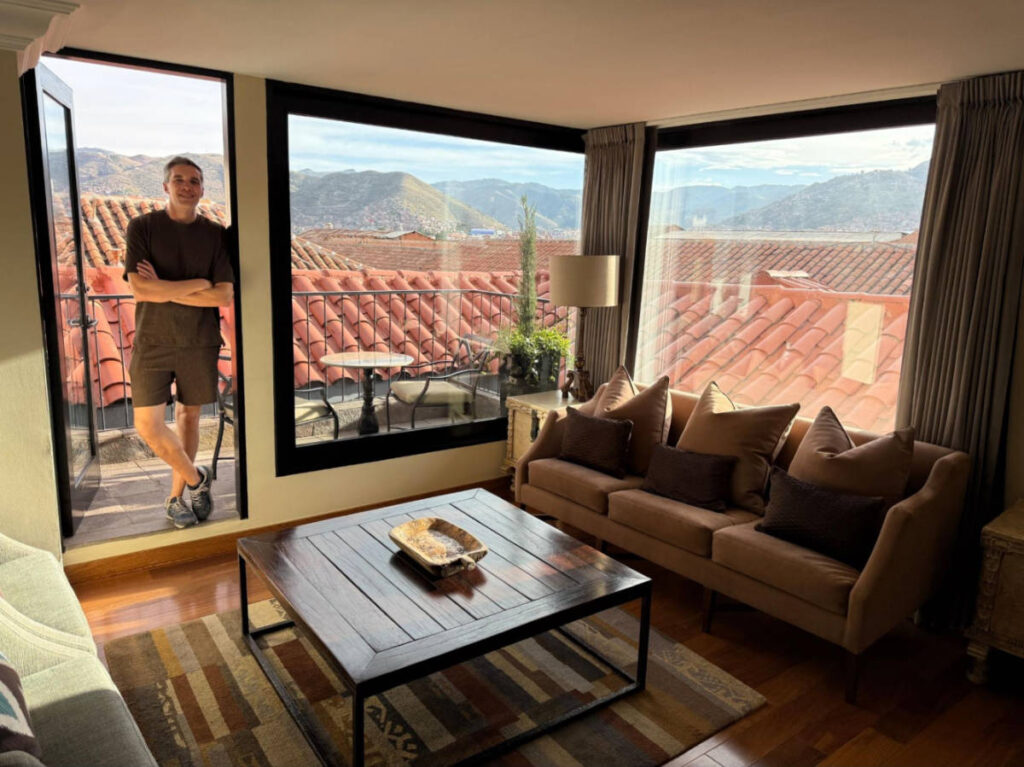
Me in our Imperial Suite at the JW Marriott Cusco El Convento (located in a former convent) 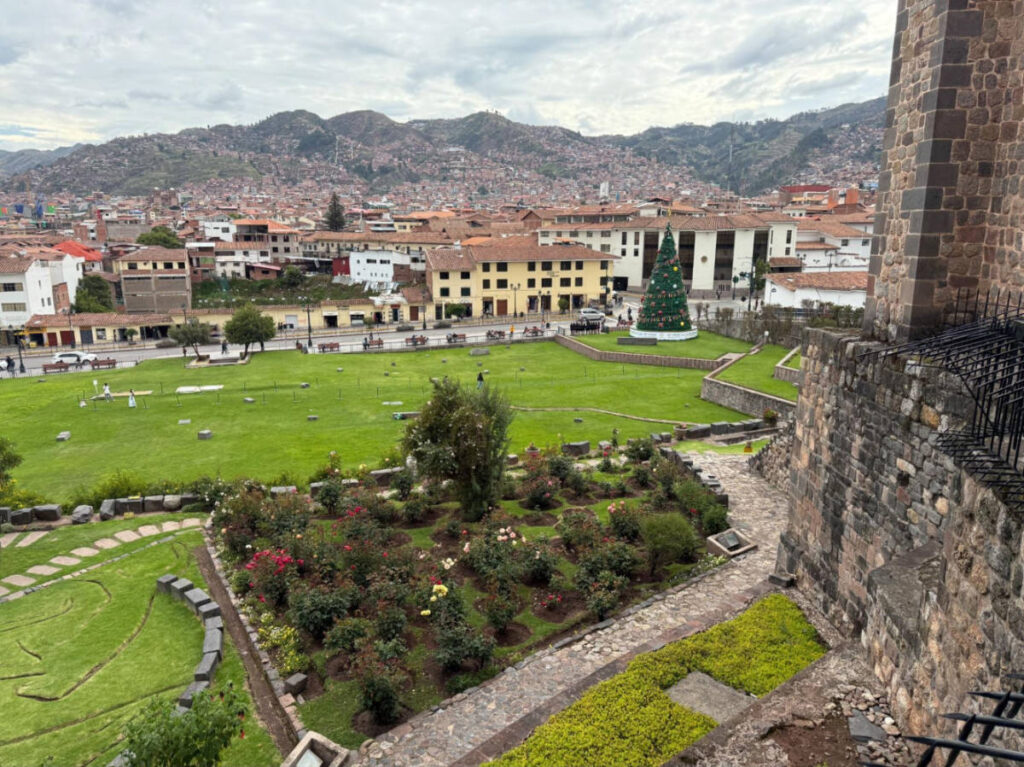
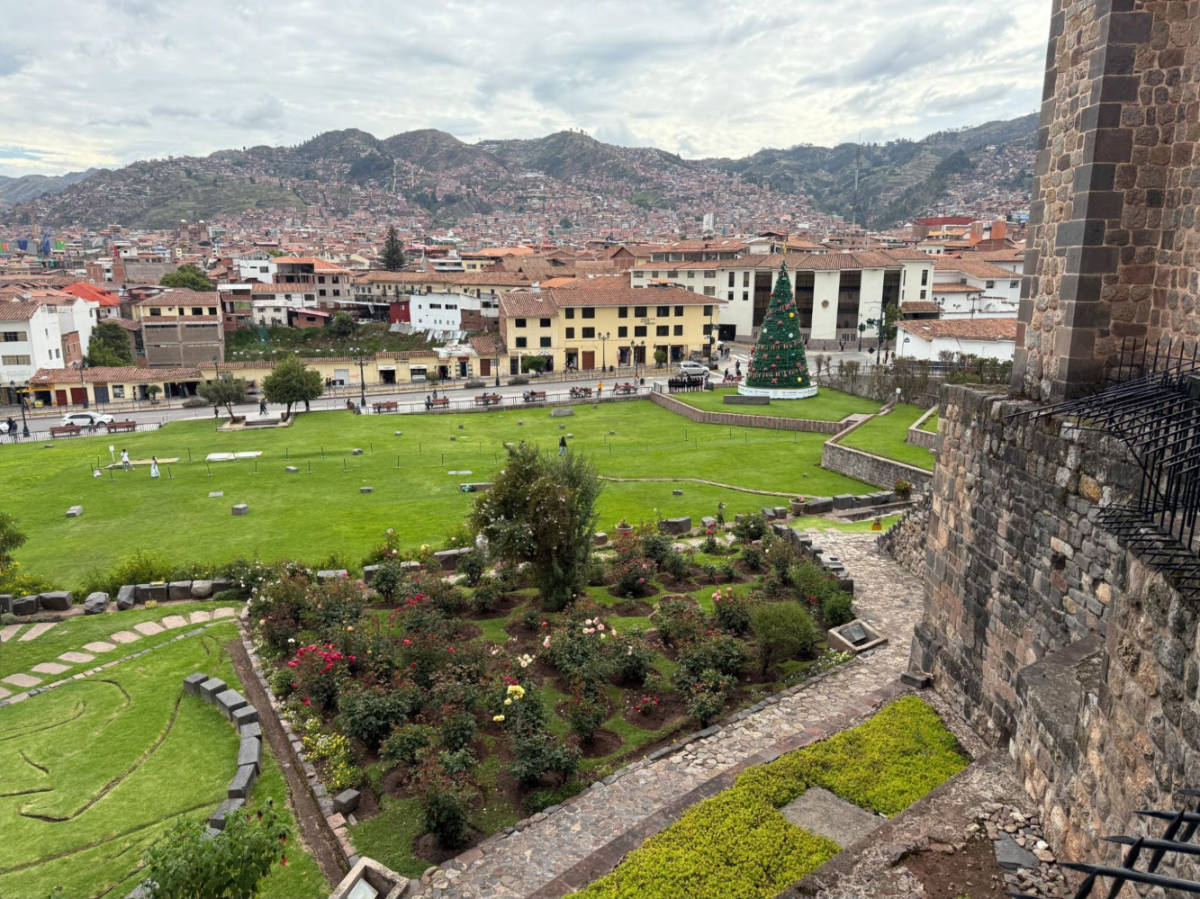
Cusco viewed from inside Qorikancha and the Church of Santo Domingo 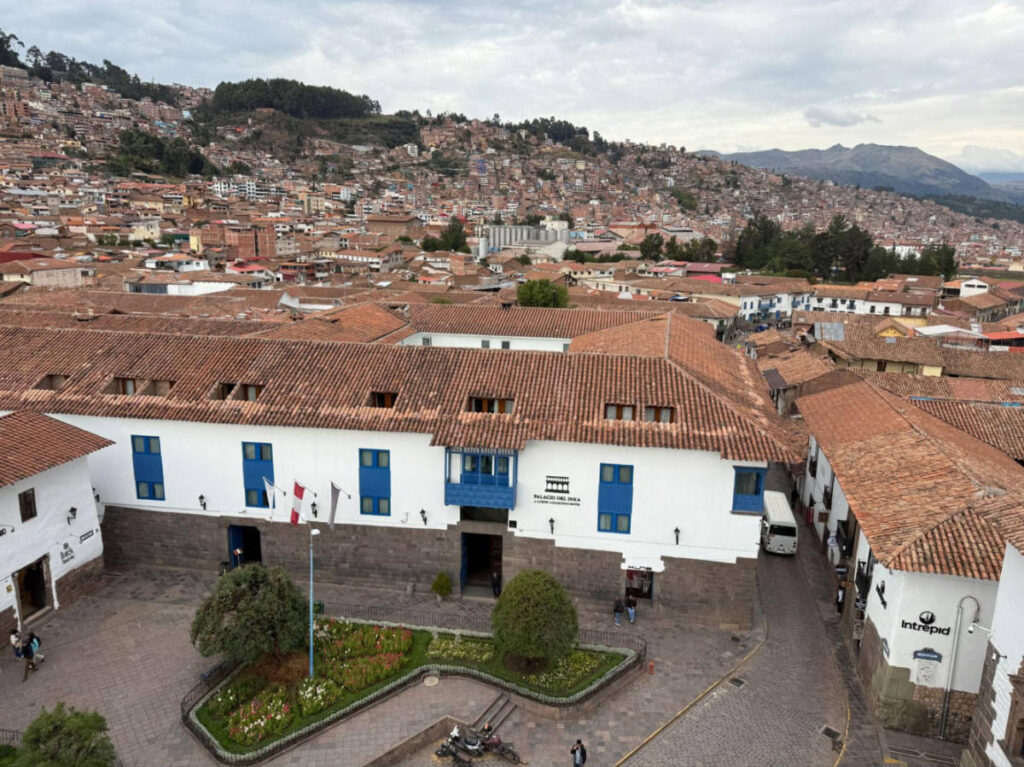
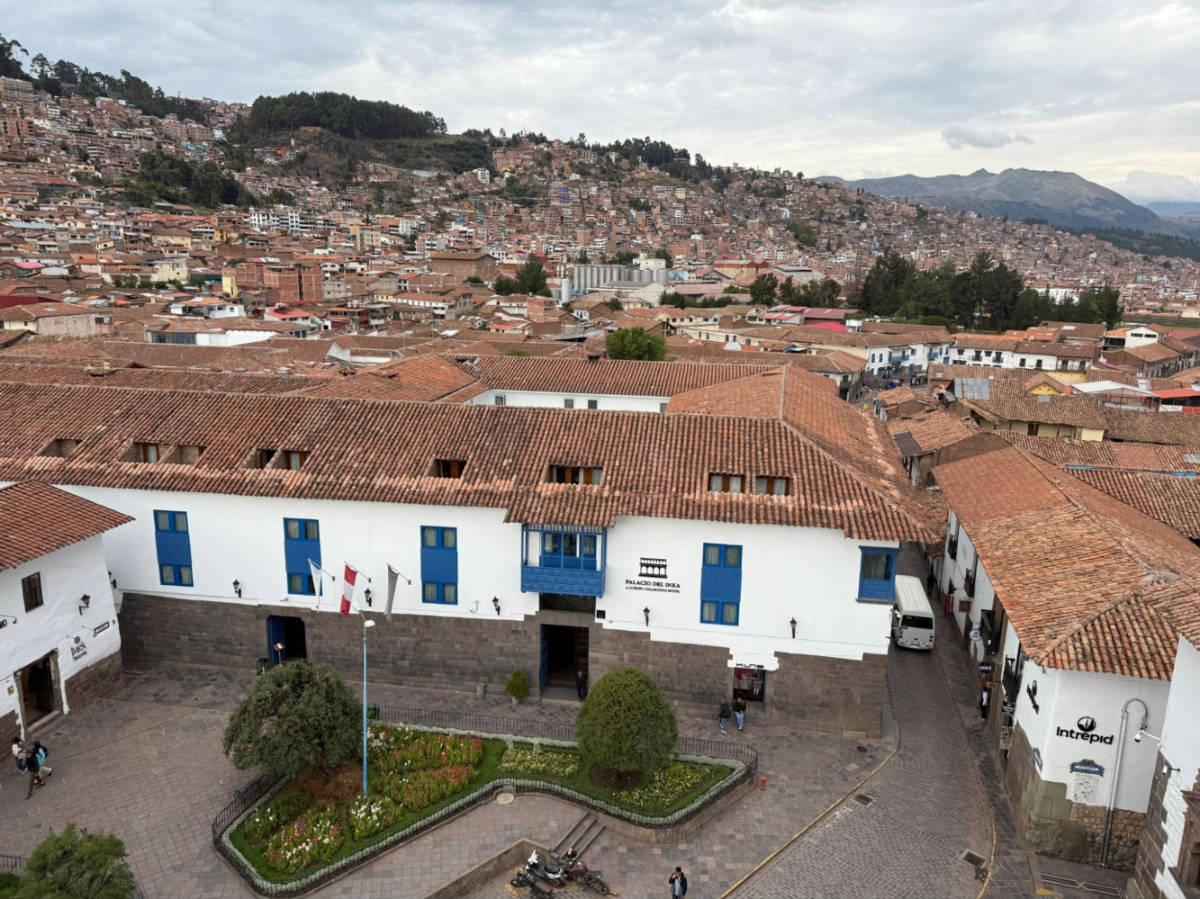
Palacio del Inka viewed from the bell tower of the Church of Santo Domingo 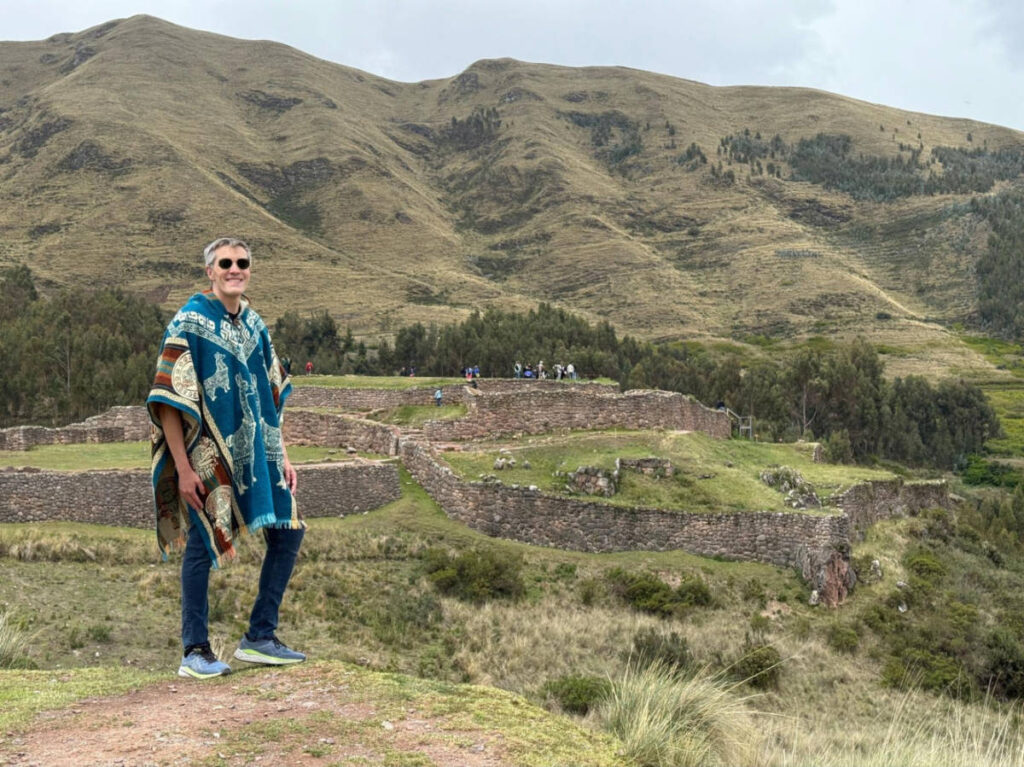
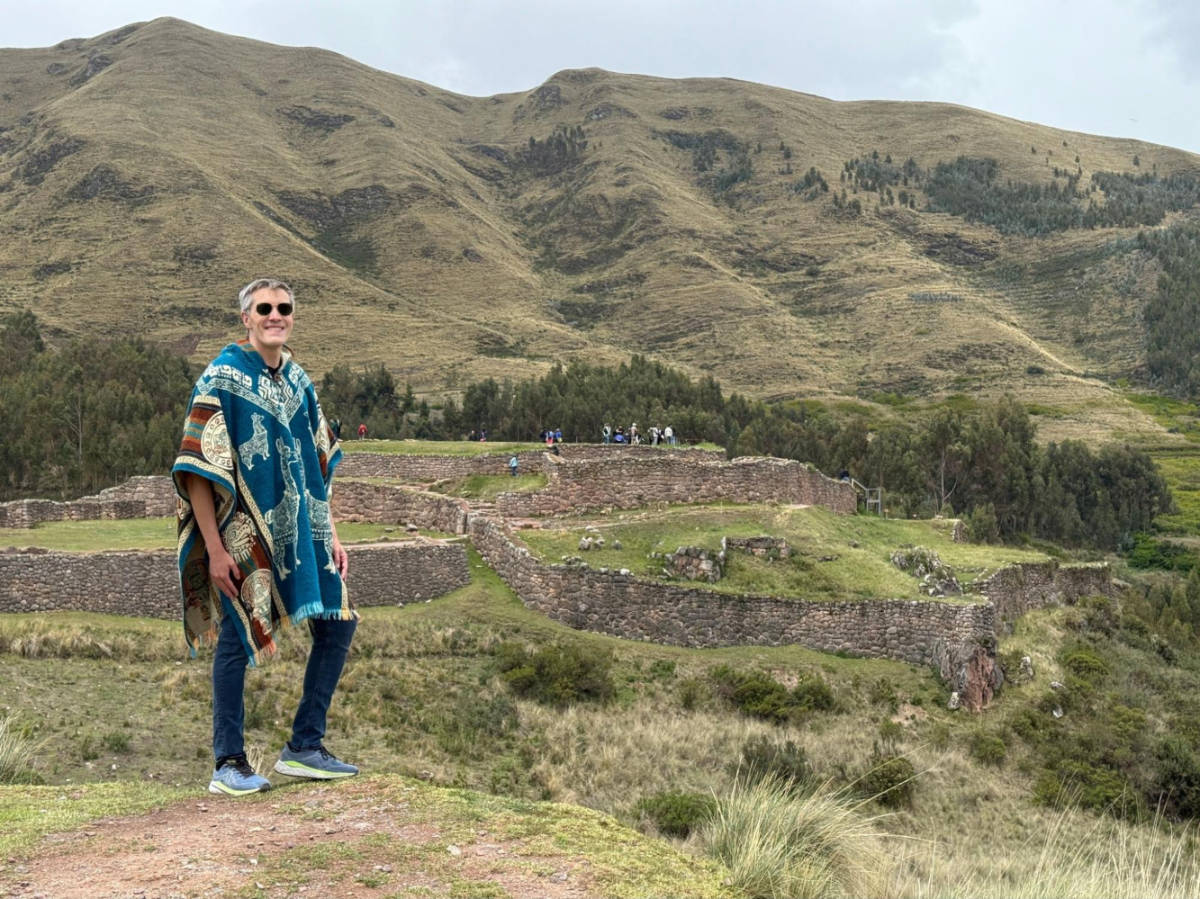
Me posing in front of the Puka Pukara Archaeological Complex
👉 A City 4+ Hours from Machu Picchu | ✨ Best Cusco Hotels: Palacio del Inka, a Luxury Collection Hotel • JW Marriott El Convento Cusco • Wyndham Costa del Sol Cusco • Casa Andina Premium Cusco • Pariwana Hostel Cusco • Quechua Hotel
I love Cusco and highly recommend that you stay there a few nights at some point during your Peru trip. I spent two weeks there on my recent trip and there was so much to do and see (see my guide to where to stay in Cusco for more).
HOWEVER, I honestly do not recommend staying in Cusco the night before you visit Machu Picchu.
I totally get why many choose to do it anyway. Cusco is where the airport is, it’s the largest city in the region, and it’s home to a whole bunch of other really cool Inca attractions (since Cusco was the center of the Inca empire).
But it just takes waaaaaay too long to get from Cusco to Machu Picchu. You’re looking at a ~1.5 to 2-hour drive from Cusco to Ollantaytambo. Then, you have to take a 1.5-hour train to Aguas Calientes (“Machu Picchu Town”). Finally, there’s a 30-60 minute bus ride up the mountain to Machu Picchu itself.
Add it all up, factor in lines, and it’s easily ~4-5 hours each way. To me, that’s not worth it, especially when staying in Aguas Calientes or the Sacred Valley offers such a pleasant alternative.
Also, be aware that Cusco sits at higher elevation than Machu Picchu or the Sacred Valley. Most people will feel the elevation in Cusco, and it’s best to take a day to acclimate.
I wrote an entire guide to where to stay in Cusco that I suggest reading for your visit there. I’ve also got an hour-long YouTube video guide to Cusco that I think you’ll really like.
Bottom line: you should 100% go to Cusco, but I’d avoid making it your only base for Machu Picchu.
If you really insist anyway, I’d suggest visiting as part of an organized tour to Machu Picchu. This way someone else takes care of everything and you avoid mis-timing it and missing your train or your timed entrance to the site.
This is a highly-rated group tour from Cusco, or you could splurge for this private tour to Machu Picchu.
Pros of Staying in the Cusco:
- Convenient to the airport
- The only major city in the region
- Loads of interesting historical sites and attractions
- Tons of restaurants, bars, and shops catering to visitors
Cons of Staying in the Cusco:
- It makes for a very long day trip to Machu Picchu (too long, imho)
- The elevation presents a serious risk of altitude sickness
📚 Cusco Mini Guide 📚
A City 4+ Hours from Machu Picchu
Google Map
✨ Best Hotels – Palacio del Inka, a Luxury Collection Hotel • JW Marriott El Convento Cusco • Wyndham Costa del Sol Cusco • Casa Andina Premium Cusco • Pariwana Hostel Cusco • Quechua Hotel
🏠 Apartments – Browse Top Rentals in Cusco
🍽️ Where to Eat – Oculto ($$$), KUSYKAY Peruvian Craft Food ($$), Morena Peruvian Kitchen ($$$), Mercado Central de San Pedro ($), Green Point Vegan Restaurant ($$)
🍸 Where to Drink – OQRE, Museo del Pisco, Molly’s Irish Bar
🎟️ Top Attractions – Qorikancha & The Church of Santo Domingo, Plaza de Armas, Saqsaywaman ruins, 12 Angled Stone, San Blas Viewpoint, Museo de Arte Precolombino Larco, Regional Historical Museum of Cusco, (note: watch my YouTube video for much more!)
Tips for Visiting Machu Picchu
👉 See my complete list of travel tips for Peru
You Need to Do These Four Things Well in Advance
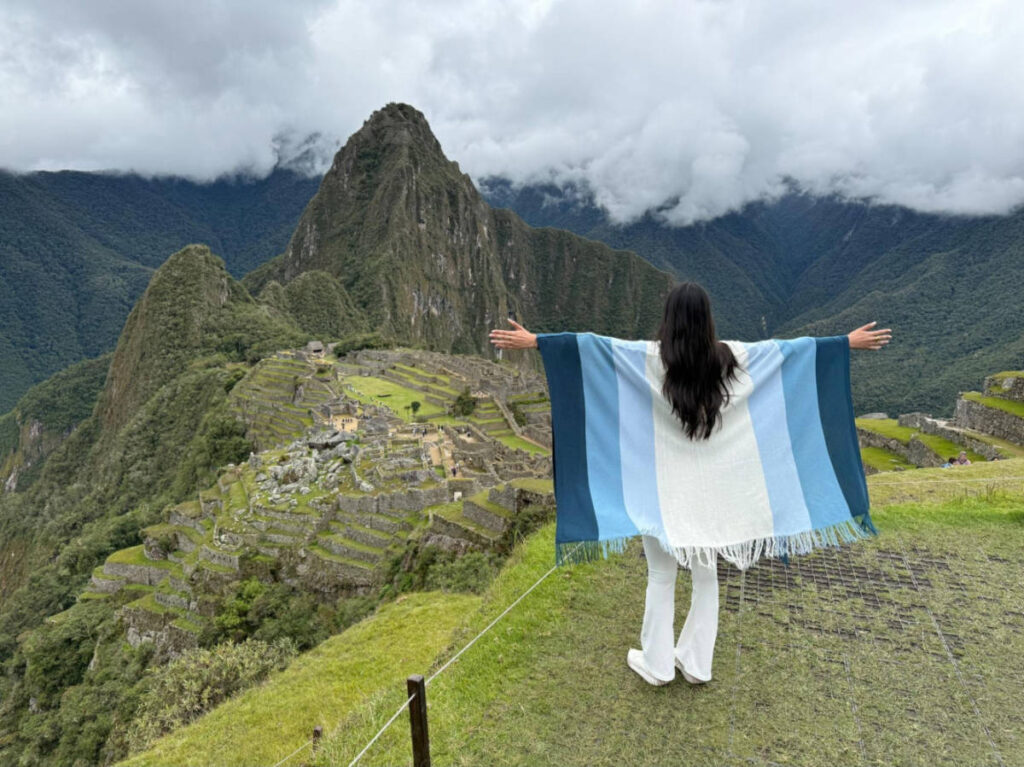
Machu Picchu requires a lot of advance planning. The journey requires multiple steps. Entrance to the site itself requires a timed entry ticket (and they are super strict about it). And everything often sells out months in advance, particularly in high season.
Specifically, there are four things you need to do well in advance to plan your Machu Picchu visit:
- First, decide what date you’ll visit Machu Picchu.
- Second, decide what circuit(s) you will do (see my next tip for help) and book your Machu Picchu tickets on the official website.
- Third, pick where to stay and reserve your hotel in your chosen base town. Again, I recommend staying in Aguas Calientes for the night before your visit. See the best hotels near Machu Picchu here.
- Fourth, book your transport to Aguas Calientes. Most people take the train, which you can book via Peru Rail or Inca Rail (I’ve done both, they are similar). There are no roads in, so the only other options are trekking (i.e., by pre-booking the Inca Trail) or by taking a bus to Hidroelectrica and hiking a couple of hours to Aguas Calientes from there.
Bear in mind that you’ll also want to buy tickets for the Consettur bus that takes you from Aguas Calientes to the Machu Picchu site (unless you want to hike it, which I don’t recommend). You can optionally do that in advance on the official website here, but they don’t really sell out so you can also just buy them at the ticket office in Aguas Calientes.
Choose Your Circuit(s) Carefully (I Suggest Booking 2-B and 1-B)
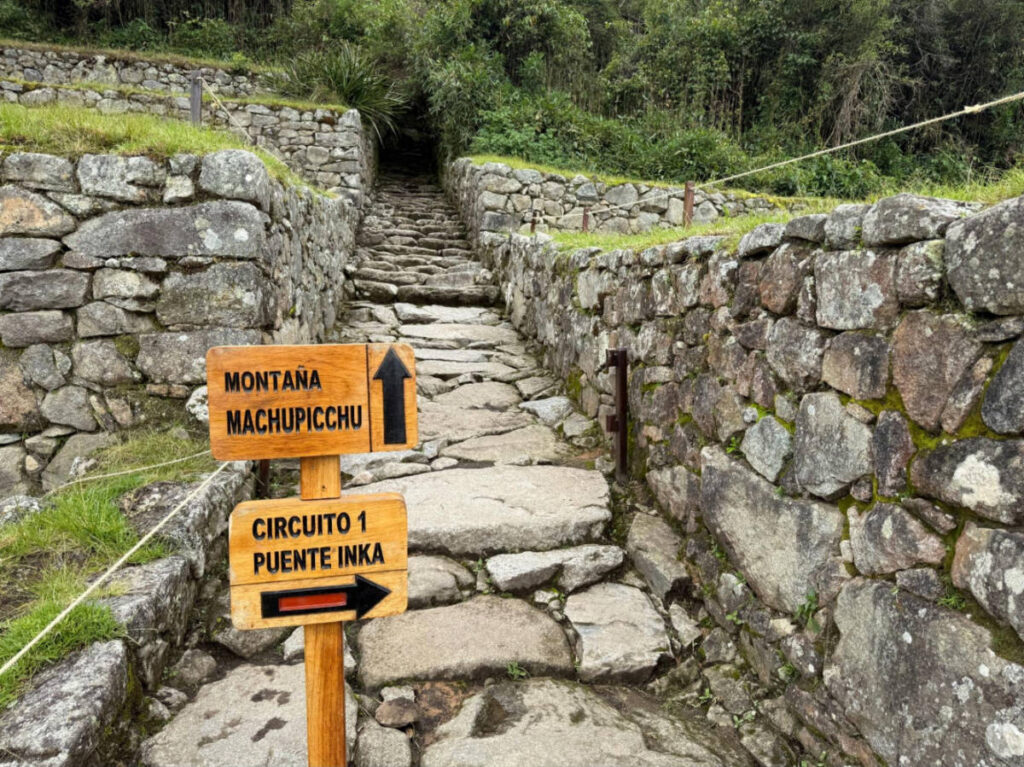
Machu Picchu instituted their new ticketing system in 2019. The idea was to regulate visitation to the site to preserve it. But, in doing so, they really found a way to make it as complicated and confusing as possible.
When booking your Machu Picchu entrance tickets (official website here), you’ll need to choose from 10 different routes along 3 circuits. Choose wisely! Several of the routes don’t even have a viewpoint of Machu Picchu, while others don’t even enter the citadel itself.
Let me try to simplify your options for you. Here are the five circuits and routes I think most people will most want to consider booking:
- Circuit 2-B (“Ruta terraza inferior”)– Circuit 2 is the only circuit that includes both a viewpoint with the iconic photo and a trip through the actual ruins themselves. That makes it the most popular ticket, and the one I’d most recommend. Just note the lower terrace viewpoint is small and can get crowded, especially on foggy days when the route gets backed up. Note that 2-A (discussed below) is functionally very similar to 2-B as they don’t check tickets for access to the lower terrace.
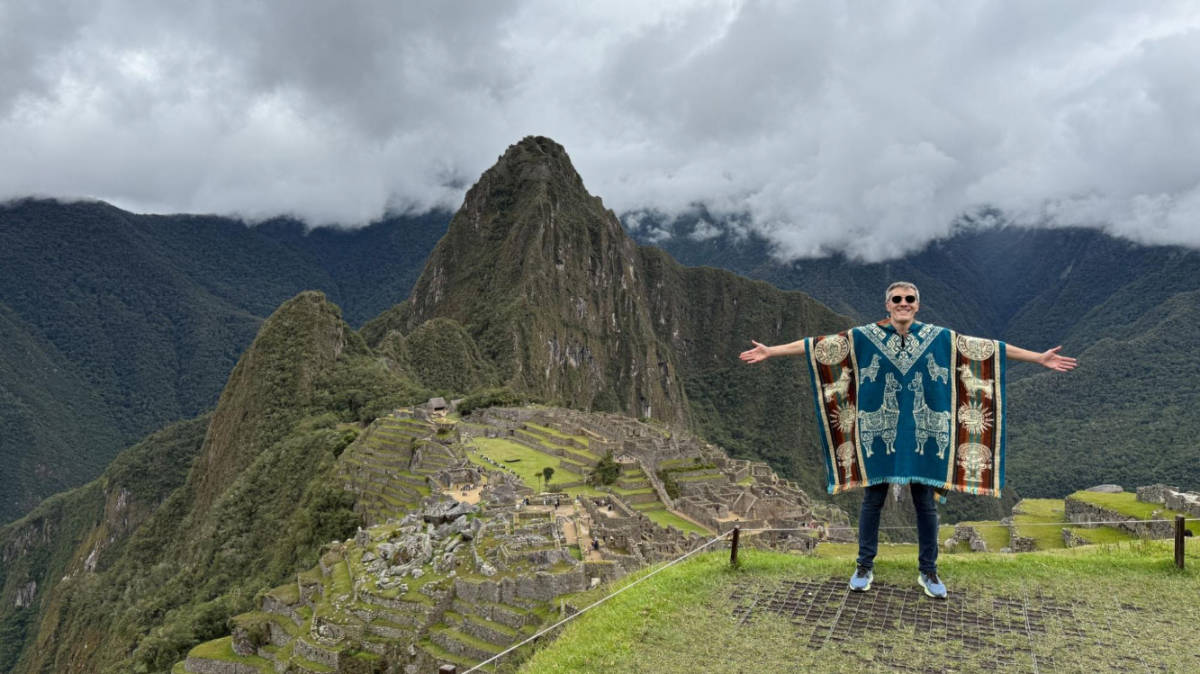
- Circuit 1-B (“Ruta terraza superior”) – this is by far the best photo spot (the cover photo of this article was taken here). But that’s really all this circuit is: a photo spot, and nothing more. You don’t even go inside Machu Picchu. You just climb up some stairs, and then you have a wide photo spot. I think it makes a good second ticket or backup to pair with another route that actually enters the ruins (like 2B).
- Circuit 3-A (“Ruta Montaña Waynapicchu”) – this is a separate ticket for a somewhat strenuous hike to ascend Waynapicchu, the mountain in those iconic photos (that the Incas built a trail up). My friends who have done it say there is a significant amount of exposure, so don’t go if you’re afraid of heights. These tickets are limited and popular, so they tend to sell out fast.
- Circuit 1-A (“Ruta Montaña Machupicchu”) – this is a ticket to hike Mount Machu Picchu. I did this on my first visit years ago. It’s a medium-hard hike, with nice views. Just note the citadel is blocked by foliage for most of the climb, and becomes too small to really see from the top. But the start of this route also takes you by the Superior Terrace, which is the best photo spot.
- Circuit 2-A (“Ruta clásico diseñada”) – this is basically the same as 2-B, but technically without access to the lower terrace (it does have a lower viewpoint where you can take a wide shot photo). However, when I visited, there were no checkpoints at the entrance to the lower terrace. So, while your mileage might vary, that makes this a good alternative if 2-B is not available for your dates.
Remember: you can book multiple entry tickets for different circuits. I’d suggest combining 2-B with 1-B if you prioritize the best photos or as a backup if you are concerned about fog potentially blocking your view (common from October to April). You could also combine 2-B with 3-A or 1-A if you want to get some actual hiking in during your visit.
Just leave a few hours between your entries so you have time to complete your first circuit and return to the entrance for your second.
If you get done early, know that there is a cafe and restrooms just outside the entrance. Also note you probably won’t have time to return to your hotel, unless you’re lucky enough to be staying at the Sanctuary Lodge Hotel (which is up the mountain, right next to the entrance booths).
Know About the 1,000 “Next-Day” Last-Minute Tickets
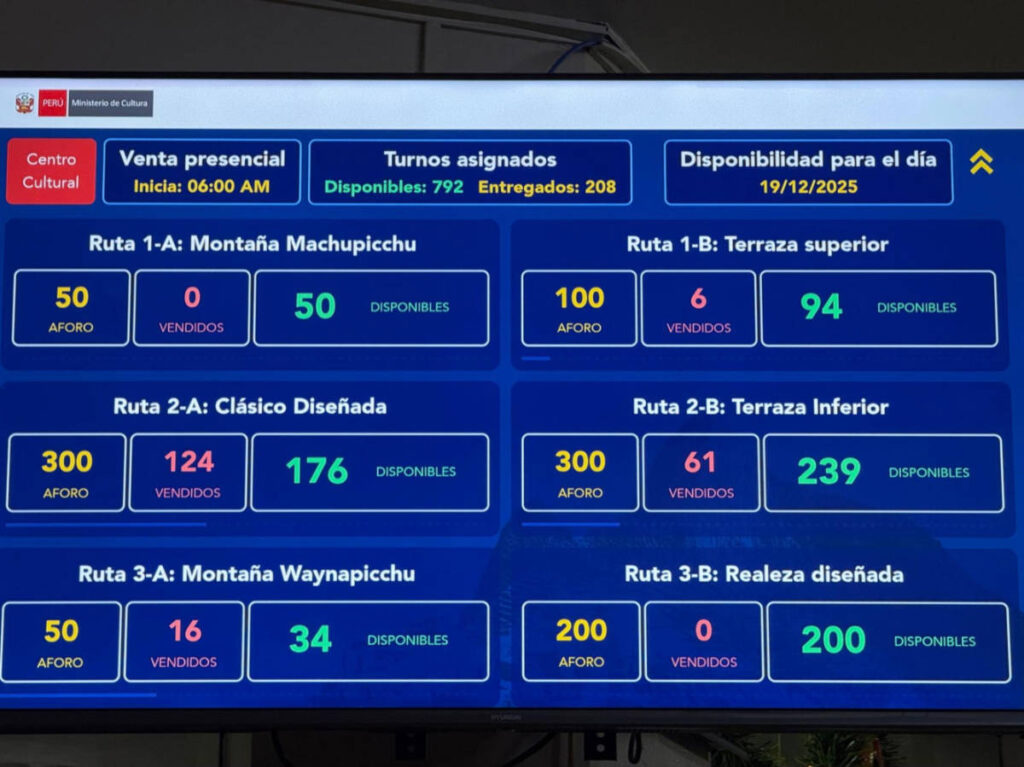
Didn’t get the ticket for the circuit you wanted in time? It might not be too late, particularly if you choose to stay in Aguas Calientes the night before your visit.
Every day, officials release 1,000 tickets for the following day in the offices of the Ministry of Culture in Aguas Calientes (map link here).
During high season, a line forms when the office opens at 6 am, and these tickets can sell out fast. But, when we visited in low season (December), there was still plenty of availability for all the circuits even at 9:30 pm, just before the office closed (see above photo).
The ministry’s website includes a live scoreboard showing how many tickets for each circuit are still available for tomorrow. Yellow shows the total tickets for that circuit, red shows how many are claimed, and green shows the number still available.
Access to these last minute tickets is one very good reason to stay in Aguas Calientes as your base the night before, as it’s the only way you can visit that office to buy a next-day ticket.
That said, you still might have a shot even if staying elsewhere, particularly in low season. Any unsold tickets are released in the morning online on the official website. So, if you have your eye on a second circuit and are coming from Cusco or the Sacred Valley, you might as well log online when you wake up and try your hand.
Machu Picchu Has a LOT of Rules
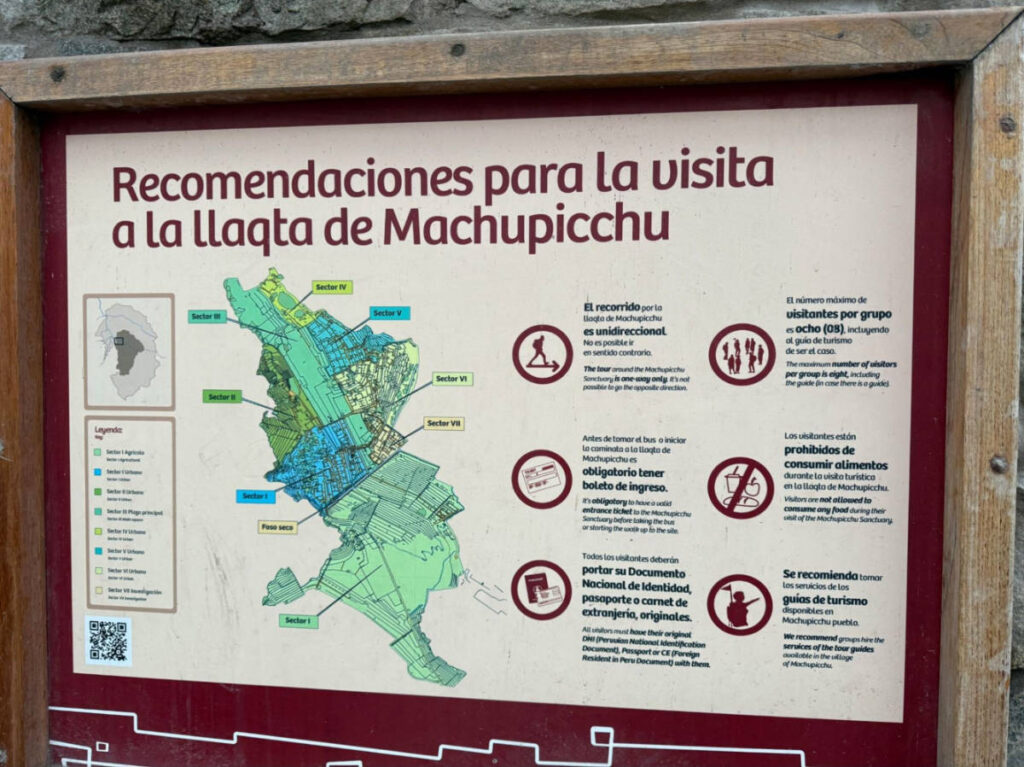
Machu Picchu has a lot of rules and regulations to help protect the site.
Some of the most important things to remember are:
- You MUST enter promptly at your assigned time. Only a 30-minute grace period is allowed (45 minutes during peak season), after which you will be turned away.
- You need to bring your passport with you or you will not get in.
- Your ticket is only good for the person named on it.
- All circuits are one-way only (meaning once you go past a viewpoint, you can’t go back)
- There are no bathrooms in Machu Picchu site itself (there are some at the entrance, at a cost of 2 sol).
- Do not touch the ancient stones or structures.
- You cannot bring tripods, self-sticks, umbrellas, food, alcohol, or a long list of prohibited items.
Yes, all the rules can feel overwhelming. But they’re needed to protect and manage the tremendous visitor flow at this ancient site. So be respectful and do your part.
From October to April, Fog Might Block Your View of Machu Picchu
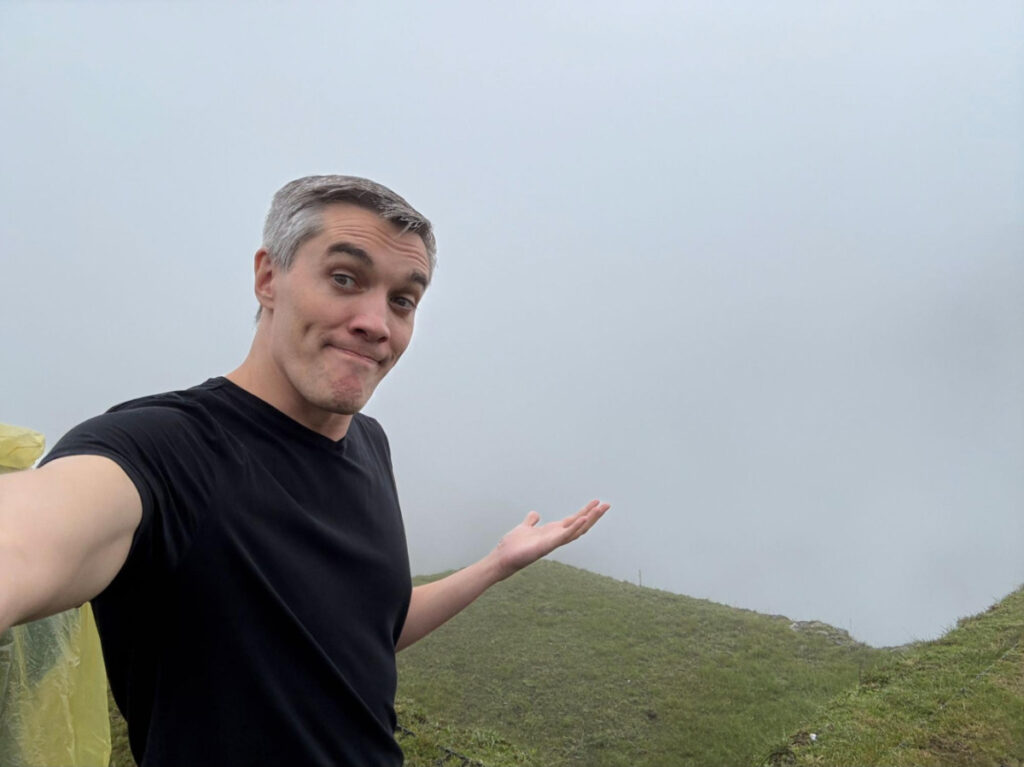
Fog is common at Machu Picchu, meaning visibility of the citadel is often limited. This is especially a risk during the rainy season (October to April).
The problem is compounded by the “one-way-only” rule and the fact that both the lower and upper terrace viewpoints sit at the start of their respective circuits. This means that when visibility is low, crowds form waiting on the terraces for the fog to clear.
Clara and I initially pre-booked Circuit 2-B based on what I’d read online. When we showed up and ascended to the lower terrace viewpoint, we were greeted by a wall of fog. We waited for three hours for the fog to clear, and it only very partially did so. Most of the people there alongside us left with no good photos!
Thankfully, the night before I realized this was a possibility, and we found out about the 1,000 last-minute tickets mentioned above. We went to the Ministry of Culture office and were able to snag a ticket to enter Circuit 1-B as a backup later in the morning. I’m so glad we did, because otherwise we would not have gotten any good pictures at all!
Circuit 1-B is definitely the best photo spot (see this story’s cover image). It’s higher, the terrace is much more spacious, and there are fewer people jostling for position compared to the crowded lower terrace on Circuit 2-B. But, of course, 1-B doesn’t actually go down into the ruins, so that’s why I suggest buying it as the perfect second/back-up ticket.
There Are a Lot of Train Options to Consider, But They’re Honestly Pretty Similar
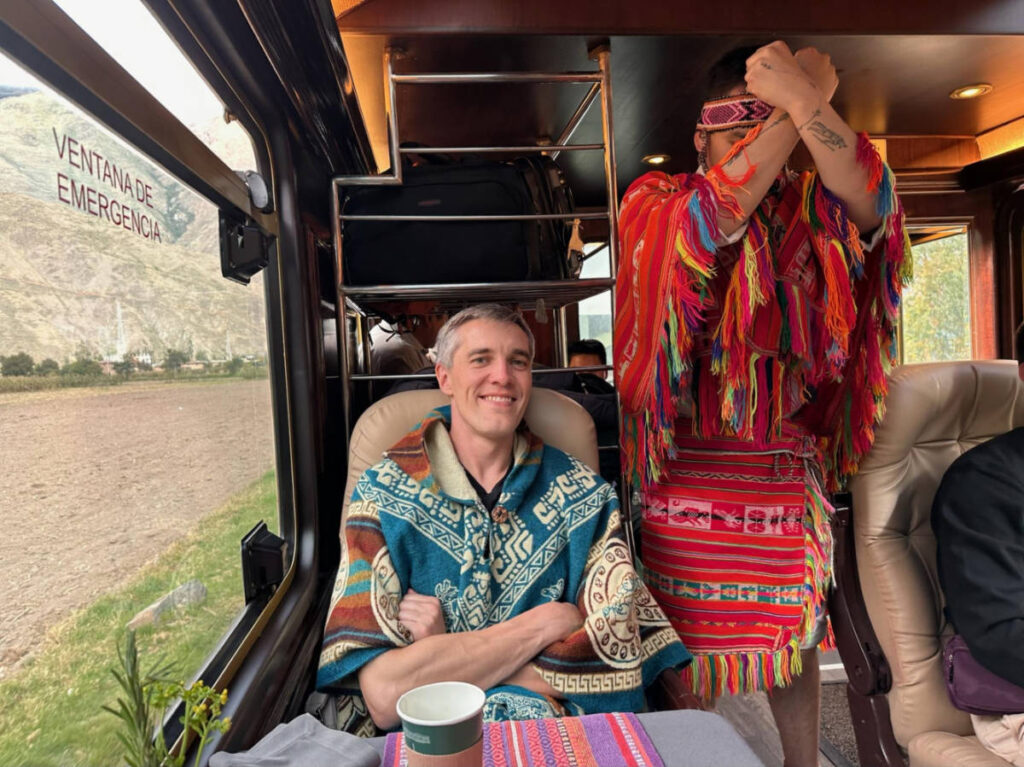
Only two rail companies serve the route to Machu Picchu town: Inca Rail and Peru Rail. Both offer various classes of train car, and try really hard to upsell you on their more premium cars.
I’ve taken several classes on both companies’ trains. The premium classes are indeed more luxurious and offer nice touches like performers, more comfortable seats, and snacks.
But, honestly, it’s just a 1.5 hour train ride, folks, and they all go down the same tracks. So it’s really not that big of a difference in experience. If you’re managing a budget, my advice is to save your cash and spend it on better accommodation.
Also be aware that if you’re coming from Cusco, you’ll need to take “bimodal” transport (i.e., a shuttle bus) to get from Cusco to the train station in Ollantaytambo. Both rail companies sell this as part of tickets from Cusco.
You Can Only Bring Small Luggage on the Train
One more note about the trains: you can only take small luggage with you to Aguas Calientes. Basically, anything airplane carry-on size or smaller will be fine. But you will need to store your larger bags at the Ollantaytambo train station or leave them at your hotel in Cusco or the Sacred Valley.
I Recommend Also Staying a Few Nights in the Sacred Valley
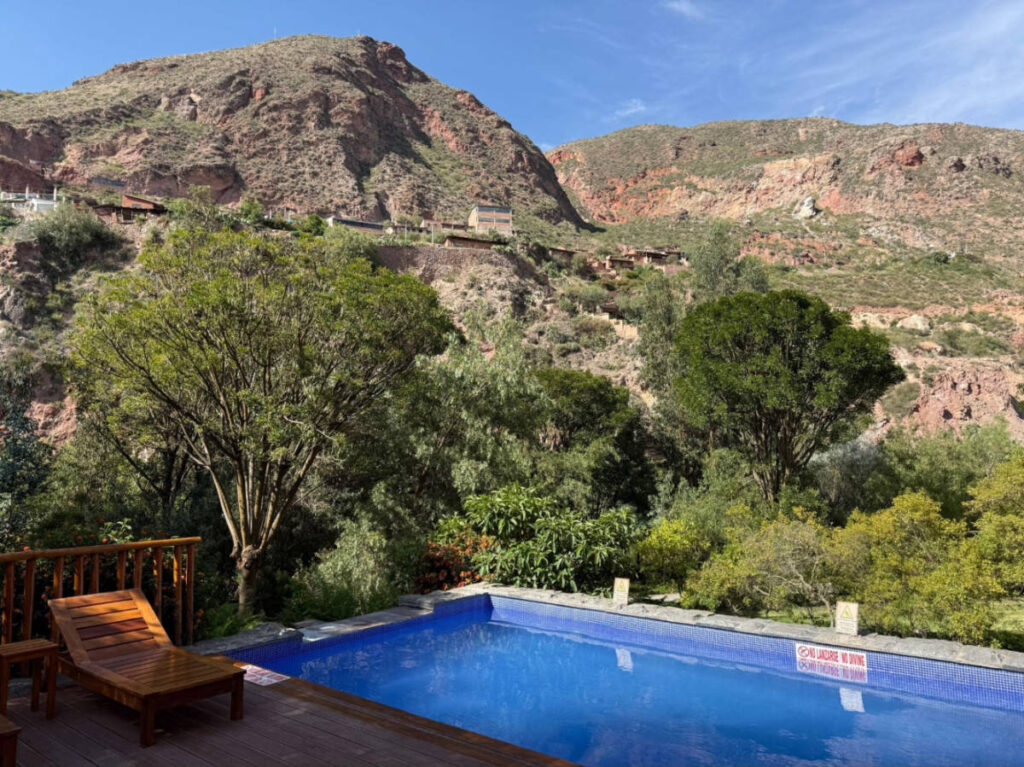
If you’ve read this far, you might have a hard time deciding among all the wonderful towns I’ve mentioned in this post.
Well, there is an easy solution: visit them all! Go read my Peru itinerary planner, and I’ll show you how, but here’s the short version:
- Fly into Cusco
- Immediately go to spend a few days in the Sacred Valley (Ollantaytambo or Urubamba)
- Visit Machu Picchu (maybe staying a night in Aguas Calientes)
- And spend your final nights exploring Cusco (after you’ve acclimated to the elevation).
I think this itinerary makes a lot of sense. It lets you experience all of Sacred Valley’s sites. But it doesn’t really add any additional transport time (hey, you’re going to Machu Picchu anyway right?). And it allows you to acclimate to the elevation before ascending to Cusco.
Watch My Peru YouTube Series for More Machu Picchu Advice
If you liked this guide, you’ll love my 10-video Peru series on YouTube – including an entire video about how not to fail Machu Picchu. Go add it to your watch list for later:
For more videos about Peru, check out my full Peru playlist on YouTube.
FAQs about Machu Picchu
How many days is enough to visit Machu Picchu?
Most people only need one day to visit Machu Picchu, assuming you aren’t taking a muti-day trek like the Inca Trail.
3-4 hours is plenty of time to explore the citadel and take a few photos from one of the terraces (provided you’ve booked a circuit that includes that).
That said, some people choose to visit a second day so that they can enter again and also climb one of the two mountain routes (Waynapicchu or Mount Machupicchu). You might also consider a second day if you’re visiting during the rainy season and really want to ensure your view isn’t blocked by fog.
What is the best circuit to book for Machu Picchu?
Circuit 2-B (“Ruta terraza inferior”) is the best circuit because it includes a viewpoint and a visit to the lower ruins. For this reason, it’s the most common and the most popular circuit to book.
Note that 2-A is nearly identical to 2-B, it just doesn’t include the lower terrace. However, when I went, they weren’t checking tickets at the lower terrace — meaningful if you had a 2-A ticket you could still go up there.
But, that being said, there are other circuits to consider and you may want to book multiple circuits. See my full explanation above.
How do I get to Machu Picchu?
To get to Machu Picchu, most visitors need to:
- First, get to Cusco, the nearest city and home of the only major airport in the region
- Second, take a shuttle or taxi to Ollantaytambo’s train station
- Third, take a train from Ollantaytambo to Aguas Calientes
- Fourth, take the bus from Aguas Calientes to the entrance of Machu Picchu (you can also hike this part, though I don’t recommend it)
For budget travelers, you also have the option of skipping the train and instead taking a bus to Hidroelectrica. From there, you’ll need to hike along the train tracks to Aguas Calientes.
What town makes for the best base for Machu Picchu?
Aguas Calientes is the closest base town for Machu Picchu. All visitors to Machu Picchu (except those doing some multi-day treks like the Inca Trail) will have to pass through Aguas Calientes at some point in their journey anyway, so it’s the most convenient option.
***
Thank you for reading my guide to where to stay for Machu Picchu.
Now keep planning your trip with my other Peru guides:
I hope you love Machu Picchu. Leave me a comment with any questions or thoughts.

Hello – really liked your you tube recommendations. What off shoulder months are the best time to visit Machu Picchu? Thanks.
October and April are the shoulder months. You can visit any time, though of course it’s rainy during some months (worst is Feb).