
Affiliate Ad Disclosure: We’re reader-supported. When you buy via our links, we earn commissions. Learn more.
Great Sand Dunes National Park (A Practical Guide)

👉 Jump to: How to Visit Great Sand Dunes | Things to Do | Where to Stay | History | Tips | FAQ
I’m a Colorado local who can help you make the most of your trip to Great Sand Dunes National Park.
This guide features information on transportation, costs, and cool activities like off-roading and sandboarding. I also share park history, where to stay, and tips for having the best experience at one of my favorite Colorado national parks. Let’s dive in!
How to Visit Great Sand Dunes National Park
Getting to Great Sand Dunes National Park

Great Sand Dunes National Park is a can’t-miss destination. However, there are fewer transportation options because this park is more remote than, for example, Rocky Mountain National Park. You’re going to want to rent a car for this trip!
✈️ Fly – The San Luis Valley Airport is the closest airport to the sand dunes. You can catch commercial flights from Denver on Boutique Air to this airport, which is a 45-minute drive from the park. Meanwhile, Denver International Airport is about a 4-hour drive from the park.
🚗 Drive – You can rent a car at the San Luis Valley Airport to drive to the park. It is a very small airport, so your options may be limited — definitely book ahead of time! You can also rent a car at DIA and travel to the sand dunes.
🚌 Bus – Greyhound buses commute to Alamosa and Blanca, Colorado. You will need to rent a car in one of those cities to get to Great Sand Dunes National Park.
Important Visiting Info for Great Sand Dunes National Park

🎟️ Entrance – You will need to buy a pass to enter Great Sand Dunes National Park. A vehicle pass is $25 and good for 7 consecutive days. An annual pass for just this national park is $45.
You might want an America the Beautiful Pass if you plan to visit multiple national parks in a year. There are also several days with free entrance at all national parks.
🕐 Park Hours – Great Sand Dunes National Park is open 24 hours a day and 365 days a year if the weather permits.
🚻 Facility Hours – The visitor center is open every day of the year except Thanksgiving, Christmas, and New Year’s Day. Visitor center hours are 9 am to 4:30 pm every day.
🅿️ Parking – There is parking at the visitor center. There is also parking at the main dunes lot along Medano Creek. There are signs directing you to your site if you’re camping, and you can walk or drive to the dunes from there.
🏞️ Website – National Park Service – Great Sand Dunes National Park
📍 Google Maps – Great Sand Dunes National Park & Preserve, 11999 State Highway 150, Mosca, CO 81146
🏠 Visitor Center – There is one visitor center near the entrance to the park. The visitor center has information about the park, a diorama showing park ecosystems, and an exhibit on nighttime at the dunes.
☎️ Phone – (719) 378-6395
🧑🤝🧑 Tours – The park offers ranger-led programs which sometimes involve hikes and exploring the park. There are also some commercial tours available to visitors, including horseback riding and Jeep tours.
🦮 Pets – Great Sand Dunes National Park is one of the most pet-friendly national parks! Leashed dogs are allowed in the main use area. This includes campgrounds, along the Medano Pass Primitive Road, and even up to High Dune. See park regulations for further details.
Things to Do in Great Sand Dunes National Park
Hiking Trails

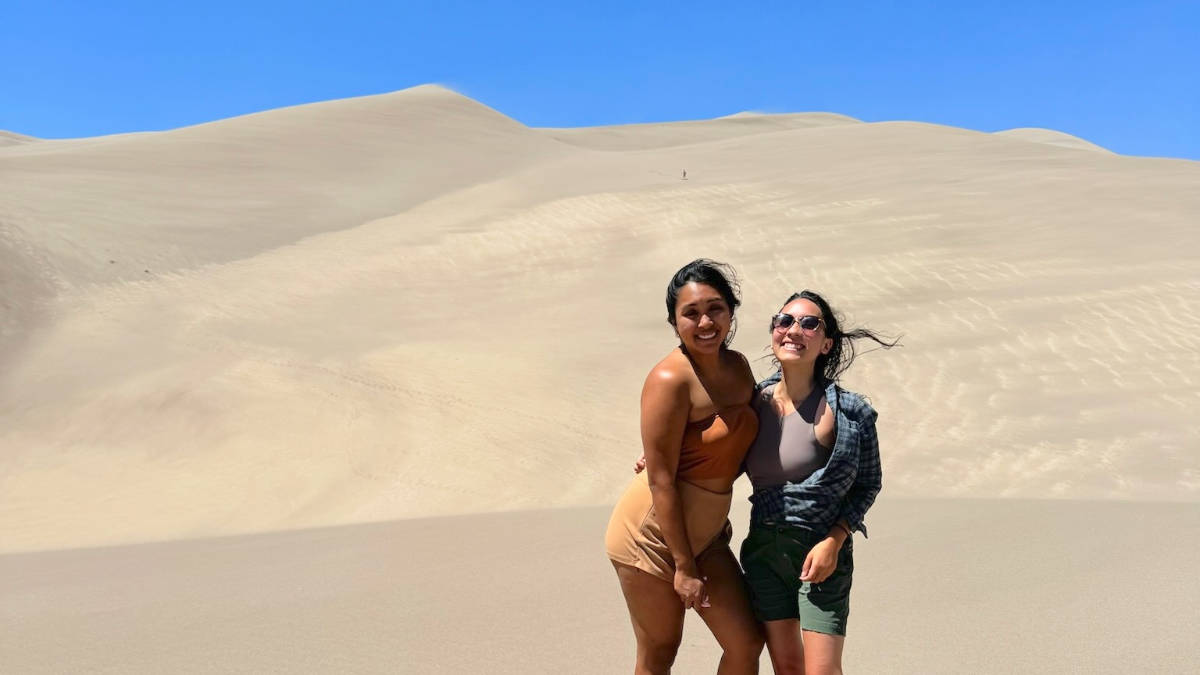
Hiking is a great way to experience the tallest sand dunes in North America. Be sure to go early in the morning if you plan to hike the dunes in the summer. Late mornings and afternoons get hot! There are also many hiking trails through the mountains near the dunes, as well as to nearby lakes and waterfalls.
- ⛰️ High Dune: There aren’t designated trails through the dunes because the wind and sand are constantly shifting. Rather, you follow the ridgeline to High Dune, which offers sweeping views of the dunes and mountains beyond. The elevation gain is just under 700 feet but because you slide a bit with each step, this hike is challenging!
- 🌟 Star Dune: Star Dune is a very challenging, 8-mile hike across the sandy peaks. However, it’s one of the best hikes in Colorado! It’s also one of the two highest sand dunes in North America.
- 🌲 Montville Nature Trail: This shady, half-mile trail is a great option for kids and those adjusting to the altitude. You can see Mt. Herard from the highest point, along with beautiful views of the dunes. Hunting is permitted in season near this trail, so you may want to check with a ranger before heading out.
- 🥾 Zapata Falls: This hike is just under a mile long, but is moderately challenging because you need to climb over rocks and ford a creek to get to the falls. Water shoes or water-proof hiking boots are recommended!
- ⛰️ Medano Lake: You’ll need a 4WD vehicle to get to this trailhead off Medano Pass road. The forested trail is almost 8 miles with a 2,000-foot elevation gain. You can also continue on to the 13,297-foot summit of Mt. Herard. Check with a ranger on snow and trail conditions before attempting this hike.
Trek through meadow and forest areas before reaching the lake. You can also continue on to the 13,297-foot summit of Mt. Herard. Check with a ranger on snow and trail conditions before attempting this hike.
Sandboarding & Sand Sledding
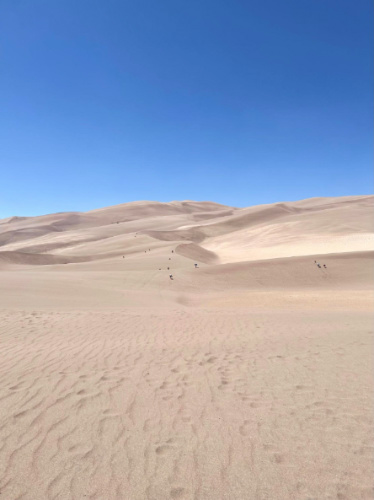
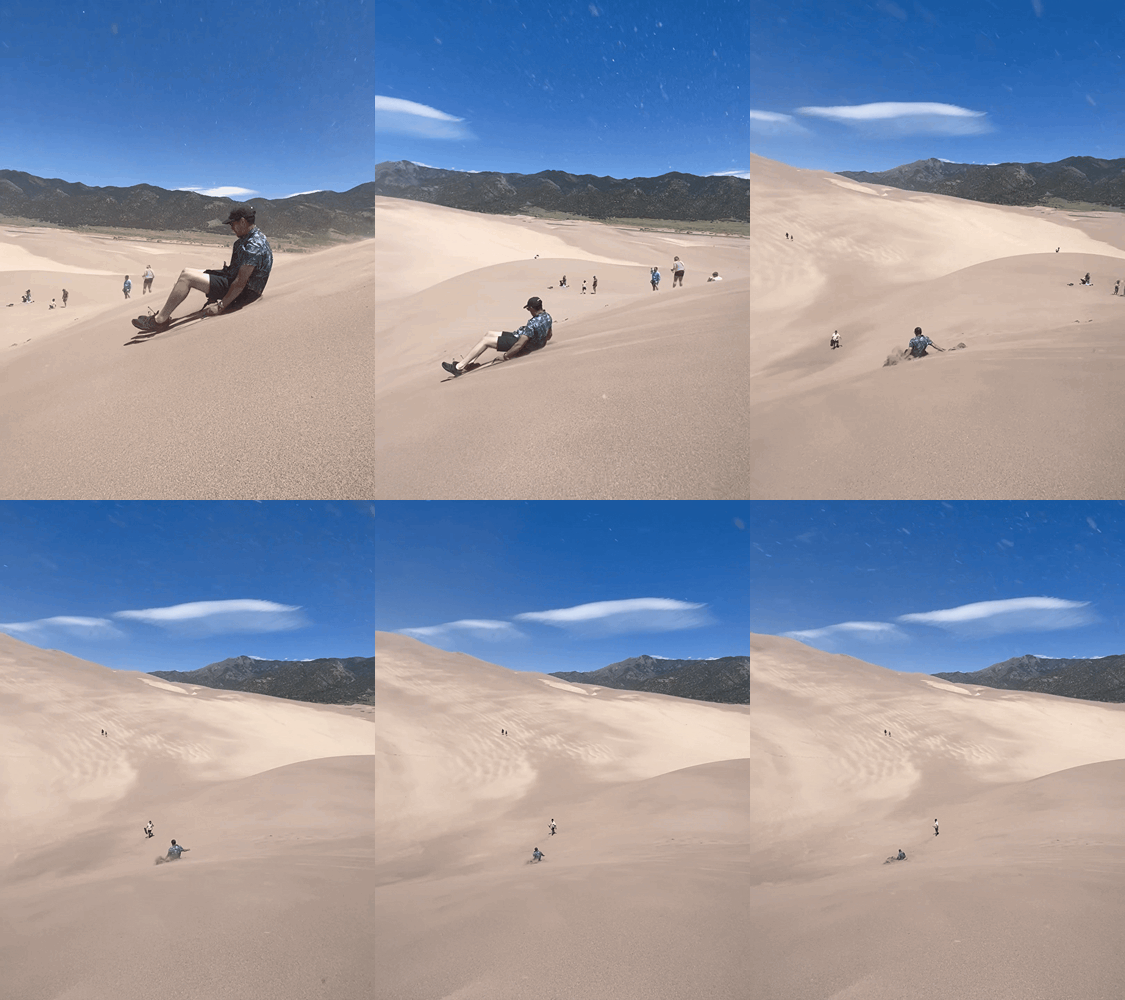
You’ll want to rent special sandboards or sand sleds for this experience! Your own sled or snowboard likely won’t work, unless the sand has been packed down by rain or snow.
You can rent sleds and sandboards at the Oasis Store, about 4 miles from the visitor center and near the park entrance. There are also some places in Blanca and Alamosa where you can rent equipment. The National Park Service does not rent this gear.
Beachgoing
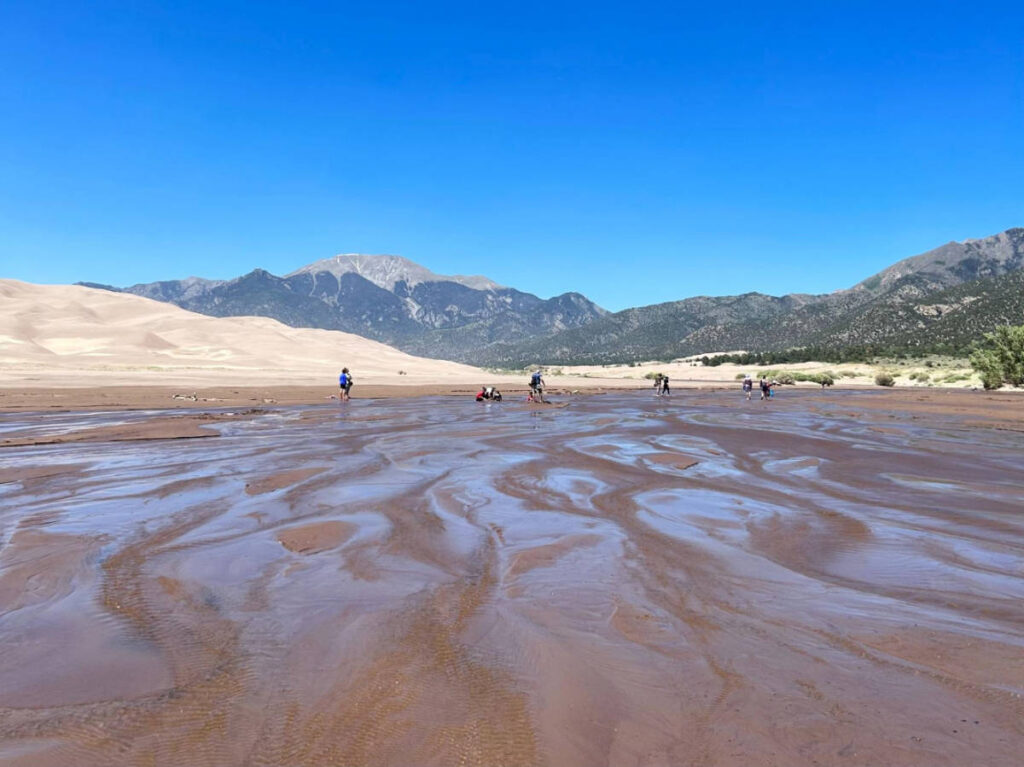
Yep, Colorado has a beach! In fact, it has been named one of the best beaches in the country by Travel & Leisure.
Medano Creek flows between the main parking lot and the sand dunes. Peak flow is usually in late May and early June, and the creek is often gone by mid- to late summer. See the national park website for creek conditions.
Scenic 4-Wheel Drive

Only 4WD vehicles with high clearance can manage the Medano Pass Primitive Road. Some places in Alamosa provide Jeep tours of the area if you don’t want to attempt the drive yourself.
You’ll encounter soft sand and creek crossings on this 22-mile road. Medano Pass connects the park with the Wet Mountain Valley, and you’ll end up on Colorado State Highway 69. Watch for bighorn sheep along the route. Plan on 2 ½-3 hours to do this drive.
Campgrounds
 Piñon Flats Campground has stunning views and generous amenities, great for the whole family
 Piñon Flats Campground has stunning views and generous amenities, great for the whole family
 Piñon Flats Campground has stunning views and generous amenities, great for the whole family


Great Sand Dunes National Park is one of the best places to camp in Colorado! There is only one campground in the park (Piñon Flats) and I highly recommend it. Make reservations early if you want to stay on-site. There are other places to camp within 40 miles of the park as well.
- ⛺ Piñon Flats Campground: Sites are open from April – October and within walking distance of the dunes. There are restrooms with sinks, flush toilets, and potable water spigots, but no showers. Although hookups are unavailable, RVs up to 35 feet long can dry camp in some sites.
- ☀️ Oasis Campground: This campground is just outside the entrance to the park and it’s open from April – October. RV sites have full hookups. There are also tent sites and camping cabins, as well as showers, laundry units, a restaurant, and a camp store.
- 🏕️ Ramble: Our editor, Abigail, loves this “glampground” in Mosca where tent sites are spaced 100-200 feet apart. Enjoy privacy around your smokeless firepit and within each outdoor kitchen, which comes complete with a pump sink and propane stove. Clean showers, bike rentals, solar-powered outlets — Ramble has it all.
Where to Stay in Great Sand Dunes National Park
Looking to stay in a nearby town? You’ve got several options near the park! The most convenient town is Alamosa. It’s big enough to have several options for hotels, food, groceries, and anything else you might need.
Alamosa

Alamosa is about a 30-minute drive from Great Sand Dunes National Park. It’s one of the larger towns in the area, so you’ll have more choices for lodging and places to eat.
The best places to stay in Alamosa for visiting Great Sand Dunes National Park are:
- 🏠 Holiday Inn Express: This Holiday Inn has an indoor pool and hot tub so you can relax after a day at the park. You’ll also get a free breakfast in the morning.
- 🍽️ Comfort Inn & Suites: Stay near Splashland Hot Springs, a geothermal outdoor public pool. The hotel has an indoor pool and hot tub, too, as well as free breakfast.
- 🏠 Fairfield Inn & Suites by Marriott: This hotel has an indoor pool and fitness center. Rooms have a sitting area and work desk. The Fairfield Inn is just 4 miles from the airport so it makes a convenient home base.
Mosca
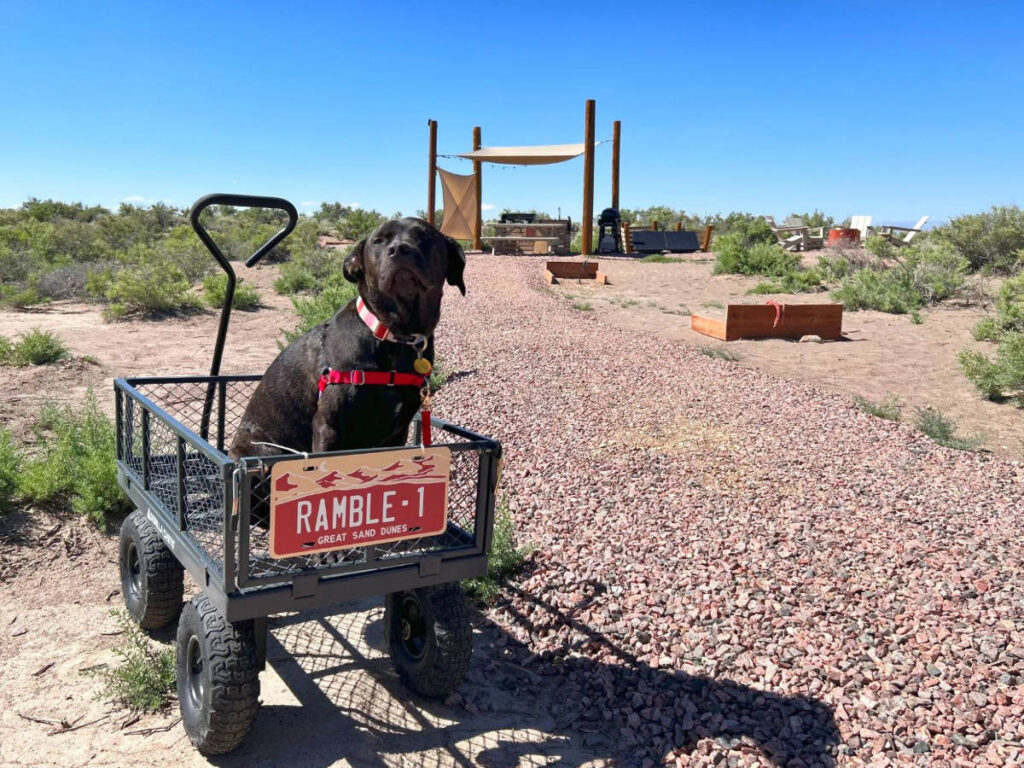
Mosca is just outside of Great Sand Dunes National Park. It’s closer to the national park than Alamosa, but there are very few places to stay.
The best places to stay in Mosca for visiting Great Sand Dunes National Park are:
- 🏞️ Great Sand Dunes Lodge: Rooms at the lodge overlook the sand dunes. You can also rent sandboards and sleds on-site to use at the park. You can stay in a standard room, a larger room with a full kitchen, or in a 5th-wheel trailer set up on site.
- 🛏️ Great Sand Dunes Mountain Retreat: This spacious cabin is located just minutes from the park entrance and accommodates up to 6 guests. Take in views from its sunny deck and flip on the firepit while stargazing in the evenings.
Monte Vista

Monte Vista is about a 45-minute drive from the Great Sand Dunes. It’s a smaller town than Alamosa, but you’ll be near the Monte Vista National Wildlife Refuge if you want more things to do in the area!
The best places to stay in Monte Vista for visiting Great Sand Dunes National Park are:
- 🏨 Baymont by Wyndham Monte Vista: A well-rated, simple hotel with clean rooms, an indoor pool, a fitness center, and complimentary continental breakfast.
- 🎥 Frontier Drive Inn: A unique glamping destination with retrofitted Steelmaster sheds, cozy yurts with pellet stoves, and a drive-in movie theater. Live music and chef dinners also take place on select nights.
History of Great Sand Dunes National Park

First Evidence
11,000 years ago – The first evidence of humans in the area of the Great Sand Dunes dates back around 11,000 years ago. The original people in the area were nomadic hunters and gatherers who followed the mammoths and prehistoric bison herds. They lived in the San Luis Valley when plants thrived and hunting was good, and went elsewhere during droughts.
Indigenous History
Until 400 years ago – Modern Indigenous tribes were in the area when the Spanish arrived 400 years ago. The Ute had a word for the Great Sand Dunes: Saa waap maa nache. It means “sand that moves.” Jicarilla Apaches, Navajo, and people from the Tewa/Tiwa-speaking pueblos all roamed the sand dunes area.
Spanish Explorers
1694 – Don Diego de Vargas was the first European known to enter the San Luis Valley. However, herders from Spanish colonies in what is now New Mexico likely came into the valley about a hundred years earlier.
Westward Expansion
1807 – Zebulon Pike first wrote about the Great Sand Dunes in his journals. He described the sand dunes in January of that year, when he was exploring the Sangre de Cristo Mountains.
1848 – John C. Fremont was hired to find a railroad route from St. Louis to California.
1853 – Captain John Gunnison crossed the dunes on horseback while working for the US Topographical Survey.
Old Spanish Trail
1830-1849 – The Old Spanish National Historic Trail was established and ran through the San Luis Valley. The trail was a trade route from Santa Fe to Los Angeles, and it also wound through Colorado, Utah, and a total of six states.
Gold Rush
1853 – Gold and silver rushes happened in the Rocky Mountains after 1853. Miners had small strikes around the San Luis Valley.
Buffalo Soldiers
1876-1879 – Black Buffalo Soldiers patrolled the region. The Buffalo Soldiers were awarded more Medals of Honor than any other American military unit during that time.
National Park & Preserve Designation
2004 – The Great Sand Dunes became a national monument under President Hoover in 1932. The area was designated a national park and preserve 71 years later.
Tips for Visiting Great Sand Dunes National Park
Arrive Early


Get to Great Sand Dunes National Park around 8 am or before for the best experience during the summer. You’ll beat the heat and the crowds that arrive later! You could also visit after 5 pm as the heat is lessening and people are going home.
Wear Special Shoes or Socks
Try Vibram FiveFingers shoes when hiking the dunes, as recommended by Abigail, a Travel Lemming editor. You can even hike in just socks if the sand isn’t too hot! Your feet will be somewhat protected, but still flexible and you won’t have to deal with sand in your shoes.
Wear Sunscreen
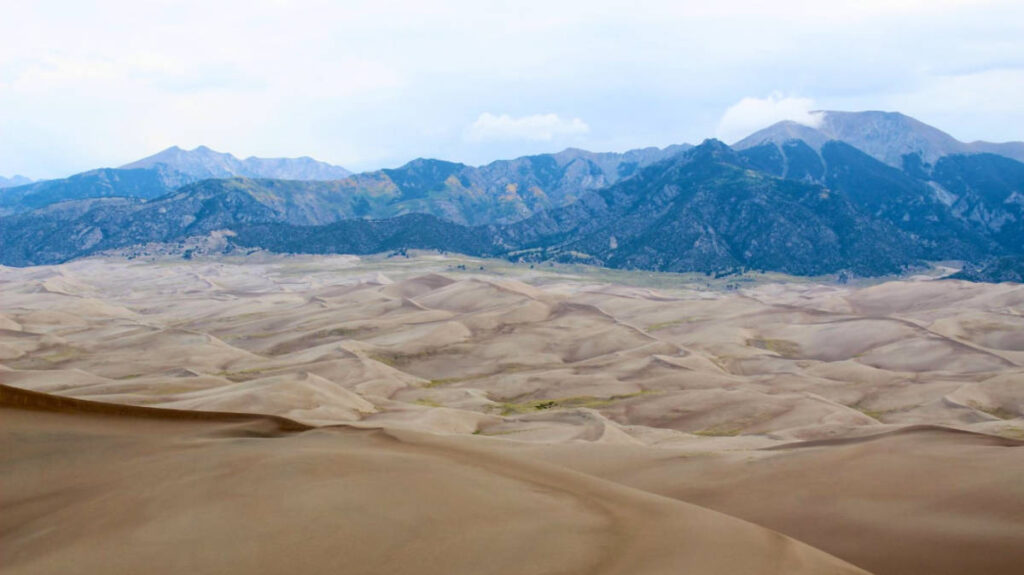
Don’t forget the sunscreen! The lowest point at this park is over 7,500 feet up so you’ll want to be protected.
Bring Lots of Water
Stay hydrated! You want plenty of water while you’re out so you can combat the elevation, possible heat, and exertion from hiking. I love my plain old Nalgene bottles much more than the fancier water bottles I’ve tried, and I bring them everywhere!
Plan Your Gas Stop
Gas up at the Oasis Store near the park entrance during business hours from April to October. Otherwise, the next closest gas stations are in Mosca (23 miles away) or Fort Garland (31 miles away).
FAQs About Great Sand Dunes National Park
What is special about Great Sand Dunes National Park?
Great Sand Dunes National Park is special because it has the tallest sand dunes in North America. It also features Medano Creek, a seasonal beach that is one of the most unique in the country.
What is the best time of year for Great Sand Dunes National Park?
The best time of year for Great Sand Dunes National Park is late May or early June. Medano Creek is at its peak flow, so you can enjoy the park before the water dries up for the summer.
Late September or October are also good months to see the park. Shoulder seasons are some of the best times to visit Colorado, and you’ll get beautiful views of fall foliage in the mountains.
Do you need 4WD for Great Sand Dunes National Park?
You do not need 4WD for Great Sand Dunes National Park. You can get to the most popular areas of the park without a 4-wheel drive vehicle. But Medano Pass Primitive Road requires 4WD, as you’ll drive through challenging sandy sections and creek crossings.
***
Hopefully, this guide has inspired you to take a southern Colorado trip to see Great Sand Dunes National Park! It’s truly one of the most distinctive places to visit in Colorado.
– Laura Falin contributed to this article
