
Affiliate Ad Disclosure: We’re reader-supported. When you buy via our links, we earn commissions. Learn more.
16 Essential Travel Tips for Canada (By a Local)

Traveling to Canada is a ton of fun – you’ll find bustling cities, mountains, beach escapes, winter wonderlands, and everything in between. But as with anywhere, there are some tips for Canada you should know to have a safe and fun time.
I was born and raised in the Canadian prairies and have visited 9/10 provinces. I think there are some seriously cool places to visit in Canada, and I absolutely love traveling around the country.
👉 To help you visit Canada the best way possible, I’ve rounded up my top 16 Canada travel tips that include everything from how to get around to how to book our best igloos (or hotels, whatever).
Want to jump around?
- 16 Tips for Traveling to Canada
- Be Prepared for the Weather
- Check the Visa & Entry Requirements
- Consider Travel Insurance for Canada
- Check the Alcohol Age Limit
- Be Wildlife Smart
- Stick to One (or Two) Areas
- Research Transportation
- Be Prepared to Tip
- Expect Sales Tax
- Know the Unsafe Neighborhoods
- Learn Some French (if you’re visiting Quebec)
- Understand (Parts of) the Metric System
- Get Out in Nature
- Familiarize Yourself With the Currency
- Canada Uses the North American Plug
- Book Accommodation in Advance
- Want More? Listen to My Canada Podcast Episode!
Oh, and be sure to stick around for the Canada Travel FAQ at the bottom of this post!
16 Tips for Traveling to Canada
Be Prepared for the Weather
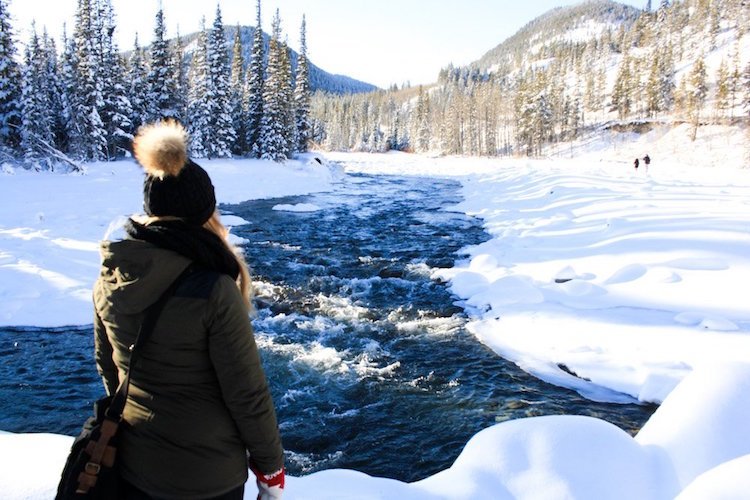
Let’s start this list off with what’s probably front and center in your mind — Canadian weather.
Contrary to what some believe, the weather in Canada isn’t freezing year-round and much of the country experiences blazing hot summers. Seriously, much of south/central Canada deals with temperatures over 30°C (86°F) in July and August, and we do battle wildfires during the warmer months.
That said, because Canada features seven different climatic zones, temperatures and weather norms vary wildly and will largely dictate the best time to visit.
A winter visit to Winnipeg (ahem, Winterpeg) will be very different from a summer visit to the Rocky Mountains or Vancouver Island. In fact, to help you navigate this, I wrote a whole guide on the best time to visit Canada. It’s also important that you know what to pack for Canada, too.
👉 Local Tip: If you’re visiting Canada in the winter, then I recommend following the weather conditions via The Weather Network and packing snow boots, a warm winter coat, and a toque (call it a beanie if you must but… it’s a toque).
Check the Visa & Entry Requirements
Apart from US citizens, travelers to Canada will need to secure either a visa or an Electronic Travel Authorization (ETA) prior to travel. Additionally, all adult travelers will need to provide a passport upon entry.
Obviously, the exact documents you’ll need to enter Canada depend on your home country, so check with your local government what the stipulations are. Once you know this, you can secure an ETA or visa online at the Government of Canada website.
Consider Travel Insurance for Canada
Regardless of where you’re traveling from, travel insurance for Canada is something to consider. Yes, Canada is heralded around the world for having a great universal healthcare system, but this only applies to Canadians. Meaning, a trip to the hospital in Canada could cost you a pretty penny without insurance.
Keep in mind that most policies will require you to have extra insurance if you plan on doing “risky” activities such as scuba diving (which does exist in Canada) or skiing.

Need Insurance? Compare Quotes with VisitorsCoverage
VisitorsCoverage is a travel insurance marketplace where you can quickly compare quotes from hundreds of insurers — all it takes is a minute to enter your details!
Check the Alcohol Age Limit
If you’re a fresh-out-of-high-school backpacker looking to travel to Canada, then this tip may be the most important to you.
Unlike the United States where the legal drinking age is 21, Canada’s alcohol rules vary by province.
In some provinces, the drinking age is 18 (Quebec, Manitoba, and Alberta), while in others it’s 19 (British Columbia, Saskatchewan, Ontario, the Maritime Provinces, and the Territories). A quick internet search will point you in the right direction on this one.
Be Wildlife Smart
With so much open space, wildlife in Canada is something to be aware of pretty much everywhere you go.
Though attacks of any kind are rare, you should be aware of grizzly bears, black bears, brown bears, moose, elk, polar bears (in the north), and other large mammals while hiking in parks and on backcountry roads.
Of course, which animals you’ll see depends on where you go, so do some research into what animals to look out for.
On a more widespread note, there are signs around Canada reminding drivers to be aware of animals crossing the road. Deer can be especially dense in some areas and often dart across roads with little to no warning — look for shiny eyes in the ditches and try to avoid driving at dusk if possible.
Stick to One (or Two) Areas
As soon as you look at a map of Canada you’ll see that it’s a humongous country with many different places to see.
In fact, if you were to drive from Cape Spear in Newfoundland (the Easternmost point on the continent) all the way to the border with Alaska, you’d cover 8,173 kilometers (5078 miles). In other words, you’d be driving for 101 hours straight — and this number doesn’t even include driving through all the territories. That’s a lot of driving in Canada!
So, unless you want to add this major road trip feat to your bucket list, pick a province (or two) and spend the bulk of your time in Canada there.
Toronto, Vancouver, Montreal, and Calgary have the busiest international airports, although smaller cities such as Winnipeg, Regina, Kelowna, Halifax, Quebec City, St. John’s, and Charlottetown are easily accessible as well.
I should also mention that air travel within Canada itself tends to run on the more expensive side.
With a couple of exceptions, Canada is dominated by two Airlines — Air Canada and WestJet — and they pretty much have the monopoly in this regard. There are some budget airlines, but the landscape is nothing compared to Europe or even the United States.
Research Transportation
Speaking of airlines in Canada, I’d recommend doing a deep dive into getting around your specific destination before you go.
Though taking an airplane is your best bet for covering long distances in Canada, each city and region has its own transportation system (train, bus, subway, etc.) that’s independent of any other.
Not to mention, some cities don’t have easy transportation systems at all — leaving local buses and renting a car as your primary options.
That said, renting a car in Canada is made easy with Discover Cars, taxis are available in all major cities, and Uber is in quite a few locations as well.
👉 Headed to Banff? Check out my post on the coolest stuff to do in Banff National Park for more Alberta inspiration!
Be Prepared to Tip

Like the United States, tipping is a common practice in Canada in the restaurant, tourism, hospitality, and other service industries.
Leaving a 15-20% tip at restaurants is standard in Canada, and the math is usually made easy on bills or credit/debit machines.
Expect Sales Tax
Unlike other places in the world, sales tax is not always included in the listed prices of items in Canada — including goods in stores, activities, and restaurant menus.
Canada uses four tax systems, PST (Provincial Sales Tax), GST (Goods and Services Tax), HST (Harmonized Sales Tax), and QST (Quebec Sales Tax).
Different provinces charge different sales tax rates and use different systems, so check this Canadian sales tax guide before you travel for the most up-to-date tax information.
It’s really not as complicated as it may sound, and you can pretty much expect to pay 10-15% tax across the board.
Know the Unsafe Neighborhoods
No matter what country you travel to, there will inevitably be safe and unsafe neighborhoods, and Canada is no exception.
Though in many places the tourist areas are far away from the tough neighborhoods, there are some instances where avoiding these areas is best done by researching ahead of time — such as in Vancouver, Winnipeg, and Toronto.
That said, generally, Canada is safe and has very little crime directed at tourists and chances are you’ll have a hassle-free trip to Canada as long as you know where to avoid.
Learn Some French (if you’re visiting Quebec)
While most of Canada’s population speaks English, there are some locations where knowing a few words in French will come in mighty handy.
The most popular instance of this is the province of Quebec, where French is the sole official language. While most people in the major cities are fluent in English, some rural areas are French-only, including the signage.
Other than Quebec, the province of New Brunswick has both official languages and there are pockets of French communities in Manitoba and Ontario.
All this said, I’ve traveled quite a bit in Quebec and have only had to really rely on my French skills a handful of times. You’ll have no problem getting by with English in Montreal or Quebec City, although I’d always start a conversation with “bonjour” out of respect for local customs.
Understand (Parts of) the Metric System

In 1975, Canadians ditched the imperial system for metric. Sort of.
Though Canada officially uses the metric system (meters, Celsius, kilograms), in practice the country casually uses a blend of the two systems.
While all signs and official documents will be in metric measurements, many Canadians (including myself) still use imperial when describing weight, baking measurements, and height. For example, I can only describe the outdoor temperature in Celsius, but solely use Fahrenheit to bake a cake in the oven.
My suggestion is to understand distance and weather temperature in metric, but don’t sweat it if that’s all you grasp. This funny use of both systems is one of the many weird things I’ve noticed about Canada.
Get Out in Nature
Cities in Canada are great — they’re largely multicultural, clean, and safe — but the natural world is where this country truly shines.
As I said above, Canada is the world’s second-largest country and is home to less than 40 million people –meaning much of Canada is unbridled wilderness, agricultural fields, or protected land. No matter which province you choose to travel to, make sure you get out and experience a couple of the fantastic National Parks.
👉 Local Tip: Parks Canada is a great place to start researching where to get your nature fix.
Familiarize Yourself With the Currency
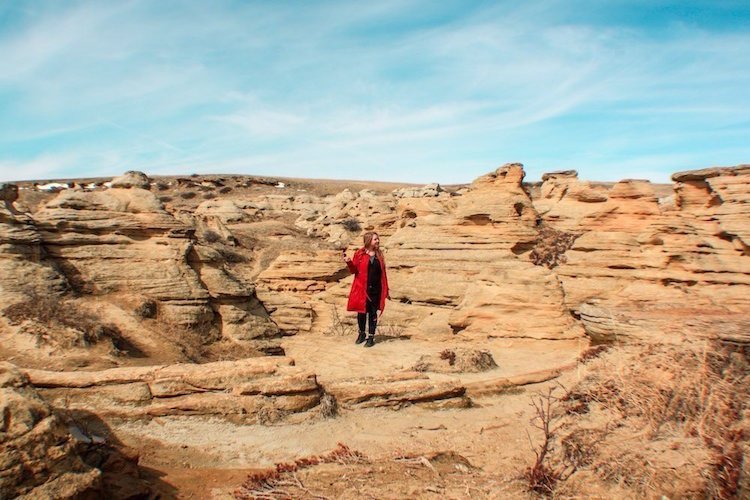
Call it Monopoly money if you must (every bill is a different color), but there’s no denying that Canadian currency packs a punch with efficiency.
Before you travel, check the Canadian dollar exchange rate against your home currency, familiarize yourself with the coins (the penny was abolished years ago for a rounding system, and “loonies” and “toonies” are legitimate currency), and exchange any currency before you travel or at a legitimate bank.
Also, with the recent spread of the coronavirus, many businesses in Canada prefer if you use debit or credit cards over cash. If this doesn’t create a huge mess with foreign transaction fees for you, digital is the way to go.
👉 Check out our full Canada travel guide for more practical tips for traveling Canada!
Canada Uses the North American Plug

When traveling to Canada, keep in mind that the country uses the same plugs as the USA — either a double flat-prong plug or a plug that uses the same two flat prongs plus a grounding pin. The standard voltage is 120V and the frequency is 60Hz.
Foreign plugs won’t fit in North American sockets, so you’ll need a travel adapter if using devices from abroad.
Book Accommodation in Advance
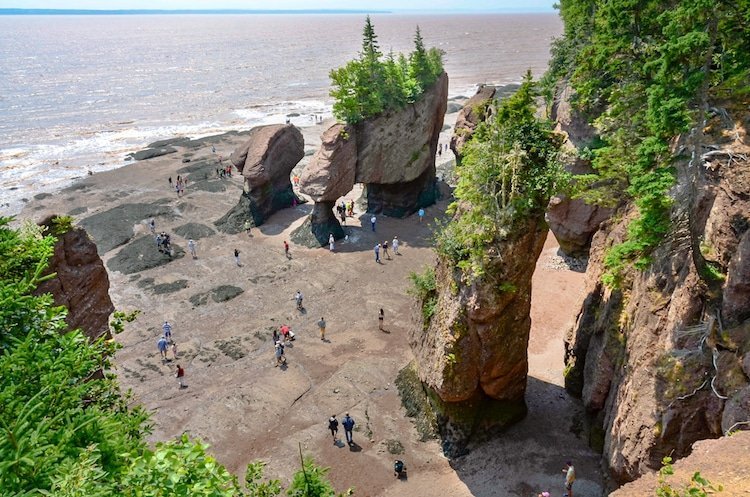
One of the biggest downfalls of Canadian travel (in my opinion) is the relative lack of affordable accommodations such as hostels.
Yes, inexpensive hotels, Airbnbs, cabins, camping, and couch surfing exist, but the “hostel atmosphere” that suits the backpacker lifestyle so well can only be found in certain areas.
In particular, Vancouver, Toronto, Montreal, Quebec City, Halifax, and Alberta’s National Parks are home to a few hostels.
Other than that, I recommend that you book your accommodations in advance for the best price possible. We recommend searching Booking.com, as it tends to have the largest selection of hotels on offer for most Canadian destinations.
Especially during times when travel is restricted, you’ll be up against local Canadians vying for the best accommodations (including campsites, which have booked up months in advance in recent years).
Want More? Listen to My Canada Podcast Episode!

If you liked this post, you’ll love my Canada episode on the Travel Lemming Podcast. It’s available on YouTube, Apple Podcasts, Spotify, or wherever you get your podcasts (just search “Travel Lemming Canada”).
I talk about the best places to visit in Canada at minute mark 04:42.
The host, Betty, and I also discussed Canada’s top national parks (15:07), how to get around (21:51), the best time to visit (19:07), Canadian etiquette & taboos (28:55) and all the other common questions about travel to Canada.
Download now and remember to listen to the entire episode before you arrive in Canada.
***
Thanks for reading my 16 Canada travel tips!
Canada is a fun and safe country full of friendly locals, amazing cities, and beautiful nature.
For more tips on Canadian travel, visit:
Have fun in Canada!

Thank you for the many tips. We are planning a trip to Niagara Falls in October. Your article was very helpful.
Thanks so much for opening my experience on Canada travel.
I appreciate
Very helpful. Thank you!
I like it and I’m really not good in metrics but I will practice