
Affiliate Ad Disclosure: We’re reader-supported. When you buy via our links, we earn commissions. Learn more.
I’m a Canadian and a frequent traveler. These are the weirdest things I’ve noticed about Canada.

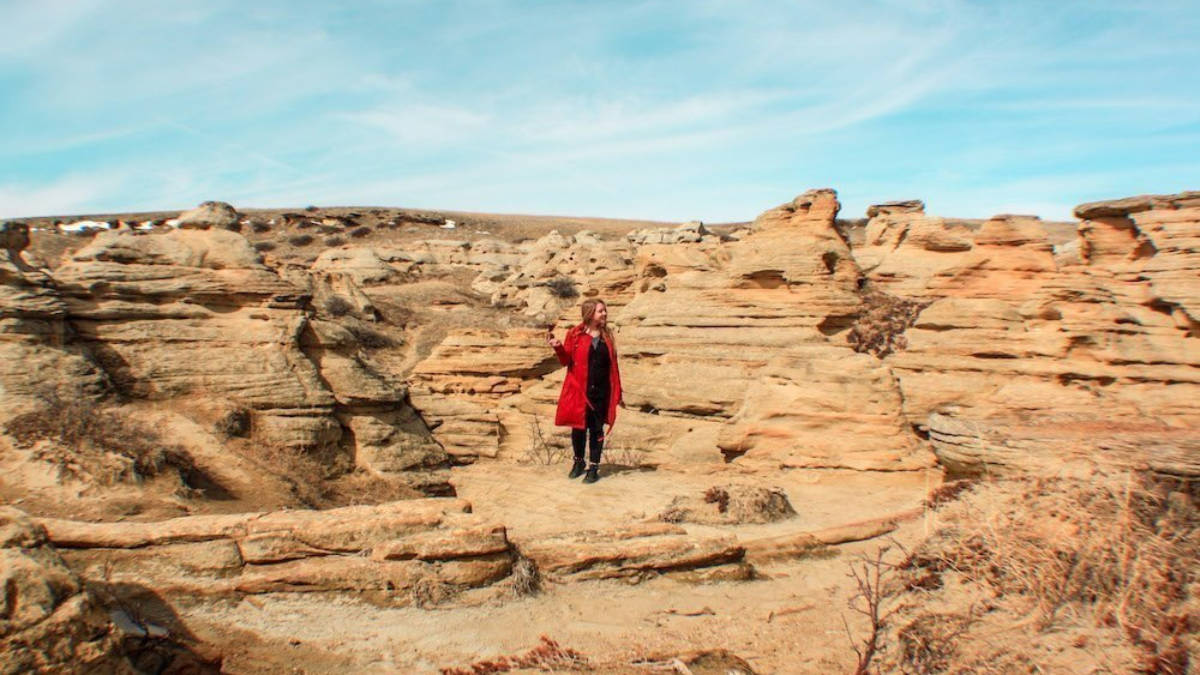
Canada can be weird.
Of course, everywhere is a little weird depending on how you look at it. Each place has its quirks. But we generally don’t notice our home country’s peculiarities until we leave and get an outside perspective.
Since I began traveling the world, I’ve come to realize the quirks that make Canada unique.
So, if you’re planning a trip to the ‘Great White North,’ then tack this article onto my list of tips for traveling Canada. If you’re not, then just enjoy these fun Canadian eccentricities.
We use the “Canadian” metric system
Obviously, the metric system isn’t Canadian-specific. In fact, the entire world uses it except for just a few countries.
However, Canadians don’t really use the metric system like other places do.
Canada adopted the metric system in 1970, and the switch was slowly implemented until 1985. Meaning, if you were born before 1985, there’s a chance you learned at least some of the imperial system of measurement. If you were born after 1985, chances are your parents and school taught you a bit of both.
This shows up in some pretty weird ways.
For example, I can tell you the distance of the nearest town in both kilometers and miles and have a pretty good gauge of both. I can also tell you the area of a room in both feet and meters. Same with measuring in inches and centimeters.
I can even tell you that the room I’m in is about 13 meters long and 9 feet high.
But I have no idea how to bake in the metric system. Grams? I don’t even know her. I turn my oven on to 350 degrees just like every American I’ve ever met, and can only measure flour in cups and tablespoons.
However, I only know the outside temperature is Celsius, not Fahrenheit.
As for weight, I know mine in pounds, not kilograms.
But I fill up my car with liters of gas, not gallons. And don’t even get me started on the Canadian gallon vs the American gallon. That’s a mystery that baffles even the biggest measurement nerds among us.
Alberta is a rat-free province
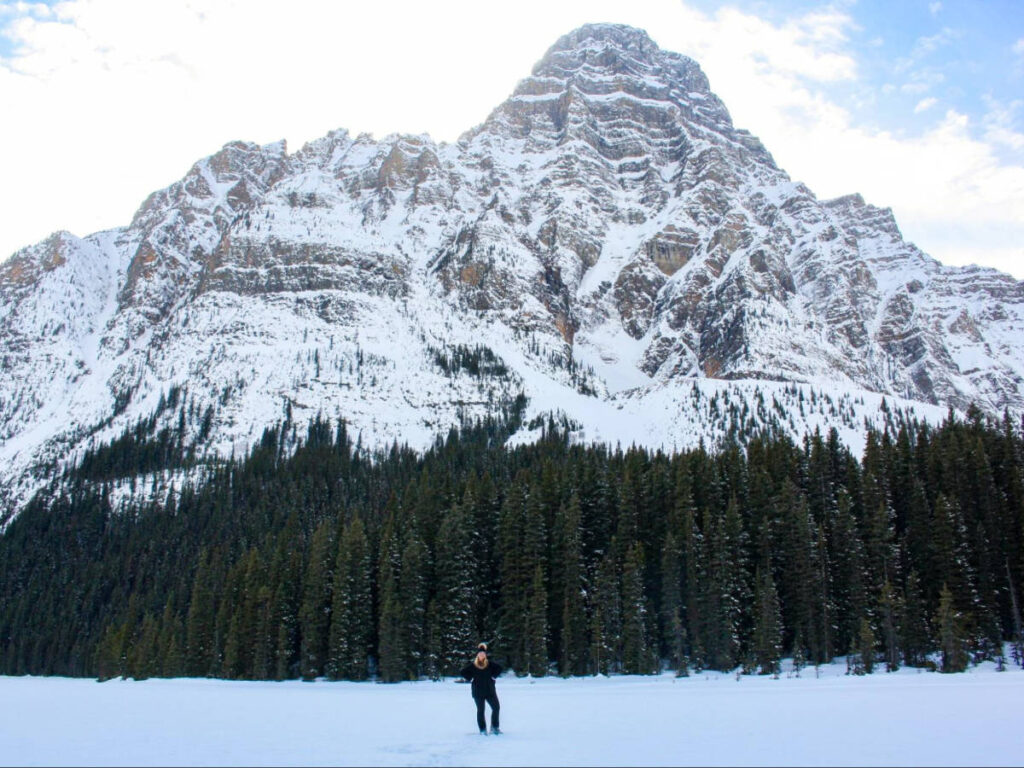
Alberta is a province largely known to the outside world for the wild beauty of Banff National Park and the cowboy-centric good time of the Calgary Stampede.
But it should be more widely recognized for one more thing. It’s rat-free.
In fact, the province hasn’t had rats breeding within its borders for over 70 years due to a very strict rat control program. According to the Government of Alberta’s website, they’re “not allowed” to establish themselves. [Source]
Just look at this rat distribution map of the world. Besides the Arctic and Antarctica, Alberta is an outlier.
We really do say “sorry” all the time
It’s not just a stereotype – Canadians really do say “sorry” all the time. But it doesn’t always mean we’re apologizing.
“Sorry” in Canada can mean excuse me, it can mean I’m acknowledging something bad has happened even though it’s not my fault, and it can be used as a passive-aggressive remark.
I think Canadians have a few reasons for their excessive use of the word “sorry.” One of the most prominent reasons is the high predisposition to follow social contracts. In our day-to-day lives, we expect people to follow the rules and not deviate. If we do deviate, even in a small way, we say sorry.
For example, yesterday I was walking on the sidewalk and three cyclists passed by. They all whispered “sorry” as they did so. They broke the social contract (and law, in my city) by biking on the sidewalk instead of the street, and they were saying “excuse me.”
I don’t blame them though, there was no bike lane and it’s no fun to get hit by cars.
Fun fact, many Canadian provinces have something called the “Apology Act.” It’s a rule of law that “preclude courts, tribunals, and arbitrators from finding that an apology is an admission of liability.” [Source]
So, if you get into a car accident and say “sorry,” you can’t be charged for admitting guilt.
These apology laws aren’t Canadian-specific and exist in many places around the world. Still, I have to assume it’s brought up quite a bit in our court system.
90% of Canadians live within 100 miles of the US border
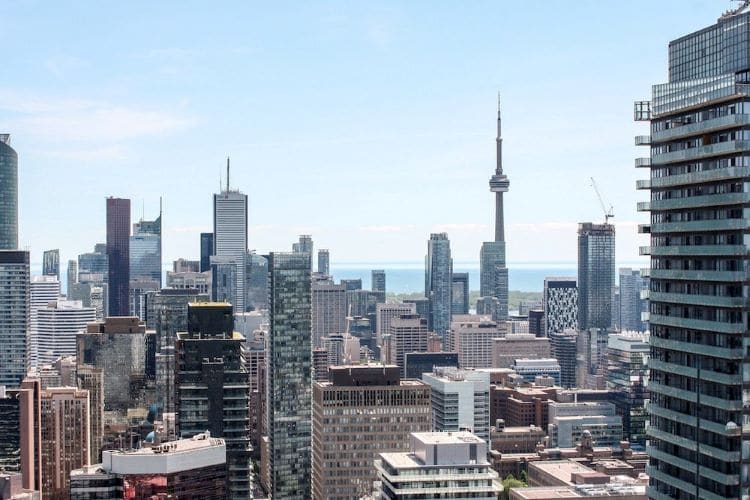
When you travel to a new-to-you country, you likely have a few destinations in mind. These destinations may be in the north, south, east, and west – you know, to get a geographically diverse lay of the land.
But this isn’t the case in Canada. For a couple of reasons, namely the advent of the Canadian National Railway and the fact that we don’t *love* being super cold in the winter.
So, 90% of Canadians live within 100 miles (160km) of the USA border. [Source] Further, more than 60% of Canadians live south of Seattle. It’s mind-boggling but I promise you, the census data isn’t lying.
In fact, many Canadians have US postal boxes, and zipping across the border to shop at outlet malls isn’t unheard of. That is, when the exchange rate makes sense, of course.
Similarly, because it’s relatively expensive to fly within Canada and from Canadian airports, many people will just cross the border to catch flights from the US.
This isn’t to say that there aren’t many great Canadian destinations in the north. Of course there are. There are just way fewer people in those places and a lot of it is straight-up wilderness.
Canada’s love of maple syrup is more than its flavor
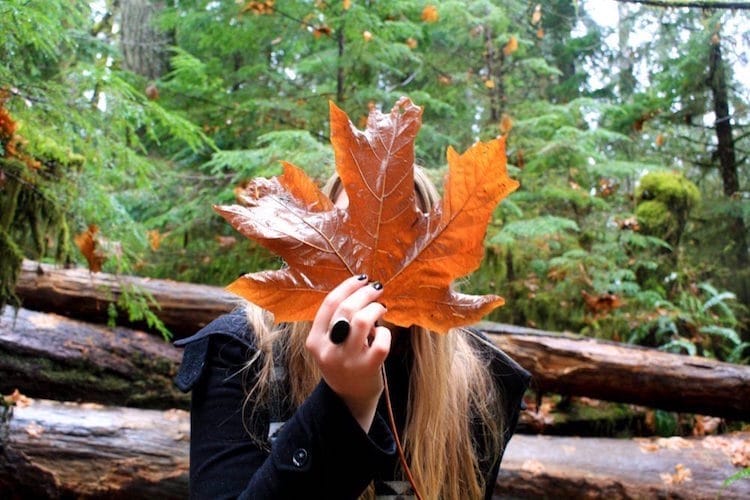
For a long time, I thought Canada’s obsession with maple syrup was more of a cultural thing than anything else. I mean, who doesn’t love the distinctively sweet taste of maple?
Ice cream, pancakes, donuts. Maple is omnipresent.
But Canada’s love of maple syrup is more than just the flavor. In fact, 71% of the world’s maple syrup comes from Canada, and 91% of that number comes from Quebec alone. [Source]
In fact, in 2022, Canada exported $477M of maple syrup to other countries. [Source]
But I’m not just here to tell you boring maple syrup facts. I want you to know about a time when maple syrup went awry.
It’s called the “Great Canadian Maple Syrup Heist.”
Over a period of several months in 2011 and 2012, nearly 2,700 tons of maple syrup were stolen from a storage facility in Quebec. This equated to roughly $24.1 million in today’s Canadian dollars. [Source]
The thieves took the barrels of syrup to a remote facility, traded the syrup with water, and then returned the water-filled barrels to the production facility.
They then trafficked the stolen maple syrup to small independent retailers.
The people involved were eventually caught and sentenced to years in prison. But not before they gained a reputation in the maple syrup community as, and I quote, “barrel rollers.”
We take off our shoes when we enter someone’s house
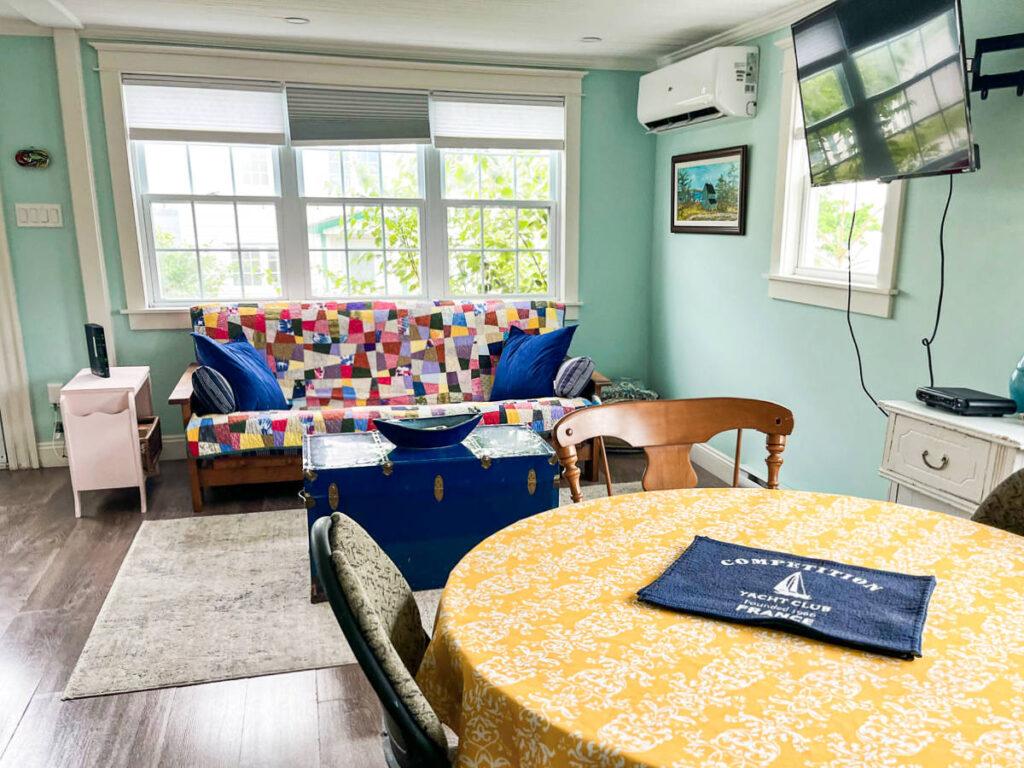
Listen — perhaps I’m tiptoeing the line of controversy here, but I don’t think taking your shoes off when you enter a house is “quirky” at all. I think it’s just plain right. There’s absolutely no way I want all that street sludge on my clean floors and all over my feet.
I actually know a guy who knows a guy who lost a toe because of dirty floors and a small cut.
And lots of the world agrees with me. It’s very much customary in many Asian, European, and Middle Eastern countries to take your shoes off in private residences.
So, you can imagine how hard I cringe when I go to my friends’ houses in the USA and they say “Oh, don’t worry about your shoes.”
Or, growing up watching American TV and seeing everyone lounging on their beds and sofas with their shoes on. Sex and the City literally made a whole episode where Carrie griped about having to take her shoes off in her friend’s NYC apartment and the chaos that ensued.
I also realize this is a regional thing in the USA, but it’s a hill I will die on.
Maybe it’s a Canadian quirk – or maybe I’d like to keep my toes, thanks.
We have four very distinct seasons
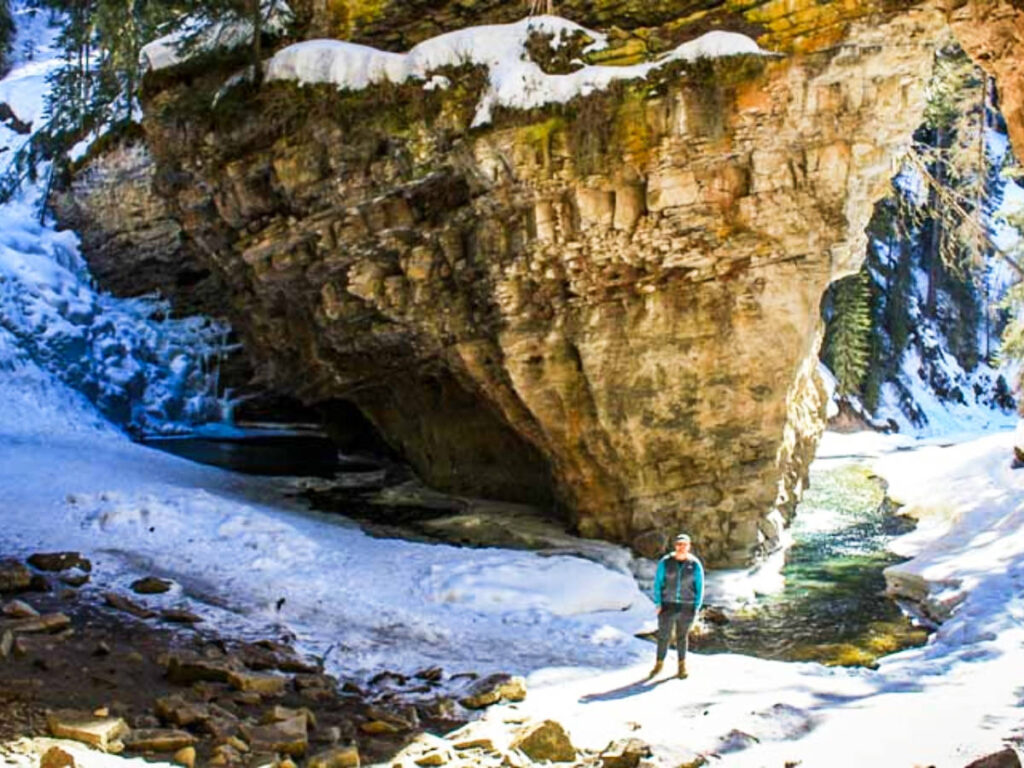
Leave it to an awkward Canadian to bring up the weather, but I think it’s a point worth making. The seasons in Canada are simply more *dramatic* than almost anywhere else I’ve been in the world.
Of course, Canada is the second-largest country on the planet. The climate in the 10 provinces and 3 territories differ as much as Oreo flavors in the supermarket.
So, let me paint with broad strokes here. The summers can get super hot with seemingly endless hours of sunshine. The winters are frigid and gloomy and it’s pretty much dark all the time.
I’m talking about a full summer-to-winter swing of 80 degrees Celsius.
Here in Winnipeg, I’ve seen +40 degrees in the summer and -40 degrees in the winter. The coasts are usually more temperate, and the north… well I haven’t been there yet but I can imagine it’s… not temperate.
Still, pretty much everywhere you go, there are four distinct seasons.
It can be a tough environment to live in, but the drama in our atmosphere has led to some of the most beautiful acts of nature I’ve ever seen. I mean, I grew up thinking the Aurora Borealis was normal everywhere. It was only when I became an adult that I realized it was a hot ticket item for travel.
Want More? Listen to My Canada Podcast Episode!

If you liked this post, you’ll love my Canada episode on the Travel Lemming Podcast. It’s available on YouTube, Apple Podcasts, Spotify, or wherever you get your podcasts (just search “Travel Lemming Canada”).
The host, Betty, and I discussed the best places to visit in Canada (04:42), Canada’s top national parks (15:07), how to get around (21:51), the best time to visit (19:07), Canadian etiquette & taboos (28:55) and all the other common questions about travel to Canada.
Download now and remember to listen to the entire episode before you arrive in Canada.
***
Thanks for reading my list of things that make Canada weird! Have you visited Canada? Let me know what you would add to this list in the comments!
Want to know more about cultural quirks just across the border? Check out Lea Rose’s list of 19 habits and behaviors that make Americans stand out abroad.
More Latest PERSPECTIVES


We just did an 8 day vacation across British Columbia…..Canadians LOVE donuts! At least they do in B.C! I mean……LOVE. There are donut shops everywhere!!!
A good list, but a caveat about the weather- the southwest of BC doesn’t really have four seasons as it’s winter is typically rainy with only a few days of slushy snow a year. Its summers are not blistery hot either.