
Affiliate Ad Disclosure: We’re reader-supported. When you buy via our links, we earn commissions. Learn more.
The Best Time to Visit Washington DC (A Local’s Guide)

👉 Jump to: Best Time to Visit Washington DC | Travel Seasons | Weather & Climate | Tips | FAQ
The best time to visit Washington DC is during the months of March, April, May, September, and October. These times of the year offer the best weather and fewer crowds, which makes visiting DC more enjoyable.
Washington DC offers plenty to do for visitors year-round and each season has its benefits and drawbacks. Weather and crowds are the major factors to consider when planning your trip to DC. Some seasons are more enjoyable than others and some seasons bring more crowds, which can affect prices around the city.
As a Washington DC local, I’ve created this guide to help you enjoy all of DC’s best attractions no matter when you visit.
When is the Best Time to Visit Washington DC?
Late spring and early fall tend to be the best times to visit Washington DC. The weather in Washington DC is best between March through May and September through October. Fewer people visit during the late spring and fall months, so there are less crowds around popular attractions.
However, choosing the best time to visit Washington DC depends on the attractions you want to see and the kind of trip you wish to have. Your travel budget can also help determine when to visit.
With all this in mind, let’s break the best time to visit Washington DC:
When to Visit Washington DC for Good Weather
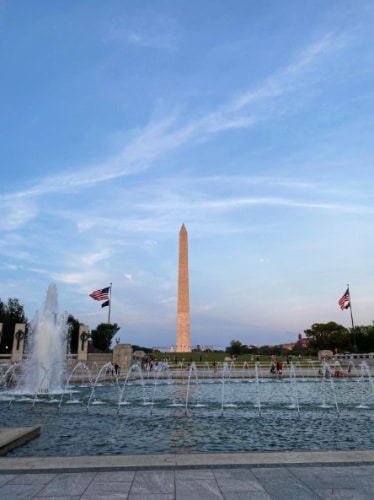
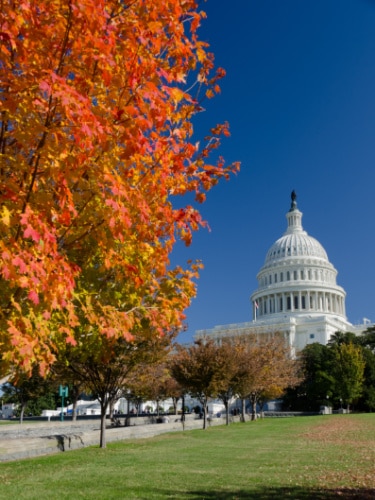
The spring and fall are the best times to visit Washington DC for the most enjoyable weather. During these months, the weather is comfortable, and crowds are fewer.
The springtime brings warmer weather in the 50s and 60s, which makes exploring the city pleasant. Late spring is the season for cherry blossoms. These blooming flowers make DC beautiful, but it also means crowds and higher prices.
The fall months of September, October, and November have comfortable weather starting in the low 80s, and eventually dropping to the 60s in late fall. The fall is also far less humid than summer. Crowds are fewer overall, but this can be a popular time for school trips.
When to Visit Washington DC to Avoid Crowds
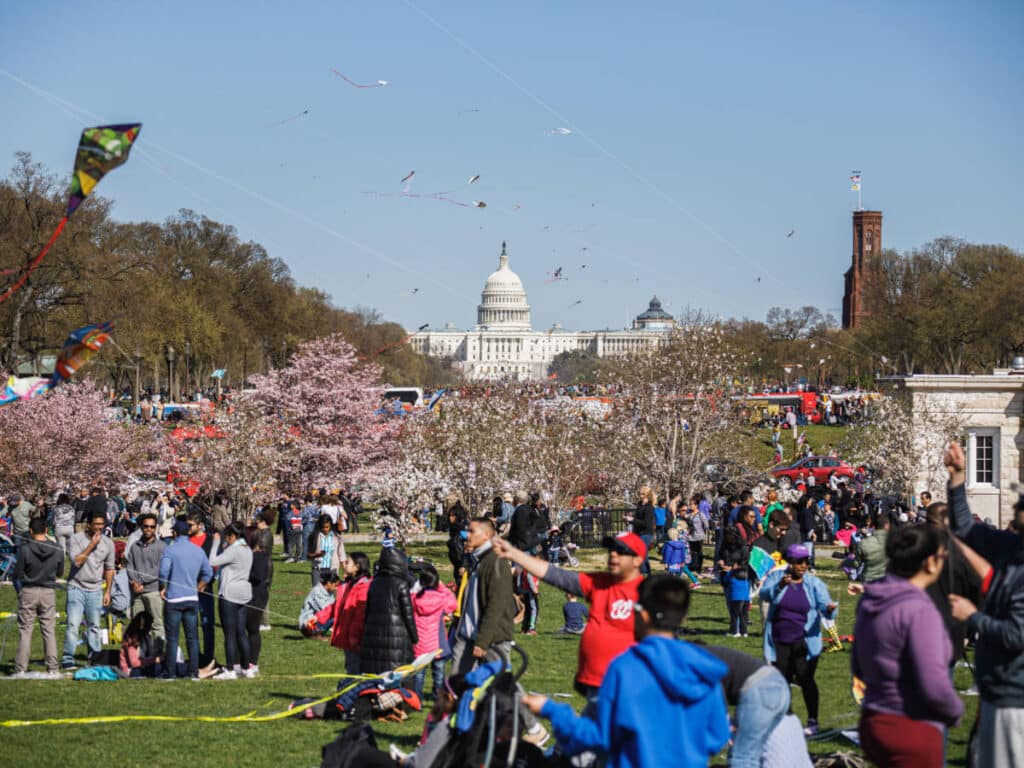
Visit Washington DC during the low season in the fall, winter, and early spring if you want to avoid crowds. These shoulder seasons have fewer major events overall and can be cheaper times to visit.
Avoid visiting Washington DC in the late spring and summer to bypass crowds. During these months, you can expect crowds, long lines, and higher prices.
The National Cherry Blossom Festival brings huge crowds from late March to mid-April. June, July, and August are the peak season for travel. The holiday season can also attract crowds. University graduation ceremonies in late spring and early summer draw crowds, too.
👉 Pro Tip: Tickets for the National Tree Lighting are available via an online lottery that starts in early November. However, the public can visit the National Christmas Tree after the ceremony in early December.
When to Visit Washington DC for Families with Kids
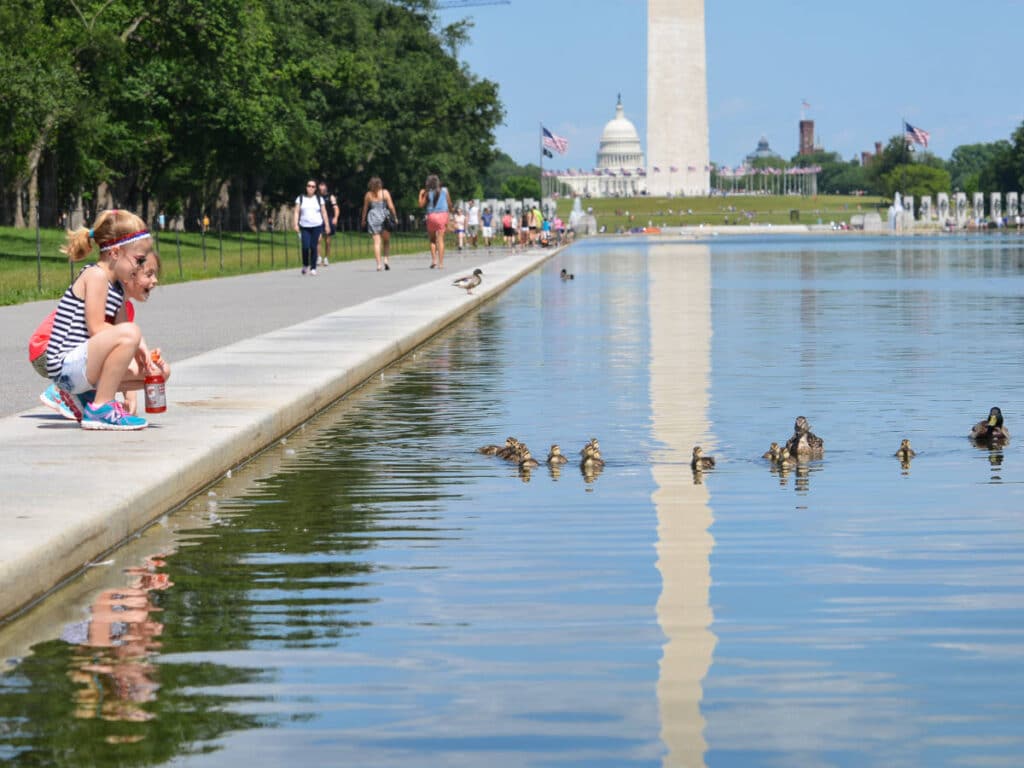
The summer is the best time to visit Washington DC for families with kids because this is when kids are out of school. This time of year offers plenty of activities and attractions to keep everyone in the family busy and engaged. Just note that summer is the busy season and there will be a lot of crowds. There’s a good chance there will be plenty of other families staying around you.
Spring break season in early March or mid-March can also be a great time to visit DC for families with kids. This time of year has cooler weather and fewer crowds so you can visit famous attractions with less of a hassle.
When to Visit Washington DC for Cherry Blossoms
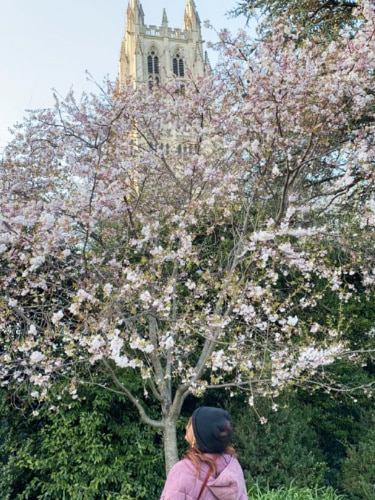
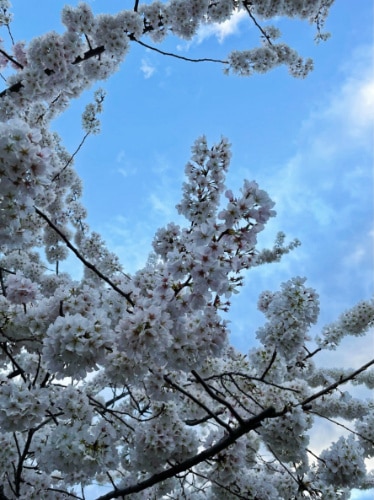
Cherry blossoms are one of the biggest annual attractions in the nation’s capital. You can visit the cherry blossoms any time between approximately mid to late March and late April. The cherry blossoms bloom throughout Washington DC. Peak bloom is announced a few weeks in advance.
The dates of the National Cherry Blossom Festival typically run from late March to mid-April. However, you don’t have to visit during the festival to view the cherry blossoms. Check when the festival is happening ahead of time and plan to visit just after the festival if you just want to see the flowering trees.
See my article on what to know about the National Cherry Blossom Festival before you go.
👉 Pro Tip: Book accommodations for the Cherry Blossom Festival early. Hotels book up quickly and hotel prices get higher closer to the festival.
Washington DC Travel Seasons
Spring (March to May)
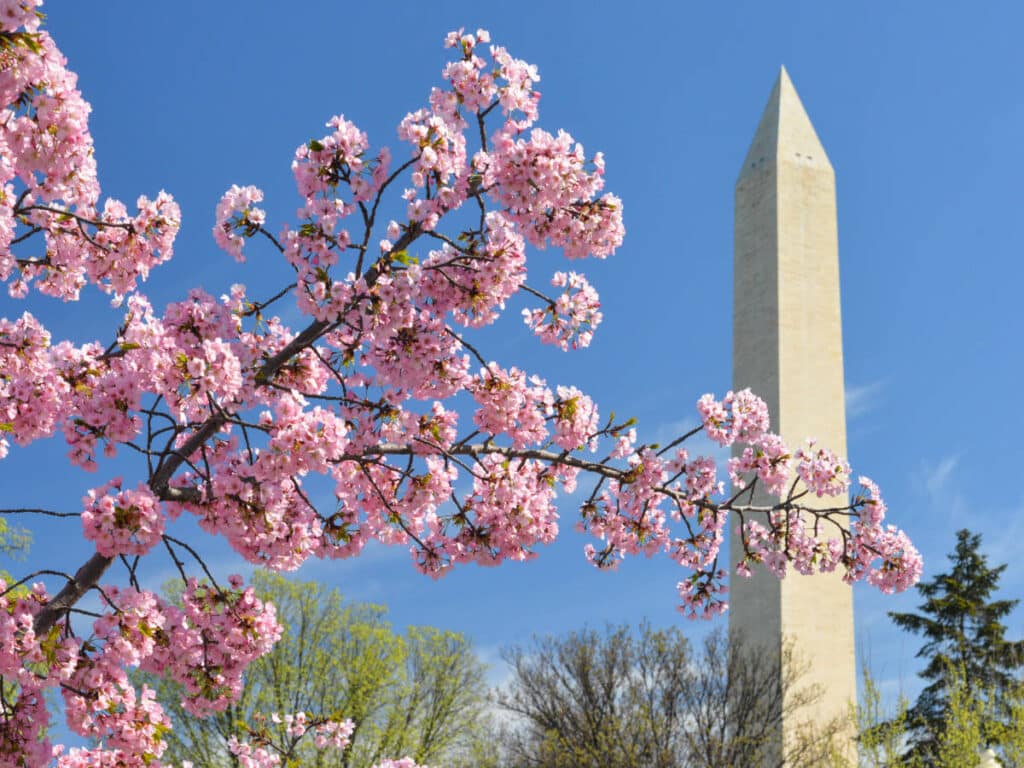
Spring is the best time to visit for good weather and enjoy attractions. The weather starts to warm up during this time. Temperatures range from the mid-50s to the low 60s.
The National Cherry Blossom Festival happens in the spring. The National Cherry Blossom Festival can bring crowds and increase prices. Crowds also come to DC for various university graduation ceremonies. Aside from these events, the spring can be less busy and less expensive overall.
Summer (June to August)
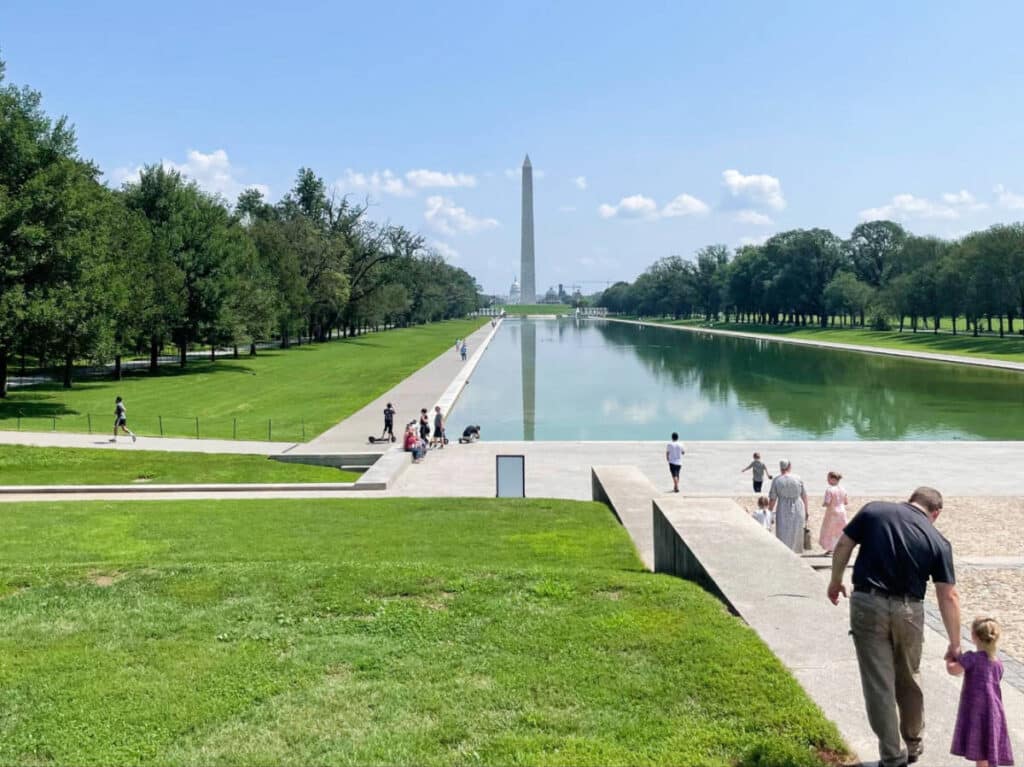
June, July, and August are popular times to visit Washington DC since these months coincide with the summer vacation season. The summer months see high temperatures in the 80s and 90s with high humidity.
The summertime brings massive crowds so local attractions and popular DC museums like the National Mall and Smithsonian Museums get busy. Summer is also the street festival season. Many neighborhood and city-wide festivals and markets make exploring DC fun.
Do note that the high summer heat can make outdoor activities unenjoyable, though.
👉 Pro Tip: Visiting nearby towns and doing day trips is a great way to avoid some of DC’s summer crowds if you’re a local.
Fall (September to November)

The fall has pleasant weather where temperatures begin to cool and the humidity lowers. The average temperature ranges from the mid-60s to the low 80s.
In general, crowds are fewer during this time. However, school groups tend to visit the nation’s capital in late fall. There tend to be crowds around educational and historic monuments like the Lincoln Memorial, Arlington National Cemetery, and the Washington Monument.
Winter (December to February)

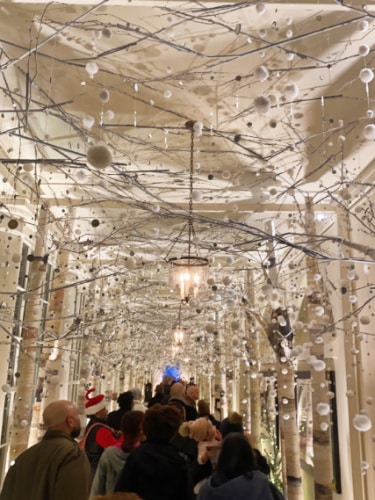
Winter is the low season and cheapest time to visit Washington DC, apart from the holidays. Tourism is slower overall and there are fewer crowds. Temperatures hover around the 30s and 40s. There can be days of inclement weather and snow accumulation can happen.
Attractions like the museums and the monuments will still be open in the winter months. But check in advance because attractions, museums, and the Library of Congress are closed on holidays.
As for holiday activities, the winter offers things like the National Tree Lighting, holiday festivals, and holiday lights. These events attract many locals and some visitors.
So, don’t be so quick to avoid the winter! The colder months can make for a wonderful trip. Read my article on why visiting DC in the fall and winter is a great idea. I explain why it’s better than the popular summer season, and list all the perks that come along with cooler temps.
👉 Pro Tip: Want to tour the White House at Christmas? You have to request tickets through your member of Congress in either the House or Senate. Plan in advance because tickets are first come, first serve.
Washington DC Weather and Climate
Washington DC is a temperate region. Summers see high temperatures with high humidity levels. Quick summer storms are common, sometimes with high winds. Winters are damp with moderate snowfall. Spring and fall have comfortable temperatures with lower humidity.
Precipitation is fairly evenly distributed in Washington DC. Accumulation is about three to four inches each month. There are few days of temperature extremes throughout the year.
Tips for Visiting Washington DC
Book Accommodations Early for Special Events
Try and book a few months in advance to avoid price surging and to secure a reservation if you want to visit Washington DC for a special event. Booking a hotel close to your event date might mean that your options for where to stay are limited. This may result in having to reserve a hotel farther out of the city.
Check for Concerts, Sporting Events, and Special Events
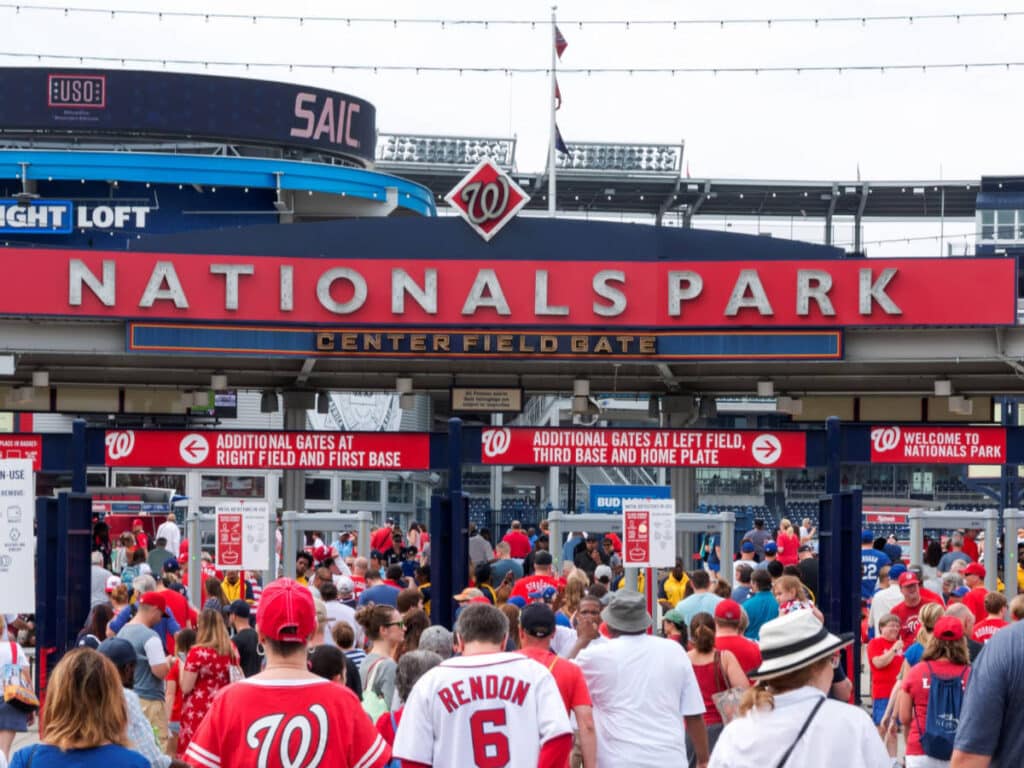
Washington DC is a popular destination for concerts, sporting events, and other special events. These events can often affect hotel prices. Be mindful of this when making travel plans, even if you’re not attending one of these events yourself.
Book Attraction Tickets Early
Book tickets in advance rather than opting for same-day entry. This is especially true for tours and attractions like the Smithsonian Museums during the high season. In fact, some attractions may even require booking tickets in advance. Following this simple tip while planning your DC itinerary can save a lot of hassle.
FAQs About When to Visit Washington DC
When is the high season in Washington DC?
June, July, and August are considered the high season in Washington D.C. since many people visit during their summer vacations.
What is the best month to go to Washington DC?
The best month to go to Washington D.C. is April or May because the weather is pleasant and crowds are not yet at their highest.
What is the cheapest month to visit Washington, DC?
January is the cheapest month to visit Washington D.C. since there is little tourism during this time.
How many days do I need in Washington, DC?
A minimum of three days is a good amount of time to visit Washington D.C. Between five and seven days is a sufficient visit.
***
Ultimately, the best time to visit Washington DC depends on what activities you want to do during your trip. You can visit Washington DC year-round, but some seasons are better than others.
Looking for more helpful DC travel information? Read my guide on Washington DC safety next.
