
Affiliate Ad Disclosure: We’re reader-supported. When you buy via our links, we earn commissions. Learn more.
27 Best Things to Do in Marrakesh
👉 Jump to: Best Things | Palaces & Heritage Sites | Museums | Culinary Experiences | Gardens | Outdoor Adventures | Day Trips | Shopping
I’ve been a frequent visitor to Marrakesh over the last 15 years and know Morocco’s most alluring imperial city as well as my hometown.
Famous for its architecture, food, and hospitality, Marrakesh is a city of stories with a rich cultural history and glowing red walls as a backdrop.
To help you plan your own visit, I’ve rounded up some of the best things to do in Marrakesh, with plenty of my favourite palaces, secret gardens, and culinary adventures on the agenda. Combine this with my article on the best places to stay in Marrakesh, and you’re all set!
27 Best Things to Do in Marrakesh
Djemaa el Fna
Explore the old town’s lively main square, with street performers, orange juice sellers, and balcony cafés.
📍 Google Maps | 👉 Browse Djemaa el Fna Tours on Viator
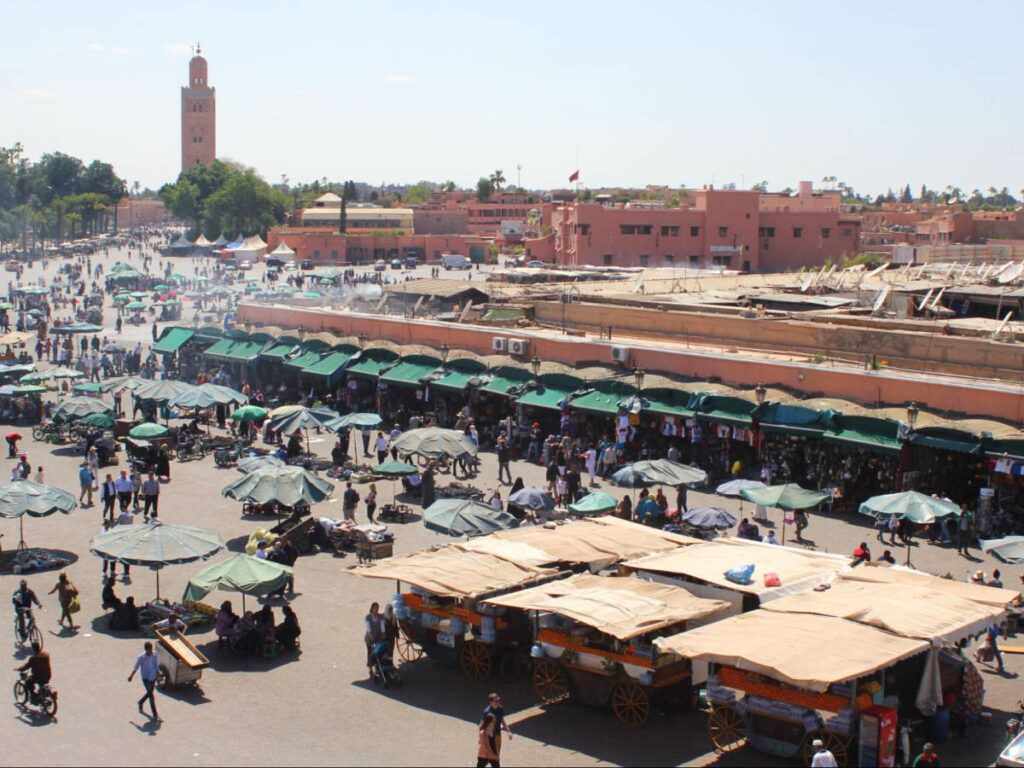
Djemaa el Fna, the main square in Marrakesh, lies at the heart of the medina (old town). It’s long been a gathering place for the city’s inhabitants and is a major draw for tourists today, too.
By day, you’ll find acrobats, musicians, and snake charmers showing off their skills — be prepared to give a tip if you watch or take photographs from close quarters. It’s a great place to people-watch from one of the café balconies that surround the square.
Djemaa el Fna is a must for all first-time visitors to Marrakesh and makes a useful focus point when navigating the labyrinthine medina streets.
Souks
A city icon, this centuries-old covered market is a sensory experience for visitors looking to buy traditional handicrafts.
📍 Google Maps | Hours: Generally 9 am – 9 pm daily, Limited Hours on Friday Afternoons | 👉 Book a Private Marrakesh Souks Shopping Tour on Viator
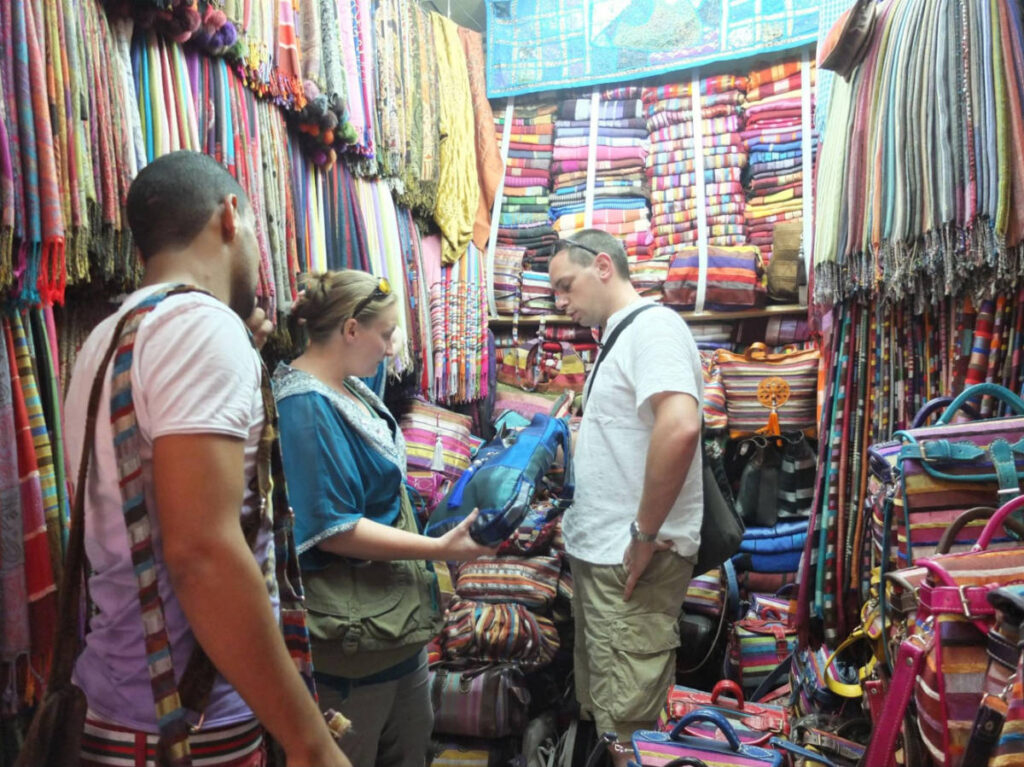
Sprawling out into the medina from Djemaa el Fna, the Marrakesh souks are a bit of a sensory overload, in a good way! Here, stalls overflowing with artisan crafts line the narrow passages, with vendors vying for your attention in all manner of creative ways.
If shopping and culture are your thing, then you’ll love strolling the souks. This is the place to buy your souvenirs, whether you’re in the market for leather babouches, colourful ceramics, or Berber rugs.
There are spices and sweet Moroccan pastries too, just follow your nose to find them. Haggling is all part of the experience, so be prepared to barter hard and try not to feel intimidated. If you don’t intend to buy, don’t touch.
Bahia Palace
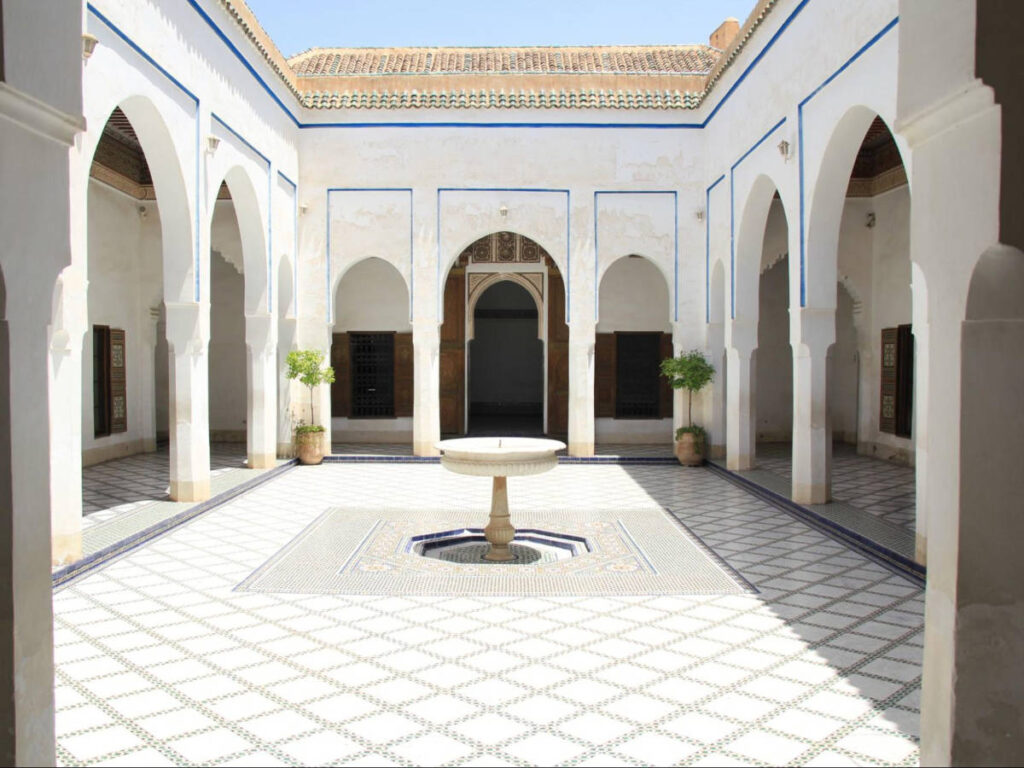
A beautiful showcase of traditional Moroccan architecture with photogenic arches and colourful mosaic tiling.
📍 Google Maps | Website | Hours: 9 am – 5 pm daily | Entrance: DH100, adults, DH30, ages 7 – 13 | 👉 Browse Bahia Palace Tours on Viator
This 19th-century royal palace is one of the best-preserved examples of traditional Moroccan architecture in the Marrakesh medina. Commissioned by the sultan’s grand vizier and created by specialist artisans from across the country, every inch of the palace was built by hand.
You can explore the peaceful courtyards, admire the exquisite craftsmanship, and stroll around the fragrant gardens while learning about the city’s intriguing past. Look out for the intricate zellij tilework and sculpted stucco as you wander through the salons.
Anyone interested in Moroccan cultural history and photography will love visiting the Bahia Palace. It’s a 15-minute walk south of the Djemaa el Fna.
Stay in a Riad
Stay in a traditional medina guesthouse with courtyards, roof terraces, and dipping pools for a quintessential Marrakesh experience.
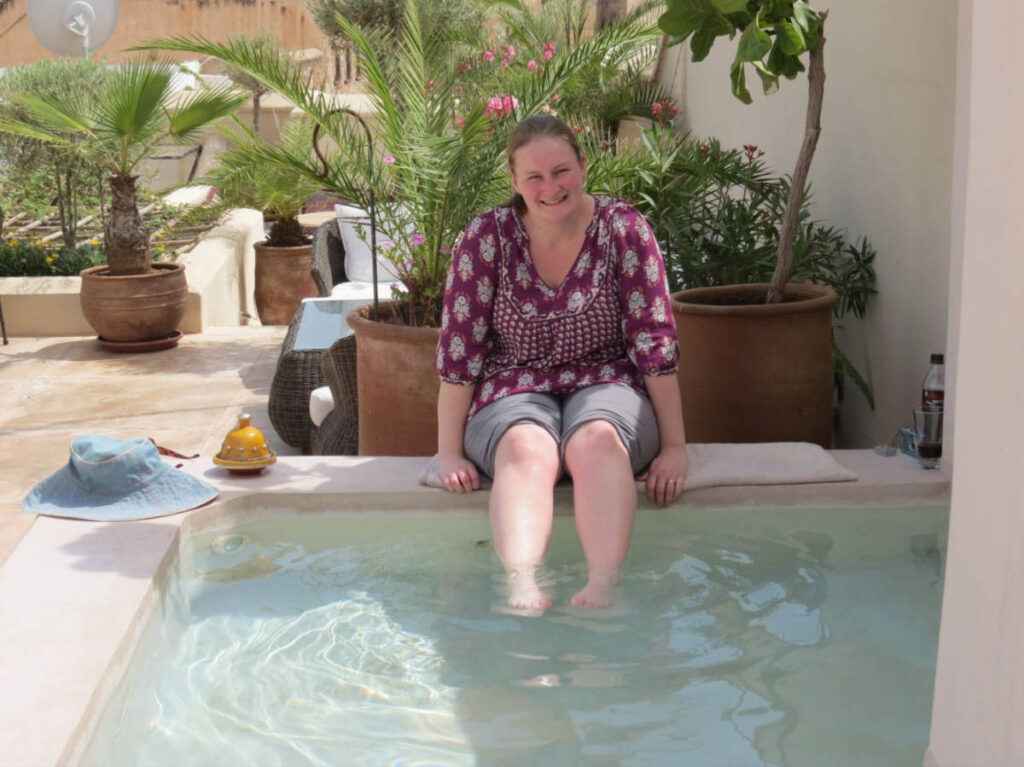
Riads are traditional homes in Marrakesh’s medina, centred around an internal courtyard with rooms on several levels. They’re intimate and romantic, with lush foliage and tinkling fountains giving a calming vibe.
You’ll find some of the city’s most beautiful zellij tilework and carved wooden façades inside these riads, so it feels like sleeping in a fairy tale. The roof terrace is usually the highlight, with views of the distant Atlas Mountains, and dipping pools for cooling off on hot afternoons.
Try to eat at least one evening meal up here and listen to the haunting calls to prayer from the local minarets. A riad stay is a great choice for travellers wanting a traditional experience, with options available for every budget.
🏨 Need a Hotel?: Some of my favourite riads in Marrakesh are Riad Assakina, La Maison Arabe, and Riad Cinnamon, but there are so many other options! For more, see my guide to where to stay in Marrakesh.
Madrasa Ben Youssef
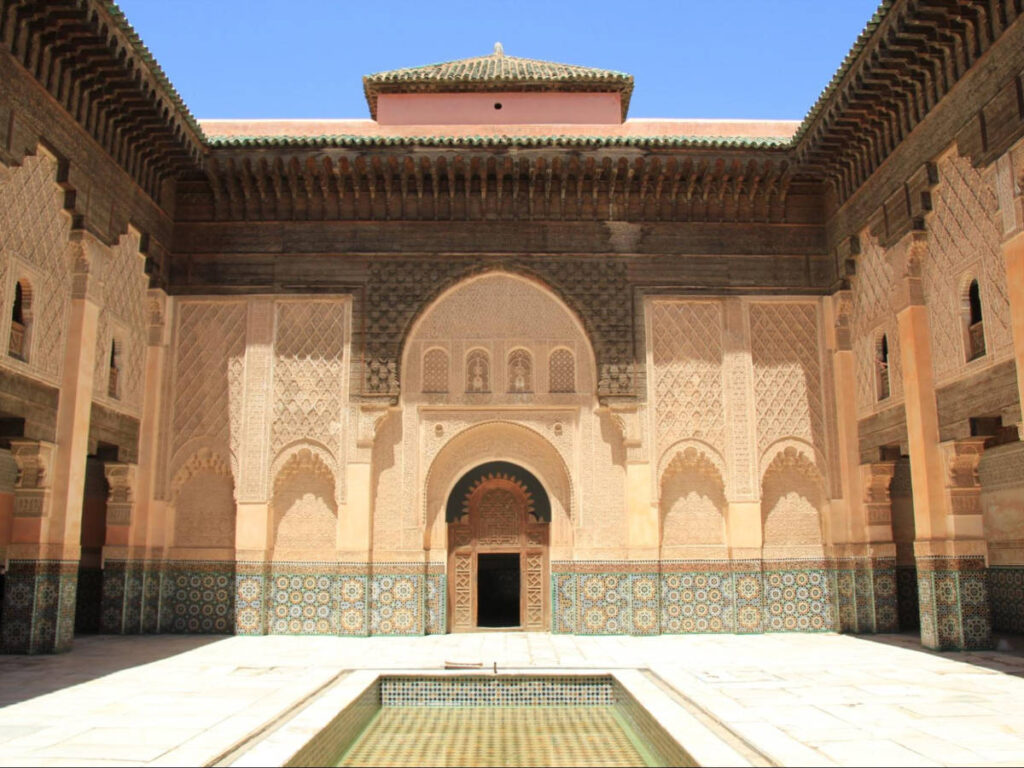
This centuries-old former Islamic school embodies Morocco’s cultural and religious history and has some of the city’s most photogenic architecture.
📍 Google Maps | Phone: (212) 524 384112 | Website | Hours: 9 am – 7 pm daily | Entrance: DH50, adults, DH10 under 12 |👉 Browse Madrasa Ben Youssef Tours on Viator
Founded in the 14th century as a centre of art, knowledge, and culture, Madrasa Ben Youssef was once the largest Islamic school in North Africa. Later abandoned, it’s now been restored to its former glory and is a fine example of traditional Moroccan architecture.
Madrasa Ben Youssef is located in the north of Marrakesh’s medina, just a 15-minute walk from Djemaa el Fna. This ancient religious complex is packed with beautiful carved cedar wood ceilings, colourful zellij tiling, and sculptured plaster with intricate geometrical designs.
The madrasa is a must for photographers — the upper galleries are the best places for shots of the courtyard and its central reflective pool.
Traditional Hammams
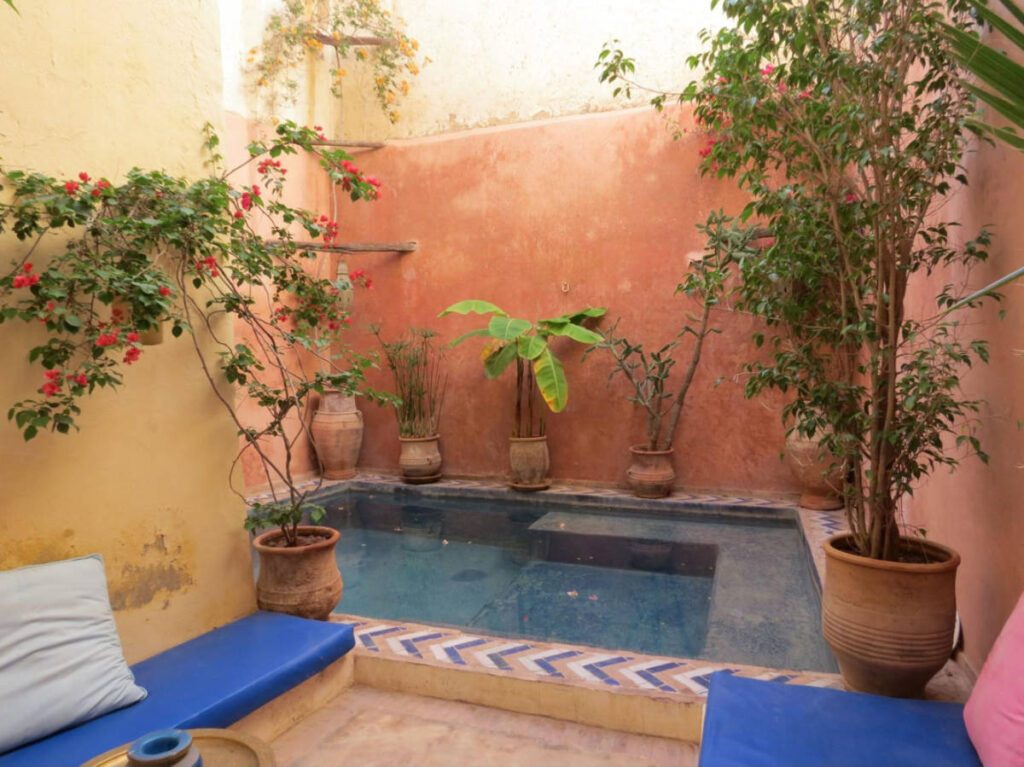
A cleansing ritual and cultural institution, the Moroccan hammam isn’t just a bath – it’s an experience.
📍 Google Maps (Hammam de la Rose) | Website | 👉 Book a Marrakesh Hammam Experience on Viator
Hammams are communal bathing spaces across the city where locals go to wash, relax, and socialise. Inspired by the old Roman bathhouses, Marrakesh’s hammams have been a staple part of life here for centuries.
There are several stages to a hammam. First up is the steam room to open your pores, after which an attendant will scrub your body using a traditional Kessa glove. Then it’s time for cleansing with Moroccan black soap and a final rinse.
You can bathe at public hammams for an authentic local experience (Hammam Mouassine is a good option), while places like Hammam de la Rose and Les Bains de Marrakech offer a more luxurious, private experience. If you enjoy spas but want to try something different, this is it!
Palaces & Heritage Sites in Marrakesh
Dar El Bacha – Confluences Museum
This former palace is a testament to Moroccan craftsmanship and is now home to a cultural museum and an iconic coffee shop.
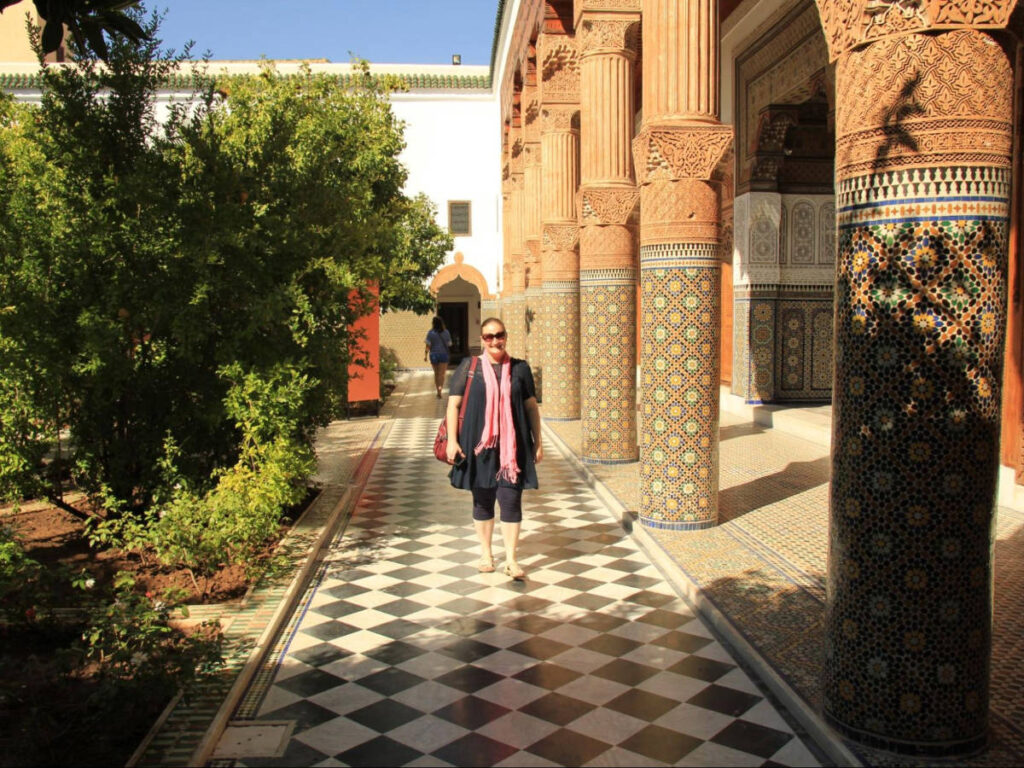
📍 Google Maps | Phone: (212) 524 389 564 | Hours: 10 am – 6 pm daily, Closed Mondays | Entrance: DH60, adults, DH15 under 18 | 👉 Book a Dar El Bacha, Ben Youssef Madrasa, and Medina Tour on Viator
Like many of the city’s palaces, Dar El Bacha is a shining example of Moroccan architecture. The ceilings are adorned with carved stucco, the walls and columns show off the colourful zellij tiling at its best, and the arched doorways are intricately carved in cedar wood.
Inside the museum, you’ll discover an eclectic collection of African art and a courtyard filled with fragrant orange trees. There’s also an Art Deco coffee shop here that sells delectable pastries.
Located at the medina entrance in the Dar el Bacha neighbourhood, the former home of the Pasha of Marrakesh is a hit with travellers interested in cultural history, as well as Instagrammers.
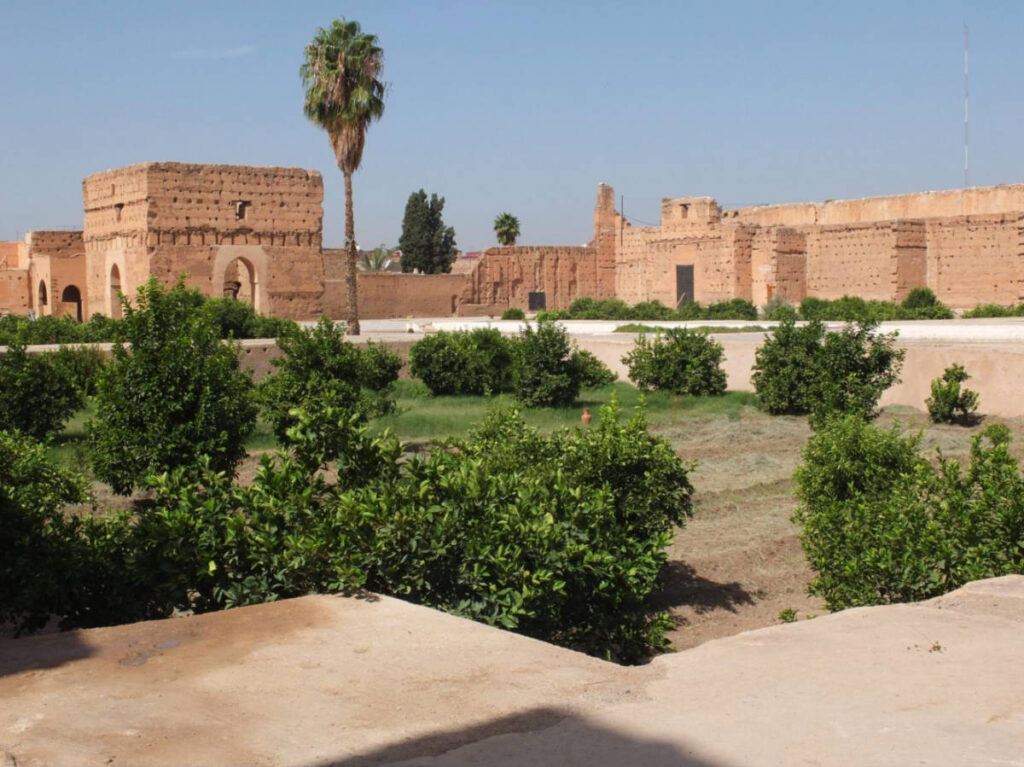
El Badi Palace
An atmospheric 16th-century palace ruin that’s a great place to spot storks nesting on the terracotta walls.
📍 Google Maps | Website | Hours: 9 am – 5 pm daily | Entrance: DH100, adults, DH30 ages 7 – 13
El Badi Palace sometimes gets overlooked in favour of the city’s better-preserved monuments, but I love this 16th-century ruin for its peace and its wildlife.
Dating back to the Saadian Dynasty, El Badi Palace was once an opulent residence but has been a ruin since the 17th century, when it was demolished so the building materials could be reused. Just a 10-minute walk south of the Djemaa el Fna, the palace now offers visitors interested in history and photography a tranquil respite from the busy medina.
If you visit between February and September, you might see storks nesting high up on the palace walls. I recommend combining a visit here with the nearby Bahia Palace and Saadian Tombs.
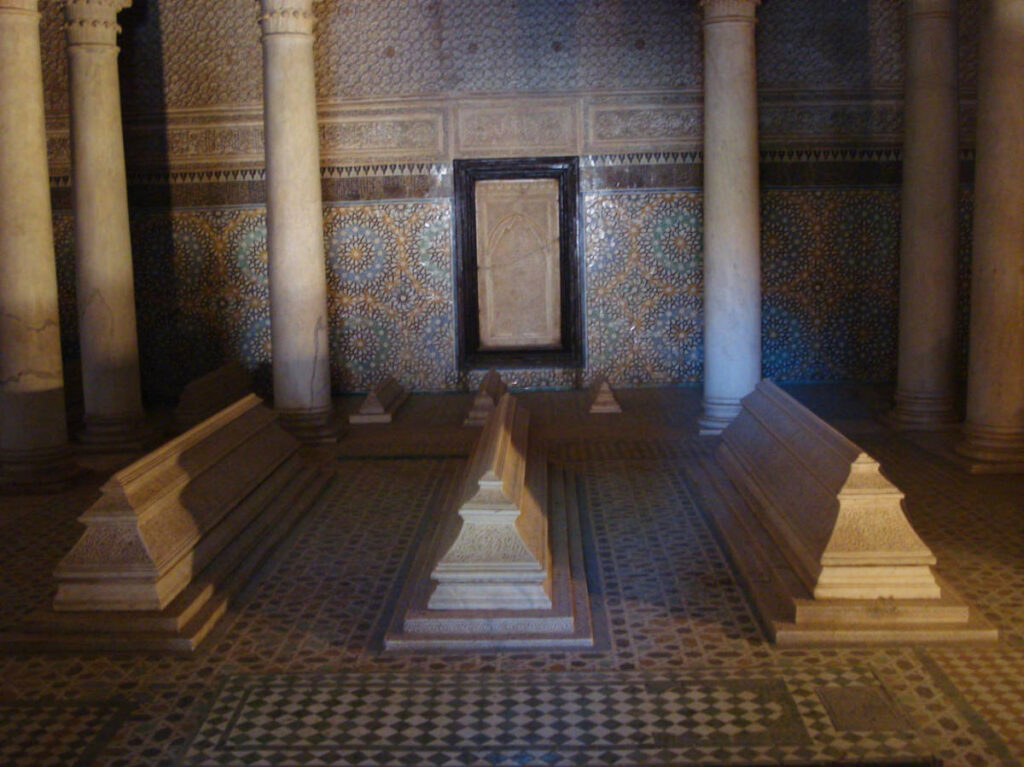
Saadian Tombs
These royal tombs from the Saadian Dynasty are found inside one of Morocco’s oldest mosques.
📍 Google Maps | Website | Hours: 9 am – 5 pm daily | Entrance: DH100, adults, DH30 ages 7 – 13 | 👉 Book a Bahia Palace, Saadian Tombs, Souk & Medina Guided Tour on Viator
Built in the 16th century by Sultan Ahmad al-Mansur, the Saadian Tombs were a regal display of wealth and power. They lay hidden for hundreds of years before being rediscovered and opened to the public in 1917.
You’ll find the tombs in the Kasbah Mosque, which is about 20 minutes south of the main square on foot. The tombs are fascinating, but it’s the exquisite Moroccan building design that will make you want to linger, with vibrant zellij tiling and carved stucco adorning the chamber walls.
If you’re into architecture or royal history, visiting the tombs is a must. It’s a relatively small site and can feel very crowded, so I recommend visiting this one around opening or closing time.
Koutoubia Mosque
A city icon and useful navigational landmark, the Koutoubia Mosque towers above the Marrakesh skyline.
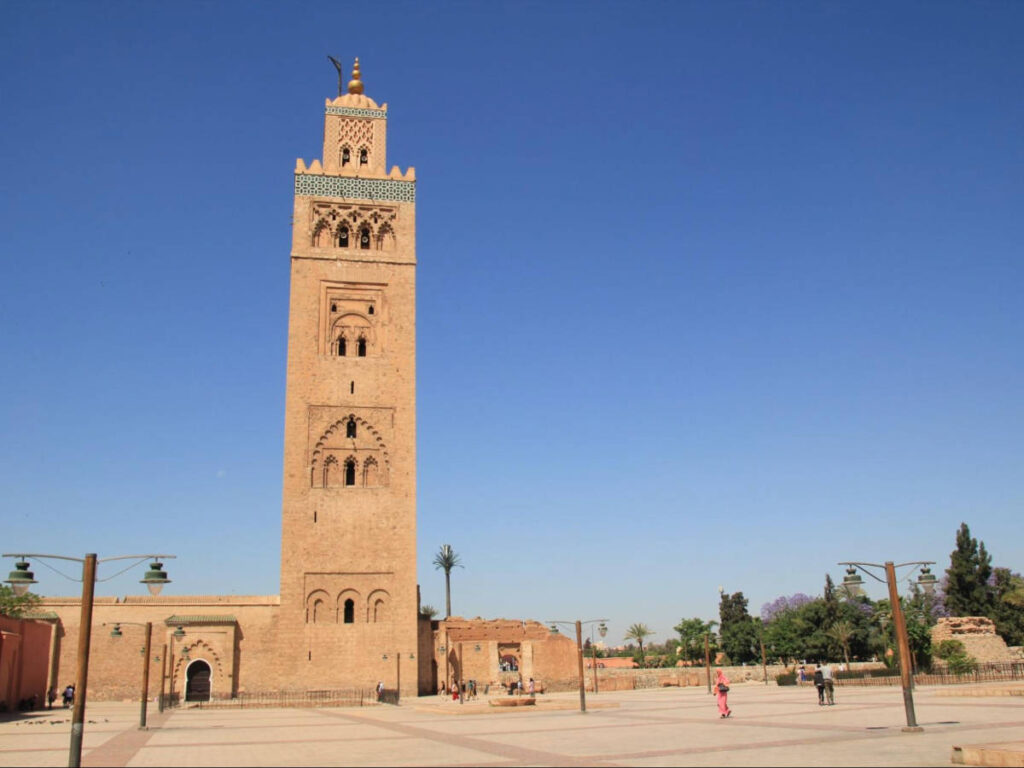
Sitting on the edge of Djemaa el Fna in the medina centre, the Koutoubia Mosque is probably the city’s most photographed landmark, thanks to its towering 77-metre minaret.
Constructed in the 12th century and named after the booksellers who used to trade in the nearby streets, the Koutoubia is the largest mosque in Marrakesh, with capacity for around 25,000 worshipers. As with most mosques, non-Muslims can’t go inside, but the external architecture is splendid enough to capture the imaginations of photographers.
Make sure you head to one of the balcony cafés around the square at sunset for that iconic silhouette shot. The minaret is a great navigational aid, too — if you’re lost, head towards it, and you’ll end up back in the main square.
Tanneries
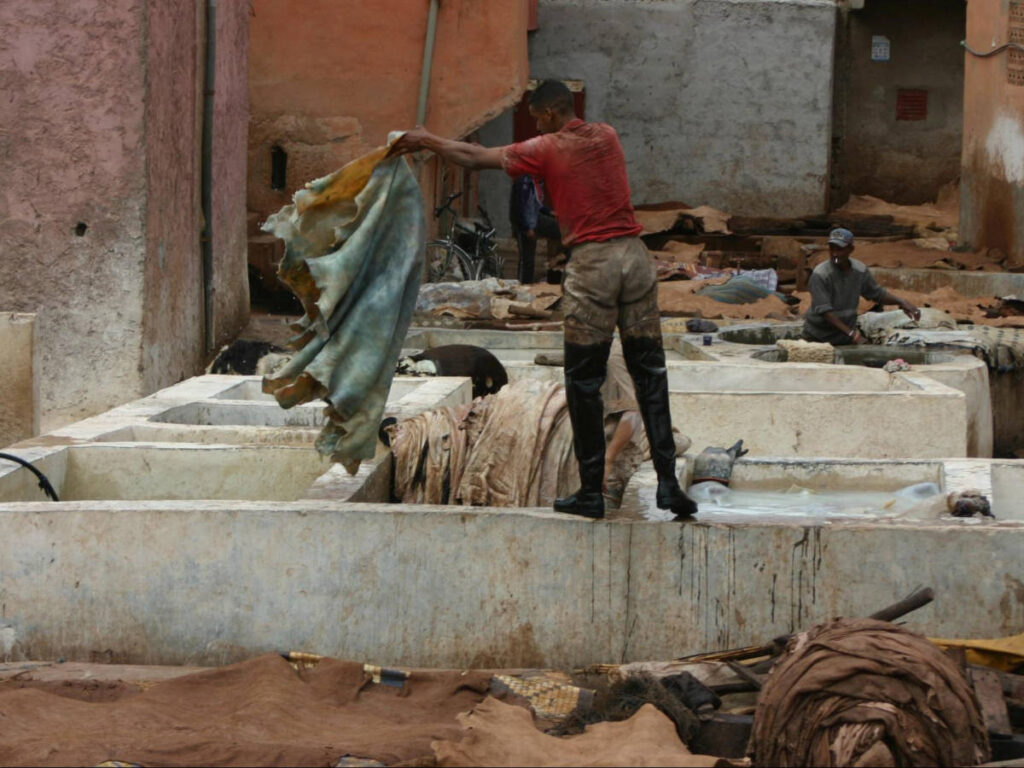
The tanneries are the heart of Marrakesh’s leatherworking industry, where one of Morocco’s oldest traditions unfolds.
📍 Google Maps | Hours: Generally 9 am – 6 pm daily | 👉 Book a Marrakesh E-Bike Tour on GetYourGuide
For travellers interested in the city’s cultural heritage, the tanneries make an intriguing diversion. This is where leather is produced before being shaped into the artisan crafts sold in the souks.
The techniques have remained unchanged for centuries, using vats of water mixed with pigeon droppings to soften the animal hides, and natural dyes for colour. On hot days, the smell can be intense!
The tanneries are a half-hour walk northeast of Djemaa el Fna, and it’s easy to get lost in the medina’s maze of alleyways. There’s always a handy local around who will show you the way for a tip, but if you’re nervous about getting scammed, then it’s best to visit with a guide. The tanneries are one of the stops on this well-rated E-bike tour.
Marrakesh Museums
Maison de la Photographie
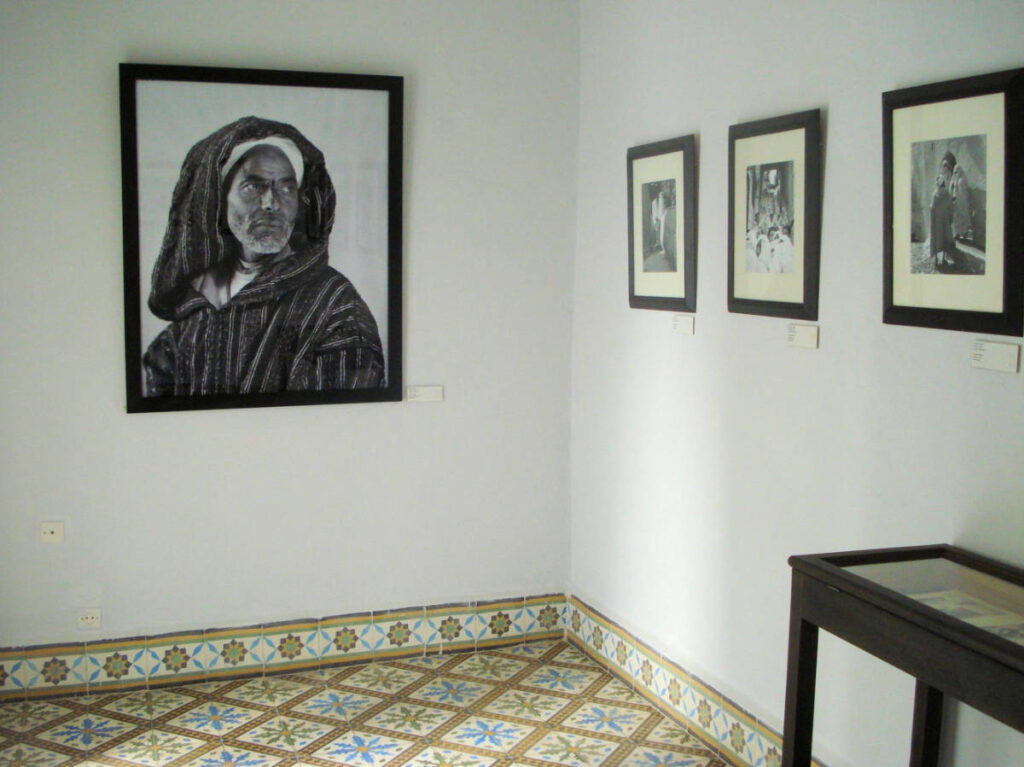
Home to an exquisite collection of prints, the House of Photography documents everyday life in Morocco since the 1800s.
📍 Google Maps | Phone: (212) 2438 5721 | Website | Hours: 9:30 am – 7 pm daily | Entrance: DH80, adults, Free, under 15
Anyone after a slice of Moroccan nostalgia will enjoy wandering through this former fondouk (merchant inn). Inside Maison de la Photographie, you’ll discover collections of photographs and films that have captured life here between 1879 and 1960.
The images of markets and street scenes are still recognisable today, while the portraits give a glimpse into the everyday lives of Moroccans through recent centuries. You’ll find the museum in the north of the medina, 13 minutes on foot from the main square.
The Madrasa Ben Youssef is nearby, so it makes sense to combine the two. Don’t leave without buying some souvenir prints from the shop or enjoying mint tea on the panoramic roof terrace after your visit. Top tip: your ticket also gives you entrance to the Music Museum (Musée de la Musique).
Musée de la Musique
Discover Gnawa rhythms and Amazigh melodies through exhibitions and traditional music evenings at this intimate museum.
📍Google Maps | Phone: (212) 5 24-37-77-92 | Website | Hours: 10 am – 7 pm daily | Entrance: DH80, adults, Free, under 15
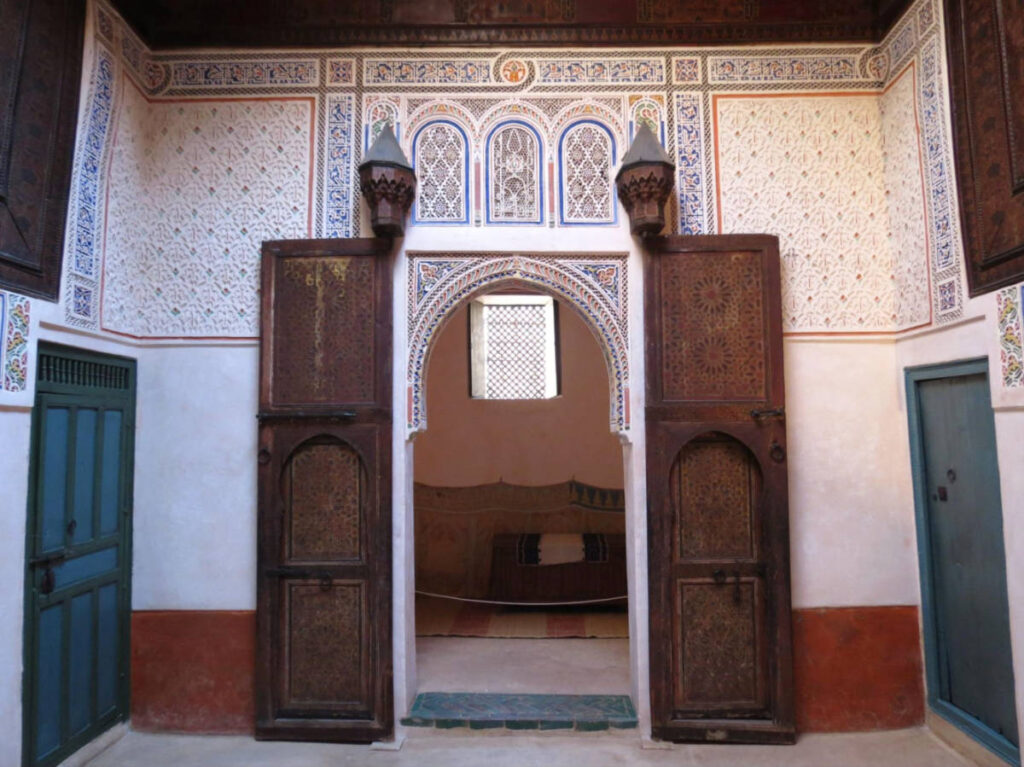
Hidden away inside an 18th-century house in the north of the medina, the quirky Musée de la Musique (Music Museum) showcases Moroccan music heritage with exhibits, documentaries, and, of course, sounds.
You’ll see some of the instruments played through the ages and learn how the diverse rhythms and melodies are influenced by Andalucian, African, and Berber cultures. The architecture inside the building is well preserved, which makes a fitting setting for the traditional evening concerts that are held throughout the week.
If you’re looking for something a bit different and want to find out more about Moroccan culture, this is a great place to come. It’s peaceful too, and is only an 8-minute walk from the main square.
Yves Saint Laurent Museum
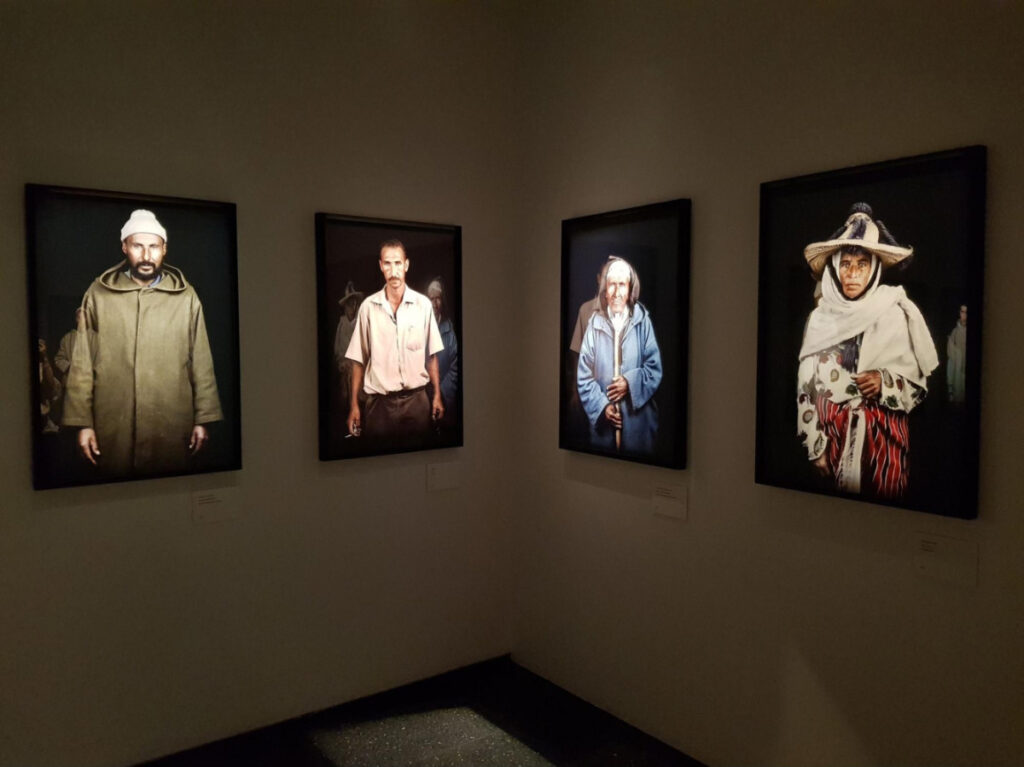
A tribute to the legendary French fashion designer, this stylish museum showcases his work, as well as thought-provoking temporary art exhibitions.
📍 Google Maps | Phone: (212) 5243 13047 | Website | Hours: 10 am – 6:30 pm daily, Closed Wednesdays | Entrance: DH140, adults, DH75, aged 10 – 18, Free under 10 | 👉 Buy YSL Museum, Berber Museum & Majorelle Garden Tickets on Viator
Popular with fashion enthusiasts, the Yves Saint Laurent Museum is a treasure trove of original clothing created by the famous designer. The exhibition halls are awash with colour and elegance, featuring garments, photos, and film clips from his personal collection.
You’ll delve deep into the world of haute couture and discover more about Yves Saint Laurent’s life here in Marrakesh. There are temporary exhibitions to enjoy too, each with a different theme.
The museum building is a style icon in itself, with contemporary curves inspired by the heritage of Marrakesh. It’s located next to the Jardin Majorelle in the New Town, so it makes sense to visit both with a combined ticket. You can walk there from the medina or take a petit taxi.
Museum of Marrakesh
This collection of heritage artefacts displayed in a magnificent palace takes you on a journey around Morocco.
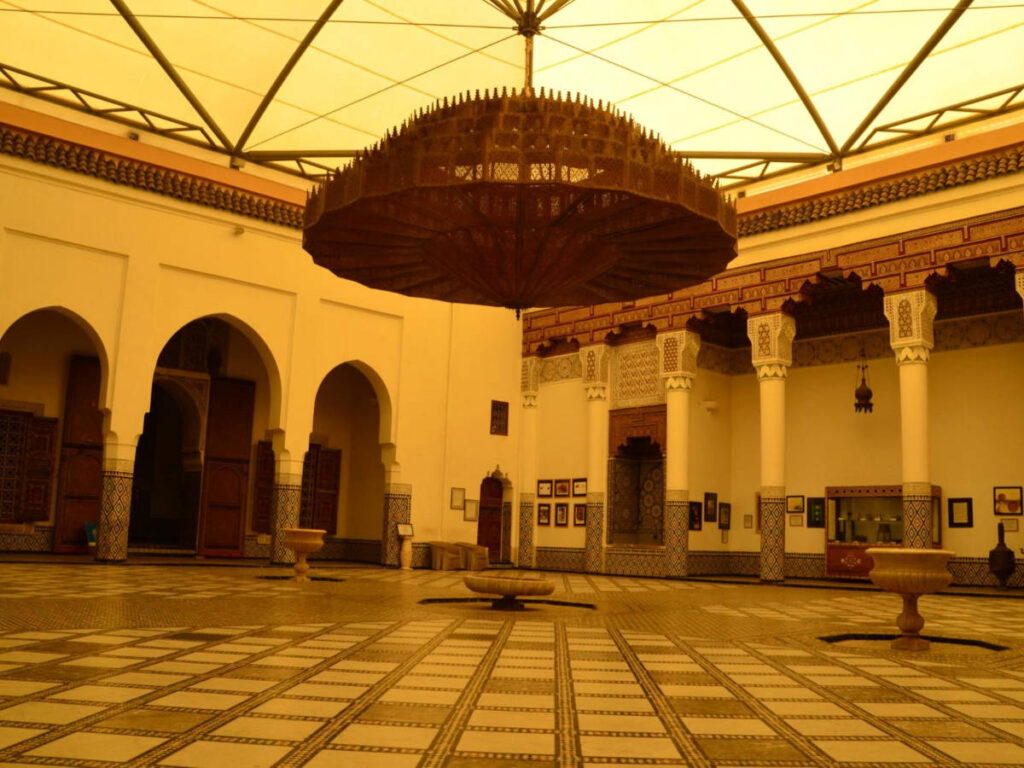
📍 Google Maps | Phone: (212) 5 24-44-18-93 | Hours: 9:30 am – 6 pm daily | Entrance: DH70, adults, DH20, under 12
The Marrakesh Museum is in the north of the medina, just 11 minutes on foot from the main square. It tells the story of Morocco’s heritage with collections of artefacts from across the country.
From textiles and jewellery to ceramics and art, the exhibits reveal their secrets to anyone wanting a deeper historical understanding of Morocco. The setting inside the 19th-century Dar Mnebhi Palace is splendid, with the spacious courtyard and enormous chandelier taking centre stage.
Visitors come here for the architecture as much as the exhibitions. Keep an eye out for the Almoravid Koubba just outside; it’s the oldest monument in Marrakesh. While it’s well worth visiting the museum, I’d recommend prioritising the Bahia Palace and Madrasa Ben Youssef if you’re tight on time.
Culinary Experiences in Marrakesh
Night Market
An assault on all the senses, this lively evening food market tempts you in with delicious aromas and catchy sales patter.
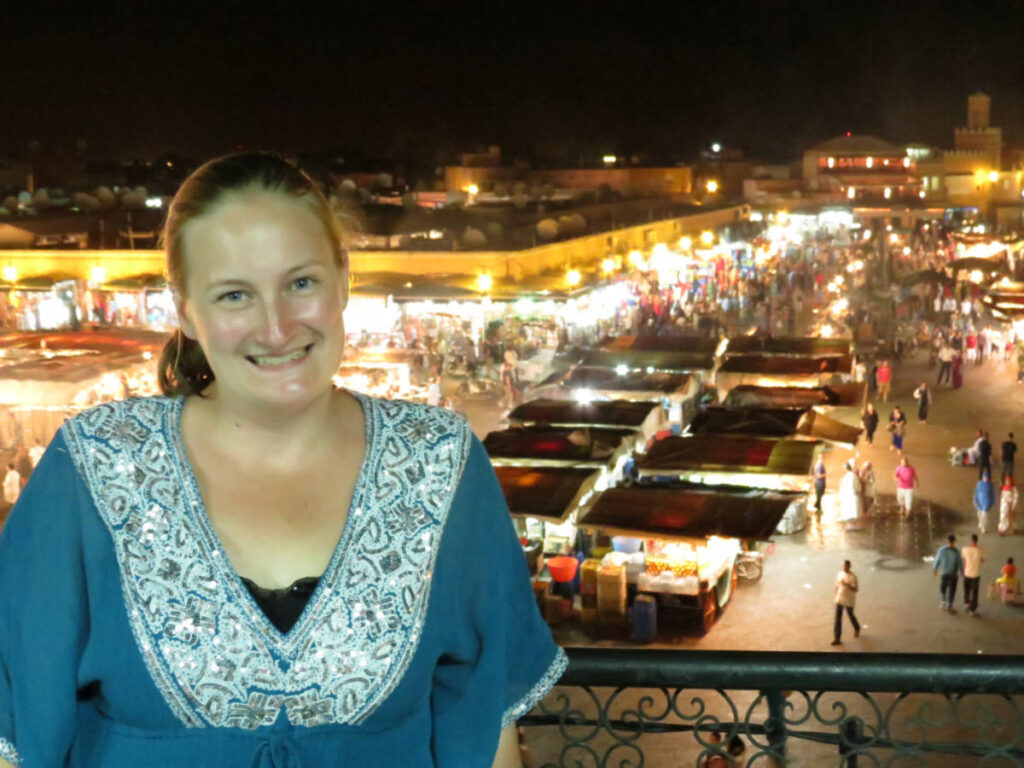
📍 Google Maps | Hours: From sunset until late, open daily | 👉 Book a Night Street Food Tour through Marrakech on Viator
No visit to Marrakesh is complete without swinging by the night market, held each evening in Djemaa el Fna.
As dusk falls, rows of food stalls appear in the square, with smoke from the sizzling grills filling the air. It’s quite a sight and best photographed from one of the café balconies. Popular with locals and tourists, the market serves up everything from roast lamb and pancakes to snail soup and offal stew.
It can feel overwhelming, with the cheeky sales patter of touts coming from all angles, so I suggest picking a stall where locals are eating — a good sign that the food is delicious. Or you could take this local-led food tour to leave all the choices up to your guide. It’s a great introduction to traditional Moroccan cuisine for foodies and anyone who’s feeling a bit peckish.
Cooking Workshop at La Maison Arabe
In this immersive cooking class, the secrets of Moroccan cuisine are revealed, one mouthful at a time.
📍 Google Maps | Phone: (212) 524-38-70-10 | Website | 👉 Book La Maison Arabe Cooking Workshop on Viator
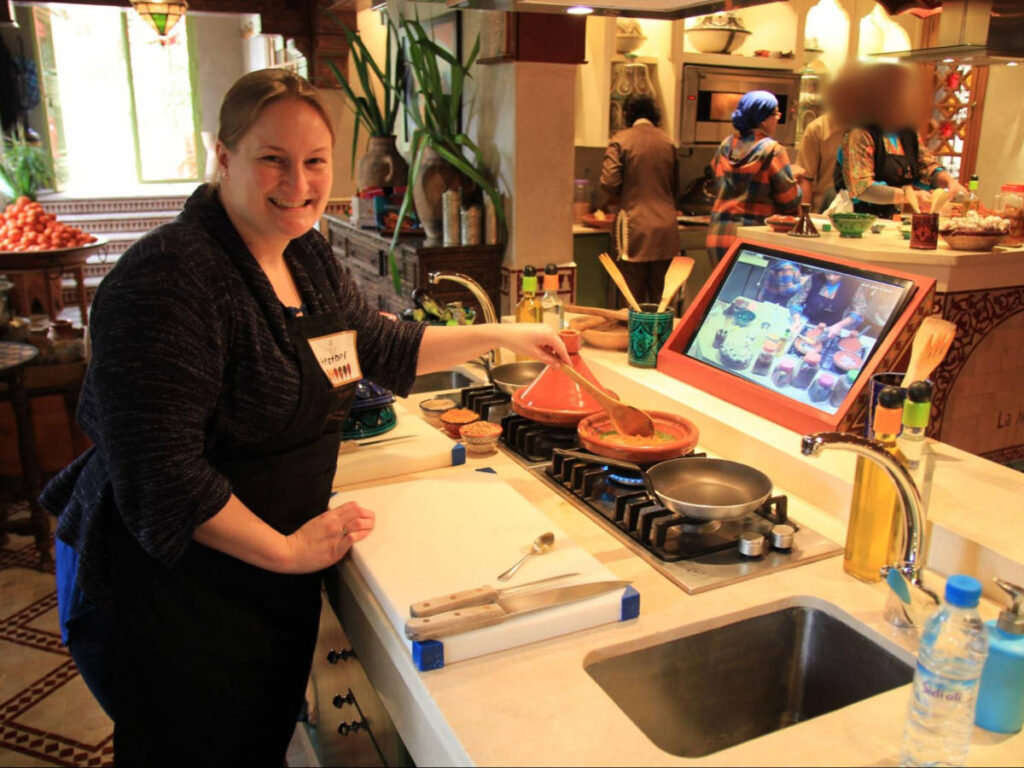
Probably my favourite thing to do in Marrakesh is the 3-hour cooking workshop at La Maison Arabe. This hands-on experience takes you on a journey through Morocco’s food history. It’s hosted by La Maison Arabe at their hotel in the west of the medina or their country club just outside town.
The class is popular with foodies and travellers curious about the city’s culinary culture. The workshops are led by a professional dada (cook). You’ll learn how to make traditional dishes like tagine and zaalouk salad, before getting to eat the results. Delicious!
There’s also a 1-hour express workshop for those short on time — I’ve done this as well, and it was heaps of fun. Classes are popular, so you’ll need to book in advance.
Street Food Walking Tour
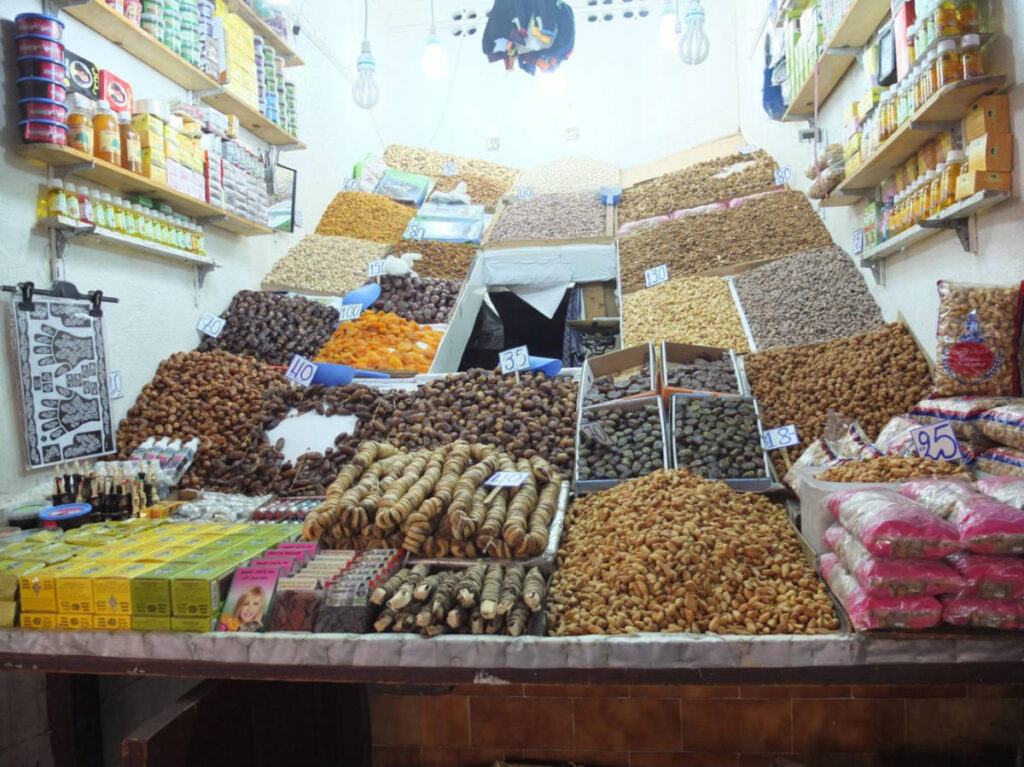
Taste your way around Marrakesh with a local, heading off the beaten track to sample traditional delicacies from street stalls and markets.
👉 Browse Marrakesh Food Tours on Viator
If you want to try traditional Moroccan cuisine but aren’t sure where to start, taking a guided food walking tour around the medina is a good option.
These excursions are immersive. On them, you’ll stop at markets and street stalls so you can taste some of the most authentic food in the city. You’ll feast on everything from fresh Moroccan salads and chicken pastilla to spicy harira soup and aromatic snail stew. Saving the best until last, you’ll finish on a sweet note with mint tea and sticky pastries.
Tours usually last 3-4 hours, often taking in some of the lesser-known parts of the old town as well as iconic markets and squares. There are plenty of options, but this Authentic Moroccan Food Tour is a highly-rated one that includes a good mix of sweet and savoury dishes.
Marrakesh Gardens
Jardin Majorelle
An oasis of colour and tranquillity, this serene botanical garden is a haven of beauty and was once home to a famous fashion designer.
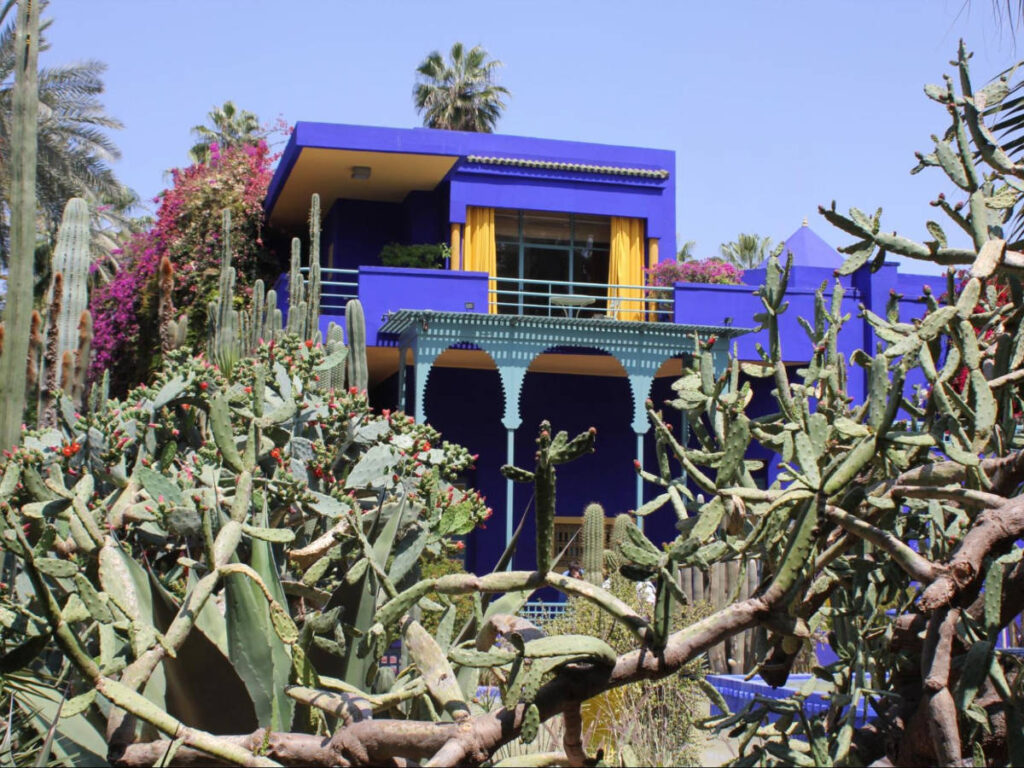
📍 Google Maps | Phone: (212) 524-29-86-86 | Website | Hours: 8 am – 6:30 pm daily | Entrance: DH170, adults, DH95 aged 10 – 18, Free, under 10 | 👉 Buy Tickets & Transport to Jardin Majorelle, Berber Museum & YSL on Viator
Designed by French painter Jacques Majorelle in the 1930s, the artistic Jardin Majorelle is beautifully laid out with exotic plants and colourful pots lining pathways that wind around lily ponds and tinkling fountains.
There are plants from all over the world, including cacti, palm trees, and bamboo. At the centre is a striking blue and yellow villa, which was later home to fashion designer Yves Saint Laurent.
Located in the New Town, the garden is popular with photographers and travellers looking to escape the city heat — it’s just a short petit taxi ride from the medina. I suggest visiting the garden either early morning or early evening, when the light is best, and to avoid the coach crowds.
Le Jardin Secret
A historic garden hidden deep in the medina, with fragrant flowerbeds, shady corners, and sweeping rooftop views.
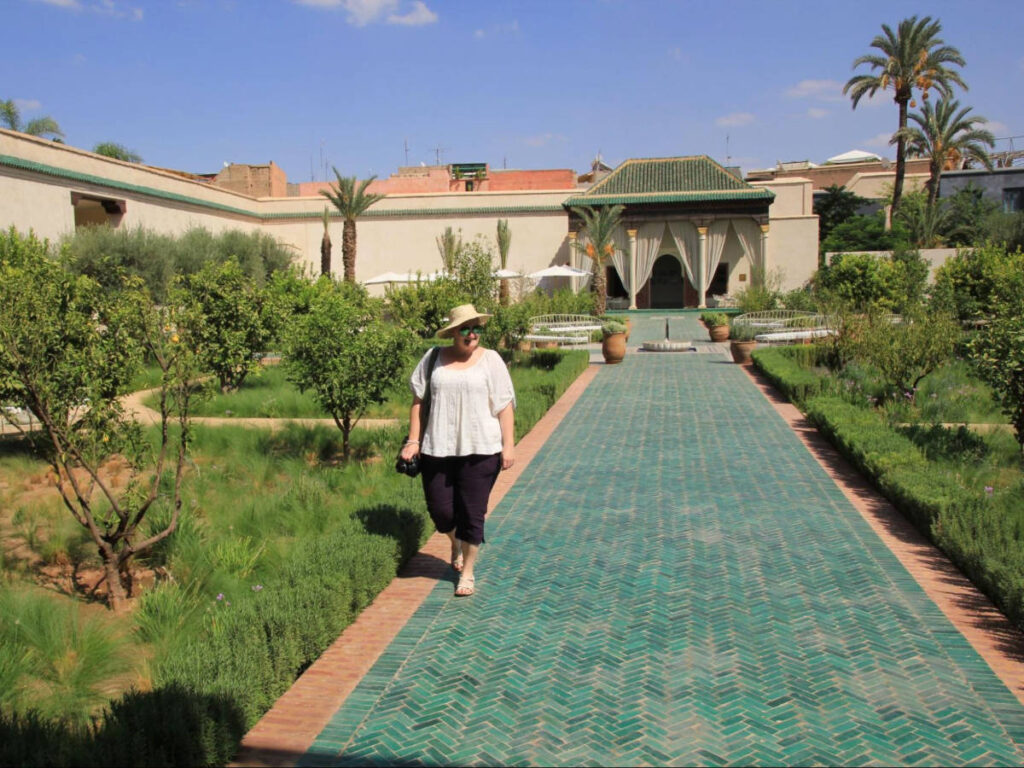
📍 Google Maps | Phone: (212) 524-39-00-40 | Website | Hours: Open daily 9:30 am – 7:30 pm March – September, 9:30 am – 6:30 pm February and October, 9:30 am – 6 pm November – January | Entrance: DH100, adults, DH40, under 24 + extra DH40 for the Tower
Tucked away down an alleyway in the north of the medina, the stunning Le Jardin Secret is a peaceful retreat filled with lush foliage, elegant pavilions, and traditional architecture.
Following the principles of Islamic garden design, walkways guide you through the grounds of this former palace, with pools and fountains giving a cooling effect. It’s the ideal spot for garden and history lovers to while away a sunny afternoon.
Don’t forget to head up the tower for views of the Atlas Mountains across the city rooftops. There’s a café in the gardens too, where you can enjoy mint tea and cake surrounded by nature. It’s just 10 minutes on foot from the Djemaa el Fna but feels a world away from the urban bustle.
Outdoor Adventures in Marrakesh
Hot Air Ballooning
Take to the skies on the edge of the city for aerial views of the Marrakesh plains in the shadow of the High Atlas Mountains.
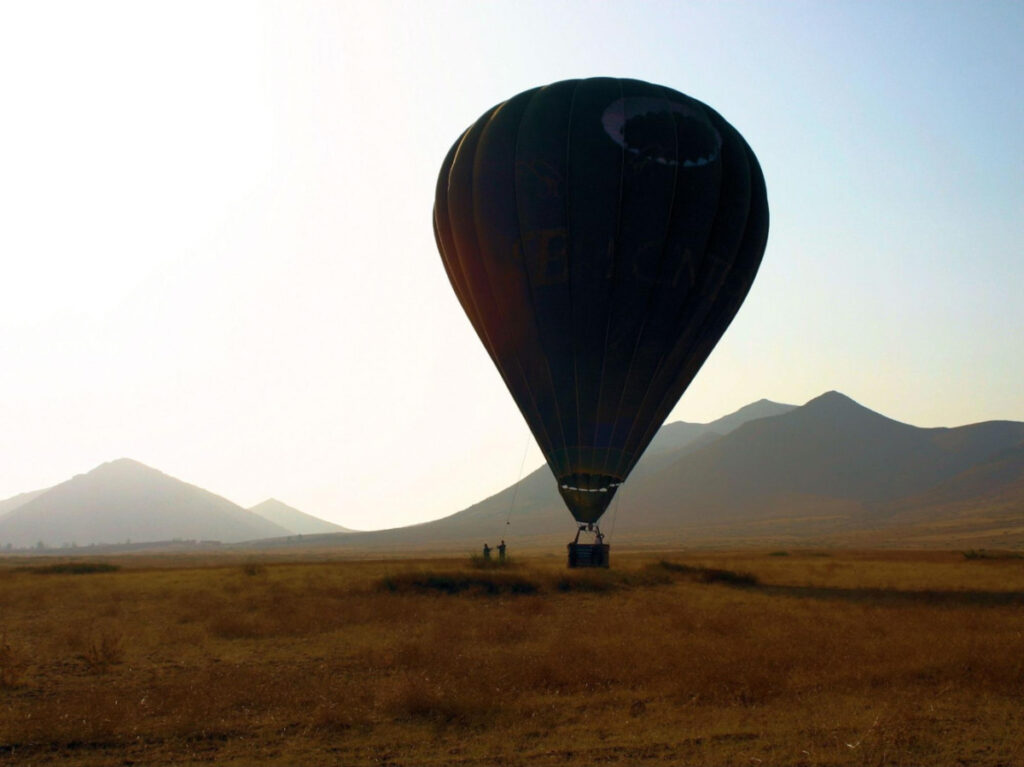
📍 Google Maps | Phone: (212) 652-129-721 | Website | Hours: 6 am – 11 am daily | Cost: DH 2050, adults, DH 1025 under 10 | 👉 Book a Marrakech Hot Air Balloon Flight & Berber Breakfast on Viator
Hot air balloon rides give intrepid explorers and photographers a unique perspective of the plains that stretch between Marrakesh and the High Atlas Mountains. Seeing the winding valleys and traditional adobe settlements from above is a unique experience, and you can often spot tiny goats and sheep moving around far below.
It’s an early start with a 6 am hotel pickup and a 30-minute transfer to the launch site, but watching the sunrise as you slowly float over the semi-desert landscapes is worth the effort.
After an hour, you’ll come back down to earth with a gentle bump and celebrate your flight with a Berber breakfast at one of the settlements you’ve just flown over. It’s a thrilling way to start the day.
Camel Ride in the Palmeraie
Ride a camel through the vast Marrakesh palm grove and enjoy a little taste of desert life.
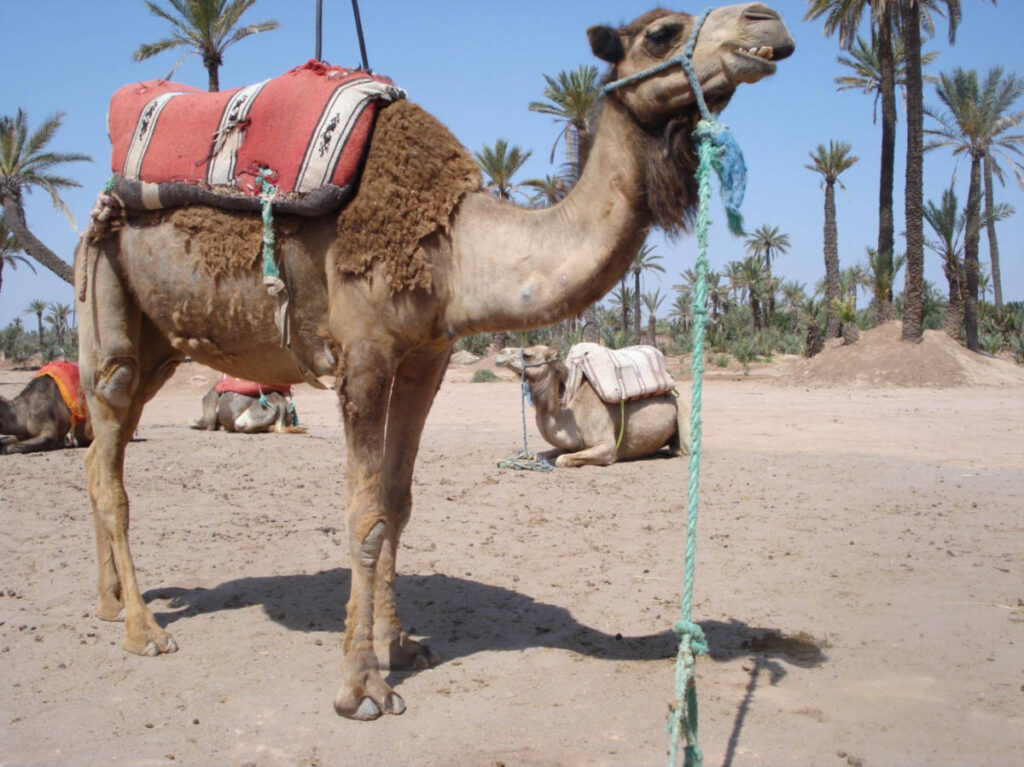
📍 Google Maps | Phone: (212) 694-317720 | Website | Hours: daily | Price: from €20 | 👉 Book a Marrakesh Camel Ride on Viator
If you’re desperate for that iconic camel ride but don’t have time to visit the deserts down at Merzouga or M’Hamid, the next best thing is the Marrakesh Palmeraie.
Located on the northern edge of the city, just 20 minutes by car from the centre, this palm grove is home to thousands of trees and several camels. Palmeraie camel ride tours are usually an hour long and include transfers and sometimes traditional outfits for those who want to look the part.
The camel ride takes you along the sandy trails that wind through the date palms, giving you a taste of desert life. Go in the early morning or late afternoon to avoid the worst of the heat, and for the best photography light.
Day Trips from Marrakesh
Day Trip to the High Atlas Mountains
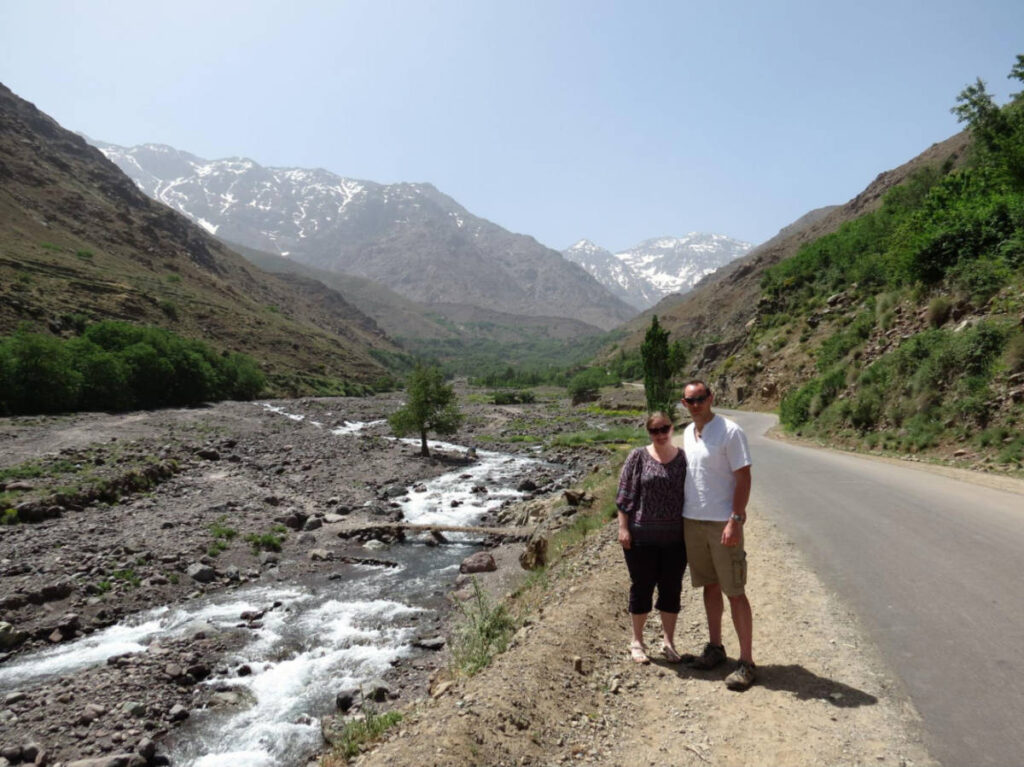
Hike through one of the prettiest valleys in the High Atlas Mountains and enjoy a scenic lunch in a dramatically located lodge.
📍Google Maps | 👉 Book a Day Trip to Imlil from Marrakesh on Viator
You’ll see the High Atlas Mountains from the roof terraces of Marrakesh, but did you know you can take a day trip to see them up close? The Imlil Valley is popular with hikers as it’s only 1.5 – 2 hours south of the city by shared taxi or private transfer.
Once in Imlil, you can walk up the valley under the watchful eye of Mount Toubkal (the highest peak in North Africa), either independently or with a guide. You’ll pass Berber villages and waterfalls, stopping for lunch in a local settlement.
If you don’t fancy a hike, I recommend heading to the majestic Kasbah du Toubkal in Imlil for lunch, where the tagines are as good as the views.
Day Trip to Ait Ben Haddou
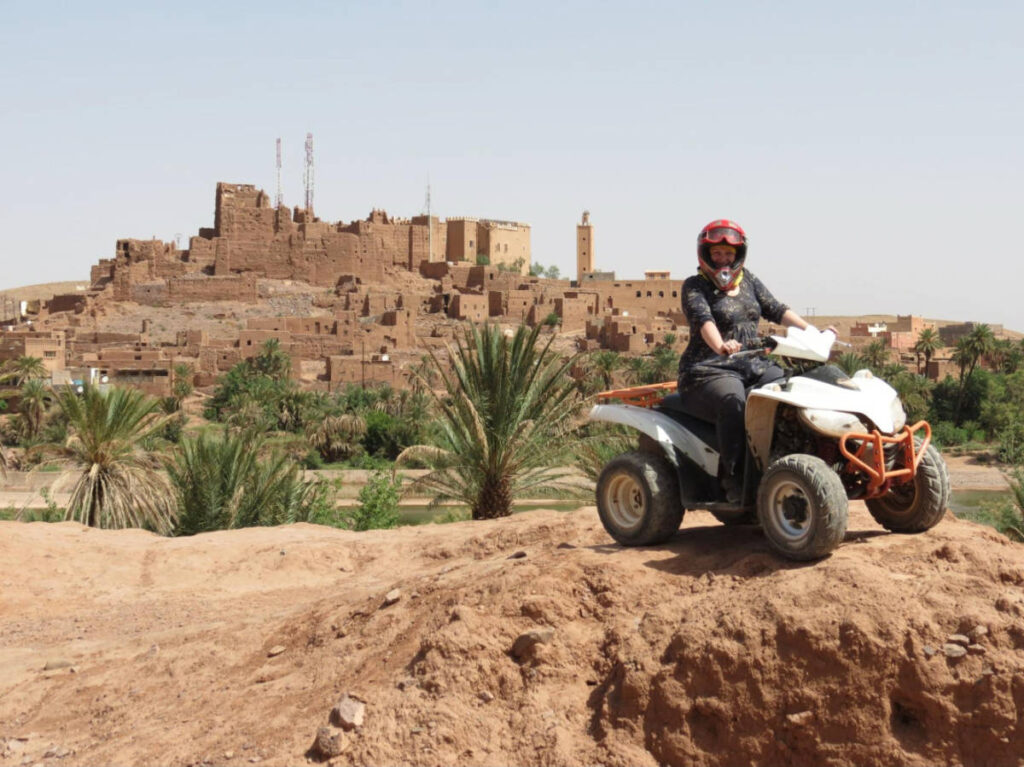
A fortified hilltop town on the ancient trans-Saharan trade route that’s become a movie icon.
📍 Google Maps | 👉 Book a Day Trip to Ait Ben Haddou from Marrakesh on Viator
Ait Ben Haddou is a UNESCO World Heritage site and one of the best-preserved ksars (fortified towns) in Morocco.
Constructed from adobe clay, the settlement dates from the 11th century. You might recognise it from the big screen as it’s been used to film movies like Lawrence of Arabia, Gladiator, and Game of Thrones. It’s a must for film buffs and anyone wanting to learn about Morocco’s heritage. If you’re feeling adventurous, quad biking excursions offer a different perspective of the ksar.
Located 100 miles south of Marrakesh, Ait Ben Haddou is 3-4 hours away by car — it’s a beautiful drive. I’d always recommend spending several days in this region, but if you’re short on time, then a day trip is worth it.
Marrakesh Shopping
Ensemble Artisanal
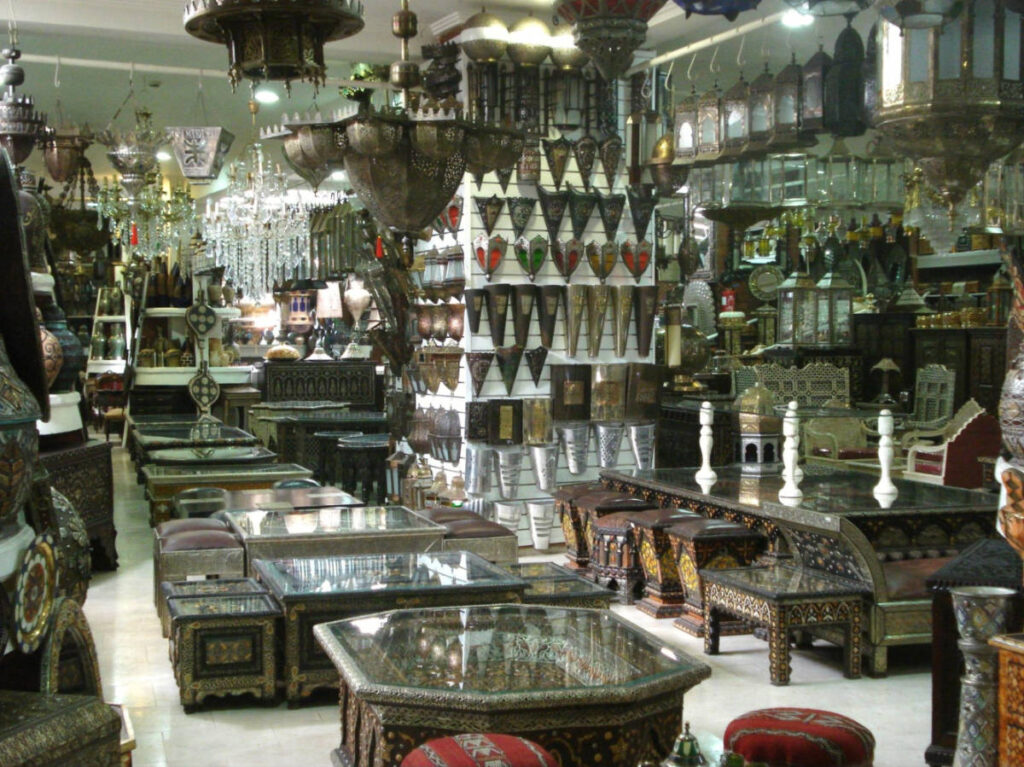
A treasure trove of artisan crafts with fixed prices for visitors who prefer a relaxing shopping experience.
📍 Google Maps | Hours: 9:30 am – 7 pm daily, closes 2 pm Sundays
This one’s for shoppers who aren’t comfortable with haggling in the souks and prefer their souvenirs to come with fixed prices. Yes, you will often bag a better deal when bartering directly with the market vendors, but it can be stressful for first-timers, which is why Ensemble Artisanal is such a good idea.
The warehouse is a treasure trove of artisan crafts, selling everything from lanterns and furniture to jewellery and leather goods. The artisans are happy to chat about their work, but there’s no pressure to buy anything.
Ensemble Artisanal is a 10-minute walk west of Djemaa el Fna, on the edge of the Cyber Park. It’s far more peaceful than the souks, and a lot cooler too.
Rahba Kedima Square
The spice square and apothecary market is the place to come for magic potions and people-watching.
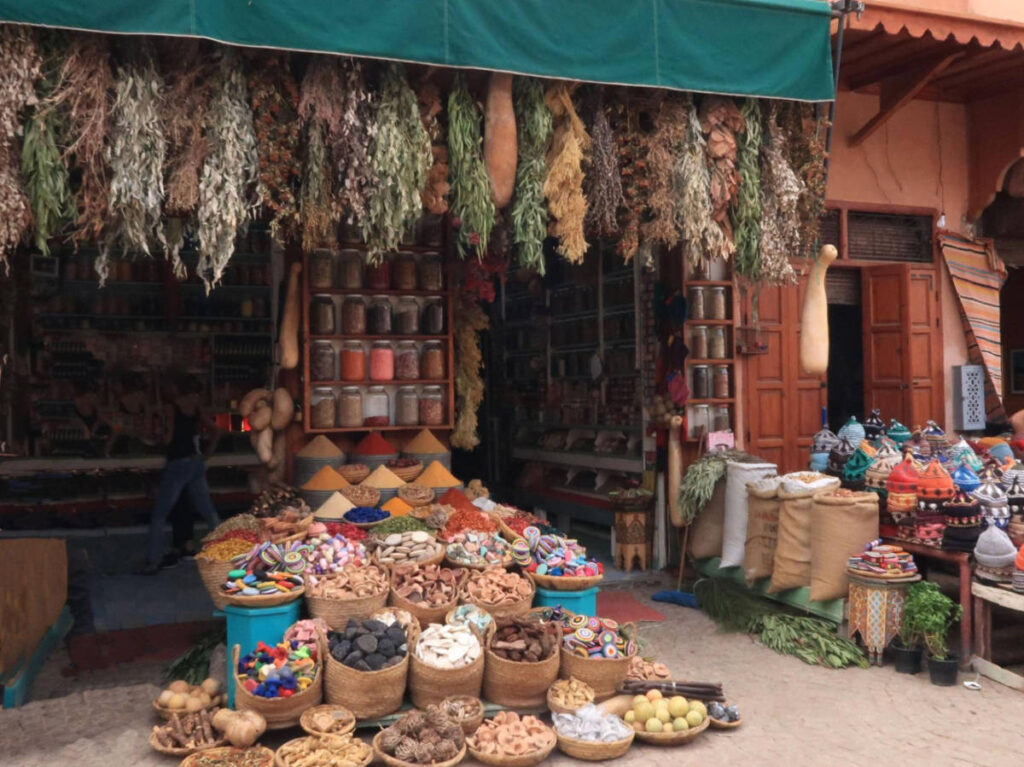
Sitting in the heart of the medina, 7 minutes north of Djemaa el Fna on foot, is Rahba Kedima Square. This little square is one of my favourite spots for shopping, people watching, and eating. It’s like a gentle introduction to the souks, so it’s great for first-time visitors.
The marketplace is full of vendors selling traditional crafts like woven baskets and table mats, but it’s the spice stalls and apothecary shops that are the main draw.
If you’re in need of a magic potion made from bizarre ingredients or want to see those colourful spice mounds, Rahba Kedima Square is the place to come. I like sitting in Café des Épices with a Moroccan crepe and some fresh orange juice, watching the bustle and planning my next move.
Boutique Concept Stores
Shop for designer clothing, homewares, and accessories in the city’s fashionable concept stores.
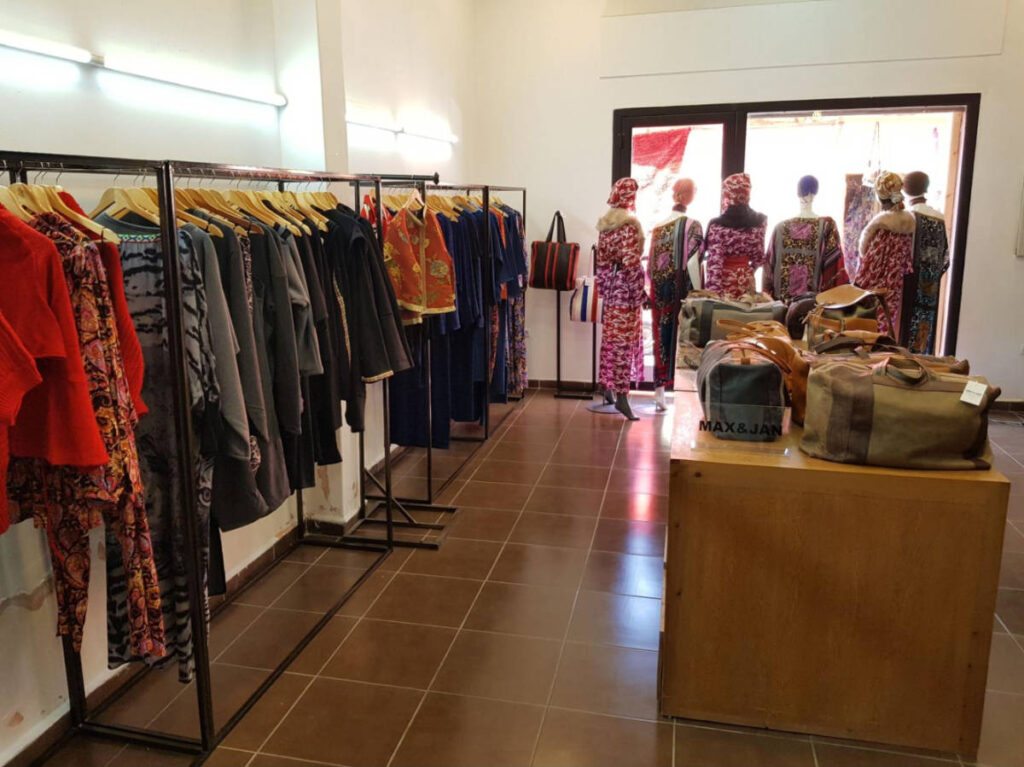
📍 Google Maps (Max & Jan)
Traditional handicrafts aren’t the only things to buy in Marrakesh, and the city has several boutique concept stores to check out for shoppers looking for more contemporary souvenirs.
For designer clothing like kaftans and shirts, head to Max & Jan in the centre of the medina or 33 Rue Majorelle near the New Town’s Jardin Majorelle. Meanwhile, for luxurious textiles and handmade Moroccan-inspired accessories, I love popping into Valérie Barkowski’s store in the north of the medina.
If you don’t fancy going too far to shop, some hotels and riads have their own boutiques on site — many pieces in my holiday wardrobe come from the lovely little shop at Riad Assakina.
***
There’s nowhere quite like Marrakesh, and I’m sure you’ll fall in love with it, just like I did. If you have a question about visiting, ask me anything in the comments below, and I’ll be happy to help.
Planning to travel through more of North Africa? Up next, take a look at Kate’s list of the best things to do in Cairo.