
Affiliate Ad Disclosure: We’re reader-supported. When you buy via our links, we earn commissions. Learn more.
The 26 Best Things to Do in Kanazawa

👉 Jump to: Best Things to Do | Sites & Attractions | Museums & Culture | Food & Drink | Traditional Craft Experiences | Cool & Unusual | Day Trips & Getaways
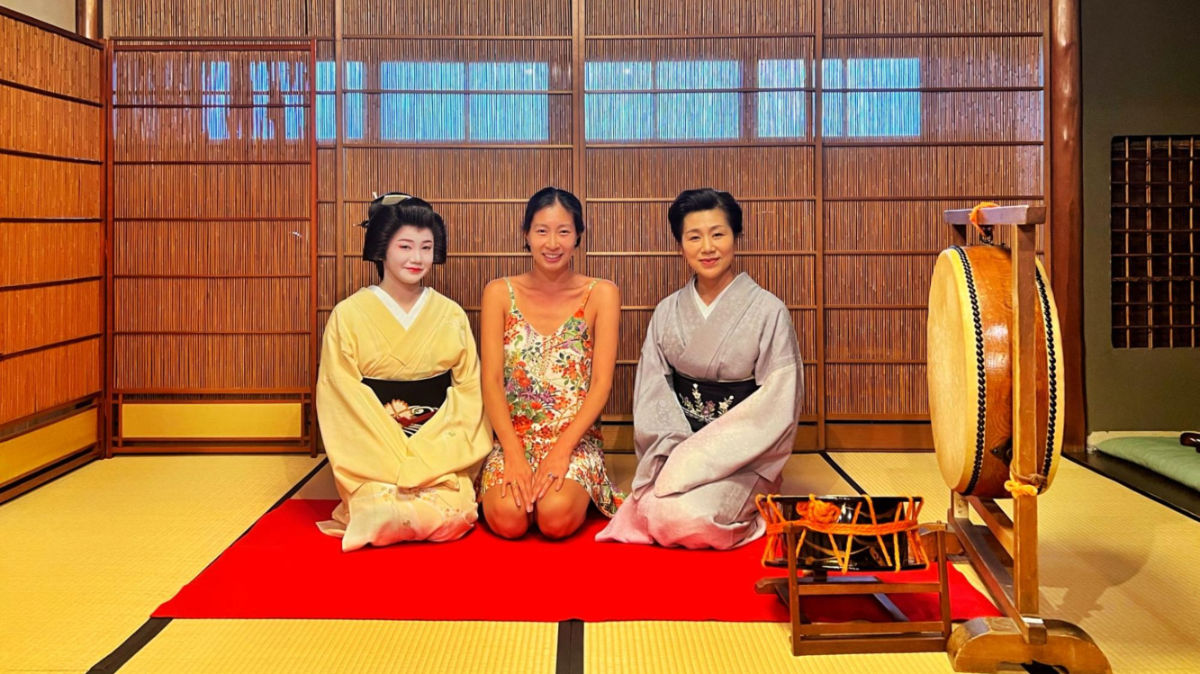
I’m an Australian living in Japan who’s visited all of the country’s 47 prefectures. Ishikawa’s Kanazawa City is somewhere I love returning to.
Rich with not only traditional arts, history, and culture, Kanazawa is a contemporary art lover’s dream. One can also feast on some of Japan’s freshest seafood at charming local gems and haute cuisine spots. Read on to discover a round-up of my favourite things to do when I visit Kanazawa by myself or with loved ones.
Also, make sure to read my guide on where to stay in Kanazawa so you can plan the perfect trip!
26 Best Things to Do in Kanazawa
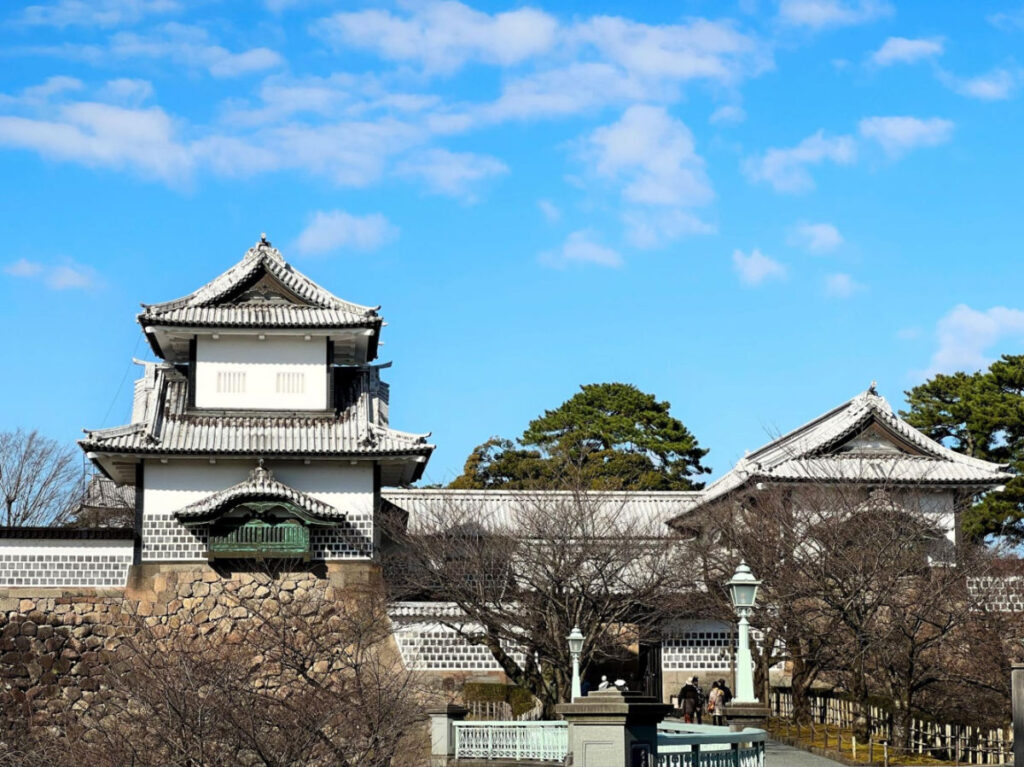
Kanazawa Castle
Explore one of Japan’s historic castles located in the center of town.
📍 Google Maps | Phone: (076) 234-3800 | Website | Hours: 7 am – 6 pm (March 1st – October 15th); 8 am – 5 pm (October 16th – end of February) | Entrance: 320JPY, adults, 100JPY 6-18yrs, free for 65+ (proof of ID required)
This large Japanese castle is set on expansive grounds, where visitors can leisurely walk around. It was once the home of the Maeda clan, the ruling clan of the ancient Kaga Domain (the old name for modern-day Ishikawa and Toyama). Lovers of ancient Japanese history and architecture should visit.
Buy a ticket at the castle entrance and explore independently, or book a private tour guide if you wish to hear more intimate historic tales. On Saturdays (from sunset to 9 pm), the Gyokusen’inmaru garden within the grounds is illuminated with various light displays throughout the changing seasons.
A visit to the castle is often best combined with a trip to the adjacent Kenroku-en Gardens.
👉 Pro Tip: If you’re an early bird, enjoy free entry from 4 am to 6 am (depending on the season) – but you must leave 15 minutes before actual opening time (7 am or 8 am, depending on the season)
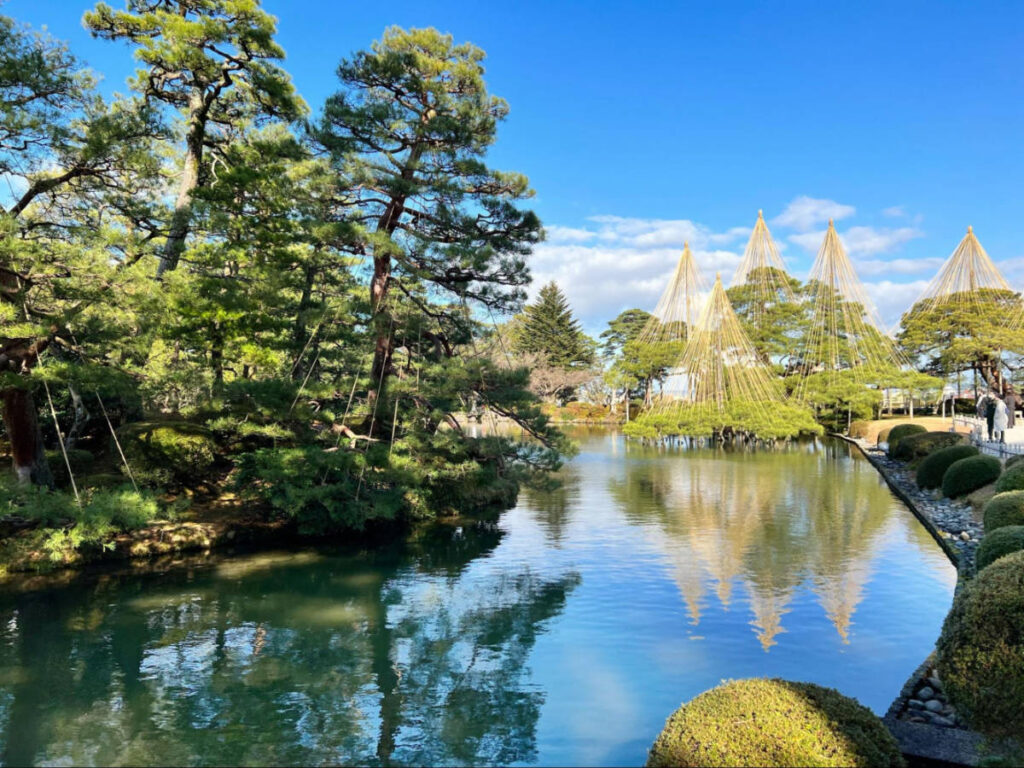
Kenroku-en Gardens
Discover one of “The Three Great Gardens of Japan.”
📍 Google Maps | Phone: (076) 234-3800 | Website | Hours: 7 am – 6 pm (March 1st – October 15th); 8 am – 5 pm (October 16th – end of February) | Entrance: 320JPY, adults, 100JPY 6 – 18yrs, free for 65+ (Proof of ID required)
Renowned for its beauty across every season — especially in autumn’s changing leaves and winter where snow blankets its grounds — Kenroku-en is probably the most visited out of the “Three Great Gardens of Japan.”
Here, visitors can stroll through the garden grounds appreciating the core techniques and elements of Japanese garden design: “spaciousness, serenity, venerability, scenic views, subtle design, and coolness” [source]
It’s a must for visitors who love nature, as well as the changing seasons, and the subtle Japanese design aesthetic and philosophy.
Although it’s open everyday, remember to enter before the last entry (generally at 4 pm). Just like Kanazawa Castle, one can enter for free during early admission hours, but you must leave about 15 minutes before official opening time.
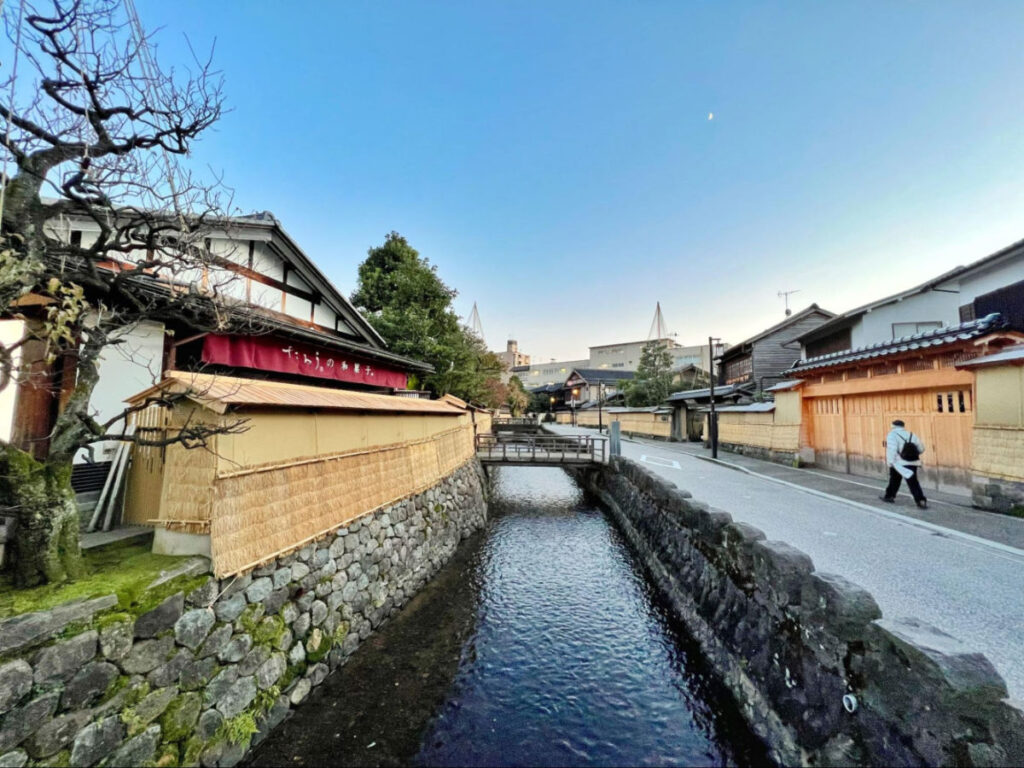
Nagamachi “Samurai” District
Walk one of Japan’s few remaining preserved historic samurai districts.
📍 Google Maps | Website
Kanazawa is one of the largest castle towns in Japan, and with the powerful Maeda clan once presiding over it, it’s no surprise there were once many homes belonging to their samurai.
In Nagamachi, one can still wander through the well-maintained historical streets, which have withstood fire, bombings, and natural disasters. The homes still maintain their original tsuchi-kabe (earthen walls), which are covered with straw mats to protect them from frost and potential cracking in the winter.
A stroll during the day will give visitors the opportunity to enter historic samurai houses, or take a breather at sweet little cafes, and browse independent pottery and boutique stores. Perfect for someone who wants a slower, quieter day and to feel like they’re back in feudal Japan.
The Three Historic “Tea” Districts
Travel back to Japan’s past as you stroll through the city’s famed Geiko tea areas.
📍 Google Maps | Website
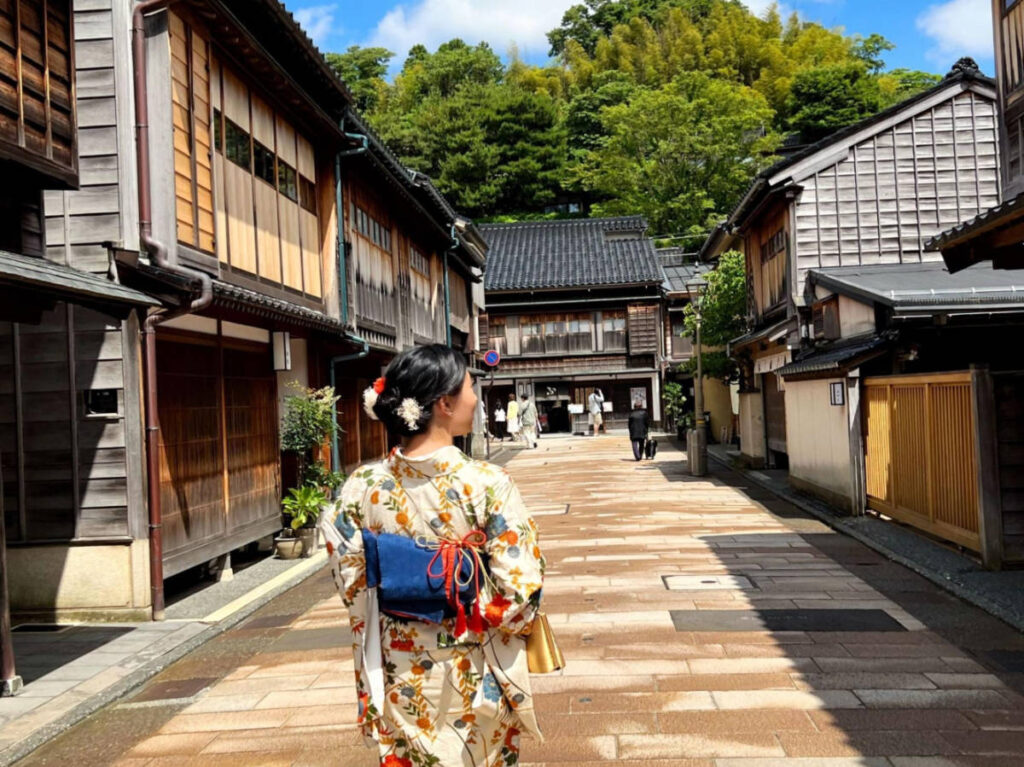
Due to Kanazawa’s fame as being Japan’s preeminent traditional cultural craft epicentre (yes, more so than Kyoto), it has protected its three historic tea districts where businessmen, merchants, and samurai once drank the night away, entertained by Geiko (Kanazawa’s Geisha).
The three districts can still be explored, all lined with stunning traditional wooden houses. Today, the houses hold small boutiques, cafes, crafts, and Geiko teahouses.
Higashi Chaya is the largest, followed by Nishi Chaya, which is known for its high-end, exclusive atmosphere. Kazue Chaya is the smallest and most intimate, lining the Asano River.
Spend time wandering the pretty stone streets and stores whilst having gold leaf ice cream. It’s also the perfect place to try wearing a traditional kimono or yukata like many of the locals.
Omicho Market
Wake early to enjoy the freshest of seafood for your morning breakfast.
📍 Google Maps | Phone: (076) 231-1462 | Website | Hours: 9 am – 5 pm daily
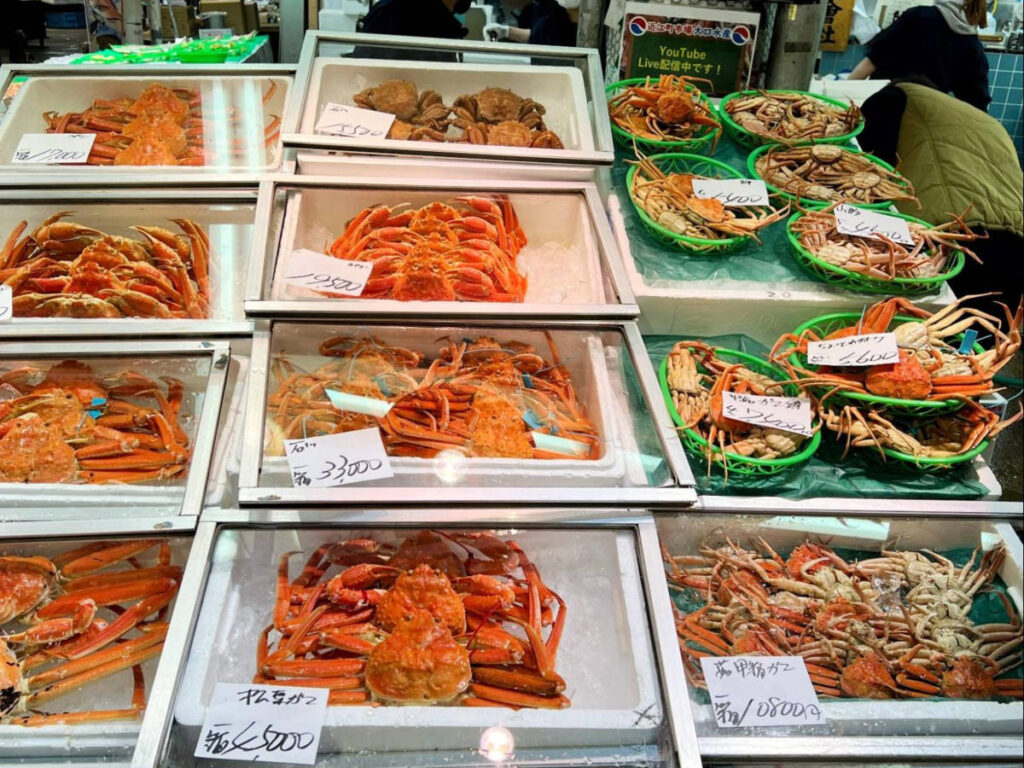
Omicho Market has been one of Ishikawa Prefecture’s top fresh seafood and shellfish markets for over 300 years. It’s located halfway between Kanazawa Station and Kanazawa Castle/Kenroku-en Garden.
Affectionately known as “Kanazawa’s kitchen,” the market is a foodie must-visit. There are multiple restaurants to choose from, from popular sushi train restaurants to smaller, intimate counter sushi bars.
It’s best to visit for a breakfast or lunch meal, as it’s only open during the daytime. For dinner, head elsewhere. Depending on how you time it, there will be lines. I prefer to either visit for an early lunch around 11 or a late lunch (each property has slightly different closing/last order times – but you will generally be safe if you aim for the 1:30/2 pm mark).
Kanazawa Sites & Attractions
Oyama Shrine
Wander this quiet shrine, composed of Eastern and Western religious architectural elements.
📍 Google Maps | Phone: (076) 231-7210 | Website | Hours: 9 am – 5 pm daily
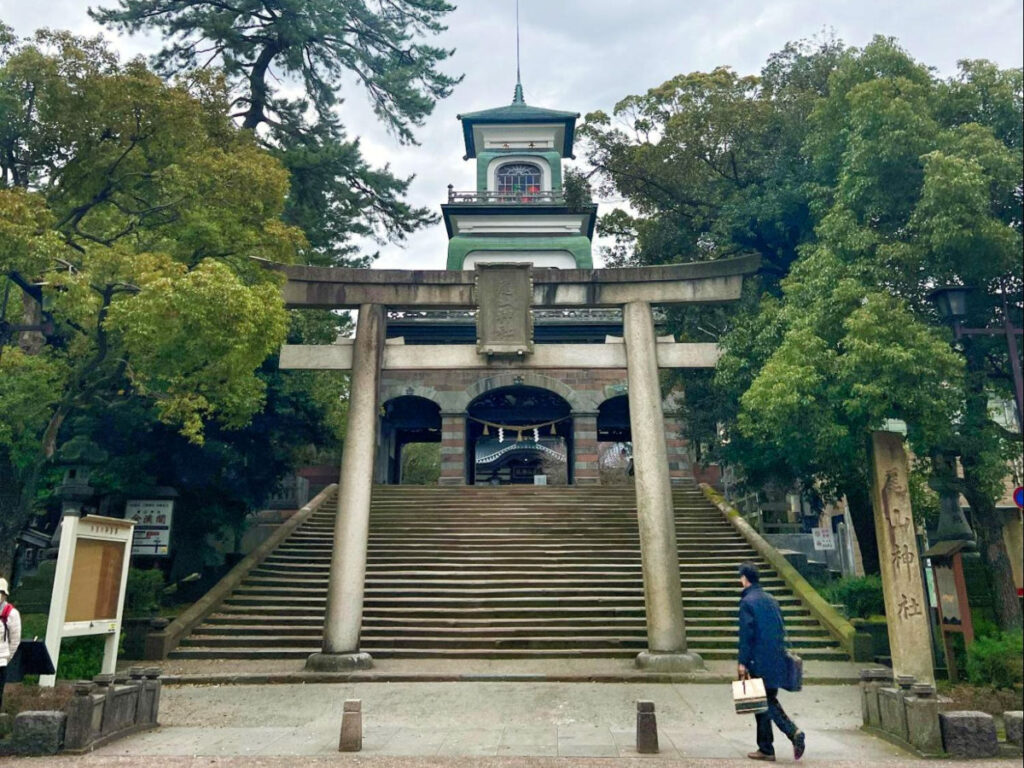
Oyama Shrine is a peaceful shrine located between Kanazawa Castle and Nagamachi District. It’s an easy stopover on a day’s exploring and a great little spot for those who appreciate shrines, architecture, and Japanese gardens.
The shrine itself is unusual, even for Japan. Its traditional Japanese torii gate stands at the foot of the stone steps, and beyond it lies the entrance gate designed by a Dutch architect. Blending both Asian and European religious characteristics, the gate originally guarded the entrance to Kanazawa Castle. Its upper stories, where colorful stained glass windows are embedded, once served as a lighthouse.
Personally, this is one of my favourite spots in Kanazawa to just have a slow, meandering walk, especially during the quiet early morning hours.
Yasue Hachimangu Shrine
Visit this charming local shrine, one of the “Five Great Shrines of Kanazawa.”
📍 Google Maps | Phone: (076) 233-3688 | Website | Hours: 9 am – 4 pm daily, irregular holidays
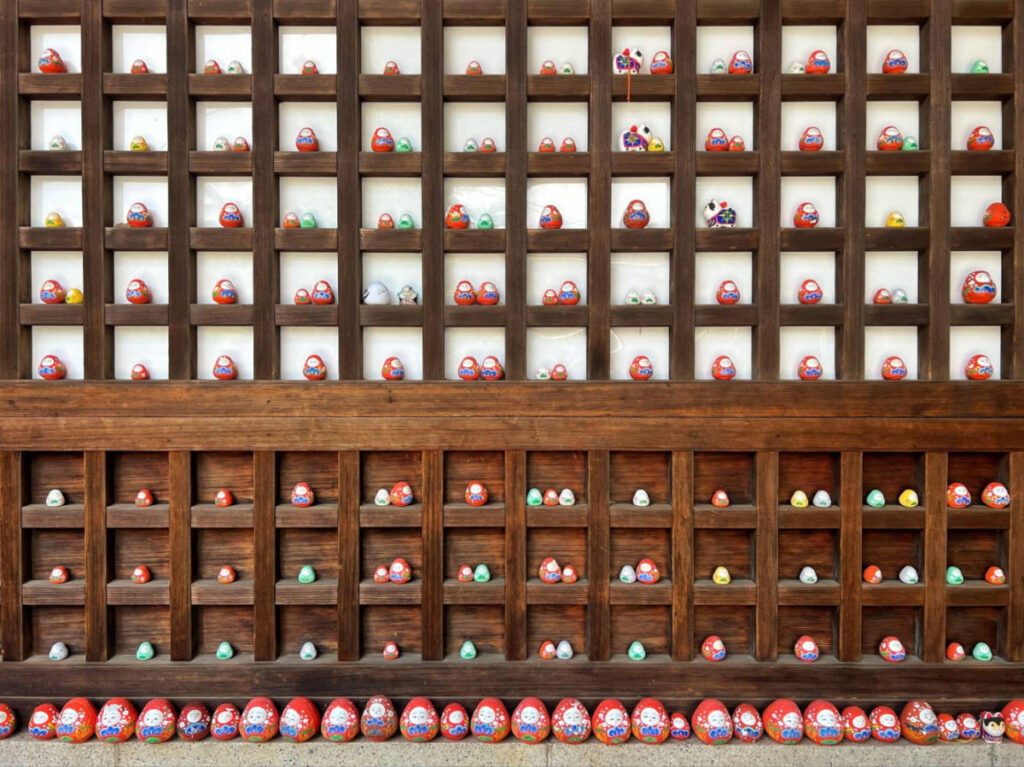
Near Kanazawa Station, Yasue Hachimangu Shrine is a quiet shrine I stumbled across to my utter delight. Locally known as “Kaji Hachiman/Hachiman-san,” visitors come here to pray for a healthy birth for mothers and their babies. The most popular day to visit is “Inu no Hi” (Day of the Dog). [source]
A painted stone statue of the Kaga Hachiman Okiagari doll (a symbol of the Hachiman god’s birth) sits upon a pedestal within the entrance. I was delighted to discover the many mini red Okiagari dolls scattered around the shrine’s grounds by visitors, similar to Osaka’s Katsuoji Temple.
Lovers of Japanese shrines and temples will enjoy a mini pilgrimage here and the Okiagari doll also makes for a very charming keepsake that is unique to Ishikawa prefecture.
Museums & Culture in Kanazawa
The 21st Contemporary Museum of Art
Spend time learning and appreciating the ever-growing contemporary art scene in Kanazawa.
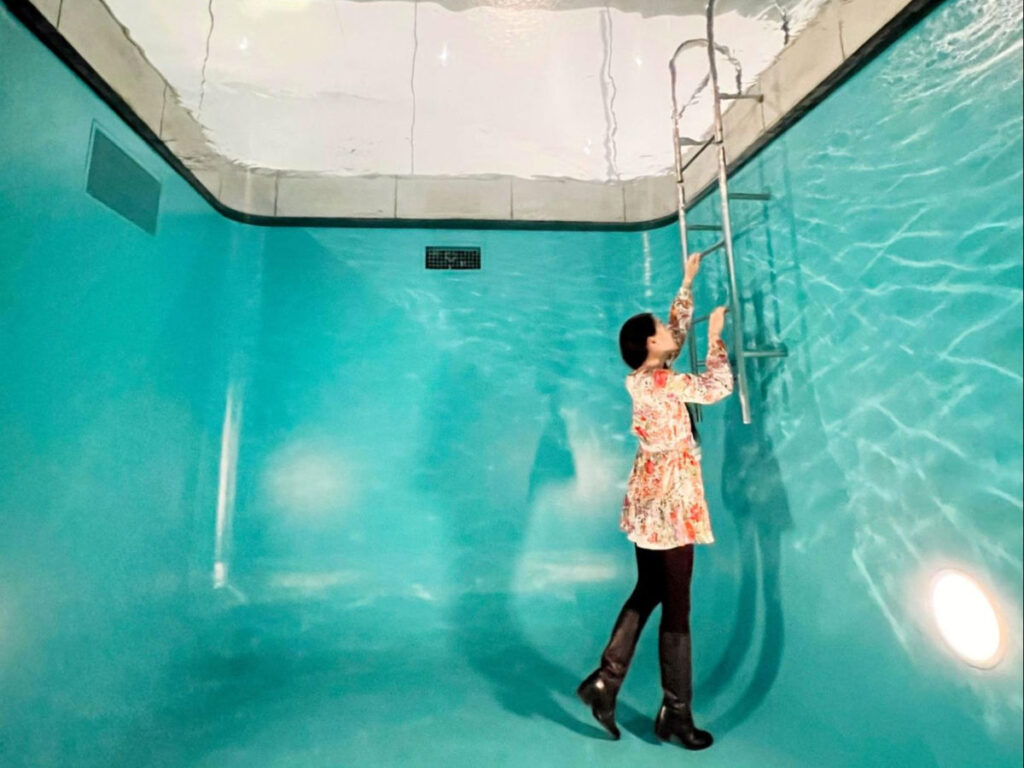
📍 Google Maps | Phone: (076) 220-2800 | Website | Hours: 10 am – 6 pm for the Exhibition Zone (until 8 pm on Fridays and Saturdays); 9 am – 10 pm daily for the Exchange Zone, other facilities vary, closed Mondays & irregular holidays | Entrance: 300 – 1200JPY (varies by exhibition)
Kanazawa’s The 21st Contemporary Museum of Art is at the forefront of Japan’s contemporary art scene with the purpose of not only celebrating art, but revitalizing the community. Therefore, helping to evolve the local traditional arts and crafts scene into a destination for modern-day art lovers.
Permanent exhibitions like Leandro Erlich’s The Swimming Pool are very popular in addition to the ever-changing seasonal exhibitions. The museum is relatively interactive, with several of the exhibitions being kid-friendly.
At night, it’s pleasant to walk around the outer museum grounds, as there are several outdoor installations that become illuminated. The museum shop also has unique souvenirs. Overall, it’s perfect for those who love art but also want a change of scenery from the more traditional Japanese sights.
D.T Suzuki Museum
Enlighten yourself with the Zen philosophies from the Buddhist master D.T Suzuki’s teachings.
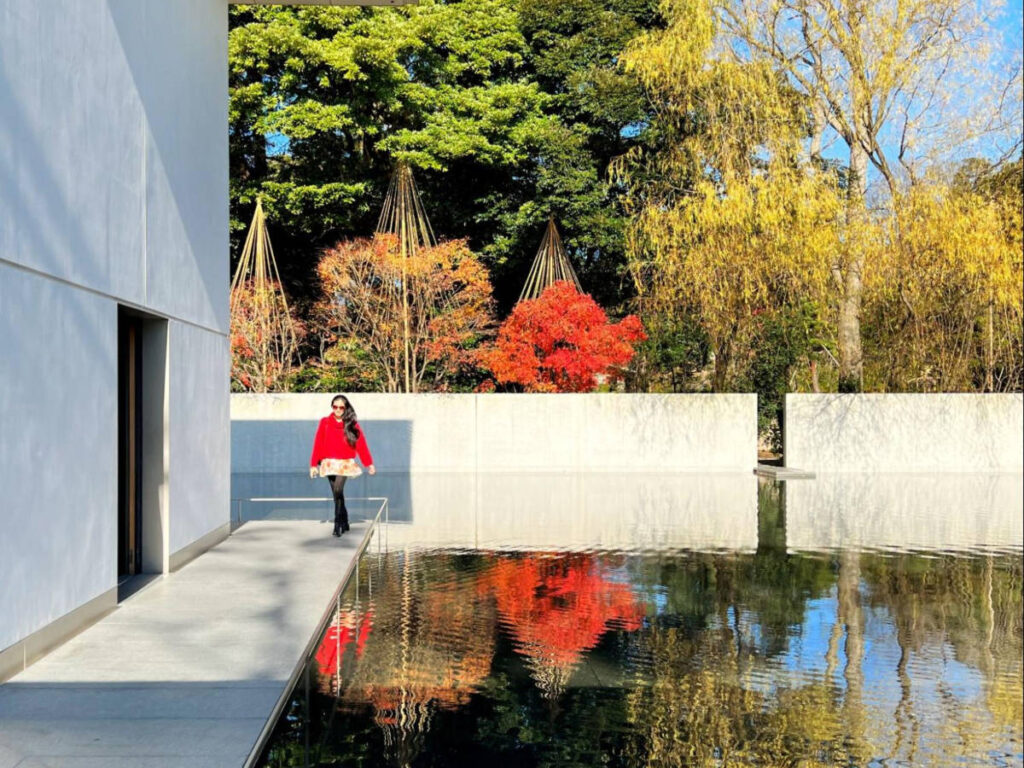
📍 Google Maps | Phone: (076) 221-8011 | Website | Hours: 9:30 am – 5 pm daily; Closed Mondays | Entrance: 310JPY, adults, 210JPY for 65+, free for students
D.T Suzuki Museum is a peaceful, contemplative space. This contemporary museum has been created in the image of an idyllic setting, embracing the philosophies of Kanazawa’s love of a landscaped garden. Three wings make up the museum, with interconnecting corridors that lead to the three gardens: the Vestibule Garden, the Roji Garden, and the Water Mirror Garden.
This serene escape is heaven for those who have a love of Zen whilst learning about the life, writings, and ideas of the Buddhist philosopher Daisetz Suzuki (D.T Suzuki), who was Kanazawa born.
Modern architecture fans will also be appreciative of the clean and minimal concrete lines, along with the reflective waters designed by Yoshio Taniguchi, who is best known for his redesign of New York City’s Museum of Modern Art in 2004.
Kamu Museum
Discover playful contemporary art exhibitions throughout the city, both permanent and temporary.
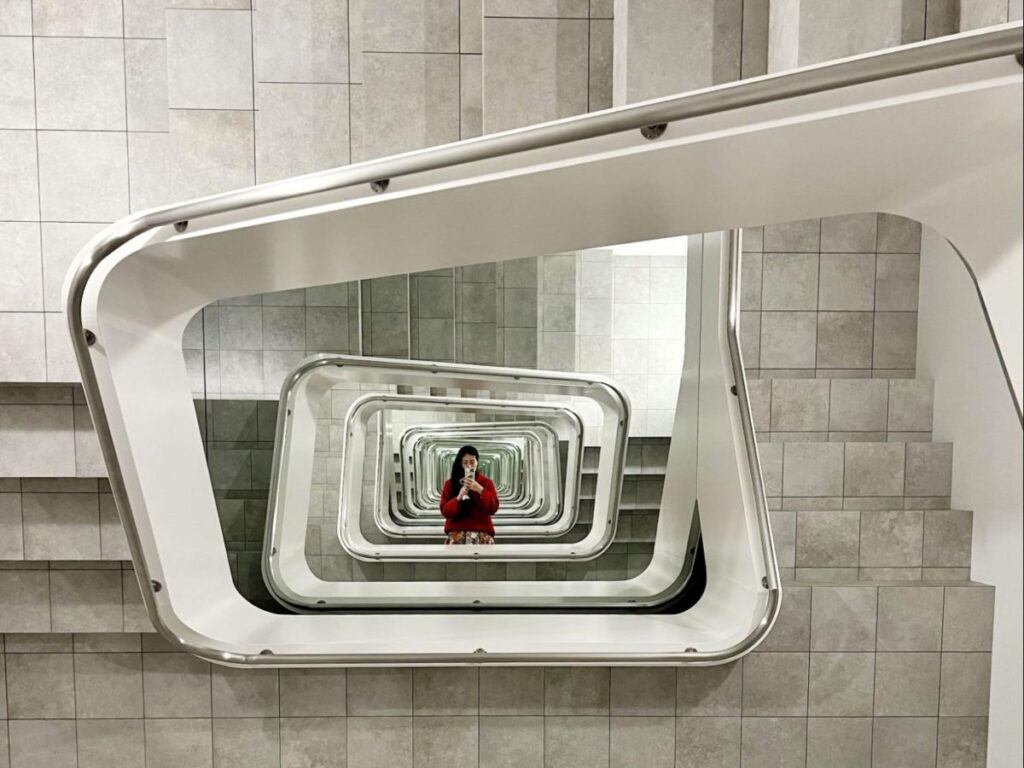
📍 Google Maps | Website | Hours: 11 am – 6 pm daily (closed from 12 pm – 1 pm); closed Mondays (except for public holidays) | Entrance: 2000JPY – 3000JPY adults, 1000JPY – 2000JPY students (1, 2, or 3-day passes)
KAMU Museum is the newest addition to Kanazawa’s contemporary art scene, offering a more playful art experience. This private art project is scattered all over the city and has utilized former abandoned buildings to create permanent small galleries/museums and outdoor spaces to showcase large art installations.
Visiting the various Kamu locations is a fabulous way to break up a day of more traditional sightseeing. In a way, it’s a great treasure hunt for adults and kids alike.
Three types of tickets are available: 1-day, 2-day, and 3-day passes, all of which must be picked up from the Kamu Center. The flexibility allows visitors to take their time to choose where to visit, from indoor museums during bad weather to outdoor installations during good weather.
Food & Drink in Kanazawa
Coil
Make your own hand-rolled sushi, gunkan sushi, and tempura rice bowls in this modern restaurant.
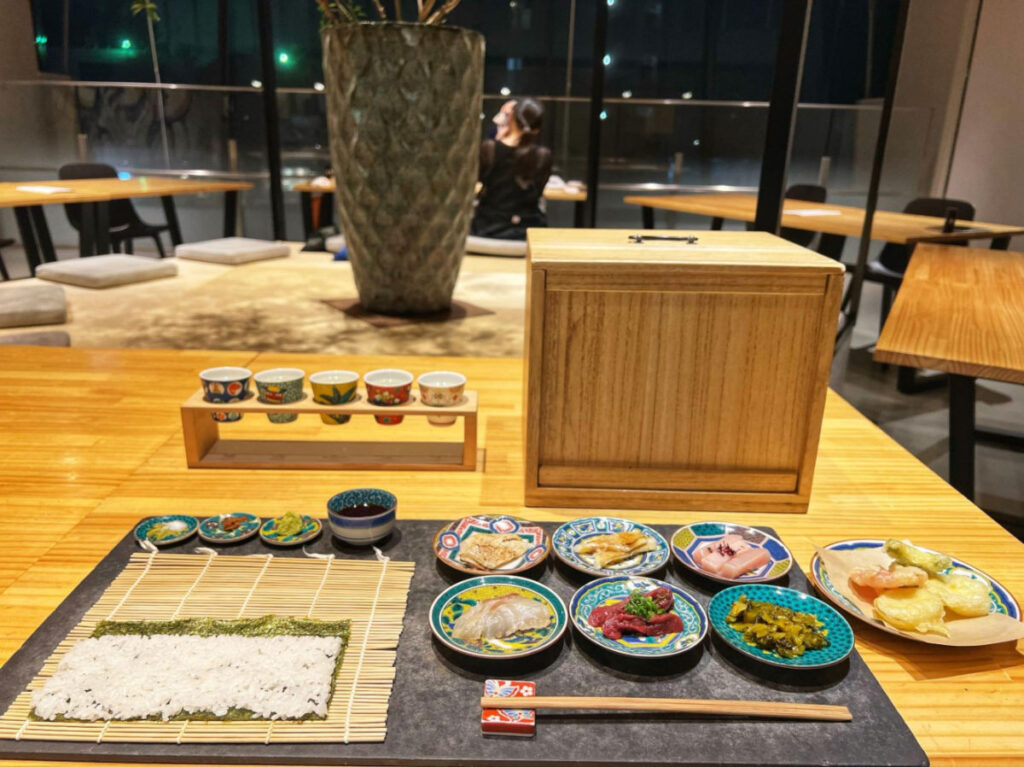
📍 Google Maps | Phone: (076) 256-5076 | Website | Hours: 11 am – 9:30 pm daily, irregular holidays
Coil is a modern sushi restaurant where diners can enjoy trying their hand at making their own hosomaki (hand-rolled) sushi. The restaurant is just a short walk from Kanazawa Station within the Kanazawa Hokomachi shopping mall.
In 2026, the restaurant updated the menu to include gunkan sushi and tempura rice bowls in their Coil Okamochi course set, along with whisking one’s own matcha. The course allows the diner to choose up to five ingredients that will fill/top their sushi (you can always add more for an additional cost). It is then served in a traditional wooden Japanese bento box upon pretty Kutani pottery.
A good range of wines and cocktails is available. I personally love the 5 glass tasting set of local sake, poured into beautiful Kutani-yaki sake cups. The tea bar is also beautiful, along with the rest of the contemporary interiors.
Gluten-free and vegan options are available.
Tile
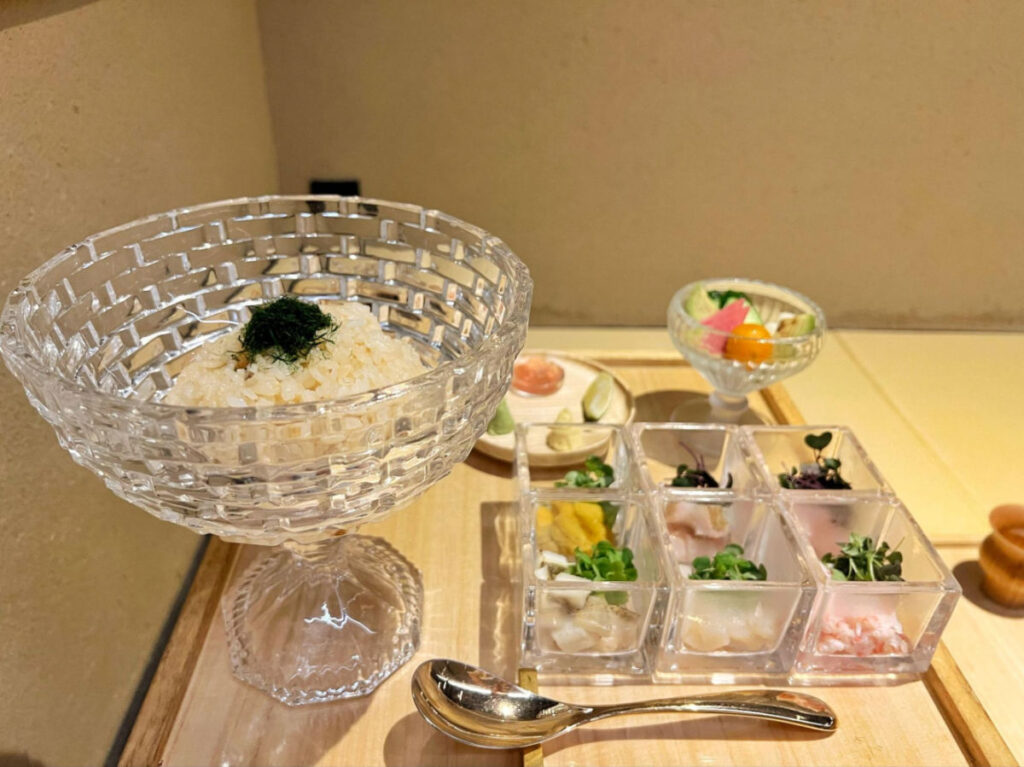
Create your own seafood rice bowls in this historic townhouse, where entry requires a secret code.
📍 Google Maps | Phone: (076) 255-2802 | Website | Hours: 11 am – 3 pm & 5 – 10 pm daily, irregular holidays
Tucked away in a quiet street is this gorgeously renovated 110-year-old kominka with a nijiri (small) entrance that requires a secret code to enter. Tile was beautifully given new life, and minimalist, contemporary architect lovers will love the clean, simple lines and large windows. It’s a stunning representation of modern Japanese design aesthetics.
Here, diners can enjoy creating their own seafood bowls whilst using wooden crafted tea boxes as their dining table (which houses one’s cutlery and other utensils). One can select between 5, 6, or 8 ingredients as their toppings.
In keeping with the tea philosophy, Tile also offers a modern interpretation of Shojin Ryori (Buddhist vegetarian) course for diners. Lastly, note that diners sit upon traditional zabuton cushions. This is also the sister restaurant of Coil, mentioned above.
A Restaurant
Taste the creative modern cuisine of Kanazawa’s seasonal produce at this perfect date night restaurant.
📍 Google Maps | Phone: (076) 255-0088 | Website | Hours: 5 pm – 11 pm daily; closed Sundays
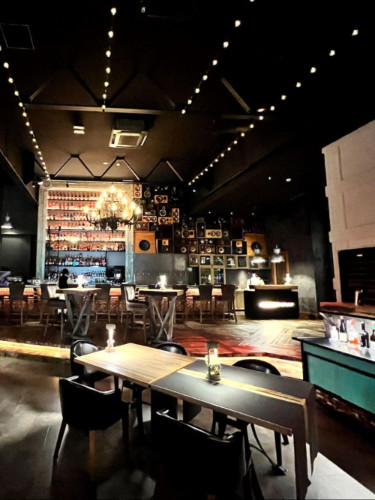
In the popular Katamachi area, there are numerous dining options available. However, if you’re craving a more Western influence in terms of dish creation or simply wanting to celebrate a special occasion, then make a reservation at A Restaurant.
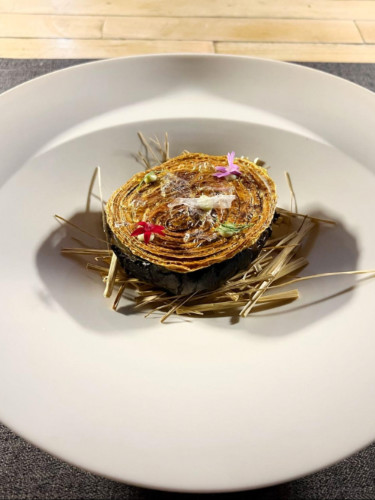
Push open the heavy wooden doors, and you will enter a sleek, dark, minimalist space with high ceilings lit by a warm golden ambiance. The restaurant serves a creative “Omakase” tasting course showcasing the changing seasonal produce from both land and sea.
Several different courses are available to choose from with a range of prices, as well as a decent selection of wines and sake. The open kitchen lets guests see the magic of the chefs at work. Save this for a splurge.
Toryanse Kanazawa Food Labo
Taste the flavours at this modern Kanazawa food stall village, where several eateries await.
📍 Google Maps | Website | Hours: Varies by restaurant
Carrying through the love of traditional Kanazawa dishes into the modern day age, this fun “food stall village” is perfect for a pre-dinner drink, snacks, dinner itself, or after-dinner drinks.
Created to help foster Kanazawa’s young restauranters, the property gives up to 12 new and up-and-coming chefs the chance to run their own small restaurant for a couple of years, letting them gain experience and network with minimum setup costs and risks.
Dining here is perfect for solo travellers and couples. Larger groups will have issues because each restaurant’s premises are small. Consider a group of 4-5 for these premises. Cards or payment apps only. No cash.
👉 Pro Tip: One of KAMU Museum’s permanent exhibitions can be found here – LIP BAR, which turns into a speakeasy at night.
Katamachi Chuo Mishokugai
Drink like a local in this popular Showa drinking alley.
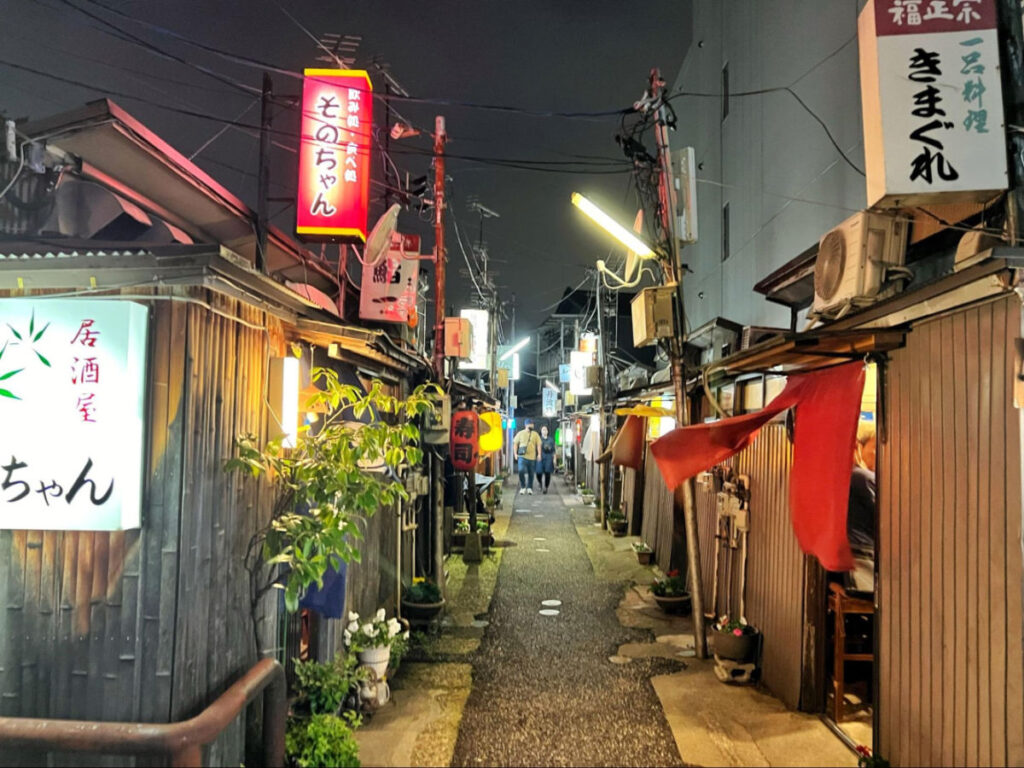
📍 Google Maps | Website | Hours: Varies by restaurant (generally 5 pm – 11 pm); irregular holidays
Within the modernness of Katamachi’s drinking and dining scene, one can still find the old Showa drinking alleys that are still popular with the locals. None is more beloved than the Chuo Mishokugai, a small street with several tiny shed-like eateries and bars, where the owners and their regular customers are more like family than anything else.
A visit here is a must for those who love the atmosphere and intimacy of Tokyo’s Golden Gai street. The menus and drink selection aren’t fancy. Instead, think simple snacks and meals, whisky highballs, beer with lots of foam, and Japanese sake.
Make sure to have cash (no cards), don’t visit in a big group (1-3 people max), and learn some basic Japanese phrases before you go.
Traditional Craft Experiences in Kanazawa
Jiyukajin Mizuhiki Museum
Learn a traditional Japanese craft to create your own personal keepsake.
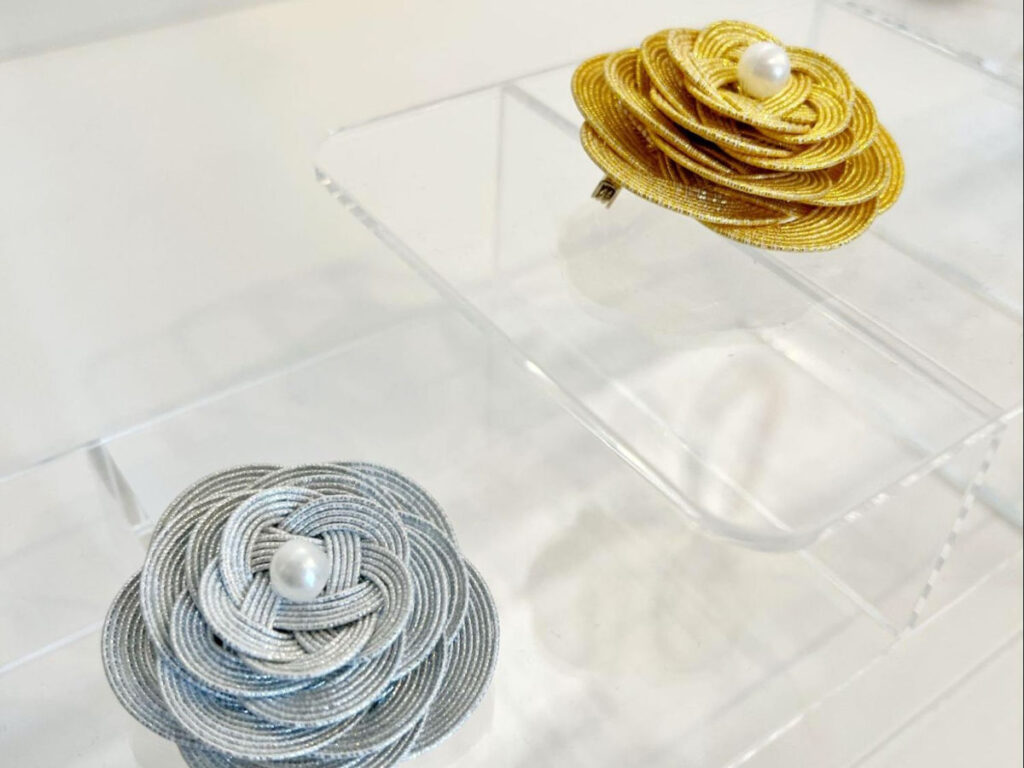
📍 Google Maps | Phone: (076) 244-6441 | Website | Hours: 10 am – 4 pm daily | Workshop Cost: Varies by course | 👉 Book alternate Mizuhiki experience on Viator
Traditionally, the Japanese craft of tying knots using thin, colourful cord is used to decorate and tie gifts, envelopes, and ceremonial items whilst symbolizing connection and affection. There are two popular knot styles – Musubi-kiri or Cho-musubi. Today, it’s now extremely popular to create pretty pieces of jewellery, hair accessories, and interior pieces.
The Jiyukajin Mizuhiki Museum showcases beautiful works of Mizuhiki as well as hosts occasional workshops where you can try your hand at making your own simple piece. The range of coloured thread in their studio is amazing, and it’s heaven for those who are fans of Japanese stationery shops and arts & crafts.
Mizuhiki workshops can also be found across the country in cities like Tokyo, Kyoto, and Nagano.
Kutani Kosen Kiln
Paint your own piece of Kutani pottery or try your hand at the potter’s wheel.
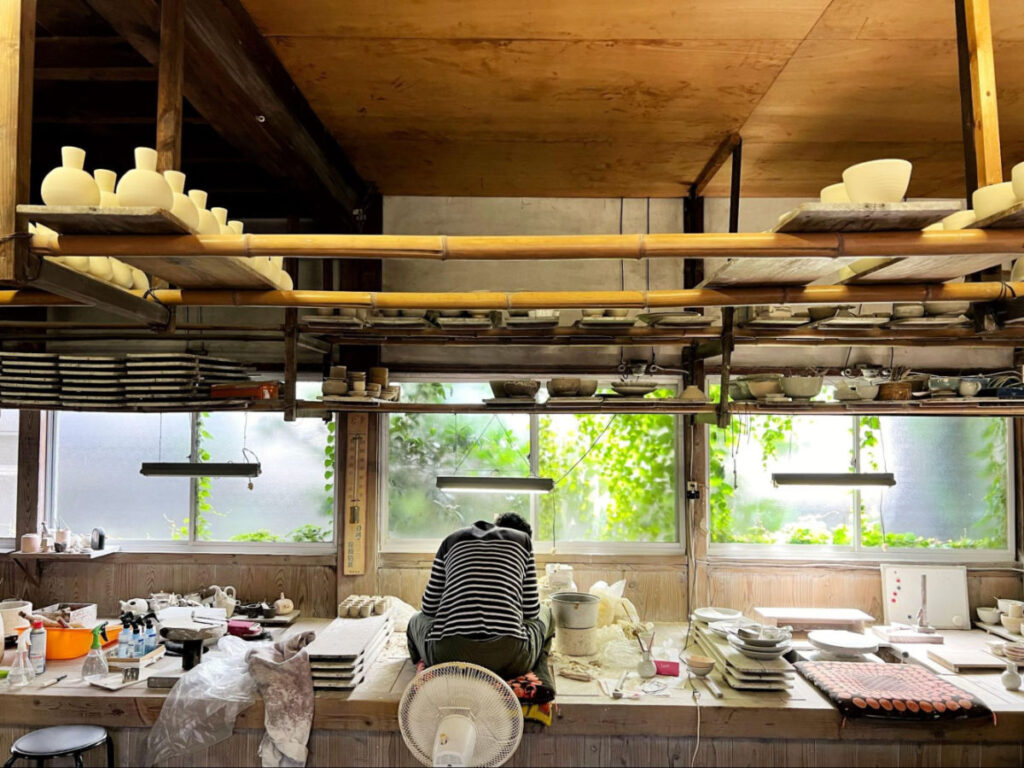
📍 Google Maps | Phone: (076) 241-0902 | Website | Hours: 9 am – 5 pm daily; irregular holidays (reservations required) | Cost: 2200-6600JPY+ per person (Etsuke Workshop), 5500-9000JPY+ per person (Potters Wheel) | 👉 Book Potters Wheel tour on Viator
Kutani Kosen Kiln is the only Kutani-yaki ceramic kiln in Kanazawa city, which makes the prefecture’s stunning Kutani porcelain, which is characterized by the use of the 5 vivid Kaga-gosai colours: indigo, ochre, crimson, dark green, and royal purple. [source]
The designs are often highly detailed, intricate, and colourful. This is one of my favourite types of Japanese pottery, along with Arita-yaki.
Include this in your itinerary if you’re a pottery lover or someone who loves meeting artisans, hearing their stories, and seeing their inner workshops. Reservations in advance are required to tour the kiln, as well as to book an experience.
If time is short, do an Etsuke Workshop (where you paint your own piece). Otherwise, try the Potter’s Wheel experience.
Hakuza Keikodokoro (Gold Leaf)
Love gold? Make your own shimmering souvenir at gold leaf workshops in Kanazawa.
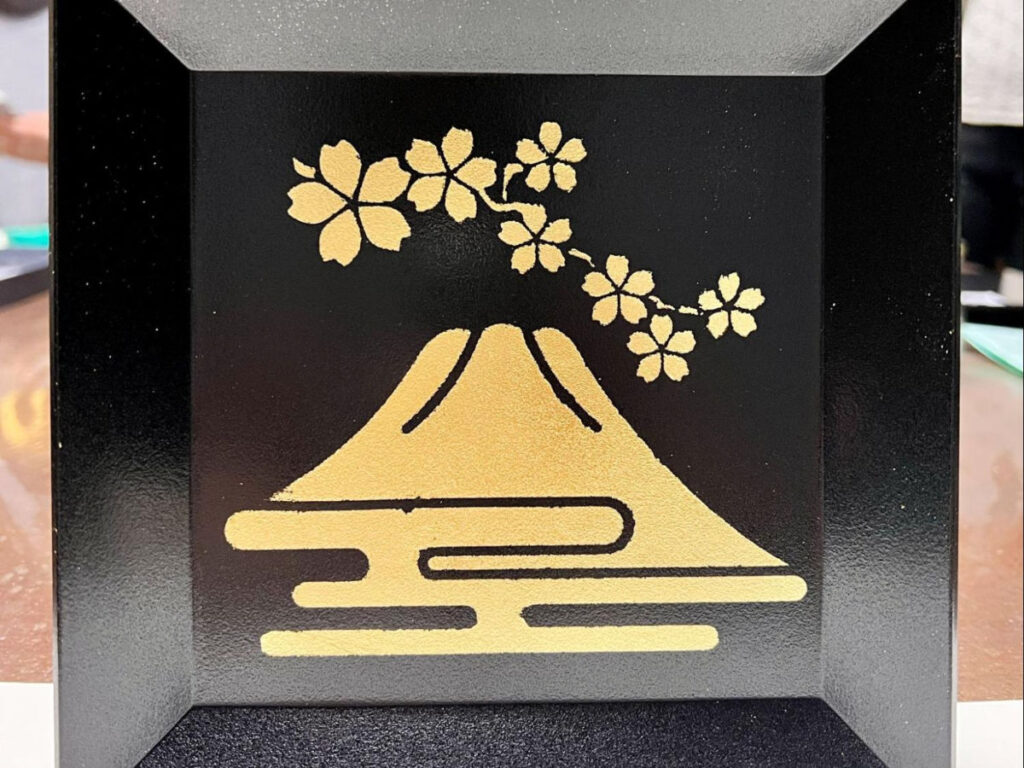
📍 Google Maps | Website | Hours: 9:30 am – 5:30/6 pm (shop); 10 am – 4 pm (workshop, reservations required); closed Tuesdays and Wednesdays; irregular holidays | 👉 Book alternate Gold Leaf Crafting on Viator
The artisan craft of gold leaf is synonymous with Kanazawa, and is designated a UNESCO intangible cultural asset. Hakuza is one of the most famous artisan houses. Their main store allows visitors to browse, see, shop, and learn about their works. Their “Golden Tea Room” is especially striking, whilst their “Golden Storehouse” in their Hakuza Hikari-gura is equally stunning.
Hakuza’s Chaya Bijin showcases their beauty and skincare products with actual gold flakes, which is extremely popular for visitors who love Japanese skincare.
Reservations are required in advance if you wish to partake in a workshop to create your own gold leaf keepsakes, with seasonal motifs like cherry blossoms, swirling clouds, rabbits, and Mt Fuji, etc. If it’s full, there are other alternatives in Kanazawa.
Kaga Yuzen Maida
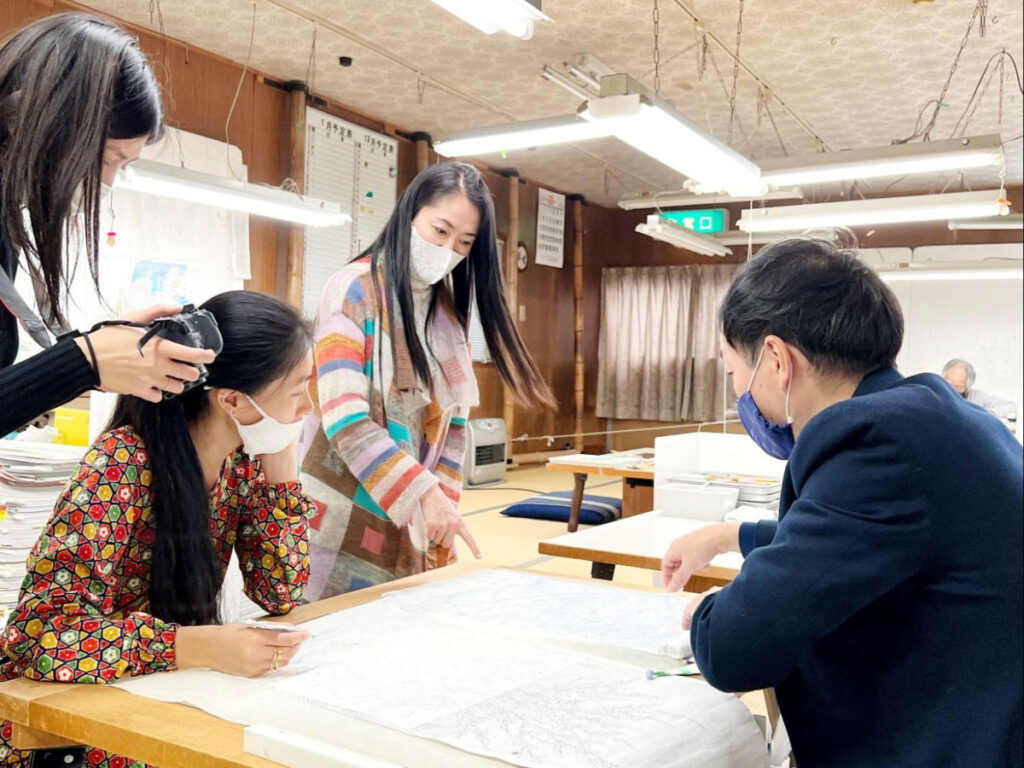
Learn the ancient techniques of Kaga-yuzen kimono from a 3rd-generation kimono master.
📍 Google Maps | Phone: (076) 221-3365 | Website | Hours: 10 am – 5 pm daily; closed Saturdays and Sundays; irregular holidays (reservations required)
Within the world of Japanese kimonos, there are several popular types. But for those that are made with the yuzen-dying technique, the big three are Edo-yuzen (Tokyo), Kyo-yuzen (Kyoto), and Kaga-yuzen (Kanazawa).
For three generations, Maida-san and his family have been creating breathtaking Kaga-yuzen kimonos, accessories, and works of art – all inspired by Kaga Yuzen traditions, which portray realistic natural seasonal scenery characterised by a graduation of hand-painted colours depicting real-world imagery of plants and flowers in Ishikawa.
A private tour here is essential for those who love to learn more about the intricacies of kimono creation and the Kaga-yuzen process, whilst having the chance to create your own silk furoshiki piece.
Advance reservation required. If unavailable, try Kaga Yuzen Kimono Center for other kimono studio options.
Cool & Unusual Things to Do in Kanazawa
Matsunoyu Sento
Soak your tired body in the relaxing waters of this popular local sento bathhouse.
📍 Google Maps | Phone: (076) 208-7155 | Website | Hours: 11 am – 11 pm daily; closed Wednesdays; irregular holidays | Entrance: 500JPY adults, 300JPY 13-22 yrs old, 150JPY 7-12 yrs old, 70JPY 0-6 yrs old, 160JPY 65+
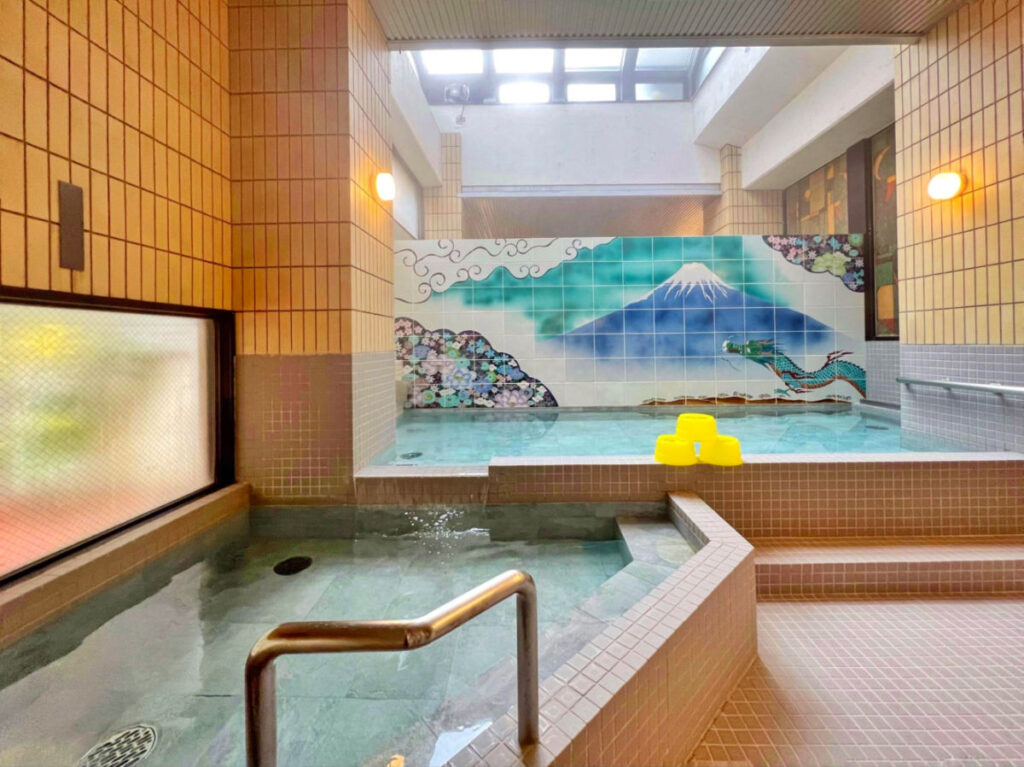
For decades, Matsunoyu Sento was a beloved fixture of the Nagamachi district, where locals would gather and bathe, soaking in the relaxing waters after a long day of work.
Time gave way to deterioration, and its doors closed. Nearly four years ago, the bathhouse was restored and renovated, and it reopened its doors to the welcoming locals. In the customs of sento bath culture, gorgeous murals adorn the walls of the male and female bath, so it’s fitting that Matsunoyu’s are made from Kutani-yaki tiles.
It’s a perfect stop to relax one’s weary body and feel the heart of a local community after exploring. The bathhouse is tattoo-friendly. Be aware, though, no clothes are allowed whilst bathing – this is still a traditional sento. Note, the waters are not onsen.
Kanazawa Kirara (Kimono Rental Shop)
Stroll around town wearing a traditional Japanese kimono.
📍 Google Maps | Phone: (076) 252-4931 | Website | Hours: 9 am – 6 pm daily; irregular holidays | Cost: 5390JPY+
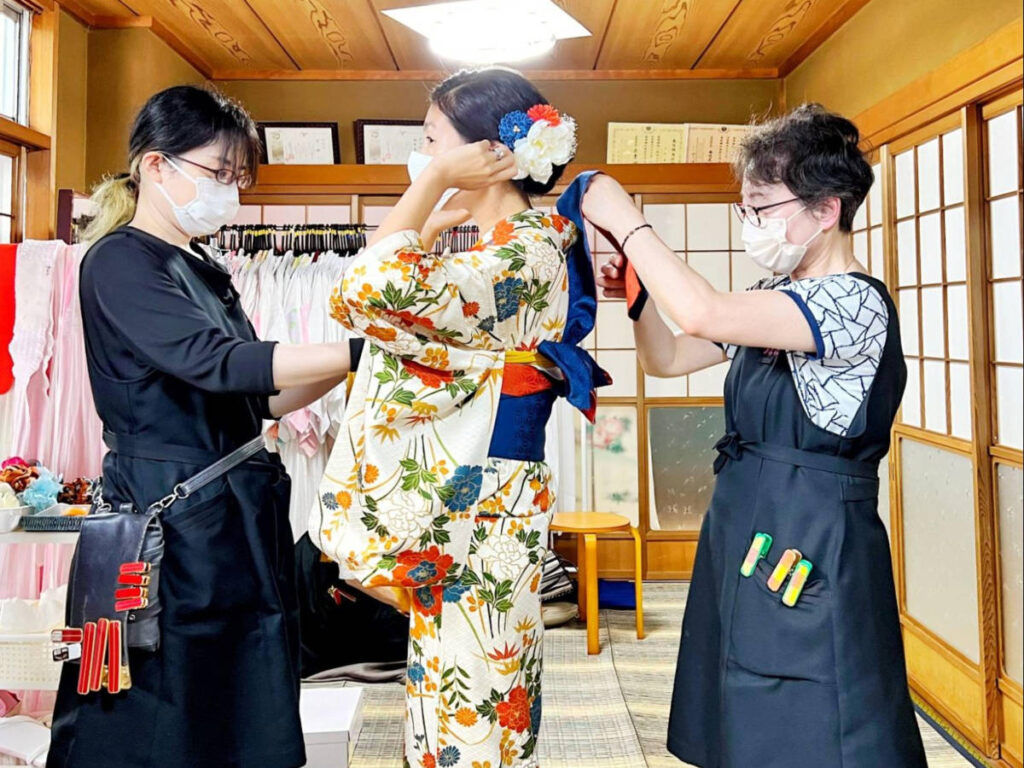
A favourite experience for many visitors is the chance of traditionally wearing Japan’s gorgeously crafted kimonos. There is no better place than Kanazawa to try this.
Several options are available, but one of the ones nearest to Higashi Chaya is Kanazawa Kirara. Inside, you can choose from a range of kimono styles. Depending on the package you choose, first you will have your hair done, and then you will be dressed.
Your clothes and belongings are kept safely in the store, and then you’re free to go stroll down the streets of Higashi Chaya for a period of time with others similarly dressed in a kimono or a yukata. It’s one of the most popular activities to do in Kanazawa and is more affordable than in Kyoto.
Geisha Performance & Tea Ceremony (Salon de thé Kaikaro)
Enjoy a rare, special encounter with the Geiko of Kanazawa.
📍 Google Maps | Phone: (076) 253-0591 | Website | Hours: 10 am – 5 pm, closed Wednesdays (may vary seasonally), irregular holidays | Entrance: 750JPY (teahouse, reservations required), 14,000JPY+ per person for Geiko experiences
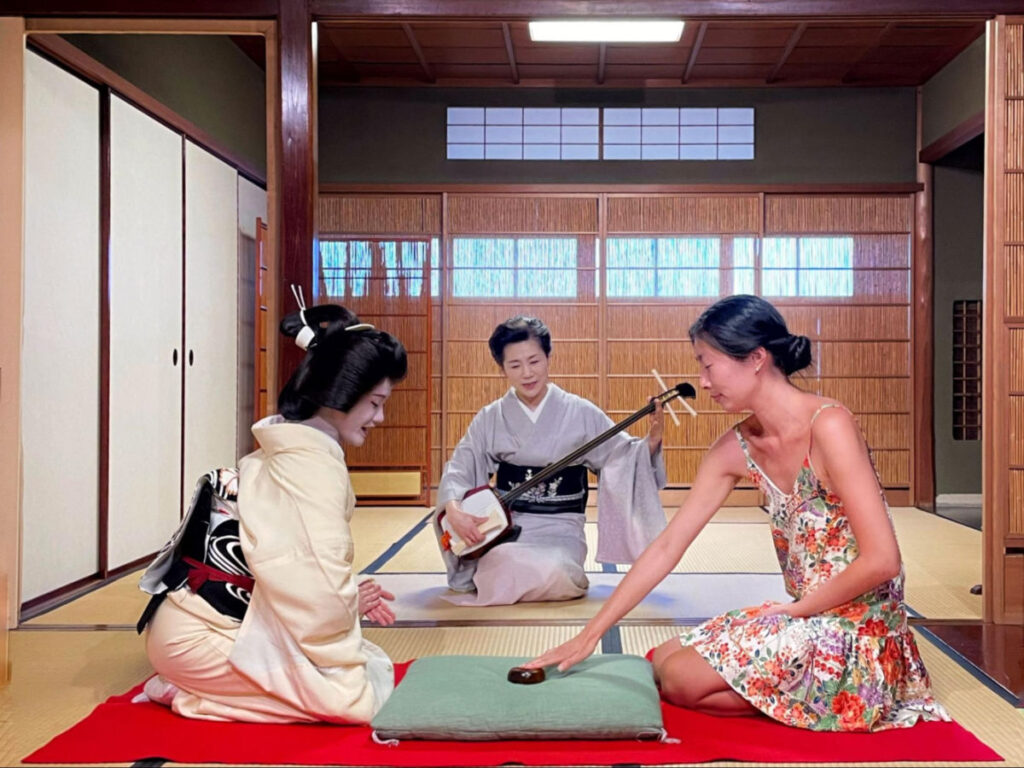
Visitors often think Kyoto is the only place where one can see a Geisha (in fact, in Kyoto, you will probably only see a Maiko – a Geisha trainee). However, there are several cities throughout Japan where one can still find Geisha, and Kanazawa is probably the most accessible.
The teahouse Kaikaro is the largest and one of the oldest, most prestigious still-running teahouses in Japan, with over 200 years of history. For those who have ever dreamt of meeting a geisha, Kaikaro should be on your list. The teahouse has several plans available, but one of the most popular is to have tea, whilst enjoying a musical performance, followed by the fun of playing their traditional drinking games.
Advance reservations are definitely required.
Private Geisha Dinner (Kinjohro)
Splurge on an ultimate once-in-a-lifetime Japanese entertainment and dining experience.
📍 Google Maps | Phone: (076) 221-8188 | Website
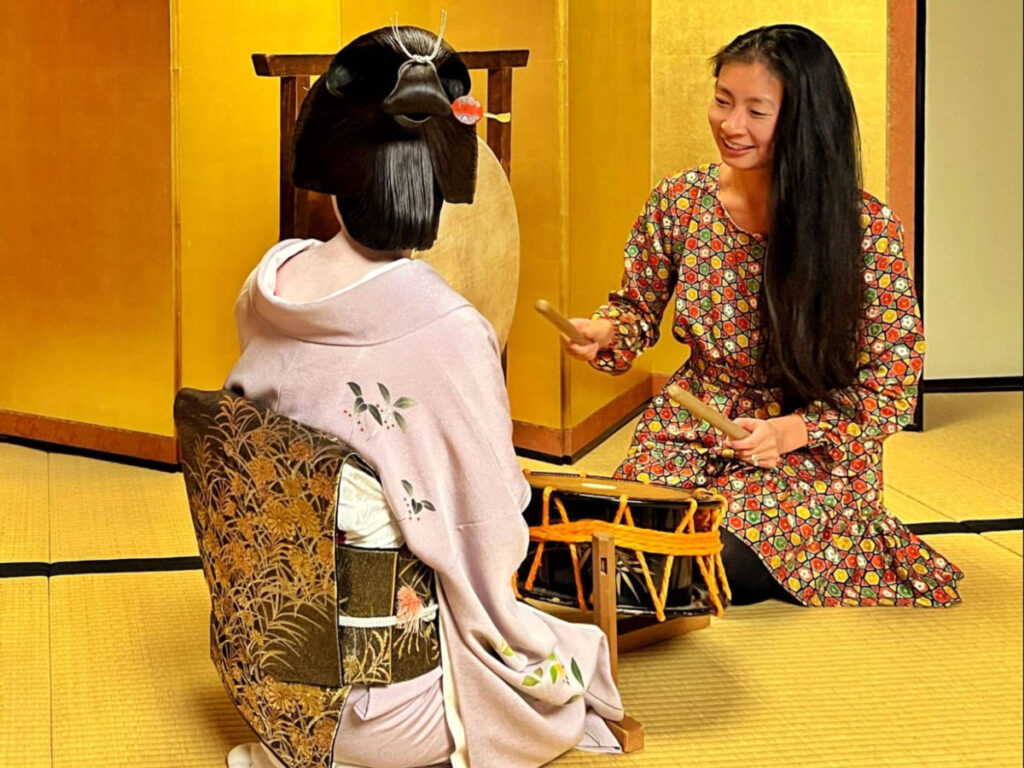
This is one of those “pinch me” moments I’ve had in life. It’s definitely a splurge, yet worth every yen spent. This private, intimate encounter will see you have a sumptuous kaiseki dinner in one of Kanazawa’s most prestigious, luxury traditional ryokans, Kinjohro.
Here, a private performance helmed by two of Kanazawa’s most senior Geisha will see the guest enjoy a traditional music show (where they will also attempt to teach you the drum rhythm for their dances), followed by the Geisha joining you at dinner to talk and drink together. Afterwards, rounds of their favourite traditional drinking games begin.
This experience is not easily organized and generally requires assistance from a luxury tour company like Wanotabi.
Day Trips & Getaways from Kanazawa
Shirakawa Go Gassho Zukuri
Visit this picturesque UNESCO World Heritage Site of traditional gassho-zukkuri houses.
📍 Google Maps | Phone: (057) 696-1311 | Website | Hours: 8 am – 5 pm | Entrance: Free (2000JPY for parking, 600JPY+ for museums)
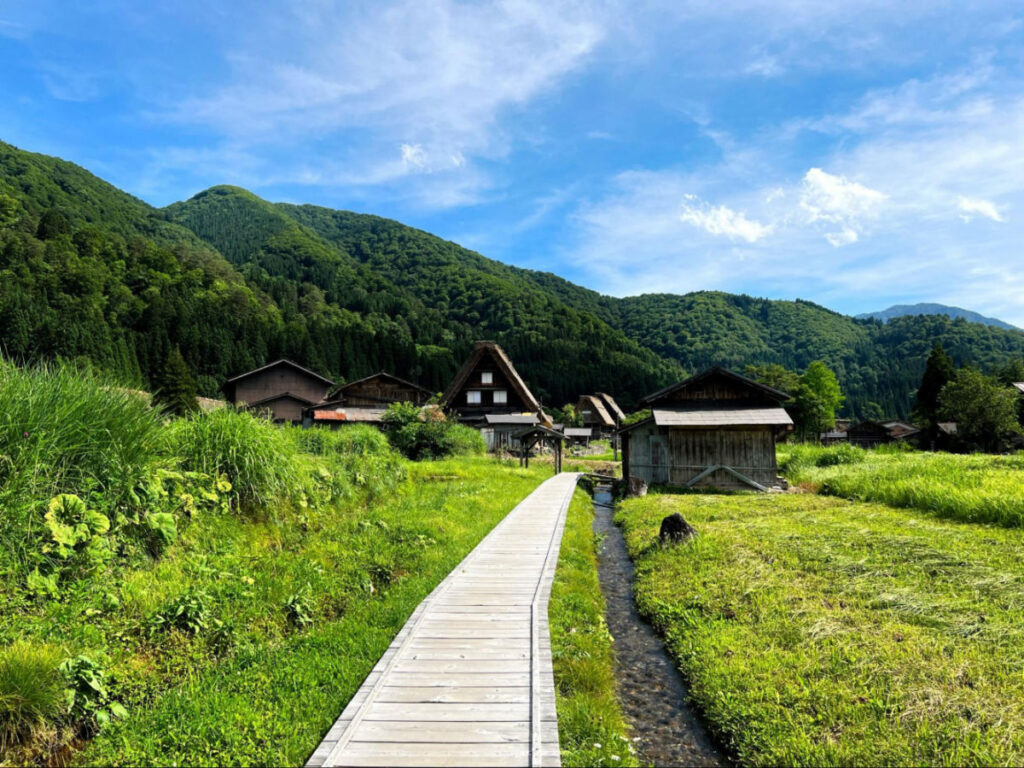
A popular day trip from Kanazawa is a road trip to the picturesque Shirakawago Gassho-Zukkuri village in Takayama. The thatched roofs of the houses are said to be in the shape of praying hands (hence the name Gassho Zukkuri).
It’s beautiful throughout the seasons. Spring sees the cherry blossoms bloom, summer has the lush green rice fields growing, autumn is painted in the hues of the changing leaves, whilst winter is cloaked in a blanket of snow.
This is definitely one for your itinerary if you love beautiful Japanese scene-scapes and rural, pastoral views. Visit the traditional houses turned-museums whilst you’re here, or try your hand at making Wagashi sweets. If you have more time, book a stay overnight in one of the houses.
Ainokura Gassho Zukuri in Gokayama
Appreciate this quieter, smaller gassho-zukkuri village that’s also a UNESCO World Heritage Site.
📍 Google Maps | Phone: (076) 366-2123 | Website | Hours: 8:30 am – 5 pm daily | Entrance: Free (500-1000JPY for parking, 300JPY+ for museums)
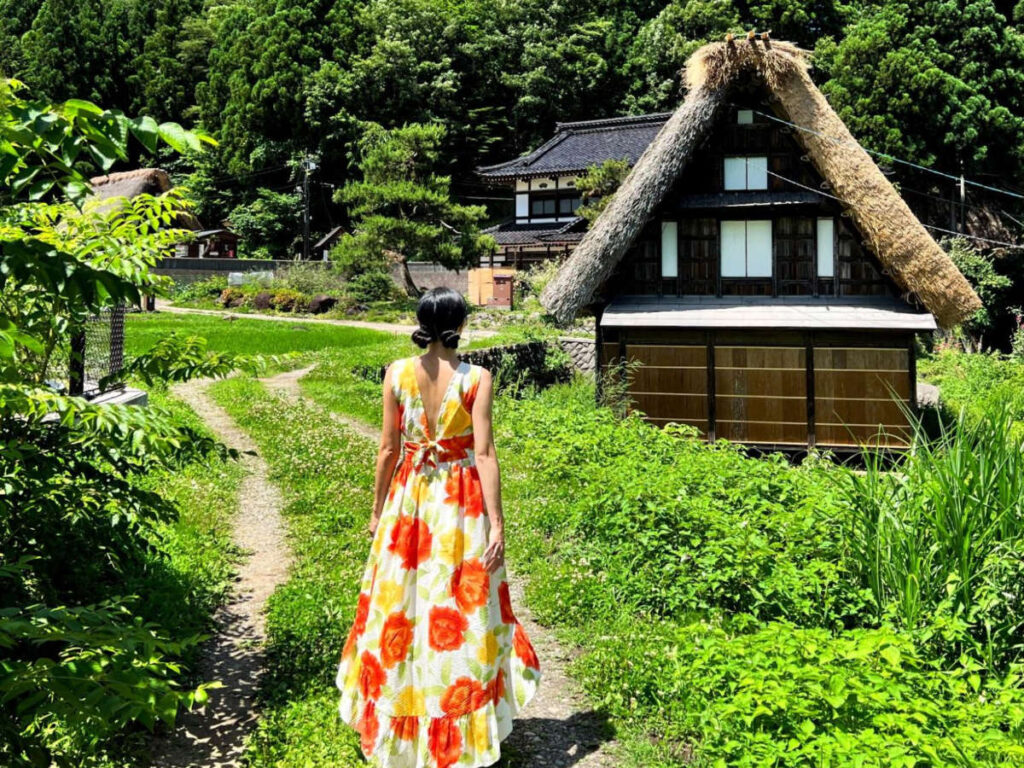
The quieter, little sister village of Shirakawa-go – Ainokura of Gokayama – is found in Toyama prefecture. For many visitors, this is a popular addition to a day trip to Shirakawa-go.
There are fewer thatched roof houses here, yet the atmosphere of the village is utterly charming. Even more rural, even more local. A stop here is best for visitors who perhaps may feel overwhelmed with the crowds at Shirakawa-go in the popular seasons.
One can also enjoy washi-paper making workshops here, along with eating delicious homemade soba filled with mountain vegetables and mushrooms. If you missed out on staying a night at Shirakawa-go, there are also a few options of traditional accommodation in Ainokura.
Shirayama Hime Jinja Shrine
Embark on a mini pilgrimage to the head shrine of all 2000-3000 Hakusan shrines in Japan.
📍 Google Maps | Phone: +81 76 272-0680 | Website | Hours: 9 am – 4 pm daily (April 1st – Oct 31st); 9:30 am – 3:30 pm (Nov 1st – Nov 30th); closed December – March | Entrance: 300JPY adults, free 18 & under
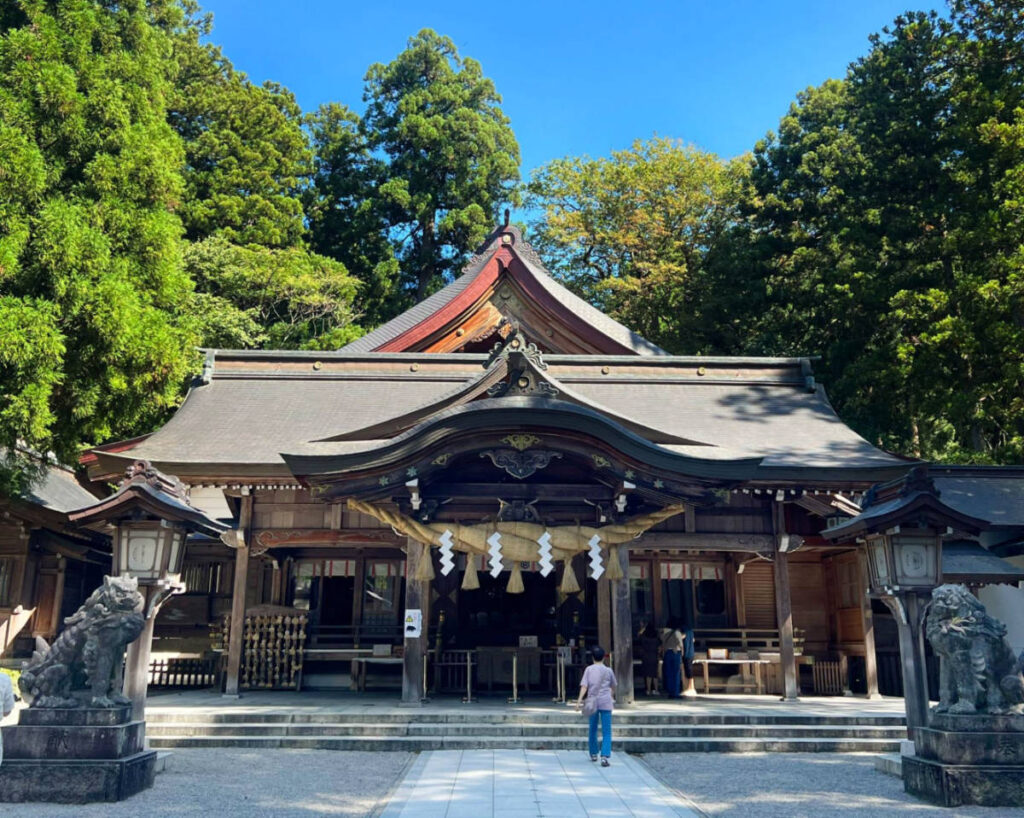
For centuries, Mt Haku (Hakusan) in Ishikawa Prefecture has been revered as a sacred site for the Hakusan faith, where the deity who protects water (the mountain is the source of four major rivers), agriculture, and safe relationships resides.
Shirayama Hime Jinja (over 2100 years old) is the grand Hakusan shrine, which protects the entire Hokuriku region. Here, one can experience the ancient water purification ritual of misogi.
Regardless if one is religious or not, a day trip to Mt Haku is easily accessible from Kanazawa City using local train and bus (the trip should take around 1-1.5 hours one-way) and is a wonderful escape into nature if you’re missing trees and the forest. If you love Japanese shrines and temples, then you should definitely visit.
Yamashiro Onsen
Have a little getaway to one of Ishikawa Prefecture’s most beautiful onsen towns.
📍 Google Maps | Phone: (076) 177-1144 | Website
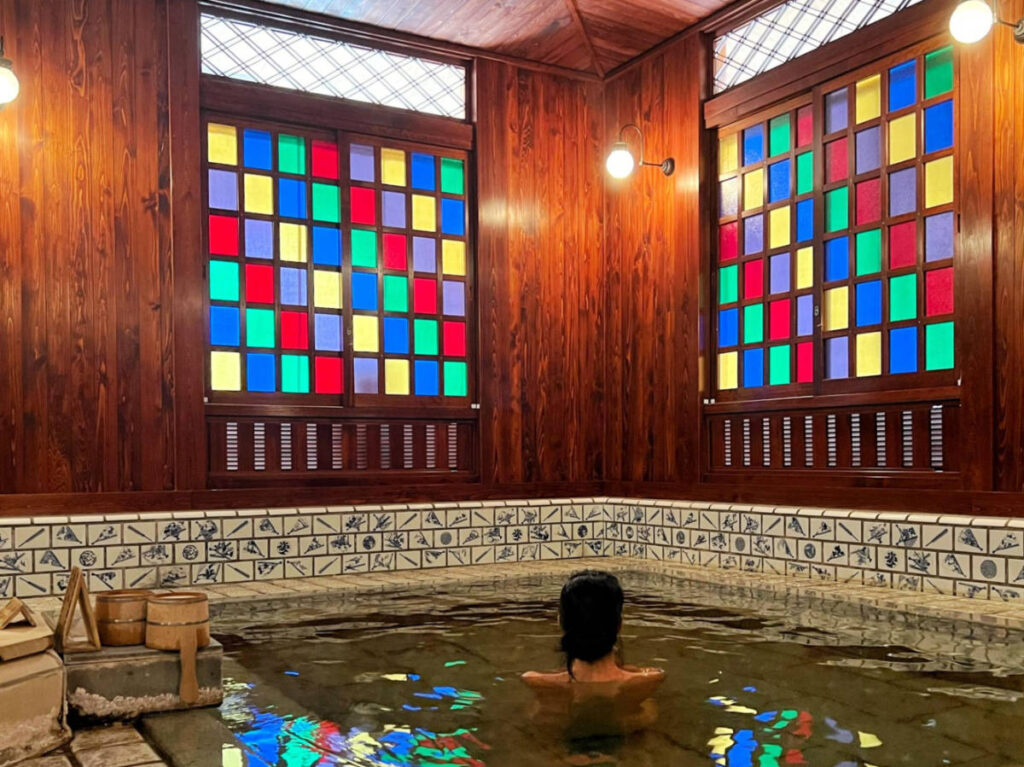
This 1300-year-old onsen town is easily accessible from Kanazawa station in 16 minutes (via express train). Built up around the central onsen bathhouse, Kosoyu, which has been restored and renovated, this charming town, decorated with kutani-yaki and other traditional Kanazawa crafts, is wonderfully walkable.
One can enjoy wearing traditional kimono, taste local sake, explore the local Yakuoin Onsenji Temple (birthplace of the modern Japanese alphabet) or Hatori Shrine, and experience a stay in an onsen ryokan.
If you wish to stay overnight, no stay is more iconic than the luxurious traditional Araya Totoan, which has been run by the same family for 18 generations. A visit to Yamashiro is a must if you’re hoping to extend your trip or simply looking to relax for a couple of nights.
👉 You Might Also Like: Best Things to Do in Kyoto and Things to Do in Tokyo
***
Kanazawa is a city that should be on everyone’s Japanese travel plans if you want to immerse yourself in art, culture, history, good food, beautiful sights, and breathtaking scenery. It has the blend of a bustling city and the calmness of serene nature, allowing one to experience some of the best Japan has to offer.