
Affiliate Ad Disclosure: We’re reader-supported. When you buy via our links, we earn commissions. Learn more.
Where to Stay in Cusco (And The Sacred Valley)

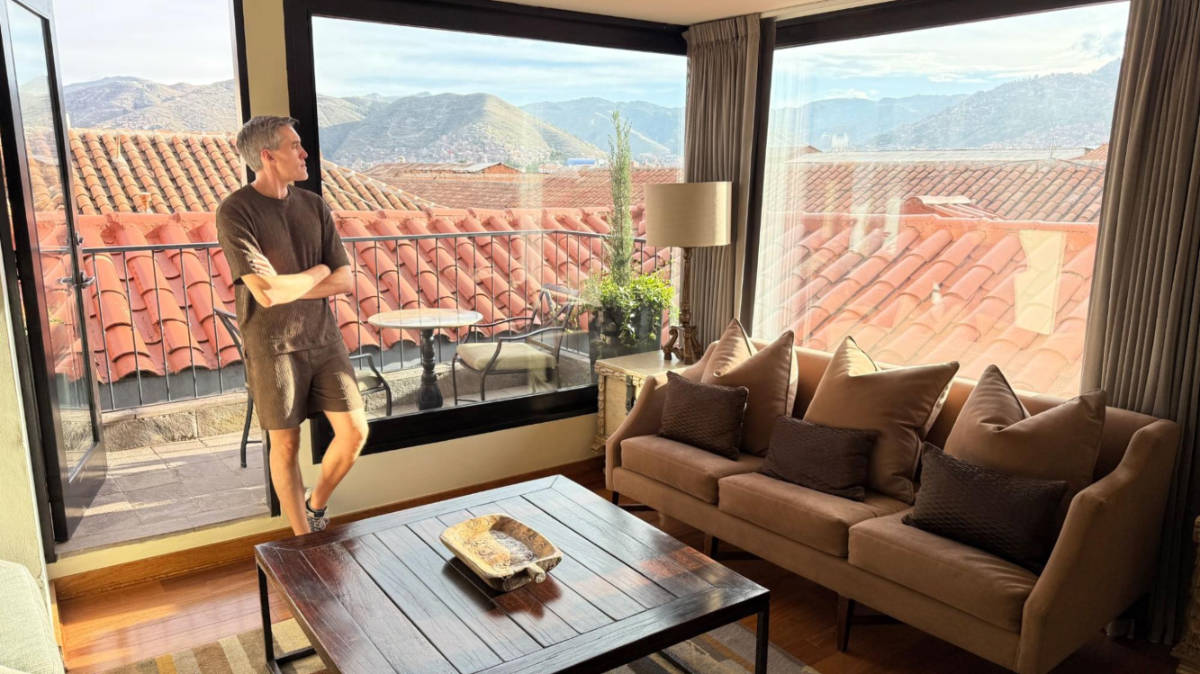
👉 Jump to: Best Places to Stay | Best Areas | Tips | My YouTube Video | FAQs
I love Cusco. I think it’s the single best destination in all of South America, and it should be on every traveler’s bucket list. But Cusco is one of those destinations that requires a lot of planning. To help you out, I made this guide to exactly where to stay for the best experience.
Almost all visitors should stay in Cusco’s Historic Center. It’s really where everything is and the only area of the city worth considering.
My favorite hotel stay here was at the luxurious Palacio del Inka. It’s a 5-star hotel located in a building that was once a part of the Inca’s Temple to the Sun, and then later turned into a Spanish colonial mansion. It was honestly one of the most memorable hotel stays of my life.
If that’s out of range for you, consider the more mid-range Wyndham Costa del Sol, a highly-rated property with a perfect location just one block from Cusco’s main square. Or, at the budget end of the spectrum, Quechua Hotel offers value and a solid location.
In addition to the Historic Center, this guide also covers the Sacred Valley, a rural mountainous area surrounding Cusco. I actually recommend starting your trip in the Sacred Valley. It sits at a lower elevation, so it’s a better place to acclimate. Plus, it’s closer to Machu Picchu than Cusco.
For the perfect trip, I’d suggest ordering your Cusco itinerary as follows:
- First, stay a few nights in the Sacred Valley and acclimate. I loved staying at Tambo del Inka, a 5-star hotel with a private train station to Machu Picchu. But I’ll list options for every budget below.
- Next, visit Machu Picchu (be sure to book your tickets well in advance).
- Lastly, return to Cusco and complete your trip visiting the sites in and around the city.
That’s my quick summary, but read on for much more essential advice. I’ve also got a series of Peru YouTube videos and a guide to where to stay for Machu Picchu to help you as well.

Best Places to Stay in Cusco
If you’re short on time, these are my top picks within the city of Cusco itself:
- 🏆 Best Overall Hotel – Palacio del Inka
- 📍 Best Location – Wyndham Costa del Sol
- 💎 Best Luxury Hotel – Monasterio, A Belmond Hotel
- 👪 Best for Families – JW Marriott El Convento (luxury) or Kantu Hotel (budget)
- ❤️ Best for Couples – Palacio del Inka (luxury) or Amaru Colonial (budget)
- 🛎️ Best Boutique – MOAF Cusco Boutique
- 🎒 Best Hostel – Pariwana Hostel or Viajero Cusco Hostel
- 🛏️Best Budget – Quechua Hotel or CASA CRISTOBAL Siete Cuartones
Additionally, I recommend staying a few nights in the surrounding Sacred Valley (pro tip: start your trip here to acclimate at lower elevation, then end in Cusco city after visiting Machu Picchu).
Here are my top picks in the Sacred Valley:
- 💎 Best Luxury – Tambo del Inka
- 🏨 Best Mid-Range – Hotel Tierra Inka Sacred Valley
- 🛏️ Best Budget – Casa Inka B&B
- 🎒 Best Hostel – Hostal al Viajero
That’s the summary, but keep reading as I explain what to expect when staying in both Cusco and the Sacred Valley. Additionally, you can reference my separate guide to where to stay for visiting Machu Picchu (which additionally covers staying in Machu Picchu town itself).
The Best Neighborhoods & Areas to Stay in Cusco
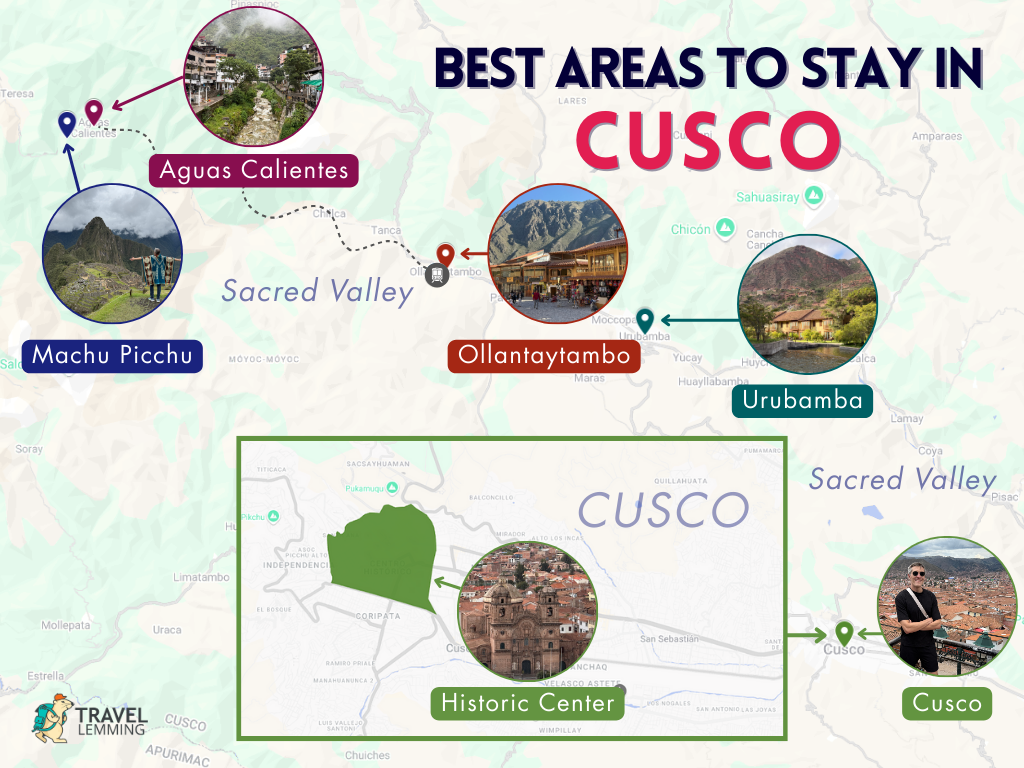
Cusco sits in a narrow Andes mountain valley 11,150 feet above sea level. There is so little flat land that the airport runway extends right through the middle of the city. That makes for cool views when flying in (so book a window seat if you can).
In Cusco itself, there’s really only one area tourists should stay in: the Historic Center. It sits at the city’s western edge and includes a few sub-areas like San Blas and San Cristobal. There are other neighborhoods in Cusco, but few have licensed hotels. And, even if you somehow found accommodation elsewhere, I’d advise against it.
Beyond the city, you could also stay in the surrounding Sacred Valley, a beautiful rural mountain area dotted by small towns and villages. The Sacred Valley sits at a lower elevation (~9,000 feet). So, as I explain below, I suggest you start your trip in the Sacred Valley, acclimate to the elevation, take on Machu Picchu, then return and finish your trip in Cusco after you’re acclimated.
Cusco’s Historic Center
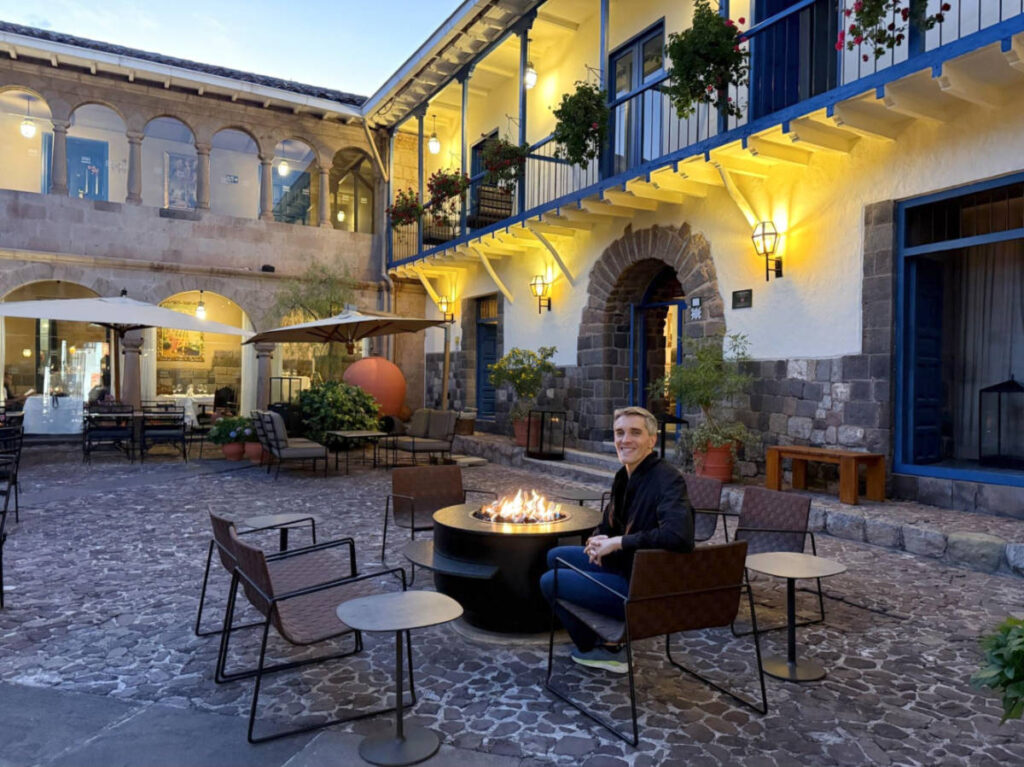
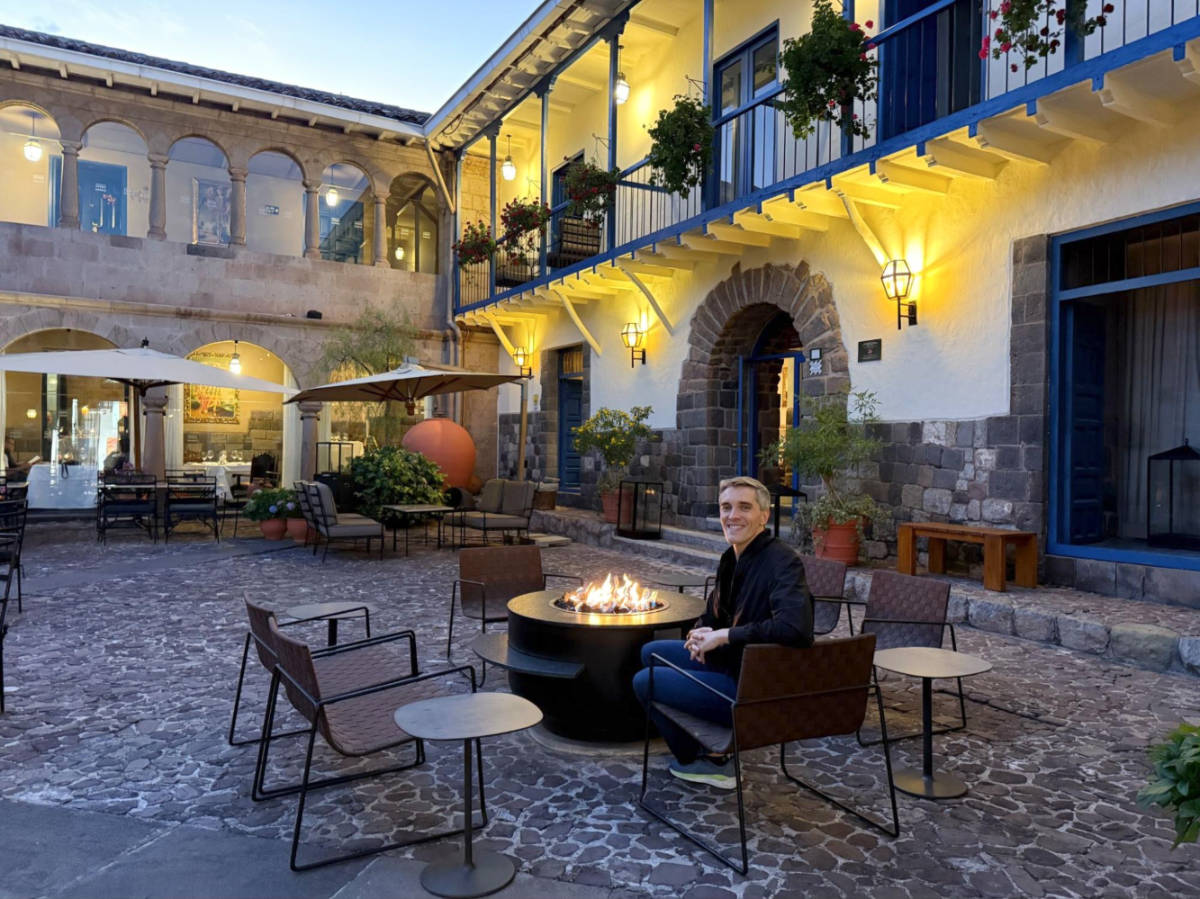
Me in the courtyard of Palacio del Inka, my #1 hotel in Cusco (see my full review here) 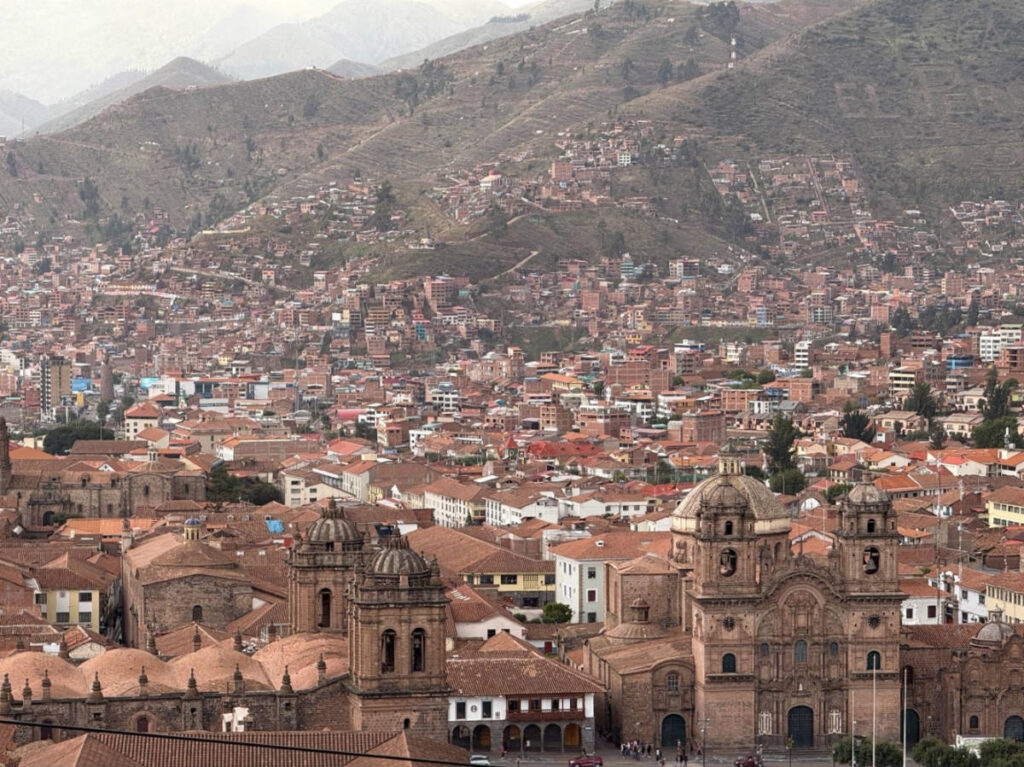
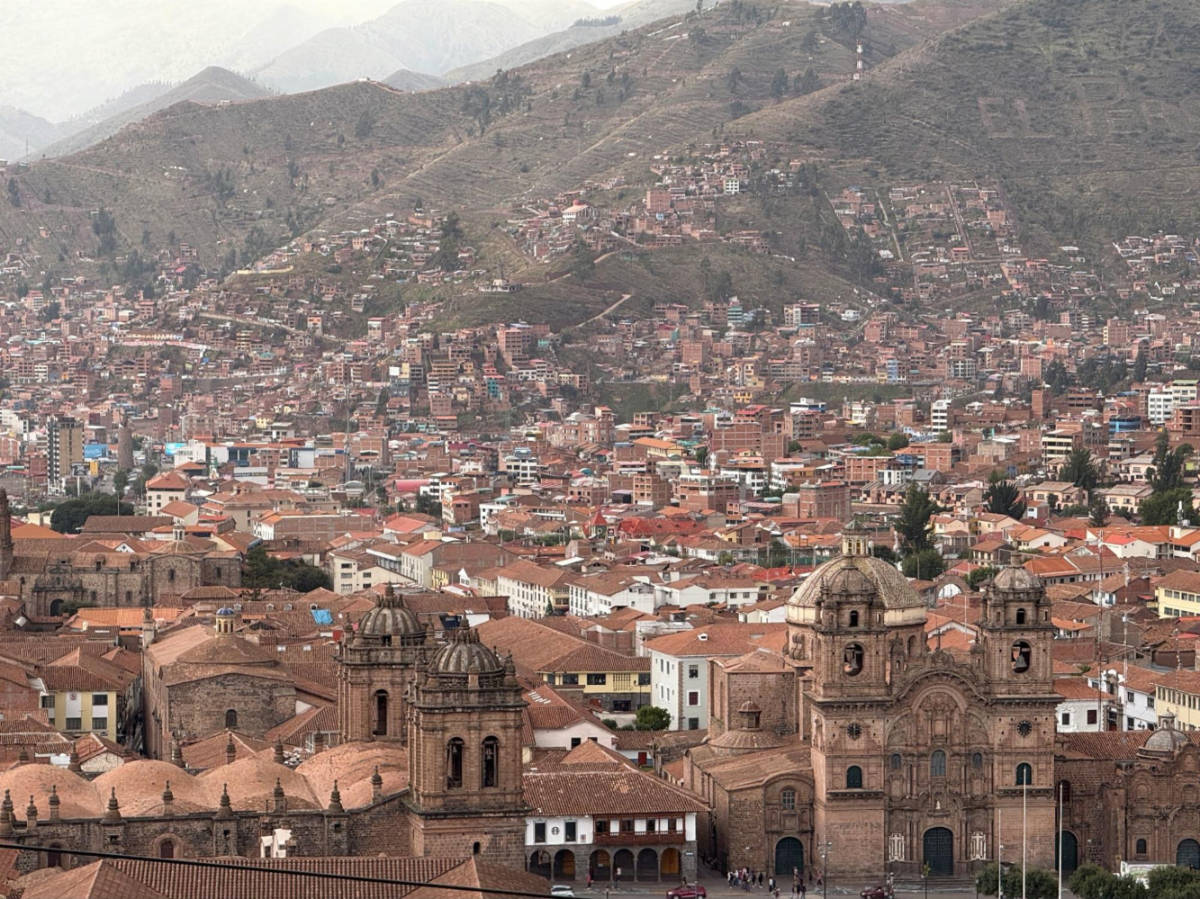
Cusco’s Historic Center is filled with history (and hills!) 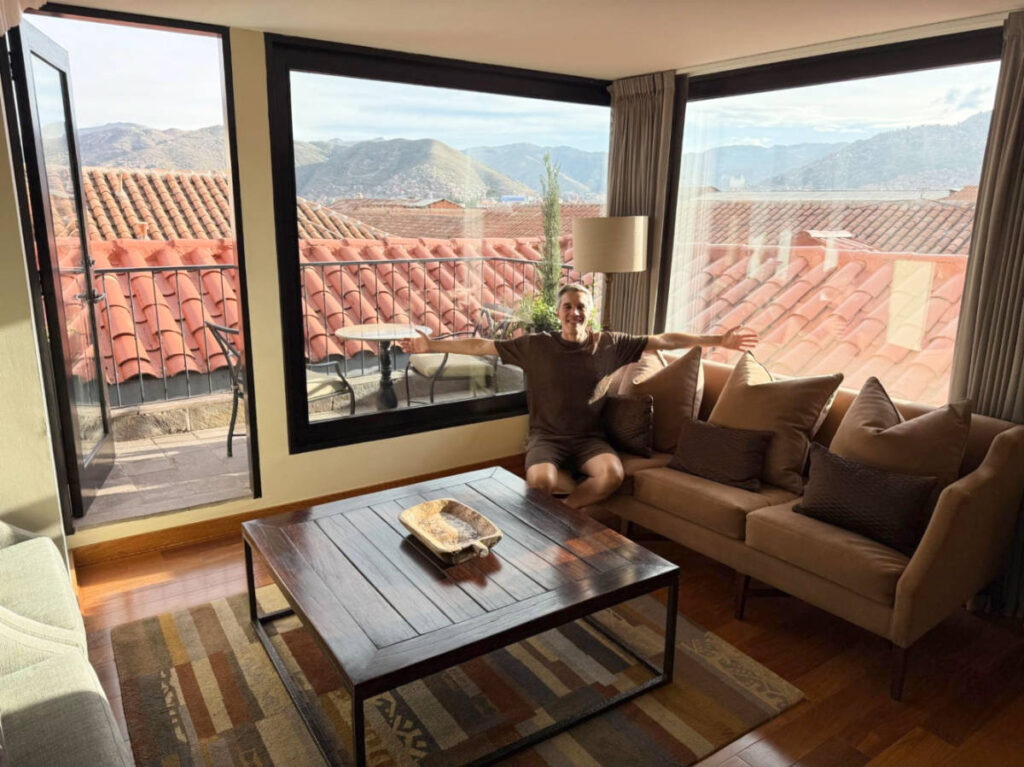
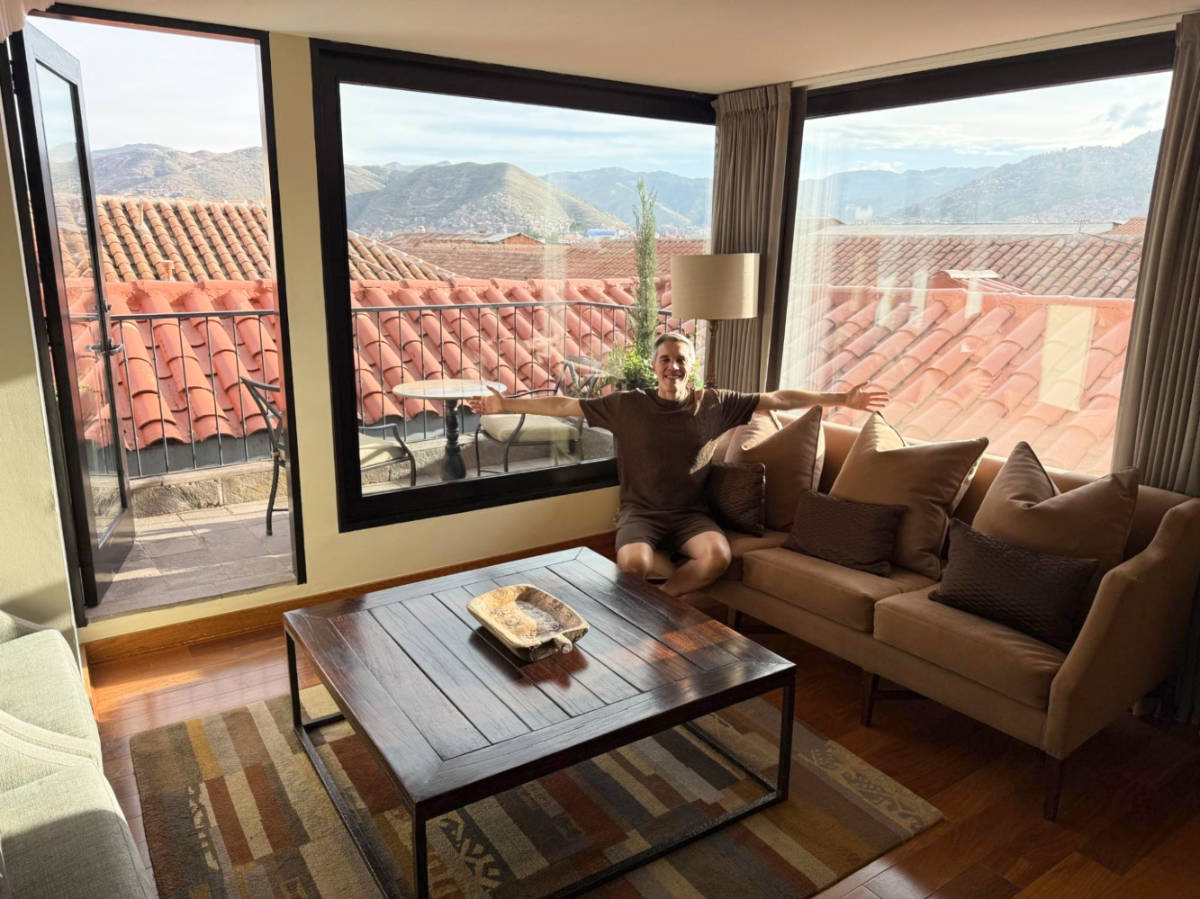
Me at the JW Marriott El Convento Cusco (located in a 500-year-old Spanish convent) 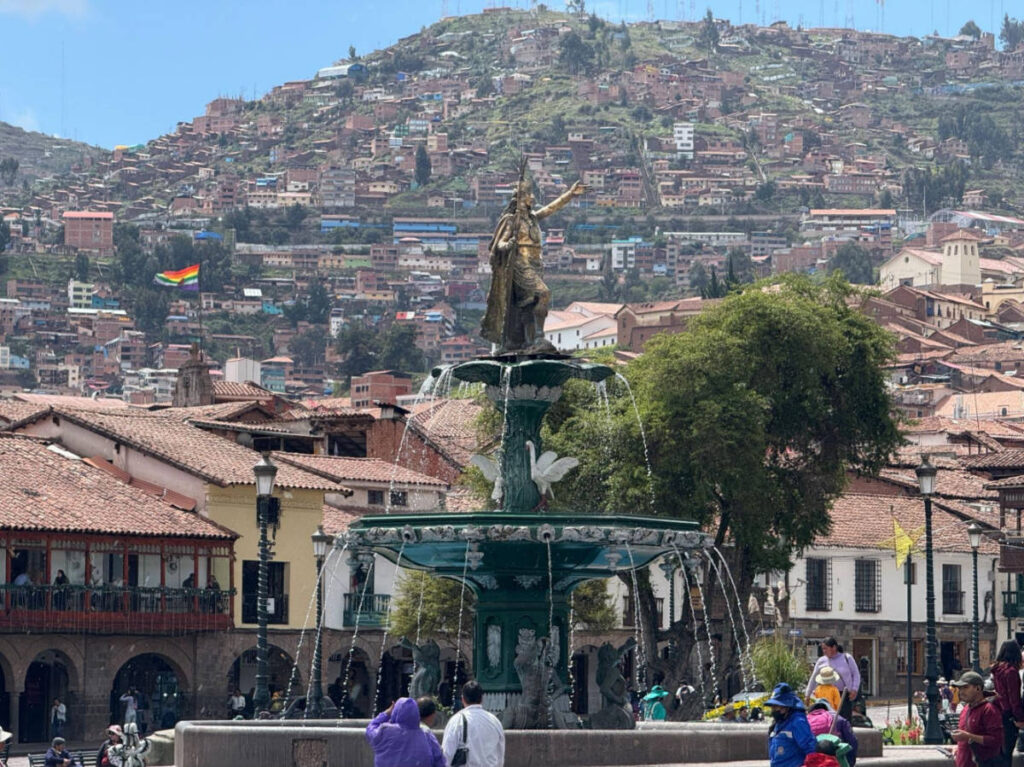
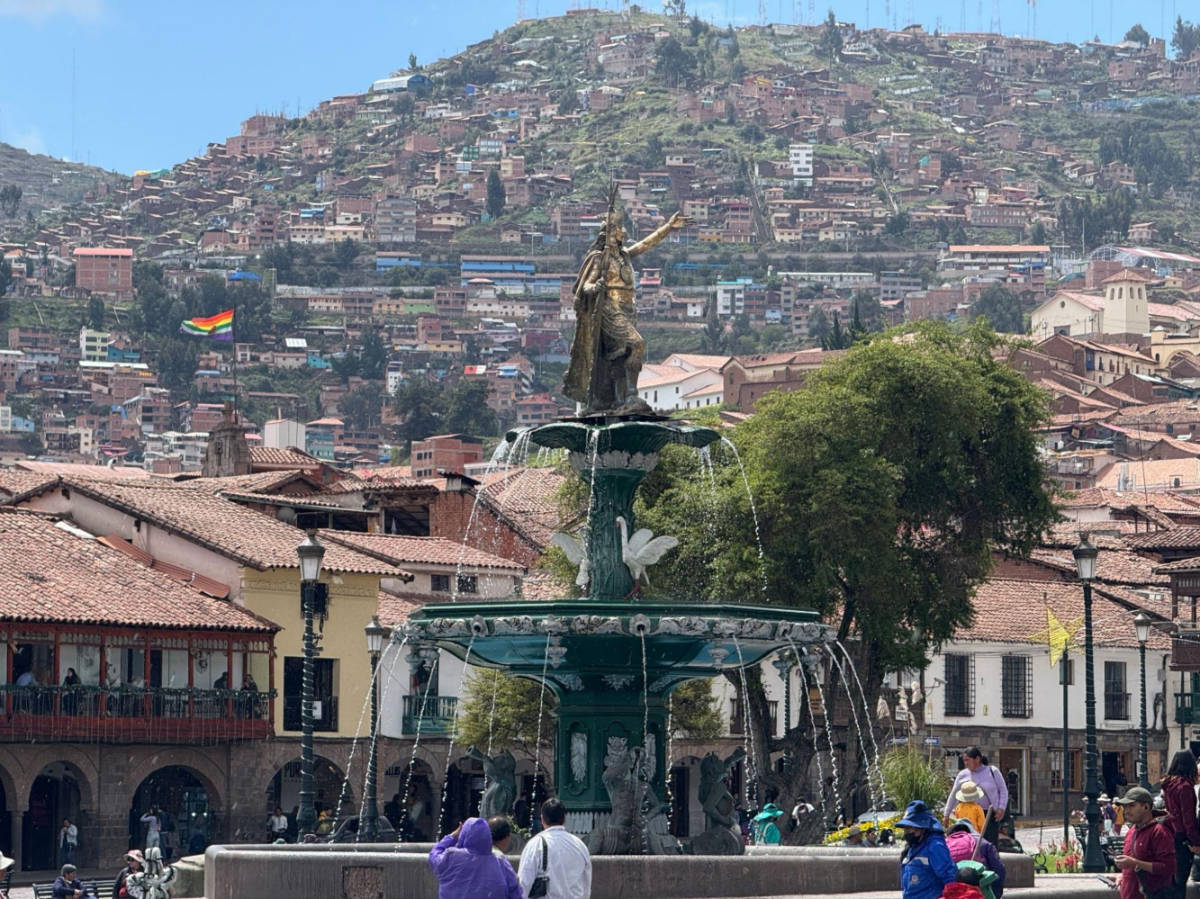
A fountain in Cusco’s Plaza de Armas (Plaza Mayor), the city’s main historic square 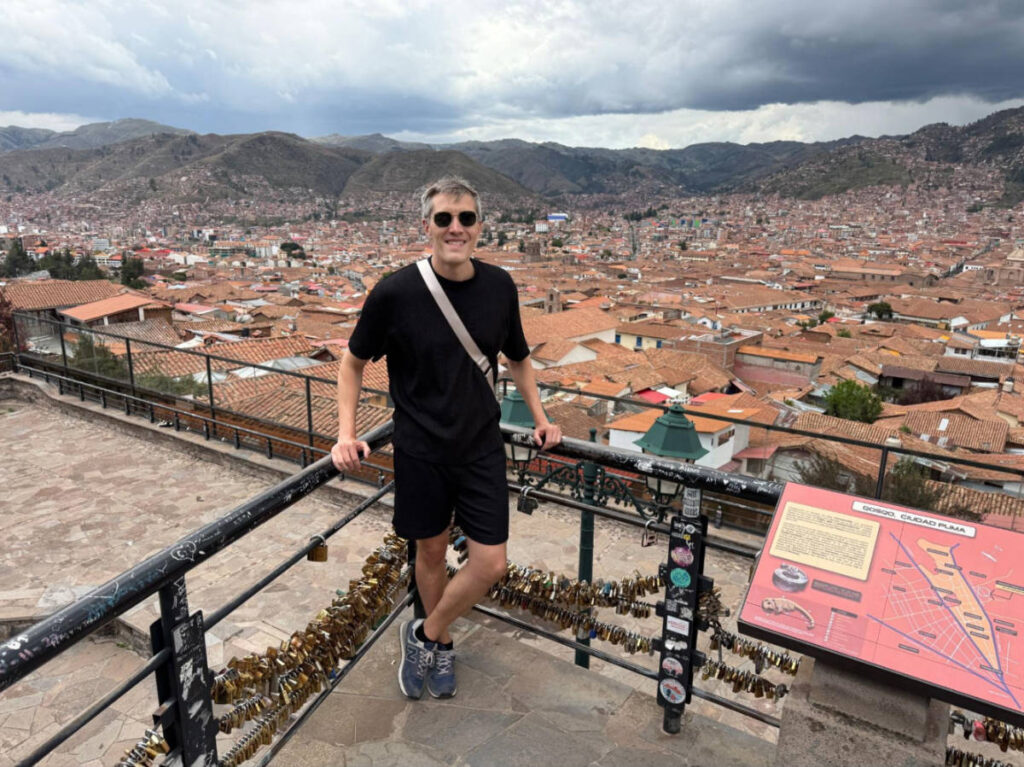
Me at the Mirador de San Blas, overlooking the Historic Center below 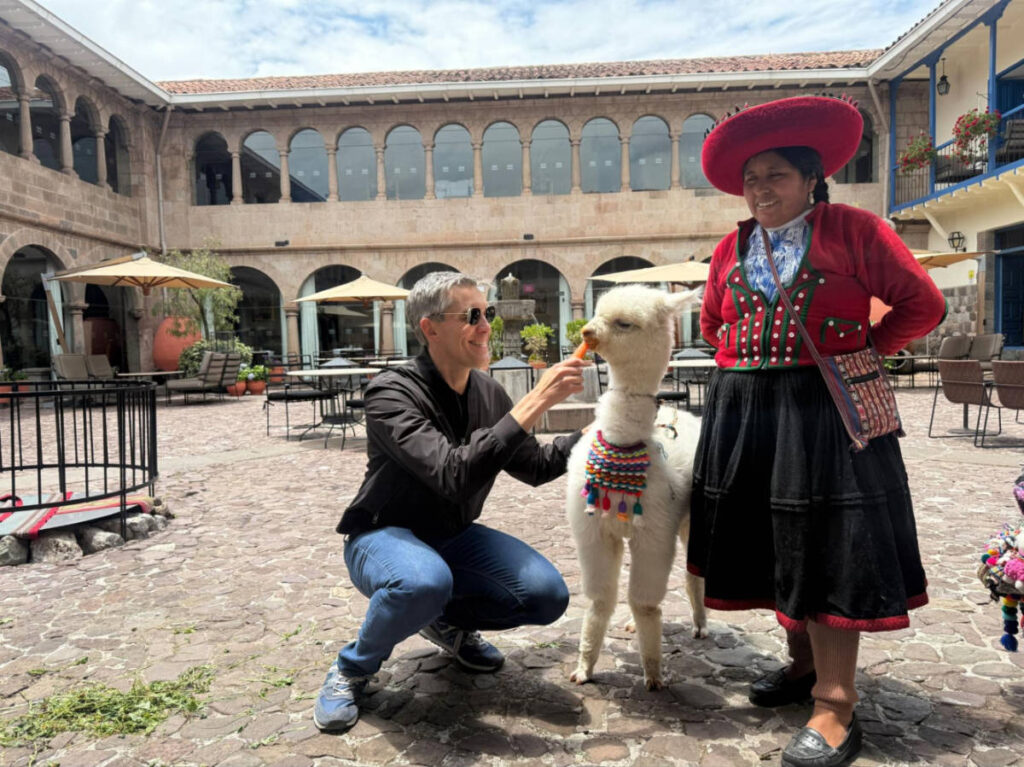
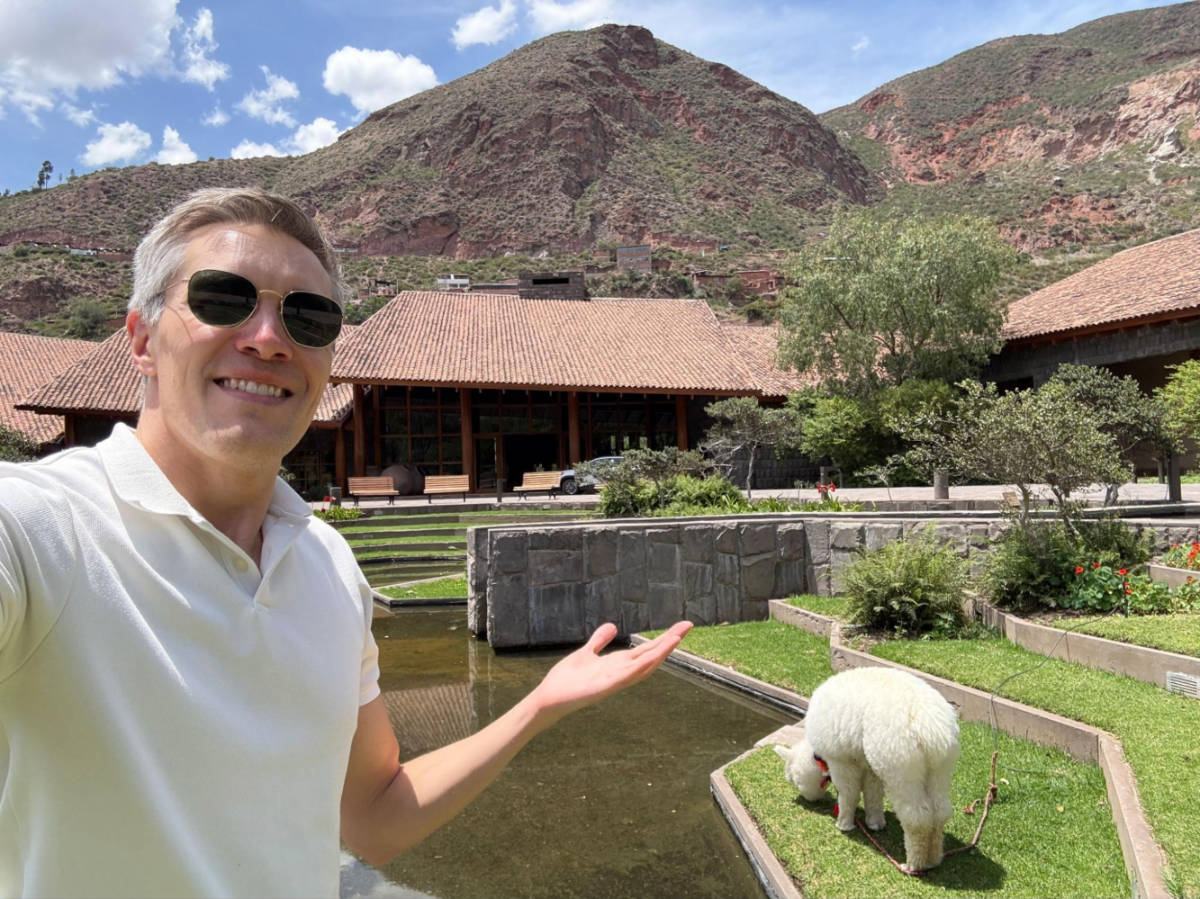
Me feeding Inti, the resident alpaca at Palacio del Inka 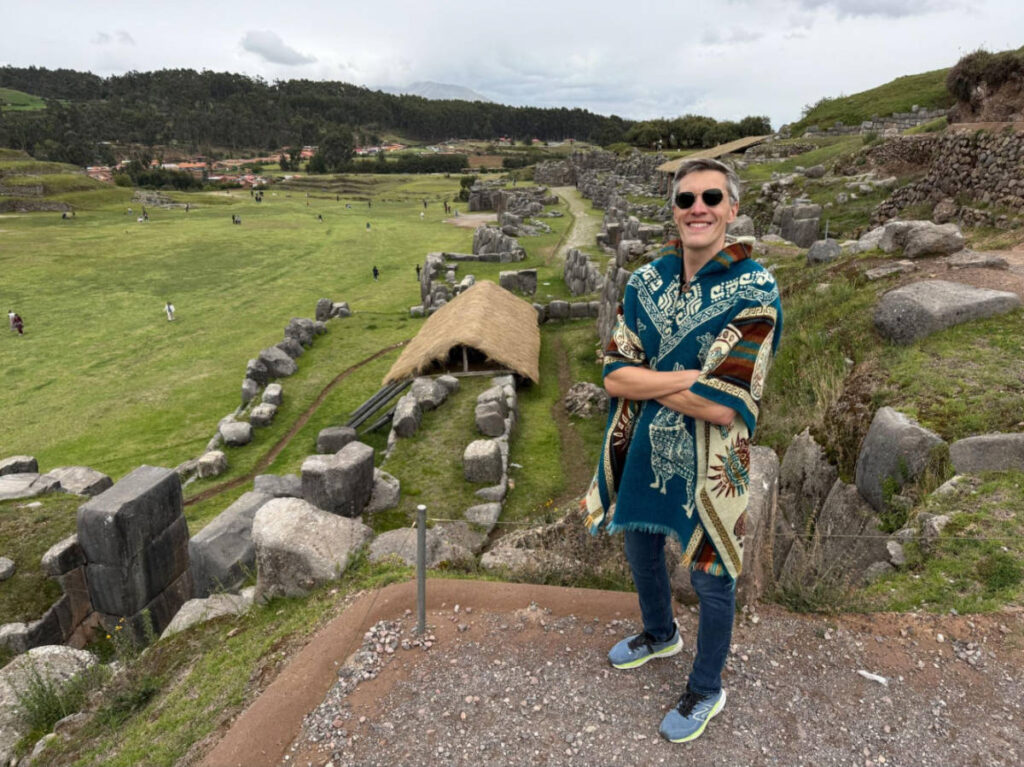
Me at the Saqsaywaman archaeological site (a must-visit just outside the center) 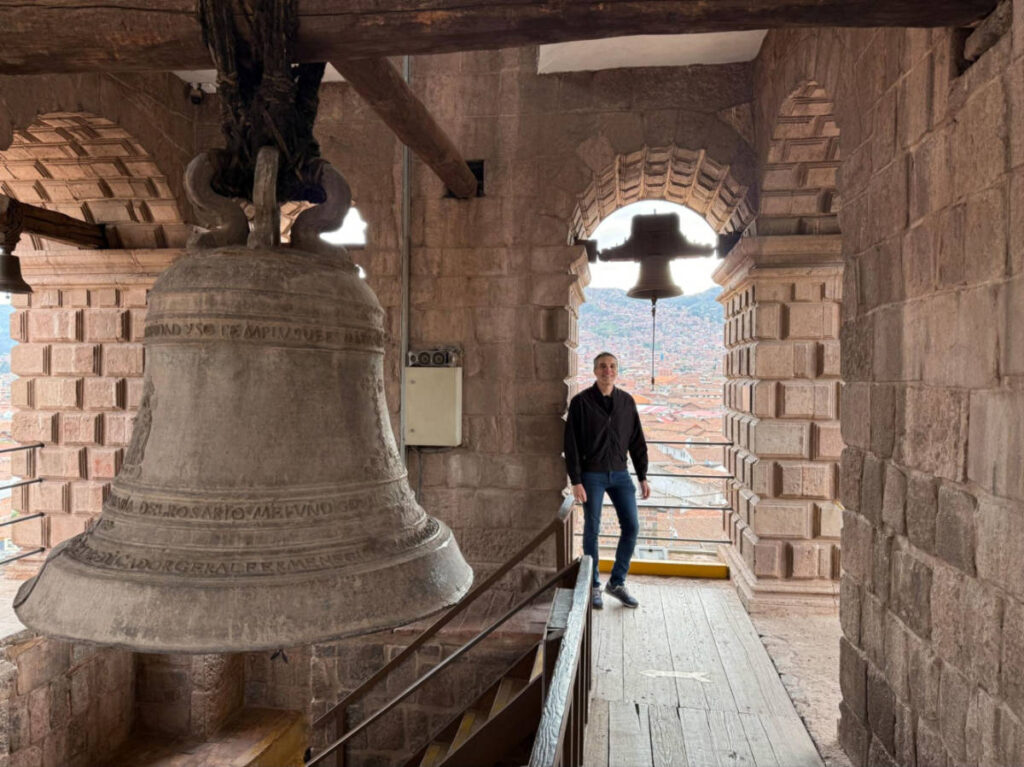
When you visit the Qorikancha and the Church of Santo Domingo, be sure to go up the bell tower! 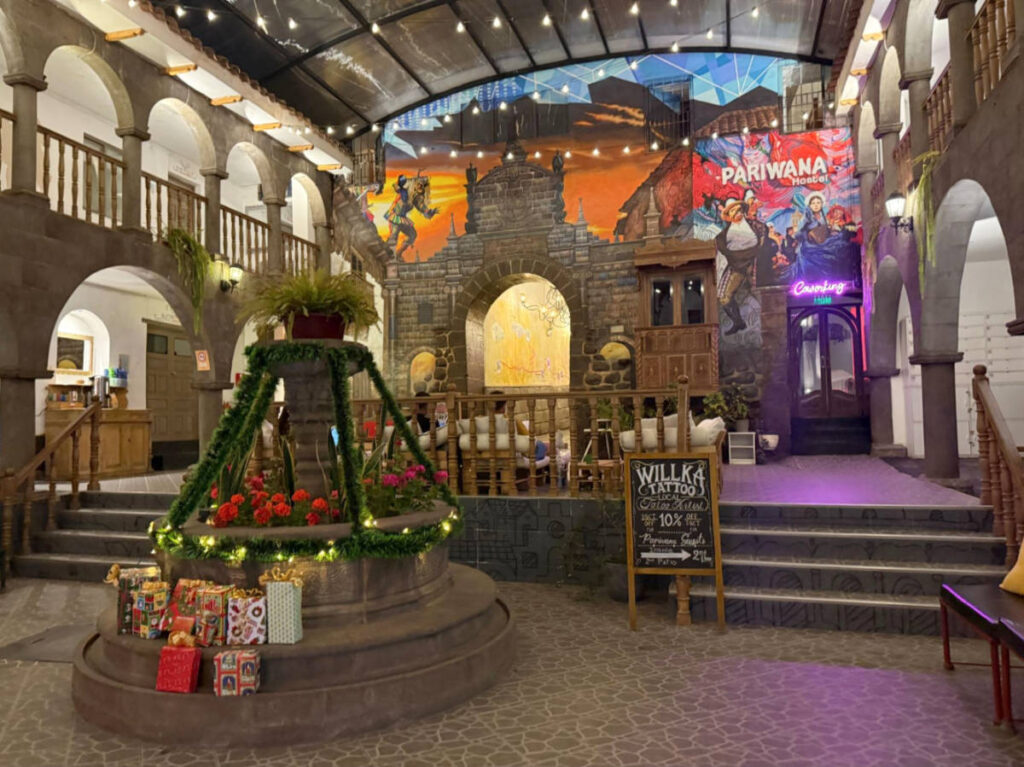
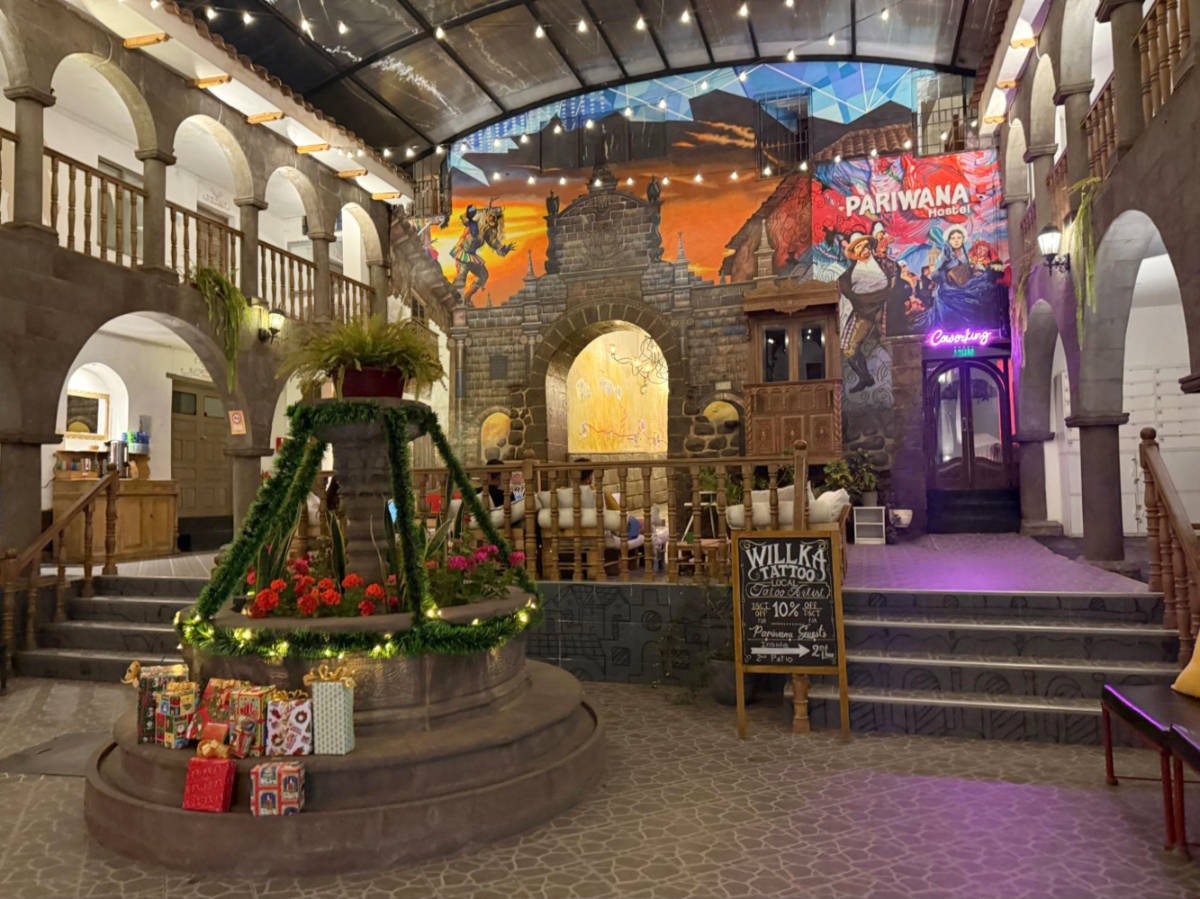
The lobby of Pariwana Hostel, a great place for backpackers (and my first stay in Cusco years ago) 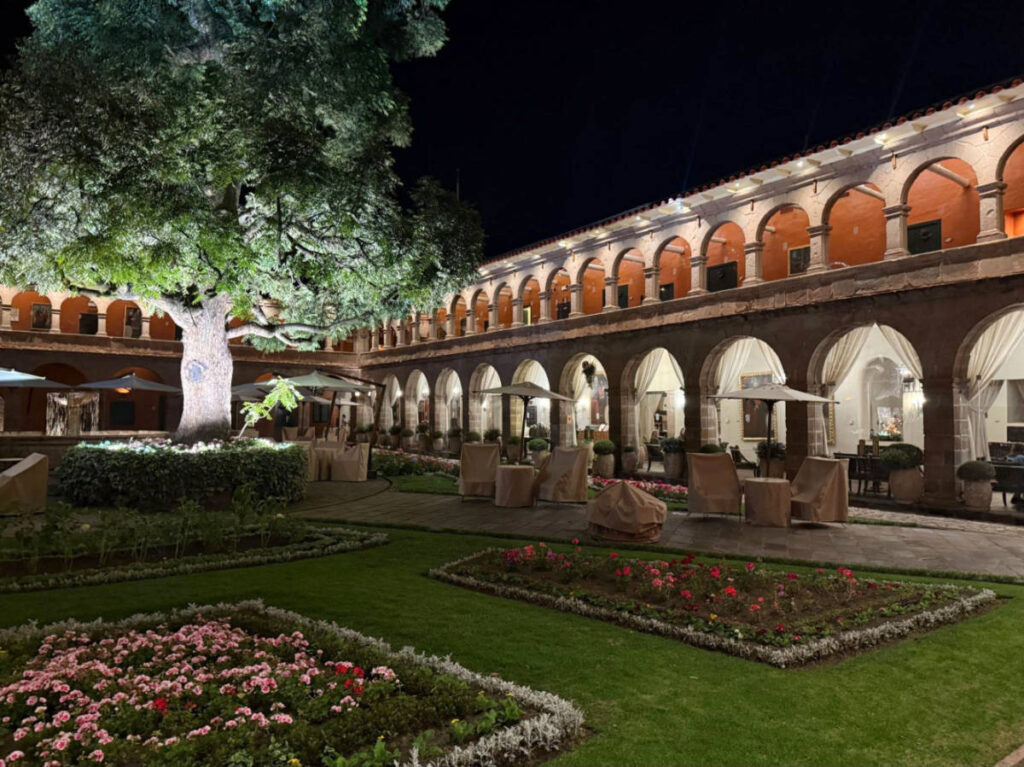
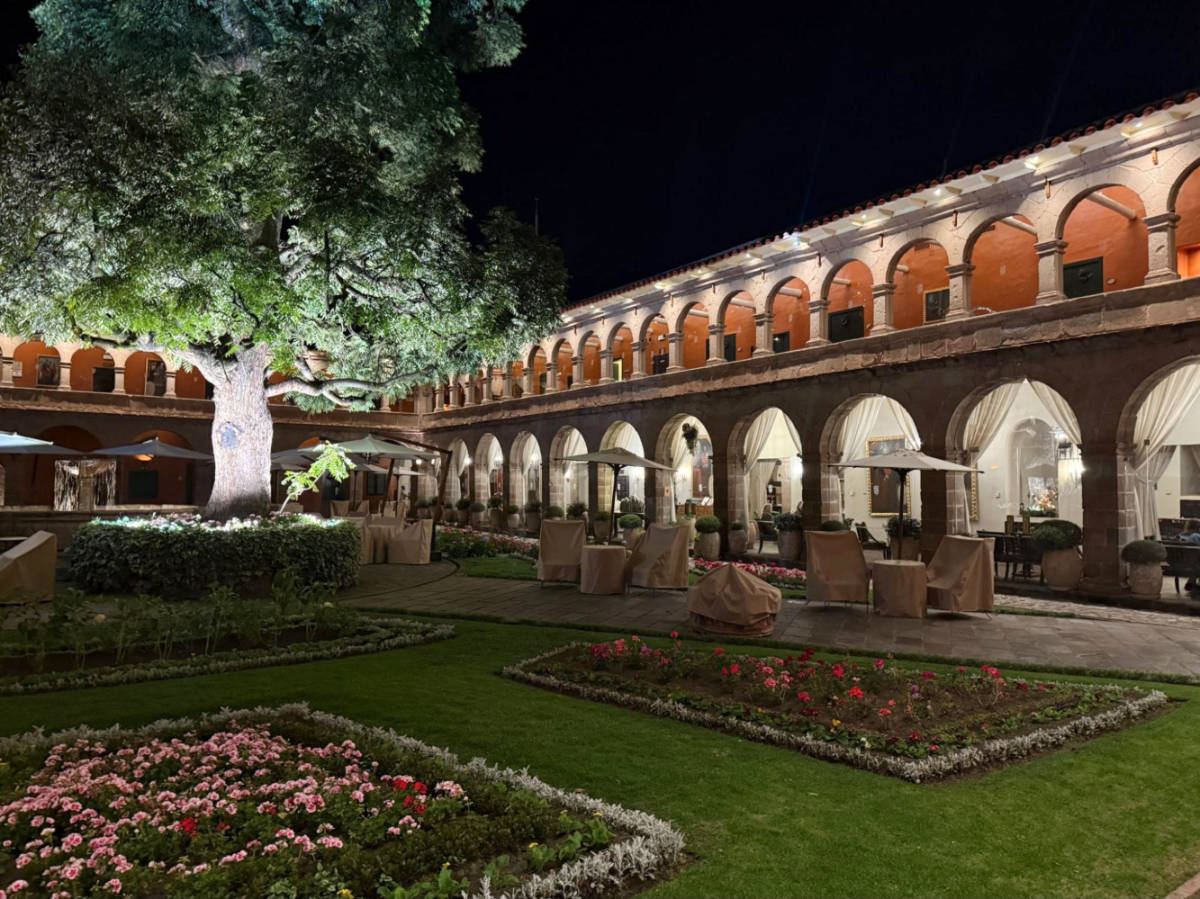
Monasterio, A Belmond Hotel, the highest-rated luxury hotel in Cusco
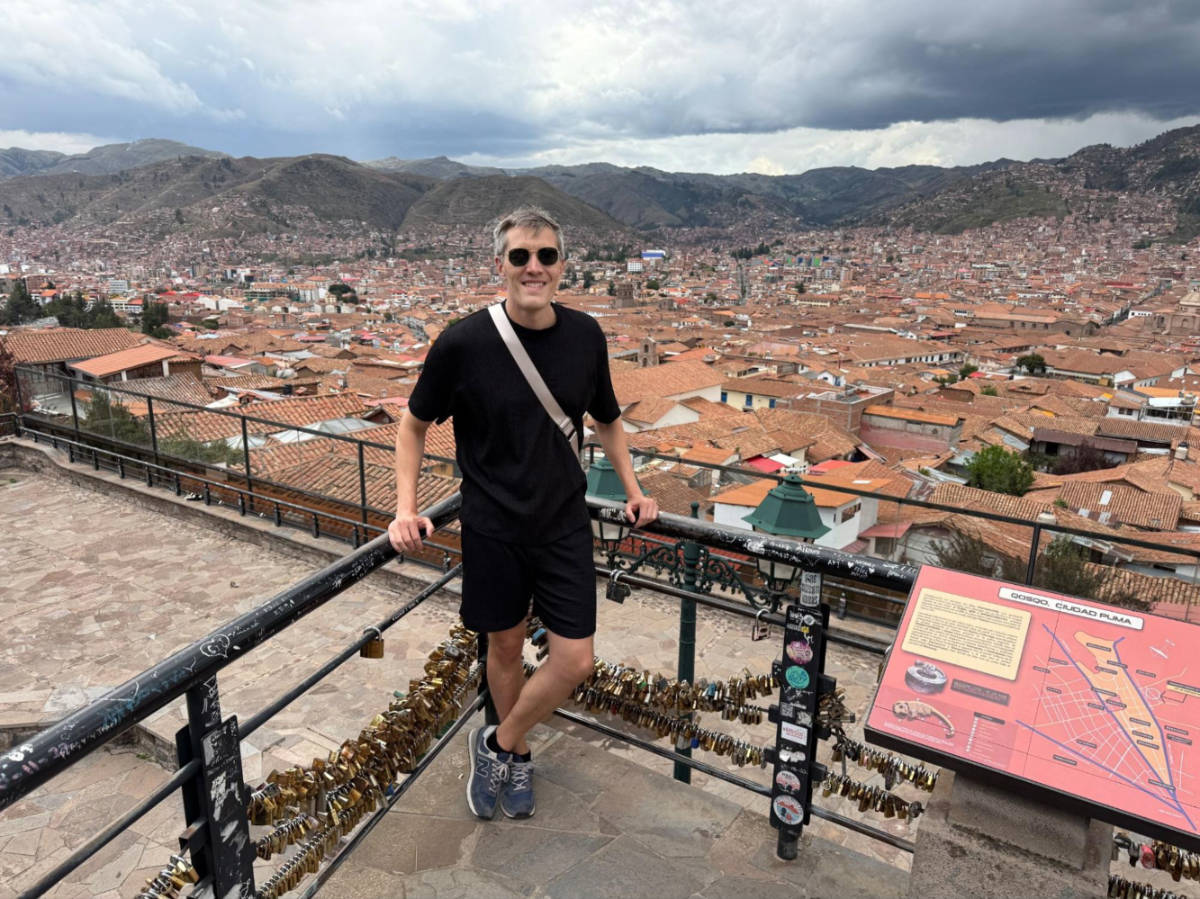
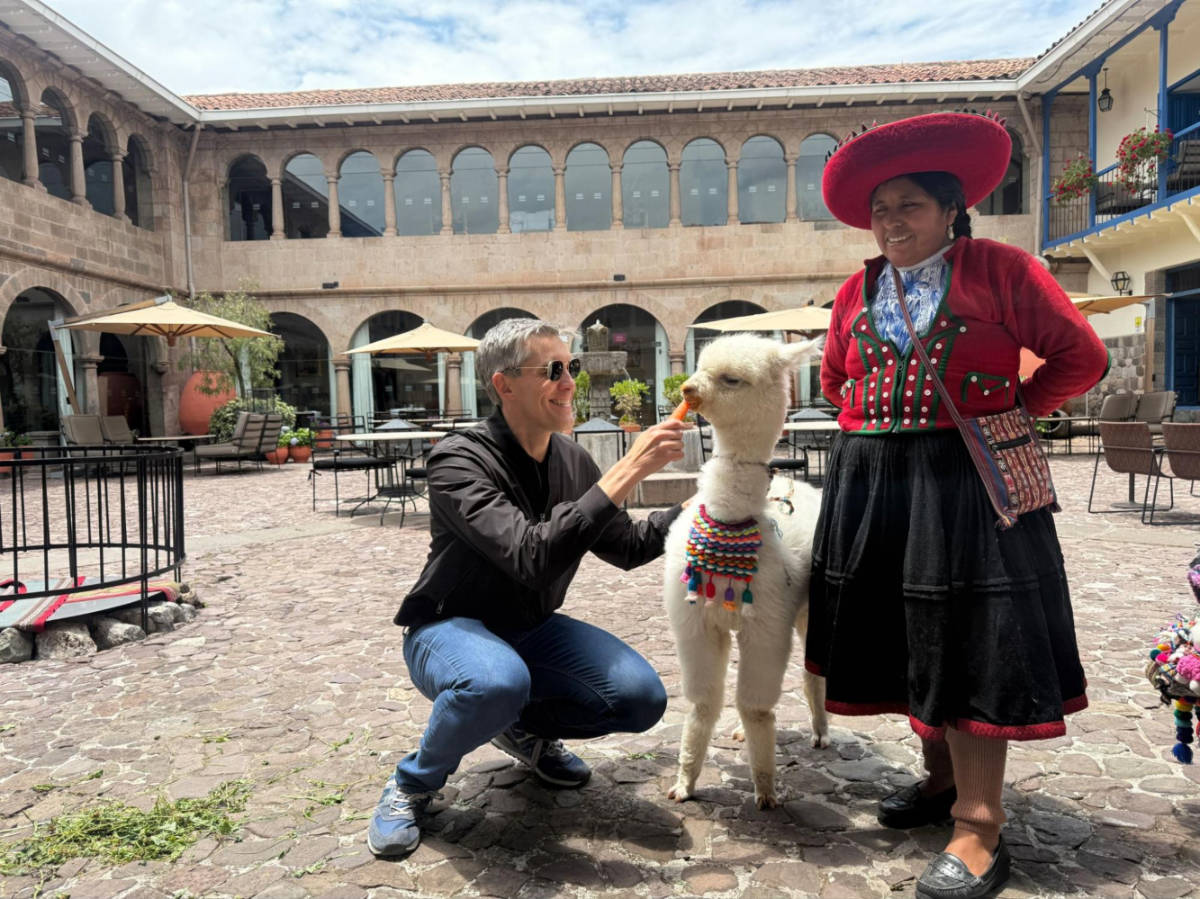
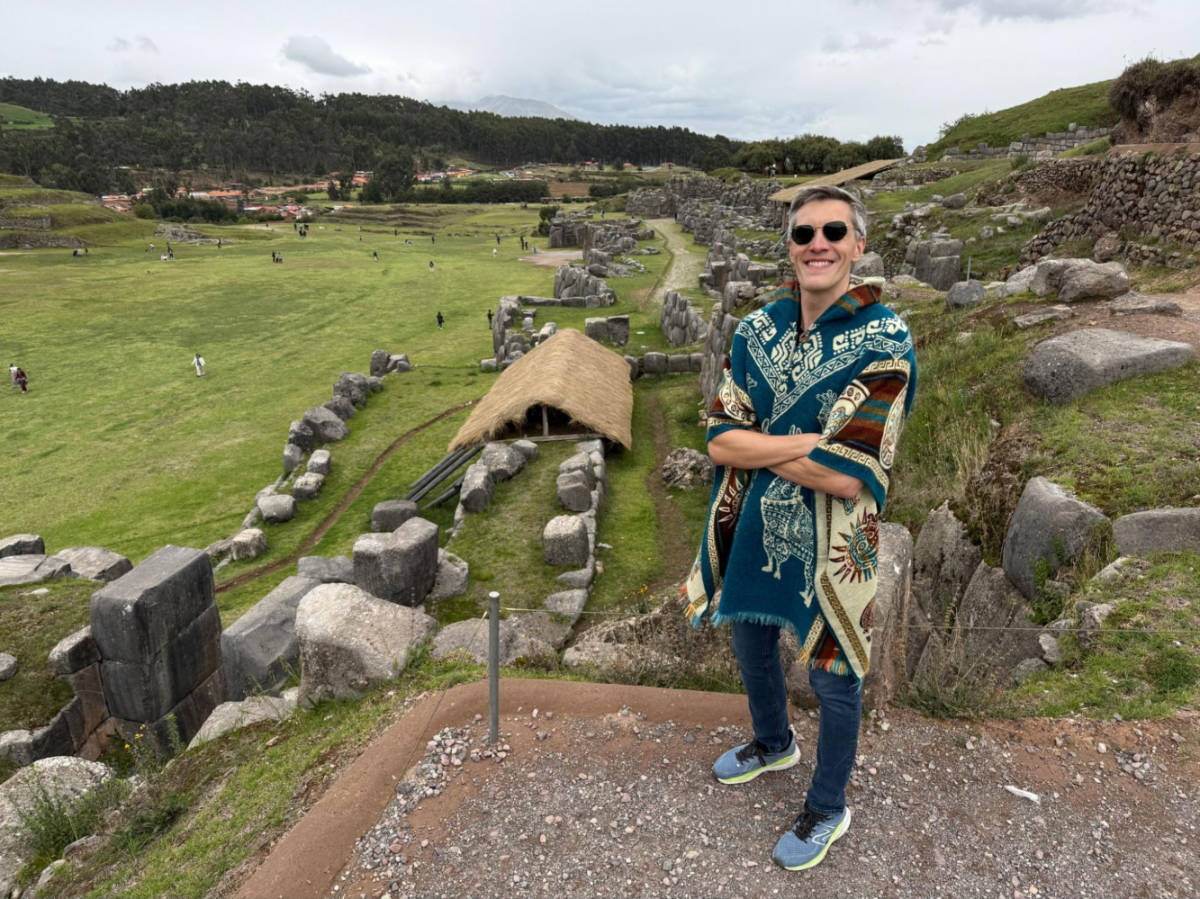
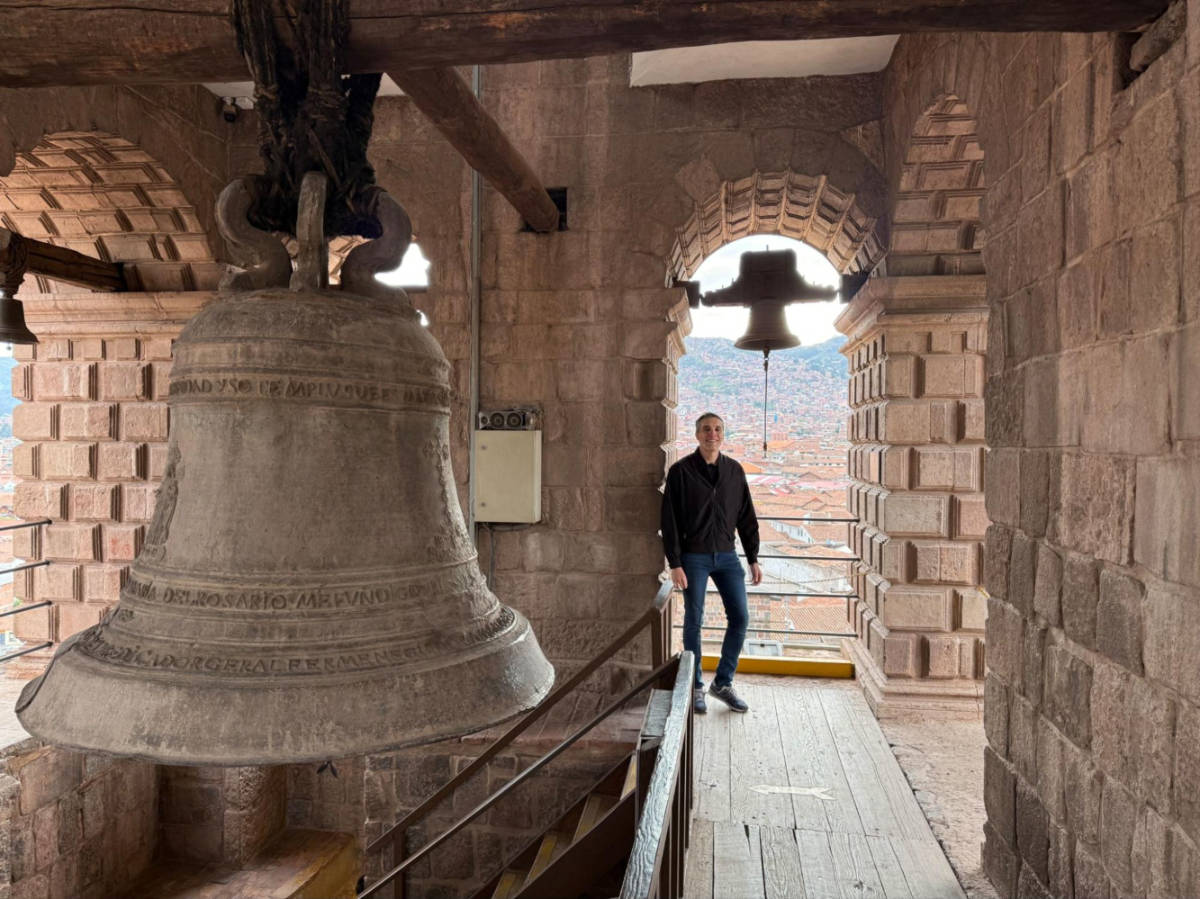
👉 The Only Area You Should Stay in Cusco | ✨ Best Historic Center Hotels: Palacio del Inka, a Luxury Collection Hotel • JW Marriott El Convento Cusco • Wyndham Costa del Sol Cusco • Casa Andina Premium Cusco • Pariwana Hostel Cusco • Quechua Hotel
Cusco’s Historic Center is where you’ll find pretty much all of Cusco’s hotels and attractions. Yes, it’s geared towards accommodating tourists. But, hey, you ARE a tourist, so you should stay here!
And, really, the Historic Center is where everything is anyway. You’ll find loads of historic sites, museums, restaurants, bars, shops, and pretty much everything you could want. It’s a little hilly, but it’s all very compact, walkable, and safe.
I’ve got an hour-long YouTube video that runs down all my Cusco advice in detail. But, if you’re in a rush, the most essential attractions are the Plaza de Armas (the central historic square), Qorikancha & the Church of Santo Domingo (go up the bell tower!), and the four sites just over the hill that are part of the Saqsaywaman archaeological zone.
My top recommended hotel is Palacio del Inka, a luxury boutique perfect for couples. We stayed here and were blown away by the hotel’s history. It was originally a part of Qorikancha, the Temple to the Sun that was once the literal center of the Inca empire. There are even original Inca walls still in the hotel! It was such an incredible stay. See my full hotel review or my YouTube video for much more.
For a more mid-range hotel, stay at Casa Andina Premium next door. It’s a perfectly-located outpost of a well-regarded Peruvian brand.
I also loved our stay at the JW Marriott El Convento Cusco, which is located in a 500-year-old Spanish convent. They even found two pre-Inca archaeological sites during the hotel’s renovation, which are now mini-museums in its basement. See my full hotel review or YouTube video for more. Overall, the JW is an ideal hotel for families or groups who want the best of Cusco.
A few other Cusco hotels to consider:
- Wyndham Costa del Sol – a mid-range option that offers value and probably the best location in Cusco, just a block from Plaza de Armas.
- MOAF Cusco Boutique – a highly-rated boutique in a central location, with prices starting at ~$75/night.
- Kantu Hotel – a family-oriented hotel (rooms have multiple beds) at a budget price point (starting from ~$70/night).
- Quechua Hotel – very budget-friendly (from $50/night) without sacrificing quality or location.
- CASA CRISTOBAL Siete Cuartones – a boutique with a lot of character from under $100/night.
Oh, and I didn’t forget about you backpackers! On my first visit to Cusco years ago, I was a backpacker myself. I stayed in both Pariwana Hostel and Viajero Hostel. I liked both, but Pariwana was my favorite of the two because of the social atmosphere. I returned on my recent visit to check it out, and can confirm it is still buzzing with energy.
Pros of Staying in the Cusco Historic Center:
- Very walkable, easy to get around on foot
- Loads of interesting historical sites and attractions
- Tons of restaurants, bars, and shops catering to visitors
Cons of Staying in the Cusco Historic Center:
- The elevation presents a serious risk of altitude sickness
- Cusco hotels book up well in advance, so plan ahead!
- Your quads will be sore from climbing up and down hills
📚 Cusco Historic Center Mini Guide 📚
The Best (& Only) Area to Stay in Cusco
Google Map
✨ Best Hotels – Palacio del Inka, a Luxury Collection Hotel • JW Marriott El Convento Cusco • Wyndham Costa del Sol Cusco • Casa Andina Premium Cusco • Pariwana Hostel Cusco • Quechua Hotel
🏠 Apartments – Browse Top Rentals in Cusco’s Historic Center
🍽️ Where to Eat – Oculto ($$$), KUSYKAY Peruvian Craft Food ($$), Morena Peruvian Kitchen ($$$), Mercado Central de San Pedro ($), Green Point Vegan Restaurant ($$)
🍸 Where to Drink – OQRE, Museo del Pisco, Molly’s Irish Bar
🎟️ Top Attractions – Qorikancha & The Church of Santo Domingo, Plaza de Armas, Saqsaywaman ruins, 12 Angled Stone, San Blas Viewpoint, Museo de Arte Precolombino Larco, Regional Historical Museum of Cusco, (note: watch my YouTube video for much more!).
The Sacred Valley
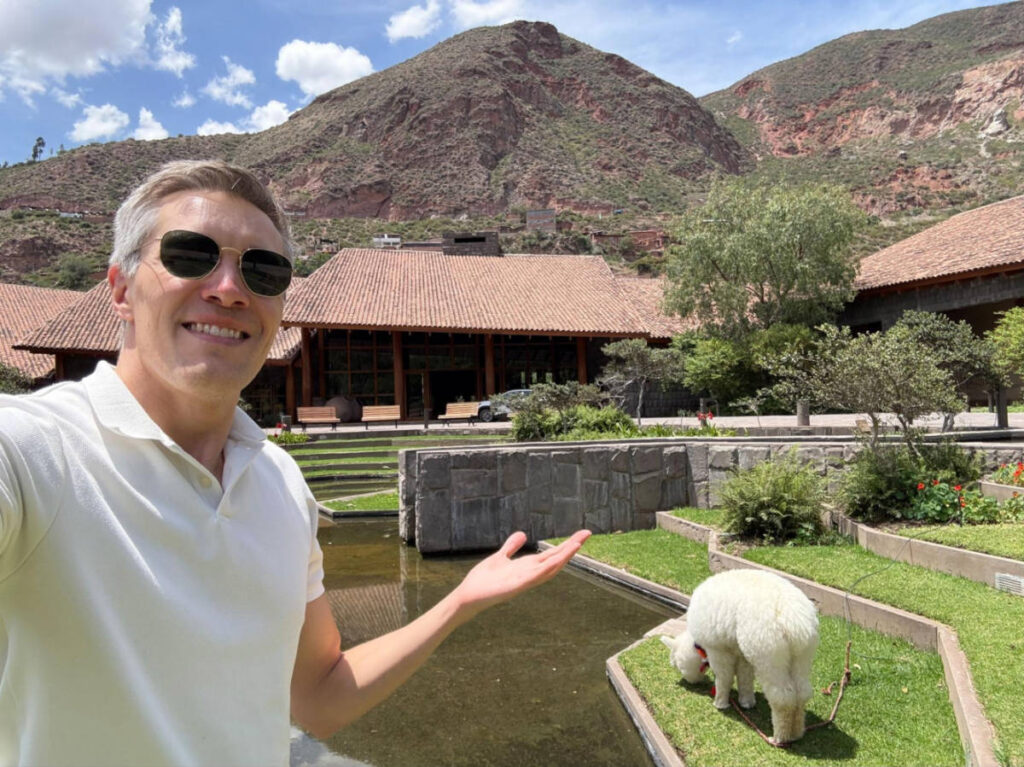
Me at Tambo del Inka in Urubamba. Arguably Peru’s #1 hotel, it even has a private train to Machu Picchu. See my full review here or my YouTube video for more. 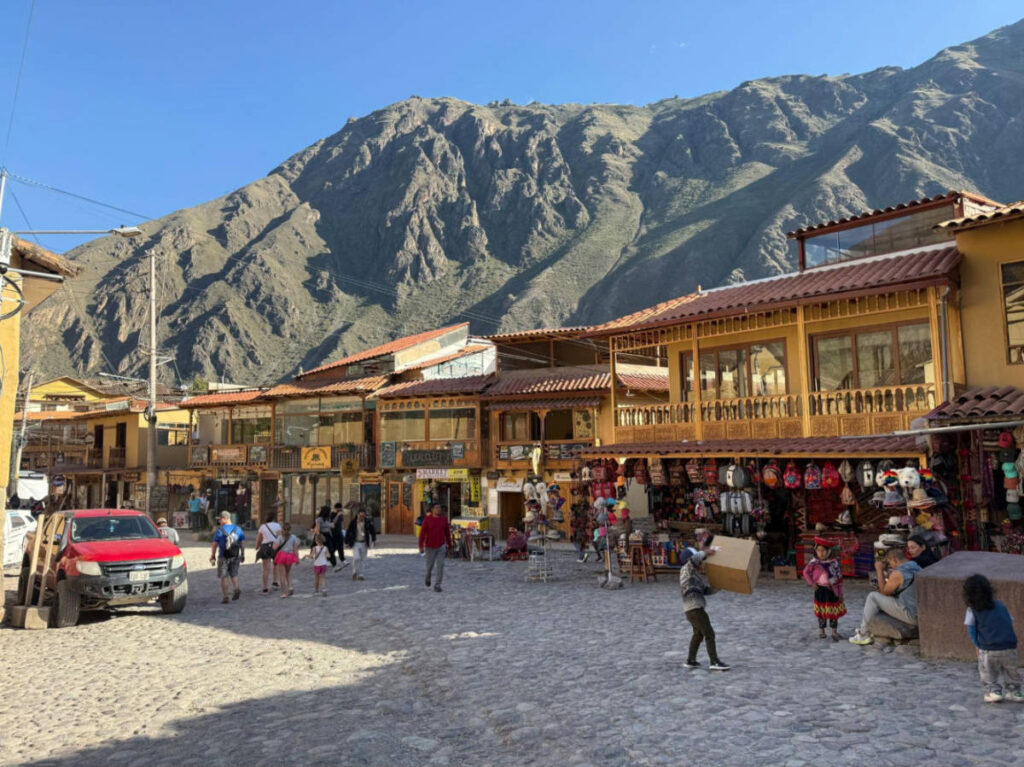
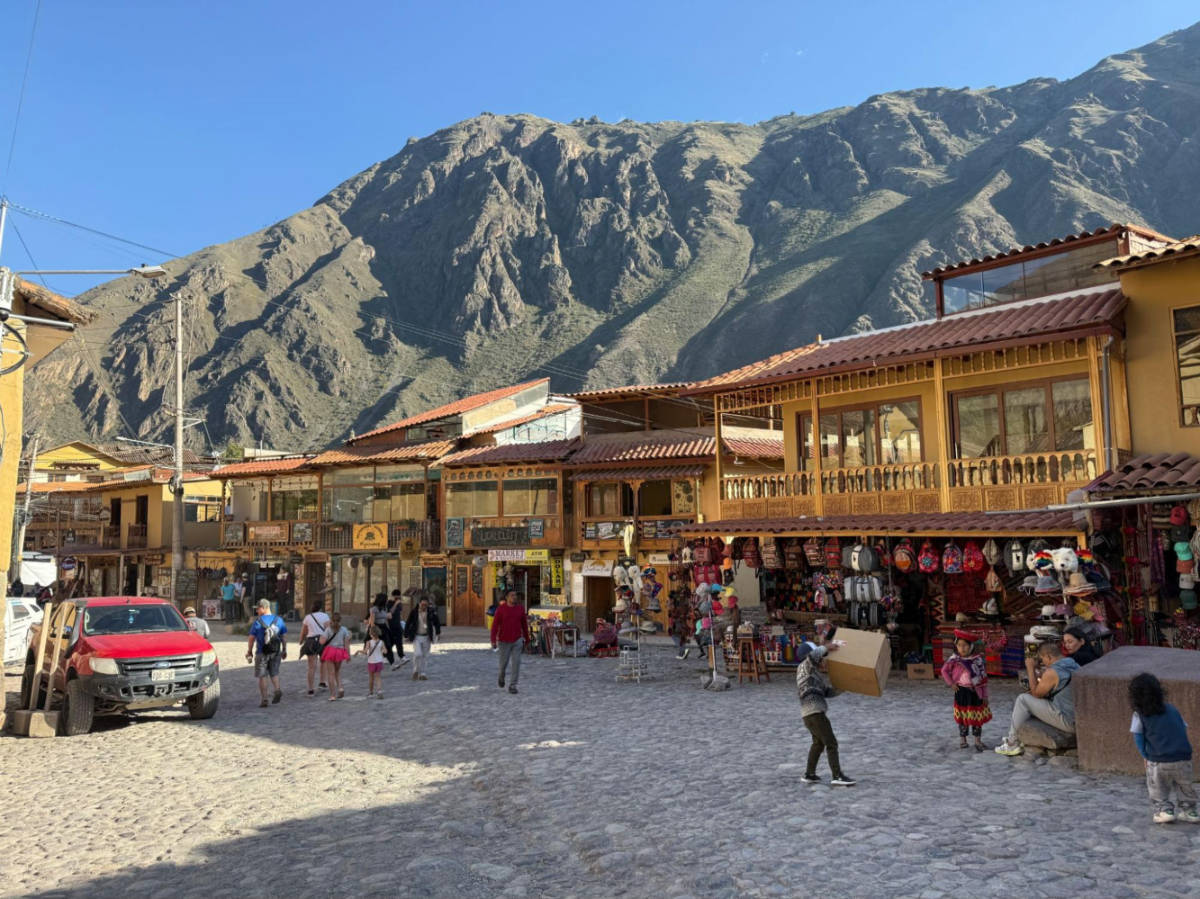
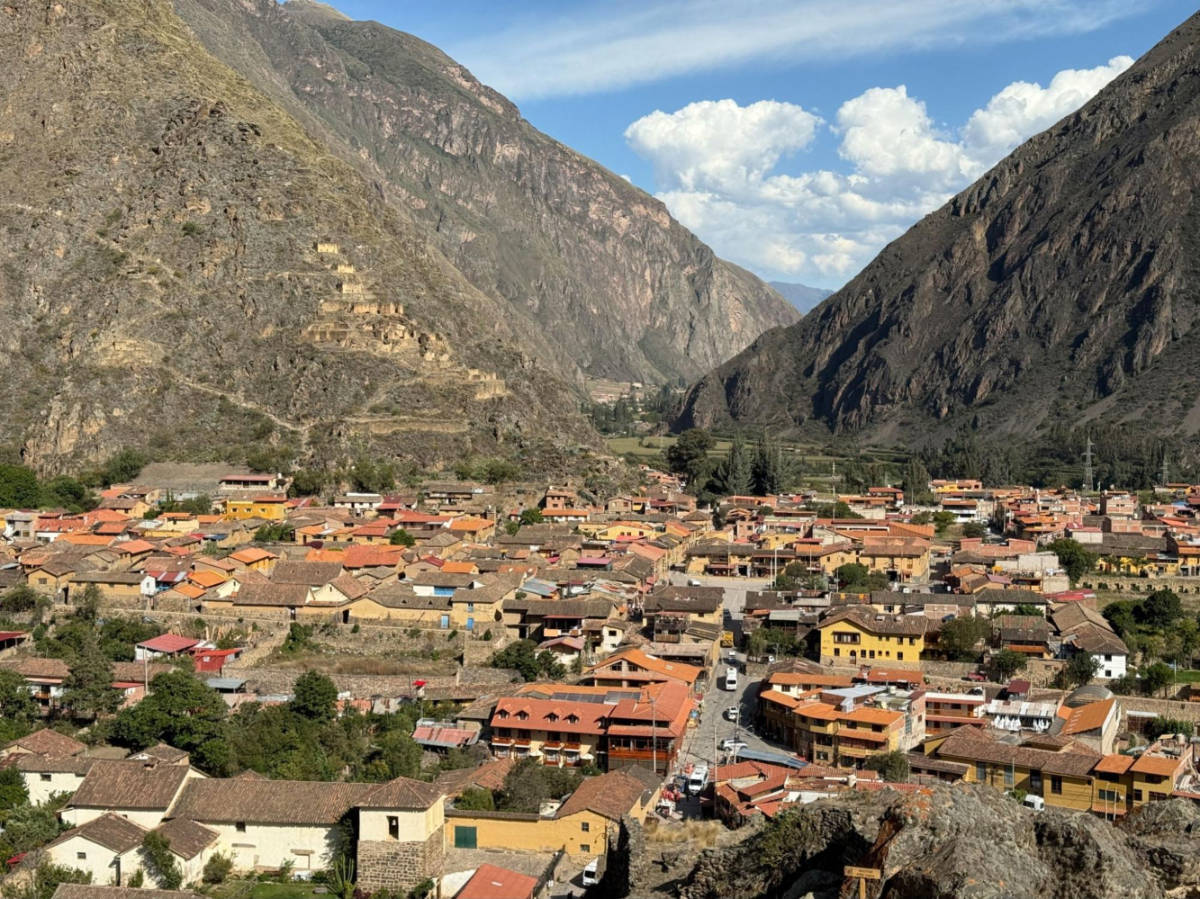
Ollantaytambo is the base for trains to Machu Picchu and, I think, one of the most gorgeous towns in South America. 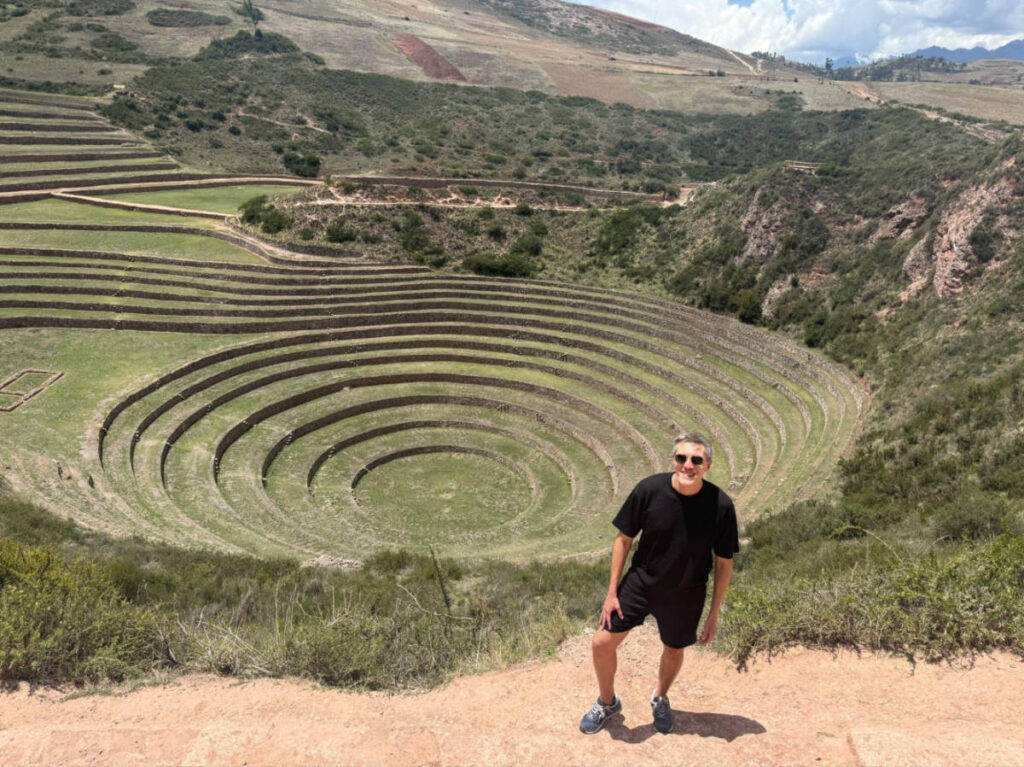
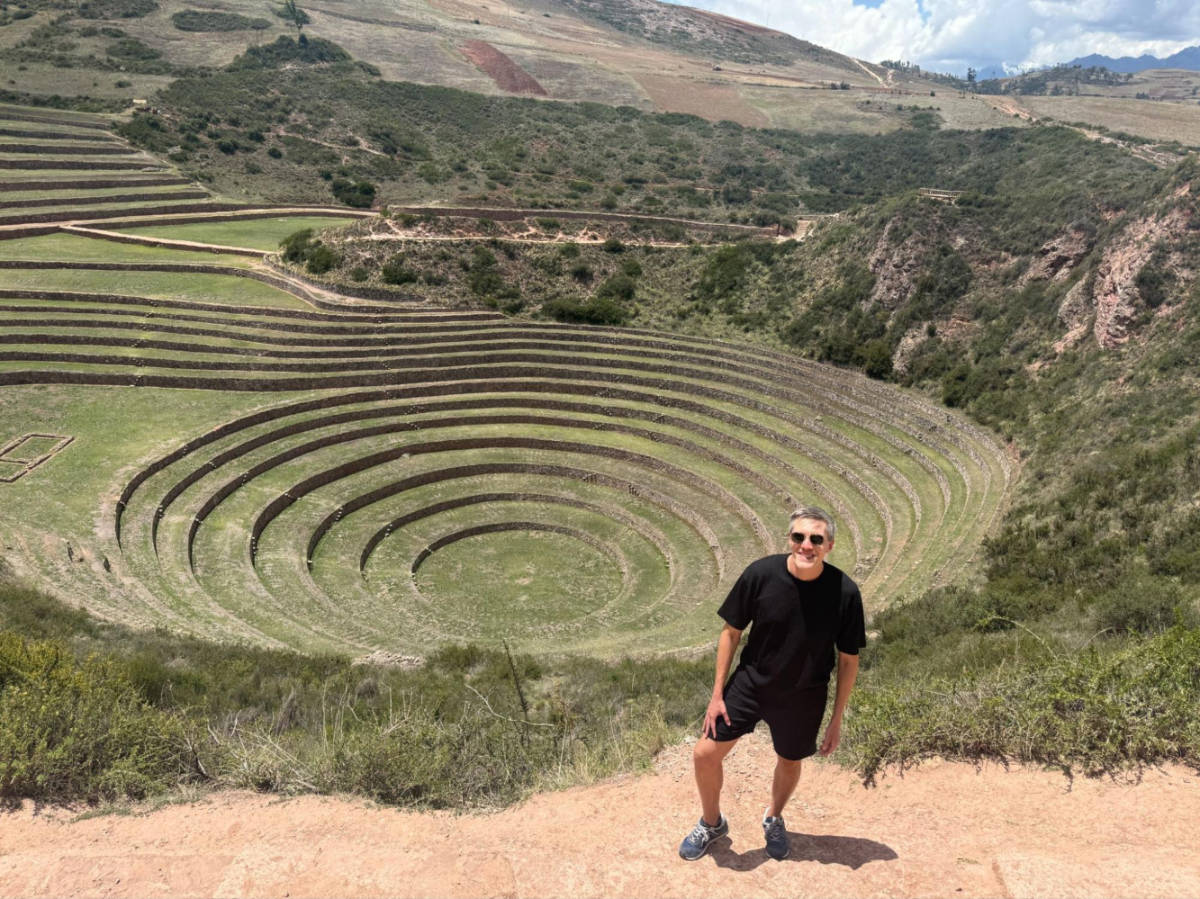
Me atop the ancient ruins of Moray (where the Incas cultivated crop varieties on those terraces). 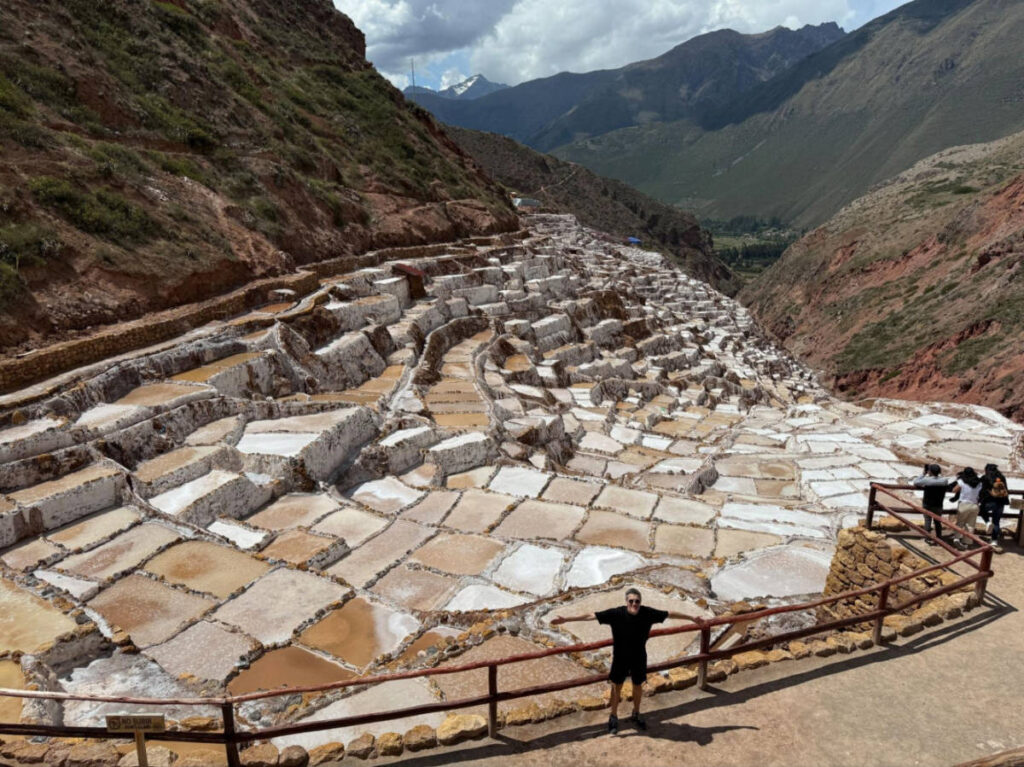
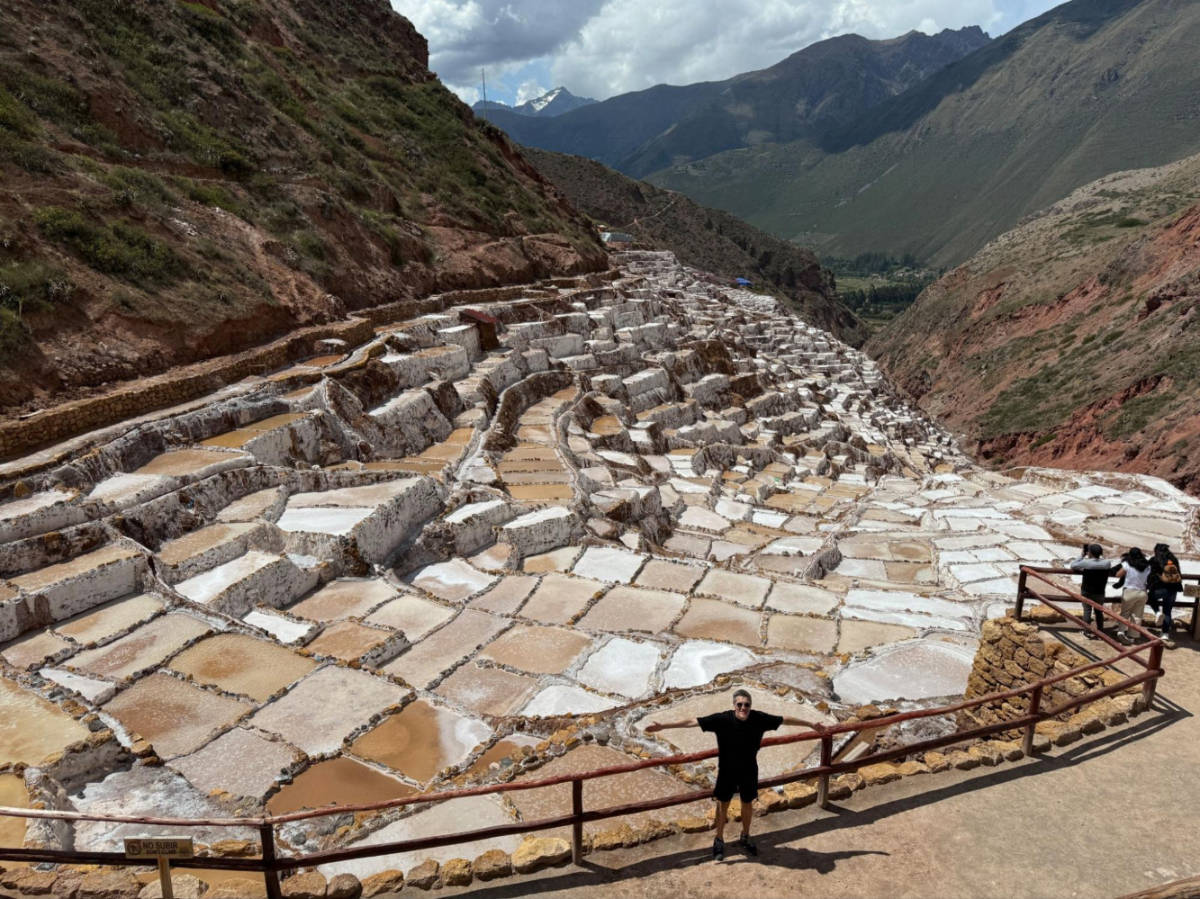
Me at the Salineras de Maras, where Andean sea salt is evaporated and harvested by local families. 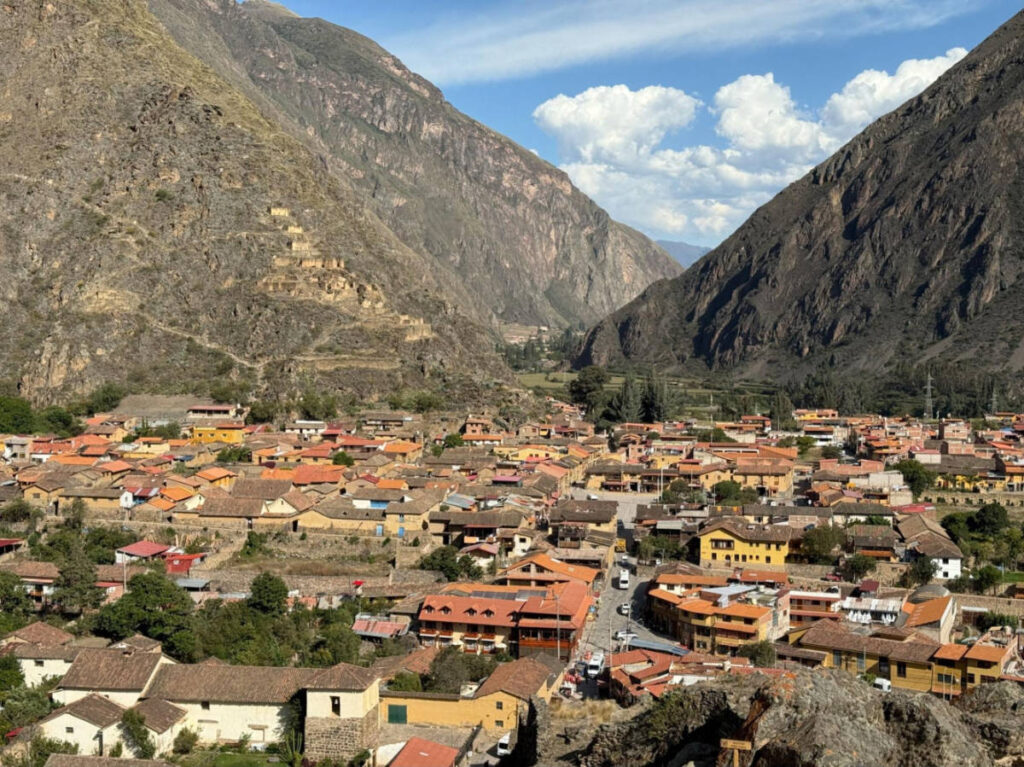
The town of Ollantaytambo, viewed from the ruins that go up the hillside. 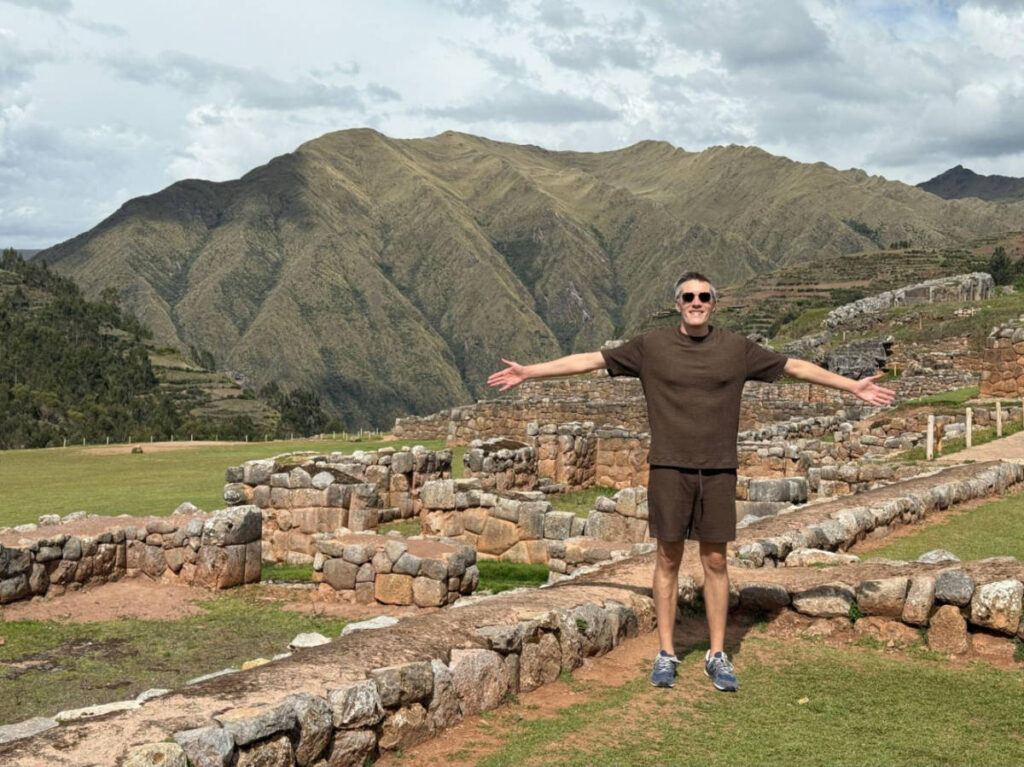
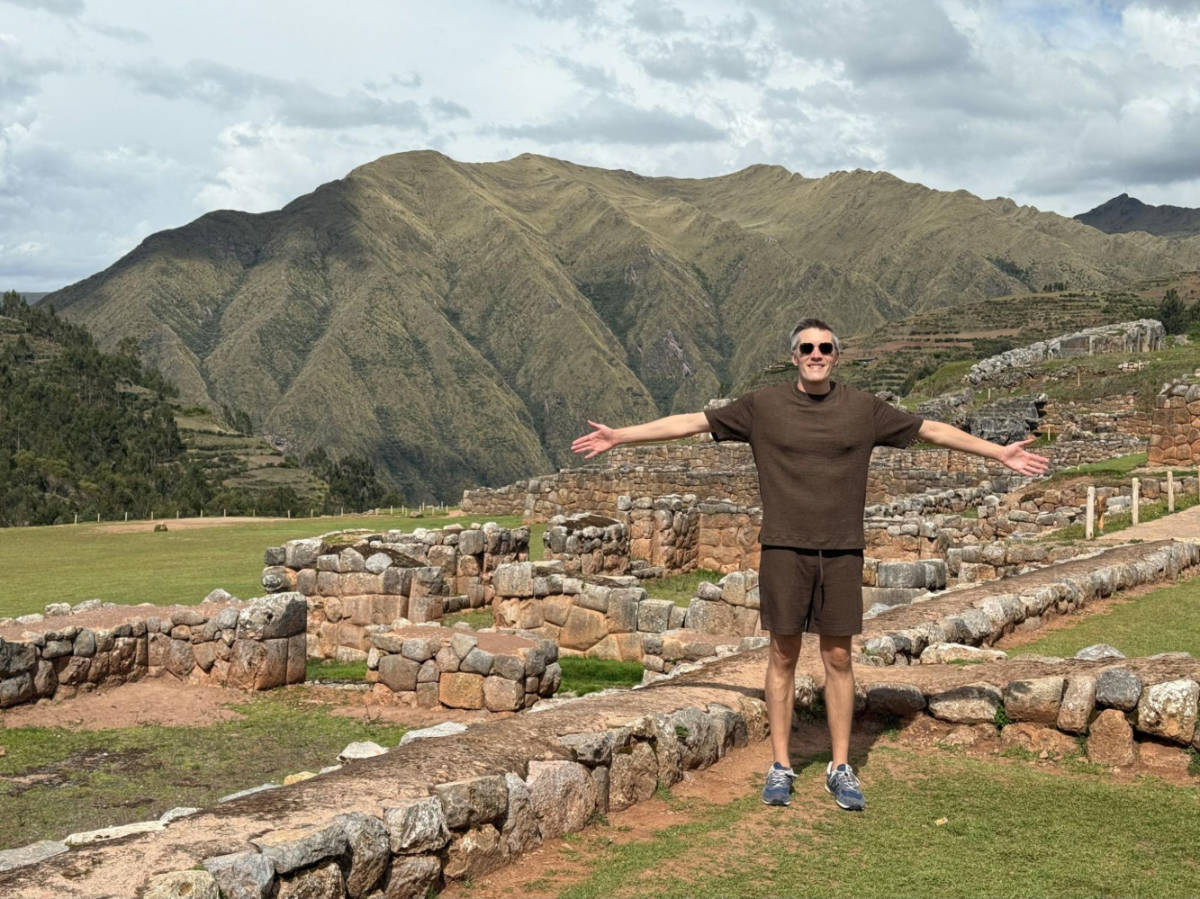
Me at the ruins of Chinchero, one of many archaeological sites in the Sacred Valley.
👉 Spend a Few Days Outside the City | ✨ Best Sacred Valley Hotels: Tambo del Inka • Hotel Tierra Inka Sacred Valley • Las Qolqas EcoResort • Aranwa Sacred Valley Hotel & Wellness • Picaflor Tambo Guest House
In addition to staying in Cusco itself, I really recommend also spending a few nights in the Sacred Valley, an expansive rural area stretching through the mountains around Cusco. Because it sits at slightly lower elevation than Cusco, I suggest starting your trip in the Sacred Valley to acclimate to the elevation.
The Sacred Valley was important during the Incan Empire because of the fertile land created by the Urubamba River. In addition to Machu Picchu, the area is home to several other important Inca sites, like the agricultural terraces at Moray, and the ruins at Pisac and Chinchero.
For most visitors, I recommend staying in the town of Ollantaytambo. There you’ll find the trains that take you to Machu Picchu Town (“Aguas Calientes”), so you likely need to head this way anyway. But the picturesque town itself has a lot to offer beyond the train station.
Even if you don’t stay here, you have to visit the Ollantaytambo ruins. These staircase-style stone terraces climb up over the neighboring hillside. If you ascend, you’ll be rewarded with incredible views over the valley. In my opinion, Ollantaytambo is the second most impressive Inca site I’ve seen in Peru, after Machu Picchu.
Ollantaytambo is home to loads of picture-perfect guesthouses, many for under $100/night. In town, check out the adorable Picaflor Tambo Guest House or the modern accommodation of Hotel Tierra Inka Sacred Valley, which is walkable to town but surrounded by nature.
Or, stay just outside of town and connect with nature by staying in luxury tent accommodation at Las Qolqas EcoResort.
On a budget? Maybe check out Casa Inka B&B. Or, for backpackers, check into Hostal al Viajero.
The nearby town of Urubamba also makes for a relaxing mountain retreat, and is home to several luxury properties. I recently spent four nights at Tambo del Inka, a stunning 5-star property set along the Urubamba river that is consistently ranked as one of the best hotels in Peru.
Tambo del Inka even has its own private train station for Machu Picchu. I had the most wonderful stay there. Read all about it in my Tambo del Inka hotel review or watch my video on YouTube to learn why it’s such a special hotel.
For more mid-range but still Instagram-worthy retreats in Urubamba, check out Aranwa Sacred Valley Hotel & Wellness or the Tierra Viva Valle Sagrado Hotel.
For a really special experience worthy of Instagram, check out the unique dome-style accommodation at MISKI SAMAY DOMO BOUTIQUE.
Wherever you stay, I strongly encourage you to linger for a couple nights in the Sacred Valley in addition to staying in Cusco. Sure, you could day trip it from Cusco. But you’ve come all the way to Peru, so you should experience its countryside the right way. The scenery is incredible, the mountain air fresh, and the history is unbeatable. It’s worth it, I promise.
Pros of Staying in The Sacred Valley:
- Tons of Inca history and interesting archaeological sites
- Closer to Machu Picchu, making it a more convenient base
- Lower elevation (~9,000 feet) compared to Cusco (~11,000 feet) means it’s a better place to start your trip
- Beautiful rural scene makes a nice contrast to the city
- Tons of llamas and alpacas!
Cons of Staying in The Sacred Valley:
- Not actually in Cusco itself (so you should also stay in Cusco to see its sites)
- Very spread out, so getting around takes time
- Hotels are limited, and book up far in advance
📚 Sacred Valley Mini Guide 📚
Where to Stay OUTSIDE of Cusco
Google Map
✨ Best Hotels – Tambo del Inka • Hotel Tierra Inka Sacred Valley • Las Qolqas EcoResort • Aranwa Sacred Valley Hotel & Wellness • Picaflor Tambo Guest House
🏠 Apartments – Browse Top Rentals in the Sacred Valley
🍽️ Where to Eat – Inka Nato Restaurante ($$), Koricancha ($$), Andean Organica Ollantaytambo ($$), Mawic Restaurant ($$), Native Peruvian Restaurant ($$$), Pakakuna Restaurante ($$)
🍸 Where to Drink – Antes de Cristo – TapRoom, Cerveceria del Valle Sagrado
🎟️ Top Attractions – Ollantaytambo Archeological Site, Zona Arqueologica Moray, Salt Mine of Maras, Centro Arqueológico de Chinchero, Parque Arqueológico Pisac
Tips for Staying in Cusco
👉 See my complete list of Peru travel tips
Altitude Sickness is a Real Thing in Cusco, So Plan Time to Acclimate to the Elevation
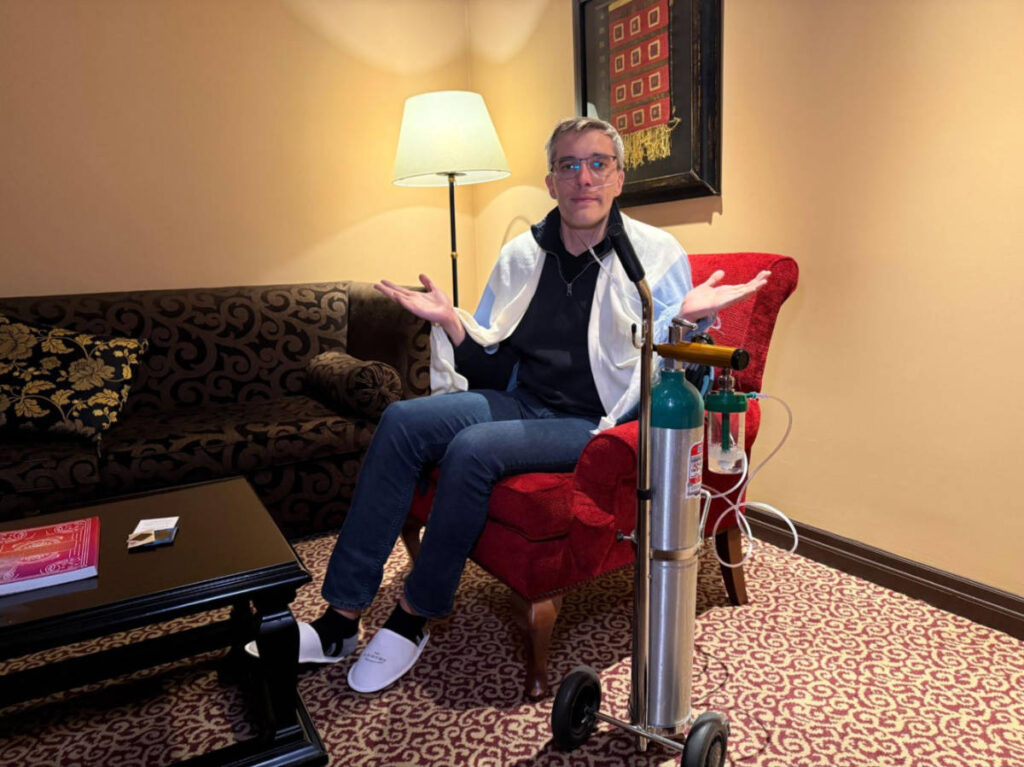
Cusco sits at 11,150 feet (3,400 meters) above sea level. If you are coming from staying in Lima or somewhere else at a low elevation, you will need to plan time to acclimate before attempting any strenuous activity like hiking.
On my first trip to Cusco I didn’t feel much, but on my most recent visit I experienced pretty strong altitude sickness on my first day. My head hurt, I lacked energy, and just overall felt kinda “blah.” It was not pleasant.
Thankfully I was staying at Palacio del Inka, which offers a free oxygen service that they bring to your room. Taking the oxygen really did help.
There are also medications you can ask your doctor about that might help. And most hotels will give you coca tea, which locals say can help. But, really, the most important thing you can do is take it easy for a day or two until you acclimate.
And Consider Starting Your Trip in the Sacred Valley (~9,000 feet elevation) and Ending it in Cusco (11,150 feet elevation) After You’ve Acclimitized
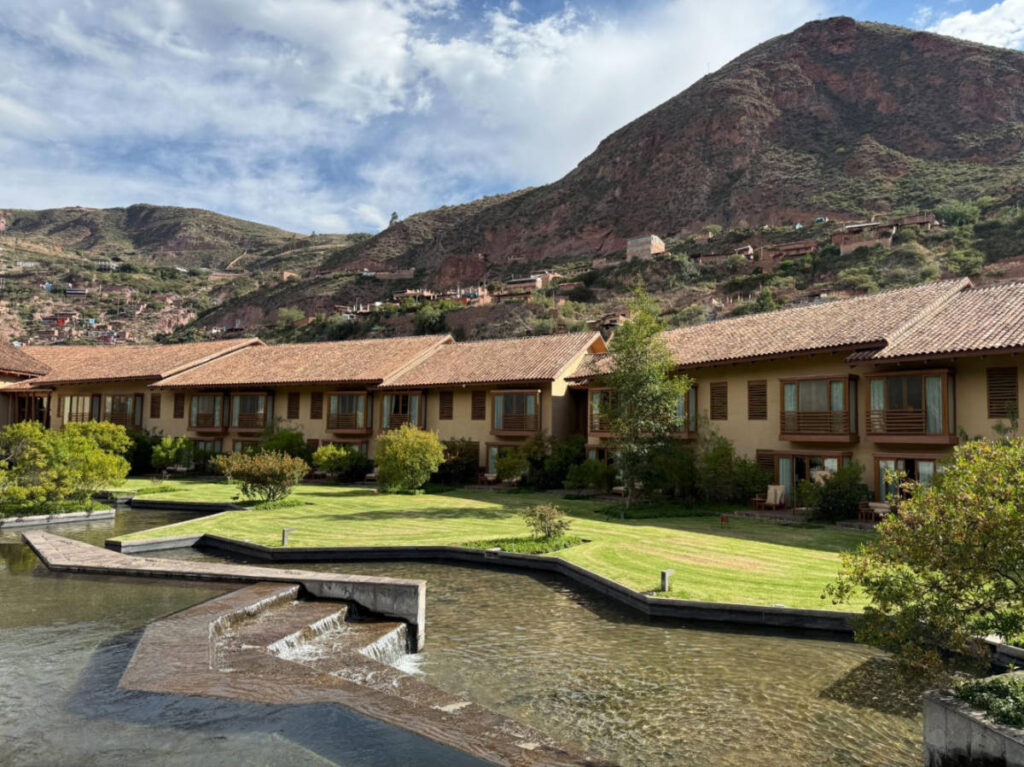
I would suggest starting your visit by staying a few nights in the Sacred Valley (~9,000 feet elevation), then visiting Machu Picchu (~7,972 feet), and then ending your trip with a stay in Cusco’s Historic Center (11,150 feet). This will allow you to better acclimate to the elevation by the time you reach Cusco.
It’s Best NOT to Stay in Cusco The Night Before Machu Picchu
Getting to Machu Picchu from Cusco is quite the journey. First, you have to go ~1.5 to 2 hours from Cusco to Ollantaytambo by taxi or shuttle. Then, you have to take a 1.5 hour train to Aguas Calientes (“Machu Picchu Town”). Finally, there’s a 30-minute bus ride up the mountain to Machu Picchu itself.
Add it all up, and factor in lines, and you’re looking at ~4-5 hours each way to get there from Cusco directly.
That’s why I would not suggest attempting it all in one day from Cusco. Instead, either stay in the Sacred Valley or in Aguas Calientes the night before your visit.
See my full guide to where to stay in Machu Picchu for more planning advice.
But, if You Insist Anyway, It’s Best to Do it Via an Organized Tour
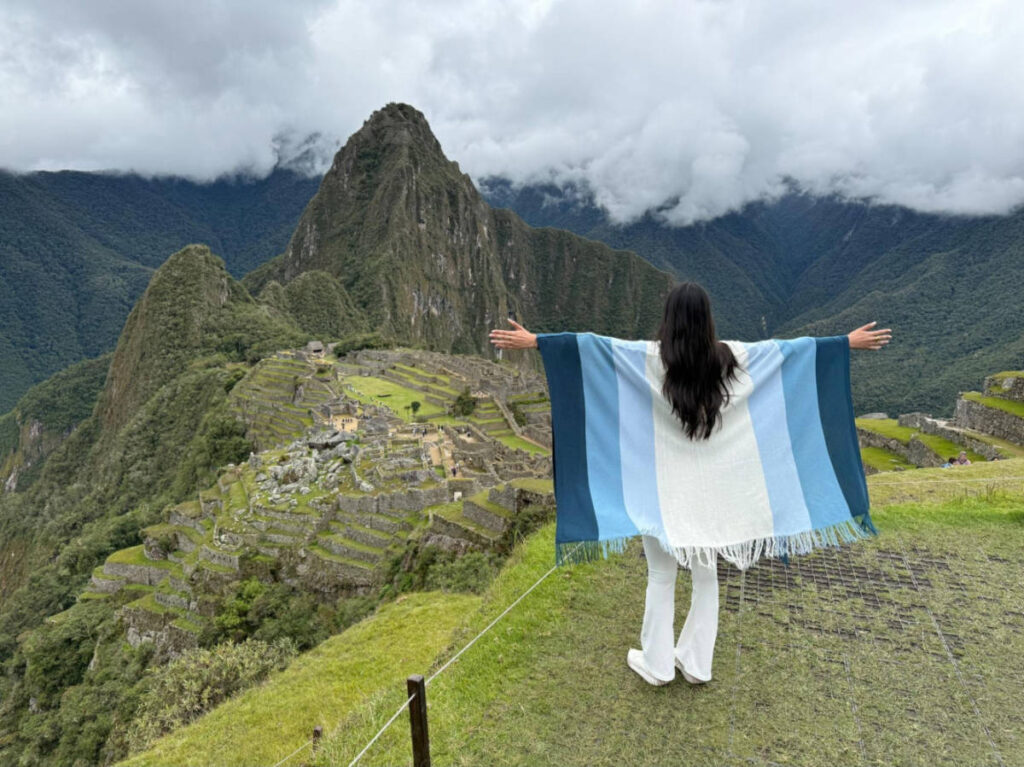
Despite my warning above, some of you will still want to do Machu Picchu directly from Cusco anyway. I get it. Particularly if you have kids, there may be some convenience to staying in a single hotel and just sucking it up for a day.
However, if you do that, I suggest going via a guided Machu Picchu tour. Otherwise you risk mis-timing it and missing either your train or, worse, your pre-booked entry time to Machu Picchu (which they strictly enforce).
This is a highly-rated group tour from Cusco, or you could splurge for this private tour to Machu Picchu.
You Really Need to Plan Ahead for Machu Picchu
Machu Picchu tickets often sell out months in advance, particularly in the high season. So you need to book ahead. And you have to choose from 10 fairly confusing “circuits,” not all of which even give you that iconic photo of Machu Picchu.
You also have to be aware of the many rules at the archaeological site. You have to enter at your set time, bring your passport, and you can only go one way around the circuit.
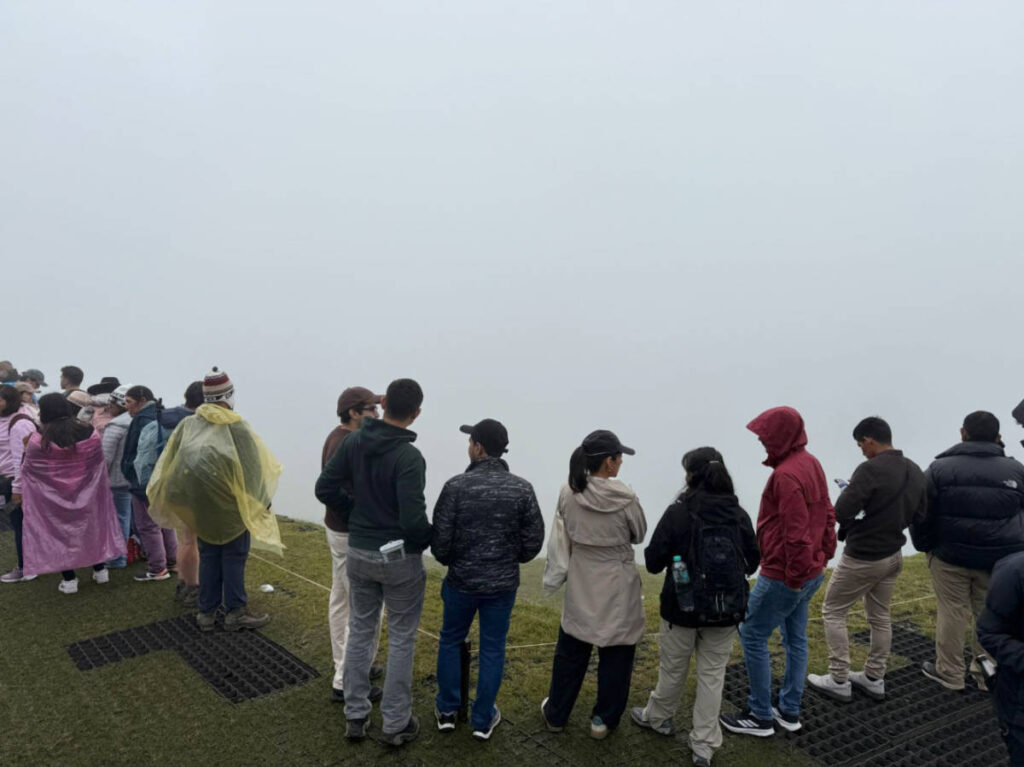
This creates a tricky planning situation, because there is a risk of fog blocking your view, especially during the rainy season (roughly October to early April). This happened to me and Clara on our recent visit, when we spent three hours staring at the fog. Thankfully I had realized this might happen the night before and booked a backup ticket for a later entrance on another circuit.
To learn from my experience, and avoid mistakes, go check out my YouTube video on how not to fail Machu Picchu.
Get Cusco’s “Boleto Turistico” To Visit Multiple Attractions
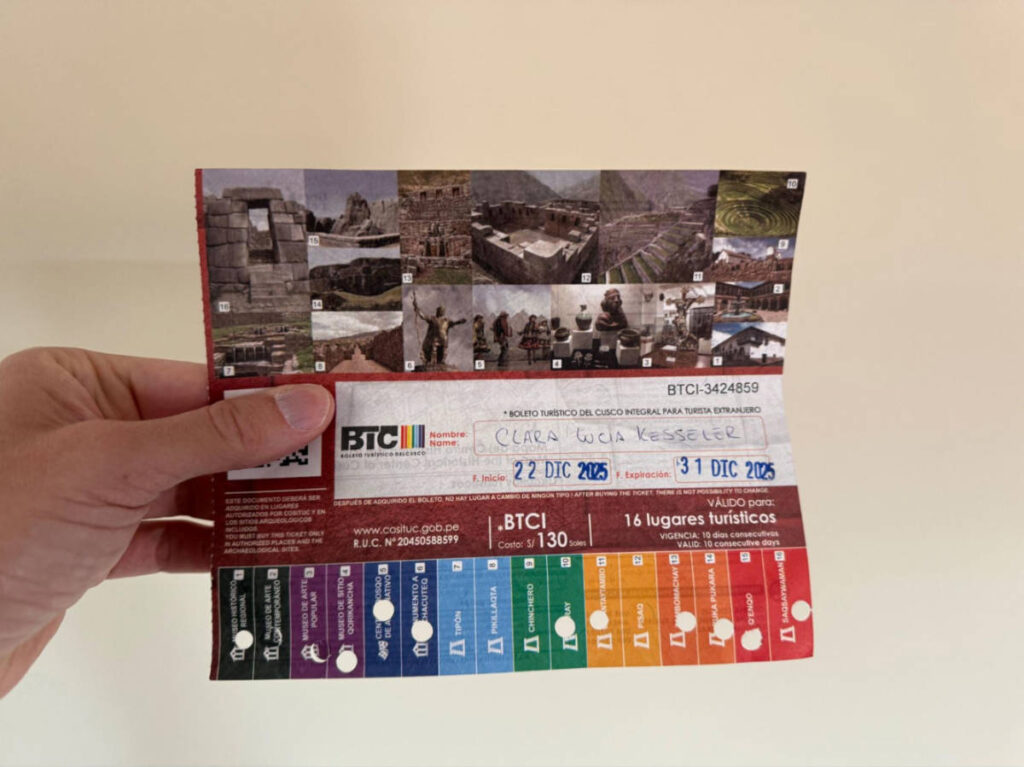
Separate from Machu Picchu, you’ll also need a tourist ticket “Boleto Turistico” to enter many of the most important historical sites in Cusco and the Sacred Valley – including the must-visit ruins at Saksaywaman, Ollantaytambo, and Moray.
The most popular option (and the one we chose) is a 10-day pass that covers 16 different sites. It costs 130 soles (~$39). They sell it on the official website here, though the site is a bit clunky.
You can also just buy it in person when entering the first site you visit, which is what we did. Just be sure to bring your passport for that first entrance. After that, they’ll just punch your ticket at subsequent sites.
Your Liquids Will Squirt Out When You Open Them
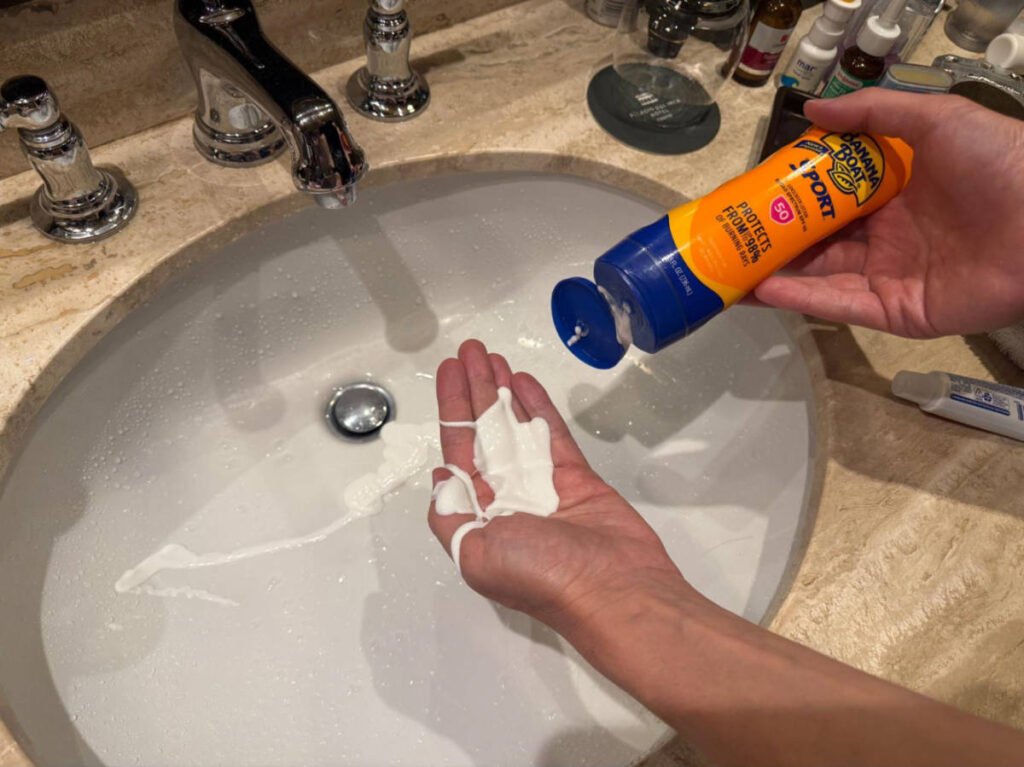
If you are coming to Cusco on a flight from lower elevation, any bottled liquids or creams you pack will squirt out aggressively upon opening them in Cusco. This is because of the pressure differential. Just pack accordingly.
And, on a related note, be sure to pack sunscreen and put it on even when it’s cloudy. The UV rays are much more intense at elevation. I forgot during our day at Machu Picchu (hey, it was super foggy after all) and ended up with a burnt nose that made me look like Rudolf for Christmas!
Pack Layers (You Could Feel All Four Seasons in One Day)
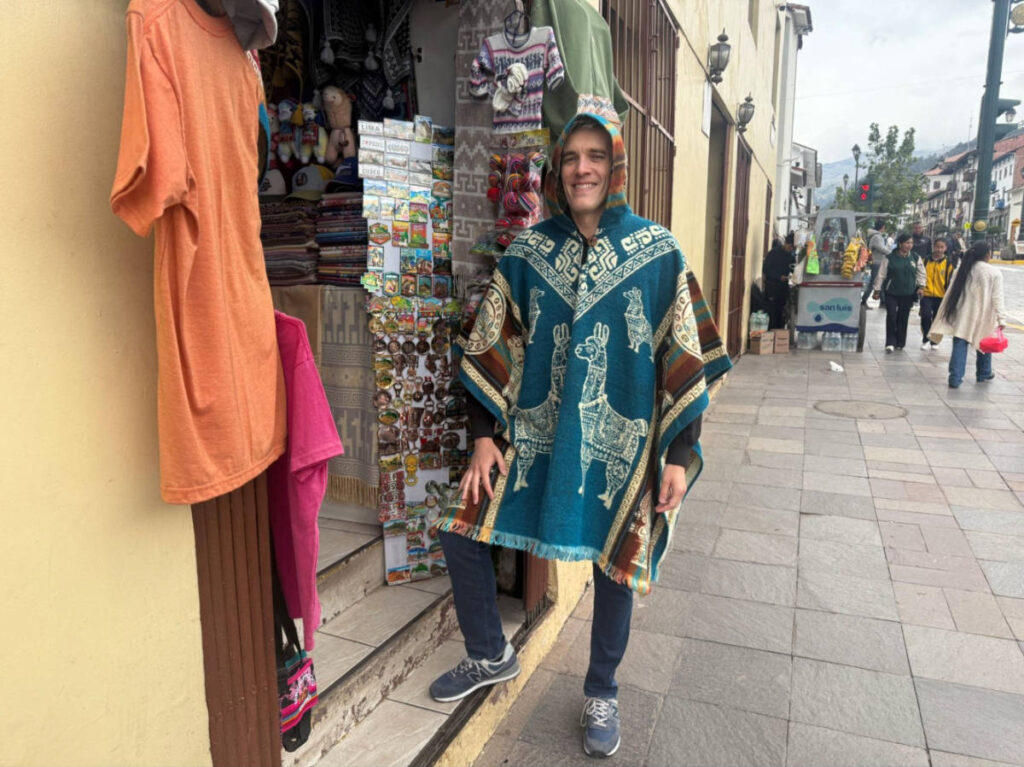
Thanks to the elevation, the weather in Cusco varies a lot, even throughout the same day. If you paid close attention to my photos in this post, you might have noticed I wore everything from shorts to a jacket and poncho during my time in Cusco.
Be sure to pack layers for Cusco. During the day you may find it to be hot, especially when walking around. But as soon as the sun goes behind the mountains, you’ll want something to cover up.
Of course, you can also buy a lot right in Cusco, which is filled with shops selling all sorts of incredible local textiles. If you like shopping, be sure to leave room in your suitcase!
Watch My Peru YouTube Series for More Cusco Tips
Over on YouTube, I’ve got 10 video guides to Peru – including one guide to everything you need to know to plan for Cusco. Go add it to your watch list for later:

FAQs about Cusco
How many days is enough to visit Cusco?
1-2 days is sufficient time to explore the core of Cusco itself. Cusco is relatively compact, with most of the sites located in its small Historic Center. That said, remember you may need an additional day to acclimate to the elevation, so if possible, plan to stay 2-3 nights in Cusco itself.
Furthermore, if you are using Cusco as a base for day trips to the Sacred Valley, 3-5 days is a more reasonable time span to allot. This gives you time to explore surrounding sites like Moray, Moras, Ollyantambo, and Pisac. It might also give you time for a day trip to Machu Picchu, but just take careful note of my answer to the next question …
Can I visit Machu Picchu on a day trip from Cusco?
Yes, it is possible to do a (long) day trip from Cusco to Machu Picchu. However, realize it will make for a very long day of about 15-20 hours roundtrip.
It takes ~2 hours to drive or bus to Ollyantambo, 1.5 hours to take the train to Machu Picchu town, 1 hour to take the bus to the Machu Picchu ruins, plus 2-4 hours to explore the ruins themselves, and then return to Cusco the same way you came.
In my opinion, it is better to stay in Aguas Calientes (Machu Picchu) town or in the Sacred Valley to break up the journey.
That said, if you really want to do the trip from Cusco, I’d recommend a guided tour to ensure you don’t miss any connections or your timed entry to Machu Picchu. You can find the best day trip tours from Cusco to Machu Picchu here.
What areas of Cusco should I avoid staying in?
Avoid staying outside of Cusco’s Historic Center. This won’t be hard, as hotels in Cusco basically don’t exist outside the area. However, be careful to avoid apartment rentals outside this area. It’s not that the areas are necessarily unsafe (overall, Cusco is quite safe for tourists), but it’s just that they lack tourist infrastructure and are quite far from the attractions.
***
That’s it for my guide to where to stay in Cusco. Keep planning with my guide to where to stay for Machu Picchu.
And, if you want me to take the stress out of planning your entire Peru vacation, just follow my Peru itinerary planner. It covers the perfect 10-day itinerary for first-timers in Peru.
I hope you have a great trip to Peru! Leave me a comment if you have questions.
