
Affiliate Ad Disclosure: We’re reader-supported. When you buy via our links, we earn commissions. Learn more.
The 58 Best Things to Do in Berlin (in 2026)

👉 Jump to: Best Things to Do | Museums & Culture | Sites & Attractions | At Night | Food & Drinks | Shopping | Parks | Seasonal Activities
Berlin both feels and is massive. It lacks a historical center as the Berlin Wall split the city post-war until 1989. Attractions, museums, and sights are thus spread out over its many unique neighborhoods.
Deciding what to do in Berlin can therefore be overwhelming. Will you focus on the Cold War or World Wars, or take the urban art route? To answer these questions, I have gathered the best things to do in Berlin for you.
Once you have decided on your itinerary, check out my guide on where to stay in Berlin next.
58 Best Things to Do in Berlin
East Side Gallery
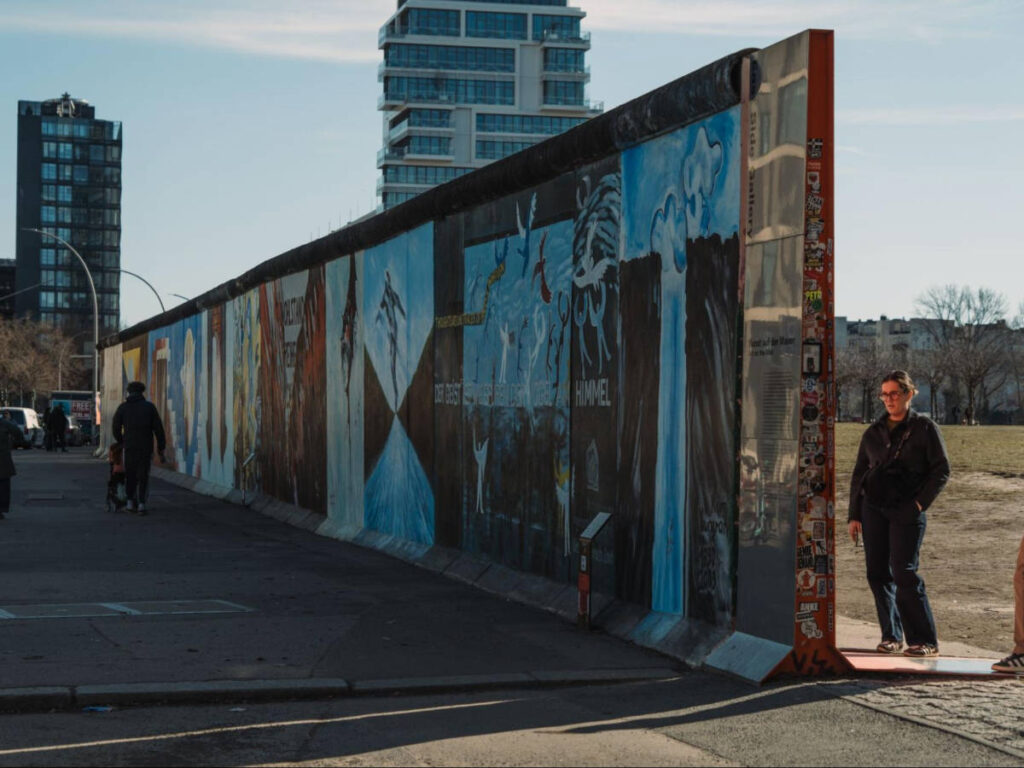
Find the political in art at the East Side Gallery, a section of the Berlin Wall that is now an outdoor art gallery.
📍 Google Maps | Phone: +49 30 213085222 | Website | Hours: all day, every day | Entrance: free
Berliners love repurposing, and the famous East Side Gallery is a testament to that. This section of the former Berlin Wall is 1.3 km long and covered in murals. Some artworks are an ode to freedom, while others criticize world politics.
The East Side Gallery is free to visit and a must-do for all travelers. Both the murals and the wall itself are a window into Cold War Berlin and what it was like to live in a divided city.
👉 Pro Tip: The East Side Gallery can get very crowded with tourists. If you’re here for urban art over history, then visit the North Side Gallery instead.
Holzmarkt 25
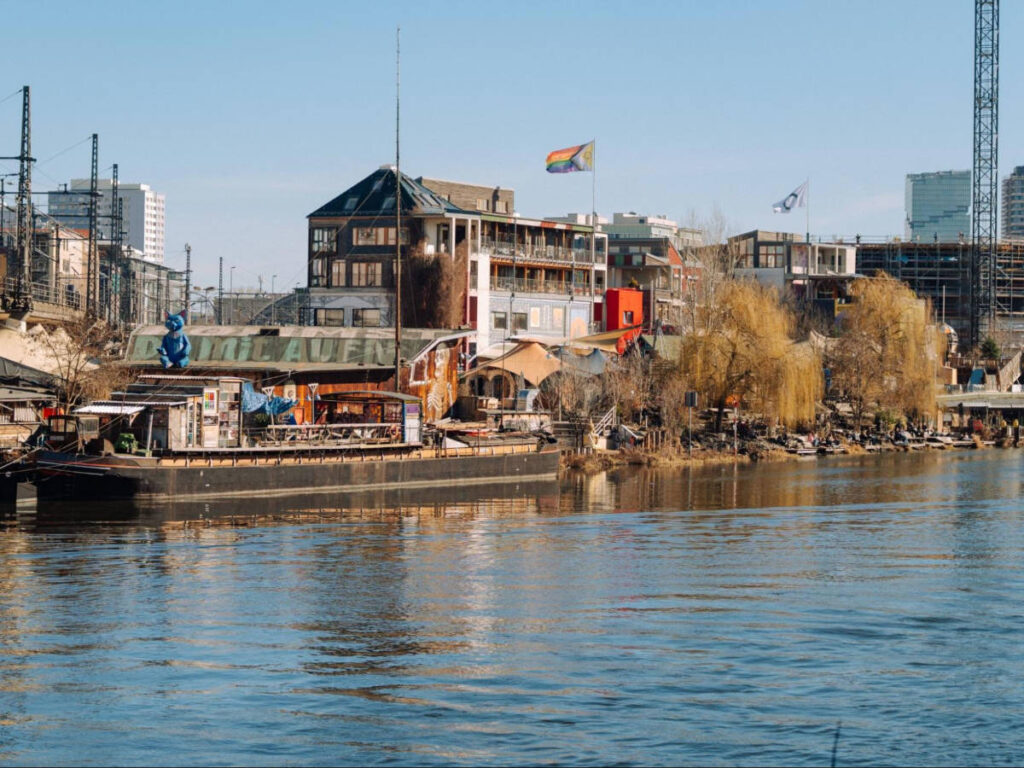
Sip on an aperitif on the banks of the Spree, visit an art installation, or dance at a party at this cultural center.
📍 Google Maps | Phone: +49 30 47361686 | Website | Hours and entrance: depend on the area you’ll visit, check the website for the latest info
Holzmarkt 25 is my favorite place in Berlin. What once was a wood market has been refashioned into a cultural center. Its funky, colorful buildings house bars, restaurants, clubs, concert halls, and office spaces. But its number one selling point is its location on the Spree.
Walking onto the premises feels like entering a festival. You can order a beer at the bar, special wines at the wine store, or a coffee at the café, and then sit down in one of the wooden alcoves lining the water. With art all around and a laid-back vibe, it is the place to go to on a sunny afternoon.
Museumsinsel
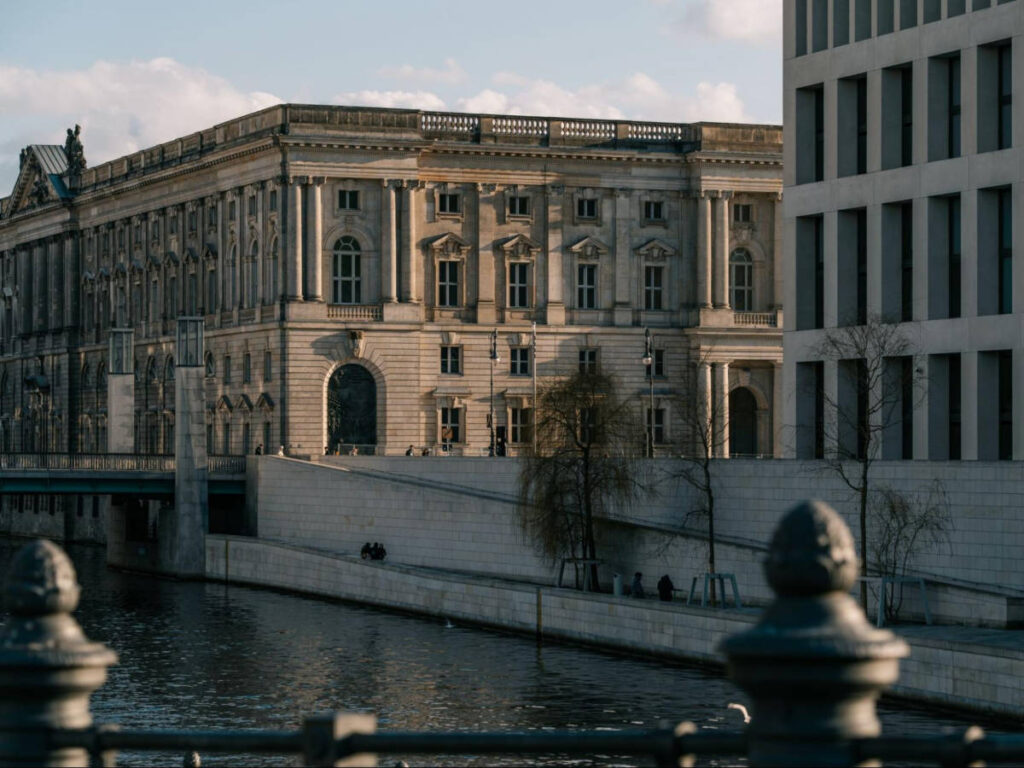
With over five museums, this island in the Spree is a must-visit for anyone interested in Ancient to 19th-century history.
📍 Google Maps | Website | Hours and entrance: depend on the museum you wish to visit
The Museumsinsel lies in the center of the Spree and, as the name suggests, is home to six museums. Unlike most of its neighborhood, Mitte, the island showcases impressive 19th-century architecture. Of all the sights, the Berliner Dom is its crown jewel.
Whatever section of history you’re interested in, the Museumsinsel has it all. Visit either the Asian Art Museum, the Bode Museum for Byzantine art, or the Pergamon Museum and Altes Museum for Ancient relics and art.
Want something more recent? The Neues Museum offers 19th-century and Egyptian exhibitions, while the Humboldt Forum offers a social and anthropological focus.
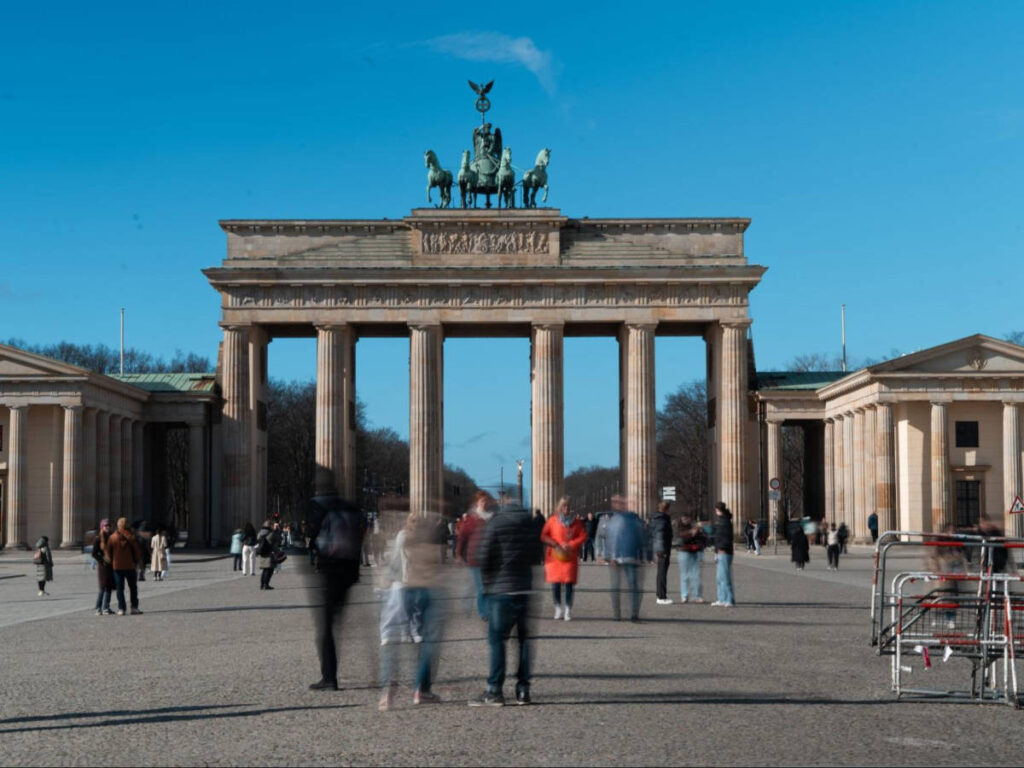
Brandenburger Tor
This former city gate is one of Berlin’s most iconic landmarks.
📍 Google Maps | 👉 Book Discover Berlin Half-Day Walking Tour on Viator
The Brandenburger Tor is one of Berlin’s iconic landmarks. Built in the 18th century to commemorate the Prussian occupation of the Netherlands, it was once the city’s gate. Now, it marks the border between Mitte and the Tiergarten.
Greek mythology and Prussian symbolism decorate the gate. While tons of information can be found online, history buffs will want to do this walking tour. This way, you get to discover the historical context of most of Berlin’s main sights.
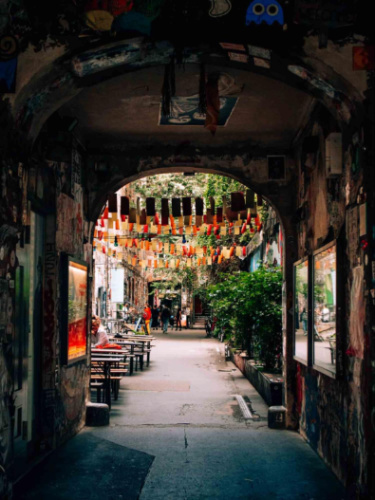
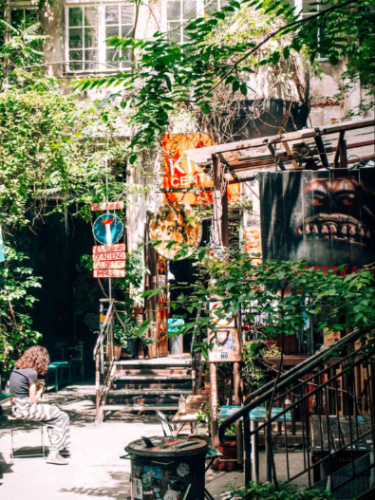
Kino Central
This cinema, hidden in downtown Berlin, shares its space with galleries and museums.
📍 Google Maps | Phone: +49 30 28599973 | Website
Kino Central is more than a cinema. It shares its courtyard with museums like Blindenwerkstatt Otto Weidt and art galleries and shops like Neurotitan. The courtyard’s walls are covered in art, and they planted trees and bushes wherever they could.
Hidden among the Hackesche Höfe, Kino Central and its neighbors are a must-visit for urban art lovers. Even if it’s just for a late-night drink or movie.
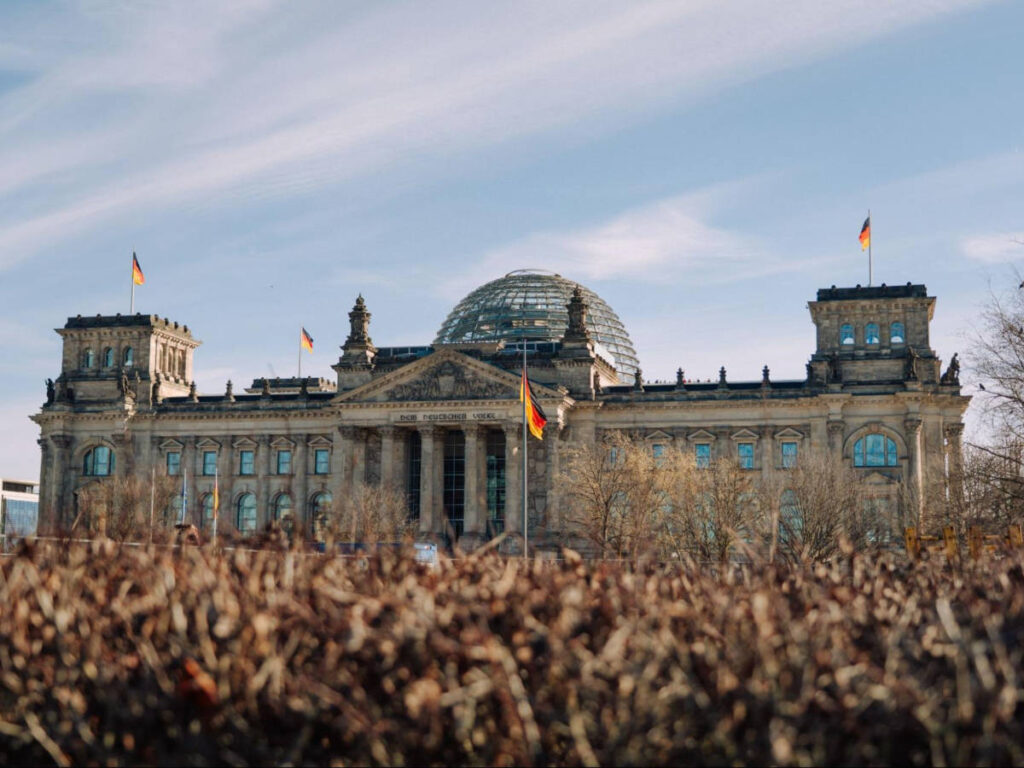
Reichstag
Home to Germany’s parliament, the Reichstag is an unmissable sight of neo-renaissance architecture and history.
📍 Google Maps | Phone: +49 30 22732083 | Website | Hours: 8:00 AM to 9:45 PM daily; closed on holidays and maintenance days | Entrance: free, but advance registration is required
The Reichstag houses Germany’s parliament. Since its construction, it has seen the country’s governments rise and fall. The building thus carries a rich history.
It’s unsurprising, then, that the Reichstag is one of Berlin’s main sights. Its proximity to the Brandenburger Tor and Tiergarten makes it a prime destination for a sightseeing tour.
Travelers who want to do more than gawk can visit its glass dome and panoramic viewing platform. And if you want to know more about its history, politics, and architecture, check out the tours.
Bar hopping in Friedrichshain
Berlin’s alternative neighborhood is the best place to experience its local bar scene.
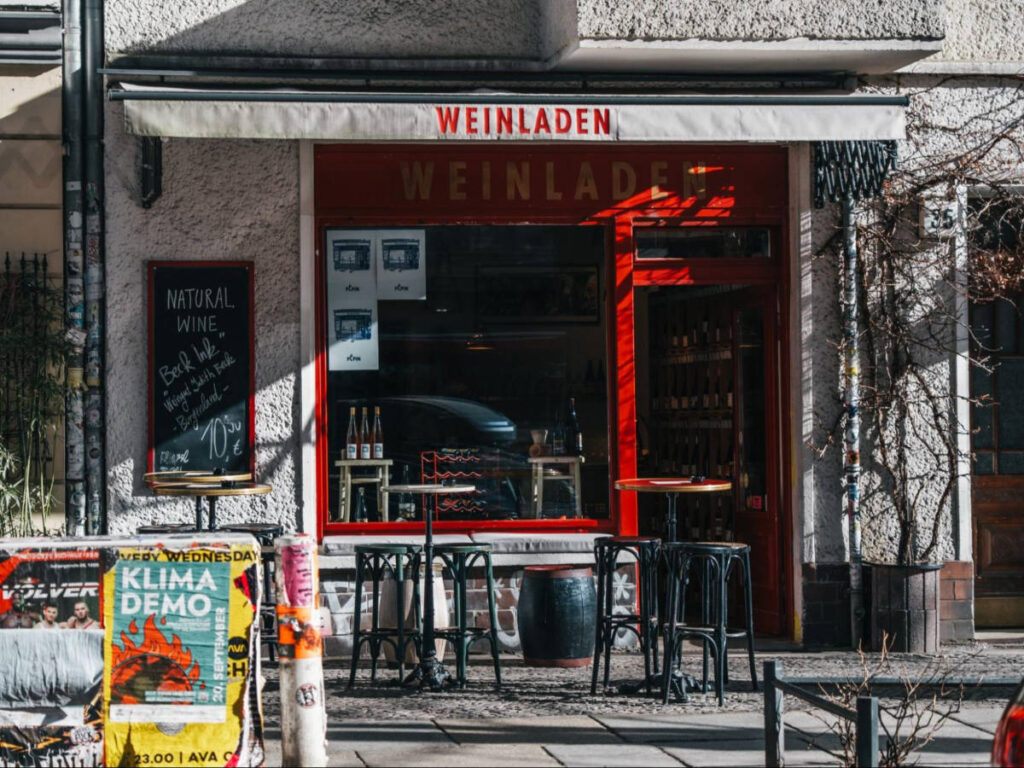
You cannot go to Berlin and not go out. But I get it: clubs like Berghain and Trésor can be intimidating, or you might not like techno at all. If that’s the case, bar hopping in Friedrichshain is the way to go.
Locals and students hang out at the myriad bars, cafés, and restaurants whenever they can. Mingling among the crowds is a great way to get to know Berlin’s bar scene. For the best vibes, visit the streets around Boxhagener Platz, which get especially lively when the sun is out.
Holocaust Monument
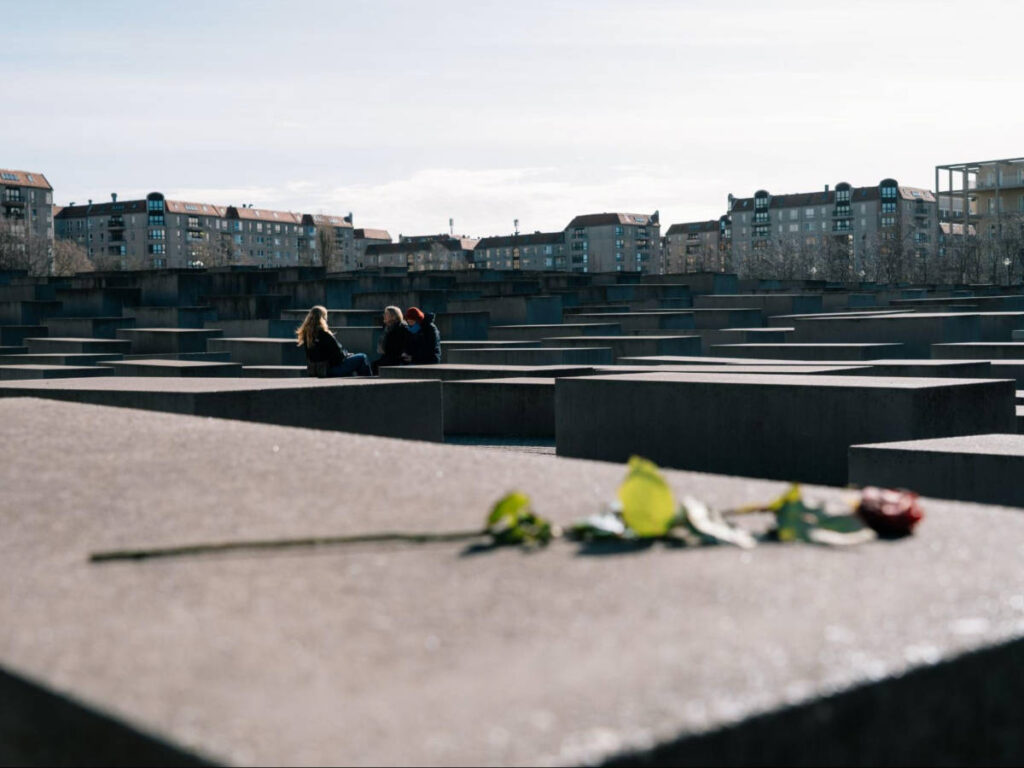
This maze of over 2,500 concrete blocks, resembling a concentration camp, is meant to preserve the memory of those lost during the Holocaust.
📍 Google Maps | Phone: +49 30 2639430 | Website
World War II is one of European history’s darkest chapters. Over the course of 5 years, Jews, Roma, Sinti, and others considered ‘undesirable’ were sent to death camps. This genocide is still visible over the entire continent. But Berlin especially has numerous monuments and museums recounting the horrors of the time.
The victims of the genocide now known as the Holocaust are memorialized in the Holocaust Monument. Over 2,500 concrete blocks of varying height create a maze mimicking camps like Auschwitz. Travelers interested in learning more can visit the underground exhibition space.
C / O Berlin
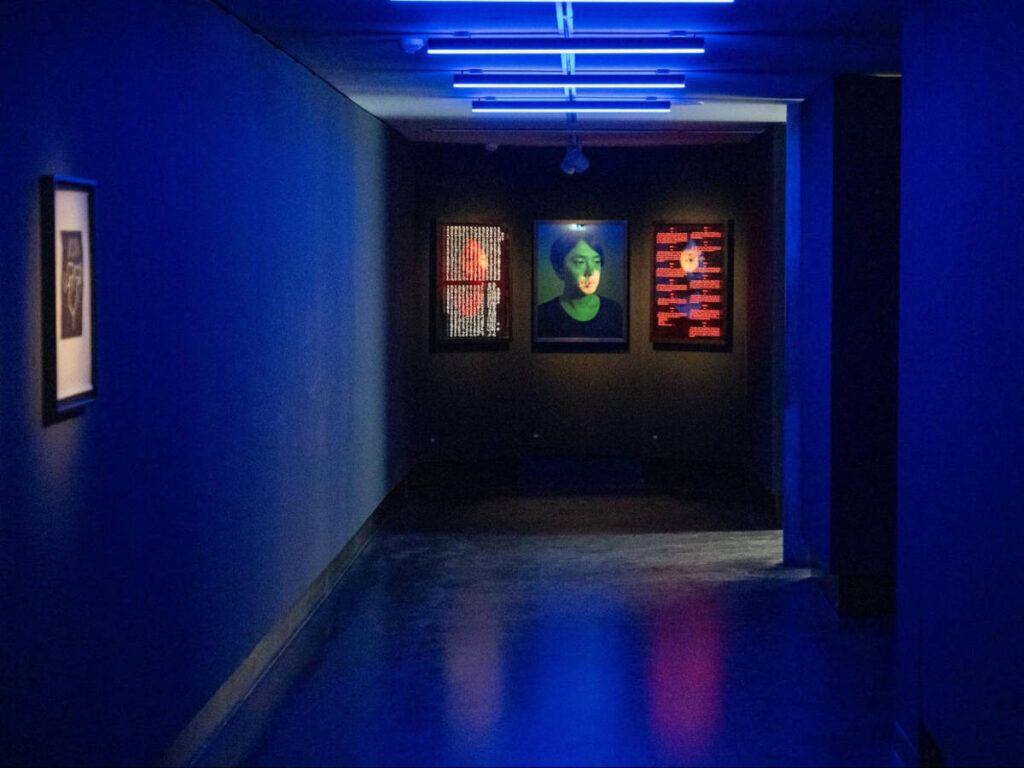
This photography museum delivers social commentary in a thought-provoking and inspiring manner.
📍 Google Maps | Phone: +49 30 284441662 | Website | Hours: 11 am – 8 pm daily; Closed Sun | Entrance: €12 adults, €6 for students
Photography is not objective. It does not depict ‘reality’, but provides a specific lens through which you can interpret the world. It is more often social commentary than an exact retelling of events. This principle lies at the heart of C/O Berlin: the city’s number one photo museum.
Exhibitions vary frequently, giving you something new to explore each time you visit Berlin. When you visit, check out the café (for fantastic pastries) and bookstore as well.
Berlin Museums & Culture
North Side Gallery
Discover up-and-coming street artists at one of Berlin’s off-the-beaten-path urban art destinations.
📍 Google Maps | Website
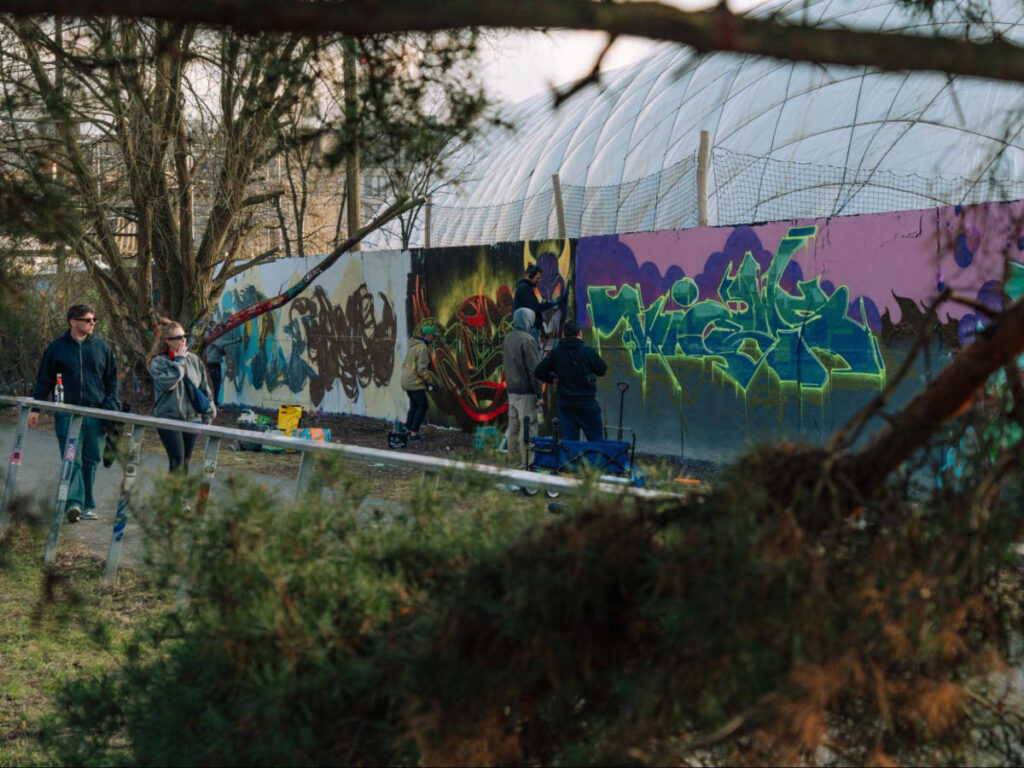
Despite Berlin’s omnipresent street art, legal space for artists to practice is limited. The North Side Gallery gives newbies that space, so they can get their hours in without breaking the law.
That is why you won’t find a curated wall at the North Side Gallery. Instead, you can observe the artists create their work in real time. This makes it a great under-the-radar alternative to the East Side Gallery.
Kulturbrauerei
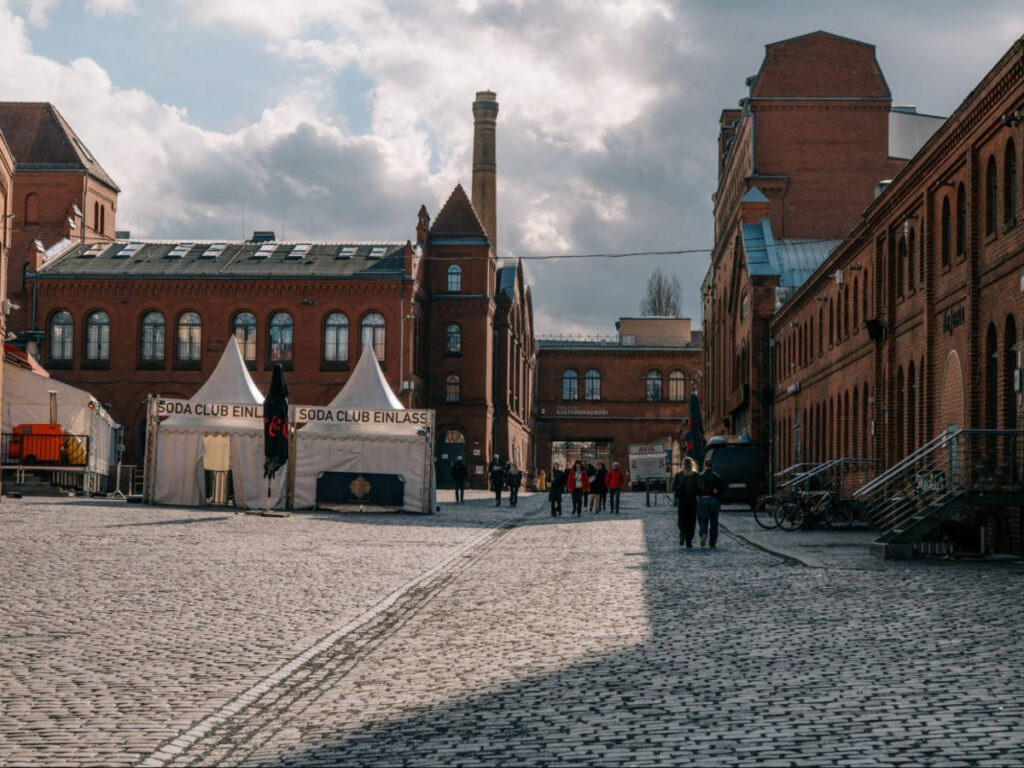
Whether you’re looking for street food, a modern play, or live music, this brewery turned cultural center has it all.
📍 Google Maps | Phone: +49 30 44352170 | Website | Hours & entrance: depend on the venue
Kulturbrauerei is a brewery turned cultural center. Its red-brick buildings, transporting you to the House of Guinness set, are a stand-alone reason to visit. Still, this space in Prenzlauer Berg has much more to offer!
Every building on the site offers something different. You can find a cinema, theaters, museums, galleries, restaurants, and clubs. But they also host the occasional event, with their weekly Streetfood Sunday being my favorite.
Topographie des Terrors
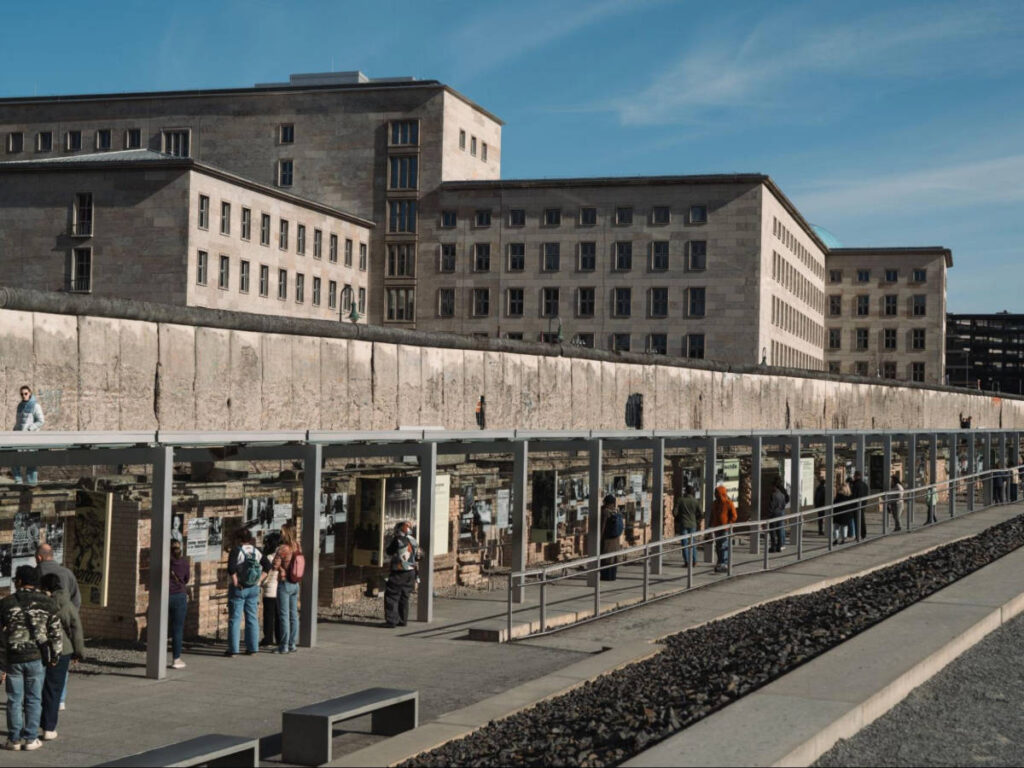
Learn more about how the Nazis came into power and eventually lost it at the site of the former Gestapo headquarters.
📍 Google Maps | Phone: +49 30 25450950 | Website | Hours: 10 am – 8 pm daily | Entrance: free
Visiting the Topographie des Terrors is a must for anyone wishing to learn more about Nazi Germany. Located on the site of the Former Gestapo headquarters, it recounts how the Nazis came into power, how they retained it, and how they lost it.
The museum is a must-see for budget travelers as well, as admission is free. You can visit the outdoor exhibition covering 1933-1945 for a broad overview, or go into details inside the building.
Because it’s free, the exhibitions can be busy. The museum recommends coming after 5 pm for a quieter visit.
DDR-Museum
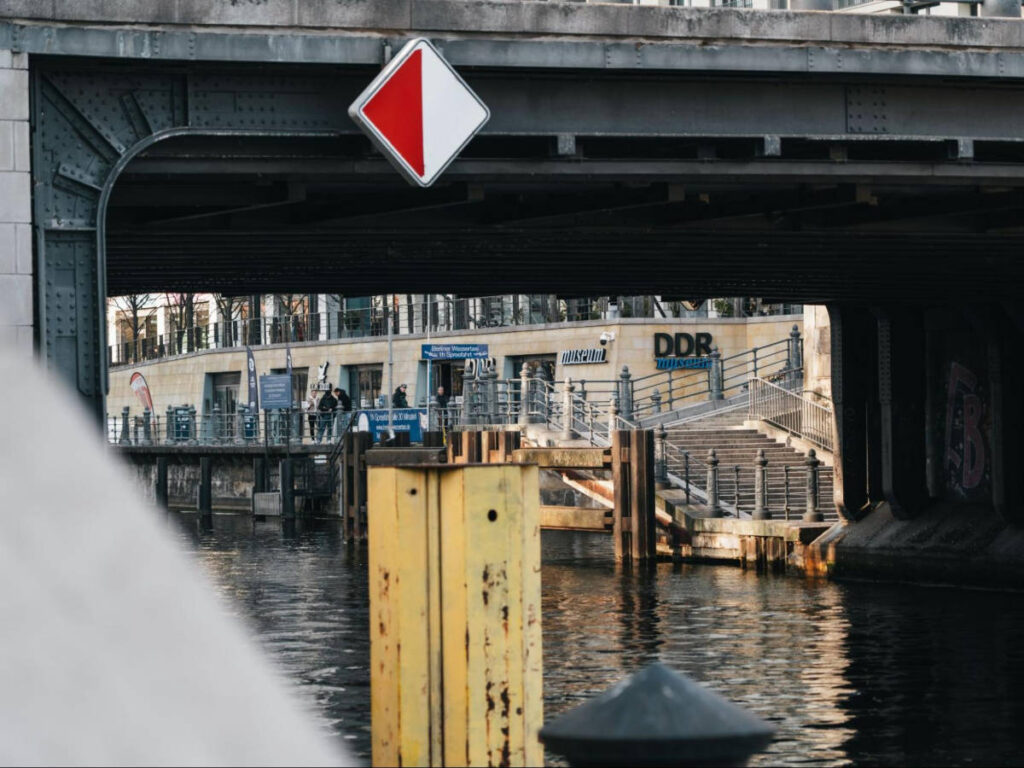
This interactive museum gives you a glimpse of East Germany’s daily life under Soviet rule, from 1945-1989.
📍 Google Maps | Phone: +49 30 847123730 | Website | Hours: 9 am – 9 pm daily | Entrance: €13,50 adults, €8 students
Ever wondered what it was like to live under Soviet rule? The DDR-Museum’s exhibition will transport you to life in East Germany between 1945 and 1989.
Not only was Berlin divided after World War II, but the Iron Curtain also split the entire country. Western Germany lived in a liberal capitalist society under French, British, and American rule, while the East shaped itself around Soviet communism.
What makes the DDR-Museum so special is that you can touch and interact with myriad objects. If you ever wanted to travel through time, try the simulated drive over Eastern German roads in an original Trabant car.
Berlin Story Bunker
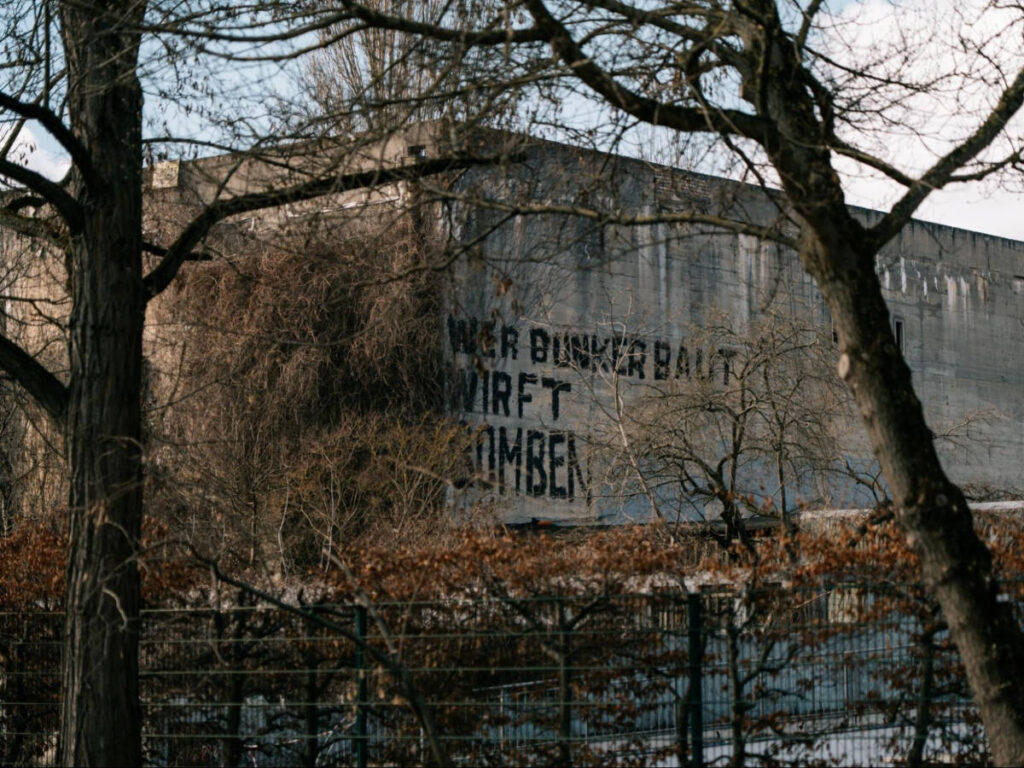
Dive deep into the psyche of Nazi Germany at this former air raid shelter.
📍 Google Maps | Phone: +49 30 26555546 | Website | Hours: 10 am – 7 pm daily | Entrance: €18 adults, €12 under 18
The Berlin Story Bunker was an air raid shelter during WWII. Now, its main exhibition revolves around the question: “Hitler – how could it happen?” Where other museums tell the tale of what happened, this one dives deep into the human psyche. Asking the question of how a nation could end up committing such atrocious acts.
The rest of the museum revolves around how Germany evolved after 1945 and the war in Ukraine. Travelers interested in modern history and how far humans can go, in both atrocities and survival, will want to spend at least three hours here.
Jewish Museum Berlin
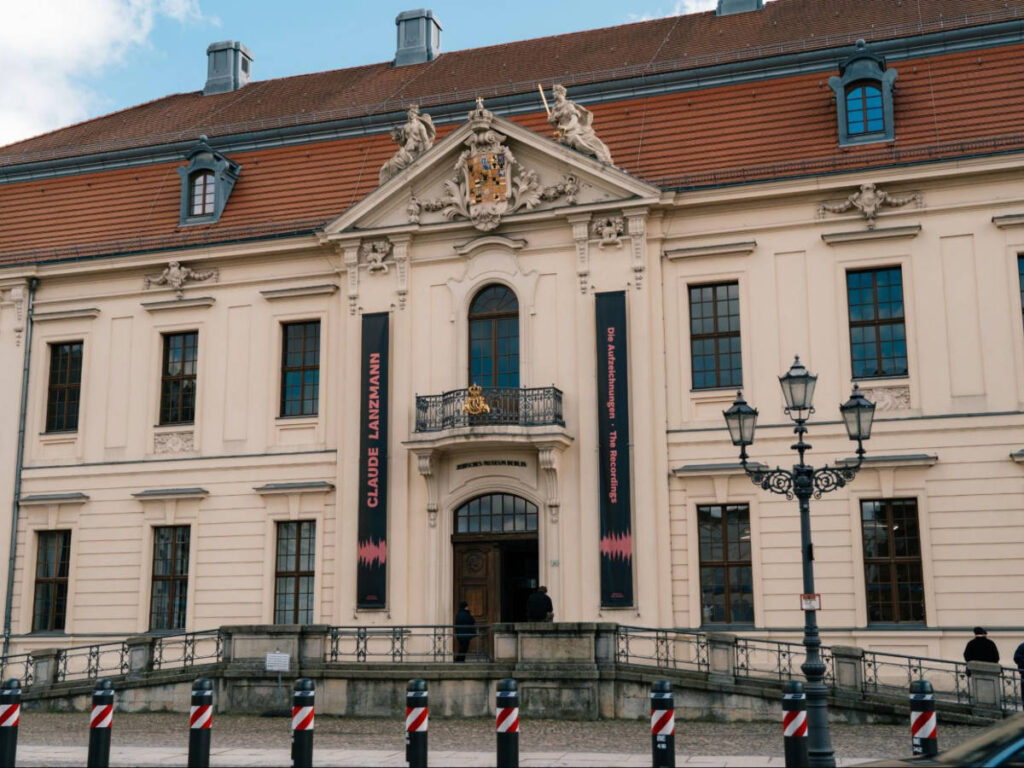
Learn more about Jewish culture, history, and modern life in Germany, which extends far beyond the Holocaust.
📍 Google Maps | Phone: +49 30 25993549 | Website | Hours: 10 am – 6 pm daily | Entrance: core exhibition is free, additional costs for temporary exhibitions
While it is a somber page in history that needs to be told, German Jewish history goes much further than the Holocaust. The community’s rich culture and ways of life are the core subject of the Jewish Museum in Berlin.
Here, you’ll find stories of the diaspora, women in Judaism, and modern, middle-class life. Learning about Jewish culture in such a manner actively counters the cultural erasure attempted by Nazi Germany.
The core exhibition is free to visit, but an additional fee applies to the temporary exhibitions. Checking which ones you want to visit ahead of time will save you a surprise later on.
Berlinische Galerie
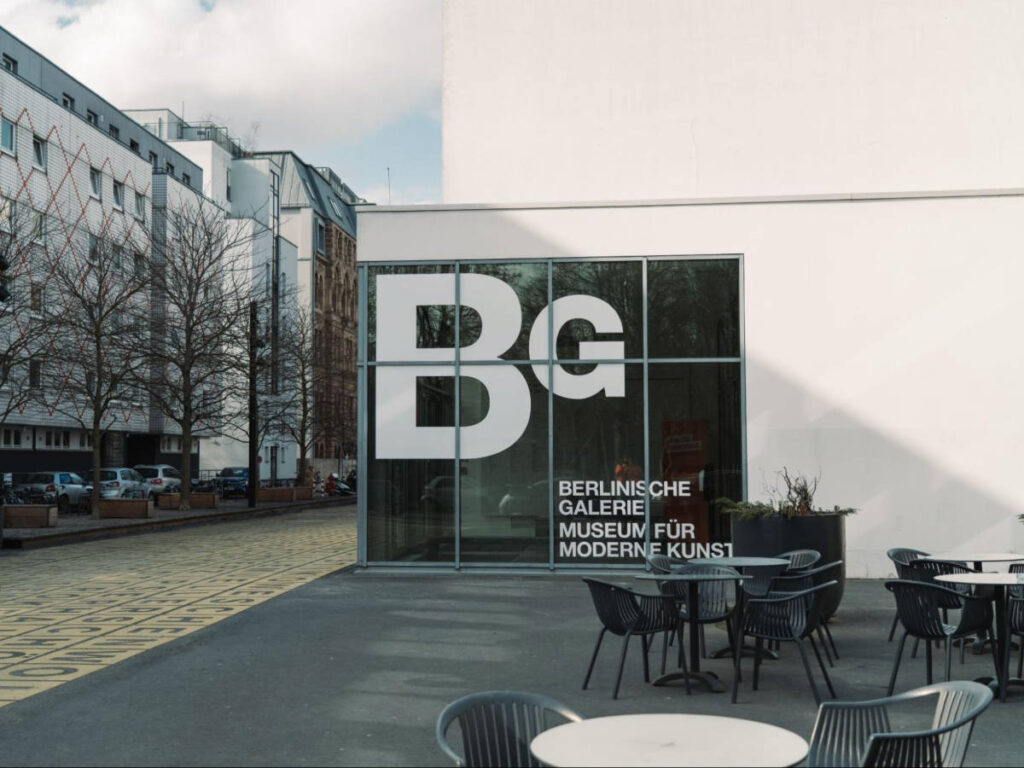
This museum displays the best of Germany’s modern and contemporary art.
📍 Google Maps | Phone: +49 30 78902600 | Website | Hours: 10 am – 6 pm daily; Closed Tuesdays | Entrance: €12 adults, free under 18
The Berlinische Galerie is the museum to go to if you love modern and contemporary art. With a collection ranging from 1880 to now, you’ll spot German expressionist, abstract, and impressionist works, and many more.
What makes the Berlinische Galerie extra special is its inclusive policy. Those with impaired hearing can follow sign language tours, while the visually impaired can experience the museum through tactile experiences.
Urban Nation
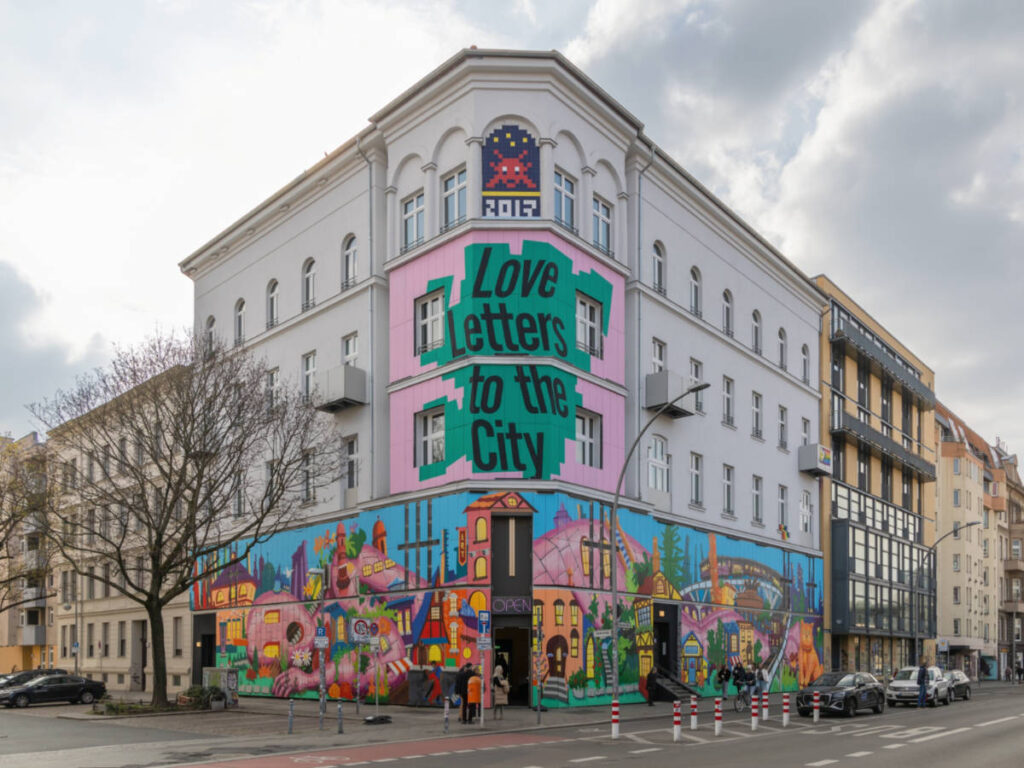
This museum showcases photographic, contemporary, and street art both indoors and far beyond its walls.
📍 Google Maps | Website | Hours: 10 am – 6 pm Tue & Wed; 12 – 8 pm Thu to Sun; Closed Mondays | Entrance: free
How can you create a museum around street art when it’s no longer on the street? By extending your exhibitions beyond your interior, says Urban Nation. Indoors, the museum displays photography and contemporary pieces, while elaborate murals extend along the museum’s street and beyond.
In many ways, Urban Nation is therefore more than a museum. Through creating spaces for contemporary and street artists to paint, they’re actively advocating for these artists’ rights to exist.
Berlin Sites & Attractions
Fernsehturm
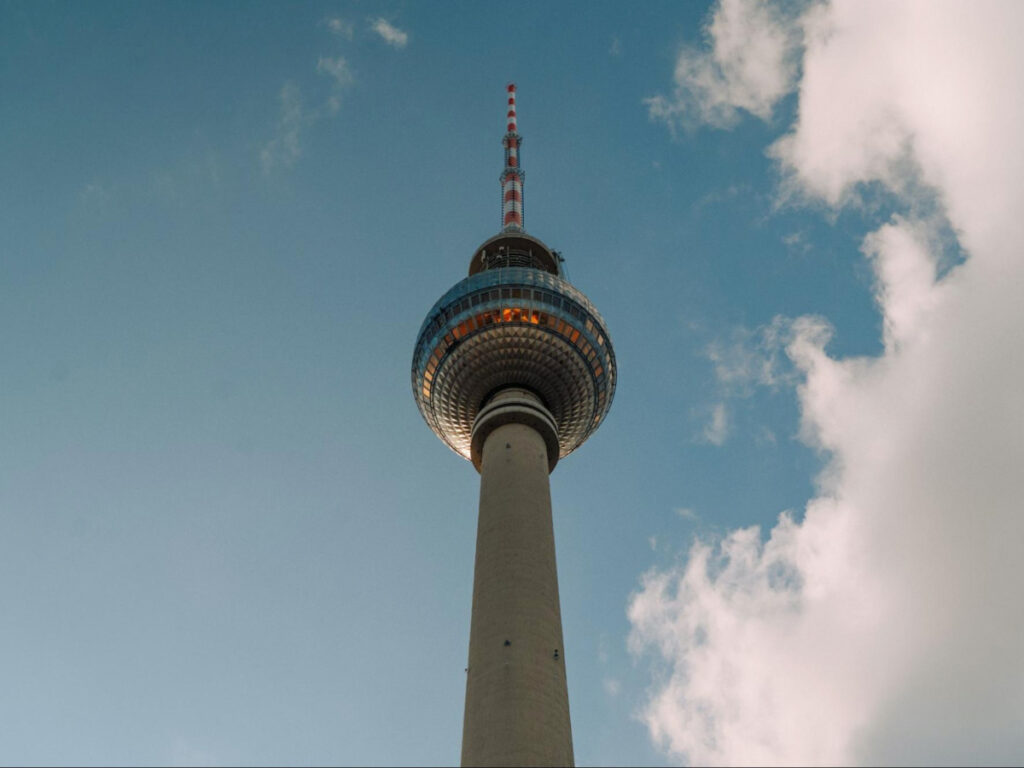
Europe’s second-tallest TV and radio tower offers panoramic views and a rotating restaurant.
📍 Google Maps | Phone: +49 30 247575875 | Website | Hours: 9 am – 11 pm daily | Entrance observation desk & sky bar: €25,50 adults, €15,50 under 14, free under 4
Go to any rooftop in Berlin, and you will see the Fernsehturm on the horizon. Located on the Alexanderplatz, the tower reaches 368 meters above the city and still broadcasts radio and TV.
Anyone can visit the observation desk and sky bar, which offers 360º views of Berlin. Travelers wanting a dinner experience at altitude can reserve a table at its rotating restaurant.
As it’s one of the major tourist activities, the tower is expensive, though. Prices vary depending on the activity and menu you choose. For budget travelers, I recommend the breakfast menu. But visiting Klunkerkranich instead is also a great option for under-the-radar views of Berlin’s skyline.
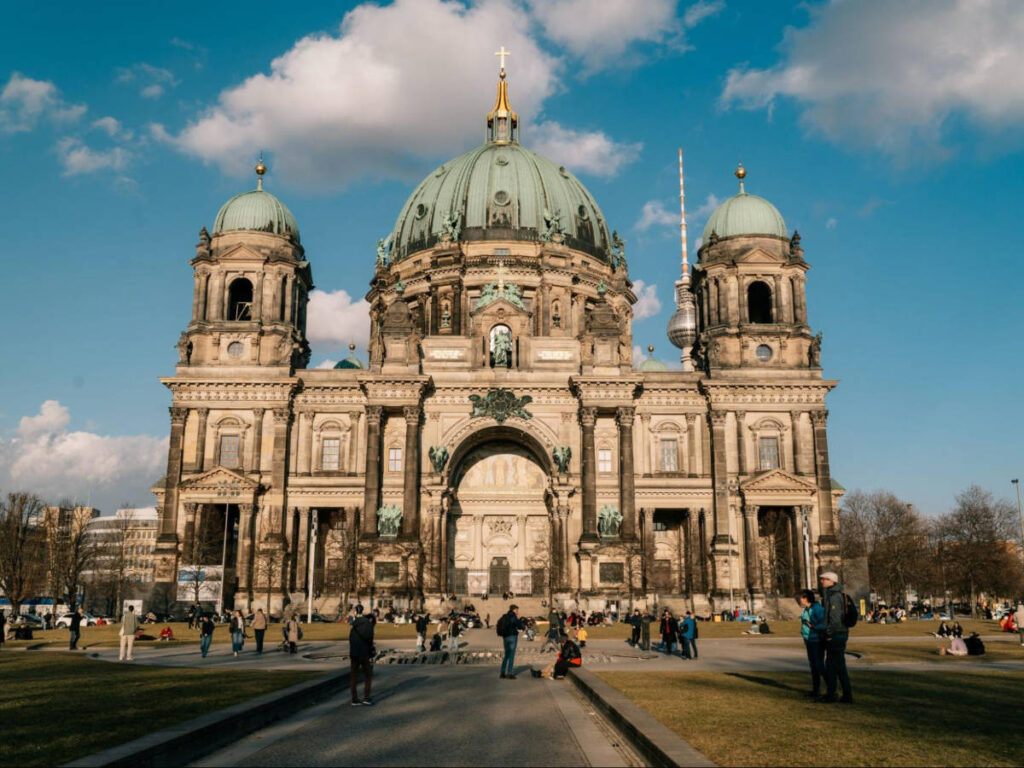
Berliner Dom
Berlin’s most impressive cathedral encompasses five architectural styles and 600 years of history.
📍 Google Maps | Phone: +49 30 20269136 | Website | Hours: 9 am – 6 pm Mon to Fri; 9 am – 5 pm Sat; 12 am – 5 pm Sun | Entrance: €15 adults, free under 18 when traveling with an adult
The Berliner Dom is an Evangelical church and one of the city’s most beautiful buildings. Having been damaged during WWII, the building is said to have been even more intricate in the past. Luckily, the municipality is debating a complete restoration as we speak.
Anyone interested in architecture, ranging from the Renaissance to the Neo-Classical styles, and Christian history will want to visit the cathedral. A visit does require an entrance fee, unless you are there to attend a service.
And if you’re a fan of composers like Bach and Mozart, then check the calendar for organ and classical concerts.
Checkpoint Charlie
This replica of Berlin’s bloodiest checkpoint is as close as you can get to the reality of living in a divided city.
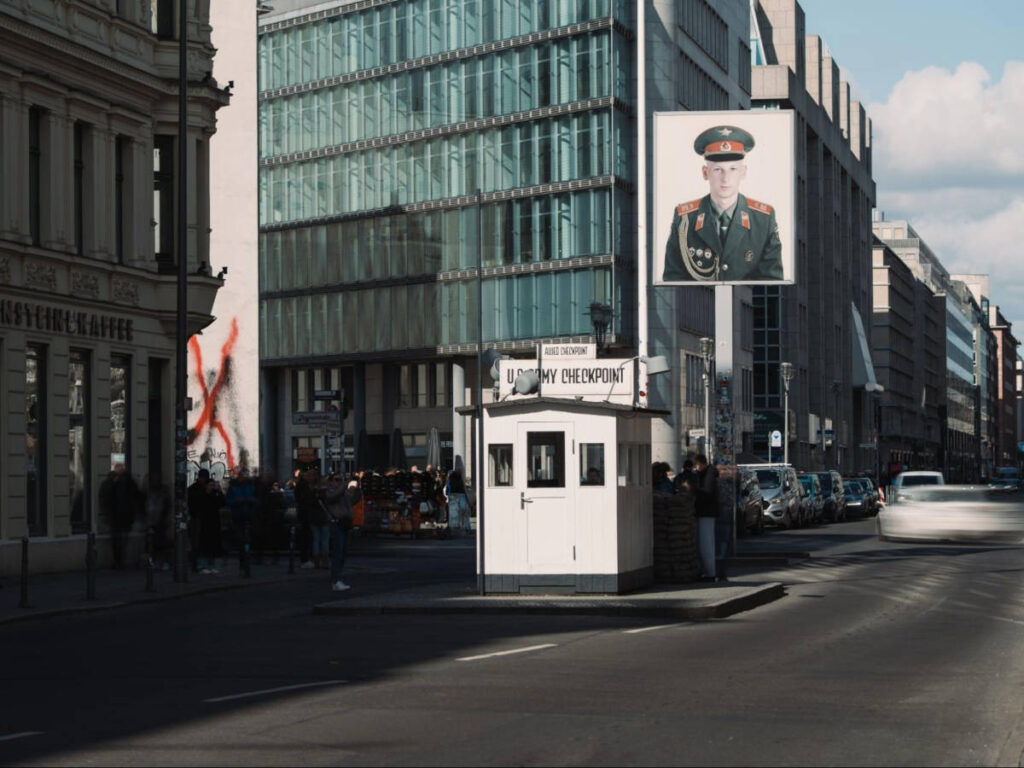
Despite it being a replica, millions of tourists flock to Checkpoint Charlie each year. Located on Friedrichstraße, it marks one of the checkpoints between East and West Berlin.
Although one of many, Checkpoint Charlie was one of the Wall’s bloodiest passages. The threat of a third world war nearly came to fruition here in 1961, and numerous civilians fatally failed to cross the wall here.
First-timers must visit Checkpoint Charlie at least once on their trip. Combine it with a visit to the nearby Topographie des Terrors to make the most of your time.
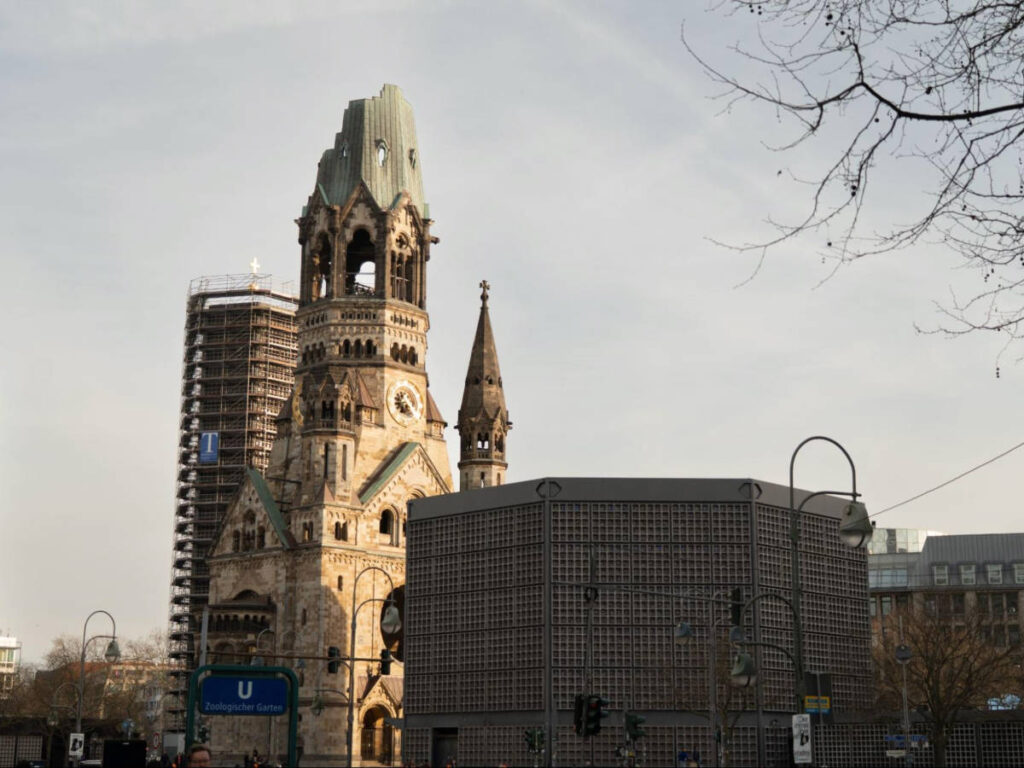
Kaiser-Wilhelm-Gedächtniskirche
Combining its destroyed tower with a modern church, this place of worship doesn’t need words to tell the tale of Berlin’s unique resilience.
📍 Google Maps | Phone: +49 30 2185023 | Website | Hours: 10 am – 6 pm daily, on Sundays the Memorial Hall opens 1 hour later
The Kaiser-Wilhelm-Gedächtniskirche was so heavily damaged during WWII that authorities decided not to rebuild it. Instead, its tower became a memorial for the war and those who were lost.
The new Evangelical church was consecrated in 1961 and still holds sermons today. If you are a Christian, it is one of the most special places to attend mass.
Travelers who prefer to learn about the church’s history can visit the Memorial Hall in the old tower, where a small exhibition displays the atrocities of the war.
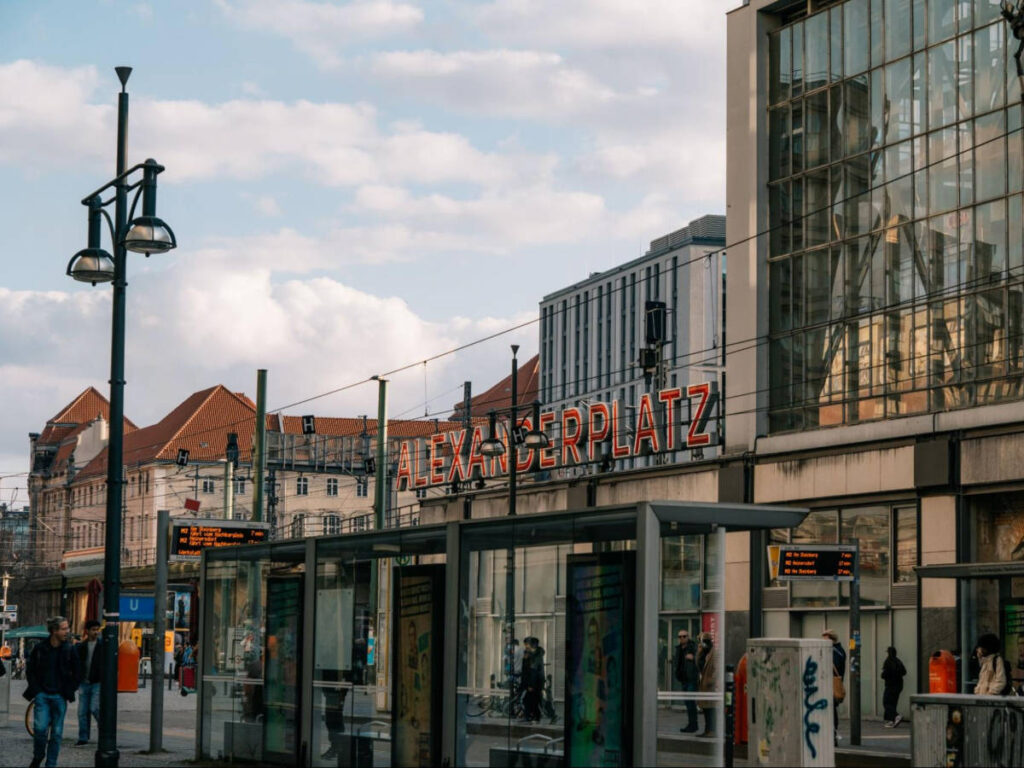
Alexanderplatz
Now home to malls and chain restaurants, Alexanderplatz was the DDR’s destination for mass rallies and military parades.
📍 Google Maps | 👉 Book Cold War, Berlin Wall, Spies and the East Side Gallery tour on Viator
Alexanderplatz will not be the most aesthetic sight of your Berlin trip. With the Fernsehturm and its grey office buildings, it can be a dreary place on a rainy day. But walking around the platz will tell you a lot about Berlin’s history.
During the war, Berlin’s historical center was destroyed. And when the city split, this center suddenly became its periphery. In need of a new center, the Soviet Union built Alexanderplatz. Here, their military paraded and held mass rallies.
For travelers interested in this part of Europe’s history, I recommend doing this Cold War tour. With a guide, you’ll learn far more about the place than you would without.
Teufelsberg
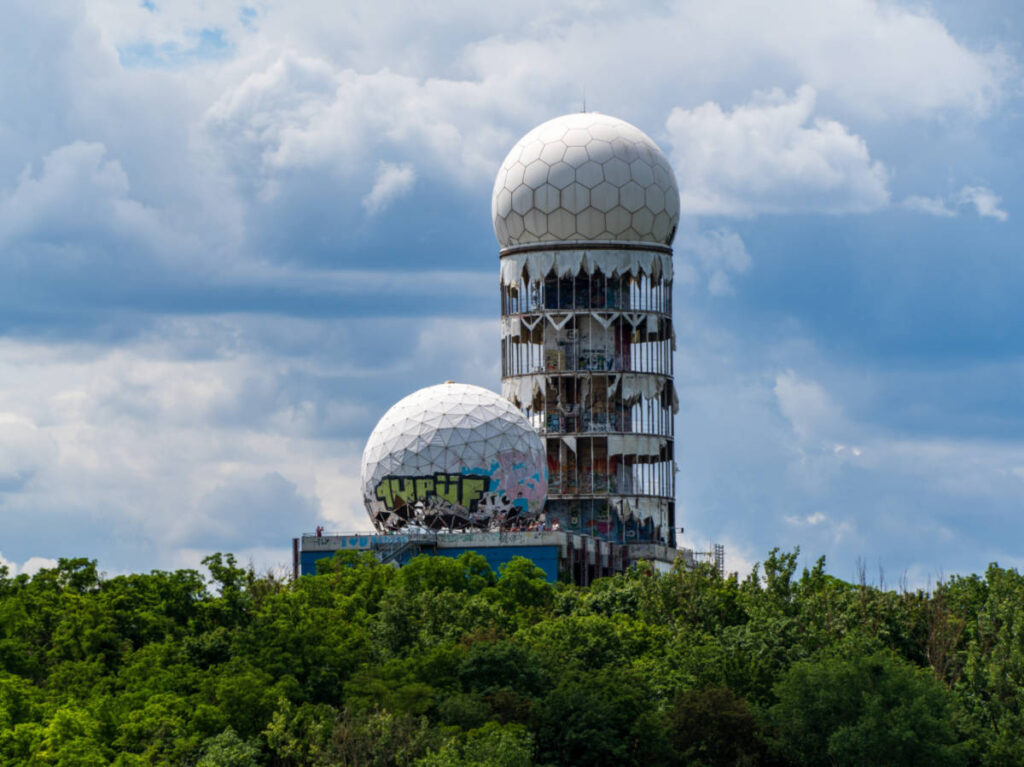
Discover Europe’s best street artists and spy history at this former surveillance and radar station.
📍 Google Maps | Website | Hours: 11 am to sunset, daily | Entrance: €12 adults, €5 under 18, free under 7
The Teufelsberg, meaning Devil’s Mountain, is an artificial hill to the west of Berlin. Built by Hitler, it was meant to be a technical warfare college. It was never finished, though, and eventually became a surveillance and radar station under American control during the Cold War.
After the fall of the wall, cultural initiatives and artists squatted in the building on and off. This resulted in one of Europe’s largest street art galleries. Combine it with the two exhibitions on the Teufelbergs political history, and you’ve got one of the most intriguing hidden gems in Berlin.
Gendarmenmarkt
Berlin’s oldest market square draws music and classical architecture lovers alike.
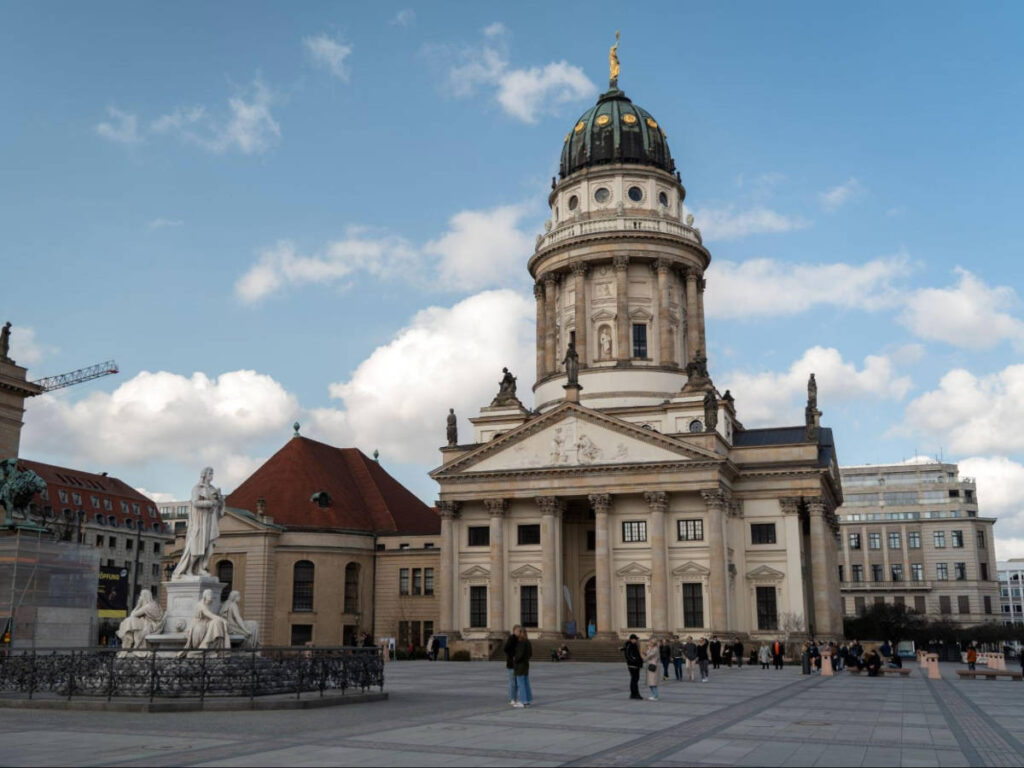
In a city where so much was destroyed, finding multiple heritage sites in one spot is tough. This is what makes the Gendarmenmarkt, which dates from the 17th century, Berlin’s most popular square.
On opposite sides of the square, you can find two near-identical churches: the Huguenot Französcher Dom and the Lutheran Deutscher Dom. In between, the Konzerthaus welcomes both classical and popular musicians.
But the most magical time to visit the square is in December, when the Christmas market fills every inch.
Berlin Wall Trail Bike Tour
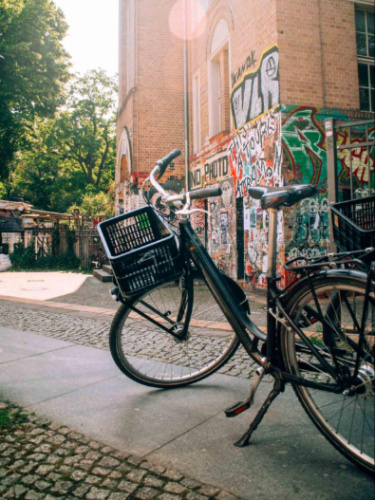
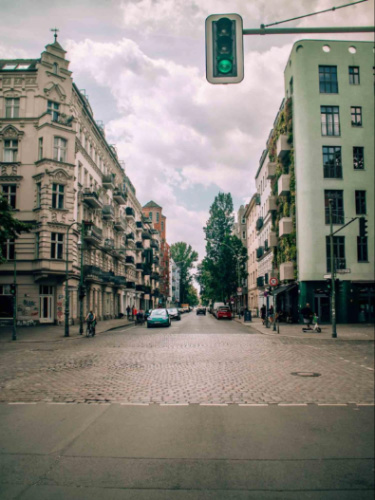
What was once used to divide Berlin’s citizens is now a cycling and hiking path surrounded by history.
Website and trail route | 👉 Book Berlin Wall and Cold War Bike Tour in Small Groups on Viator
The Berlin Wall used to span 160 kilometers and encircled West Berlin. Since its fall in 1989, the municipality has turned its former location into a hiking and biking trail.
Consisting of 14 sections, the Berlin Wall Trail is an ideal activity for sporty travelers. You could rent a bike and do one section, or do them all and book accommodation along the way. Either way, check out the municipality’s website for the history of the multiple sights present along the route.
But if cycling by yourself seems daunting, I recommend a bike tour instead. Although you won’t cycle around the entire wall, you will learn about its history and see the main sights.
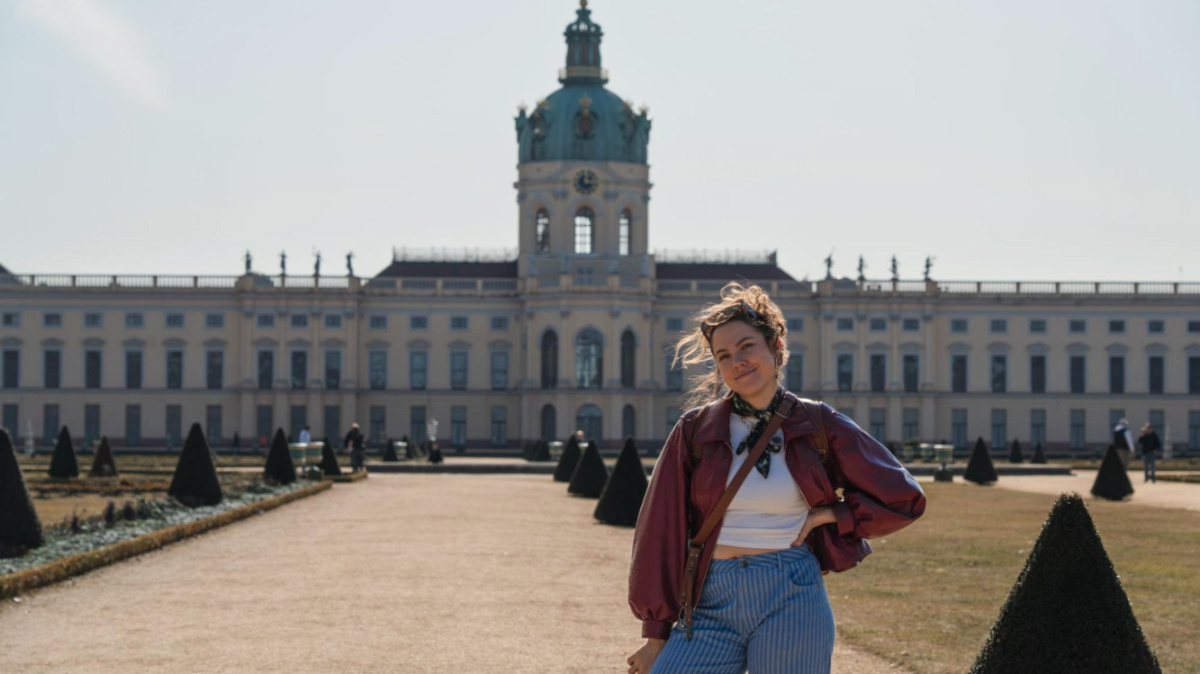
Schloss Charlottenburg
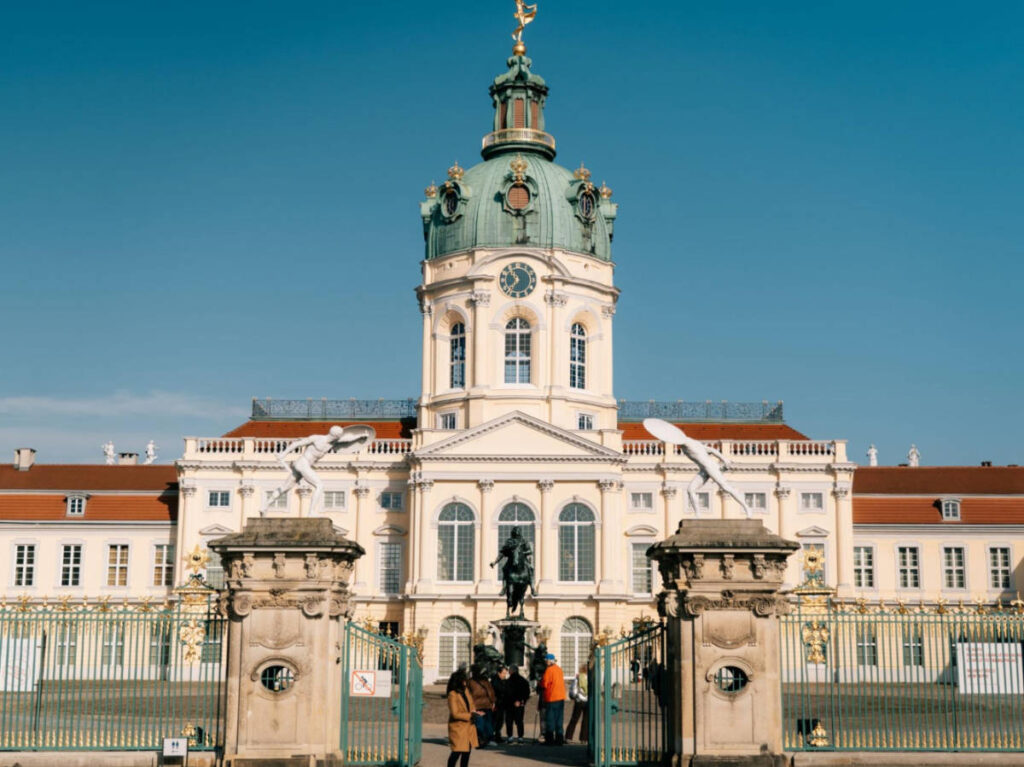
One of the Prussian monarchs’ former homes, this castle transports you to their luxurious 18th-century life.
📍 Google Maps | Phone: +49 30 320910 | Website | Hours: 10 am – 5:30 pm daily; Closed Mondays | Entrance: €19 adults, free under 7
Before Germany’s unification in the late 19th century, the country was a collection of sovereign states. Schloss Charlottenburg was built by the first queen of its most powerful state: Prussia.
Currently, the castle is a museum showcasing the lives and wealth of the Hohenzollern dynasty. On the ground floors are the Prussian kings and queens’ residences. Its upper floors are dedicated to their silver and porcelain collections.
Schloss Charlottenburg is thus a must-visit for those interested in Prussian history. Don’t forget the palace gardens though. Free to enter, they’re just as beautiful and worthwhile as the castle.
At Night in Berlin
Berghain
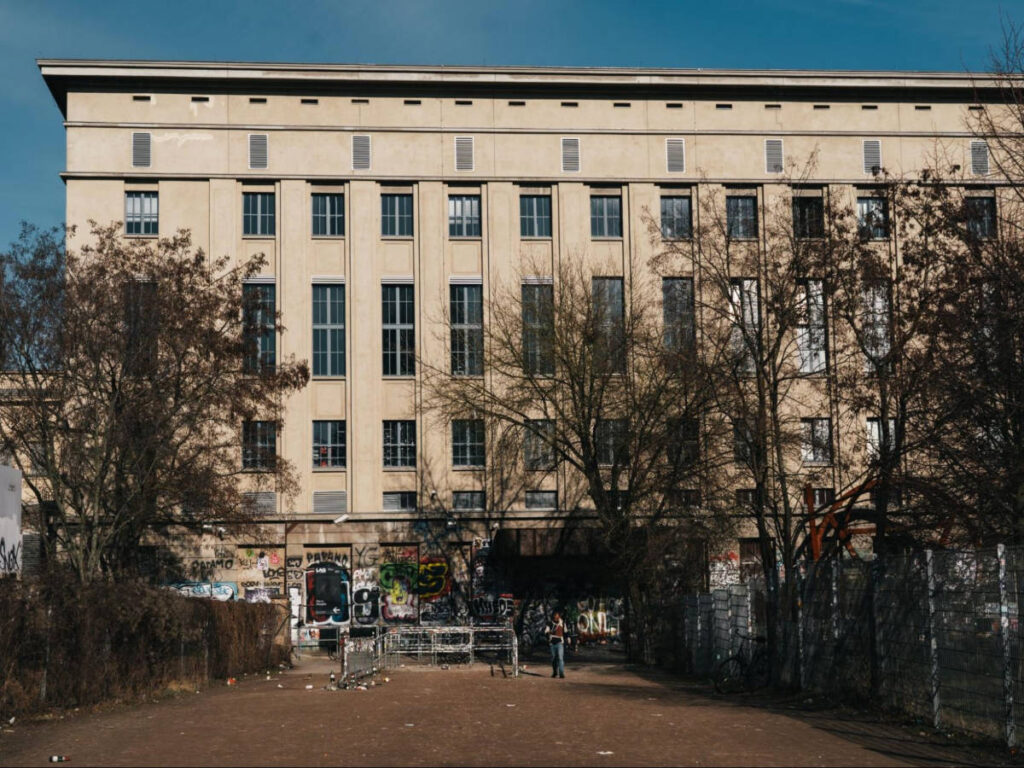
Berlin’s most (in)famous club is known as the capital of techno.
📍 Google Maps | Phone: +49 30 29360210 | Website | Hours: depends on the program, but generally Friday to Monday morning | Entrance: depends on the event
Berghain is Berlin’s most infamous club. Located on the border between Friedrichshain and Kreuzberg, the massive building is also known as the ‘world capital of techno.’
Travelers who love a good rave will want to visit Berghain on their trip. The space originated as a gay club and is now an inclusive, sex-positive venue that mixes music, art, and culture.
👉 Pro Tip: The line will be long, so take some drinks with you for the wait, and don’t make a scene if they turn you away.
Kit Kat Club
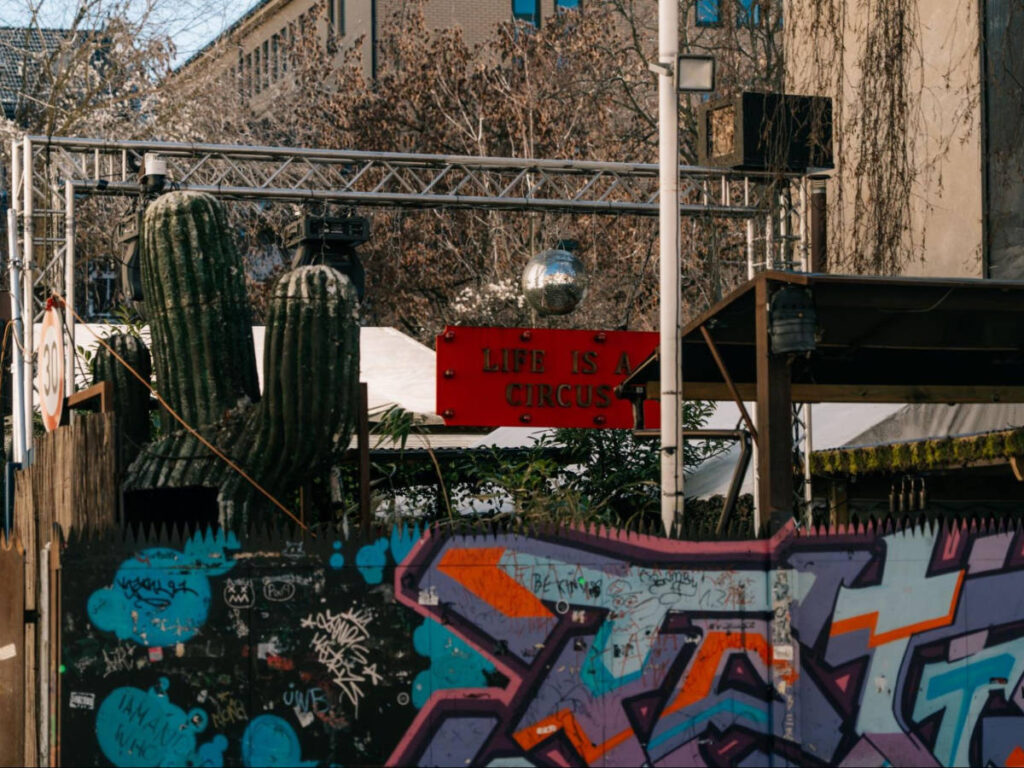
Named after a fictional cabaret venue, this sex-positive club is a must-visit for party animals.
📍 Google Maps | Website | Hours: opening times range from 8 to 10 am, and closing times from 6 to 9 am | Entrance: depends on the event
Like Berghain, the KitKatClub embraces sexual freedom and expression. But where Berghain is dark and cult-like, the KitKatClub is hedonistic and plays house and trance, as well as techno.
Travelers who love to go clubbing abroad but want a more diverse musical repertoire will feel right at home here. Just note that the club has a strict fetish dress code and sex-positive policy. So only go if you feel comfortable in and are accepting of such spaces.
Trésor
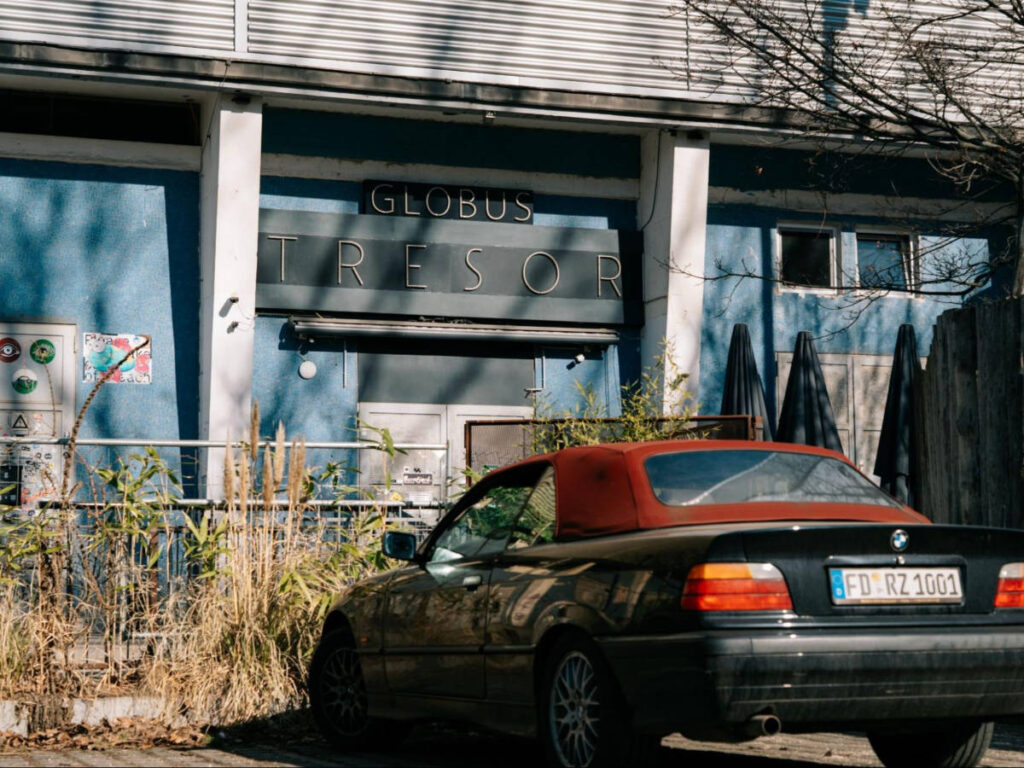
This electronic dance club combines Detroit and Berlin techno spread over three floors.
📍 Google Maps | Phone: +49 30 62908750 | Website | Hours: Opening times 8 pm; closing times range from 8 to 12 am; but it depends on the program | Entrance: between €20-€30, depending on the event
Ravers who want to dance the night away but feel uncomfortable in sexual atmospheres like Berghain and the KitKatClub will want to go to Trésor.
This electronic dance club was one of the first to open after the fall of the Berlin Wall. It combines Detroit and Berlin techno, and the atmosphere is industrial. With three floors, it will keep you occupied for hours.
Drinks at a Späti
Hang out like a local with a beer and some chips at these late-night shops.
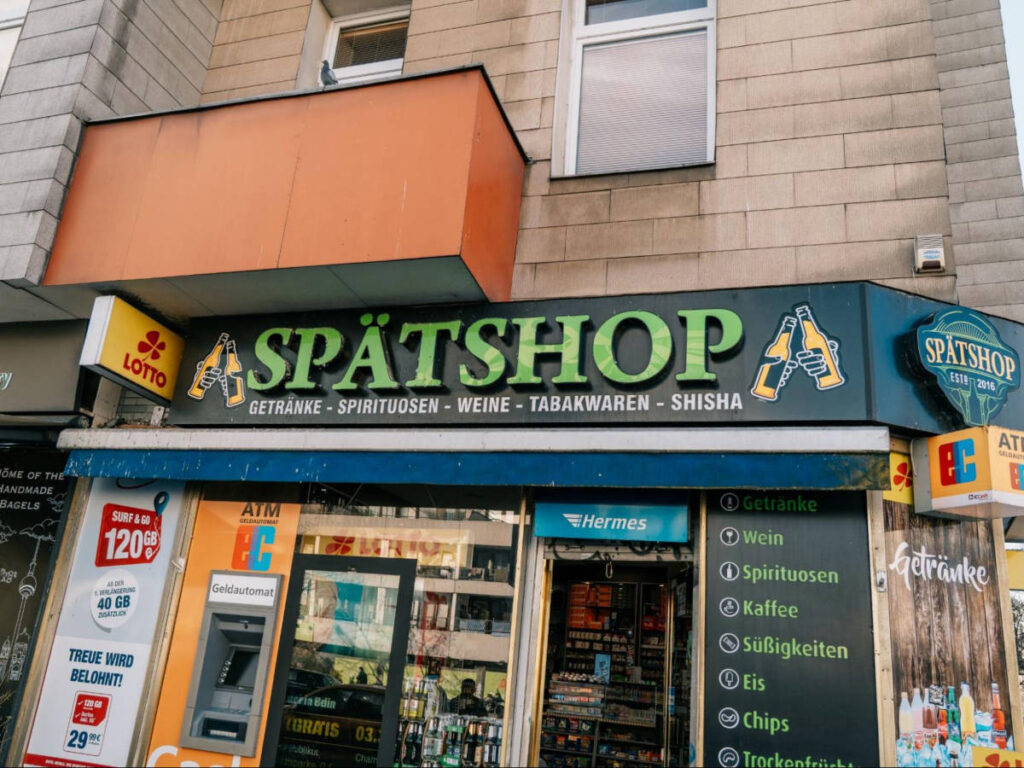
In Berlin, späti’s are more than late-night shops; they’re a place to hang out with friends. Some have tables and chairs, while others are just a place to buy beer and snacks for the long wait in Berlin’s club queues. Whenever you want to hang out or you’re craving a cheap beer, channel your inner Berliner and head to a späti!
Shaubühne
A modern-style building showcasing avant-garde and experimental plays.
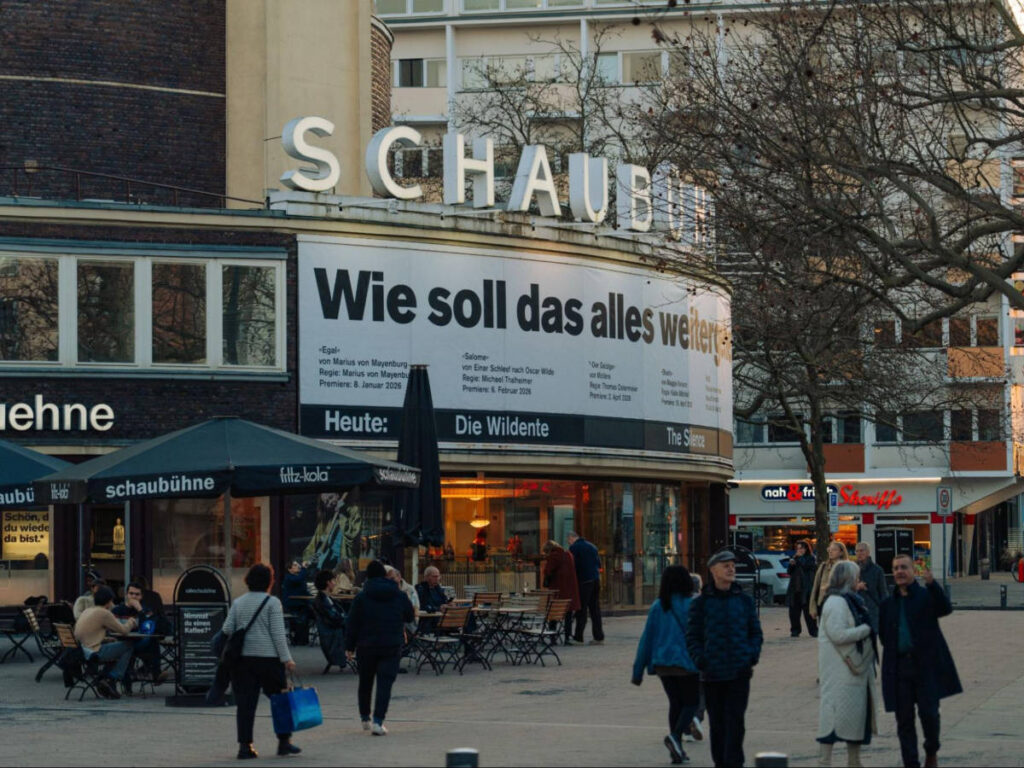
📍 Google Maps | Phone: +49 30 890023 | Website | Hours: depend on the program | Entrance: depends on the show
Theatre fanatics will want to spend a night at the Schaubühne on the Kurfürstendamm. This avant-garde theatre showcases both modern classics and contemporary works. Although most of the plays are performed in German, some have English subtitles.
Those interested in modern architecture won’t want to miss the Schaubühne’s building. Designed in the New Objectivity style by Erich Mendelsohn, the round front with the chimney-like center is one of this neighborhood’s more unique buildings.
Berliner Philharmonie
Seating its namesake famous orchestra, this modern concert hall is a must-see for classical music lovers and budget travelers.
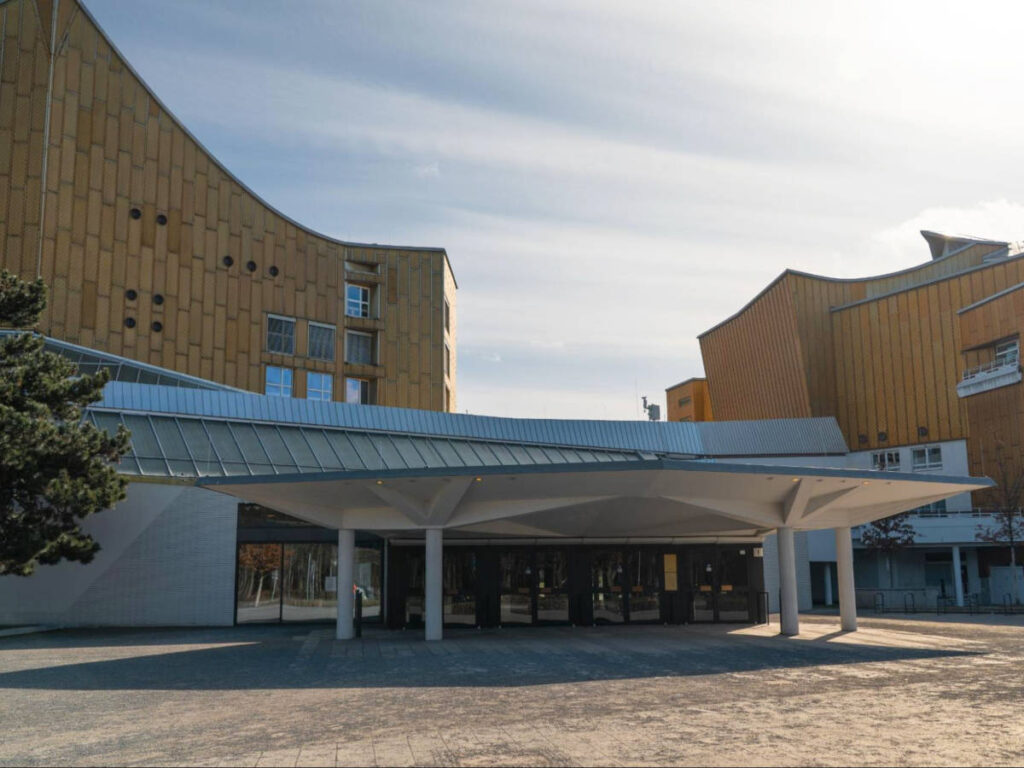
📍 Google Maps | Phone: +49 30 254880 | Website | Hours: depend on the program | Entrance: depends on the performance
The Berliner Philharmonie is home to its namesake world-famous orchestra. In both its Grand Hall and Chamber Music Hall, you can listen to an array of musical styles: from classics by Beethoven to upbeat tango.
While an evening concert is great for a romantic date, budget travelers can sign up for a lunch concert instead. Every Wednesday at 1 pm, visitors can enjoy a free 50-minute concert. Get some food at their restaurant at noon, and you’ve got yourself a soothing sightseeing break.
Food & Drinks in Berlin
Klunkerkranich
Berlin’s greenest rooftop terrace is an oasis amidst the chaos of the city.
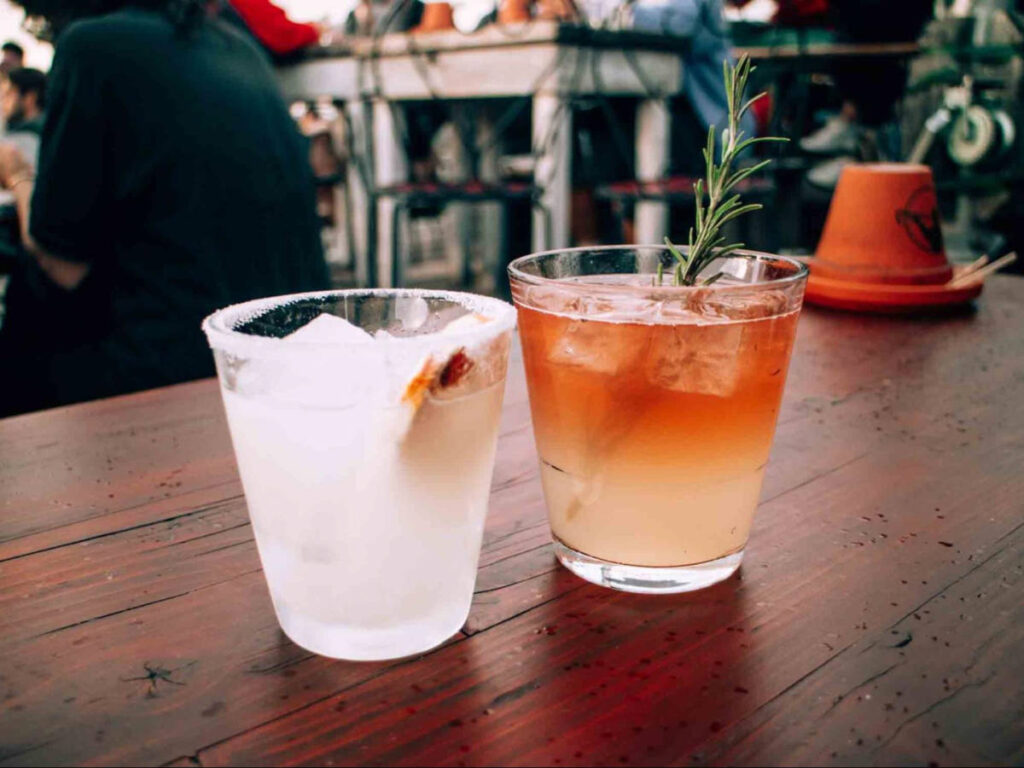
📍 Google Maps | Website | Hours: 5 pm – 12 am Mon-Wed; 4 pm – 2 am Thu; 4 pm – 3 am Fri-Sat, 4 pm – midnight Sun | Entrance: varies between €3 and €9
Klunkerkranich’s rooftop bar goes unmatched in Berlin, but you have to find it first. The bar is located atop the Contipark Neukölln Arcaden garage. To get in, you have to take the elevator to the fifth floor, where you can find the entrance.
The rooftop itself is large, offering panoramic views of Berlin, tons of greenery, and sand for kids to play in. They serve cold drinks, sandwiches, and snacks, and at night the laid-back terrace transforms into a nightclub.
But the best time of day to be here is during sunset! But get here early: despite its hidden location, Klunkerkranich is a popular spot.
Birgit
This trendy biergarten and club is an adult playground filled with pizza, beer, and DJ booths.
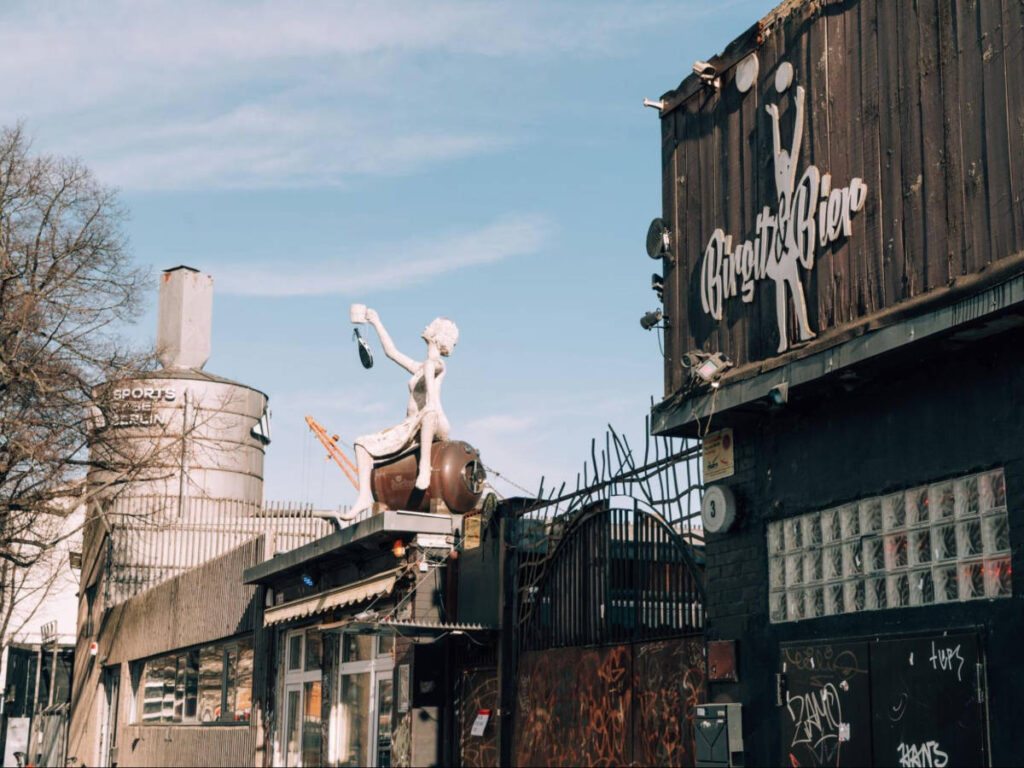
📍 Google Maps | Phone: +49 30 814560910 | Website | Hours: 12 am – 2 am & 2 pm – midnight Mon-Tue & Thu-Fri; 12 am – 6 am & 2 pm – midnight Sat-Sun; 2 pm – 12 am Wed | Entrance: depends on time and day
Birgit is where biergarten meets club. Its bars and stages are spread over several make-shift buildings and outdoor areas. Filled with thrifted chairs, couches, and chandeliers, it is one of the trendiest places to go to during spring and summer.
So whether you’re looking for late-afternoon drinks, Neapolitan pizza, or late-night parties, Birgit is the place to go.
Beer Gardens
Join the local Berliners for a beer in a classic biergarten on a sunny afternoon.
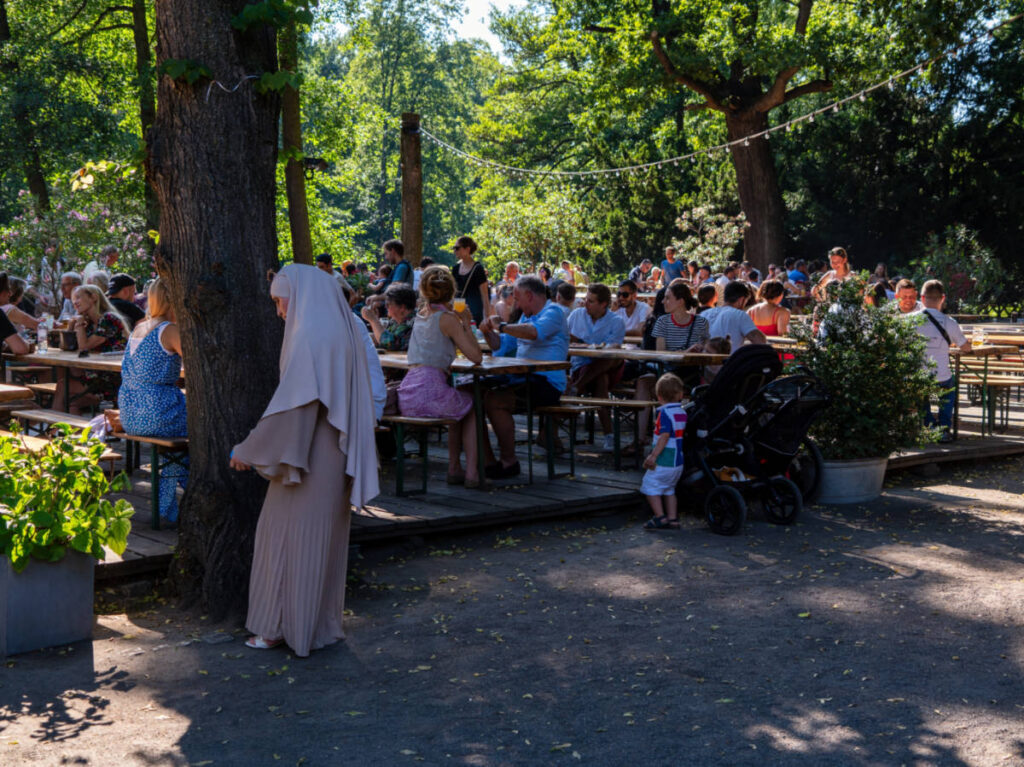
📍 Google Maps | Phone: +49 30 2544930 | Café am Neuen See Website | Hours: 9 am – midnight daily
While beer gardens were born in Southern Germany, they have become a national phenomenon. Berlin also offers many different gardens. From the trendy clublike Birgit, to classic Bavarian ones like Café am Neuen See.
Locals flock to their terraces whenever the sun is out, and so should you when visiting Berlin in spring or summer. These beer gardens are an oasis within the city.
Vietnamese Food
Thanks to the Vietnamese community in Berlin, every street corner offers scrumptious pho and spring rolls.
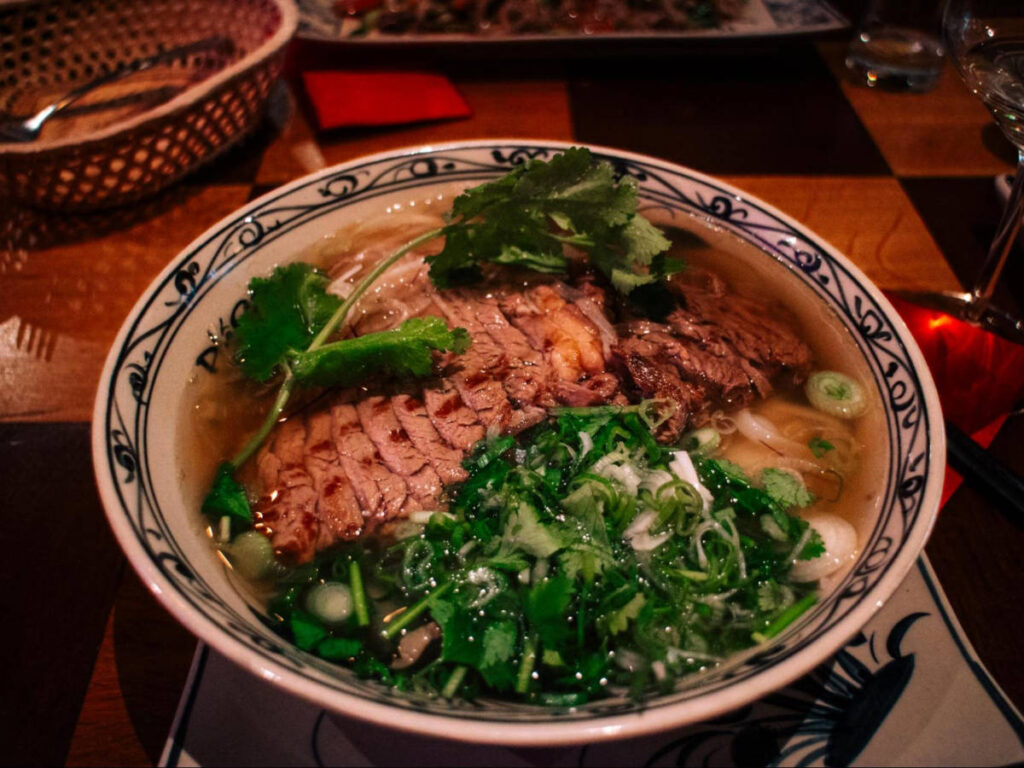
📍 Google Maps | Phone: +49 30 39710948 | Website | Hours: 12 – 10 pm daily
You can’t go to Berlin and not notice the vast number of Vietnamese restaurants. While this might seem surprising, it really isn’t. Over 40,000 Vietnamese people live here, the largest Southeast Asian community in Berlin.
The city is therefore one of the best places in Europe to try Vietnamese food. One of my favorite restaurants is Pho Co, which, as the name suggests, serves a killer pho.
Marheineke Markthalle
Primarily a market for fresh goods, this hidden gem in Kreuzberg also serves drinks and snacks from various vendors.
📍 Google Maps | Phone: +49 30 50566536 | Website | Hours: 8 am – 8 pm Mon to Fri; 8 am – 6 pm Sat; Closed Sundays
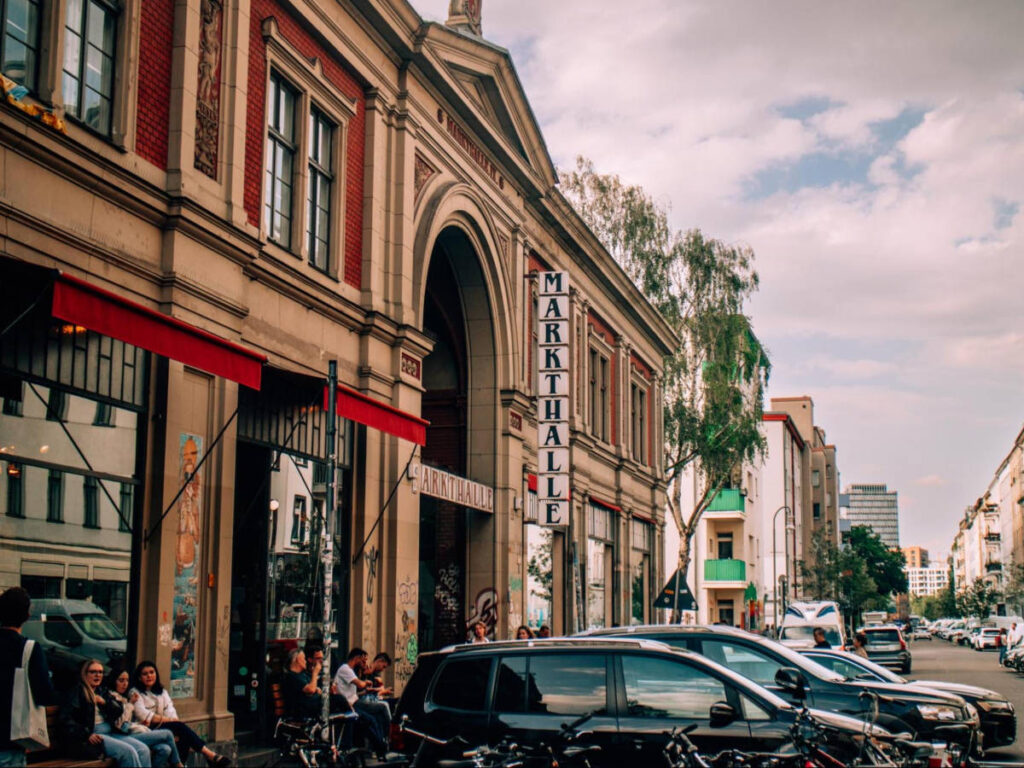
Marheineke Markthalle still flies under the tourist radar. But it’s just as good as its popular sister, Markthalle Neun. While it’s mainly a place for locals to do their groceries, various vendors sell oysters, wine, beer, and other snacks.
The front of the Markthalle is lined with chairs, tables, and parasols, making it a great place for late-afternoon drinks. Or you can take your snacks to go and sit down on the nearby Tempelhofer Feld.
Markthalle Neun
This indoor market serves the world’s best street food with a dash of industrial vibes.
📍 Google Maps | Phone: +49 30 61073473 | Website | Hours: 9 am – 8 pm daily, Closed Sundays
Markthalle Neun is an indoor market with a trendy, industrial vibe in north Kreuzberg. Its ceilings are covered in steel frames and mirror balls, while the air is laced with scents from every cuisine you can think of.
With such a rich offer in street food, Markthalle Neun is a must-visit for foodies. Here, you can try anything from natural wine, Japanese pancakes, and Peruvian ceviche to Korean noodles and French crêpes. They even have a cheese vendor where you can assemble your own platter.
Gestrandet Mitte
Close your eyes on a hot day, and you’ll find yourself in the tropics at this bar facing the Spree.
📍 Google Maps | Phone: +49 179 2313732 | Website | Hours: Open in spring and summer
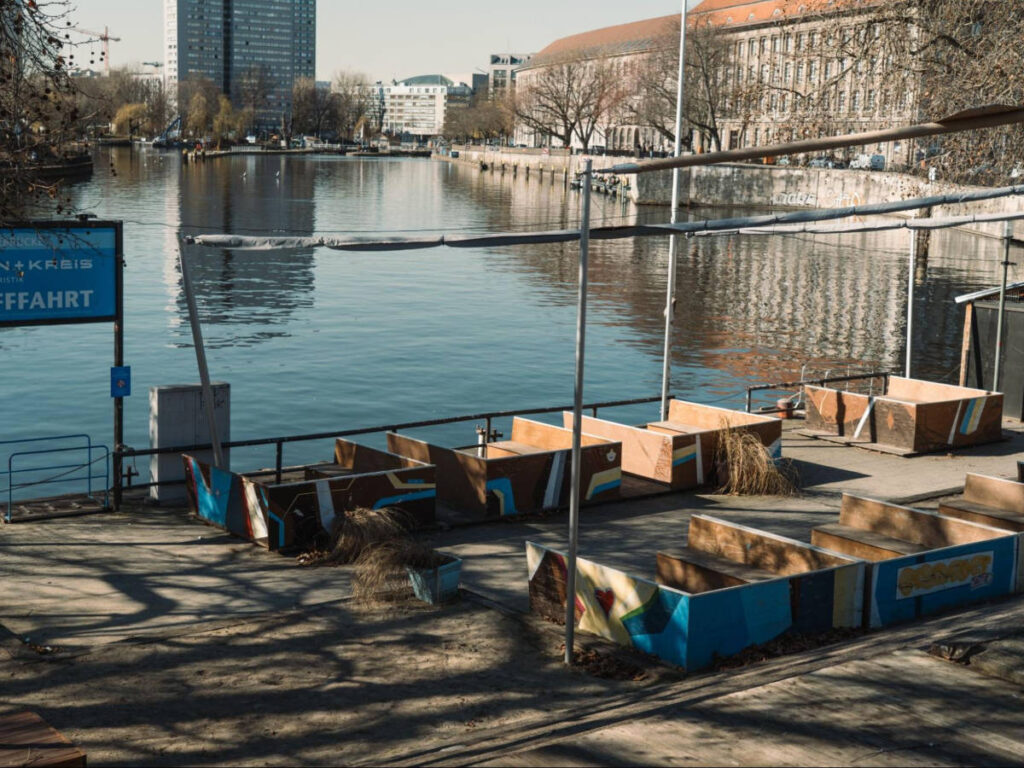
Gestrandet Mitte is Berlin’s one-and-only beach club. During the warmer months, the manmade beach opens its doors to sunbathers and cocktail lovers.
Travelers visiting Berlin in summer must visit Gestrandet Mitte at least once. When the weather is nice, the city transforms: people are outside constantly, turning every space into a chill party. Spending an afternoon at its beach bar will properly acquaint you with the city’s sunny side.
Currywurst
This historical sausage is Berlin’s favorite snack, and soon to be yours, too.
📍 Google Maps | Phone: +49 30 31992992 | Curry 36 Website | Hours: 8 am – 5 am daily
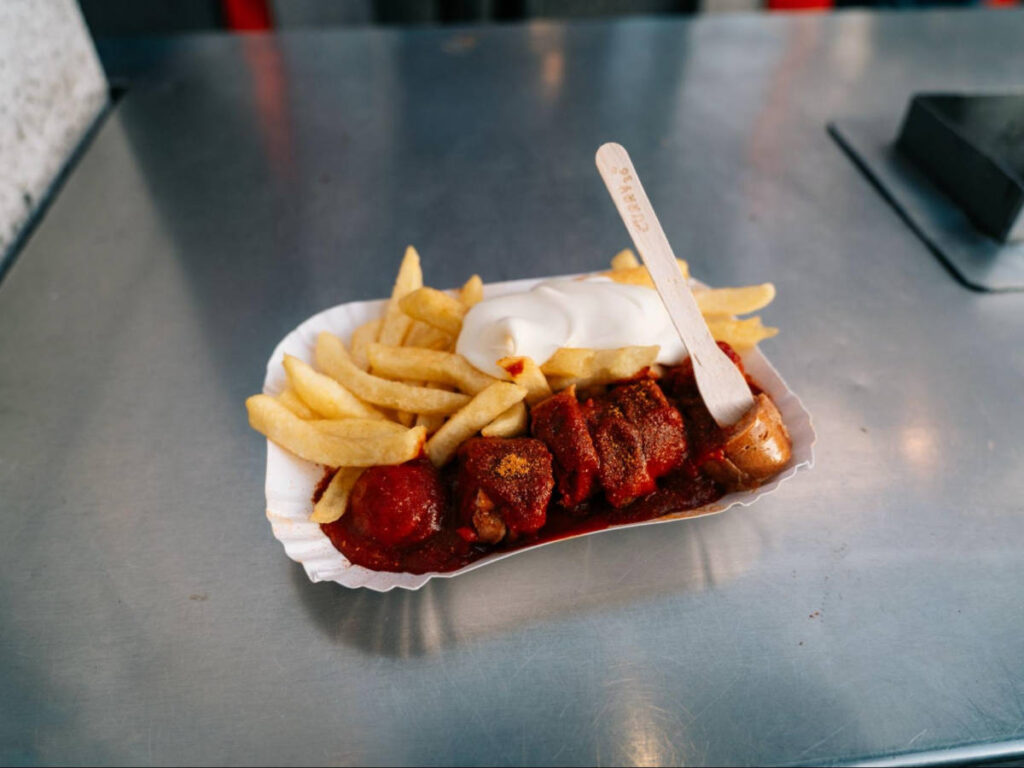
Currywurst is fast food with history. Invented after World War II, it quickly became Berlin’s favorite snack. Consisting of boiled, smoked sausage drenched in curry-flavored tomato sauce, it is best with a side of fries.
Because it’s such a Berlin staple, any traveler must try it at least once. Even vegans cannot skip it, as many vendors offer vegan options.
Döner Kebab
This pitta filled with spiced meat, salad, and garlic sauce is Berlin’s favorite after-party snack.
📍 Google Maps | Mustafa’s Gemüse Kebap Website | Hours: 11 am – 11:30 pm Mon to Thu; 2 pm – 1:30 am Fri; 10 am – 1:30 am Sat, 10 am – 11:30 pm Sun
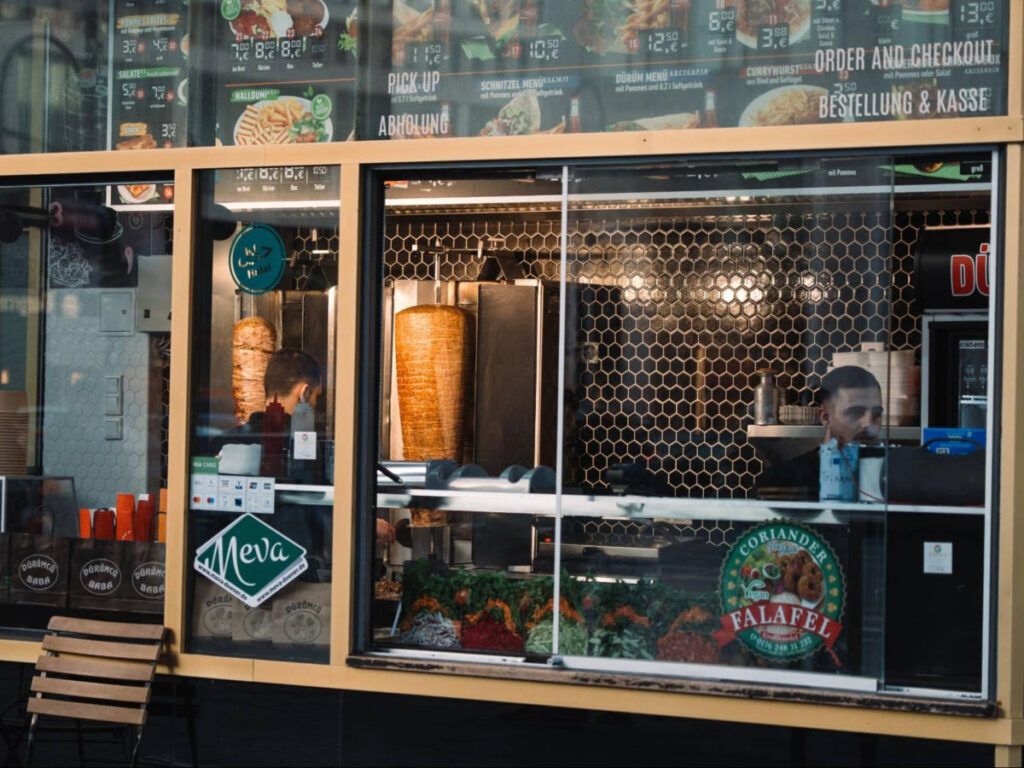
One thing Berlin and Amsterdam have in common is that the best food after a night out is döner kebab. While ‘kapsalon’ is the Dutch way to eat it, in Berlin, they serve it in a pitta bun.
Due to its popularity, you’ll find döner everywhere in Berlin. But if you want the crème de la crème, Mustafa’s Gemüse Kebap in Kreuzberg is the way to go.
Streetfood Sunday in Kulturbrauerei
Prenzlauer Berg’s cultural center hosts a small street food festival every Sunday.
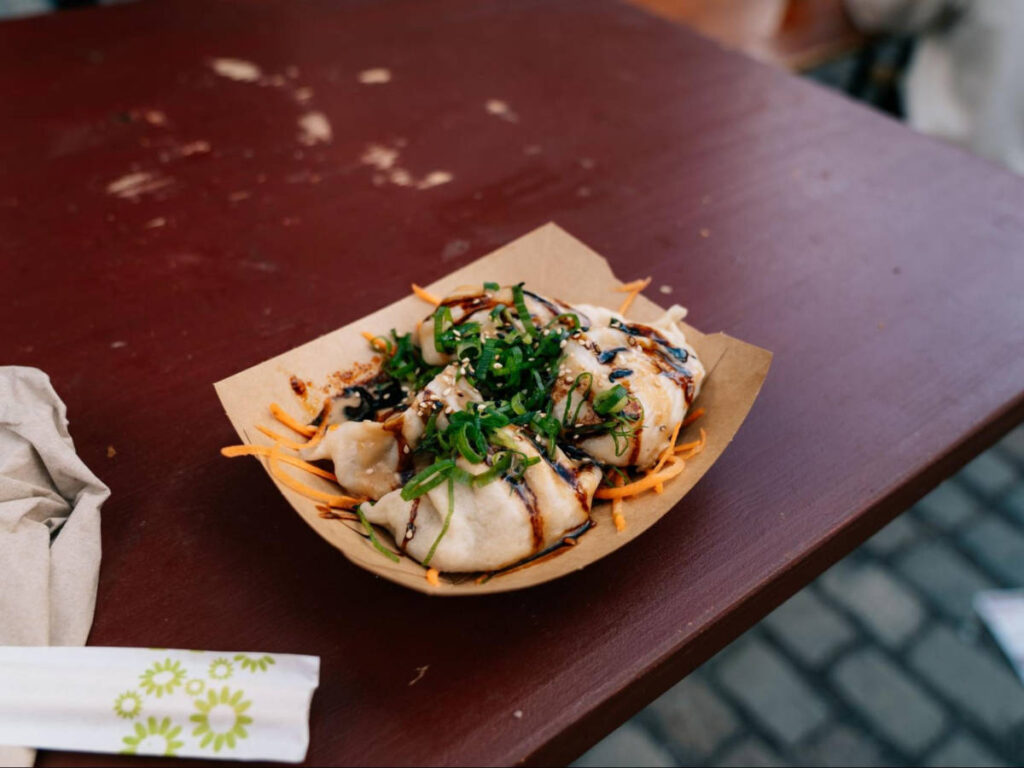
📍 Google Maps | Phone: +49 30 44352170 | Website | Hours: 12 – 6 pm every Sunday
Looking for a street food market in the open air? Then look no further than Streetfood Sunday in the Kulturbrauerei. Although not as big as Markthalle Neun, the food is just as good.
As they host different vendors weekly, it’s a must-do for first-time and return visitors. But if you’re a foodie, I hope the Tibetan dumpling stand is there for you to try! And if you have the time, check out the rest of the Kulturbrauerei as well.
Shopping in Berlin
Hackesche Höfe
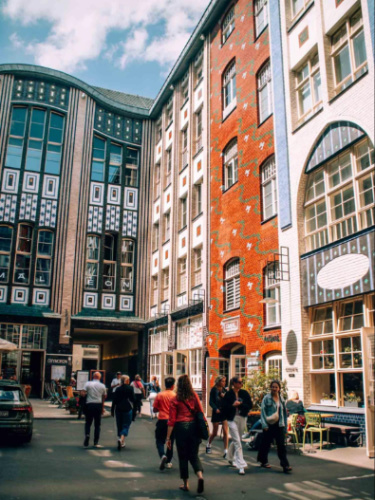
This network of courtyards built in the Jugendstil style is a must-visit for foodies, shopaholics, and architecture lovers.
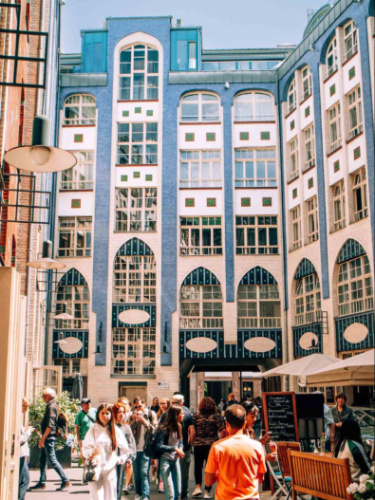
📍 Google Maps | Phone: +49 30 2834603 | Website | Hours: 7 am – 11 pm daily
Every traveler must visit the Hackesche Höfe, even if you don’t like shopping. This network of courtyards in Berlin’s center was built in the Jugendstil style, making each façade a work of art.
Inside, every courtyard offers multiple stores by local brands and designers. I especially love Who Killed Bambi, which sells upcycled vintage clothing. But you can also find major brands like Puma and Lululemon.
Foodies will also want to explore the Hackesche Höfe. Sweet tooths can sample artisan éclairs at Canal Berlin, while bougie travelers can try fine dining at Oxymoron. But if it’s sunny, go enjoy a well-deserved Aperol Spritz on pizzeria Capvin’s terrace.
Flea Markets
Berlin’s flea markets are a gold mine for vintage designer clothes, antiques, and local art.
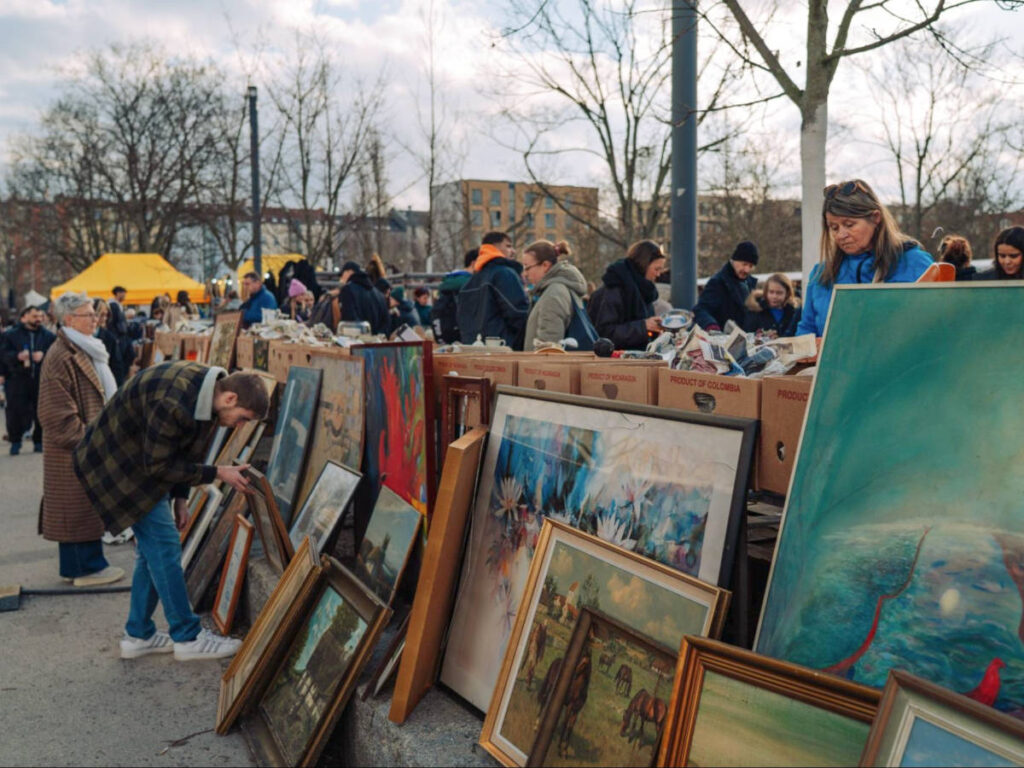
📍 Mauerpark Google Maps | Phone: +49 30 2977 2486 | Website | Hours: 10 am – 6 pm Sundays
On weekends, Berlin’s parks and streets flood with numerous flea markets, or flohmarkt in German. But instead of finding literal fleas, you will find a gold mine here. Think vintage Burberry coats in mint condition, antique porcelain, and MCM furniture.
Berlin’s most popular market is the Sunday flea market in Mauerpark, which also sells street food and local art. Other great markets are Der Schmucke on Fehrbelliner Platz, which is known for its vast offering of art, and Nowkoelln, which sells local art, vintage clothes, and handicrafts.
Kurfüstendamm
Berlin’s longest shopping boulevard showcases the big brands, as well as quaint boutiques and cafés.
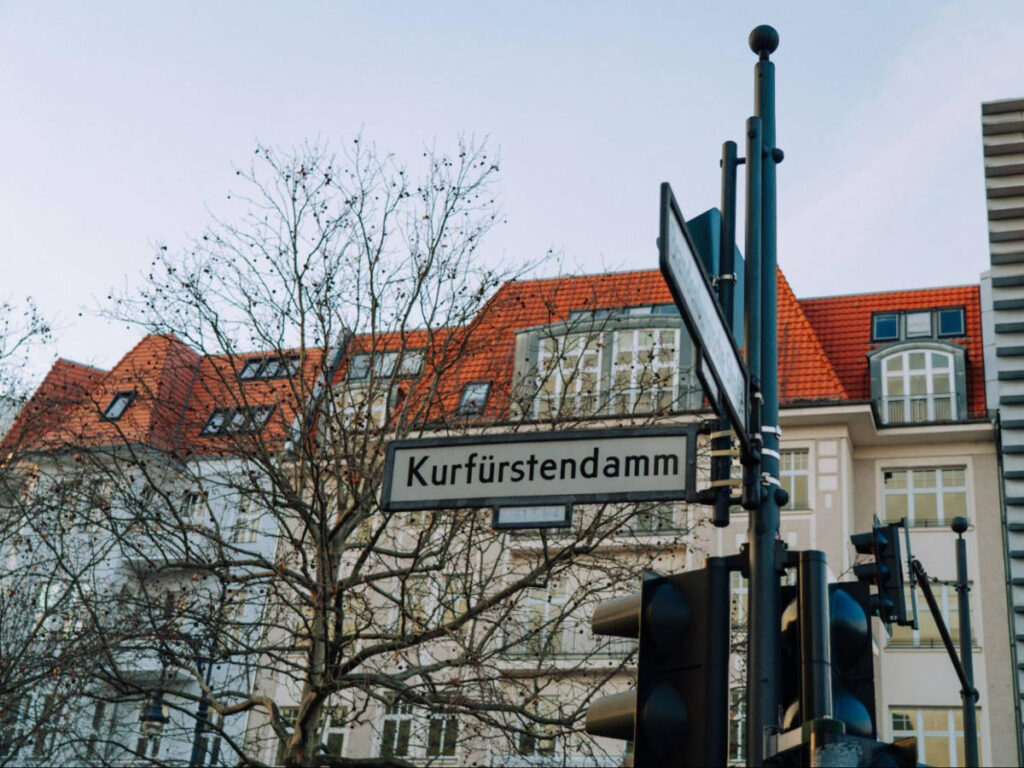
The Kurfürstendamm is Berlin’s largest shopping boulevard. What began as a road that led noble hunters to the Grunewald now displays the city’s wealth. Travelers looking for luxury shops will want to stroll along the street at least once.
If you prefer smaller boutiques, Parisian cafés, and under-the-radar food experiences, then venture into the Kurfürstendamm’s side streets. The Kantstraße is a must-visit for Asian cuisine, while gluten-free foodies will want to get spoiled at Aera bakery.
Bikini Berlin
This mall’s serene energy and rooftop views of the Berliner Zoo offer the perfect respite from the city.
📍 Google Maps | Phone: +49 30 55496430 | Website | Hours: 10 am – 8 pm daily, Closed Sundays
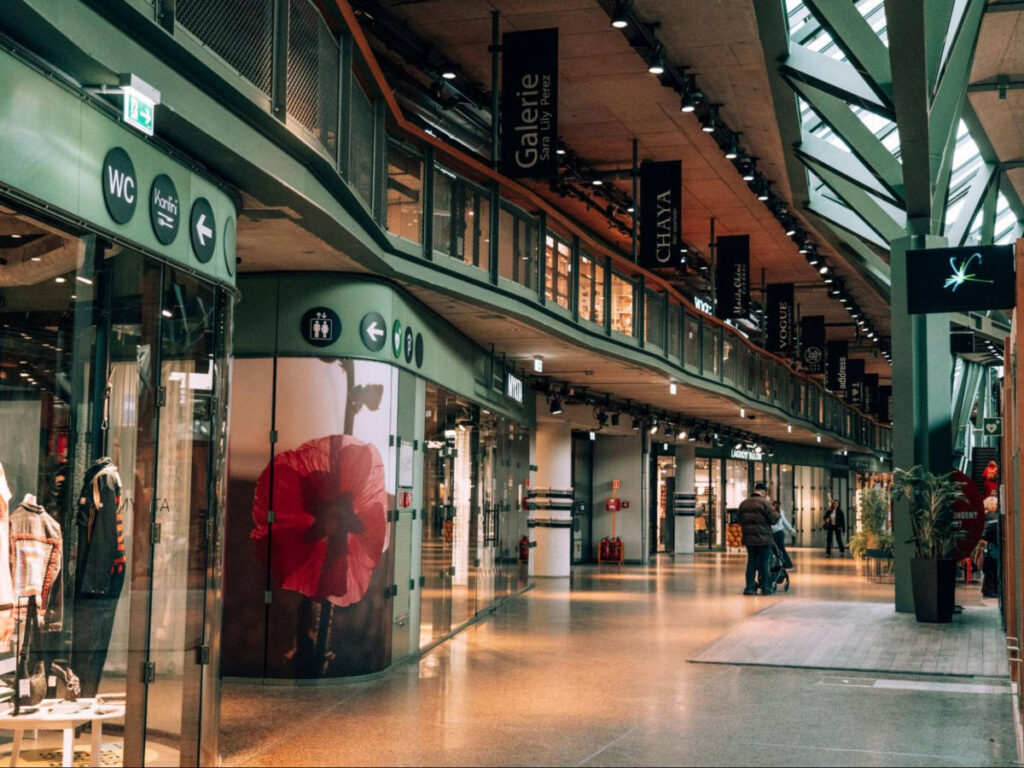
Bikini Berlin is one of those malls you want to chill in for a while. Its interior is full of greens and wood, creating a serene atmosphere. Whether it’s raining or time for a break, this mall offers the perfect respite from the city.
Shopaholics will enjoy its variety of local and international brands, while foodies will want to stroll around its extensive food court. But whatever you do, you can’t miss its rooftop, which looks out over the Berliner Zoo.
Shakespeare and Sons
As a café and bookstore in one, fanatic readers will want to spend an afternoon here.
📍 Google Maps | Website | Hours: 8 am – 7 pm daily
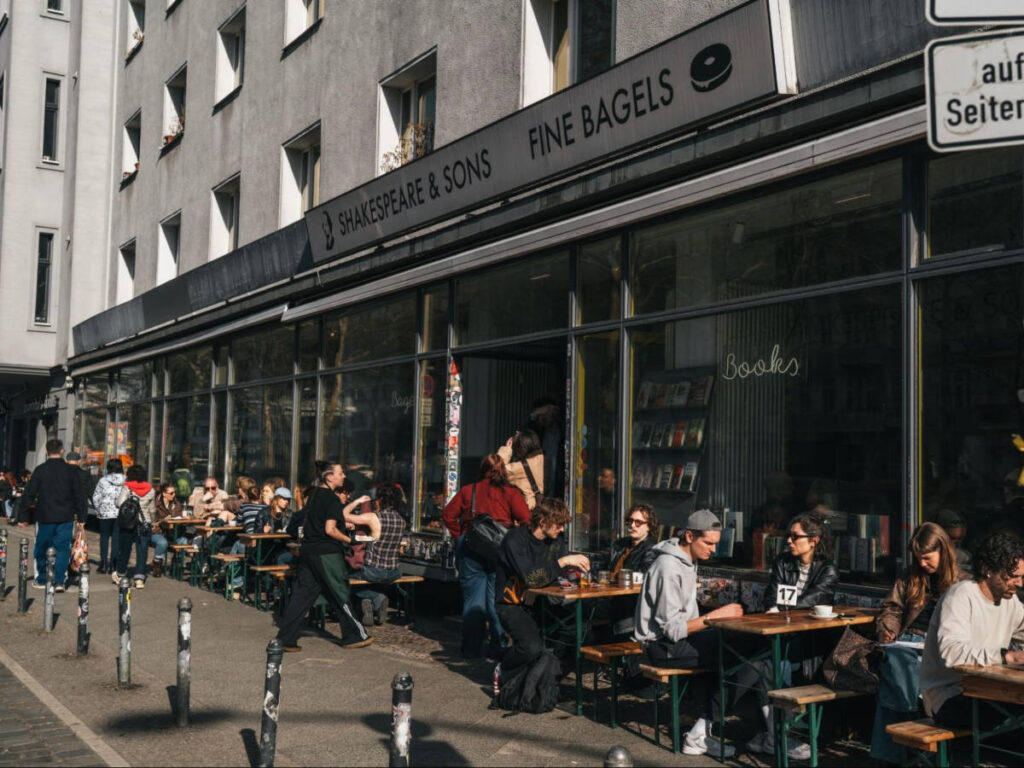
Shakespeare and Sons is a book lover’s dream, as it’s a bookstore and café in one. Bookworms can thus easily spend their entire day here.
Start by browsing its shelves and buying a book or two. Then sit down with a coffee and a pastry, or one of its phenomenal bagels, for an afternoon of reading.
Once you’re done with your book(s), head into the café’s neighborhood, Friedrichshain, which is popular for its bar scene.
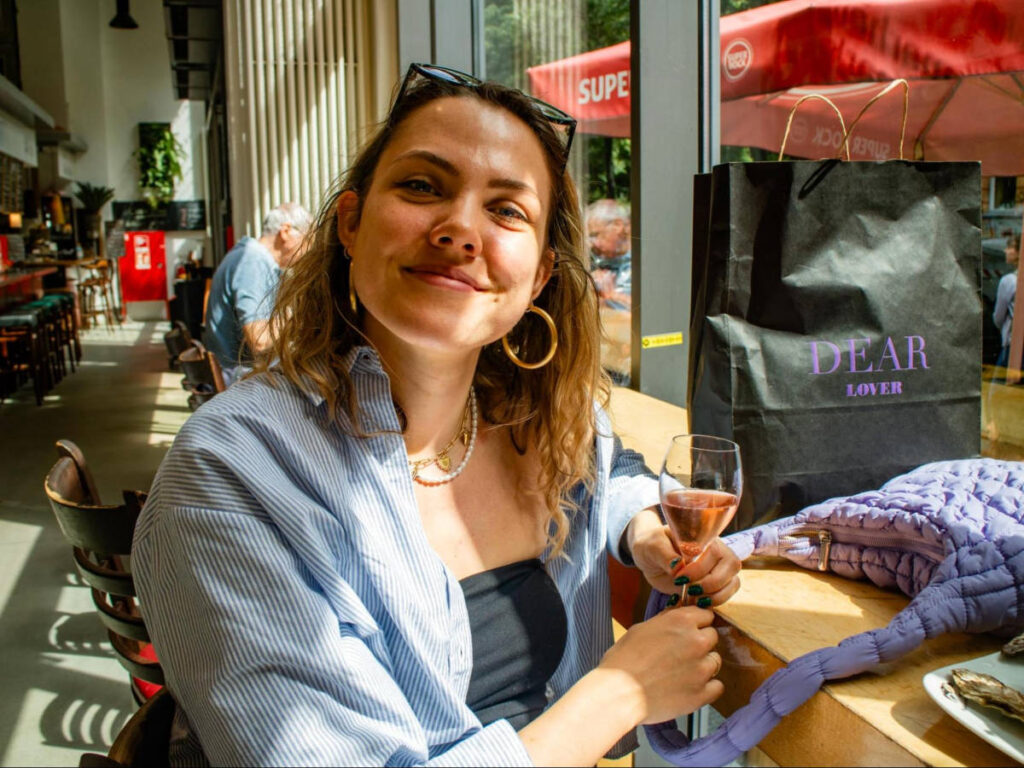
Vintage Shopping
Match Berlin’s creative fashion sense by trying your luck at one of its many vintage stores.
📍 DEAR Google Maps | Phone: +49 30 49081169 | DEAR Website | Hours: 12 – 6 pm daily; Closed Sundays & Mondays
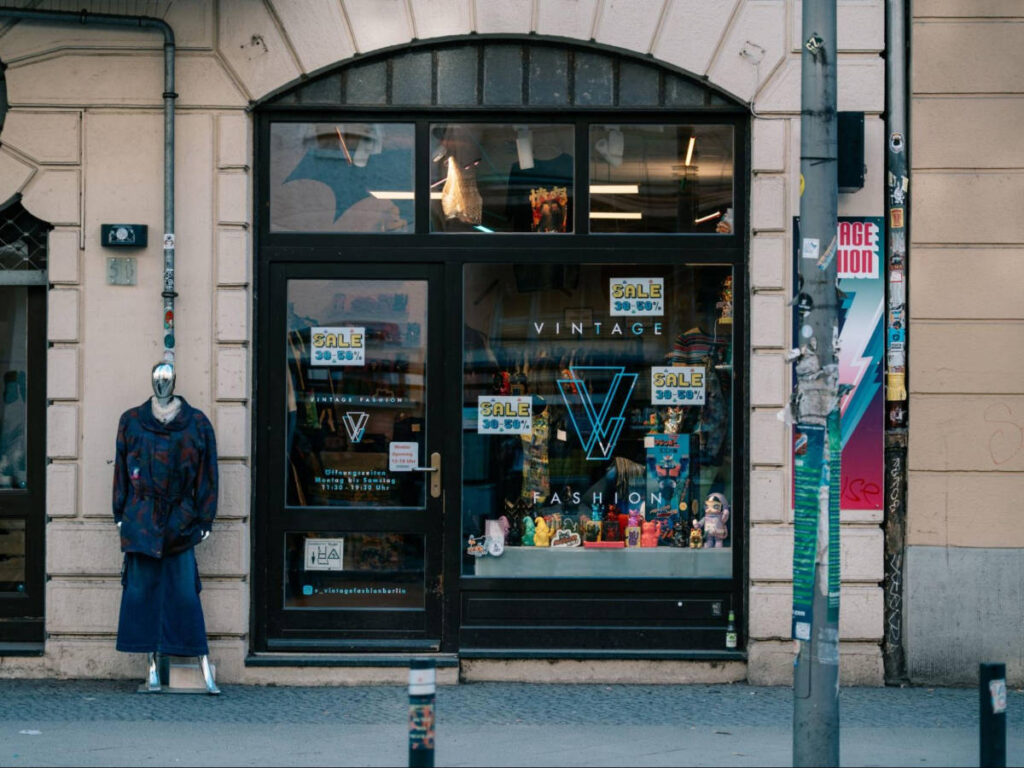
If the flea markets didn’t convince you, then Berlin’s 150+ vintage stores will prove Berlin’s position as the capital of preloved fashion. Browsing their racks is thus a must-do if you love to shop second-hand.
While shops like Vintage Revivals and Picknweight are great for cheap finds, my personal favorite is DEAR. This store sells second-hand designer and luxury-brand clothing at a fraction of the price. I once found a Faithful the Brand dress, which I can’t stop wearing.
Parks in Berlin
Tiergarten
Berlin’s grandest park is not only great for a picnic, but a history-induced stroll as well.
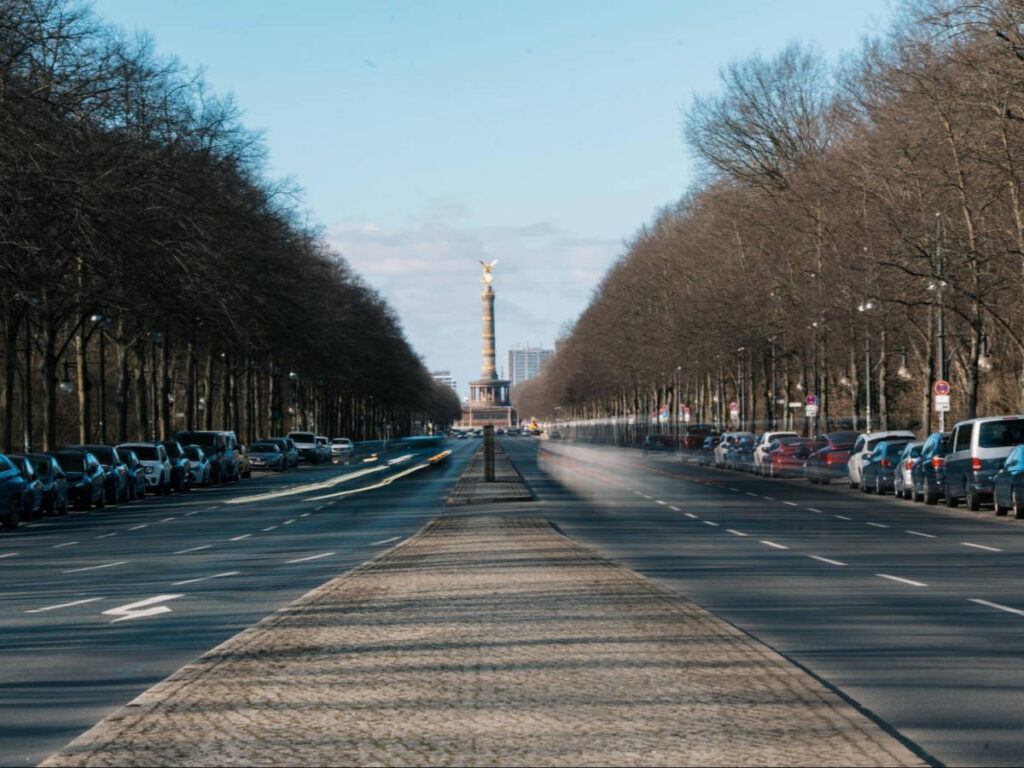
Once the primary hunting grounds for the Berliner elite, the Tiergarten is now the city’s largest park. In spring and summer, locals go for a run here or bring their home-cooked food for impromptu picnics. Even in the colder months, the bare trees form a romantic backdrop for a stroll.
In addition to nature, the park features several monuments, of which the 19th-century Siegessäule is the most prominent. And if bare trees sound boring to you, visit the Berliner Zoo in the southern part of the park instead.
Berliner Zoo
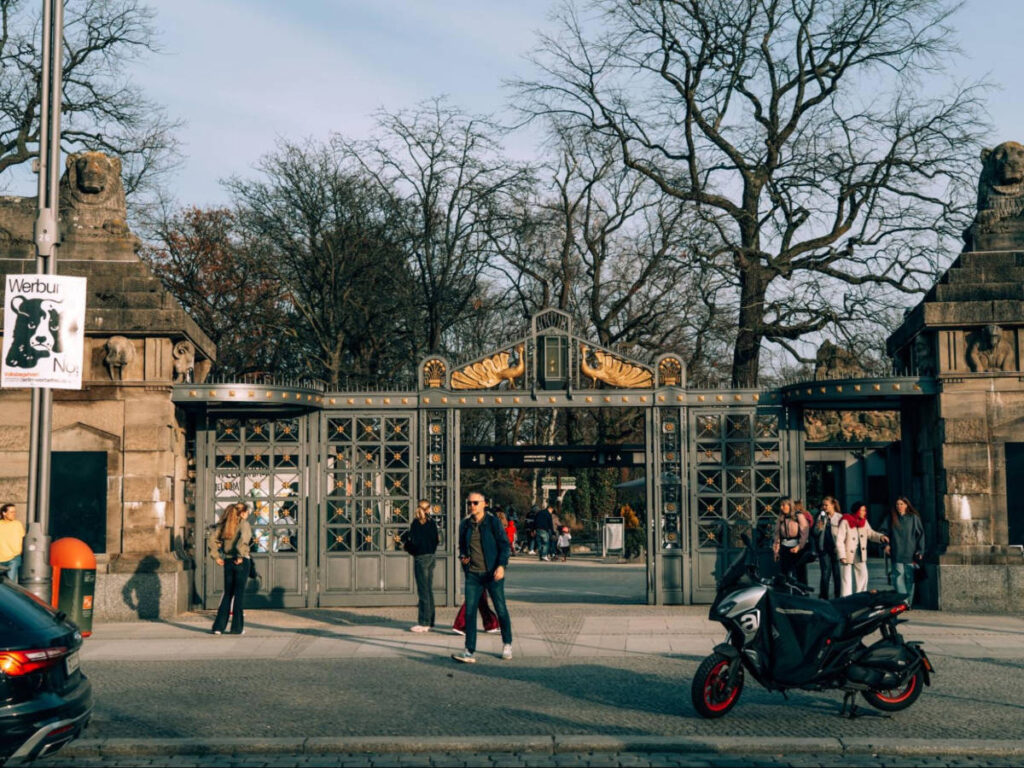
Berlin’s oldest zoo is not only a must-visit for families, but also for travelers interested in the protection and conservation of endangered species.
📍 Google Maps | Website | Hours: 9 am – 6:30 pm daily | Entrance: from €16 adults, from €7,50 under 16, free for children under 4
With nearly 200 years in the books, the Berliner Zoo is Germany’s oldest zoo. Over the past two centuries, it has worked together with universities and research centers. Currently, it actively contributes to the conservation and protection of endangered species.
This means both adults and kids will learn a lot about our planet’s flora and fauna when visiting the Berliner Zoo. Luckily for parents who are not that into observing animals, the park’s architecture and landscape are equally engaging.
👉 Tip: Personally, I don’t believe wild animals should be caged, which is why I don’t visit zoos. Still, zoos do play an important role in animal protection, and visiting one that is accredited by the European Association of Zoos and Aquaria might send your money in the right direction. It’s up to you what you wish to support!
Viktoriapark
A waterfall in the middle of the city? You can find it in Berlin’s dreamiest green space.
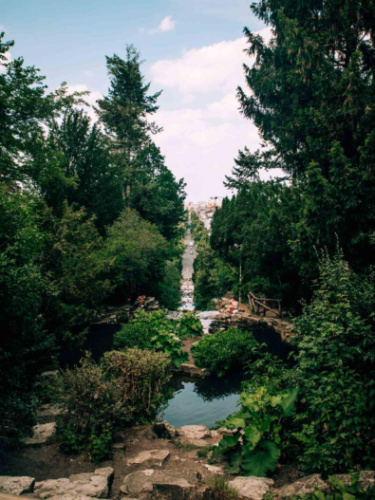
Viktoriapark is one of those places unknown to tourists, but a must-visit when looking to escape the city. Its popular neighbor, the Tempelhofer Feld, draws in most tourists and locals leaving this romantic park a tranquil haven.
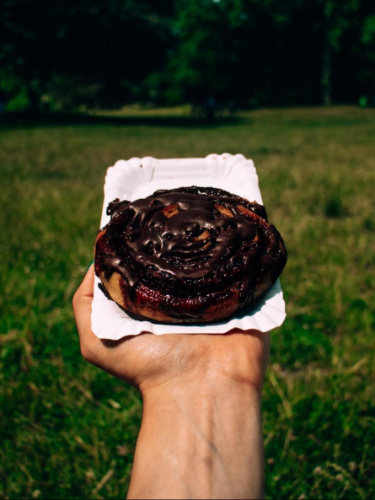
Located on the hill that gave Kreuzberg its name, Viktoriapark is the only green space in Berlin sporting a large man-made waterfall. This, including the drooping trees and soft grass, is reason enough to visit. Grab a pastry at the nearby bakery Oshione (gluten free) and lie down in the park to escape the crowds.
Tempelhofer Feld
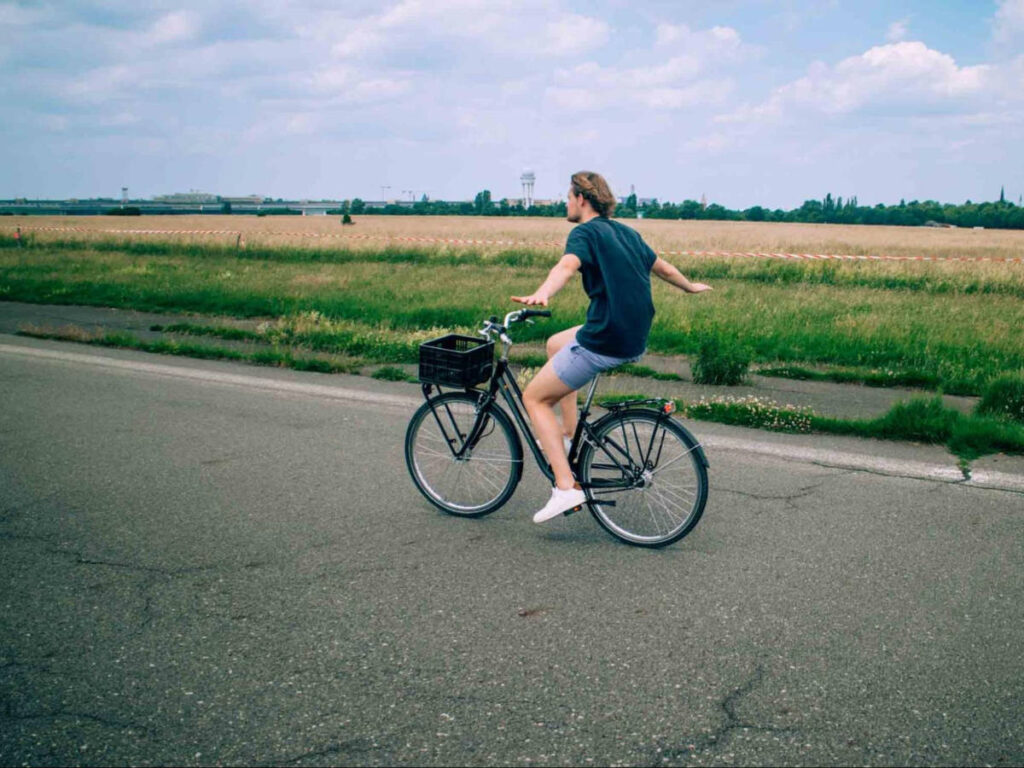
Skate, cycle, or run around West Berlin’s former airport.
📍 Google Maps | Phone: +49 30 700906710 | Website | Hours: depends on the month, check them here
Ever wanted to run on an airport’s landing track? On the Tempelhofer Feld you can! This former airport used to be the primary way for provisions and people to enter and exit West Berlin.
After it closed in 2008, the city turned it into a park where locals go for picnics, cycling, and rollerblading. Other parts are breeding grounds for birds, while some areas are designated BBQ spots.
Being one of the most extraordinary things to do in Berlin, every tourist must visit the Tempelhofer Feld at least once.
Mauerpark
With karaoke sundays, flea markets, live musicians, and street artists, this place is Berlin’s most vibrant park.
📍 Google Maps | Website
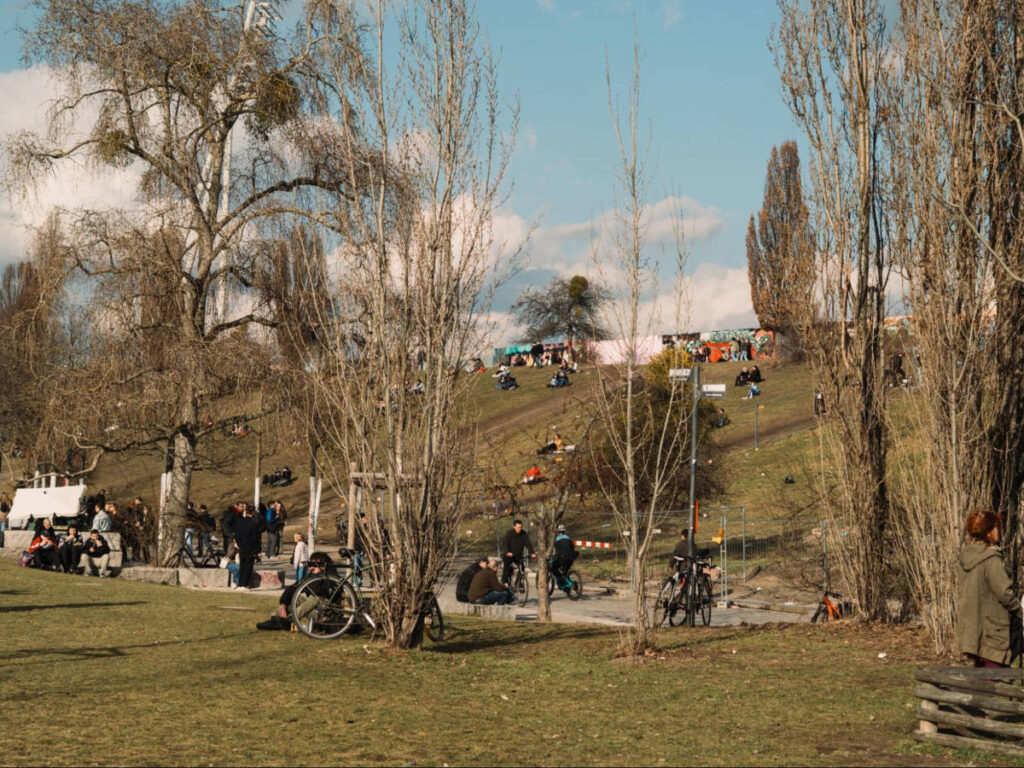
Where Viktoriapark is Berlin’s most serene park, Mauerpark is its most vibrant. Located in the former strip of no-man’s land along the Wall, it was once a place of horror. But since the fall of the Wall, the place has transformed.
Mauerpark is now a gathering spot for musicians, street artists, youth, and flea market vendors. Visit on a sunny day for a picnic or on a Sunday for the park’s most popular event: the public karaoke.
Seasonal Activities in Berlin
Italian Street Food Festival
Every June, the True Italian cuisine network organizes a street food festival that will transport you to Italy.
📍 Google Maps | Phone: +49 030 62867442 | Website | 6 & 7 June, 2026 | Entrance: see their website for ticket sale.
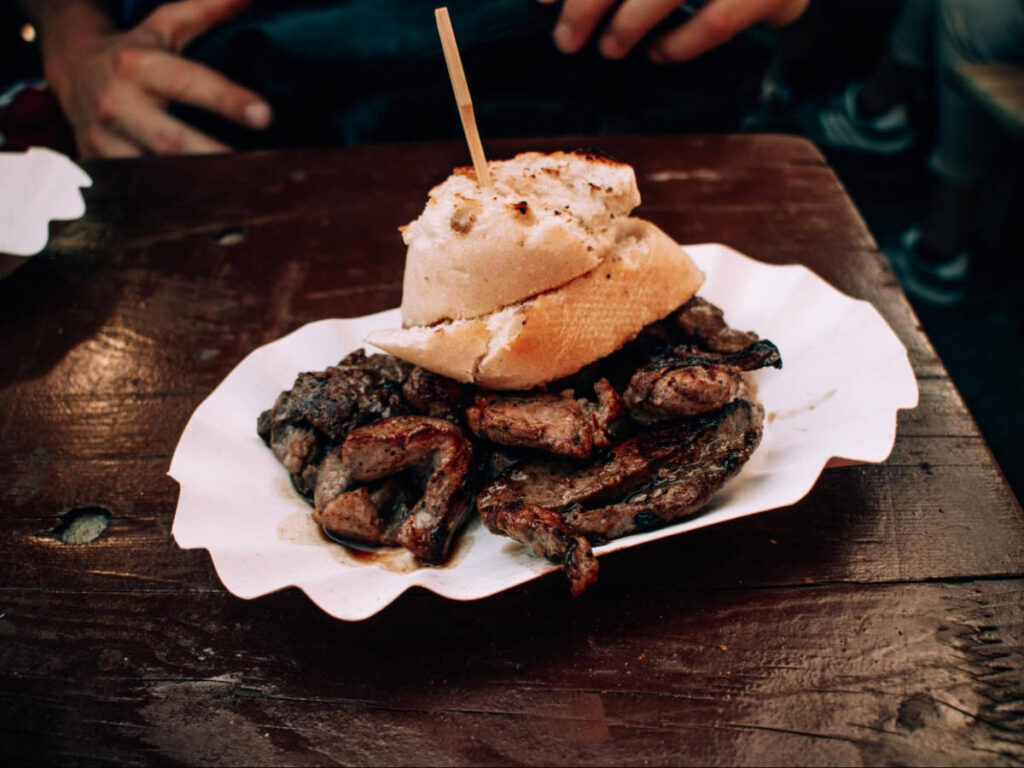
Every spring, the Italian cuisine network True Italian organizes a food festival in Osthafen. Most vendors represent a different region, which ensures you get the full Italian experience. The food truly is phenomenal, making this a must-do for foodies.
The best way to get access to the festival is by buying tickets through their website, instead of at the entrance. Not visiting in June? Then check out the restaurants connected to True Italian.
👉 Pro Tip: Bring lots of cash! Most vendors don’t accept card payments, so if you want to fill your stomach, make sure your wallet is full too.
Christmas Markets
Watch Berlin transform into a Christmas movie during one of its many markets.
Website | Dates: late November until Christmas Eve
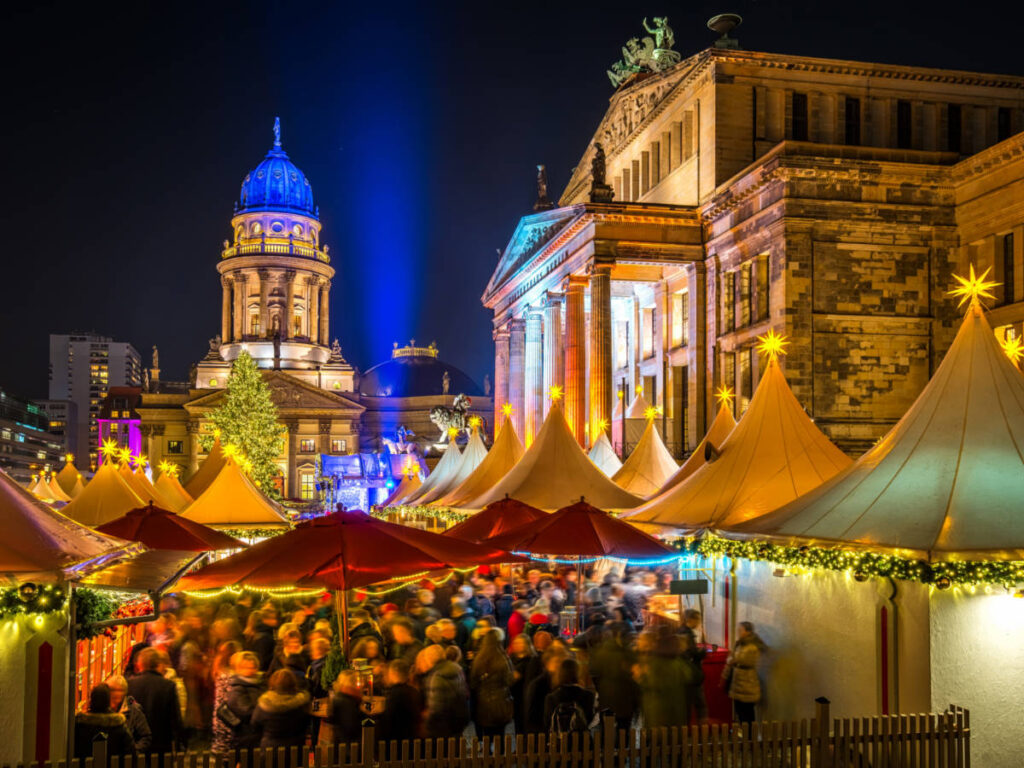
Visiting Berlin in the weeks before Christmas? Then you must visit a Christmas Market. During the most magical time of the year, twinkly lights illuminate its squares and the scents of mulled wine and pretzels fill the air.
Berlin’s most classical one can be found on the Gendarmenmarkt, but the city has many more special-themed markets on offer. To figure out which one best suits you, check out Visit Berlin’s full list.
Badeschiff
This swimming pool in the Spree is the place to cool off on a summer’s day.
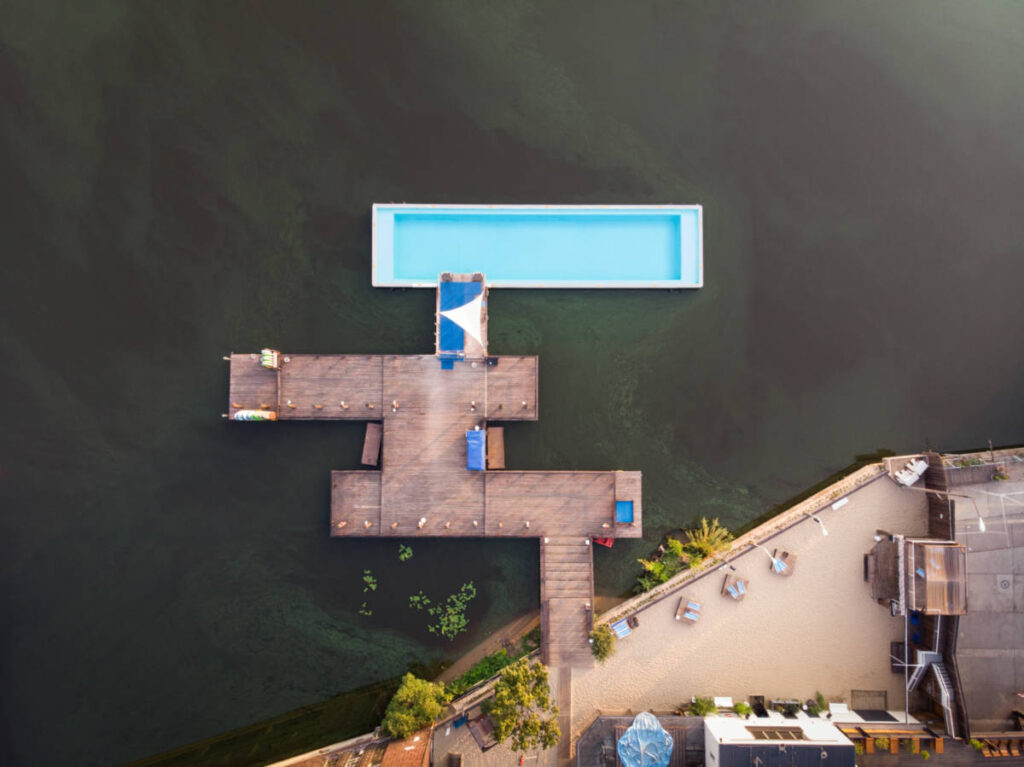
📍 Google Maps | Phone: +49 30 5332030 | Website | Hours: keep an eye on their website for updated opening times | Entrance: €8 for two hours
While swimming in the Spree on a hot summer’s day is dangerous, swimming in a pool in the Spree is the best way to cool off. Badeschiff is a public pool and beach club in one, making it a perfect place to escape the city’s heat.
To ensure a spot, you need to book your tickets in advance through their website. For €8, you can spend two hours at the pool. But if that’s too steep for you, consider swimming in the Wannsee instead.
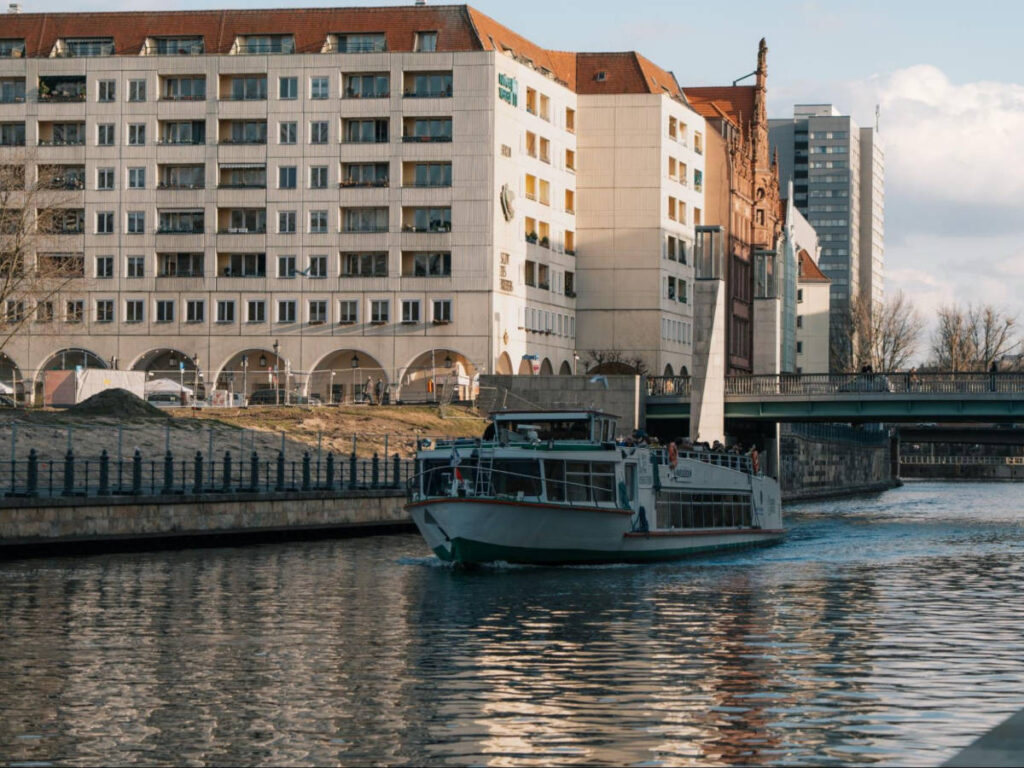
Spree Boat Tour
Whether you’re unable to walk long distances or want to see Berlin’s highlights from the water, a boat tour is a must-do in Berlin.
👉 Book Sightseeing boat tour on a historic ship in Berlin on Viator
A boat tour on the Spree is the best way to see Berlin’s highlights if you’re short on time or unable to walk long distances. Additionally, seeing the Reichstag and the Berliner Dom from the water is something quite special.
As it’s one of the most popular things to do in Berlin, you’ll find plenty of tour options. Personally, I prefer a tour that includes drinks and snacks. This tour on a historic ship with a bar does just that.
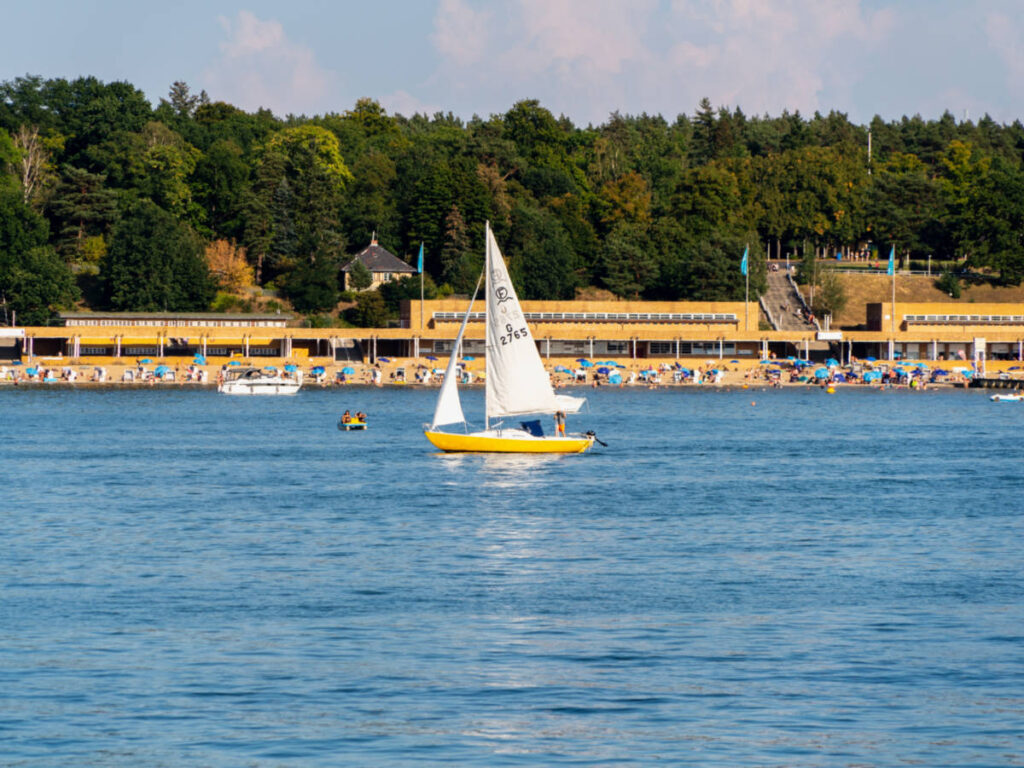
Swim in the Wannsee
Berlin’s closest lake is the no. 1 swimming destination for locals and intrepid travelers.
📍 Google Maps | Phone: +49 30 78732500 | Website | Hours: opens in early summer, check website for latest opening times | Entrance: €6,50 adults, €3,80 under 14, free under 5
The Wannsee is a natural lake to the southeast of Berlin and a popular swimming spot among locals. Its Strandbad is the best alternative to Badeschiff. Not only does a ticket grant you access to the beach for an entire day, but you get to experience some of the Grunewald’s nature as well.
The Strandbad has sunbeds for rent, great sanitary facilities, and a restaurant. But if you don’t want to pay for beach access, there are also plenty of free beaches around, like Badestelle Große Steinlanke and Wannseestrand.
🚗 How to Get There: The quickest way to get to the Wannsee is by S-bahn. The Nikolassee station is closest to the Strandbad and can be reached by S1 and S7. Check the BVG website for the best routes. You could also choose to rent a bicycle and cycle through the Grunewald towards one of the more remote beaches.
***
There you have it, the best things to do in Berlin! If you’re going to continue traveling around Germany, read my guide on where to stay in Hamburg next.