
Affiliate Ad Disclosure: We’re reader-supported. When you buy via our links, we earn commissions. Learn more.
I worked on a sailboat in Indonesia for one week. Here’s how it went.

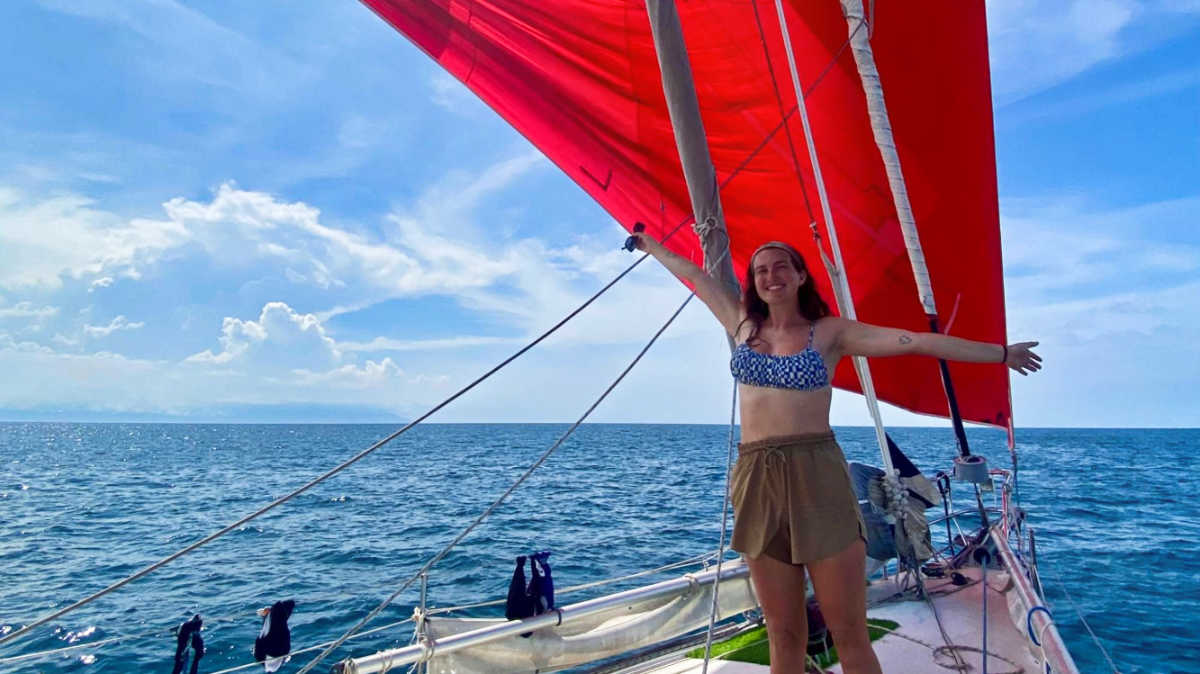
I’ve always loved the ocean, but never considered sailing. That was until I met a few backpackers in Australia who told me they worked on a sailboat for a month and crossed the Pacific from Panama to Fiji.
They told me stories of long days spent on the water and peaceful nights sleeping under a blanket of stars. I was hooked.
I found out which website they used to connect with boats needing crew, and I made a profile. I looked for a sailboat somewhere in Southeast Asia where I could learn to sail for 1-2 weeks.
I sailed for one week down the west coast of Lombok, Indonesia, learned all the ropes of sailing and explored tiny islands where we were some of the only non-locals. I saw dolphins and sea turtles and felt an unmatched sense of freedom.
It was rewarding, but it was hard. I worked from morning to night. I got sick, sunburnt, and exhausted.
Every day I thought about quitting, but every day I found something new that made me fall in love with the experience all over again.
How did I choose a boat?
I used Find-a-Crew, a free website, to start looking at different sailboats that were looking for volunteer workers. I chatted with a few captains before finding one I really liked.
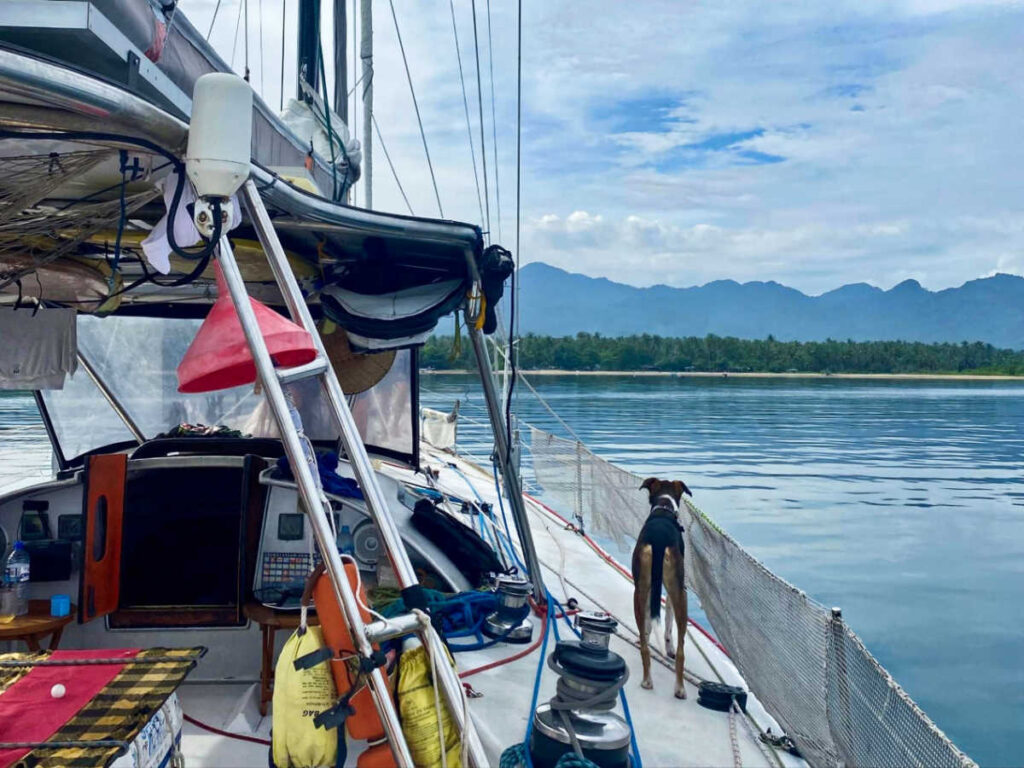
I ended up sailing with an Italian-British family — Captain Timo, his partner Jo, and their young son, Nemo. They live aboard a 66-foot racing boat that they’ve converted into a family cruiser. They even have a YouTube channel where people can follow their sailing adventures!
I chose to sail with Jo and Timo for a few reasons.
First, they were beginner-friendly. A lot of the captains I looked at on the website required their crew to have a certain number of nautical miles under their belt. But Jo and Timo were willing to take me in and teach me everything they knew, even though I’d never sailed before.
Second, they were flexible with my timing. Because of my travel plans, I only had one week to try out a spontaneous sailing adventure. While other boats typically required a 3-week minimum commitment, Jo and Timo were fine with me only staying a week.
Third, I liked that Jo — a woman — was on board. During my search for a captain, I encountered mostly older men.
As a 25-year-old woman in a non-English-speaking country far from home, I was a bit hesitant. I knew that agreeing to spend a week on the ocean with complete strangers was a risk. Having another woman on board made me feel a little safer.
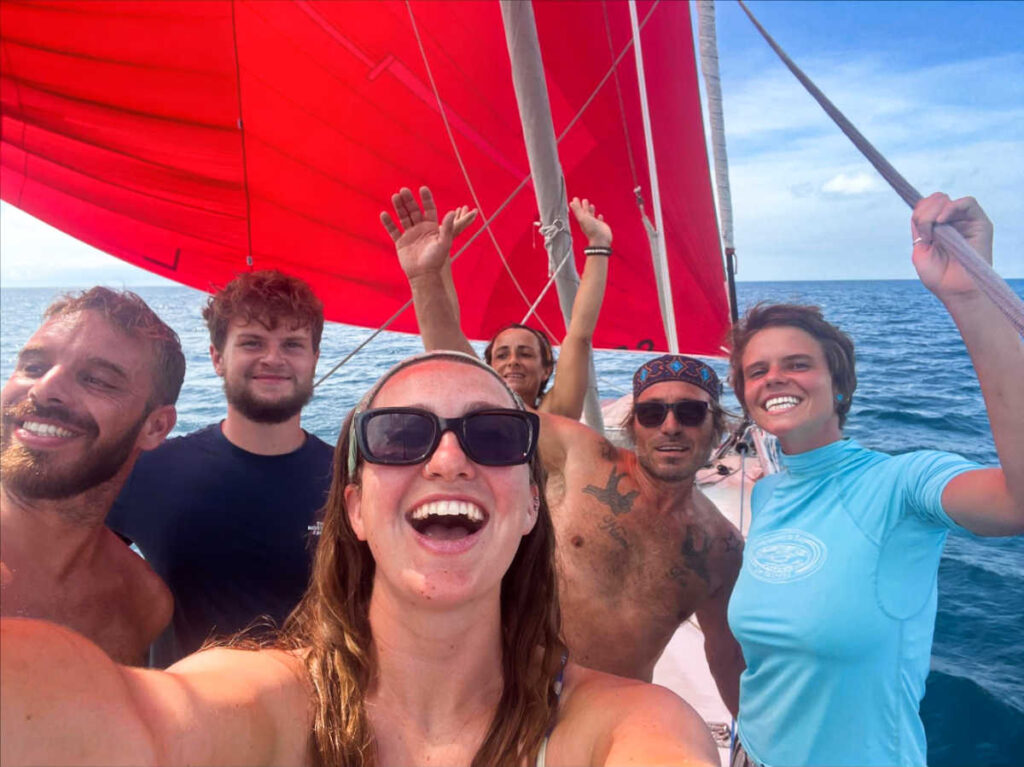
I worked with 5 other crew members who had various degrees of sailing experience. There were two French boys and a British boy who worked the whole week with me, plus an American couple who came for just a few days. We became a little family over the course of the week.
Where we sailed
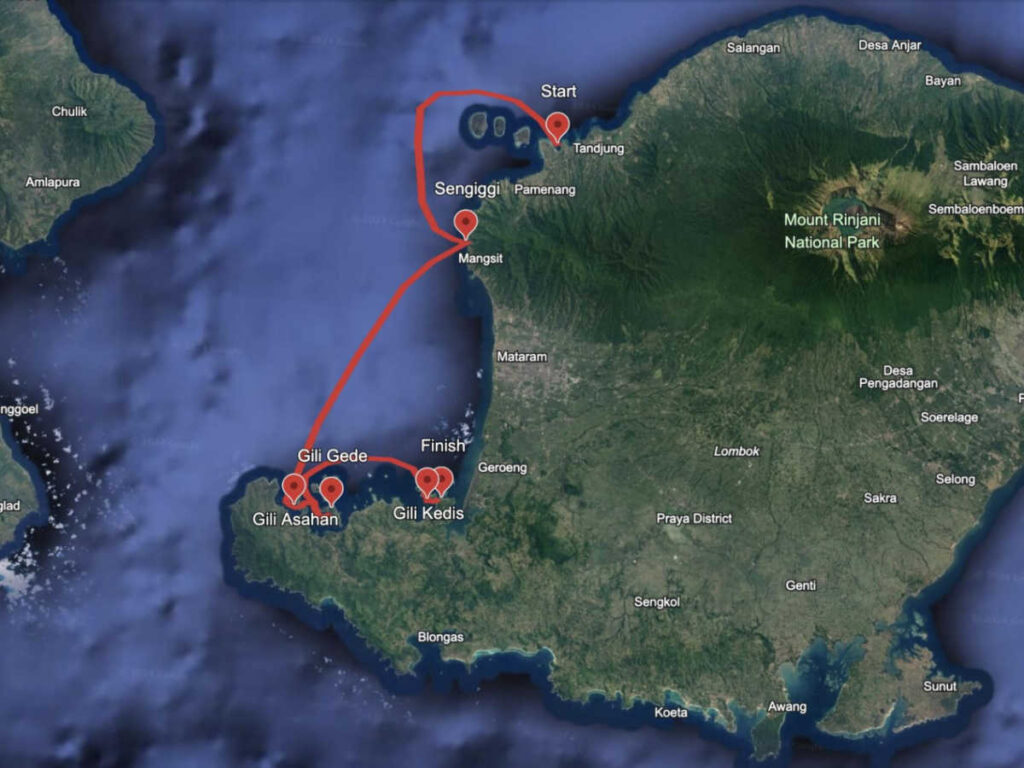
We sailed down the west coast of Lombok, an island next to Bali in Indonesia. We started at the top, sailed down to Sengiggi, and then sailed to the “Secret Gilis.”
Gili means island in the local Sasak language. The Secret Gilis are a series of islands at the southern end of Lombok’s west coast. Why are they secret? Well, they’re often overlooked in favor of the Gilis up north, which are huge tourist hotspots.
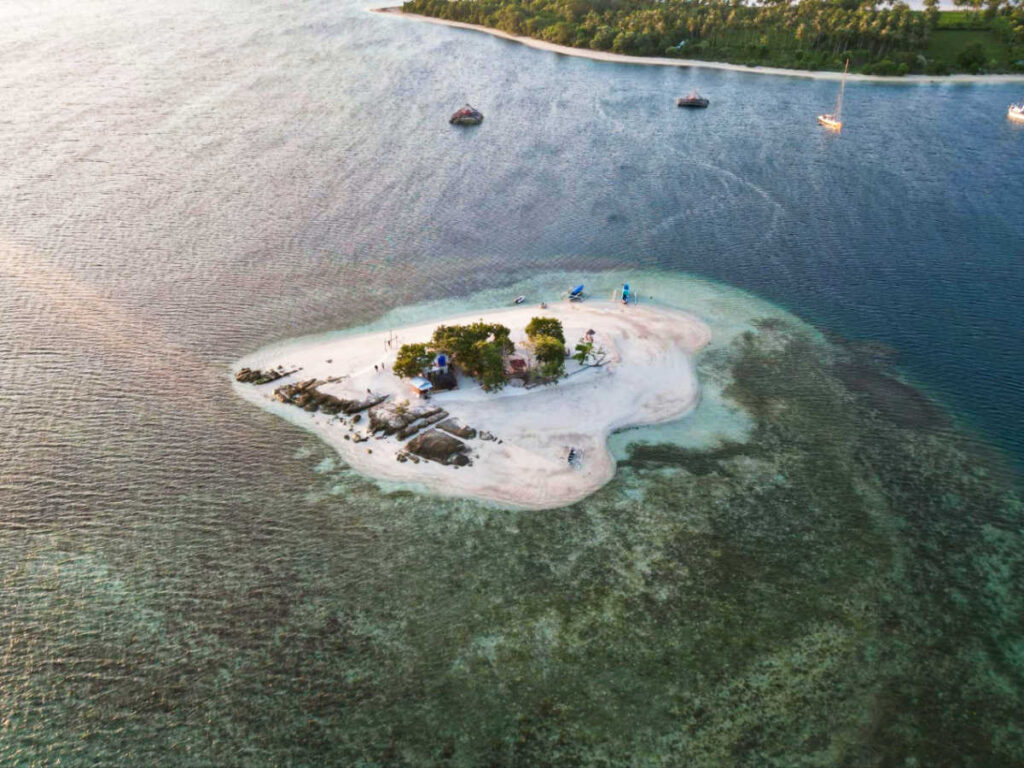
There are very few tourists at the Secret Gilis. I walked all the way around Gili Gede, and I only saw one other tourist amidst all the locals. I was able to see a side of Indonesia that is difficult to find nowadays — one without overwhelming foreign influence.
We went to Gili Asahan, Gili Gede and Gili Kedis. We spent 1-2 nights moored at each spot.
I learned the rules of sailing…
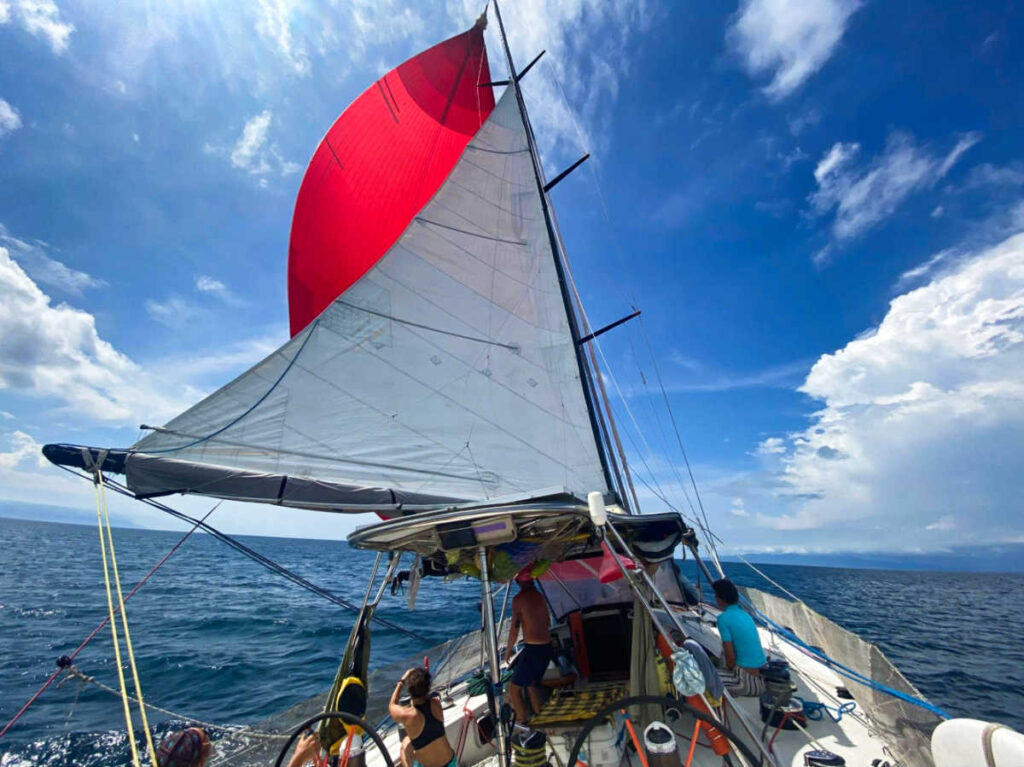
My sailing education began the second I stepped foot onto the boat. Timo has been sailing for his whole life and used to work as a sailing instructor back in Italy. I was excited about this aspect — after all, I came here to learn!
Let me start by saying that sailing is so much more difficult than I ever thought. I spent the first 3 days just trying to learn all the parts of the boat.
We would usually begin sailing for the day, and then once we had hit a good speed, Timo would sit us all down for our daily lesson.
I learned the different kinds of sails, how to steer, and how to read the wind. I learned how to “tack” to change direction when sailing upwind. I learned what a winch is and how much to tighten the sails for our intended direction.

I learned there are a million ropes on a sailboat, and each of them has a very specific purpose. I learned the essential sailor’s knots and would constantly practice tying them throughout the day.
And I learned that there is no limit to how much pasta and focaccia I can eat, as long as I have a real Italian captain to cook for me.
It was a lot of information at first, and it could be overwhelming at times. But it was also incredibly fun. I felt like I was decoding a new language, one that was basically universal.
…and the chaos.
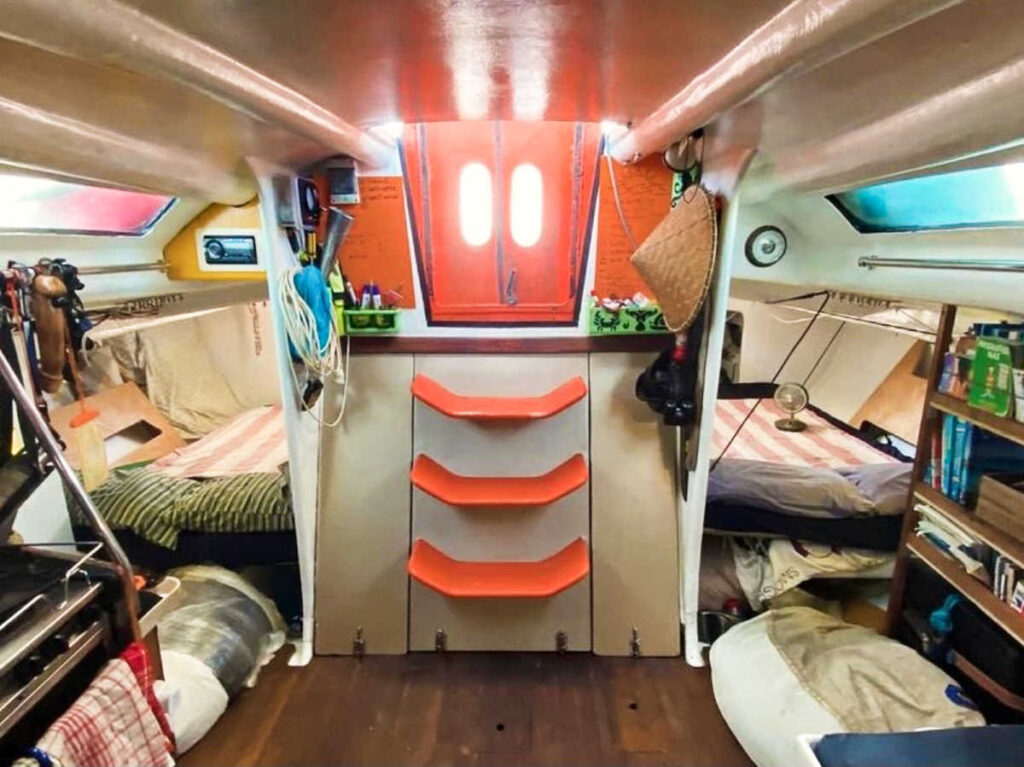
Amidst all these new learnings was another discovery lurking not too far beneath the surface — living aboard a boat can be infuriating sometimes.
The first thing I realized is that the boat is a racing boat — equipped for speed, not comfort. My only personal space was a very, very small nook below deck, just big enough for a twin-sized mattress.
It was cramped and hot down there. Add in the fact that Indonesia is 100 degrees and humid, and you get a pretty uncomfortable sleeping situation. I had a small fan, which was the only thing that helped me fall asleep.
Obviously, the boat didn’t have a shower. I was swimming in the ocean every day, which kept me fairly clean, but my hair was getting saltier by the minute. I finally got my first proper shower after 5 days, when we docked at a marina that had a small bathroom.
But by far the worst experience was my sunburn. Even though I had tried to be diligent about applying sunscreen, I had forgotten one crucial thing — lips need sunscreen too.
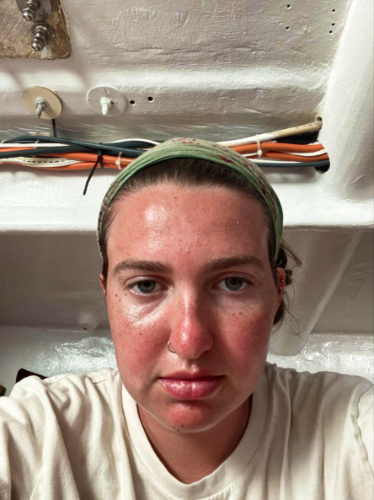
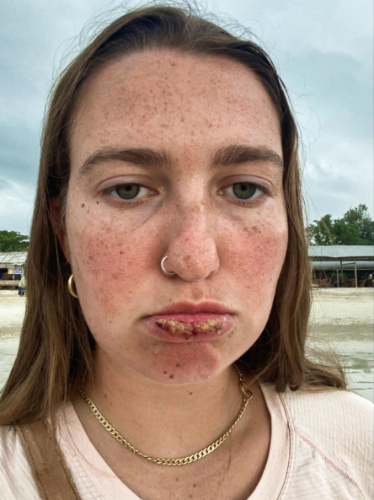
I’ll spare you the details, but essentially my bottom lip completely peeled off and scabbed over from spending so much time in the sun and salt water.
In the weeks that followed, the scabs were puffy, and tender, and would fall off in a pool of blood if I accidentally ripped them while eating or drinking. Cute!
On top of everything else, I developed a cough and stuffy nose on day 2 (no idea why). I summed up the experience pretty well in this excerpt from my journal:
I spent the first few days adjusting to boat life by getting extremely sunburnt and also sick. I kayaked to the mainland in Senggigi to pick up medication at the nearest pharmacy, but I tipped the kayak over while landing on the shore because the waves were too strong.
So now I’m soaked and sandy. A quick hand to my forehead reveals I’m developing a small fever, or maybe that’s just the sunburn — I don’t know. I squeaked my way down the street in my Tevas while sopping wet and managed to find some kind of Indonesian medication to help my inflamed sinuses.
I had severely underestimated how much these discomforts would begin to affect me.
I think of myself as fairly adventurous, not too reliant on earthly goods. But I have decided that air conditioning, a full bathroom, and reliable sun protection are earthly goods I would like to have around from now on.
Sailing is hard work…
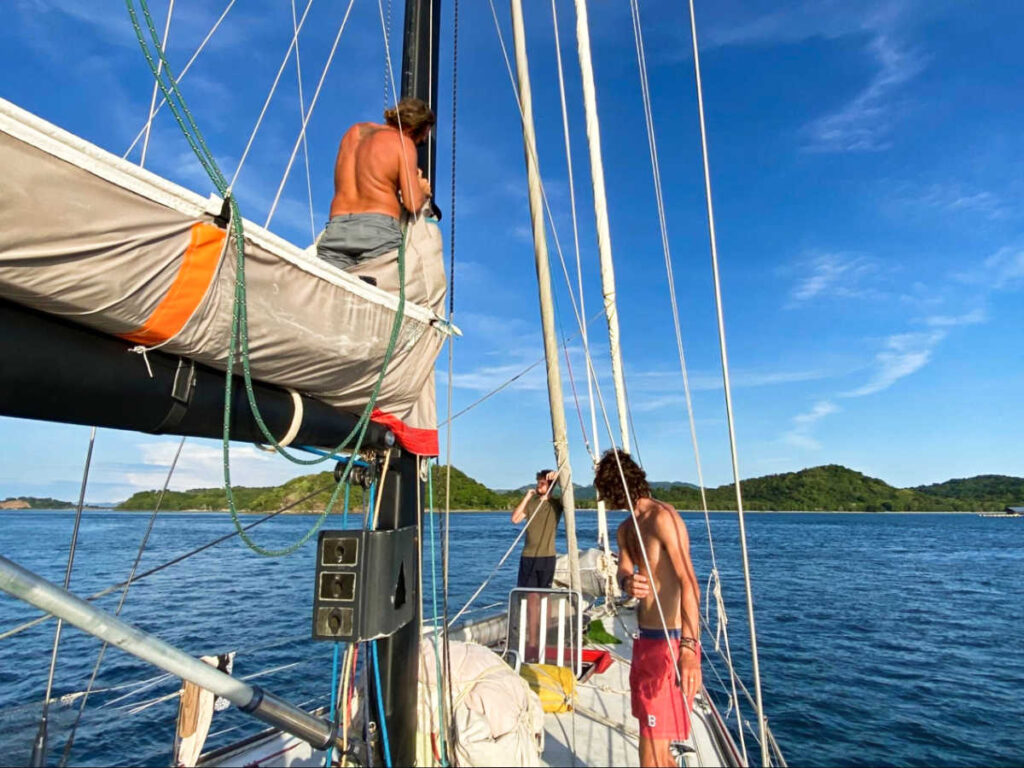
This was not some vacation-style, laid-back trip on a catamaran. This was hard work.
I had to be up at 7 am every day, clean the deck, help with dishes, prepare the boat for sailing, sail for 6-7 hours, anchor the boat, do maintenance tasks, and then I could finally relax around 8 pm.
While we sailed, I always had to be ready to jump up and help.
There were times when it was smooth sailing (quite literally), and I could relax on the bow and read my book while we skimmed over the water.
But at any moment’s notice, I had to be ready to tighten a winch, take over steering, or lower a sail. I was constantly “on.”
… and sailing is freeing.
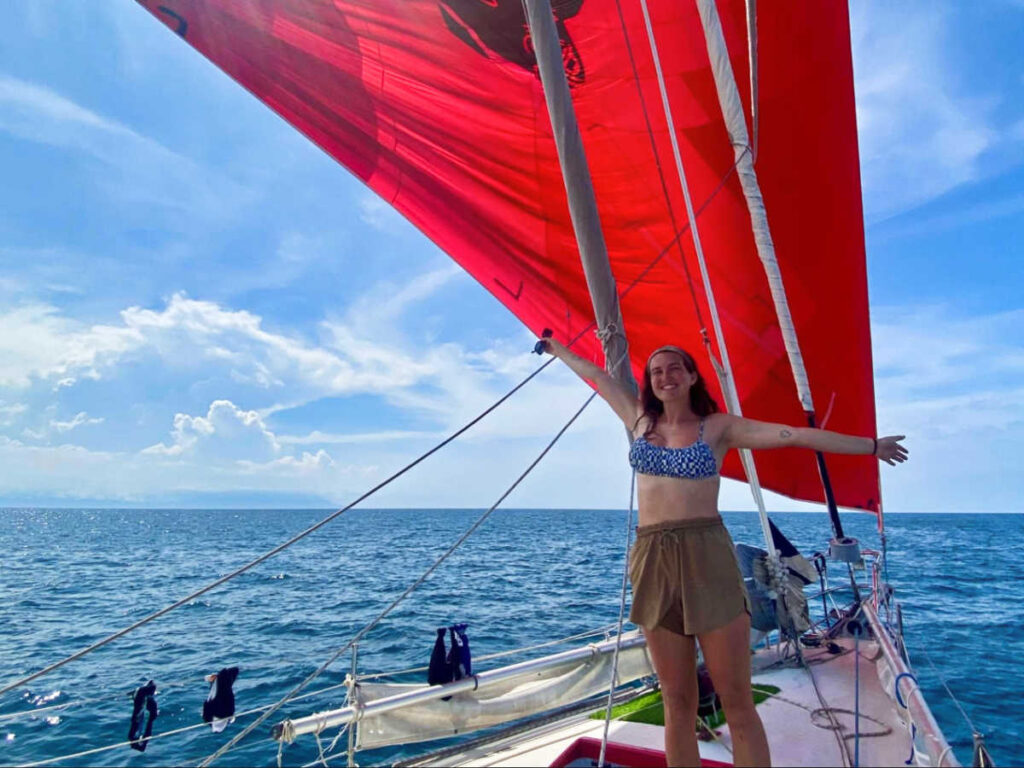
But even with all the hard work required, my favorite moments on the boat eclipsed any of the struggles I had.
We watched dolphins swim with the boat, jumping up and doing dramatic flips just 5 feet from us.
We saw the faint outlines of volcanoes on nearby islands rising above the clouds.
We saw (and heard) countless mosques on the shores of Lombok, with gorgeous architecture and colors.
I got into the habit of lying on the bow with my book while we sailed — soaking up the sun, reading, and feeling the wind in my face. I was always barefoot, in a bathing suit and an old t-shirt, and never really cared what I looked like.
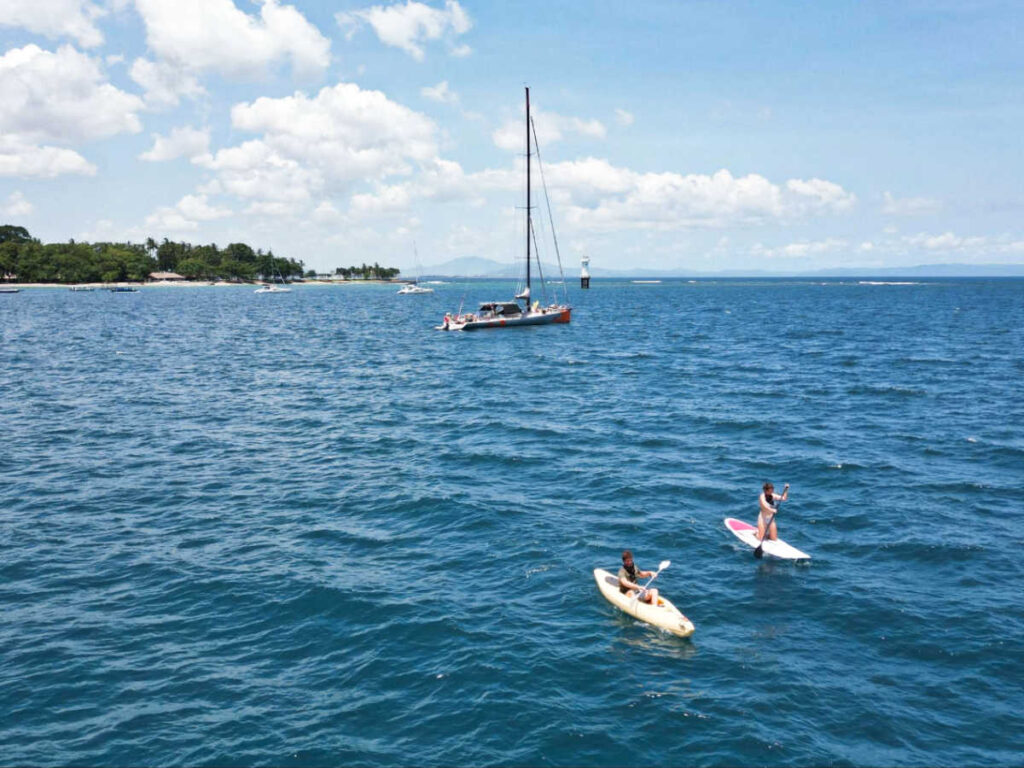
The boat came equipped with a paddleboard and two kayaks. In each new location, I got to take the kayak out and explore the shores of whatever island we were moored at that day.
Timo is an excellent cook, so we had delicious lunches each day — sashimi, pasta, focaccia. There was also a constant supply of fresh tropical fruit anytime I wanted it, so I stuffed myself full of mangosteen, snake fruit, and mangoes.
I snorkeled with sea turtles, swam above vibrant coral reefs, and watched an ocean sunset every day. I explored islands that I never even knew existed before this trip.
Each night, the whole crew would stay up late, once the heat of the day had finally dissipated. We sat on beanbags on the deck and had long conversations underneath the stars. We talked for hours about history, science, politics, etymology, and geography.
I also had a really nice conversation with one of the local bartenders at the Gili Gede marina.
She was about my age, and we talked like I would talk with my friends back home — about what to study at university, about family pressures to find a long-term partner, about not knowing what to do in our futures. Even with the language barrier, we chatted for almost an hour.
Overall, I loved it. Waking up every day with a sense of freedom and adventure was unmatched.
Maintenance days — a true sailing experience
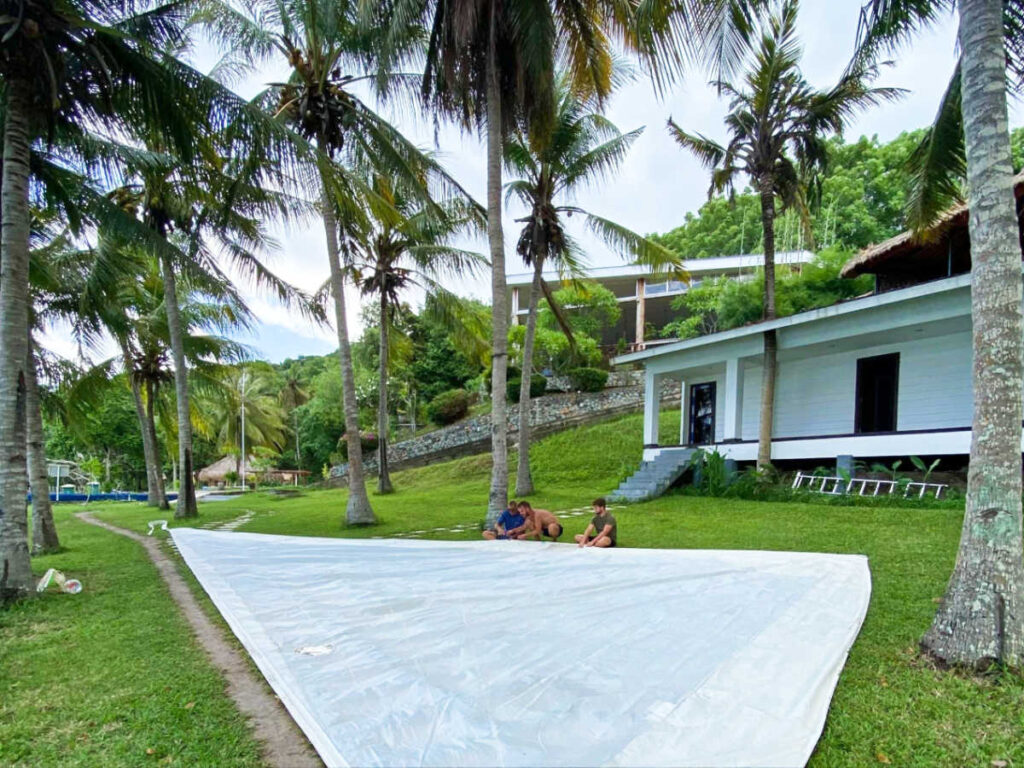
There were two days when we didn’t sail at all. Instead, we scrubbed the deck, replaced the boat’s side netting, scraped barnacles off the hull, helped to patch up the mainsail, cleaned the boat fenders…. and more.
Days like these were when I questioned what I was doing there, slowly sunburning on a boat deck in 100-degree weather, getting bit by mosquitos, and not even sailing anywhere.
But this is a crucial part of true sailing. Boats take a lot of upkeep! Learning about the maintenance required gave me an authentic impression of what it’s like to own a boat.
The magic moment — confidence, finally!
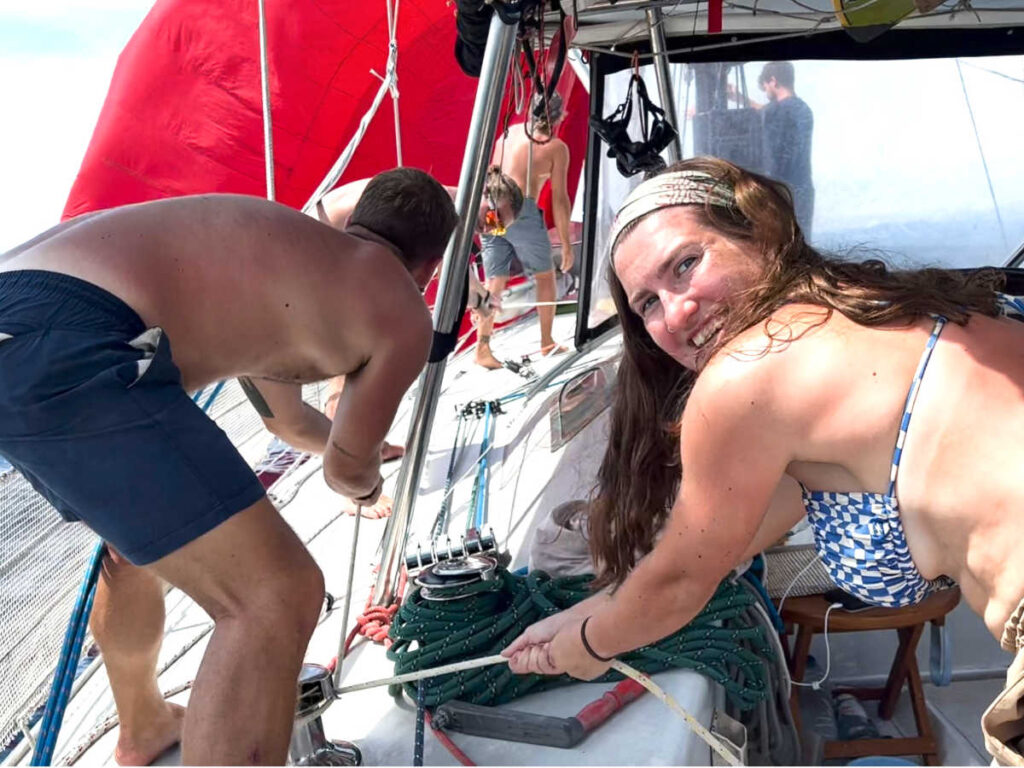
Near the end of the week, I had a moment where I finally put together some of the things I had learned.
Timo had each of us take a turn tuning the sails. My task was this: I had to direct the rest of the crew to tighten the jib, and then I would make the call when to stop tightening it.
If I was successful, the boat would sail faster. If I was unsuccessful, the boat would lose the wind, slow down, and spin out. No pressure.
If you had asked me to do this at the beginning of the week, I would have had no idea what the jib even was, let alone which ropes controlled it and how tight to pull the sail.
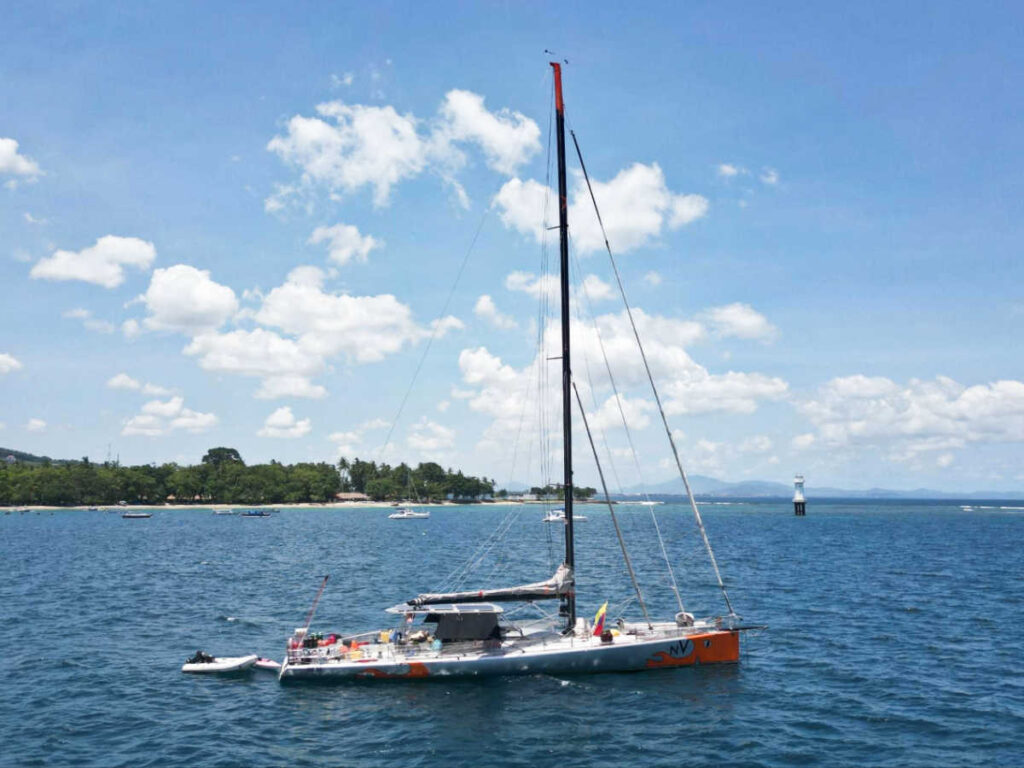
But something was different now. I had observed Timo the whole week, and I was beginning to crack the code.
I watched the crew begin to adjust the ropes and waited until the moment was right. I gave the call. Hesitant, I looked to Timo for approval, who gave me a big smile and a “Brava, Laura!”
I had done it.
It was one of those a-ha! moments that made me very proud of myself. I couldn’t stop smiling. I felt like I had something to show for myself — like I had proven I could be a sailor, someday. Maybe I was already on my way.
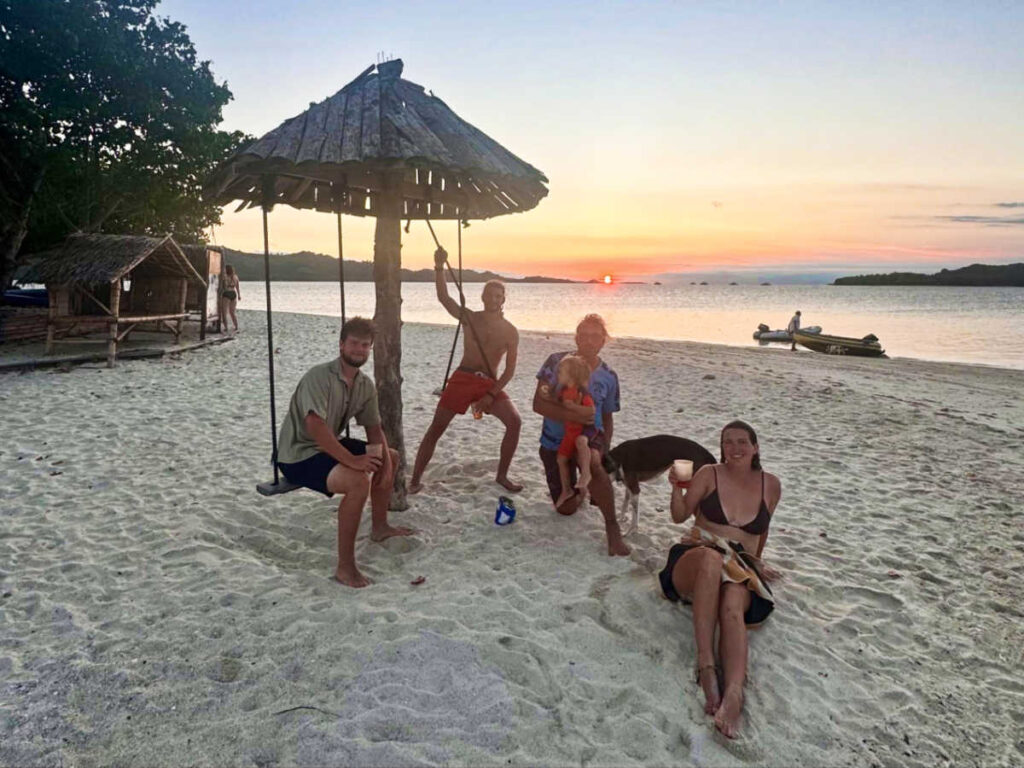
Looking back, would I do it all again? The answer is a solid YES!
I’m very grateful to Jo and Timo for taking me under their wing. Sailing with them was a great first experience.
One final thing I noticed is how much sailing brings people together. It’s a really wonderful community.
We found ourselves anchoring next to sailors who Jo and Timo had met at other marinas around the world. And I ended up hanging out with one of the French boys on my crew when I traveled to France later that year.
It was definitely not a relaxing, easy time. I had to really work. But this gave me an accurate portrayal of everything that goes into living on a boat: the beauty and the chaos.
Catch me taking sailing lessons back in San Francisco now.
🎙️ Listen to the Podcast: Betty interviewed me all about my sailing experience in Episode 5 of the Travel Lemming Podcast on YouTube (segment begins at 28:43). You can also listen on Spotify and Apple Podcasts!
***
I’d love to hear about your own sailing experience. Have you ever done something like this? Leave a comment below and let me know!
Or if you’re planning a trip to Indonesia and want ideas for another epic experience to add to your itinerary, check out my piece about my experience hiking the 12,000+ ft tall Mt. Rinjani.
More Latest PERSPECTIVES


