
Affiliate Ad Disclosure: We’re reader-supported. When you buy via our links, we earn commissions. Learn more.
What I Wish I Knew Before I Thru-Hiked the Appalachian Trail


Article Summary:
- I thru-hiked all 2,198.4 miles of the Appalachian Trail (AT) without having backpacked before. There are definitely some things I should have learned more about before starting my journey.
- Trail names, unique trail lingo, and traditions all contribute to the vibrant culture that surrounds the AT.
- Camping is just as important as hiking when it comes to the success of a thru-hike.
- Adapting to unexpected events is one of the most valuable aspects of a successful thru-hike.
My first backpacking trip was a 169-day thru-hike of the Appalachian Trail.
Before my first night on the trail, I had never slept in a tent before.
In fact, my first day on the AT was also the first time I used the majority of my (newly purchased) hiking gear!
I had very little backpacking experience, which meant I had a whole lot to learn. If you are also new to this, let me explain a few terms first:
The Appalachian Trail (AT) is a 2200-mile footpath that winds through the Appalachian Mountains. It stretches from Georgia to Maine in the United States and passes through 6 national parks, 14 states, and countless mountain subranges [Source].
A thru-hike is an end-to-end hike of a trail.
Typically, the term ‘thru-hiker’ describes someone who’s hiking the entirety of a long trail, like the Pacific Crest Trail or the Appalachian Trail.
For me on the AT, this meant hiking every day for six months while living out of my backpack and resupplying on food every 5-7 days.
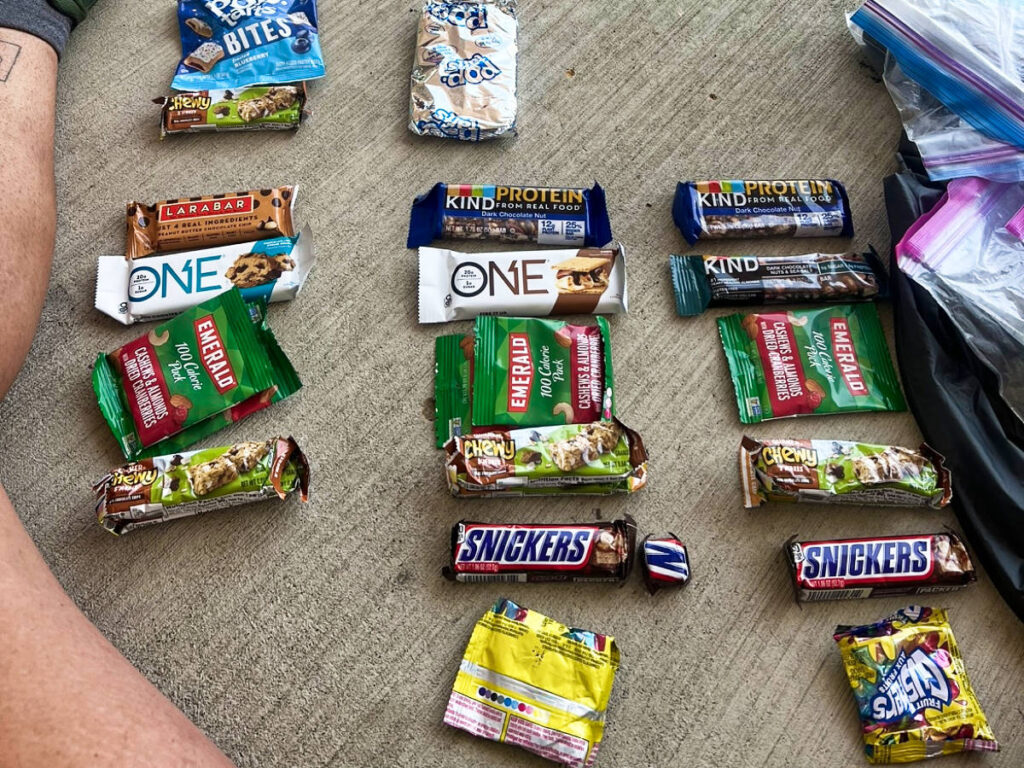
I had an amazing adventure hiking the AT and wouldn’t have changed a thing. But were there things that a novice hiker like myself would have benefited from knowing before starting a thru-hike? Absolutely!
So, if you’ve ever wanted to do a long-distance hike like the AT, keep reading because I’m going to share what I wish I had known before I started my thru-hike of the Appalachian Trail.
There’s a Whole Culture Surrounding the Appalachian Trail

The first thru-hike of the AT was completed by Earl Shaffer in 1948 [Source]. Since then, more and more hikers have attempted to thru-hike the AT every year.
With access to social media and cell phones, it’s easier than ever for hikers to share their experiences with the world. As a result, a strong culture around thru-hiking the AT has emerged.
I thought my thru-hike would be an isolating (yet revelational) experience. In reality, I found the Appalachian Trail to be an extremely social place. Thru-hikes can still be revelational, but they definitely do not need to be isolating!
The culture and community I discovered on the trail were so welcoming.
Here are some of my favorite traditions:
Trail Names
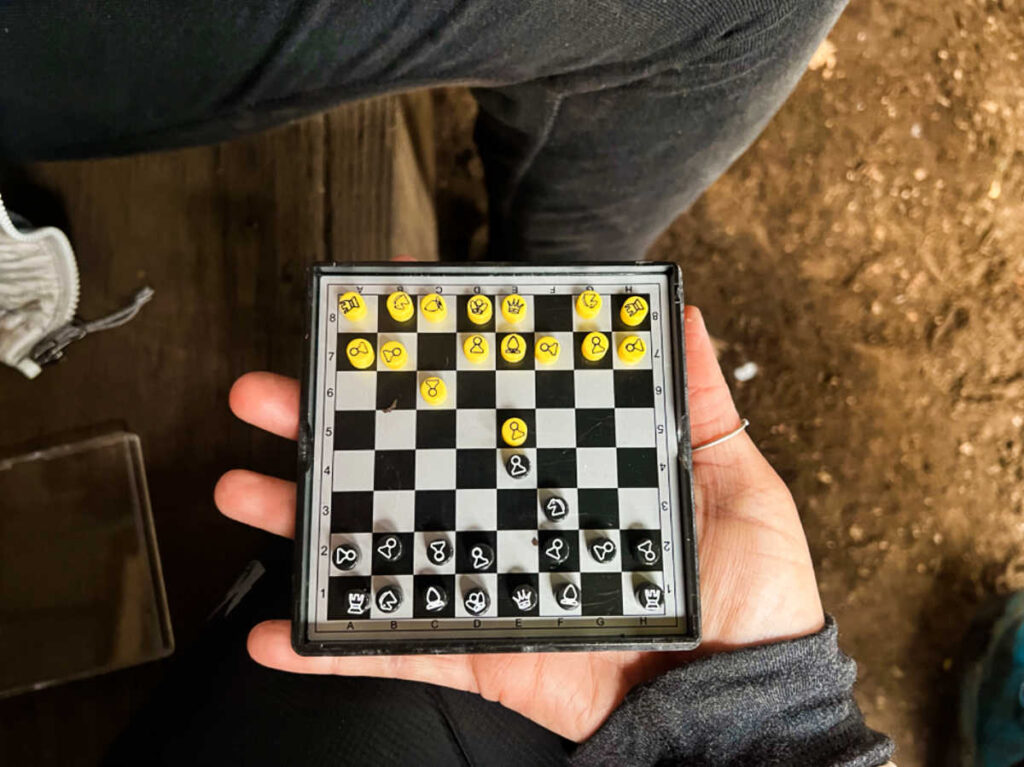
One of my favorite parts of the hiking culture on the Appalachian Trail is trail names. As the title implies, a trail name is your pseudonym on the trail. It’s typically given to you by other hikers and for many, it becomes a big part of their identity.
My trail name is Checkmate. I was given the name because, well, I am quite good at games. I also kept a mini chess board in my pack and would play chess with other hikers at camp.
Terminology
There’s a lot of trail-specific terminology. Terms like tramily, NOBO, and zero days are all commonly used words on the Appalachian Trail.
A ‘tramily’ is a trail family. Often, hikers who start their thru-hike solo will begin hiking with other hikers – those hikers form a tramily!
‘NOBO’ means North Bound which indicates that a hiker started their hike in Georgia and is hiking north.
A ‘zero day’ is a day where a hiker hikes zero miles. Often, these days are spent in town resupplying on food and doing laundry.
On my NOBO thru-hike, I took a total of 17 zero days. And, I still keep in-touch with my tramily to this day!
Traditions
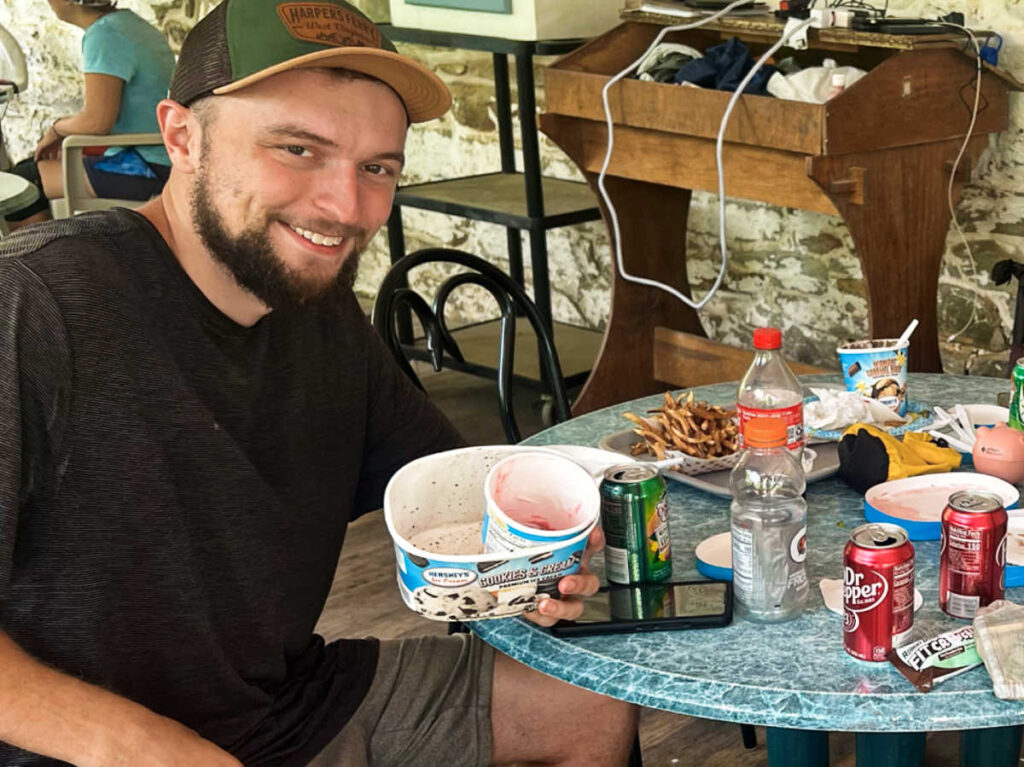
The AT has many traditions.
A fun one is the half-gallon challenge. The goal is to eat half a gallon of ice cream at the trail’s halfway point. Pine Grove Furnace General Store, where hikers stop to buy the ice cream for the challenge, has become a memorable trail stop.
Although I didn’t partake in the half-gallon challenge myself, I had a lot of fun cheering on my tramily as they ate their ice cream.
Ultimately, the culture on the Appalachian Trail is built from the shared experiences created by the traditions and camaraderie.
In hindsight, I wish I had known a bit more about the trail’s culture and traditions so I could have mentally prepared for my hike differently. However, learning about the culture and traditions of the Appalachian Trail while I was actually hiking helped me connect with other hikers.
The AT’s culture is inclusive and welcoming and I found so many knowledgeable hikers who were willing to help me throughout my journey.
Camping is Just as Important as Hiking
It’s called a thru-HIKE, isn’t it?
When I first envisioned my thru-hike, I thought about the different mountains I’d climb and the varying terrains I would traverse.
I assumed that the gratification of my experience was going to come from hiking-related accomplishments. I wish I had known that camping and time spent in town would end up being just as meaningful as the actual hiking!
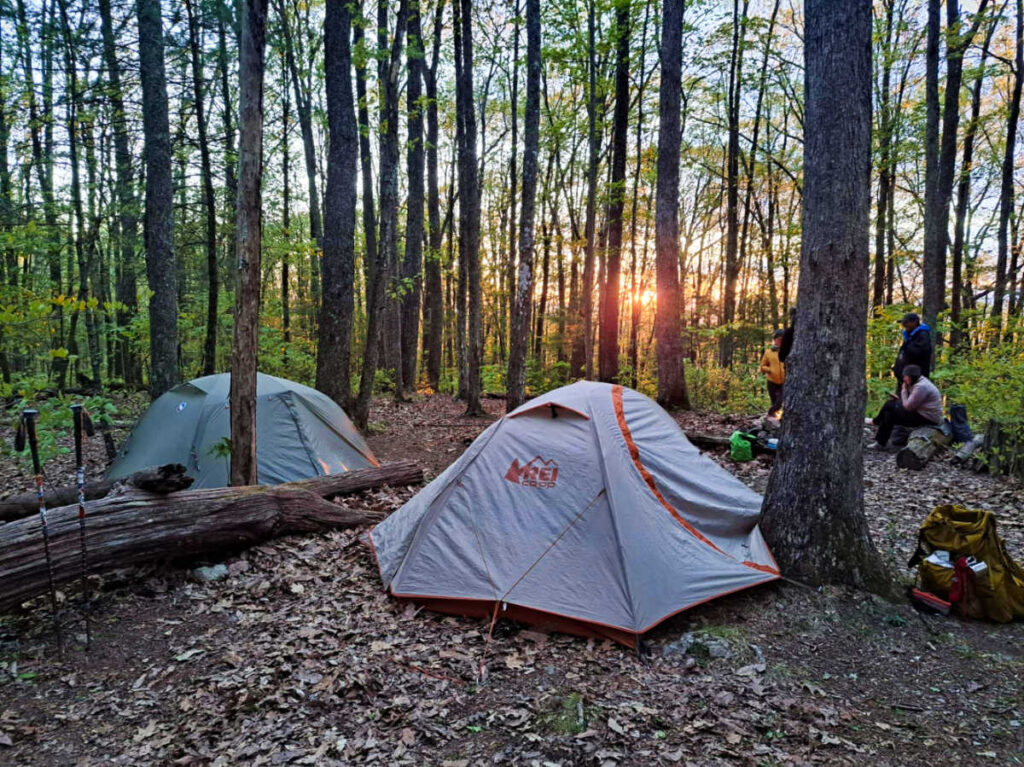
I typically spent 8 to 12 hours a day hiking, but I spent the rest of my time at camp. The AT has three-sided wooden structures referred to as ‘shelters’. While sleeping in a shelter isn’t required, many thru-hikers still make camp near shelters.
Camp was always the best and worst part of my day.
On one hand, it was glorious to finish hiking for the day as well as rest and chat with other hikers. On the other hand, getting to camp meant chores! Pitching my tent, filtering water to drink, hanging my food bag in a tree… the list goes on.
Before starting my thru-hike, I trained. I went on walks with my dog wearing my pack. I used the StairMaster at the gym – you get the idea. I wish I had known to practice for the camping aspect of my journey, too.
Many of my fellow thru-hikers I met had extensive backpacking experience and didn’t need to practice hanging a food bag in a tree. But for any newer hikers and backpackers out there – being proficient at camp chores can save you valuable time. So, be sure to practice!
Expect the Unexpected
Finally, and possibly most importantly, I wish I had known that adaptability is key to a successful thru-hike.
Before starting my hike, I sat down and planned out an itinerary for my first three months. I wrote out daily mileage and a food resupply schedule. I was convinced I was going to stick to it. Then, due to a bad storm, I was off schedule by my third day.
At the beginning of my hike, I was constantly feeling like I was behind schedule because of my arbitrary itinerary. I created a huge unnecessary mental battle for myself. Once I eventually scrapped my plan and started taking my hike a few days at a time, I was able to enjoy myself much more.
I was trying to control all aspects of my adventure because I was so determined to make my time on the trail life-changing. I eventually gave up trying to have control over my entire experience and just started embracing the unpredictable nature of the journey.
There were so many elements out of my control – the weather, gear malfunctions, overuse injuries. Adaptability to respond to unexpected issues was so important!
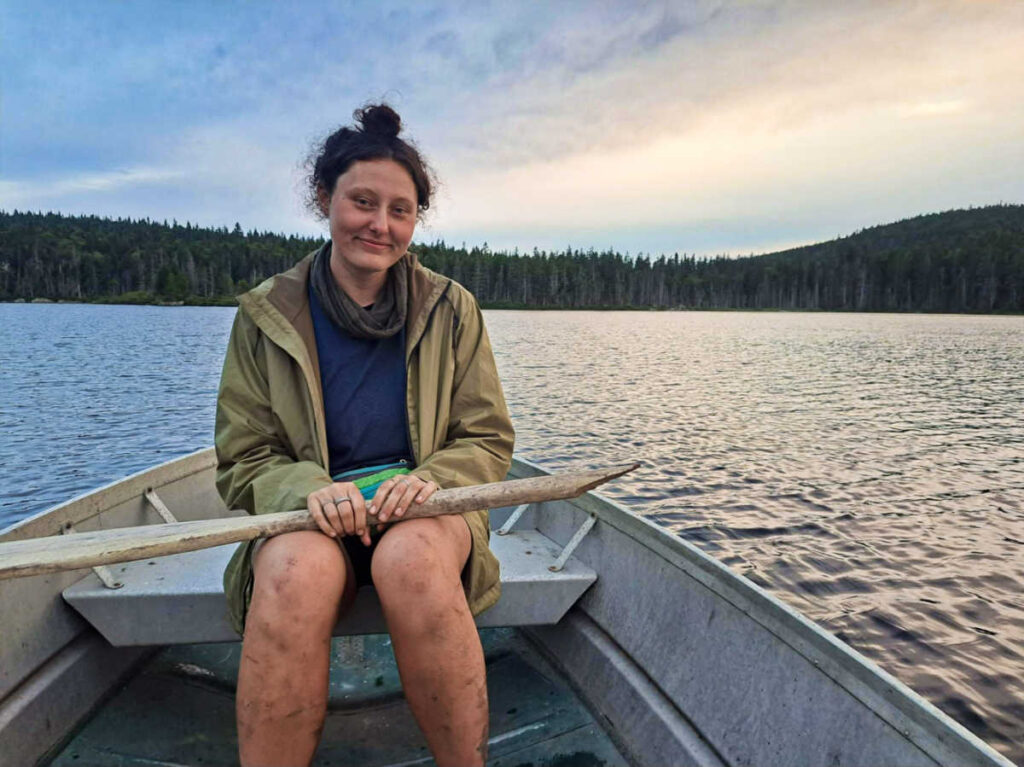
While hiking along a lake in Maine, I stumbled across a rowboat. Rather than hiking as far as we planned that day, my hiking partner and I took the boat out on the water and spent a few hours relaxing. It was the most unexpected yet fun day.
I often reminisce about slowly drifting around the lake on the row boat. It was a beautiful memory created because I decided to seize on the unexpected.
**
While many of my fellow thru-hikers on the AT had years of backpacking experience, I had none.
Learning and improving as a hiker was a fundamental part of my journey. But for any future thru-hikers out there, I hope this article can help get your hike started on the right foot (pun intended!).
Thru-hiking any trail is a bucket-list experience. Are you looking for your next adventure? The mountains are always calling!
Next up, read Taylor’s article on why she loves adventure travel + her tips on how to have more adventures.
More Latest PERSPECTIVES


Your comments are spot on. I through hiked the AT in 2022 and while I had years of experience, it was still a very rewarding experience, especially being 66 when I started and turning 67 at the mid-way point.
Did you stay in touch with the person you were hiking with? How was the cost? Did you stay many times in town.