
Affiliate Ad Disclosure: We’re reader-supported. When you buy via our links, we earn commissions. Learn more.
I have moderate hearing loss. Here’s how I cope when traveling.


I have moderate genetic hearing loss and have used hearing aids for ten years. It can sometimes be a challenge at home, but it’s even more so when I’m traveling.
But I’m definitely not the only one making my way through this world with hearing loss! More than 18 million Americans have what’s considered to be moderate hearing loss. [Source]
This means we have trouble hearing in noisy places, like a restaurant. Train stations and airports can be anxiety-inducing, too, because it’s often hard to hear and understand what’s going on. We can also struggle to hear people talking quietly or on the phone.
So, it can be hard to travel with hearing loss! Here are a few tips that have worked for me — plus ways to assist a travel partner who has trouble hearing.
6 Tips for Traveling with Moderate Hearing Loss
Sign up for airline apps
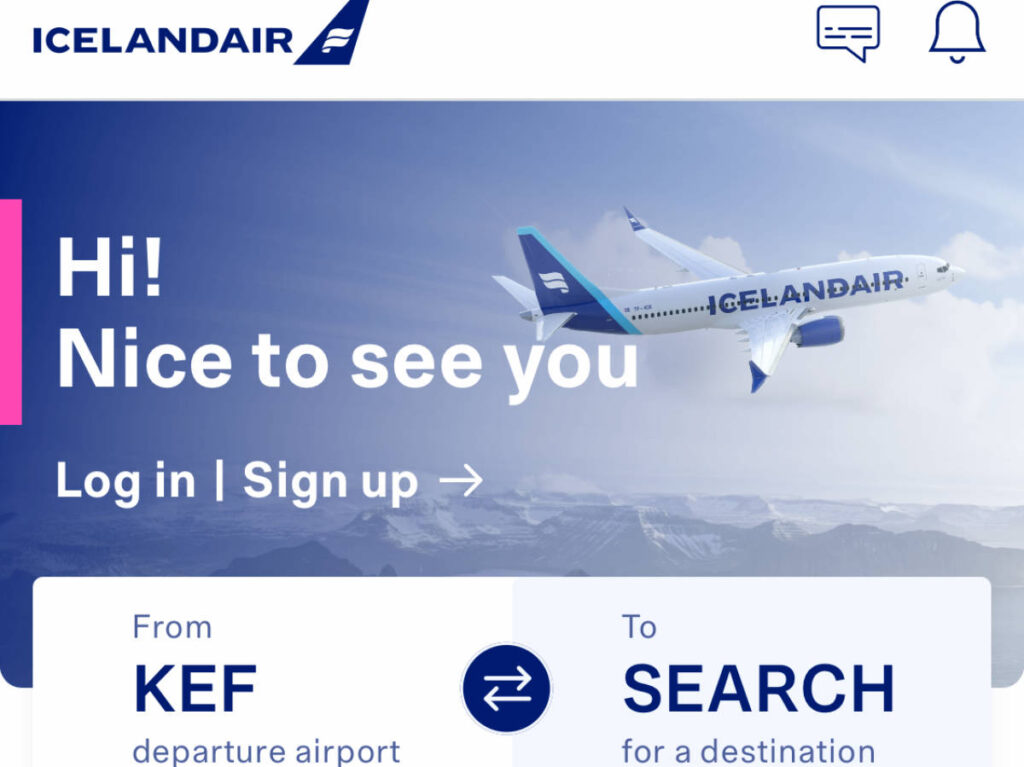
By far, travel apps are the most helpful thing for those with hearing loss — especially airline apps. I put all of my flight info into the app, and get updates during the days and weeks beforehand. But the app is even more important when I’m at the airport.
I can usually hear overhead announcements, but I almost never understand them! I rely on the app to tell me if there’s been a last-minute gate change, delay, or other update.
Once I’m at my gate, I double-check my flight on the display to make sure I’m in the right place. I also stay in sight of the gate near our departure time so I know by visual cues when to board.
Pack your hearing aid and supplies in your carry-on
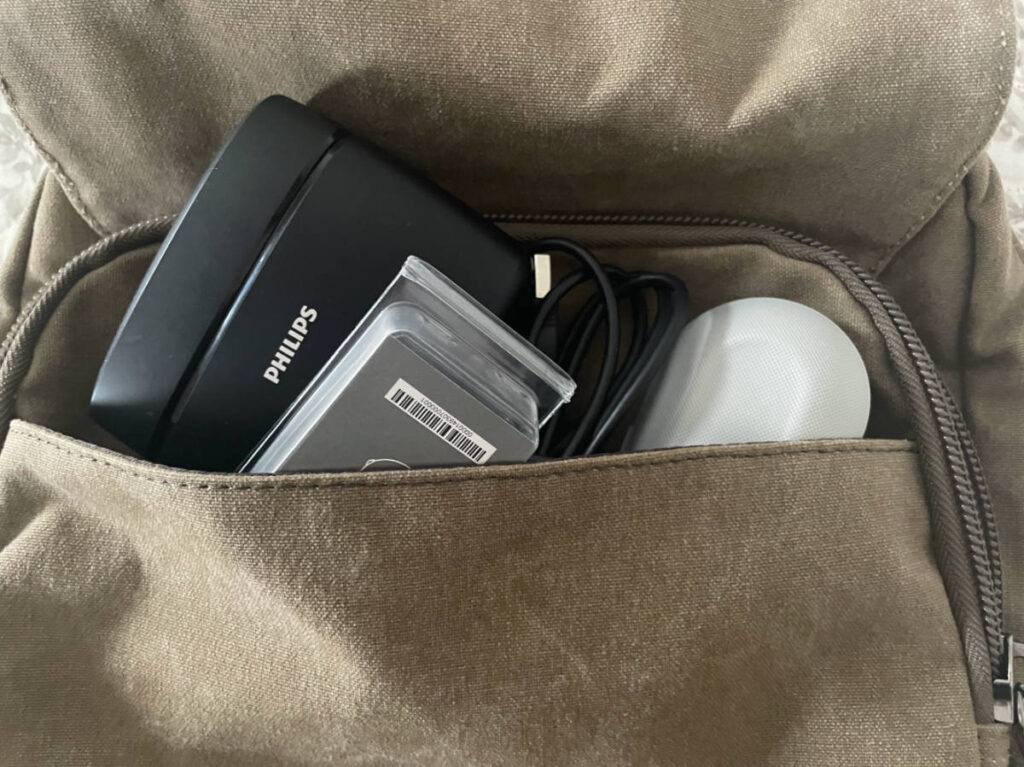
Hearing aids and supplies including batteries, chargers, and cases are medical devices [Source]. You can bring them on an airplane packed in your carry-on.
I do this so I have everything I need if my flight is delayed or my suitcase is lost. I also pack an adapter to plug everything in if I’m traveling to another country.
Leave your hearing aids in during screening
TSA allows passengers to leave their hearing aids in during screenings [Source]. I used to tell the TSA agent that I had hearing aids, but no one seemed to care and I got out of the habit. So far, I haven’t had anyone send me back. It doesn’t seem to be a big deal.
Bring noise-canceling headphones

A lot of us who are hard of hearing have trouble distinguishing between background noise and what we want to hear. On an airplane, I can’t hear anything with the engines going.
Noise-canceling headphones are one of the essentials that help me travel better. They’re extremely helpful for hearing music or entertainment during a flight. I also use subtitles for shows and movies; although, they can be hard to read on a small screen.
I watch flight attendants for any visual cues since I know there’s no way I’ll hear them with headphones on.
Plan ahead for activities
When I’m on a trip, I try to be prepared for activities where I may need to remove my hearing aids. When my husband and I explored the Golden Circle in Iceland, we visited several hot springs. I made sure to bring a travel case to store my hearing aids in a dry spot while we were in the water.
If you’re going somewhere like hot springs or a beach, be careful of sand or water getting into your devices. You may even want to consider a waterproof case for your hearing aids.
Splurge for seats closer to the stage

When I was in London, we saw a show on the West End (Mean Girls! Highly recommend). We bought better seats than I would have at home and I suppose it’s unsurprising that I had a much more enjoyable experience.
But I think for people with hearing loss, this can be even more pronounced. I was closer so I could hear the dialogue better. I could also see the performers’ faces and watch them speak. I’ve actually seen this show before, and I realized how much I missed when I was in the cheap seats.
If you’re booking an experience like a Broadway show or a tour you’re excited about, consider splurging for closer seats. It can be so worth it to hear everything easily. You can also ask if they have services like open or seatback captioning or assistive listening devices.
How to Help a Travel Partner with Hearing Loss
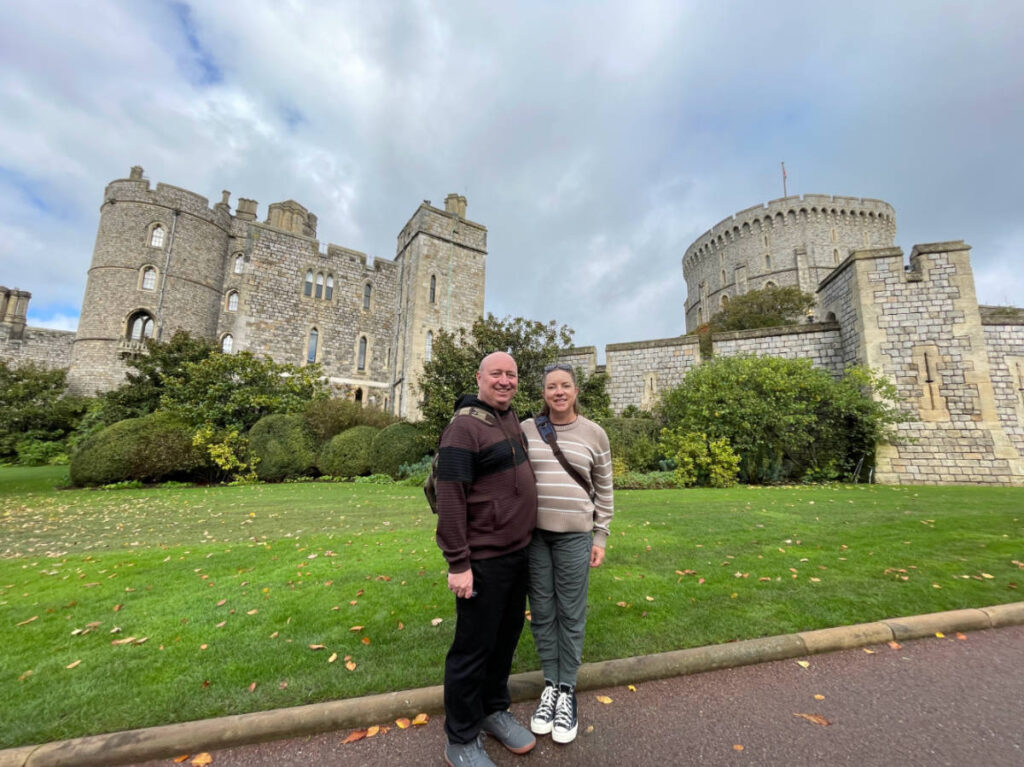
It can be an adjustment to travel with someone who needs accommodations… especially if they didn’t need them earlier in your relationship.
My two biggest fears are being seen as a burden, or being seen as stupid because I don’t understand what’s happening. I appreciate that my husband and friends help me out without rolling their eyes or laughing at me.
Here are a few things you can do to assist your friend or partner with hearing loss when you’re traveling as a group or a couple:
Face them so they can see your lips/gestures
I was surprised to discover how much I relied on reading lips and facial expressions! I realized this when everyone suddenly donned a mask during the pandemic.
Even though most of us haven’t had formal lip-reading training, we’ve learned to watch faces and mouths to understand conversations.
So the easiest thing you can do for your hearing-impaired friend or partner is to face them when you’re talking. Let them see your expressions and gestures. You don’t need to speak exaggeratedly; just speak where they can see you.
Make sure they understand announcements or comments

Travel partners can be really helpful in loud, crowded places like airports, trains, and subways. We really appreciate it when you tell us what speakers are saying in their announcements (to me, they sound like the adults in Charlie Brown cartoons).
Also, when I’m in a conversation, I usually ask someone to repeat themselves once. If I still don’t get it, I’ll turn to the person I’m with to help me understand. I feel silly asking someone to repeat themselves over and over, and it can be helpful to hear the line again from someone I’m used to hearing.
Ask them how you can best assist them
I think this is good advice for traveling with anyone who needs special accommodations: Begin by asking how you can best assist them.
Every person is different. It’s possible something I find very helpful might just annoy someone else. Asking people means treating them like an adult in charge of their own experience instead of treating them like a child.
***
I hope to keep traveling for a long time, and I’m grateful I have travel partners who are willing to assist me and treat me with dignity. I hope I’m that gracious to people I meet while I’m traveling, even if I don’t know their personal struggles!
More Latest PERSPECTIVES


