
Affiliate Ad Disclosure: We’re reader-supported. When you buy via our links, we earn commissions. Learn more.
I cycled into the sunset on this epic Japanese ride. Here’s why I loved the Shimanami Kaido.

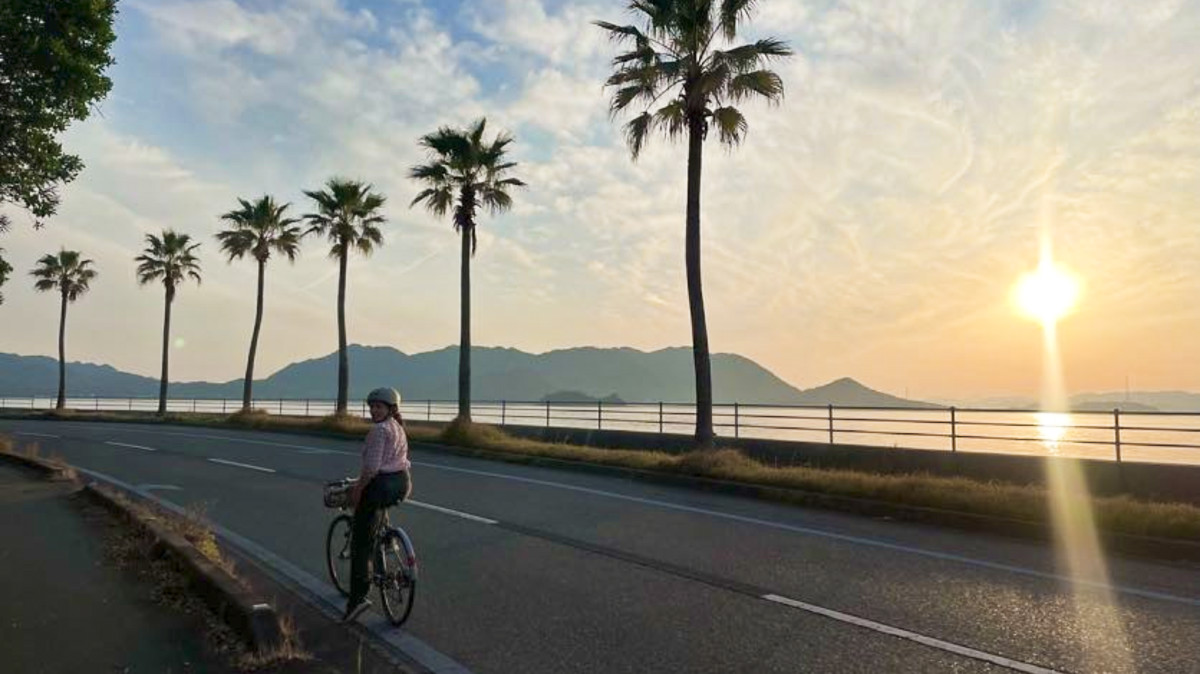
👉 Jump to: Shimanami Kaido Cycling Route | Itinerary | Tips
It wasn’t easy deciding on an itinerary for Japan because there are so many amazing things to do. But the moment I saw a photo of the Shimanami Kaido cycle route in my guidebook, I was sold. The beautiful scenery, rave reviews, and seeming accessibility of the 70 km route piqued my interest.
The cycle quickly became a fixture on my itinerary and is now firmly a fixture on my list of holiday highlights. Every pedal from the Japanese mainland of Honshu to the island of Shikoku over the Seto Inland Sea was worth it. Even if you don’t cycle, why not use it as inspiration for places to visit in Japan?
Whether you’re a keen cyclist or just want to explore a quieter pace of life on Japanese islands that fewer than 1% of international tourists visit, I can’t recommend this route highly enough.
Read on to hear why I loved the Shimanami Kaido route and the places along the way. I’ll also share how I did the route, where I stayed, and some of my favourite photos!
The Shimanami Kaido is considered one of the best cycling routes in the world
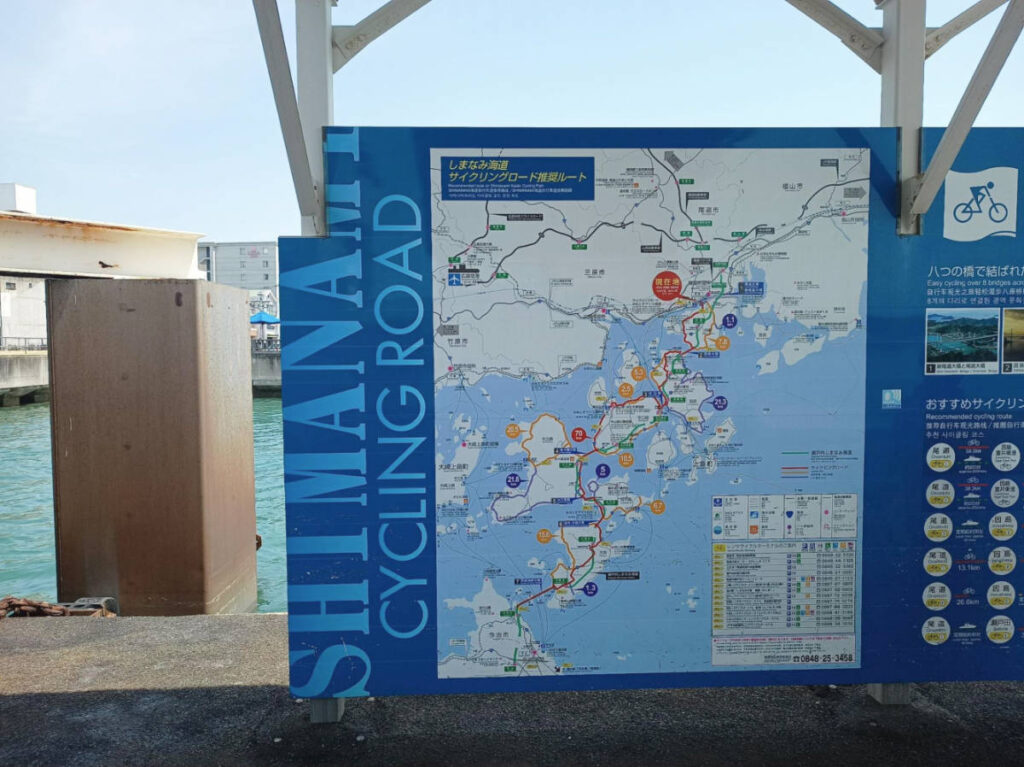
The Shimanami Kaido route has a well-deserved global reputation. The incredible cycling infrastructure and efficient Japanese services made the cycle feel easy (apart from a few little hills!) The roughly 70 km route from Japan’s main island, Honshu, to the fourth largest island of Shikoku, has some of the best cycling infrastructure imaginable.
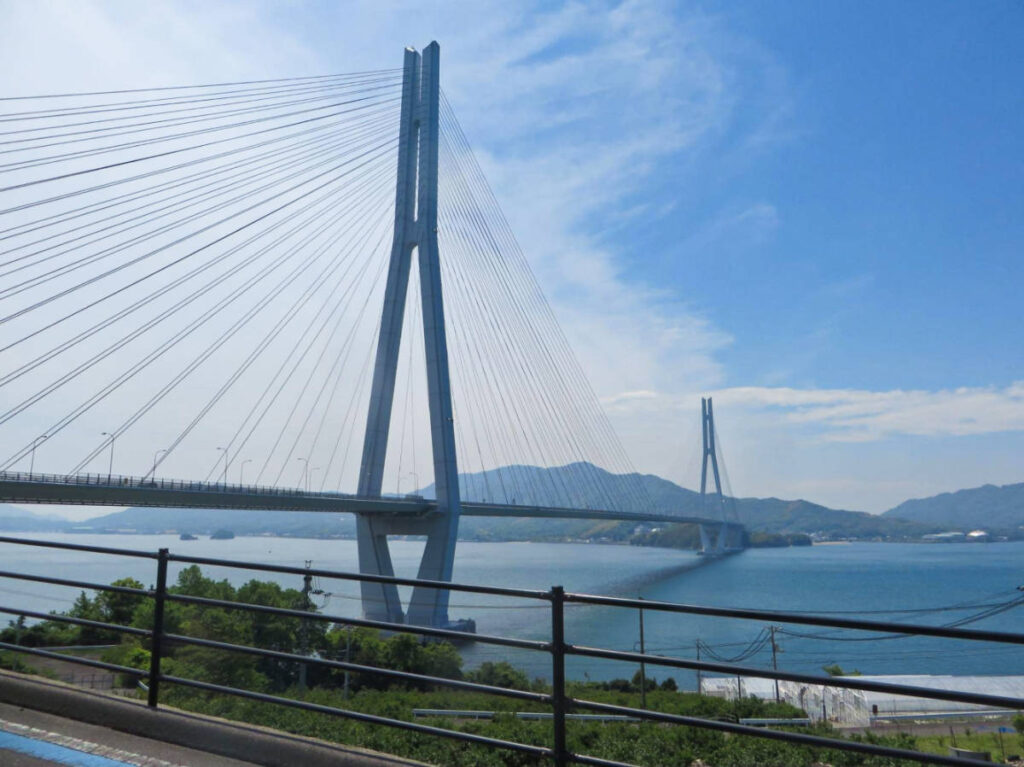
The Shimanami Kaido, also known as the Nishiseto Expressway, runs from Onomichi to Imabari. Meandering across 6 islands in the Seto Inland Sea, the route offers panoramic views of open water, islands, and lush greenery. The route begins with a ferry crossing and is dotted with epic bridges, making island-hopping (well, cycling) easy.
The cycling infrastructure is incredible and easy to follow
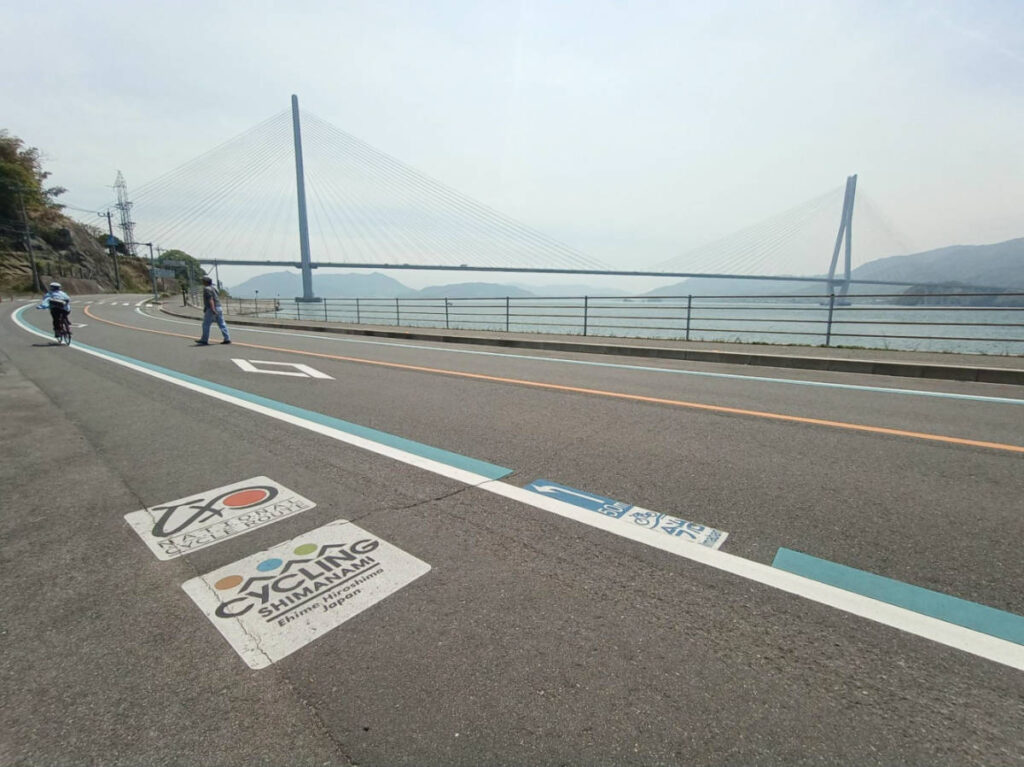
It is hard to describe just how well-planned and efficient the route is for cyclists. I didn’t once feel lost or unsafe despite cycling over 70 km on the other side of the world with none of my own kit. The route is mapped out with a blue line painted on the floor and plenty of signposts and signals.
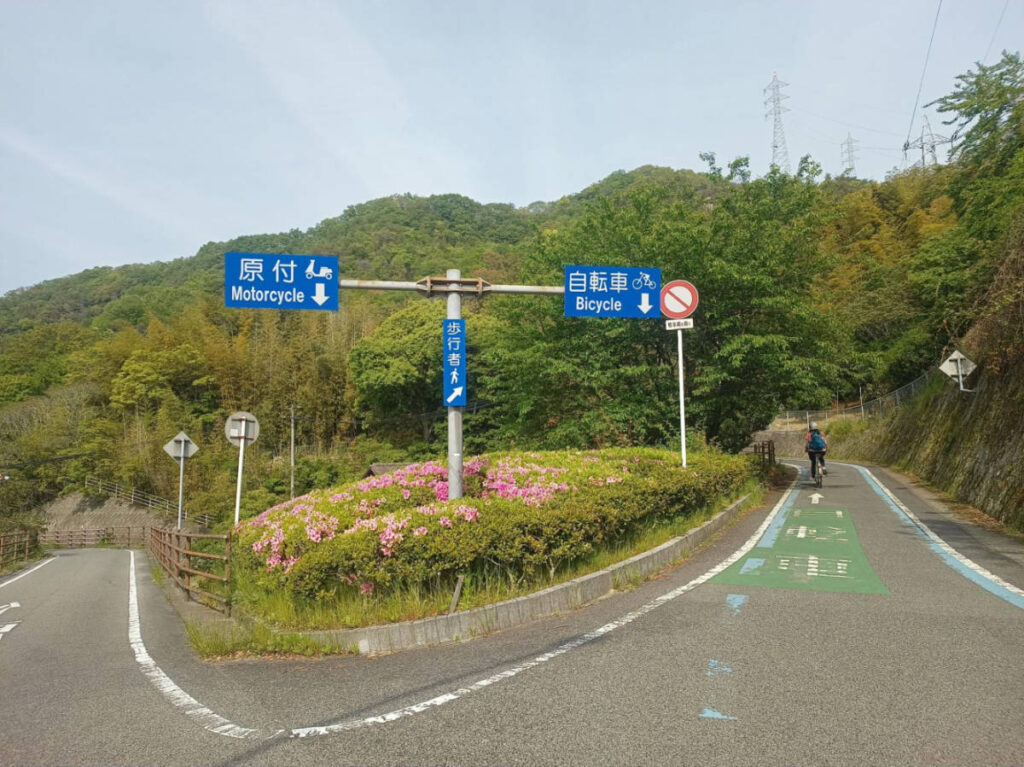
The pedestrian and cycle route runs along a highway, but I rarely felt like I was cycling near cars. There is even a separate lane or layer on the bridges for cyclists and pedestrians. From the smooth road surface to the gentle slopes leading to the bridges, the route made me realise what is possible when infrastructure is built with bikes in mind.
Cyclists will be required to pay small toll charges again as of March 2026, but this was previously just ¥500, or less than $4! The quality of the route is well worth a small fee, and I would happily pay to support good infrastructure.
There are many cycle-friendly places to stay
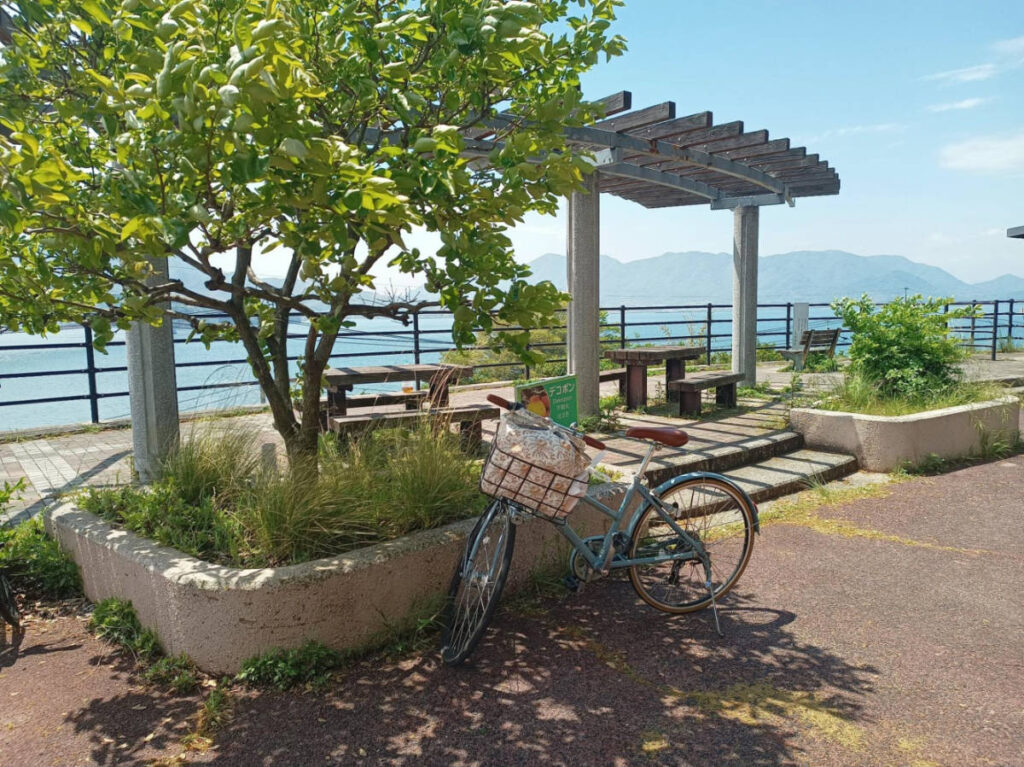
It’s not just the route itself that is incredibly well-planned and welcoming for cyclists. There are plenty of cafes, restaurants, and other facilities for cyclists along the way, including viewpoints to stop off to recharge and admire the scenery.
Cycling the route is an unforgettable way to take in the scenery and enjoy a quieter pace in Japan
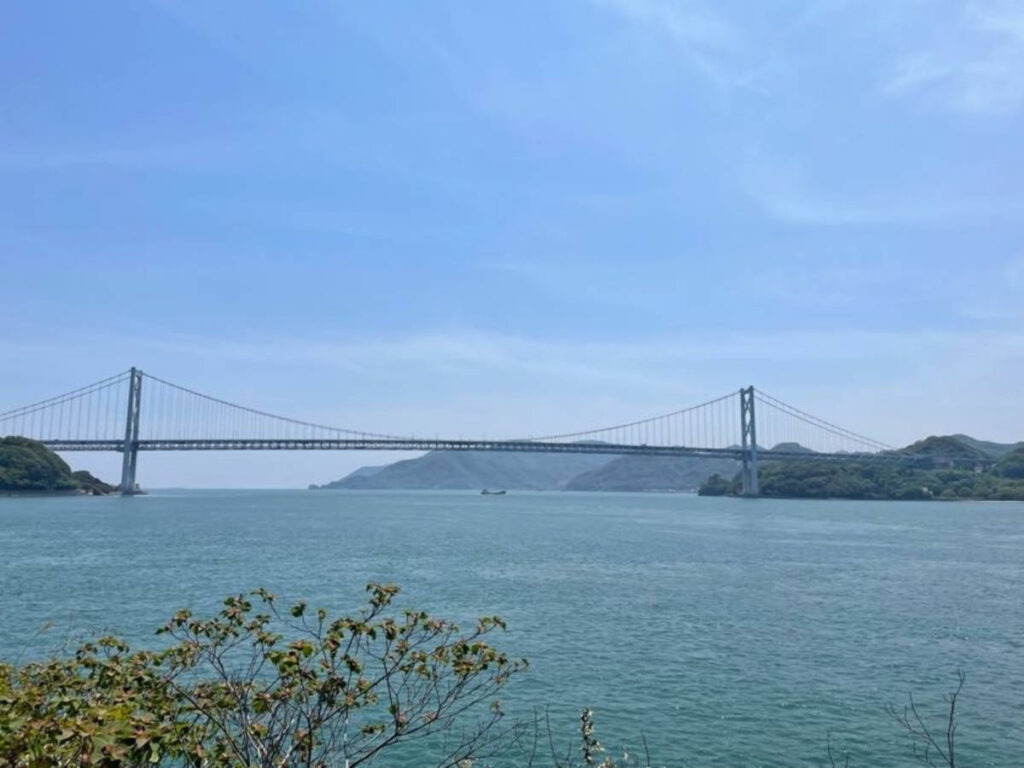
When people travel to Japan, they often stay in the cities of Tokyo, Kyoto, and Osaka, where (over)tourism is concentrated. Whilst these cities are absolutely worth a visit, there is so much more to the country. Fewer than 1% of international tourists venture to Shikoku!
The Shimanami Kaido is a great way to escape the crowds and get off the beaten track. Despite being a well-known route, it was not busy, and I sometimes had a whole stretch of road and a stunning view to myself. Just me, my bike, and the gorgeous views under the blue sky.
Pedalling through the small islands was very peaceful and made me appreciate the contrast between the calm of being in nature and the bustle of Japanese urban life.
It’s a great sense of achievement to have cycled over 6 islands in Japan
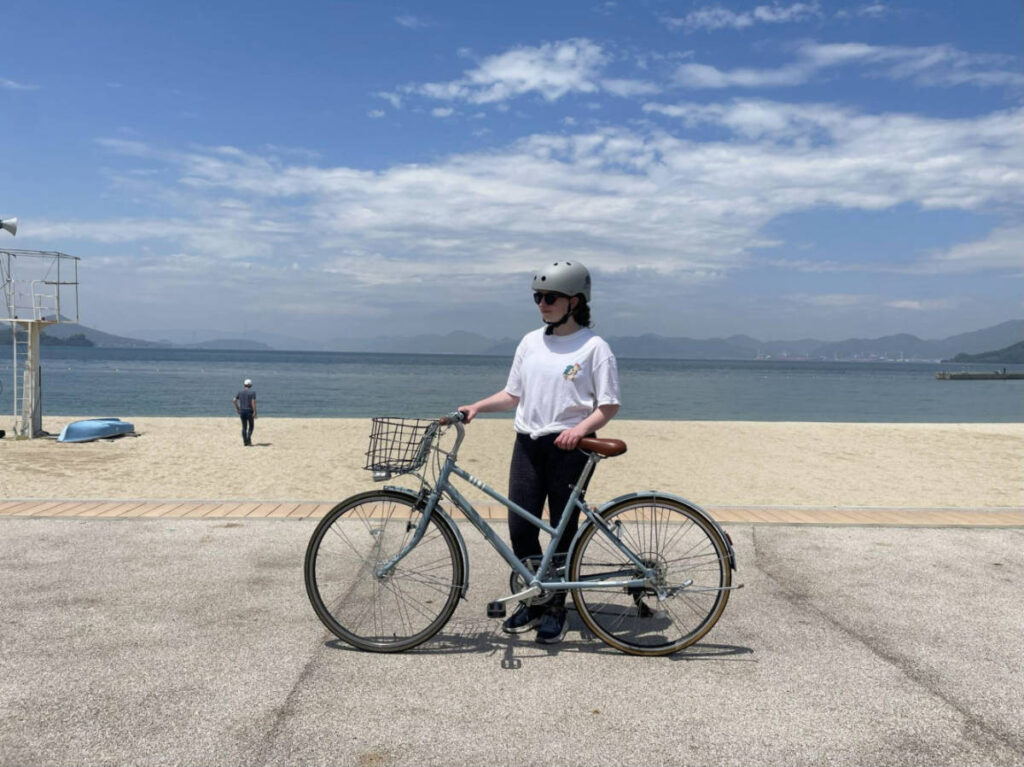
I love travelling overland as you can see more of the scenery, better appreciate a country, and have a sense of achievement. It’s very satisfying to arrive somewhere by bike and look back at everywhere you have cycled.
I really got to know the roads, bridges, and scenery along the way and felt connected to the land and the sea. I also loved seeing normal everyday life pass me by in a way you miss when travelling quickly or in touristy spots.
I recommend cycling the route over (at least) two days – here’s my exact itinerary
One of my biggest recommendations is to cycle the route over (at least) two days to make the most of it and visit lovely places. You could easily use the route and this area as a base for an entire holiday and itinerary!
Whilst it is possible to do the ride in one day, especially if you rent an e-bike (more on the logistics of the ride later!), you would miss out on a lot. This area of Japan is full of hidden gems! The joy of exploring by bike is that you can stop whenever you want to take a photo, pop into a cute shop, or sit by an epic view with an ice cream – not something to rush.
My friend and I wanted to make the most of the cycle, so we chose to do it over two full days, dedicating three nights of the itinerary to the cycle.
Day 1: Onomichi to Setoda
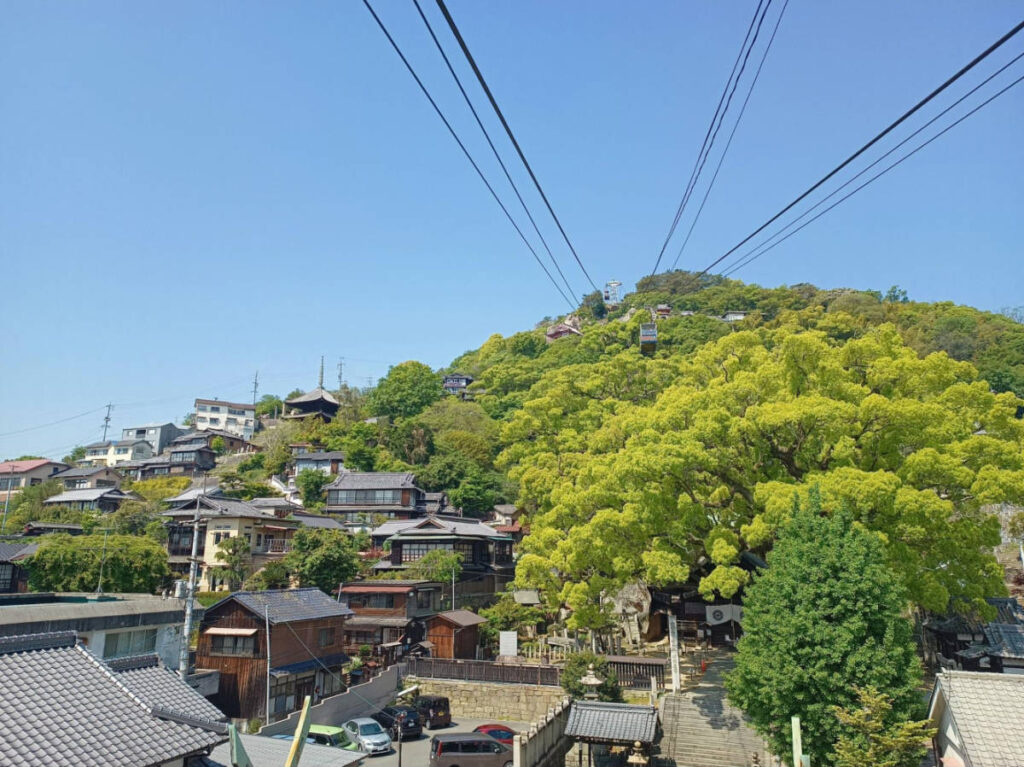
We stayed one night before the start of the cycle in Lemonsea Onomichi – one of the best hostels I’ve ever stayed in (and I’ve stayed in over 50 hostels!).
Our intention was to set off early in the morning to ride, but our departure was somewhat delayed by exploring Onomichi! The town is picturesque and we couldn’t resist taking the ropeway up to explore Senkoji Park and some of the 25 temples that form part of the town’s well-known Temple Walk.
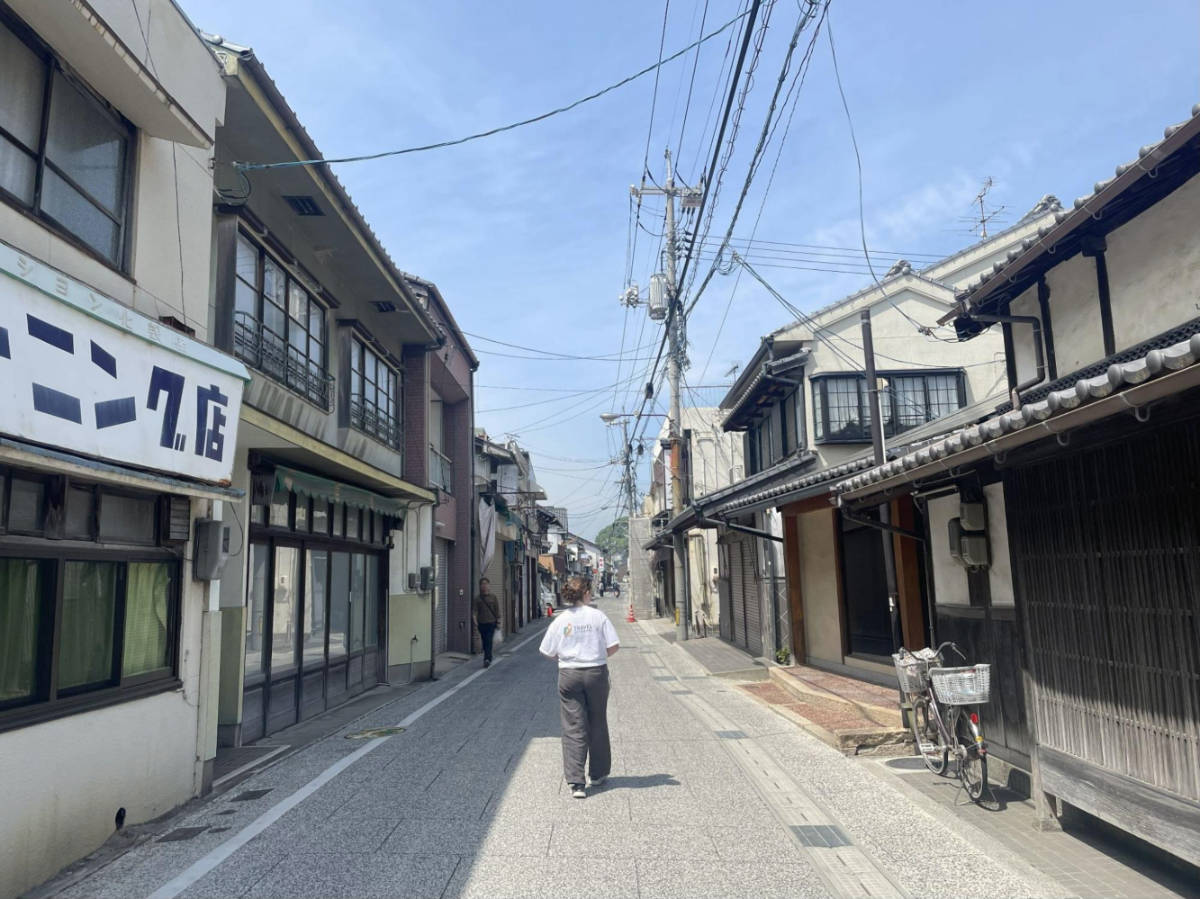
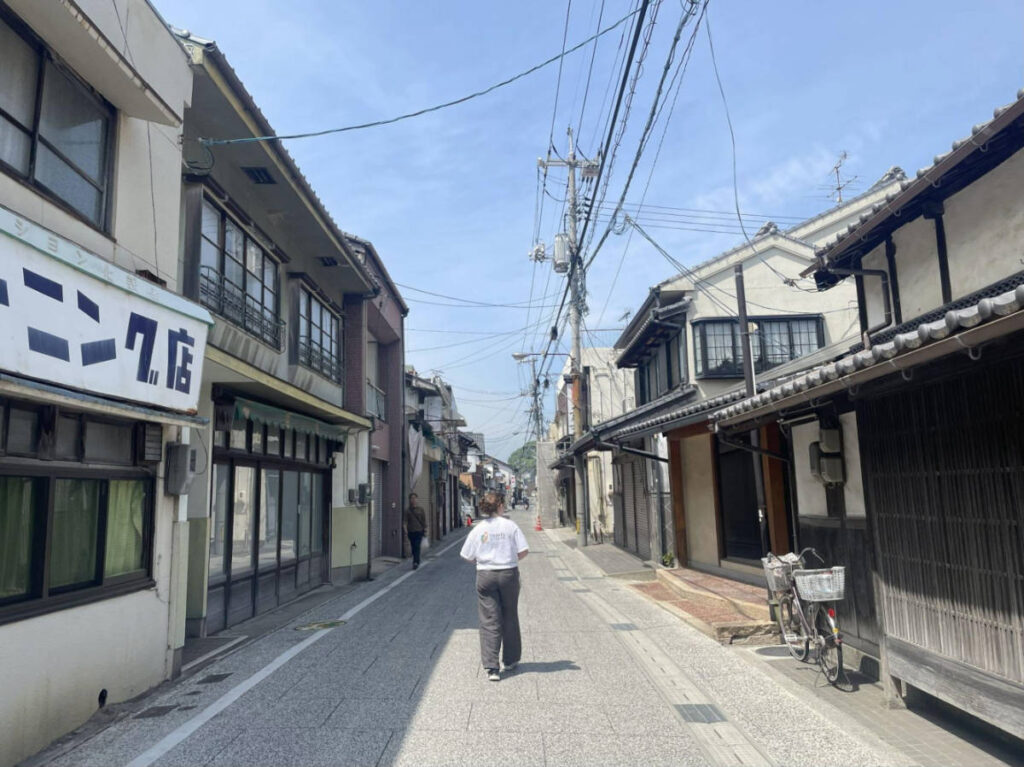 Ruthie walking in Setoda
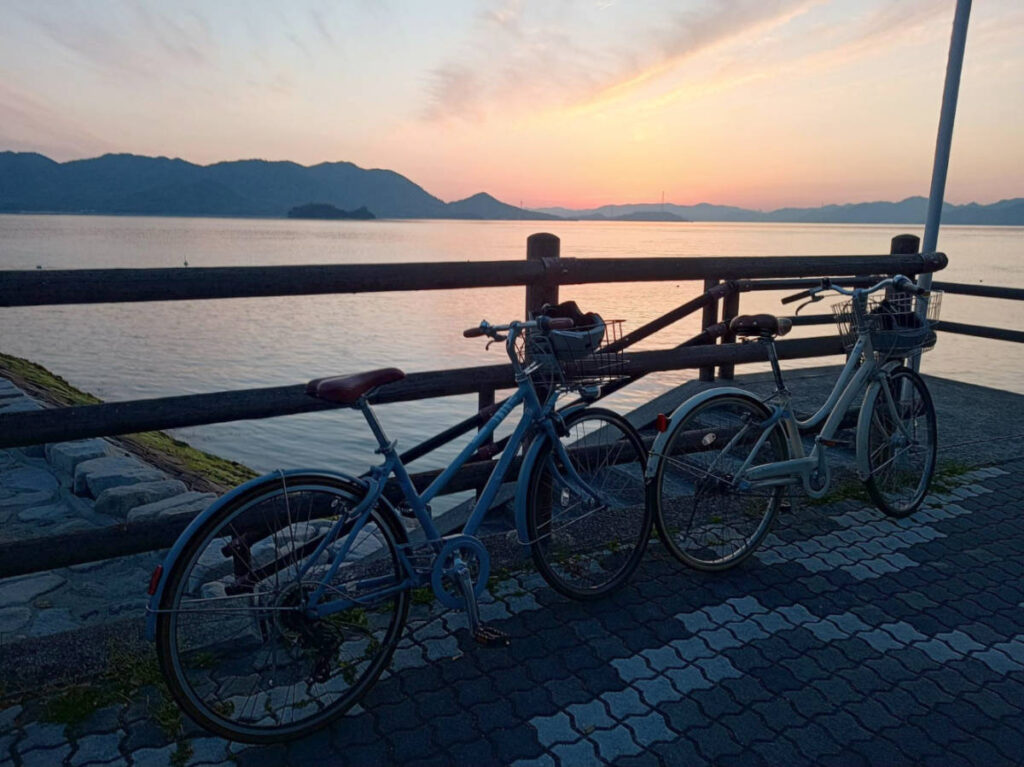 Sunset Beach
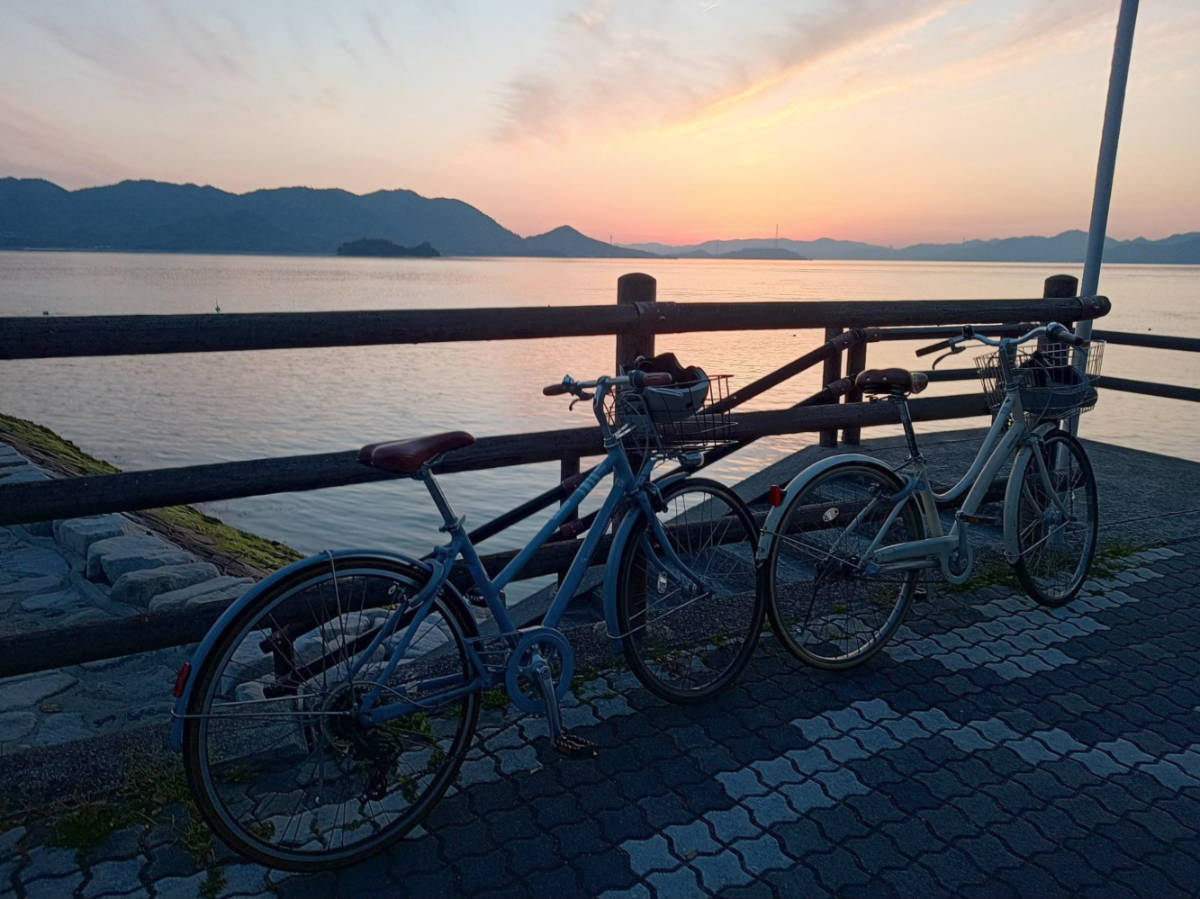
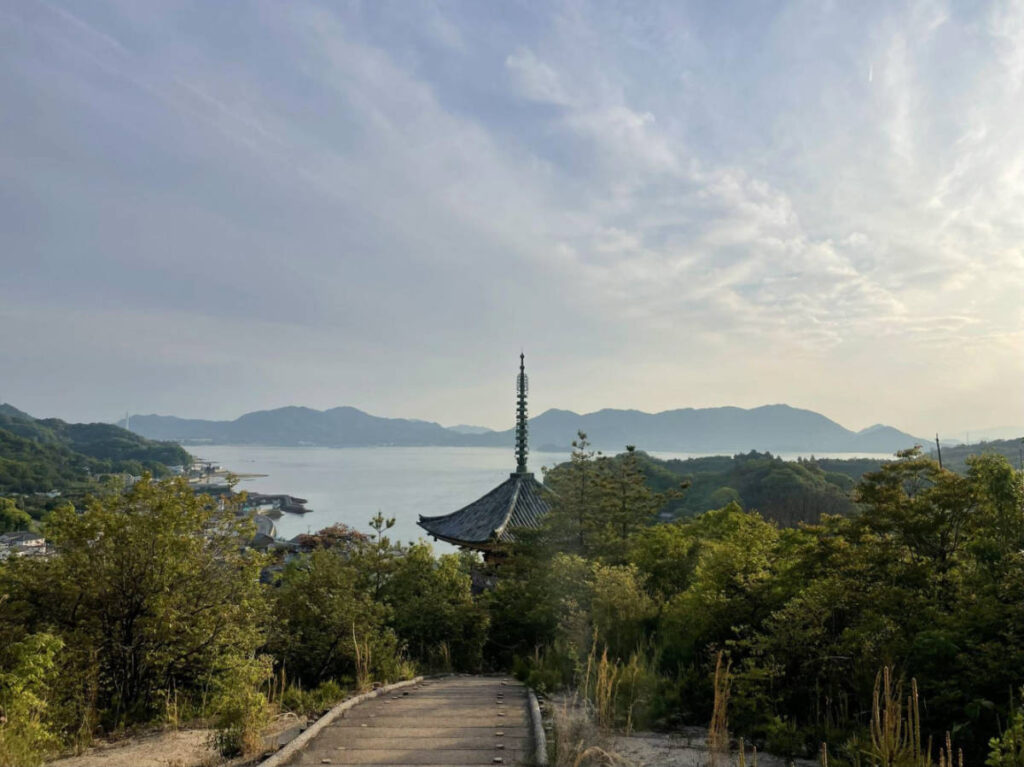
We stayed a night in Bed&Cafe Onzo in Setoda, a cute town on Ikuchijima Island, which is roughly halfway through the cycle. We arrived in time to enjoy golden hour from Kojoji pagoda, which has stood proudly with panoramic views across the island for over 600 years.
We then headed to the aptly named Sunset Beach for the sunset, which was truly spectacular.
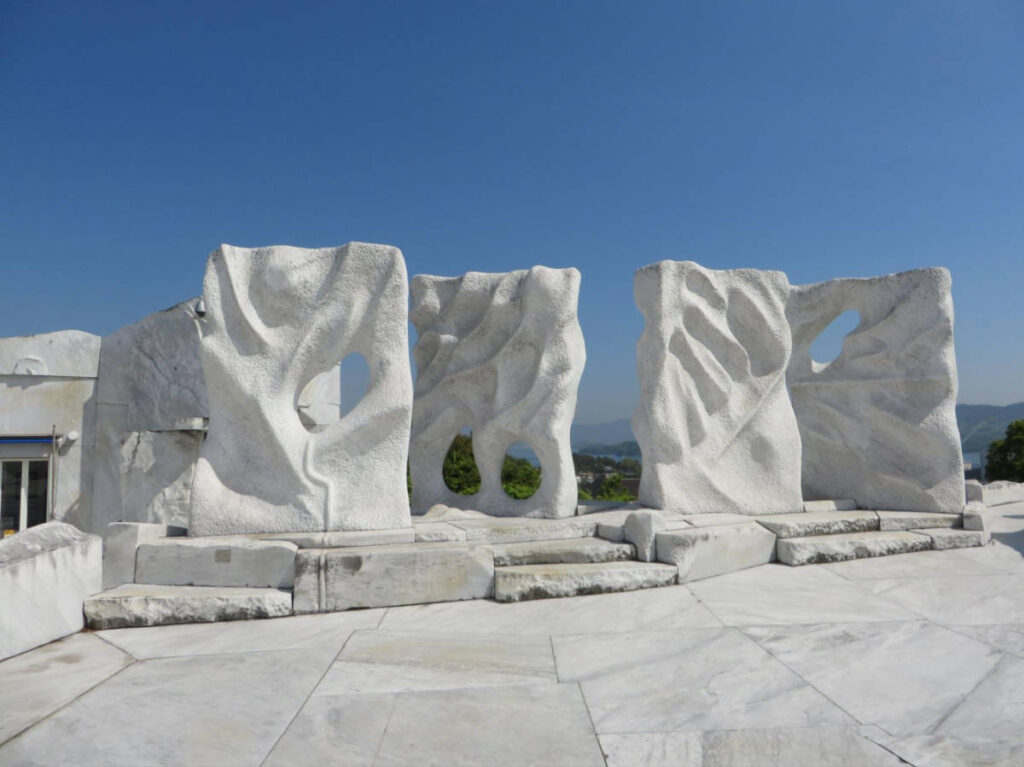
Setoda was full of wonderful places to explore. Our morning departure was again delayed thanks to another epic temple visit. Kosanji Temple is an unexpected treasure trove with intriguing sights, including replicas of Japan’s famous temple buildings and a garden with sculptures made of Italian marble.
Day 2: Setoda to Takamatsu
Having cycled our way from Setoda to Shikoku, an island seldom visited by foreign tourists to Japan, we wanted to savour our efforts and enjoy what the island had to offer.
We spent a night in Ten to Sen Guesthouse in Takamatsu in Kagawa Prefecture, just a short train ride from Imabari.
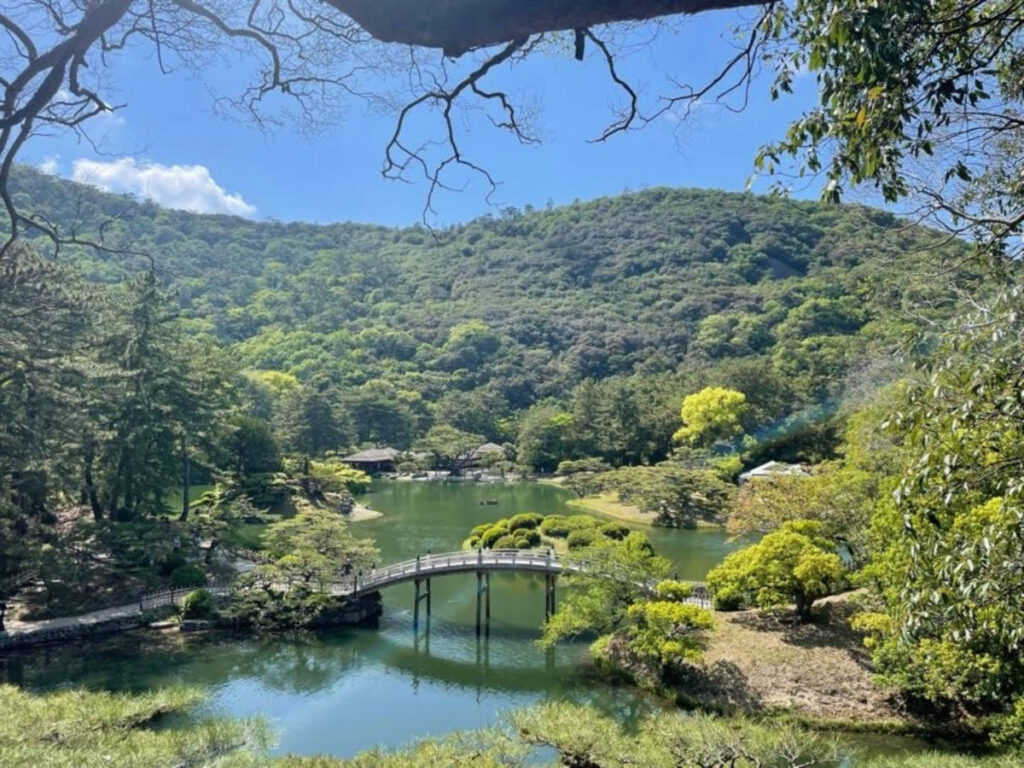
We spent our day at the stunning Ritsurin Garden, considered one of the best gardens in Japan, and Kitahama Alley, a labyrinth of edgy shops and cafes in renovated warehouses near the Port.
Shikoku and its four Prefectures warrant more than a day of exploring. The island is rich with culture, history and nature, and known for its epic scenery and pilgrimage of 88 temples around the island.
My tips for the Shimanami Kaido cycle
The ride is made easy and accessible for tourists, but it still requires a bit of planning and logistics. Here are my top tips for making sure you get the best experience possible.
You need to be fairly confident on a bike
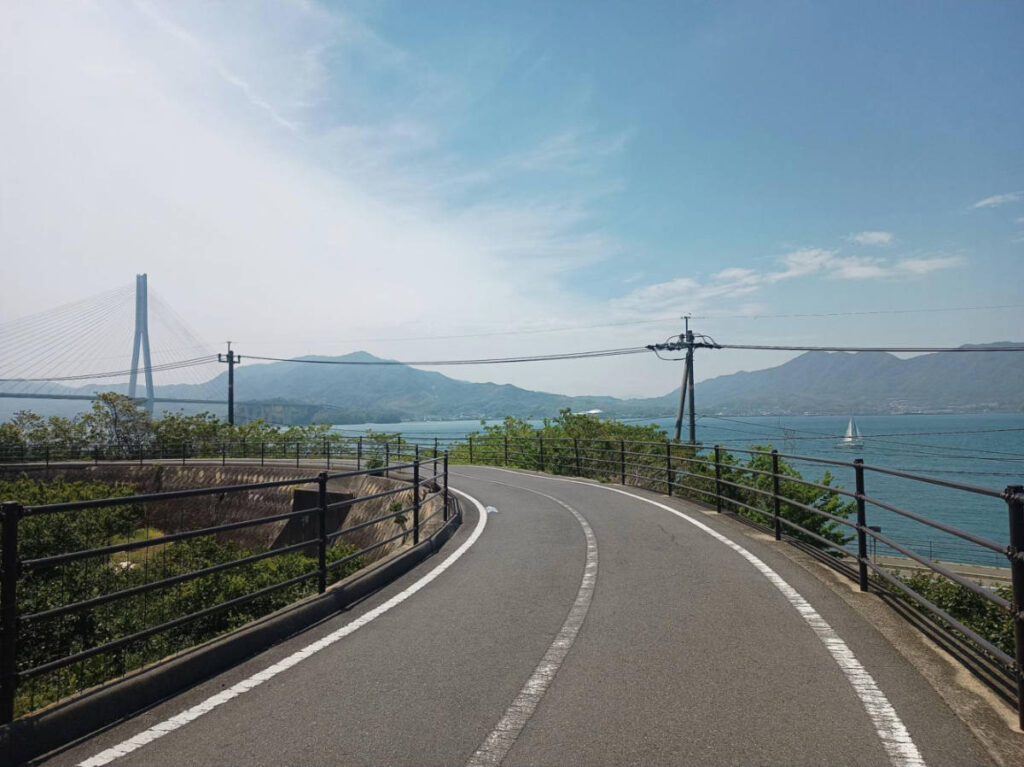
Granted, the cycle route is super easy to follow and as straightforward as a 70 km cycle can be. It’s suitable for people who aren’t frequent cyclists, especially on an e-bike. But (sorry for stating the obvious) you still have to cycle!
In total, we covered 79 kilometres with an elevation of 1705 ft over the route – and it was harder to cycle in the breeze! Think carefully about your own limits before committing to the ride, and if the cycle is too much, take the route as inspiration and explore the islands on foot or by train or bus.
Rent a bike from one of the main rental stations
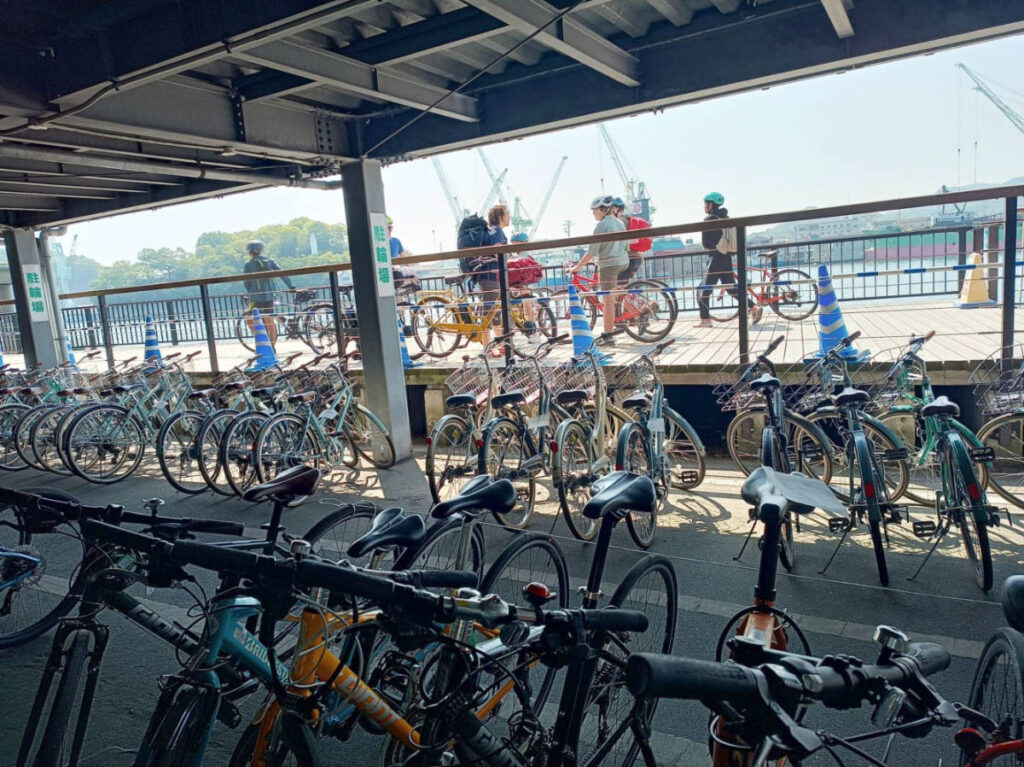
We rented bikes from the main Shimanami Bike Rental facility. We reserved them in advance, although some are available on a first-come, first-served basis on the day. We hired them from Onomichi and dropped them off in Imabari at the end of the route. The rental facilities are well-organised and equipped.
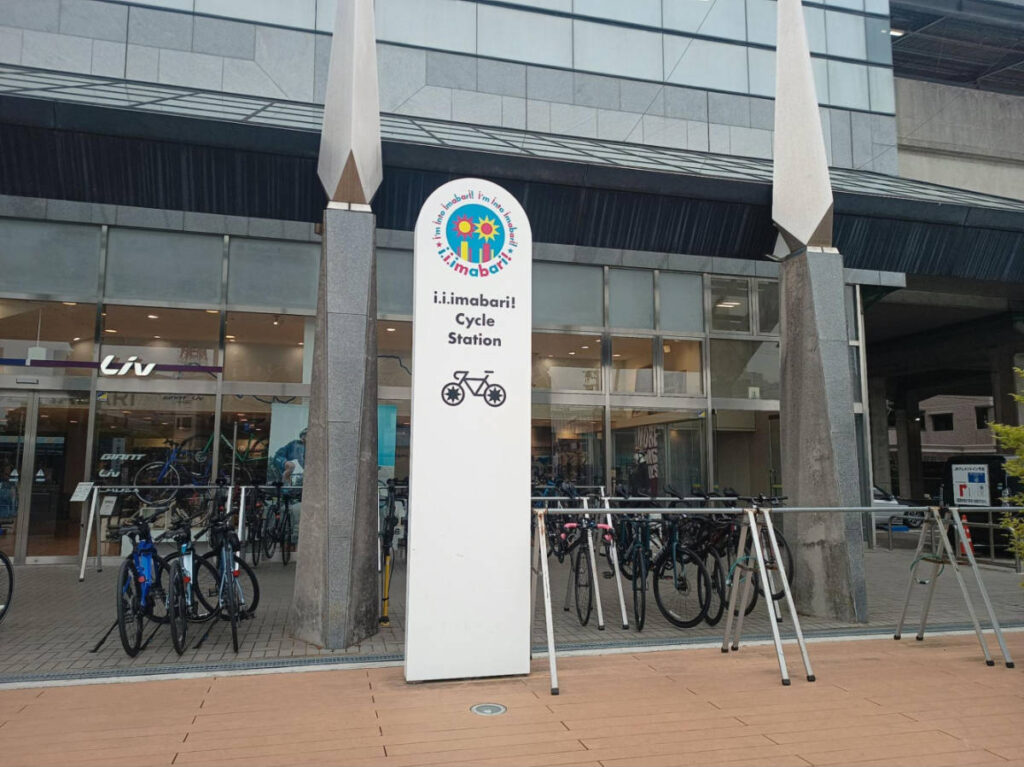
You can hire city cycles, cross bikes, and battery-assisted bikes. We went for the city cycle as they had baskets for our bags. Some of the bikes were on the smaller size and not ideal for tourists on the taller side, and the handlebars were quite narrow. You just have to get used to it!
The push bikes could be rented over multiple days and returned to a number of facilities along the route. E-bikes can only be rented for one day, which can make the logistics of extending the cycle over multiple days a bit harder (but not impossible).
Send your luggage on or leave it in a locker
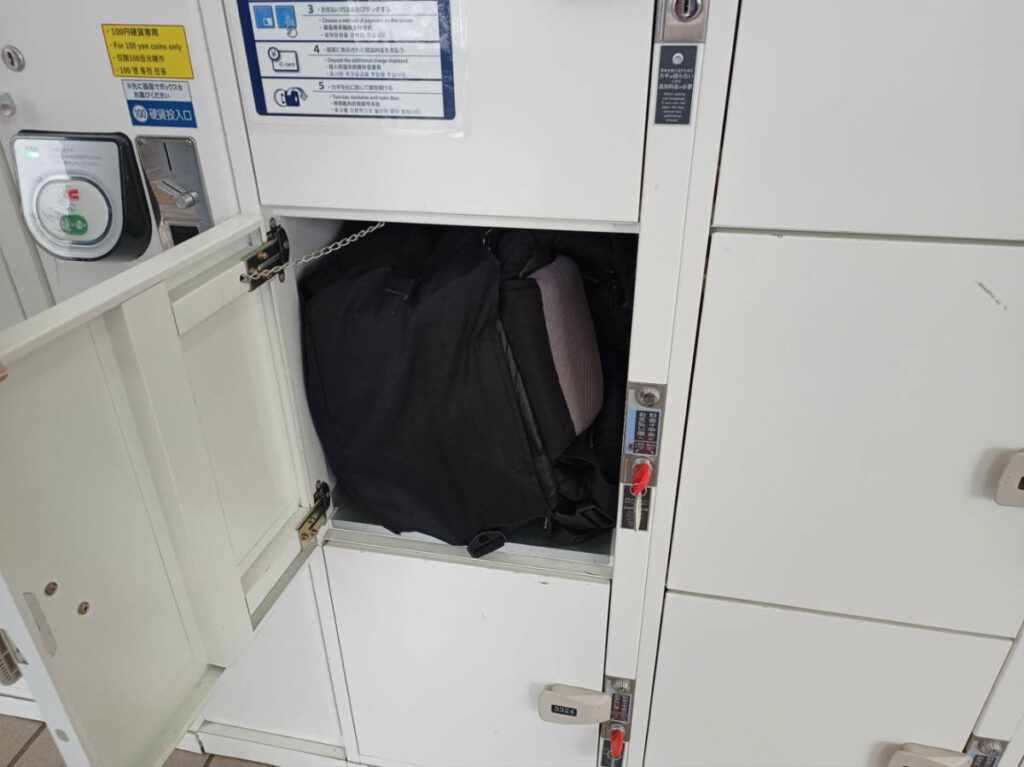
You’ll need to leave your main luggage behind whilst you take just a small backpack or bag that will fit in the bike basket. As fellow TL Writer Sky mentioned in her list of travel hacks for Japan, luggage shipment services are common here, which makes this pretty simple.
We sent our suitcases from the hostel in Onomichi to our accommodation after the cycle. This was one of the reasons I ditched my backpack in favour of a suitcase on my trip!
You could also leave luggage in a coin locker in a train station, but keep in mind that lockers are emptied after three days.
Book accommodation in advance
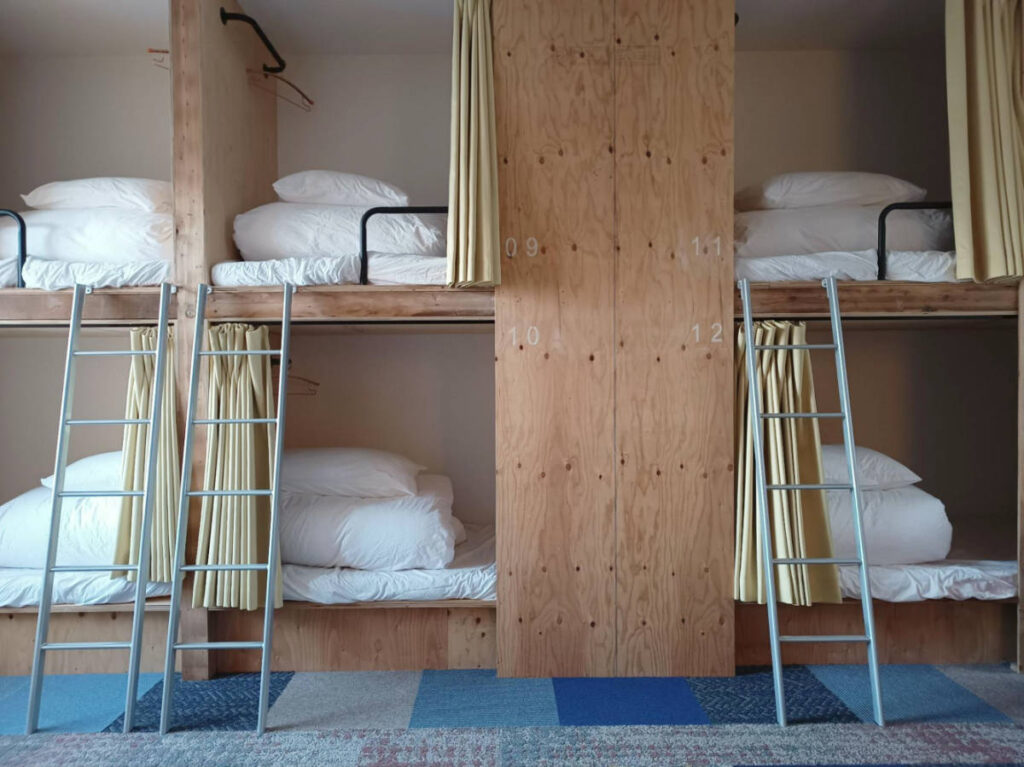
There are limited accommodation options along the route, including some amazing places to stay, so book ahead to avoid disappointment. Be sure to check the locations and consider how far away from the route you want to stay.
👉 Want to know more about Japanese accommodation options? Read Chelsea’s article about staying in traditional Japanese hotels.
Take the train back to Honshu
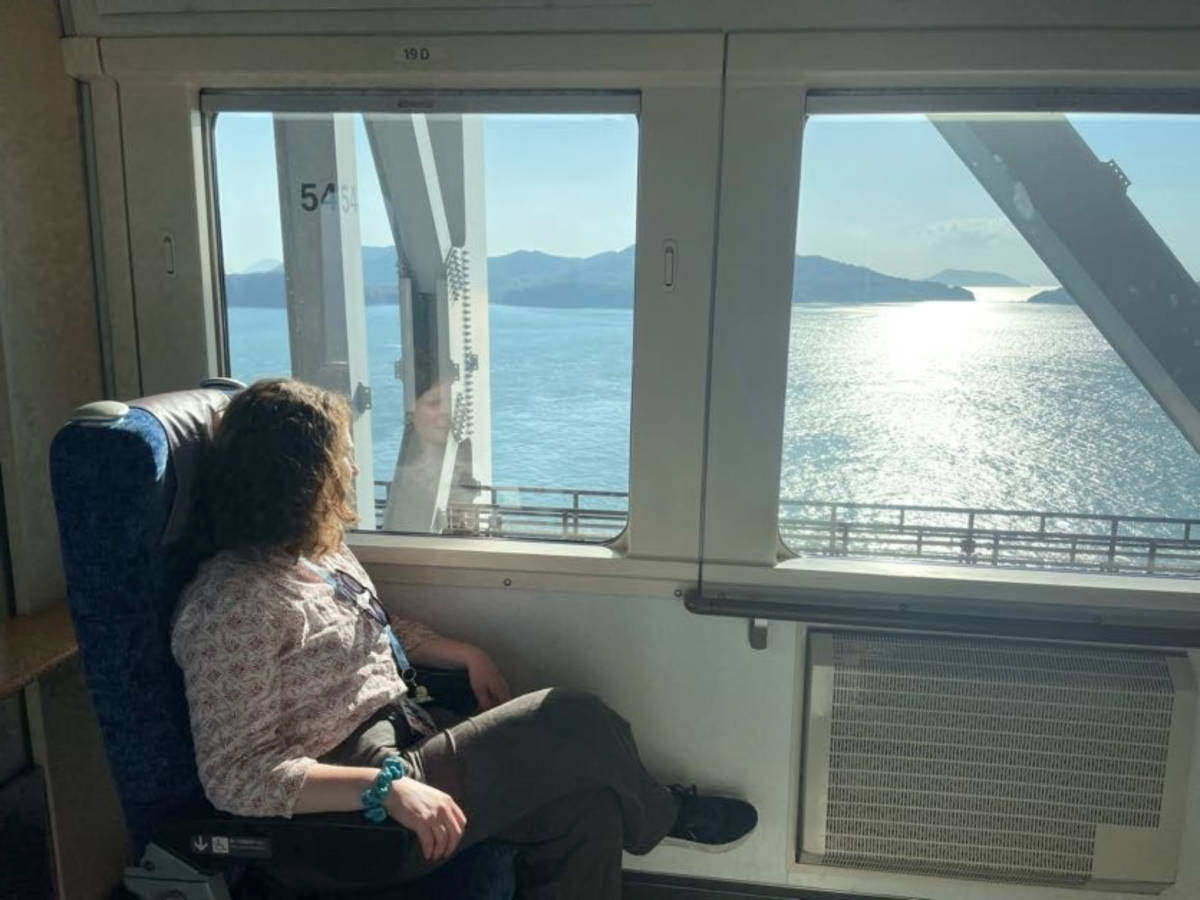
Unless you plan to cycle all the way back, you’re likely to travel back by bus or train. I had a Japan Rail Pass, which made train travel really easy on Japan’s public transport system. The train ride from Shikoku to Honshu covers an impressive route crossing over the Great Seto Bridge Line.
It was really special to enjoy the views one last time and wave farewell to the Seto Inland Sea from the comfort of a chair!
Take some snacks and water, and plan your meals
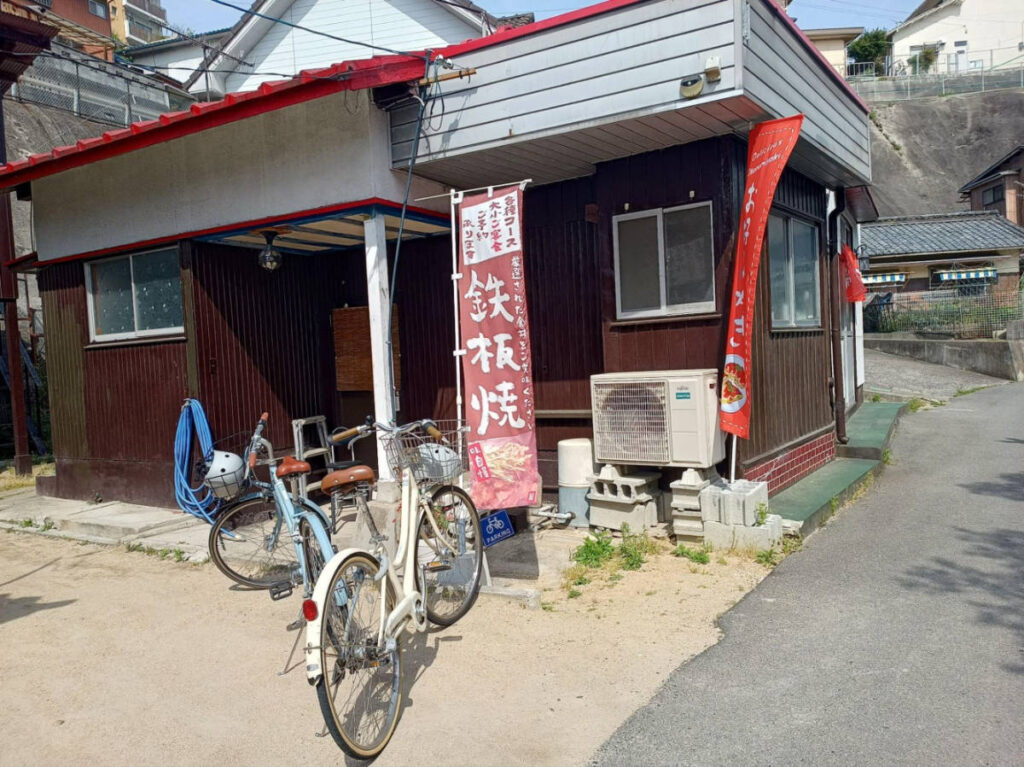
It’s important to stay hydrated and eat plenty when cycling. Take a couple of water bottles (there are places you can refill en route) and some snacks.
There are stretches of the route without many restaurants or cafes, so I recommend planning roughly where you will stop for lunch. If staying a night on an island, it’s best to book dinner in advance as there are limited options. In Setoda, I recommend the restaurant at the hotel SOIL Setoda – the wood-fired dishes were delicious!
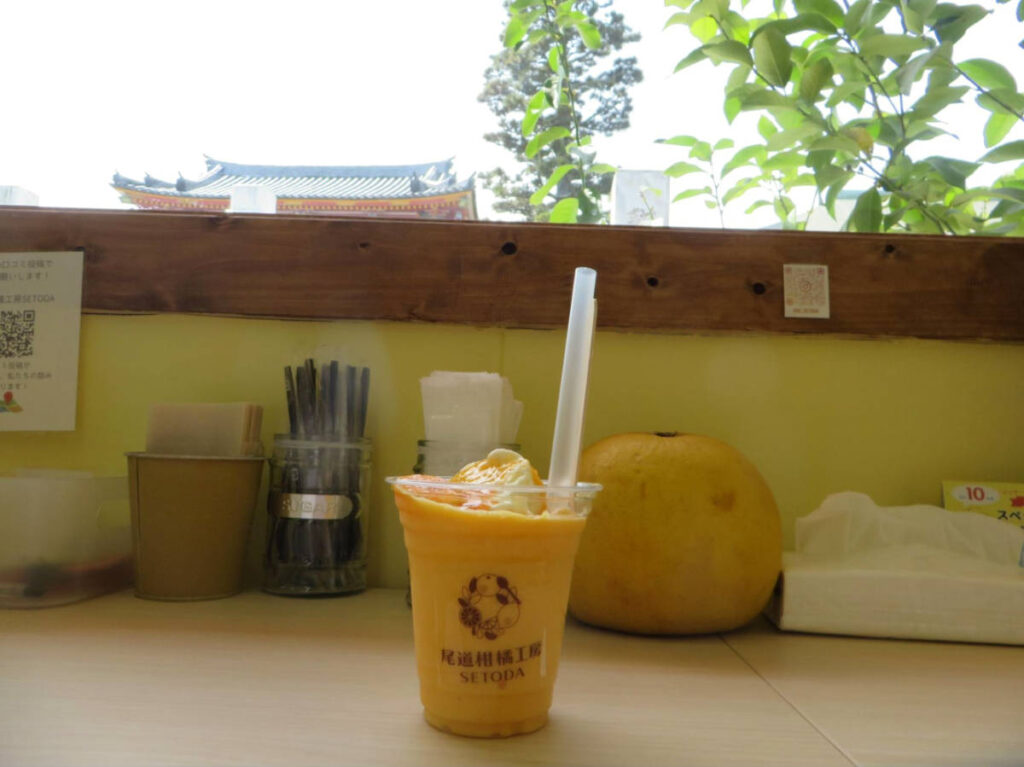
Japanese cafes tend to open later than here in the UK, and I hadn’t planned breakfast well.
But a lemon cake and freshly squeezed orange juice with a scoop of ice cream (extravagant breakfast, I know) soon filled the gap. Ikuchijima Island is famed for its lemons, so I like to claim that lemon cake for breakfast was purely a cultural experience.
Keep your camera on hand
It’s not practical to have your camera out the whole time, as your hands need to be on the handlebars (and you’ll get nowhere if you take photos every time you see a nice view!). But you will definitely want to take a few snaps, so keep your camera somewhere safe and easy to get to.
***
The Shimanami Kaido is an epic cycle through a stunning corner of Japan. I hope you are inspired to add it to your Japan trip, whether you explore by bike or not.
I’m happy to answer any questions in the comments section below, and would love to hear your experience if you have also completed the route!
More Latest PERSPECTIVES


I’m not great on slopes but quite happy to get off and push my bike when I can’t manage the gradient. Is it safe to push/walk on the route when necessary? I don’t want the faff of an e-bike
Hello, Yes, it is definitely safe to push/walk up slopes when needed. A large portion of the route is completely separate for cyclists – either on a cyclist-only path or on a separated part of the road, so you can calmly walk along and enjoy the view! There are slopes leading up to most of the bridges but these are almost always cycle-only paths and very quiet. Even where the route runs alongside a road, the roads are not busy and drivers are very considerate and polite to cyclists.
As I write in the article, I recommend splitting the ride into 2 days and staying for a night in the middle (Setoda) and at the end (Takamatsu), especially if you might be taking some of the ride at a slower pace. I can’t recommend the Shimanami Kaido enough, and hope that reassures you that you’ll be fine! Happy to answer any other questions you have about the ride.