
Affiliate Ad Disclosure: We’re reader-supported. When you buy via our links, we earn commissions. Learn more.
I plan my trips abroad around sports events. Here’s why you should, too.

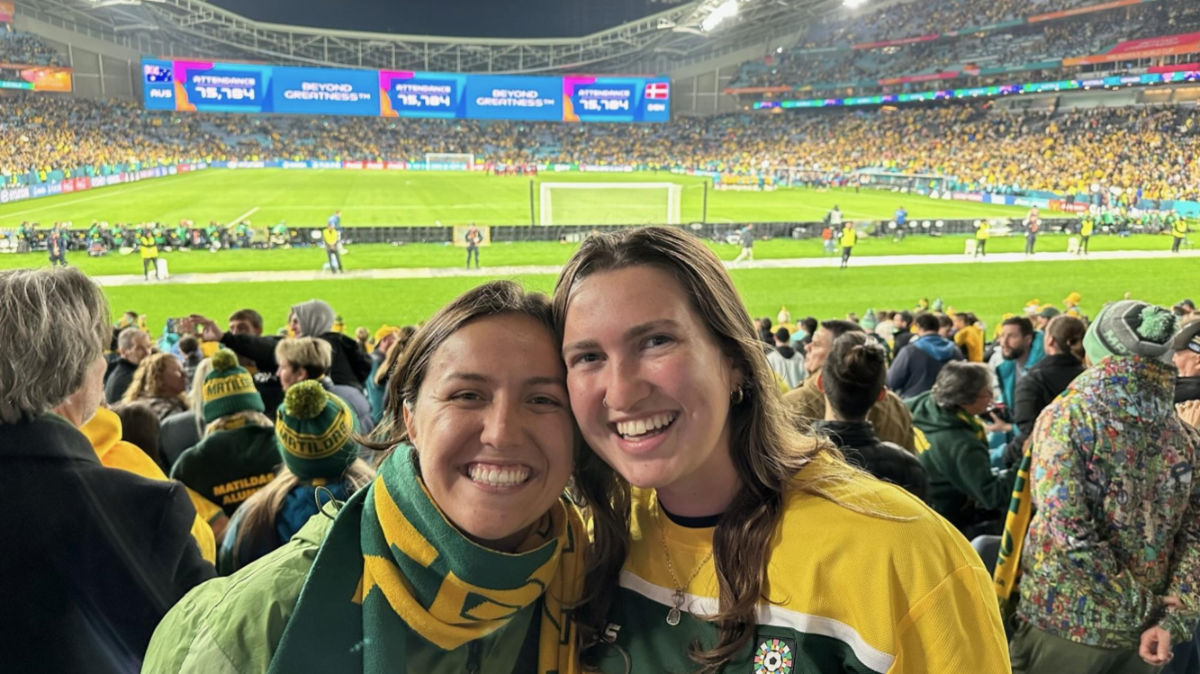
What’s the furthest you would travel for a sports event? How about halfway around the world?
I played sports growing up, but I’ve always been a pretty casual fan. I wouldn’t consider myself someone who necessarily follows sports… until I began aligning my international travels with major sports events. Now, I quite literally follow sports.
If this sounds extreme, hear me out.
Some of my favorite travel memories have come from sports events. It all started when I lived in a small town in Croatia during their historic 2018 FIFA World Cup run. The pubs were packed each match, and it felt like the whole country was buzzing with excitement. I knew I was witnessing something special.
So when I saw that the 2023 Women’s World Cup was going to be held in Australia, a country I’d been wanting to travel to for years, I couldn’t say no. I bought tickets to the World Cup, quit my job, and bought a one-way flight to Sydney.
When I look back on my favorite travel stories of all time, Croatia and Australia stand out miles beyond the rest.
Here’s why:
Getting involved in a country’s sports is a way to get deeply involved in the culture. It’s truly for everyone — not just people who enjoy watching sports!
Where it all began: I lived in Croatia during the 2018 World Cup
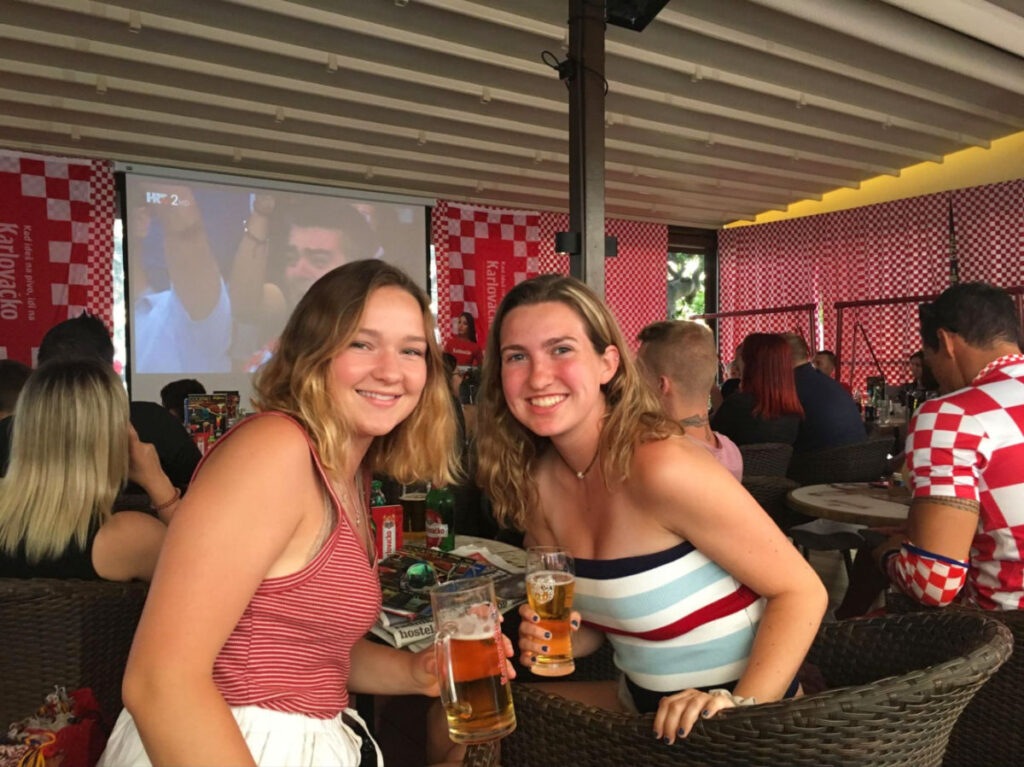
In 2018, I spent the summer as a volunteer English teacher in Croatia. I lived in a small town of about 5,000 people, and I quickly fell in love with the community.
The FIFA World Cup, the world’s preeminent soccer tournament, was happening that summer. Although the matches were taking place in Russia, countries from around the world tuned in to watch their men’s teams compete. Croatia was no exception.
I knew that the tournament was going on. But I honestly didn’t know how Croatia would do — they were huge underdogs, and no one expected them to go far.
However, that soon changed. Croatia’s stunning 3-0 victory over Argentina in the group stage caught the world’s attention. I attended a watch party with hundreds of people in my tiny town square, and the energy was like nothing I’d experienced before.
Croatia started winning, and then they just didn’t stop.
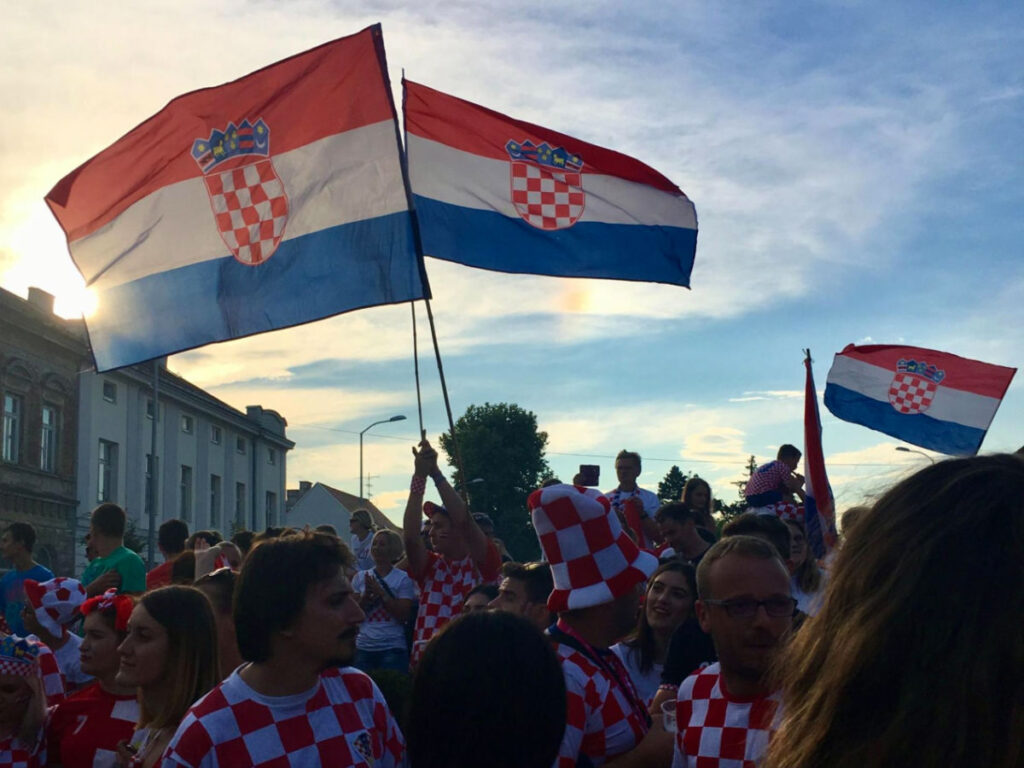
The next 2 games — a round of 16 victory over Denmark and a shocking quarterfinal victory over the host team, Russia — were both won on dramatic penalty shootouts in extra time.
The amount of collective stress I felt while watching these games was insane. Three weeks ago, I hadn’t even known, much less cared, that Croatia would be in the World Cup. And now here I was, singing the viral Croatian supporters’ song, holding hands with the strangers next to me, and yelling idemo Hrvatska.
When it came time for the semifinal against England, it felt like Croatia’s underdog dreams might end there.
I can still remember that game as if it was in slow-motion: the pub erupting and beers being tossed into the air when Croatia scored, jumping and hugging the old man next to me when the final whistle blew, running out into the streets to fireworks being set off and people dancing on top of cars.
Croatia beat England 2-1 to shock the world and make it to the final. The whole town partied until about 4 in the morning.
It was the first and only time in history that Croatia made it to a World Cup Final.
In the final, they ended up losing to France and getting second place, but no one seemed to hold onto that disappointment for long. It was thrilling just to have gotten there.
Then I traveled to Australia for the FIFA Women’s World Cup
After experiencing Croatia’s excitement in the 2018 World Cup, I wanted more.
In 2022, I found out that the Women’s World Cup would be held in Australia and New Zealand the following summer. I had always wanted to travel Down Under, thanks to my dad’s epic stories about his time backpacking Australia & New Zealand when he was my age.
So I bought tickets. My reasoning was simple: I had been wanting to go to Australia, and the World Cup provided the perfect impetus.
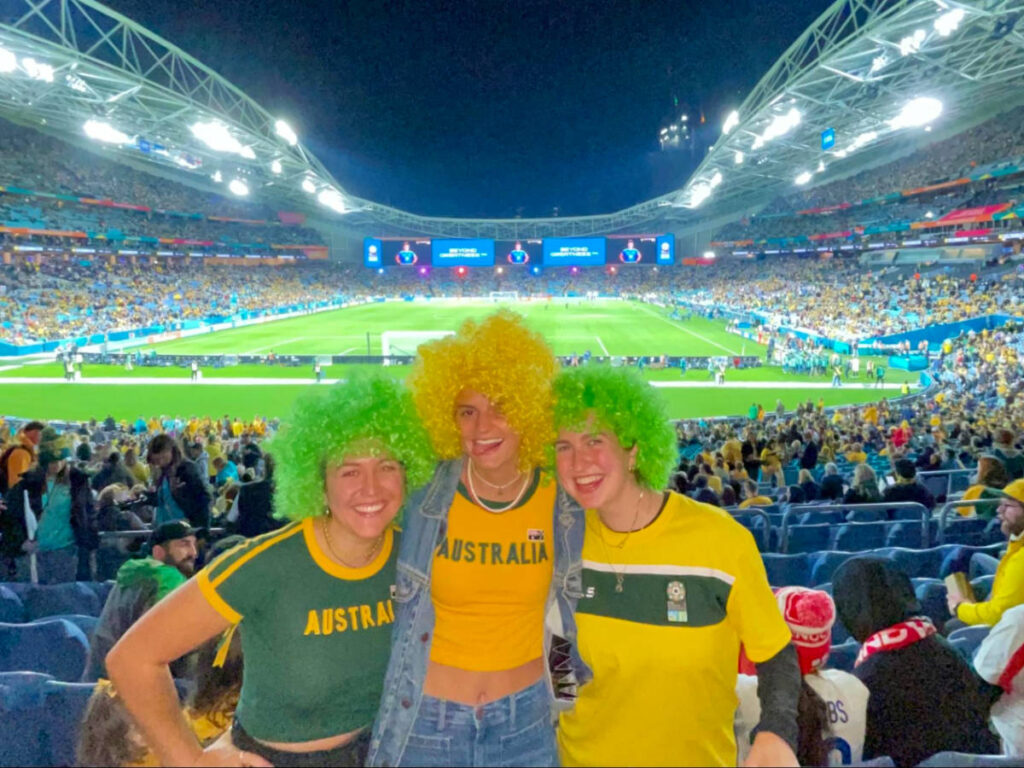
My partner and I stayed in Sydney for a full month. We went to seven World Cup games at the stadium and watched countless other matches at watch parties around the city.
The atmosphere around the Women’s World Cup was electric. Nearly every match in Sydney was sold out. We packed into the stadium with 80,000 other fans to cheer on the Matildas, Australia’s national team.
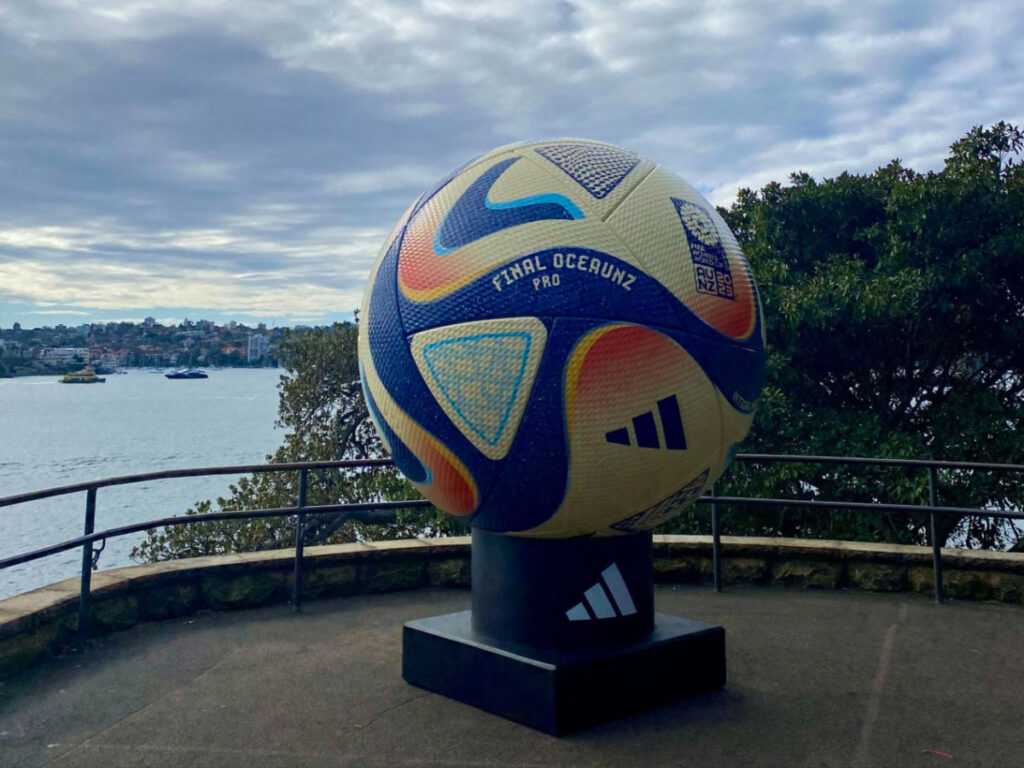
I loved watching Australia’s matches the most. Uniting with thousands of other fans — either at matches or at watch parties around the city — made me feel like I was immediately part of a community, even though I had only just arrived in the country.
By attending Australia’s games, I immersed myself fully in the country’s sports culture.
I learned the Australian national anthem. I dressed in all green and gold. And I yelled the quintessential Australian cheer, “Aussie, Aussie, Aussie, Oi, Oi, Oi!” more times than I can count.
To this day, it’s some of the most fun I’ve ever had.
I decided to stay for the Australian Open
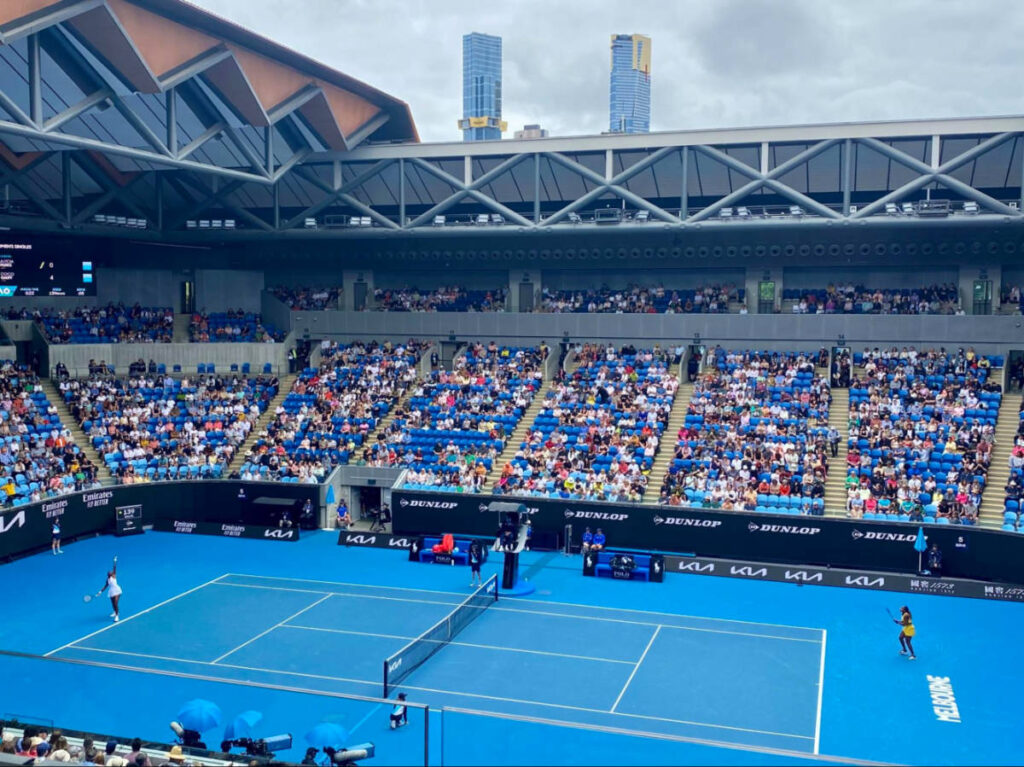
I didn’t go home after the World Cup was over. For the next several months, I road-tripped up Australia’s East Coast, traveled to Fiji, and backpacked around New Zealand’s North Island.
I also knew I needed to make it down to Melbourne at some point. Australia’s second-largest city, Melbourne is a cultural metropolis.
So, I timed my visit to Melbourne with the Australian Open tennis tournament.
Before this, I had never paid attention to tennis. I could name exactly two famous tennis players, and their names both ended with Williams.
But the Australian Open is so much more than just a tennis tournament — it’s a festival-like atmosphere. The whole city gets involved: bars and restaurants host watch parties, musicians play special concerts, and visitors flock to Melbourne from around the world.
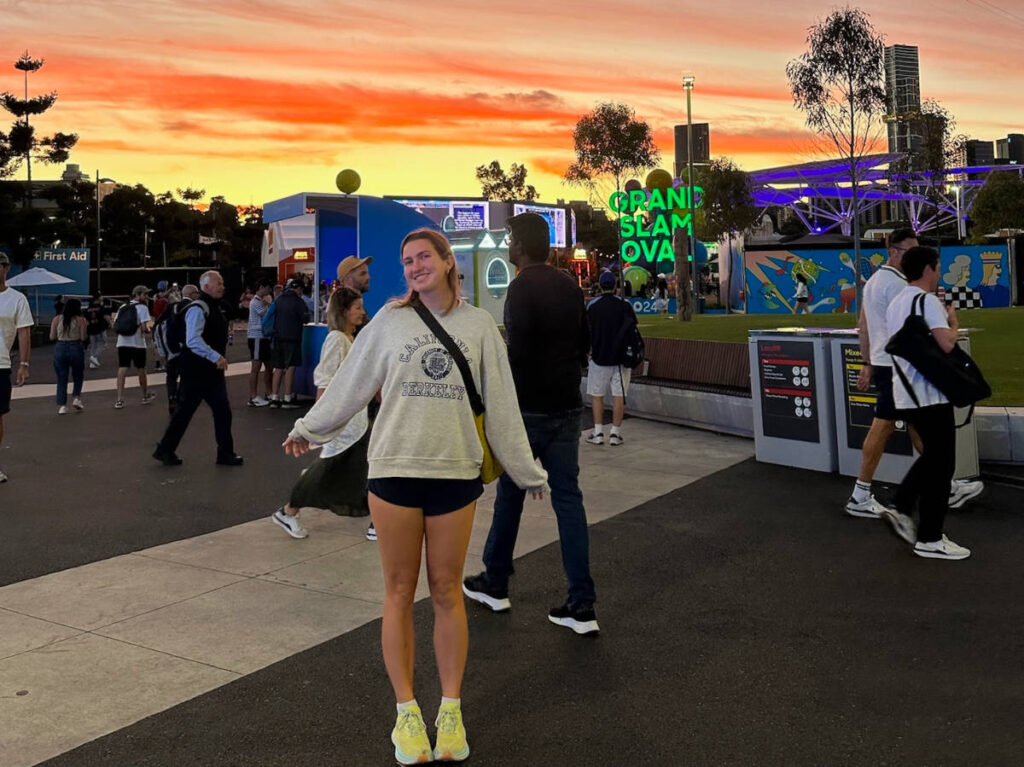
And much to my surprise, a day pass to the festivities was only $60!
The Open happens over the course of about 3 weeks. I went for two days. I wandered between courts, watched some of the best athletes in the world, soaked up the Australian sunshine, and drank fancy cocktails. It was so much fun.
Even though I had never been to a tennis match before, I didn’t feel out of my element at all. I quickly learned the rules and which players were favored. I tried to watch as many matches as possible, going to watch parties around the city and joining in the fun.
Going to the Australian Open left me with a whole new appreciation for tennis — and became one of the highlights of my time in Melbourne.
Then I flew to Europe for the Men’s Euro
At this point, I had decided to transform my 6-month trip to Australia and New Zealand into a one year trip around the world.
While traveling through Vietnam, we told a group of British guys that we were heading to Europe in June. They looked excited — “You’ll be there for the Euro!”
The UEFA European Football Championship, more informally known as “the Euro,” is almost as big a deal as the World Cup. It’s a major soccer tournament held every four years during June and July.
We hadn’t even known that the Euro was being held in 2024 — but at this point, it seemed like a perfect way to round out our sports-themed year of travel.
The Euro was held in Germany, but we didn’t go to any of the games. Instead, we enjoyed cheering for the national team of whatever country we were currently in!

We watched Scotland’s first match in a tiny pub in the Scottish Highlands.
We bought hats in Bratislava to watch Slovakia’s big match with some friends.
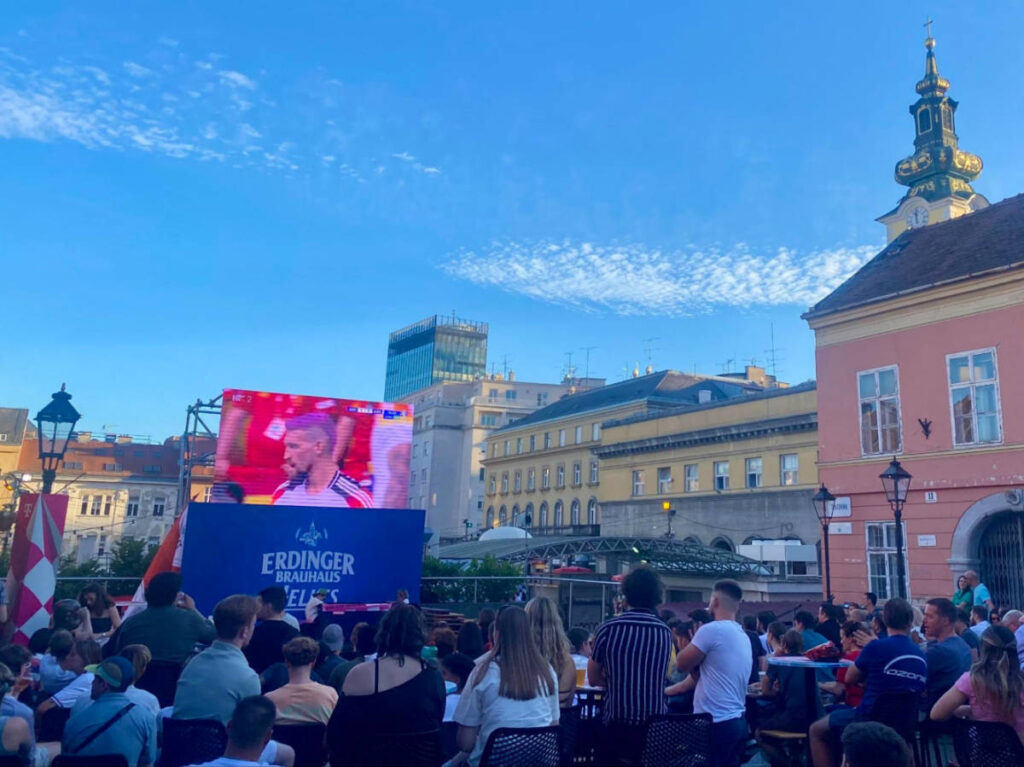
We went to a huge outdoor watch party on the banks of the Danube in Vienna with hundreds of other fans.
It reminded me so much of what I had loved about the World Cup. Each country and culture is so different — but many of them share the same fierce dedication to their home country’s team.
Watching the Euro with different groups of fans didn’t make me feel divided. Instead, it showed me how sports can bring people together, united by a common cause. No matter where we went, from small towns to big cities, there was always someone cheering for their team.
There are some drawbacks to traveling during big sports events

Of course, there are a few things to be aware of before traveling for a major sports event.
- 🚕 Traffic is worse. In Australia, for example, the trains were backed up nearly every World Cup game. While this wasn’t a problem for us, since we were usually at the game, it could get annoying if we were just trying to get around the city.
- 💵 It’s more expensive. We were in Paris right before the start of the 2024 Olympics, and we noticed that a lot of prices were already jacked up. Our hostel was super expensive, and the metro price had been increased from its usual price.
- 🏨 There’s a lack of accommodation options. In Melbourne, we noticed that hotels filled up more during the Australian Open.
But, the positives outweigh the negatives

Even though it might be more expensive and crowded, going to a huge sports event while traveling is absolutely worth it.
- 🇭🇷 The national pride and excitement is unmatched. In both Croatia and Australia, my favorite memories came from joining in this sense of pride for their country’s teams.
- 🤝 You get to know the country’s culture. I can still sing the countless sports songs or chants that I learned while attending games. And I instantly had something to talk about with local people I met.
- 🏆 You get to witness history. With each major sports tournament, there will almost inevitably be historic moments, dramatic wins, or shocking new records. Being there to witness it is an incredible feeling.
- 🎉 It’s fun just to be there. Some of my best travel memories have come from just being in the right place at the right time and joining in on the excitement.
Which brings me to my next point…
You don’t even need to go to the game
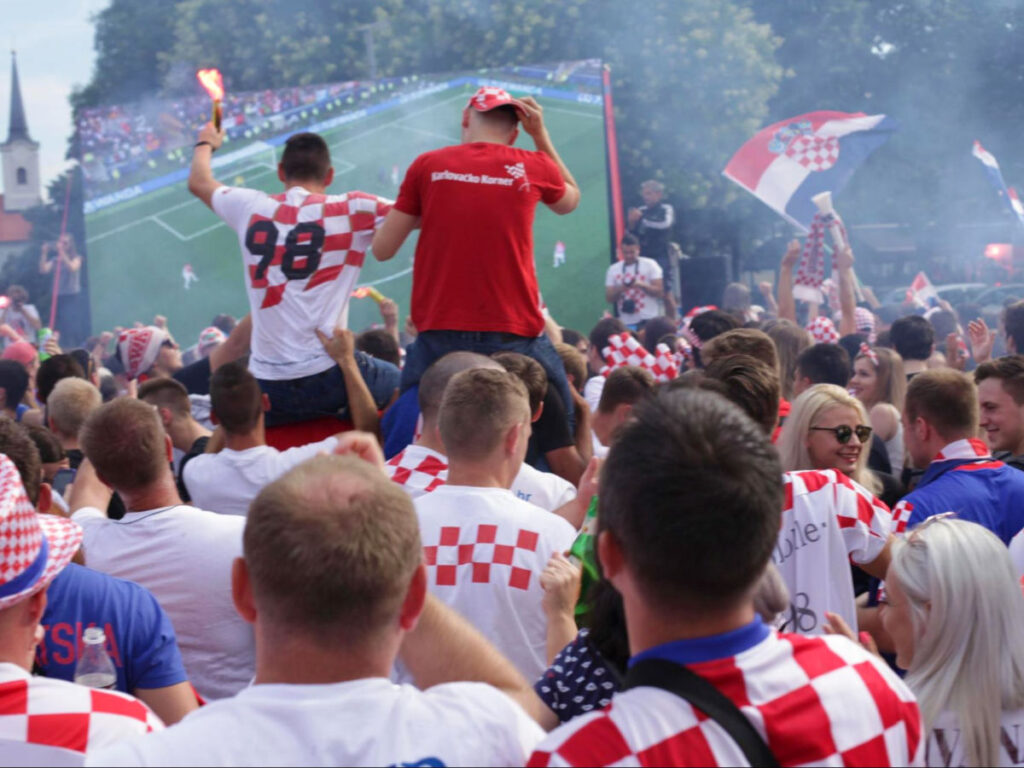
A lot of my core memories come from just being in a country at the time of the event — not even being at the game!
Take the 2018 World Cup, for example. I wasn’t even in the country where the World Cup was taking place (it was in Russia), but going to pubs to watch Croatia’s games made me feel like I was in the middle of all the action.
Same with the 2023 Women’s World Cup. While we did go to many of the games, my favorite moment of that tournament wasn’t even at one of the matches.
It was in a pub in downtown Sydney, where we watched the Australian team beat France in a historic 10-round penalty shootout. The pub was fully packed — standing room only — and everyone’s eyes were glued to the TV screens.
When Australia scored the winning goal, the pub erupted. I’ve never screamed so loudly in my entire life. People were jumping on tables. Beer was everywhere. It was an unforgettable night.
Local sports events are fun, too
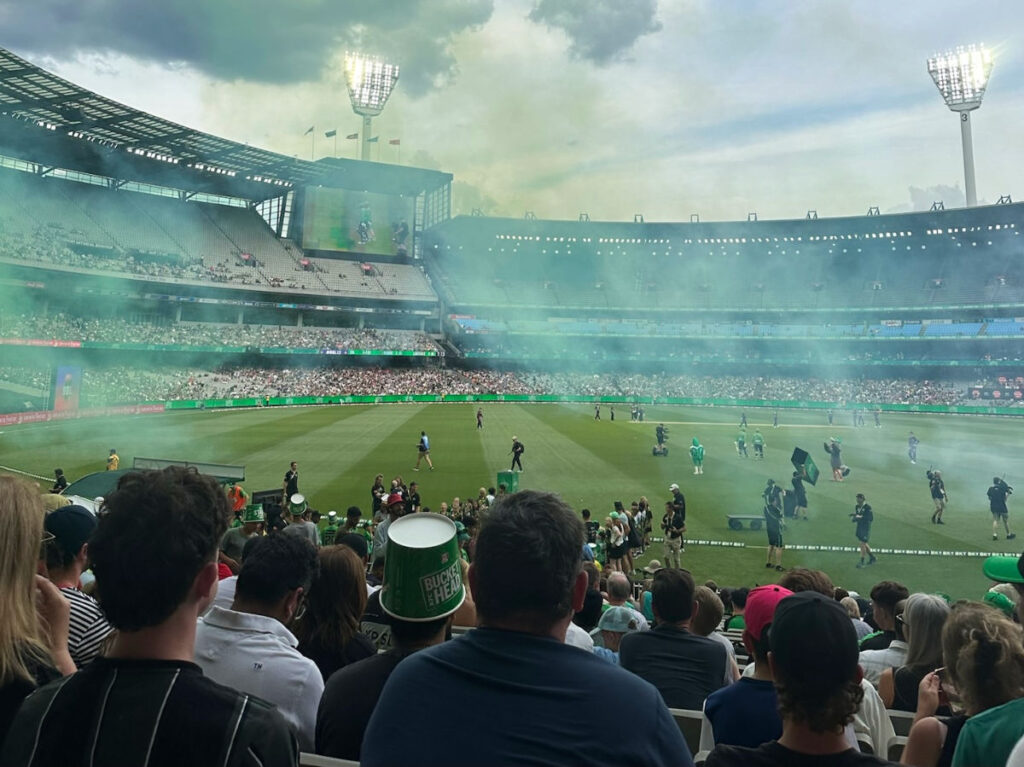
Okay, so maybe you’re not convinced that you need to fly halfway around the world for a major sports event. But you can still incorporate sports on your next travel adventure!
Watching local sports in a new country is a great way to get more involved in the culture.
I began watching both cricket and Australian Football while traveling in Australia. It was funny to try to learn a completely new sport that I’d never been exposed to before. But it was a great way to bond with new friends and immerse ourselves more into the Aussie lifestyle.
Local sports are great because the tickets are usually pretty affordable, and you don’t run into the kind of accommodation or traffic issues that come with a major sports event.
Sports are culturally significant and unifying
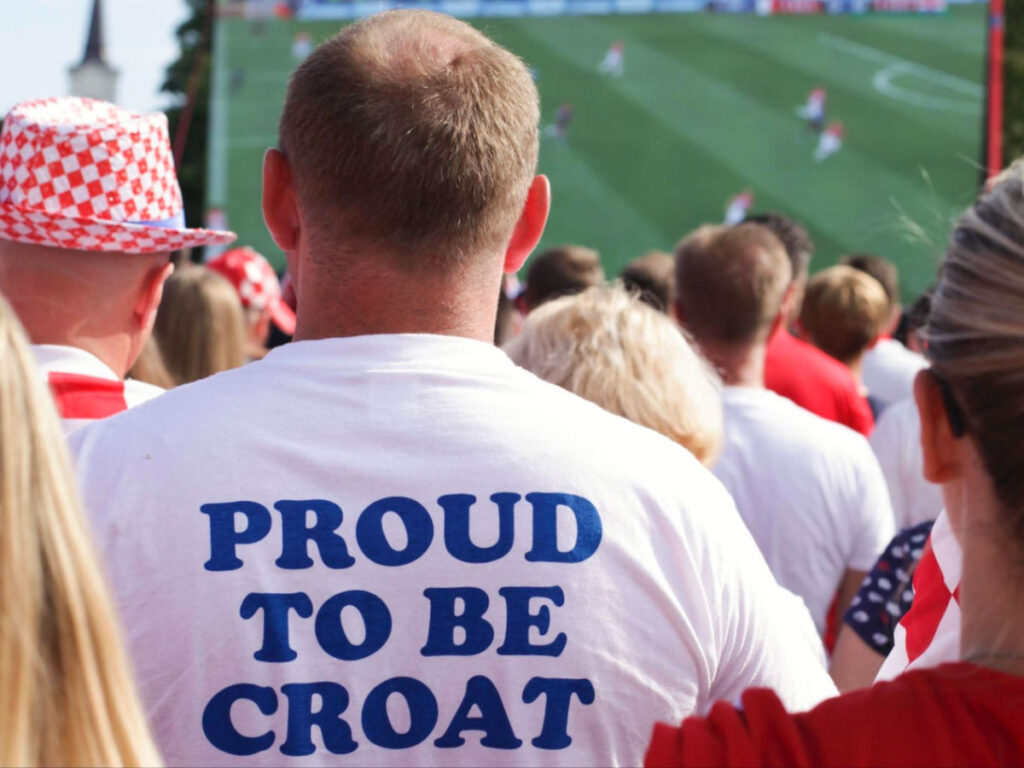
To truly understand why the 2018 World Cup was such a big deal to Croatia, you have to know more about the country’s history.
Croatia is barely 30 years old. The country won independence in 1991 and suffered through some brutal wars in the 90s.
For a nation that new, and that small, to make it all the way to a World Cup Final? Not only was it historic, but it was extremely culturally significant to many in Croatia. It showed the world that they mattered.
And being there in 2018 wasn’t just about watching the games at the bars. In the English classes I was teaching, all the kids ever wanted to do was talk about soccer, watch soccer, or play soccer. Getting swept up in the excitement of the World Cup was a way for me to bond with my new community.
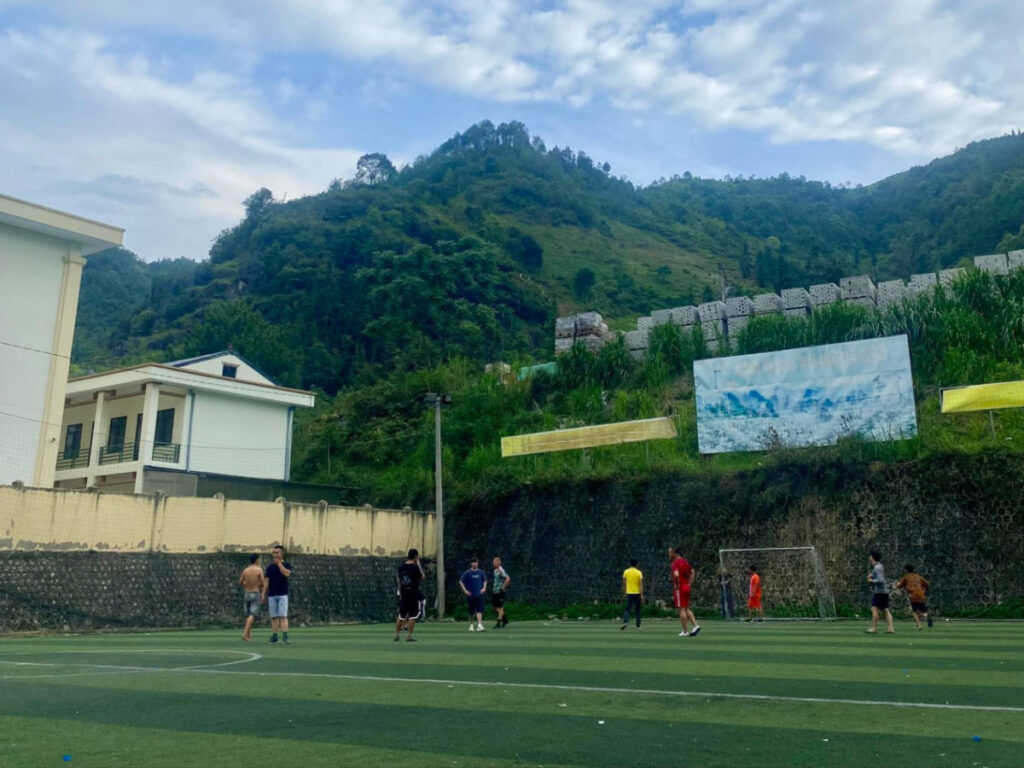
And while sports can be used to showcase national pride, they can also unify those from different backgrounds.
When I was traveling in Vietnam, I was invited to a pickup soccer game with some of the locals in the small town I was staying in.
Out of the 20 or so players, only one of them spoke English. I did not speak any Vietnamese. But we all knew the rules of soccer. Sports were a universal language for us.
We played for a few hours, and it was the first time that I felt like I was able to really connect with others as an equal. The distinction between tourist and local fell away. It didn’t matter that we didn’t speak the same language. We had something in common — a love of the game.
Sports aren’t just silly games — they’re a huge way of getting involved in a country’s culture.
Sports are also a great way to make unforgettable travel memories. Now, when I watch certain sports teams, I’m reminded of my travels somewhere.
I have a lifelong fondness for the Croatian national soccer team.
Anytime I watch tennis, I think about the Australian Open and my time in Melbourne.
And I still regularly check the scores for the Australian Football League, thanks to my time watching AFL games with new Aussie friends.
So yeah, maybe I wasn’t a sports fanatic before. But weirdly enough, travel brought me closer to sports, and sports brought me closer to travel. It’s a very unique relationship that has been the source of some of my favorite travel memories thus far. I can’t wait to keep making more.
👉 You Might Also Like: Bad Bunny shows a side of Puerto Rico most tourists never see (but you can)
***
What’s the best sports memory you’ve had? Have you ever traveled for a sports event? Let me know in the comments!
Up next, check out why Niamh thinks the NYC Marathon weekend is the best time to visit!
More Latest PERSPECTIVES


