
Affiliate Ad Disclosure: We’re reader-supported. When you buy via our links, we earn commissions. Learn more.
People often skip New Zealand’s North Island. Here’s why you shouldn’t.

When asked to conjure up images of New Zealand, most people imagine the South Island.
New Zealand’s South Island is iconic: huge mountains, fjords, lakes, and beautiful wildlife. It’s become famous for the extremity of its beauty.
The South Island has risen in popularity in recent years, especially among travel publications. Travel Lemming even ranked it on our list of best places to travel in 2023.
But the North Island has a lot to offer too — and it has a lot that you won’t be able to find in the South Island.
The North Island is much more populous than the South Island. It has better cities, more cultural diversity, a picturesque countryside, and even a few volcanoes!
On my recent backpacking trip to New Zealand, I spent 1 month exploring the North Island and 1 month in the South Island. After seeing both, I can’t imagine not seeing the North Island.
Here are 5 reasons you shouldn’t skip the North Island of New Zealand.
#1: Māori Culture is much more prevalent
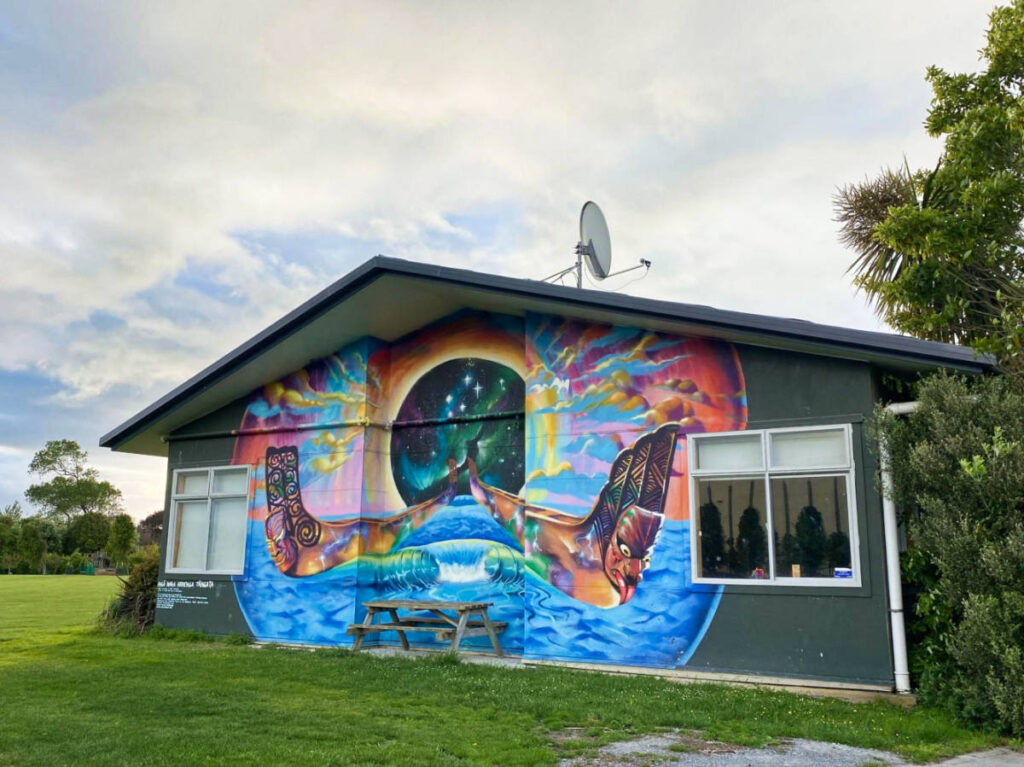
Looking back on my trip, one of my favorite aspects of visiting New Zealand was to see how respected, honored, and alive the Māori culture is.
New Zealand’s indigenous people, the Māori, have been living in New Zealand for over a thousand years. British colonists, on the other hand, didn’t arrive until less than 200 years ago. In the Māori language, New Zealand is called Aotearoa — a name that is now commonly used by many Kiwis, not just the Māori people.
To this day, the Māori culture is an essential part of New Zealand’s cultural identity. Māori people are the second-largest ethnic group in Aotearoa New Zealand. The Māori language, once almost lost due to colonization, became an official language of New Zealand in 1987.
The North Island has a much larger Māori population than the South Island. The majority of Māori cultural experiences — like museums, art, or dancing — are in the North.
Certain places in the North Island have become hotspots for Māori cultural tourism.
Rotorua, for example, is home to a living Māori village, where different cultural performances take place. This is one of the best places in New Zealand to watch a haka — a powerful dance that is used to prepare for battle (or in modern days, a sporting event) or to mark a right of passage (like birthdays or graduations).
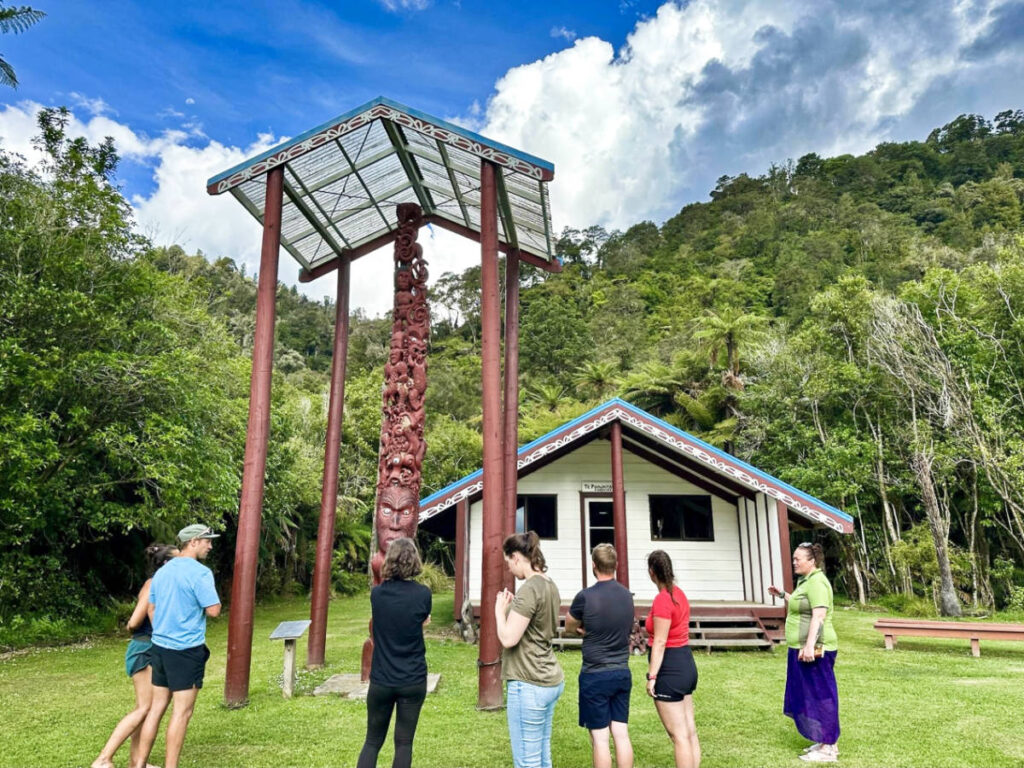
Another way to experience Māori culture is to visit a marae, or tribal meeting house. My partner and I were invited into a marae when we took a canoe journey along the sacred Whanganui River.
But honestly, anywhere you go in the North Island, you’ll get a sense of how prevalent the Māori culture really is. You don’t see this as much in the South Island. It’s something I would have really missed out on if I didn’t go to the North Island.
#2: Its picturesque rolling green hills are quintessential New Zealand
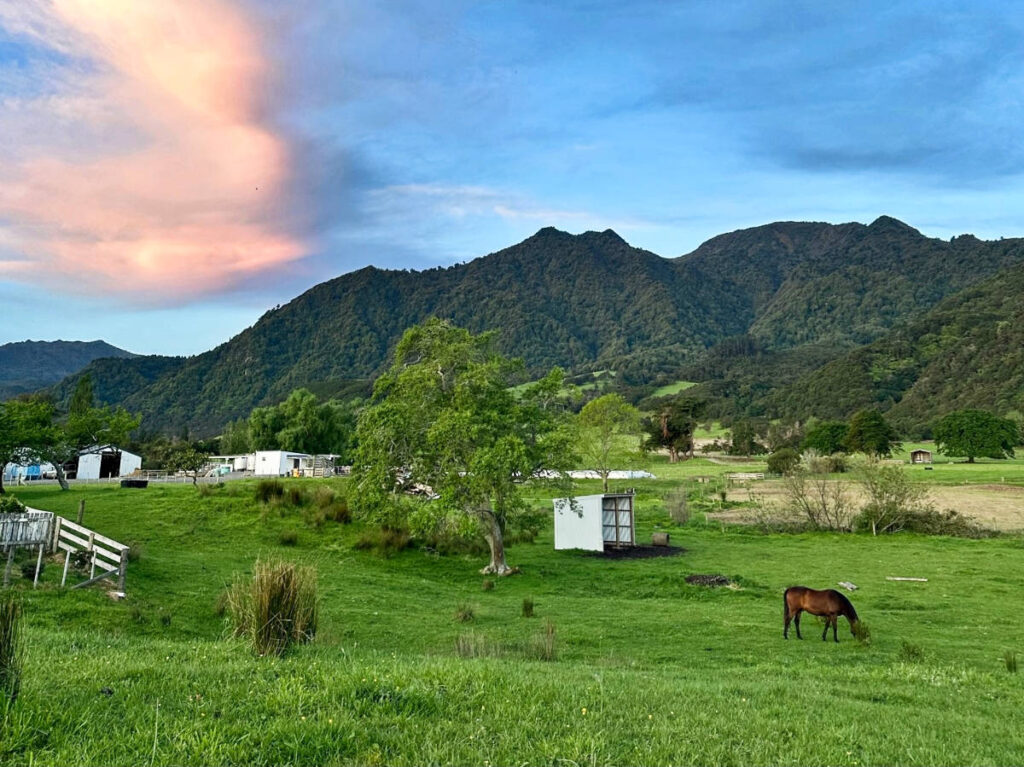
The defining aspect of the North Island’s landscape is the countryside. While the South Island is known for dramatic mountain peaks and valleys, the North Island has smaller mountains and lush green landscapes.
This makes for a picturesque countryside filled with small farms, creeks, and rolling green hills. The landscape looks much different than the South Island, but to me, it’s quintessential New Zealand.
I briefly lived on a dairy farm in Te Aroha, a small country town about 2 hours south of Auckland. I really fell in love with the landscape here. My partner and I took long bike rides through the pastures, hiked through the surrounding hills, and visited nearby Hobbiton (more on that later).
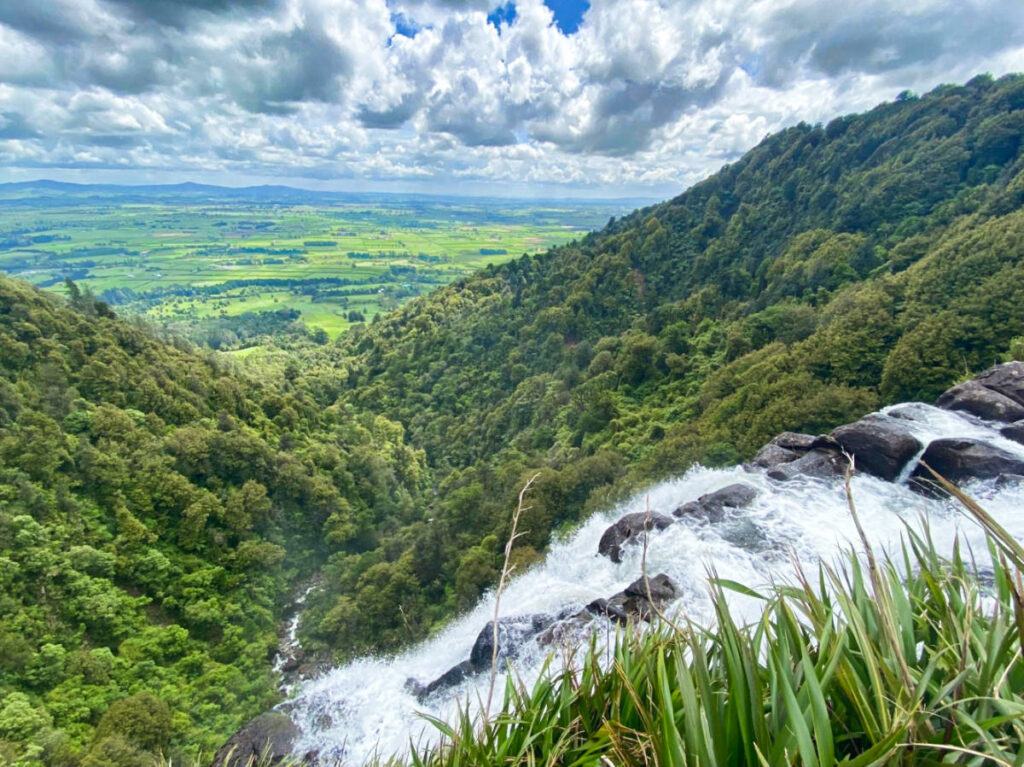
One day, we hiked to the top of a nearby waterfall called Wairere Falls. At the top, we could see for miles. The view reminded me a lot of the pristine English countryside — neat little plots separated by trees, all in varying shades of green.
After Te Aroha, I took trains and buses around the rest of the North Island. Most of the landscape seemed similar to the dairy farm. There were perfectly rounded green hills and lots of trees – it was very pastoral.
But New Zealand is constantly surprising. To say that the North Island is entirely made up of rolling green hills would be a huge misjudgment.
#3: There’s an active volcanic zone
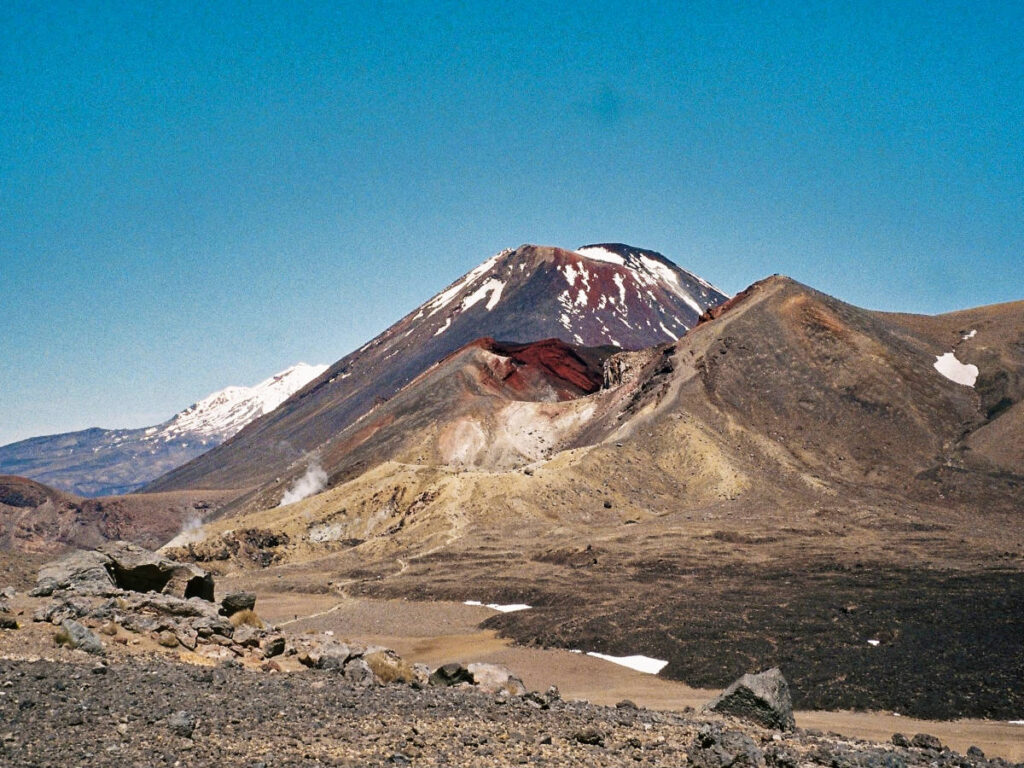
In the middle of all those rolling green hills is… an active volcanic zone! The North Island’s volcanoes lie almost smack dab in the middle of the island. It’s known as the Taupō Volcanic Zone and stretches from the Bay of Plenty to Tongariro National Park.
This area is full of incredible and unique scenery that I was not expecting from the North Island at all.
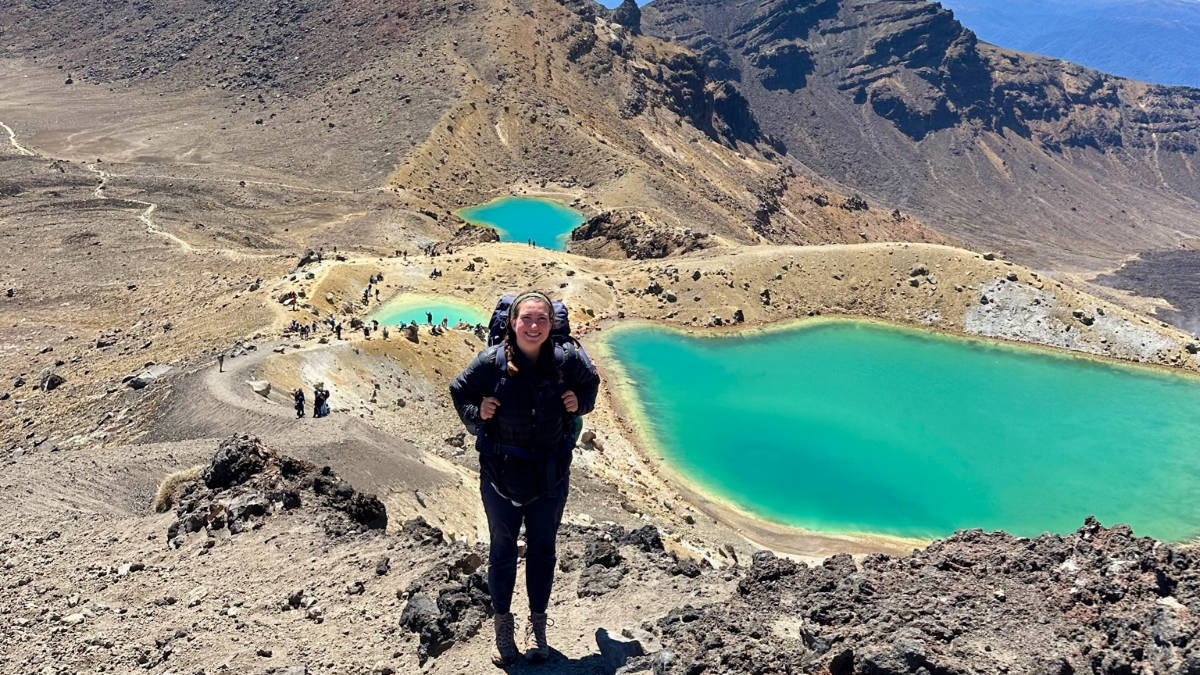
Our main experience in the volcanic zone was hiking the Tongariro Northern Circuit, a 4-day backpacking trip around Mt. Ngauruhoe, an active volcano.
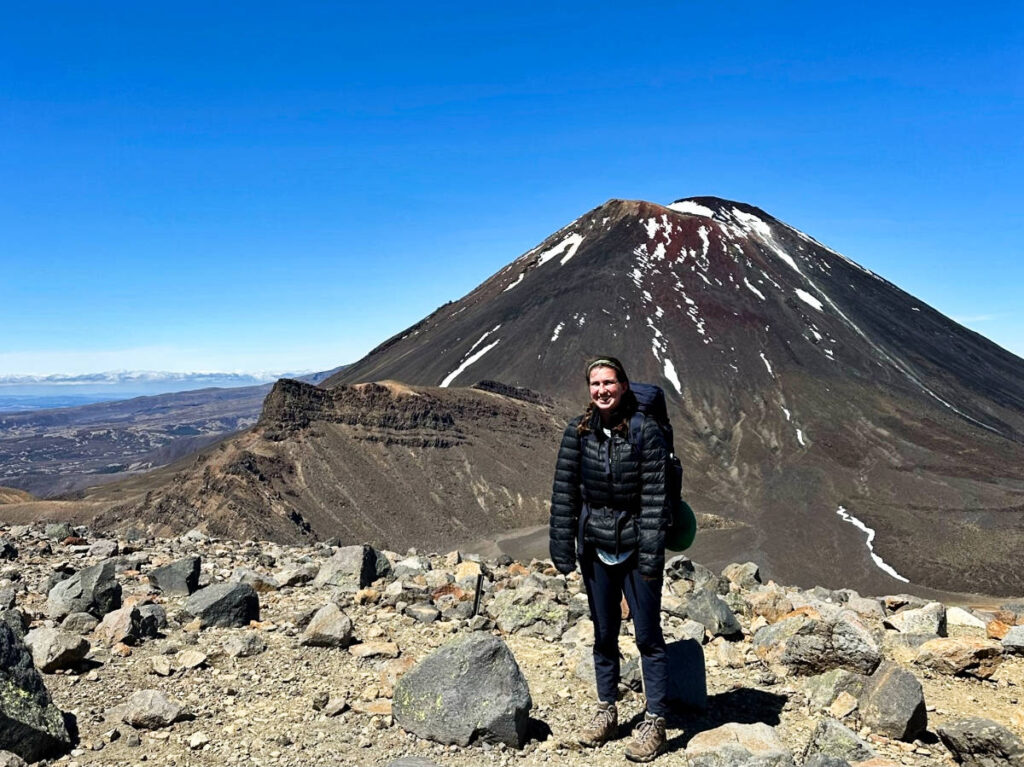
Hiking around Mt. Ngauruhoe in Tongariro National Park was one of my favorite experiences in New Zealand. I can’t imagine skipping the North Island and not knowing this place existed.
For visitors who don’t want to do the full 4-day backcountry trek, there’s a nice alternative: the Tongariro Alpine Crossing is a one-day hike that passes by the most scenic parts of the national park.
You’ll hike right past the summit of Mt. Ngauruhoe, giving you unparalleled views of the perfect volcanic cone. You’ll then hike past steaming vents, a huge red crater, and neon blue lakes. Tongariro Alpine Crossing is New Zealand’s most popular day hike. After doing it, I understand why!
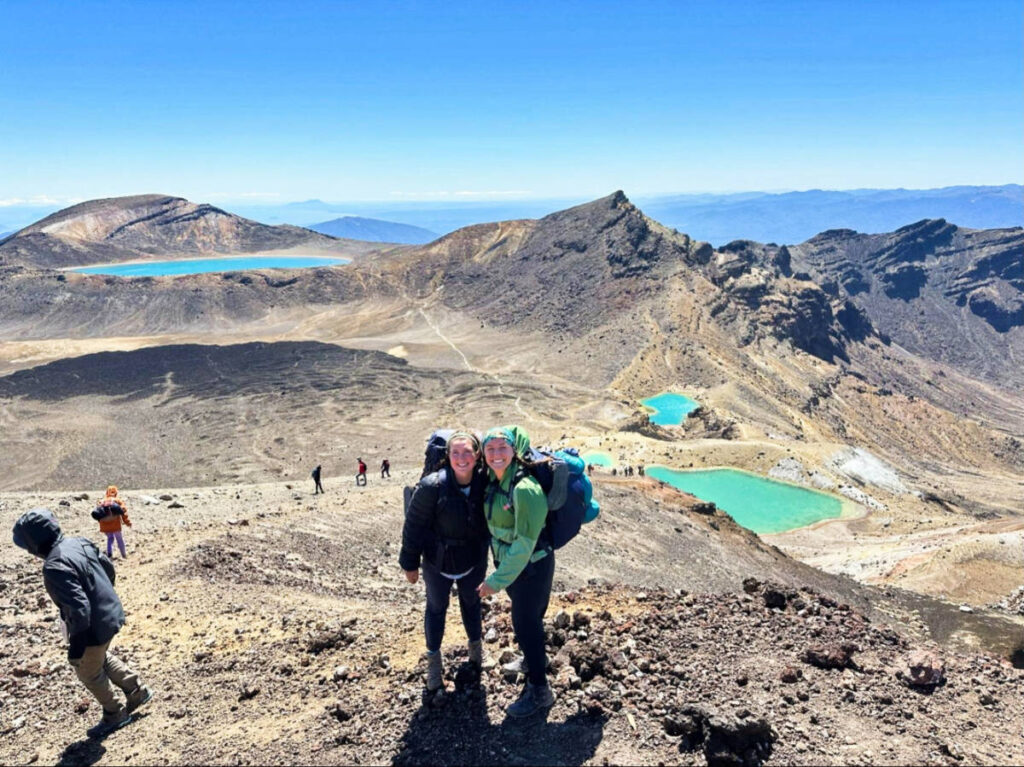
Some other popular tourist destinations in the Taupō Volcanic Zone are Lake Taupō and Rotorua.
Lake Taupō is a huge lake that formed from a volcanic eruption nearly 2,000 years ago. It has beautiful blue water and is a perfect temperature for swimming, thanks to warm geothermal currents.
Along with being famous for its Māori culture, Rotorua is also home to one of the world’s most active geothermal fields. In Rotorua you’ll find powerful geysers, bubbling mud baths, and soakable hot springs.
#4: The Whanganui River is as peaceful as it is sacred
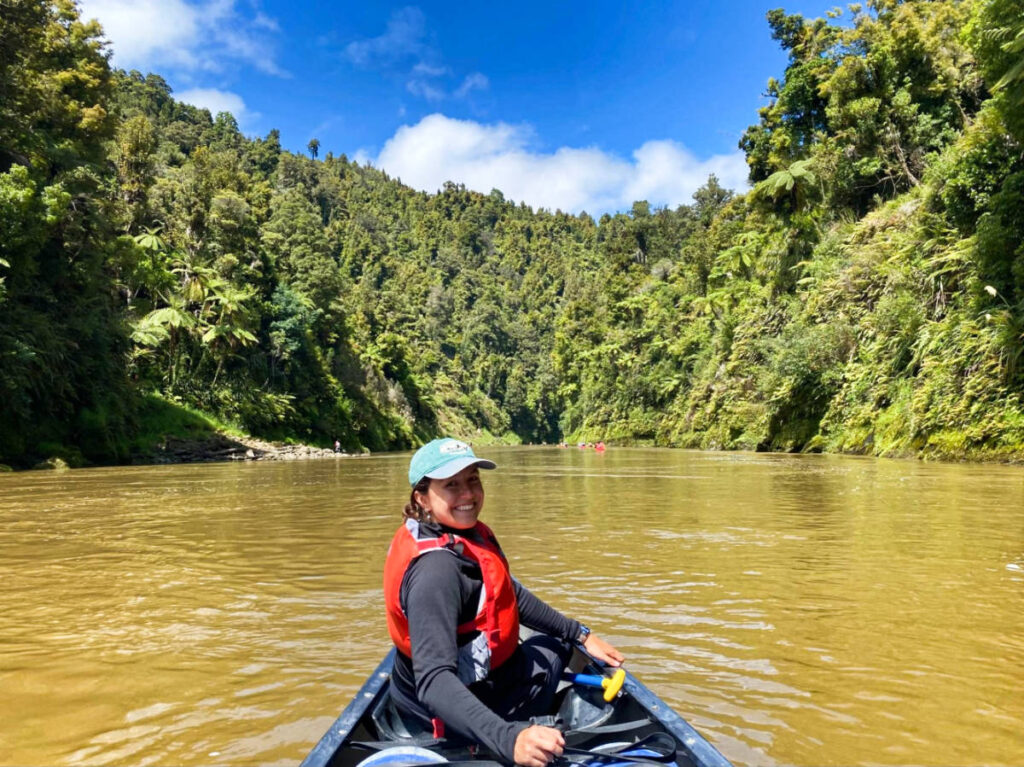
The Whanganui River is a vastly underrated area of the North Island.
This huge river flows for 180 miles before emptying into the sea. It’s incredibly beautiful, passing through lush forests and a national park. It’s also pretty undisturbed, with very few roads and little to no development on its shores.
We explored the Whanganui River by doing a 3-day canoe trip down it. We paddled past gorgeous ferns and waterfalls, stayed in remote huts along the way, and found unmatched peace and quiet.
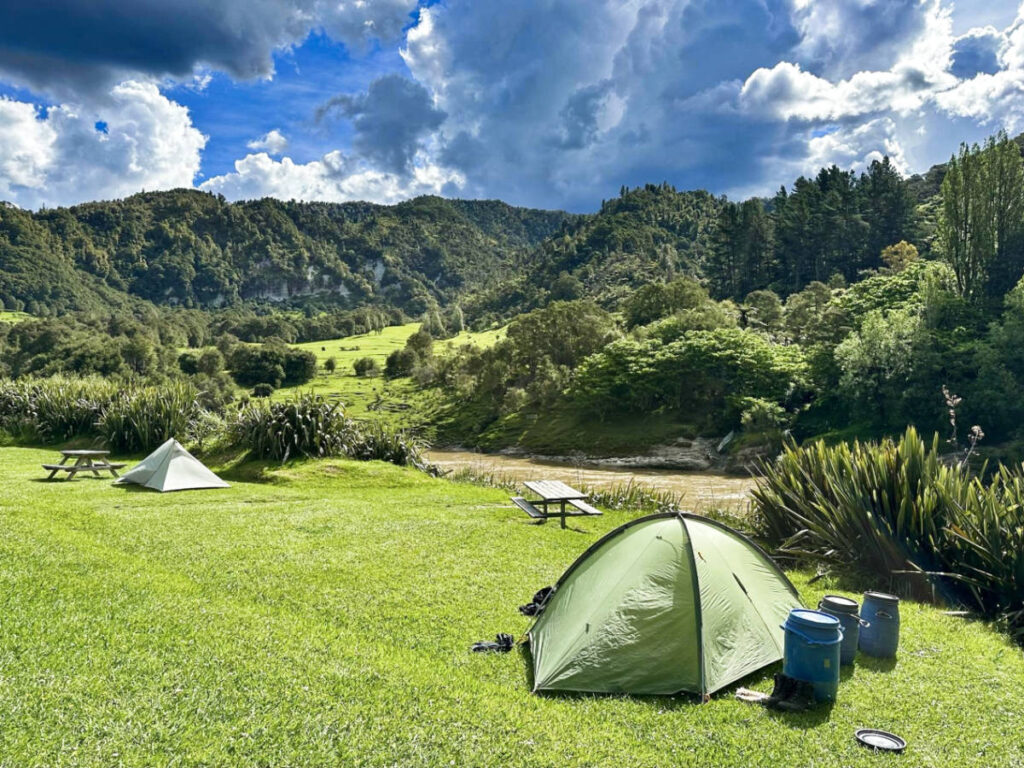
The river is sacred to the local Māori iwi (tribe), so it’s another great place to learn more about the local Māori culture. During our paddle, we were welcomed into a Māori marae.
In 2017, the Whanganui River became the first river in the world to be granted legal personhood, granting it the same legal rights as a human being.
#5: Wellington is the best city in the country
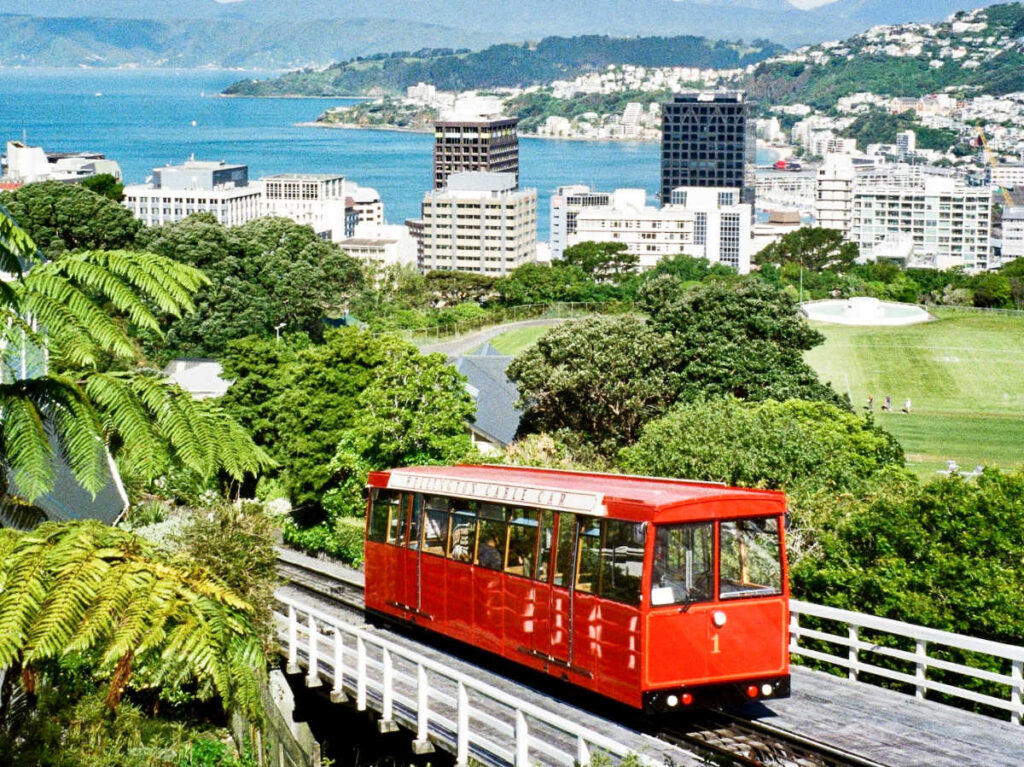
Wellington is the capital city of New Zealand. It’s also, in my opinion, the best city in New Zealand.
It’s not the biggest city — Auckland takes that title — but Wellington possesses more charm. It has a small city vibe, with just under 400,000 residents.
Wellington reminds me of my home city of San Francisco a bit, so maybe that’s why I’m biased. It’s right on the water, steeped in natural beauty, has temperate weather, and a mid-sized population. It even has a cable car like San Francisco!
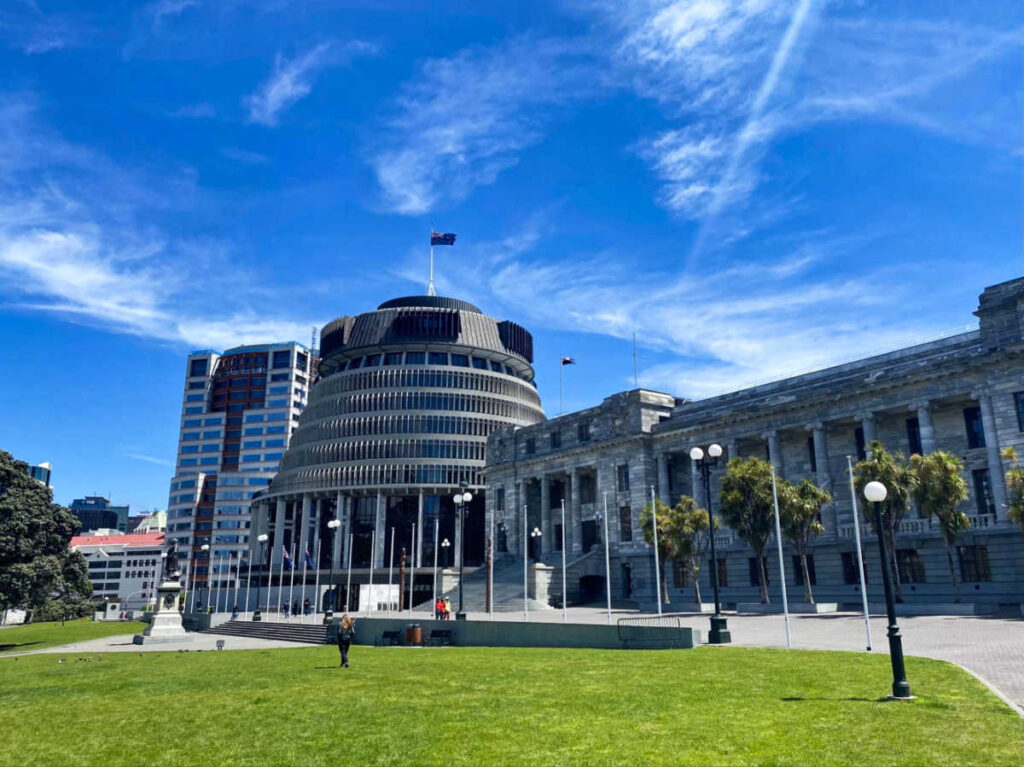
There’s tons to see and do in Wellington. We walked by famous government buildings (it is the capital, after all), went to the Museum of New Zealand Te Papa Tongarewa, and explored a charming downtown area.
The city is surrounded by natural beauty and parks. We hiked up a mountain to a lookout over the city, strolled through the Wellington Botanic Garden, and went to a huge native bird sanctuary called Zealandia. All of this was less than 15 minutes from downtown.
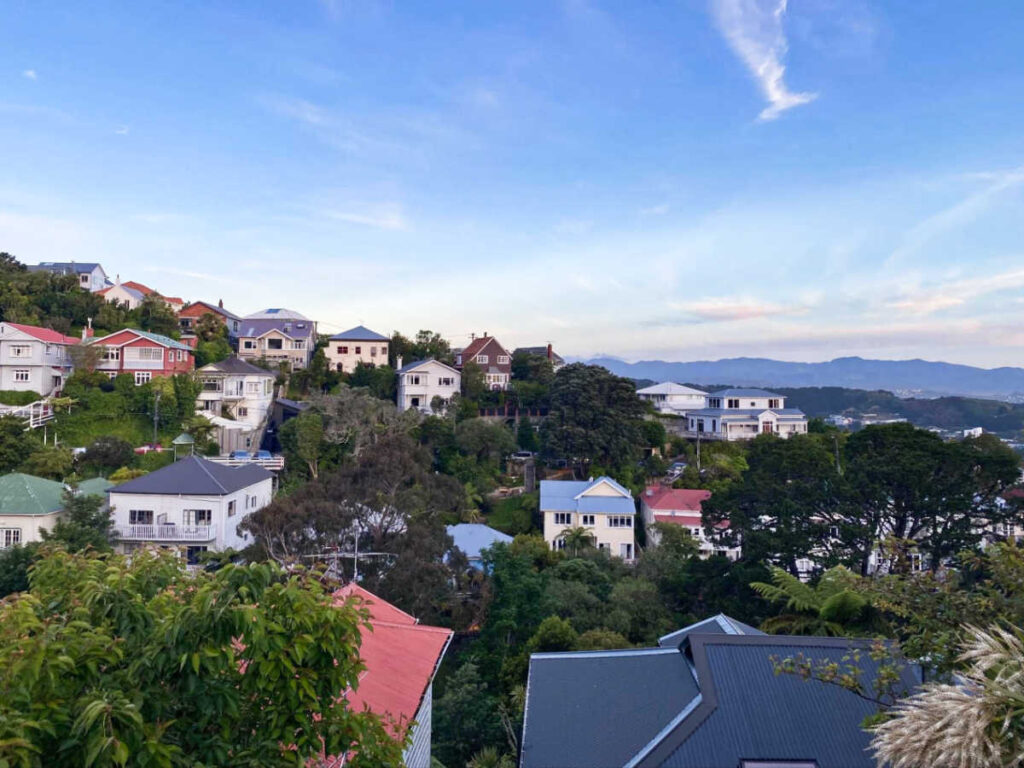
We visited a friend living in Wellington, so maybe another reason I loved it so much was because we got a local point of view. We hung out in the student neighborhood, went on some great hikes, and explored local bookstores and microbreweries (shoutout Garage Project).
All in all, Wellington felt like it had the most character out of any city in New Zealand that I saw.
Other Things to Do in the North Island
There were lots of parts of the North Island that I enjoyed. Here are my honorable mentions:
Explore Auckland’s iconic attractions
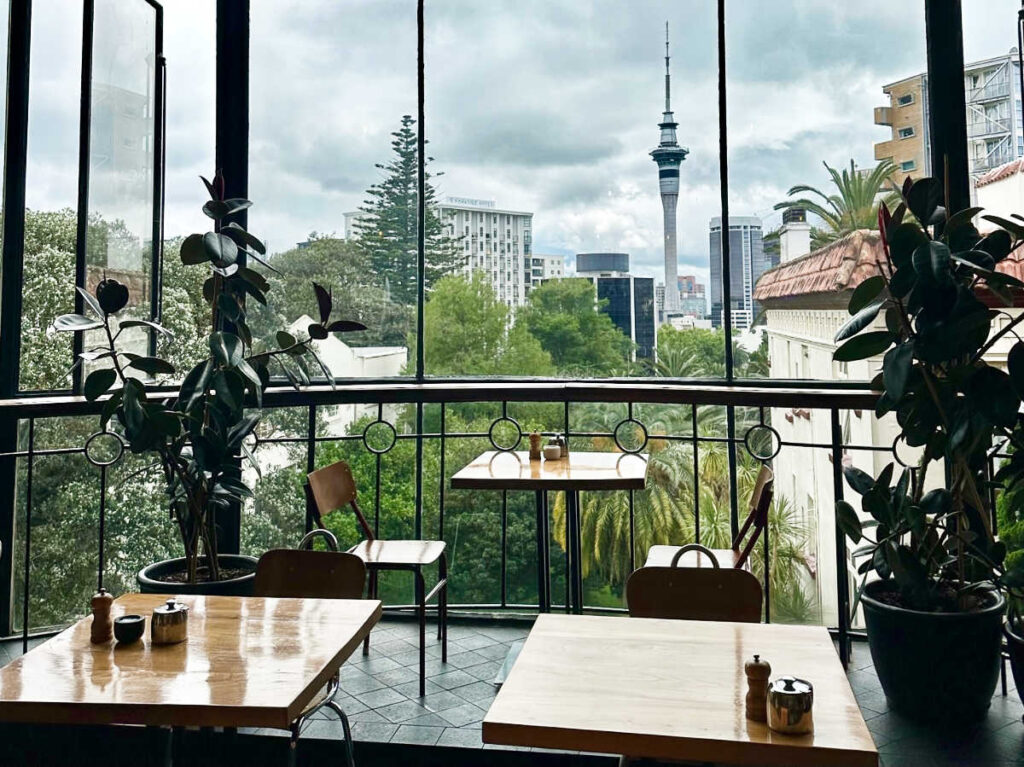
Although Auckland wasn’t my favorite city in New Zealand, it was still a great starting point for our travels. It’s the biggest city and the business capital of New Zealand, so it’s a must-see.
The city has some iconic tourist spots, like the tall Sky Tower and the gorgeous harbors. There are also really cool neighborhoods outside of downtown with tons of parks and cafes to explore.
We had pretty bad weather while we were there. It rained every day, and we weren’t really able to enjoy being outside. So much of Auckland’s beauty comes from its parks, beaches, and islands. I think with some better weather, I would’ve been able to like Auckland more!
Dive into all things Lord of the Rings at Hobbiton
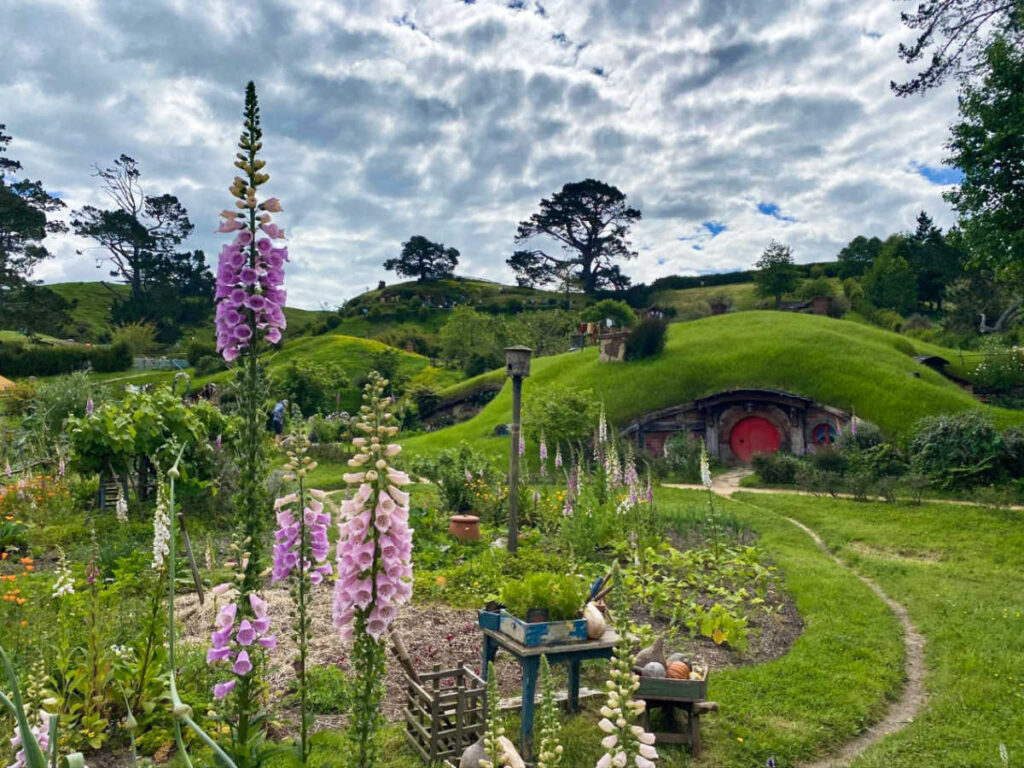
A visit to Hobbiton is essential for any Lord of the Rings fans. This is the real Hobbit village that was built for the filming of the LOTR trilogy and the subsequent Hobbit trilogy.
The North Island’s rolling green hills were the perfect setting for the Shire. Hobbiton is completely built into the natural landscape and surrounded by a working sheep and dairy farm.
Visitors can tour the grounds, walk through a hobbit hole, and grab a drink at the Hobbiton pub. It’s a super fun experience and worth a visit even if you haven’t seen the movies!
Tour the dairy farms
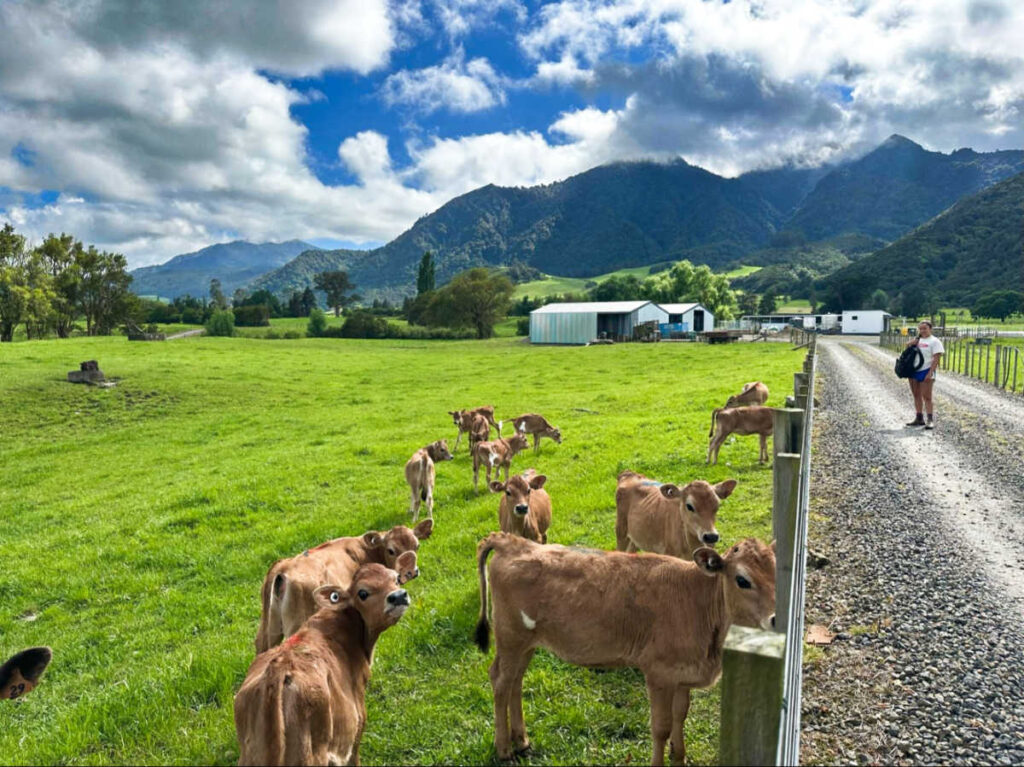
New Zealand is known for having more cows and sheep than people, so it’s no surprise that dairy farms are prevalent throughout the North Island. I found them to be super different from the crowded dairy farms I’m used to seeing in the United States.
In New Zealand, cows seemed to always have plenty of pasture to roam around on, amidst a backdrop of green hills and meadows. Touring the different dairy farms around the North Island left me with more pictures of baby cows than I ever needed.
Visit the black sand beaches on the western coast
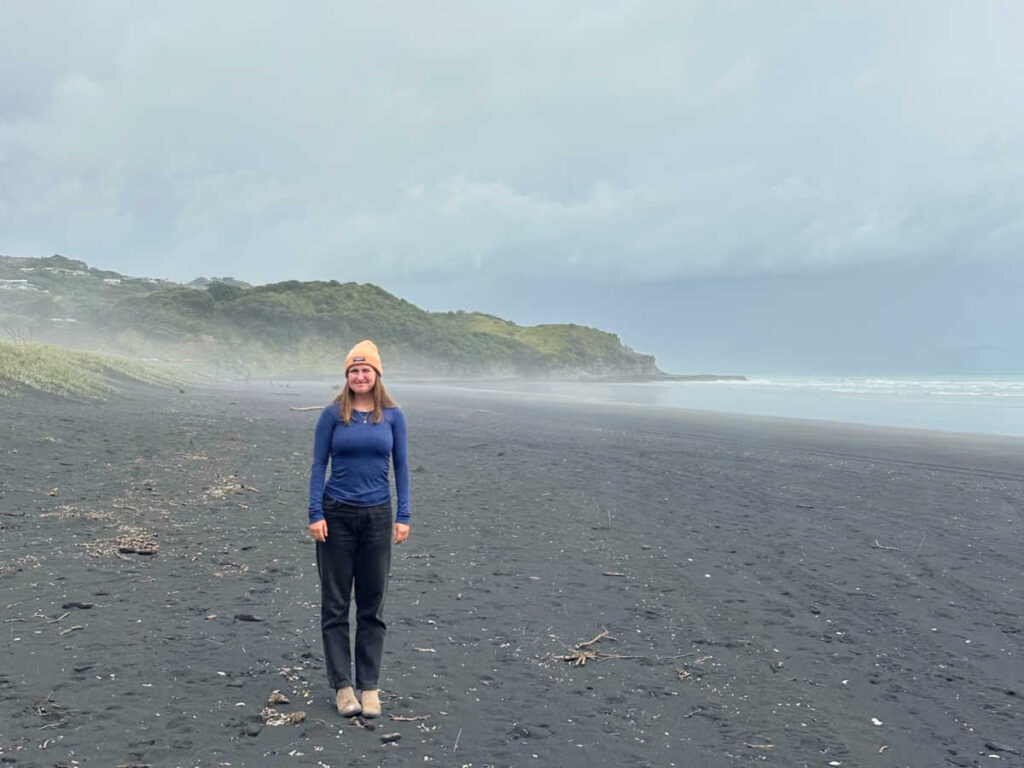
The North Island’s western coast is famous for its black sand beaches. There’s a good string of them just outside of Auckland. Places like Muriwai, Piha, and Karekare are popular with locals and tourists alike.
The South Island does have some black sand beaches too, so it’s not totally unique to the North Island. But it’s still another great thing to see when you’re traveling in the North!
Go hiking through a variety of landscapes
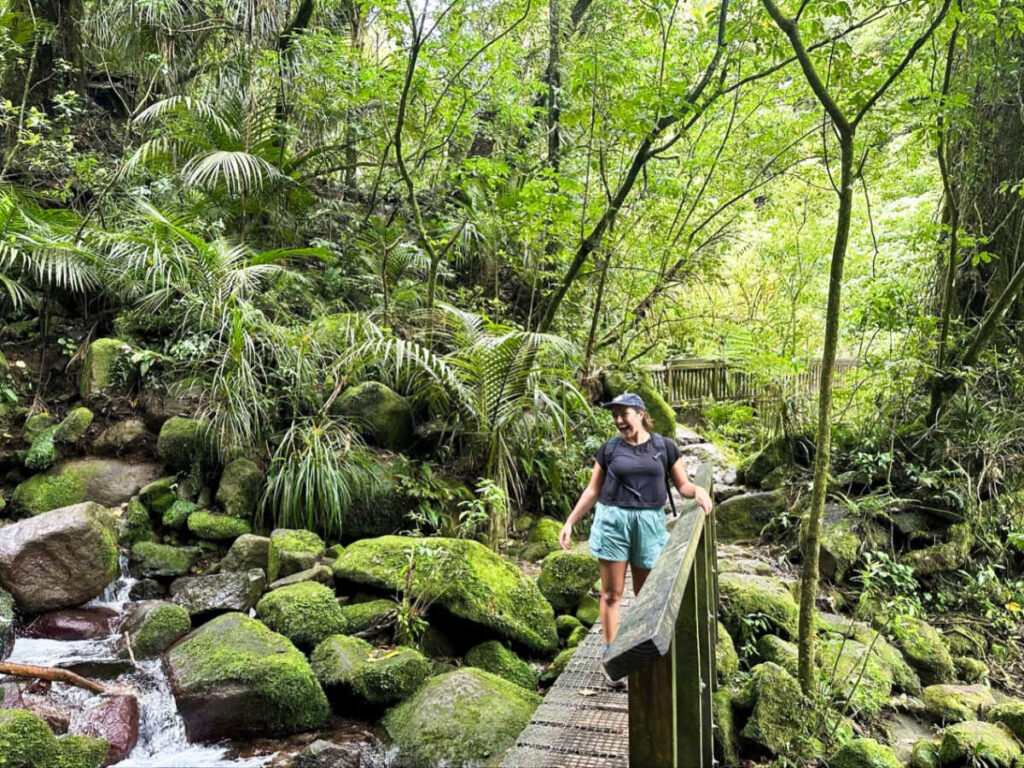
The South Island may have taller mountains, but that doesn’t mean there aren’t fantastic hiking opportunities on the North Island too.
We saw tons of variety in landscapes while we hiked. We hiked past iconic species (like New Zealand’s tree ferns), to the tops of beautiful waterfalls, and around volcanoes.
Hiking was pretty much always available no matter where in the North Island we went. And it was always incredible!
📚 Related Reading: New Zealand Packing Essentials
**
Don’t get me wrong, the South Island is cool — but the North Island deserves more hype than it gets.
I usually hear travelers talk about the North Island as the one with better cities (like Auckland and Wellington) and the South Island as the one with better nature.
But the North Island has incredible natural scenery that I think is vastly underrated. The volcanoes of Tongariro National Park, the rolling hills of the Waikato Valley, and the beautiful Whanganui River were some of my favorite spots in all of New Zealand.
The main reason I’d advocate for visiting the North Island is that a full picture of New Zealand culture is impossible to get without learning about Māori culture — and you’ll mostly find that in the North Island.
So on your next New Zealand trip, come say kia ora to the North. I promise it won’t disappoint.
Want to experience more of New Zealand? Consider doing the Great Walks! I hiked 3 of New Zealand’s Great Walks and they were the highlight of my trip.
More Latest PERSPECTIVES


